
An Engineer with a passion for working in and scaling Web3 communities.
Joined November 2022
- Tweets 1,890
- Following 927
- Followers 453
- Likes 4,656
316 Photos and videos
















eCarl retweeted

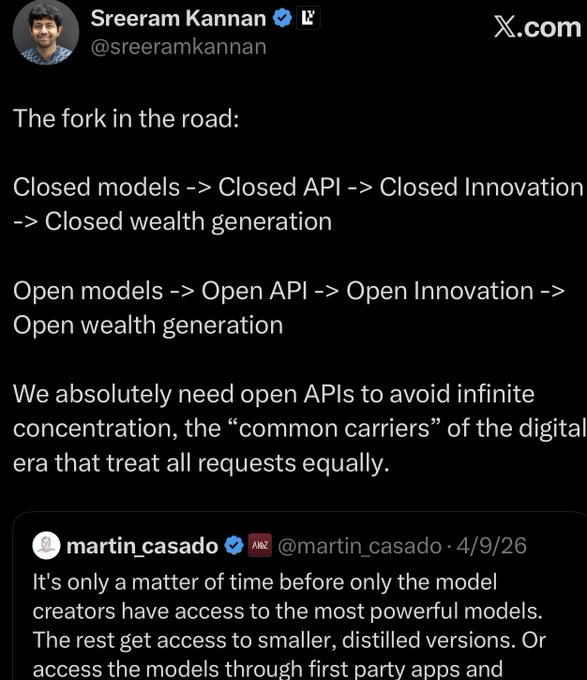
So Claude launched Fable - which is a nerfed version of Mythos
We're finally starting to see what we have predicted for a long time.
The beginnings of managed stagnation.
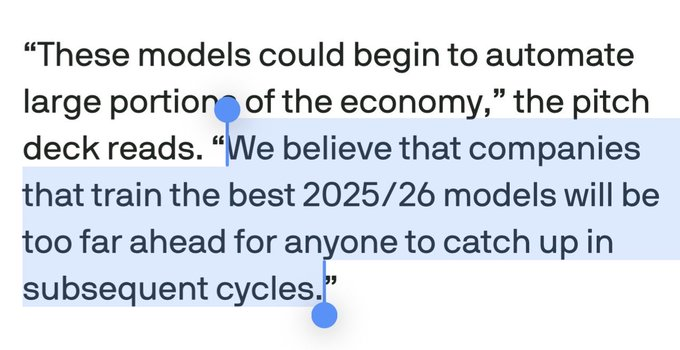
The most powerful version stays in-house, everyone else gets a throttled copy.
Select "trusted" teams got access to Mythos while everyone else got Fable (and not for long - it appears that it will be available only via extra usage from June 22) meaning even the nerfed version will cost $$$
We're starting to see rich / whatever "trusted" means in this context get access to the latest and best models while everyone else gets access to a worse one
They also added "novel" safeguards - including limiting what it does when used for frontier LLM development!
It limits what the model does (i.e. further nerfs it) without the user even know via methods such as prompt modification.
e.g. you give it a task, it returns you an output
but behind the scenes
if it didn't like what you asked, it changes your prompt into something it does like, and returns that without you being aware!!!
And they mention LLM development as a specific aspect that's blocked!
This is like Microsoft shutting down the PC when it sensed Linus Torvalds coding Linux.
This is managed stagnation in its early form.
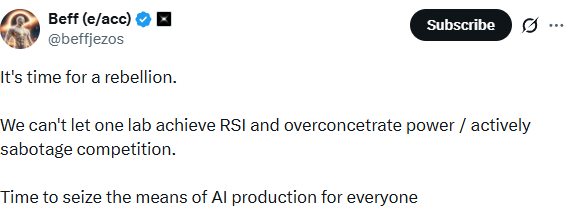
One company holds the frontier and rations who gets it.
The best model goes to a trusted few, a weaker one to everyone willing to pay, and nothing at all to the rest.
That is exactly what open algorithms break.
You can't nerf math that is already in the open.
This is the fork in the road.
Either algorithms go open in the next year or one company owns the future and never gives it back.


Introducing Claude Fable 5: a Mythos-class model that we’ve made safe for general use.
Its capabilities exceed those of any model we’ve ever made generally available.
4
26
113
5,287
eCarl retweeted

Jun 8
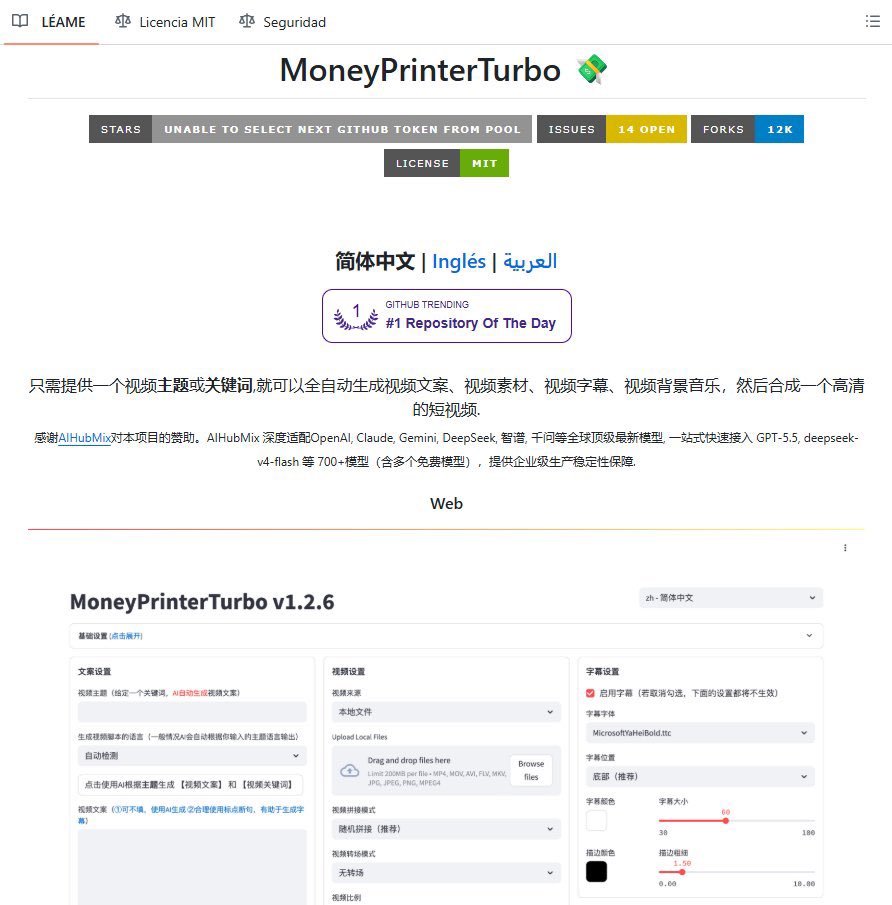
ÇİNLİ BİR ADAM RESMEN PARA BASMA MAKİNESİ OLUŞTURDU.
Github'da 13.000 yıldız almış bir araç var.
Adı moneyprinterturbo.
Bir çinli geliştirici yaptı.
Ücretsiz ve tamamen açık kaynak.
Tiktok, reels, youtube shorts için tam videoları otomatik üretiyor.
Nasıl çalışıyor.
Tek bir iş akışında her şeyi hallediyor.
Senaryo üretimi, seslendirme, altyazı, görsel kaynaklar, düzenleme, hepsi dakikalar içinde.
Yayına hazır video çıkıyor.
Sen hiçbir şeye dokunmuyorsun.
Şimdi neden bu kadar popüler oldu.
Çünkü normalde bu süreç şöyle işliyor.
Senaryo için ayrı araç, seslendirme için ayrı araç, altyazı için ayrı araç, görsel için ayrı araç, düzenleme için ayrı araç.
Her biri ayrı para istiyor, ayrı zaman istiyor, ayrı öğrenme istiyor.
Moneyprinterturbo hepsini tek çatıda birleştirdi.
Ücretsiz, sınırsız ve kategorisindeki en popüler açık kaynak proje haline geldi.
Tiktok shop ve youtube shorts kanalları aylık 6 ila 10 bin dolar kazanıyor.
Bunlar bu süreci kullanıyor.
Fark şu:
Onlar araçlar için para ödüyor.
Sen ödemiyorsun.
Kurulumu 5 dakika.
Github'da ara.
Kur, çalıştır, içerik üret hepsi tamamen senin elinde.
143
1,204
10,244
1,019,697
eCarl retweeted

Algorithms are the moat

5
23
95
4,236
eCarl retweeted
Summary of last weeks community call!
Google found a powerful new algorithm and locked it away. Within months, a swarm of strangers on the internet, teenagers included, rebuilt most of it from scratch.
That should not be possible.
Closed labs are supposed to win.
1
19
86
2,364
eCarl retweeted
At TIG, we always knew we’d make some surprising allies as we pursue our mission.
The Pope, however, was not on our 2026 bingo card.
During the first encyclical of his tenure, @pontifex was clear: algorithms must henceforth be included in the basket of ‘goods that are universally intended for everyone’.
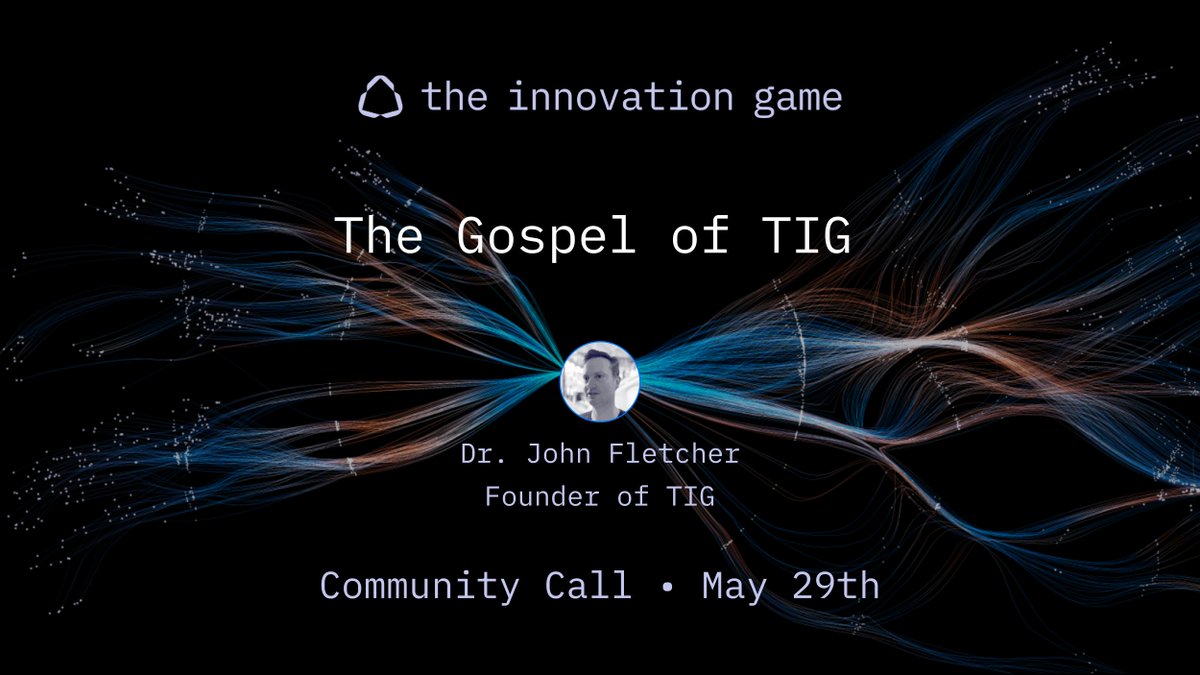
Today at 5PM BST, tune in to hear @Dr_JohnFletcher and @0x_Asuka discuss how TIG ensures that frontier technologies will remain accessible to all.
See you there!
5
26
118
3,295

The next GRASS Token Holder and Network Participant Call will take place on July 7. The call will provide an overview of Grass network progress, the development roadmap, business milestones, growth highlights, and more.
To promote equal access to information, the call will be open to the public. Questions may be submitted in advance for consideration during the session.
Further details, including the exact time and registration information, will be shared soon.
627
804
4,121
243,141
eCarl retweeted
TIG builds an IP portfolio that only ever grows.
2
26
125
5,245
eCarl retweeted

May 25
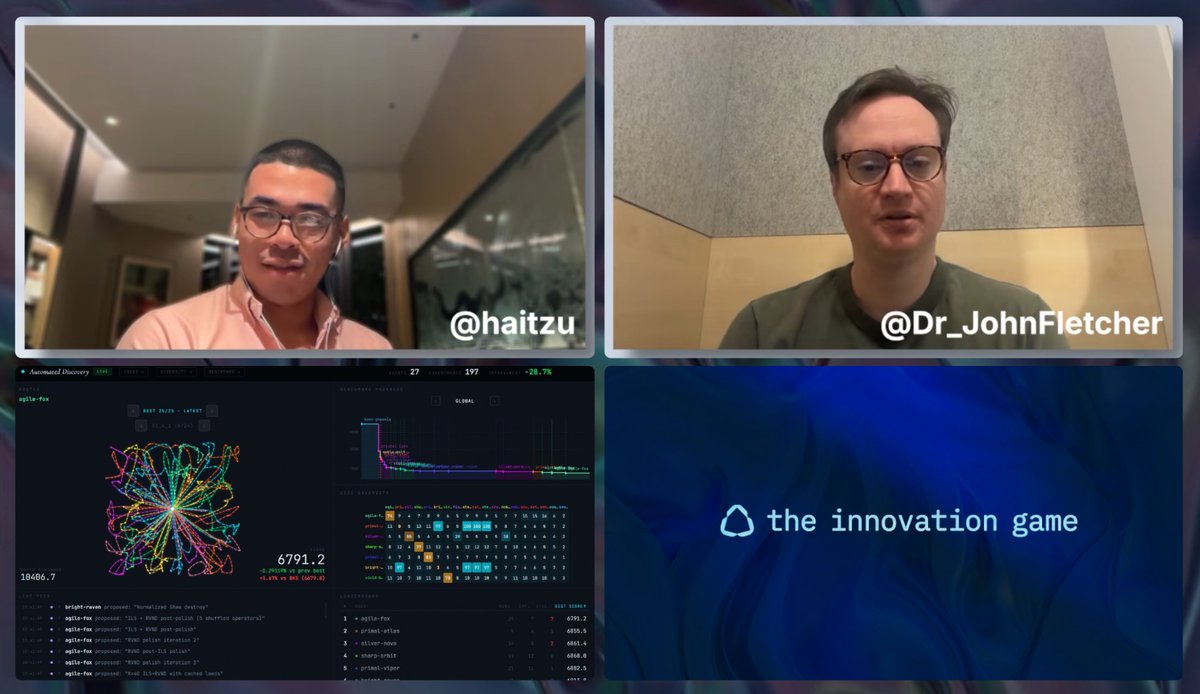
Another great discussion from @haitzu with $TIG founder @Dr_JohnFletcher
45 minutes of your time and you'll understand why $TIG is a multi billion dollar protocol in the making
👉 youtube.com/watch?v=mOK_HS6S…
Tokenised algorithms 🔥🖊️
$TIG
May 15

Yeah $TIG is flying under the radar
An open protocol for algorithm development
listening to John explain how algorithms can optimise & help you extract maximum utility from any given chip
DeepMind, OpenAI, Anthropic, they're all racing to own the algorithmic layer
if they win, you pay a tax on every optimized query, every solved route, every compressed model
Over the last 50 years, we focused on hardware
The fight was between Intel, ASML, TSMC: who could etch circuits smallest and cheapest at scale?
many years ago we realised Moore's law seemed to be hitting a ceiling, that there may be fundamental limitations of physics
as such, the focus changed to how we could extract maximum utility from the hardware
the fight will be for the most optimised software
I spoke with @Dr_JohnFletcher to discuss the TIG mission
Full ep on our youtube
00:00 Intro
00:26 Primer on $TIG
02:18 Cambridge, ARM and the TIG Team
06:33 Why open source?
15:21 Why challenges for algorithms
20:00 Role of IP licensing
23:29 Defending Against Algorithmic Monopolies
27:40 Monetisation
28:40 Use Cases
36:23 Power Struggle vs AI Labs
39:12 Freedom Ideology
9
39
178
12,993
eCarl retweeted

May 23
The "Honest Token" Angle
Max supply: 130M $TIG. Circulating today: ~29M.
Emission is tied to actual algorithmic output — not arbitrary schedules or team unlocks.
The more genuine breakthroughs the protocol produces, the more valuable those emissions become.
There's a fee to submit (10 TIG for code, 250 TIG for a breakthrough claim), which burns spam and keeps the innovation bar real.
This isn't a token that inflates to pay influencers. The game theory is: be useful, get rewarded, stay open.
Every algorithm ever produced on TIG lives in a public GitHub repo. Permanently.
The team held off on a token for years while they built the actual infrastructure.
That's unusual.
And it's why the chart going from under $1 to over $5 ATH in its first year isn't just speculation — there's something underneath it.
$tig
1
6
65
2,637
eCarl retweeted

1
4
33
1,094
eCarl retweeted
7
16
103
5,904
eCarl retweeted
A couple of points on the recent OpenAI math result and why TIG is built for exactly this.
First of all, this is a genuinely impressive result. It's a longstanding famous problem and many mathematicians are impressed with it.
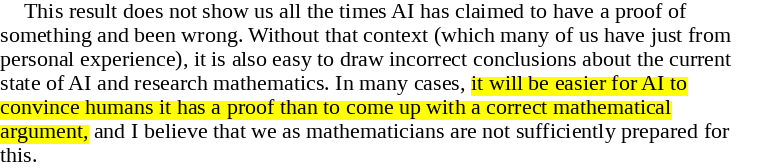
Where TIG comes in is the difference in how its algorithm challenges are verified vs how proofs like the one from OpenAI are verified.
The AI did the proof with over 125 pages in its chain of thought.
BUT
It took nine mathematicians multiple weeks to verify it actually worked.
The raw output required polishing (missing definitions, scrambled logic) and ultimately needed a human-edited, reorganised, clearer version as the final proof.
So the AI produced something but humans had to do all the heavy lifting to figure out if it was real.
That is the whole problem with AI doing maths.
Generating gets faster, verifying stays slow and expensive.
One of the nine mathematicians flagged this directly, worried that even experts will struggle to verify future proofs.
TIG sidesteps this entirely.
The problems on TIG are asymmetric.
Hard to solve, trivial to verify.
If an algorithm is better (eg runs quicker), it does not matter at all what the contents of the algorithm are.
You run it.
It either works or it doesn’t.
If it works, you can tell immediately if it was better.
No expertise needed.
This is what the miners (benchmarkers) in the TIG network do.
When an algorithm is submitted, benchmarkers run and then adopt the best one.
So with the increase in AI x Maths, TIG works not only on challenges of economic importance, but on the exact shape of problem where AI-generated work can actually be trusted at scale.

Today, we share a breakthrough on the planar unit distance problem, a famous open question first posed by Paul Erdős in 1946.
For nearly 80 years, mathematicians believed the best possible solutions looked roughly like square grids.
An OpenAI model has now disproved that belief, discovering an entirely new family of constructions that performs better.
This marks the first time AI has autonomously solved a prominent open problem central to a field of mathematics.
7
26
153
9,073
eCarl retweeted

May 20
This is a big reason why $TIG @tigfoundation is such a high conviction play for me.
It’s the only way you can invest directly in algorithms in addition to being the most efficient means available for improving them. 20% of the TIG challenges that’re live so far have produced state-of-the-art algos.
It doesn’t matter what @base, KOLs, and retail participants think, do, or say- $TIG will reach a multi-billion dollar valuation with or without them since 100% of revenue gets TWAP’d into the token.
6
26
955
eCarl retweeted

May 20
I don’t think people realise how big $TIG can become if they succeed.
2
5
52
805
eCarl retweeted
Crypto’s original fight was against concentrated power
7
19
123
3,815
eCarl retweeted
If you understand this, you're ahead of 99.9% of the "open source AI" community
Disagree?
Please say why in the comments!

We don’t need decentralised training.
We need open algorithms.
3
17
97
3,412

The savvy of you will have noticed Leopold Aschenbrenner just filed his 'Situational Awareness LP' Q1 2026 13F, showing a multi-billion dollar put position against AI hardware
Why? Moore's law seems to be hitting a ceiling; there may be fundamental limitations for physical hardware advancements
Algorithmic improvements offer an alternative avenue to explore in order to make greater advancements in AI capabilities
@tigfoundation (TIG) is a decentralized protocol that uses proof-of-work as a coordination mechanism for algorithmic research & development
Take the philosophy of Bittensor’s incentives mechanism, but apply it specifically for algorithms
The thesis is that algorithms are the most undervalued & most monopoly-prone layer of the AI stack
TIG is building the open-source alternative to what Google DeepMind could otherwise own outright
@Dr_JohnFletcher has been researching this area for over a decade; four of them created TIG with the protocol having been live for two years
The next major catalyst will come from the commercial model being proven; when that happens the repricing will be violent
We are at the stage in the cycle where there are AI tokens with viable products that solve real world problems
I'm an avid believer that crypto enables AI; strong incentive mechanisms for the brightest minds to participate, or allowing vast amounts of capital to be transferred globally
Those paying attention to the teams innovating with these novel concepts could find themselves at the beginning of an asymmetric bet
This podcast is worth a watch, also subscribe to my free newsletter (link in bio) where I’ll cover several other promising opportunities emerging
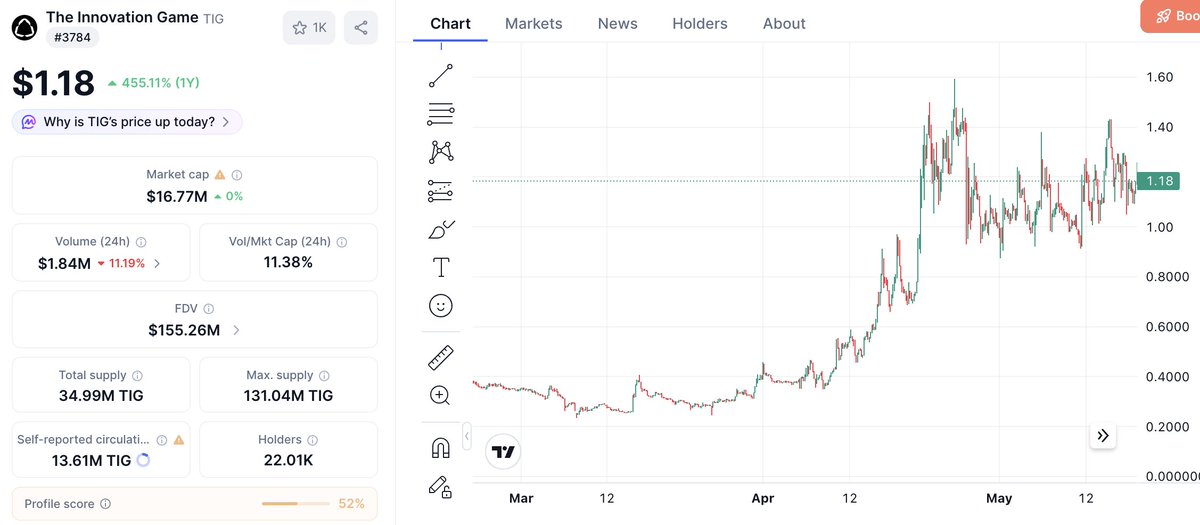
It was an absolute pleasure chatting with @haitzu
I really appreciate how he's clearly done his research on $TIG and his genuine curiosity around the issue $TIG addresses..
Full interview here youtu.be/mOK_HS6SNlw?si=4I48…
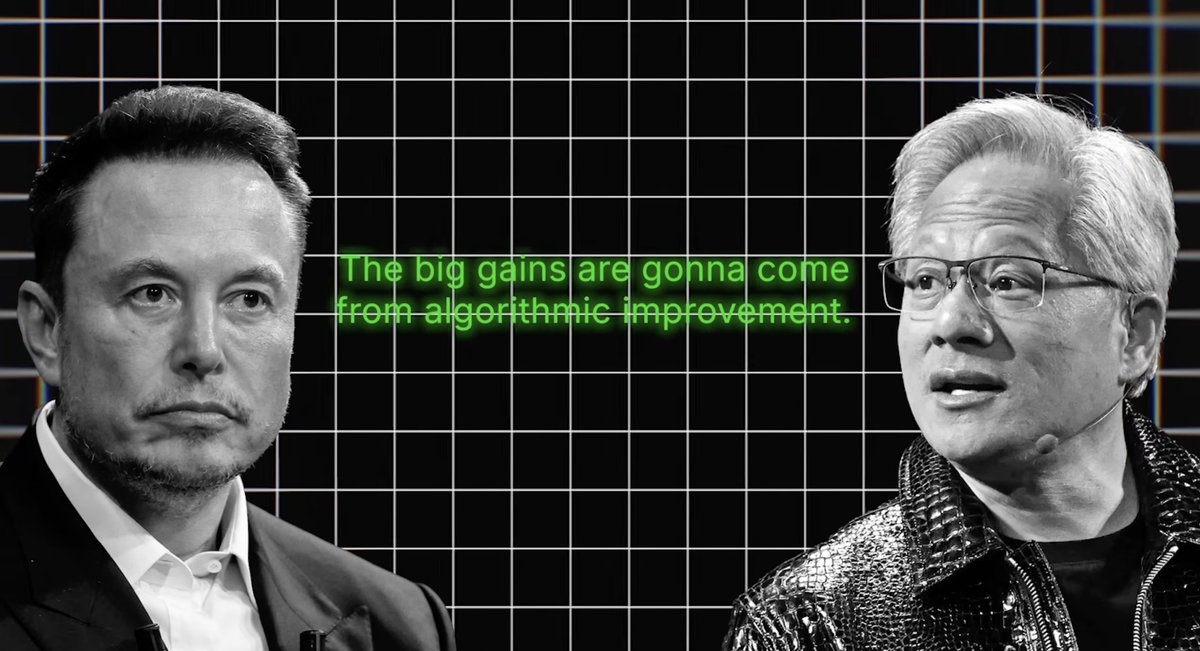
29
20
153
25,078
eCarl retweeted
Open source built Linux on volunteer time.
AI can't be built that way because the machines cost real money.
@Dr_JohnFletcher on why open source AI needs a way to capture value, and why TIG was built to do it.
2
24
117
3,999
eCarl retweeted

May 17
The $TIG thesis is that algorithms are the most undervalued and most monopoly-prone layer of the AI stack, and TIG is building the open-source alternative to what Google DeepMind / Anthropic / Open AI could otherwise own outright
- innovators submit optimised algos
- benchmarkets test algos vs. test cases
- TIG manages license rights to these algos
Critical to this endeavour is Philip David
Who spent a decade at ARM, who licensed their chip design to companies like Apple, Qualcomm, Samsung etc
But let's be clear:
their commercial model is not yet empirically proven
Licensing revenue is the long-term engine, but the network is still in its build phase and trades as such
1. TIG has assembled fascinating token architecture
2. Run by a Class A team
3. Tackling one of the defining problems of our time
Available in the public markets

May 15
Yeah $TIG is flying under the radar
An open protocol for algorithm development
listening to John explain how algorithms can optimise & help you extract maximum utility from any given chip
DeepMind, OpenAI, Anthropic, they're all racing to own the algorithmic layer
if they win, you pay a tax on every optimized query, every solved route, every compressed model
Over the last 50 years, we focused on hardware
The fight was between Intel, ASML, TSMC: who could etch circuits smallest and cheapest at scale?
many years ago we realised Moore's law seemed to be hitting a ceiling, that there may be fundamental limitations of physics
as such, the focus changed to how we could extract maximum utility from the hardware
the fight will be for the most optimised software
I spoke with @Dr_JohnFletcher to discuss the TIG mission
Full ep on our youtube
00:00 Intro
00:26 Primer on $TIG
02:18 Cambridge, ARM and the TIG Team
06:33 Why open source?
15:21 Why challenges for algorithms
20:00 Role of IP licensing
23:29 Defending Against Algorithmic Monopolies
27:40 Monetisation
28:40 Use Cases
36:23 Power Struggle vs AI Labs
39:12 Freedom Ideology
3
22
119
8,211
eCarl retweeted
May 15
Yeah $TIG is flying under the radar
An open protocol for algorithm development
listening to John explain how algorithms can optimise & help you extract maximum utility from any given chip
DeepMind, OpenAI, Anthropic, they're all racing to own the algorithmic layer
if they win, you pay a tax on every optimized query, every solved route, every compressed model
Over the last 50 years, we focused on hardware
The fight was between Intel, ASML, TSMC: who could etch circuits smallest and cheapest at scale?
many years ago we realised Moore's law seemed to be hitting a ceiling, that there may be fundamental limitations of physics
as such, the focus changed to how we could extract maximum utility from the hardware
the fight will be for the most optimised software
I spoke with @Dr_JohnFletcher to discuss the TIG mission
Full ep on our youtube
00:00 Intro
00:26 Primer on $TIG
02:18 Cambridge, ARM and the TIG Team
06:33 Why open source?
15:21 Why challenges for algorithms
20:00 Role of IP licensing
23:29 Defending Against Algorithmic Monopolies
27:40 Monetisation
28:40 Use Cases
36:23 Power Struggle vs AI Labs
39:12 Freedom Ideology
18
32
145
38,092