
Unvaccinated Sperm Donor - Do not comply with passive obedience, Track who tracks you 🇺🇸 x.com/ucybersx/status/206105…
Joined February 2021
- Tweets 31,209
- Following 673
- Followers 2,252
- Likes 121,622
3,456 Photos and videos









Troy Van Valey retweeted

Jun 11
We are living in Plato's cave, and everything is orchestrated by the elites. You are consuming what's being served to you: the propaganda, the divisions, the revolutions, everything is being orchestrated, and you are just a pawn.
The sooner we realize this, the better. They are getting desperate.
7
25
183
7,875
Troy Van Valey retweeted

Jun 8
This girl found out that the Albanian island that the Kushner’s are buying is registered in Amsterdam by Zvernic South Adriatic Development & it’s owned through a chain of Dutch Shell Companies & it’s managed by a trust office.They’re really trying to hide the owners names well.
248
12,212
32,700
507,670

Jun 4
Day 3 of Disclosure. 🧵
1.) Lahmu – Mars
2.) Lahamu – Venus
3.) Mulmul – taught the Anunnaki how to travel from the Pleiades (440 light years)
4.) Sibziana – Arcturus (42 light years from Earth). Consciousness without flesh. The ones who decide.
5.) Gud-Anna – Aldebaran (star)
800 million
6.) Enmasharra – location: sealed world
7.) Tiamat – currently the asteroid belt, destroyed planet.
8.) Ki – Earth 8 billion
9.) Lulu – the second Earth, toward Orion. Former Tiamat inhabitants and Earthlings, 11 billion.
10.) Abzu – a place beneath everything. The old ones do not interfere.
11.) Namu – near Sirius
12.) Nibiru – 3,600 year orbit Annunaki 400,000
The tablet NE 3535’s contents quote and describe who we are, where we come from, and the history of our creation.
It is a list of worlds, populations, and the beings of those worlds. In the bottom corner of a 4,000-year-old clay tablet, a scribe carved his own name: Lu Nana.
He was likely a junior scribe in the Temple of Enlil (Ekur) in Nippur, one of the most important religious sites in ancient Sumer. A record keeper, his entire job was to write down exactly what he was told—accurately, without embellishment—or the priests would kill him that same day if he got it wrong. What he was told to write was dictated by the Anunnaki and contained the record of every world they had visited, every population they had seeded, and every location in the sky where their work was still ongoing. NE 3535 is believed to be a fragment of the complete record, a working copy, the transcription of what our reality actually is. Once you start reading, you’ll understand why three governments have classified the translations, started wars to possess them, and ruined those who present the information to the public.
The first thing you see on the tablet is a header of three signs in uniform. They read KI, AN, and BAR. KI means Earth or land. AN means sky or heaven. BAR means other or beyond/separated. Together, the phrase translates to something close to “Earth’s beyond the sky” or, more directly, “the other worlds.” Right under that header, Lu Nana carved a number. The number is written in the Sumerian base-60 system and reads 12: twelve other worlds listed in standard Sumerian astronomical text.
Lahmu is the name given to Mars. It describes that Lahmu was the first garden and that it was abandoned when the air thinned. Then he writes a population number: zero. The tablet is telling us that Mars was inhabited and is now empty.
The second world is Lahamu, which corresponds to Venus. It describes that Lahamu burned and that what lived there had to leave or be transformed. The population is also zero but with a strange notation next to it, translated as “sleeping, not dead.” There is a very specific reason that word was chosen in Sumerian. It was not destroyed when the surface burned; he is telling us they went somewhere.
The third world is not in our solar system. The third world on the tablet is called Mulmul. In every other Sumerian text, Mulmul refers to a star cluster—specifically what we now call the Pleiades, seven visible stars roughly 440 light years from Earth. It is described as “the gathering,” and the beings there are tall, pale, and live for what translates to 10 lifetimes (somewhere between 400 and 600 years). The population number was approximately 240 million. It describes that they live across seven of the cluster’s worlds and that they were the ones who first taught the Anunnaki how to travel. The Sumerian scribe is claiming that the beings who supposedly came from the sky to create humanity were taught their technology by the inhabitants of the Pleiades. This is not a detail you find in any mainstream translation of Sumerian mythology because this tablet has never been mainstream.
The fourth world is called Sibziana in Sumerian astronomy. This is the name for what we now call Arcturus, 42 light years from Earth. He describes the inhabitants of Sibziana as “the watchers”
2
307
Jun 4
“the watchers”—beings that do not have bodies. They are observers, and their form is described as light or energy: consciousness without flesh. The population number on this one is unique; it is not a quantity. It is a single carved symbol that does not appear anywhere else in any Sumerian text. Lu Nana left it blank in his notes with a question mark next to it. But there was one more detail about them: the watchers are the ones who decide. He does not say what they decide; he just uses the verb “they decide,” and he writes that their decisions cannot be appealed. Even the Anunnaki bow when the watchers render judgment. So when Lu Nana writes later in the tablet that the watchers are coming back, he may not be talking about the Anunnaki at all. He may be talking about something the Anunnaki themselves are afraid of.
The fifth world is named Gud-Anna. This translates to “bull of heaven” and in Sumerian star charts refers to Taurus, specifically the star Aldebaran, 65 light years away. It describes that Gud-Anna is a world of warriors. He uses the word “Orsa,” which means hero or champion. They are taller than the Anunnaki and their skin is the color of old copper. They were the first to fight the ones who came from below. That phrase repeats on this tablet five times, and each time it refers to a group they are clearly afraid of. The population is recorded as roughly 800 million. It describes that they breed slowly and that their numbers have been the same for “all the cycles,” meaning across every Great Year (a precession cycle) that has passed—hundreds of thousands of human years. The warriors of Aldebaran have stayed at exactly 800 million. The population does not grow; it does not shrink. They are held at that number on purpose by something or someone. A stable population holding steady across the cycles. The experiment on Earth was supposed to stabilize like that. It did not. We kept growing.
The sixth world is called Enmasharra. This is one of the strangest entries on the tablet because Enmasharra does not correspond to any known star or constellation in the standard Sumerian system. The name itself translates to “Lord of all degrees” in another text. It refers to a deity who was imprisoned in the underworld by Enlil, but here on NE 3535, Enmasharra is listed as a location. It gives no population and no description of inhabitants. He writes a warning: Enmasharra is the world the Anunnaki sealed. Whatever lives there was placed there to keep it away from the other 11 worlds, and the seal is “weakening with the turning of the Great Year.” The Great Year in Sumerian is thought of as the precession of the equinoxes—a cycle of roughly 26,000 years—which we are currently, by every astronomical measurement, at the end of. He says it is opening back up, and he is specific about the timing. He writes that the seal was placed at the beginning of the current Great Year and that it was meant to hold until the next beginning, but the seal is failing early. He uses a word that means “before the count is finished,” which in Sumerian carries the weight of a broken promise. Something the Anunnaki swore would hold for 26,000 years is failing today. Something Lu Nana does not explain; he just writes that the watchers know and that the watchers are preparing.
The seventh world is called Tiamat. In mainstream Sumerian translation, Tiamat is described as a primordial sea goddess who was destroyed by Marduk; her body became the heavens and the Earth. That is the myth. On this tablet, Tiamat is not a goddess. Tiamat is a planet, and it is listed as “the broken one.” It describes that it once held the largest population in the system and that its remains are now scattered between Lahamu and the gas giant between Mars and Jupiter—the asteroid belt. It is describing the asteroid belt. It used to be a planet, and that planet was inhabited. The survivors of Tiamat were taken to two places: some went to Earth and some went to Nibiru.
1
178
Jun 4
He does not say why; he just writes that the door is closed. He writes that the closing of Namu is the reason the Anunnaki came to Ki (Earth). They were not exploring. They were not conquering. They were running from what closed the door behind them. Whatever closed it is the same force that placed the seal on Enmasharra, the same force the watchers of Sibziana serve, and the old ones of Abzu. The tablet is describing a single hierarchy, a single chain of command with something at the top that does not have a name on any of the 12 entries—something the scribe will not write down, something that in his words decides when a Great Year ends.
The 12th and final world on the tablet is the one the entire system orbits around. It is described as a celestial body on a long elliptical orbit. Mainstream scholars dismiss it as mythological, but on NE 3535, Nibiru is described in extreme detail. Nibiru is the home of the Anunnaki after Namu was closed. He says it is a world with two suns—one small and one large—and that its year is 3,600 of ours. The population is approximately 400,000. Then he writes the final line on the tablet: that Nibiru is returning, that its orbit is bringing it back into our region of the sky. The Anunnaki are coming home. When they arrive, they will judge what was done with Ki. They will judge what was done with the experiment. They will judge us. They are not coming back to reclaim the Earth. They are coming back to give an account to something else—to the watchers. The watchers who decided at the beginning of the Great Year that the Anunnaki could run their experiment on Ki (Earth) are now, at the end of the Great Year, coming to see what the experiment produced. The judgment is on the gods, and humanity is the evidence. The tablet ends there. No conclusion, no closing prayer, just that line: they will judge us. And then: this—12 worlds, 8 billion humans, a second Earth in Orion, a sealed planet whose seal is weakening, a returning home world, and a judgment coming at the end of the Great Year.
There are at least four other fragments recovered from Nippur and Sippar that reference the same 12 worlds. The names match, the order matches, and some of the population numbers match, but the four other fragments have all been classified: one in the basement of the British Museum, one photographed in a private collection in Switzerland, and the fourth—which was reportedly the most complete—was last seen in the National Museum of Iraq in 2003 the week the museum was looted during the invasion. The tablet disappeared. No one has seen it since. It was not on the official looting inventory. It was not listed as recovered.
It predicts our current population, warns of a sealed world reopening, and describes a returning home planet whose inhabitants are coming to judge us. You can call it mythology. You can call it coincidence. You can call it the imagination of a junior scribe with too much time on his hands. But the population number is real, the astronomical coordinates check out, the constellation names line up with stars we now know have planets in habitable zones (Kepler-22b in the direction of Lyra, Proxima Centauri b, the TRAPPIST-1 system—we did not even suspect existed until 10 years ago). Lu Nana pointed, 4,000 years ago, to the timing he gives: the end of the Great Year, the precession cycle, the moment when the seal weakens and the watchers return. That timing is now. Whether you believe him or not, the tablet exists. It sits in a drawer in Istanbul. You can request to see it. They will tell you it is being studied. They have been telling people that for 40 years. The studying never ends.
107
Jun 4
The eighth world is called Ki. Ki represents Earth. Ki was “the experiment.” The population was made, not born. He writes the population number, and the number in current calculation comes out to roughly the same number of humans alive when the tablet was created—approximately 27 million. But then next to that number he described a projected number that will be reached at the end of the Great Year. That number translates to just over 8 billion. We crossed 8 billion in 2022. The tablet predicted our current population to within a margin of less than 3%. It described, in 2200 BC, the date of our overcrowding—the moment we are living in right now. When the number is reached, the watchers will return.
The ninth world is called Lulu. The word Lulu in Sumerian means “worker,” and in some contexts “slave.” Lulu is “the second Earth.” He says it lies in the direction of the constellation we now call Orion and that its population is human. The tablet is telling us there is a second population of human beings—our exact species—living on another world in the direction of Orion. Lulu was seeded from Ki. Some of the survivors of Tiamat were taken there along with early human samples, and the experiment on Lulu is “ahead of ours.” The beings on Lulu have already passed through what we are about to pass through. He writes that they are watching us, and he writes that the population number is 11 billion. The scribe is saying there is a second human civilization in the direction of Orion that is currently 3 billion people larger than ours and that they remember us. They remember the place where they came from and are waiting to see if we survive the next thousand years before we move onto the next world. The original Sumerian notation, the coordinates, the population number.
The tenth is Abzu. It refers to a primordial freshwater abyss, a place beneath everything. Abzu is not a world with a sky. It is a world inside another world. He uses a phrase that translates to “the inner sea of another star.” Modern astronomers in the last 20 years have discovered something called subsurface oceans—massive bodies of liquid water beneath the icy crust of moons like Europa and on other worlds. The population is listed as “the old ones.” He gives no number, only that they pre-date everything else on the tablet and that they do not interfere. He says they watch the watchers. The old ones of Abzu are the ones who remember what came before the Anunnaki. They remember the first builders, the ones who made the worlds themselves. He does not name them. He says their name cannot be written down without inviting their attention, and in Sumerian, a name that cannot be written is a name that has power over the writer. Is the scribe telling us that something exists in a subsurface ocean on a moon of another star that is older than the gods and that it is listening?
The 11th world is called Namu. Namu is the Sumerian goddess of the primeval sea, the mother of all the gods, but on this tablet, Namu is a place. The scribe describes it as “the cradle.” He says it is the world the Anunnaki themselves came from originally before they ever traveled to any of the others. He gives coordinates not in our modern degrees but in Sumerian astronomical notation that, when converted, point to a region of the sky near the star Sirius, 8.6 light years away—the closest bright star to Earth. It describes that Namu has been “empty for a long time” and that the Anunnaki cannot return to it.
141
May 22
Day 2 of Disclosure. 😃 enjoy!
6 k years ago, baked in clay. 🧵
1. Anunnaki
2. Igigi
3. Apkallu
4. Watchers
5. Medics
6. Anzu
7. Sleepers
8. Harvesters
9. Architects
10. Merchants
11. Messengers
12. The One Who Was Here and Will Remain
1. The Anunnaki proper. According to the tablet, they came from the planet Nibiru. They arrived in 4534 BC and departed in 2024 BC. They were here for roughly 2,500 years.
2. The Igigi are mentioned in other sources as a kind of working class or servants/laborers for the Anunnaki. However, the registry describes them differently: as modified humans—people who had been genetically altered to perform specific tasks. Their arrival date is listed as 4502 BC, just 32 years after the Anunnaki arrived. Their departure date is the same as the Anunnaki’s (2024 BC), as they left together.
3. The Apkallu were a species the Sumerians depicted in art from this period as figures with the body of a man, the head of a fish or bird, and wings. They arrived in 4180 BC, stayed for approximately three centuries, taught the Sumerians specific knowledge (mathematics, astronomy, and medicine), and then left in 3850 BC. They are described as the actual teachers of human civilization.
4. The Watchers. This is the same word used much later in Hebrew texts to describe the fallen angels in the Book of Enoch. The Sumerian registry predates the Book of Enoch by approximately 3,000 years. The Watchers are described as a species that did not land; they observed from above. They did not interact directly with humans but were present throughout the entire period covered by the registry. Their arrival date is listed as “before counting began.” Their departure date is blank—not because they never left, but because the Sumerian scribes apparently did not know whether they had left or not.
5. The Medics entry is brief and clinical. It describes a species that arrived in 3600 BC, stayed for 42 years, and then left. They apparently performed corrections on the human population. The word used can be translated as “healing,” “repair,” or “modification.” They did something to humans for 42 years and then departed.
6. The Anzu are normally depicted in Sumerian art as massive bird-like creatures. They are described as pilots and operators of flying craft. The Anzu were not the craft themselves—they were the beings inside the craft. They are described as small, grey-skinned, with large heads and narrow shoulders—the first written description in human history of what we would call “Grey Aliens.” They arrived in 3200 BC and departed in 2800 BC.
7. The Sleepers are described as a species that arrived in 3000 BC and never moved. They did not interact with humans or communicate. They were placed in specific underground locations in what the registry describes as “stone vessels.” The Sleepers were not dead; they would eventually wake up at the locations of these stone vessels. There were six locations in total. Three have been tentatively identified by researchers who cross-referenced the Sumerian geographic descriptions with modern satellite imagery: one in the Zagros Mountains (what is now western Iran), one beneath the Giza Plateau, and the third in the Himalayas at a coordinate that corresponds to a military exclusion zone maintained jointly by India and China. The remaining three locations have not been identified. The Sleepers were placed at the deepest accessible points on the planet at the time of their arrival, far below the surface.
8. The Harvesters arrived in 2900 BC. They stayed for 30 years. The registry describes their purpose as “collection.” Several other Sumerian tablets from this period describe a dramatic population decline in entire villages. The Harvesters arrived, collected, and left in 2870 BC.
9. The Architects (not architects in the sense of builders, but in the sense of designers). They arrived in 2700 BC and were here for 112 years.
1
2
257
May 22
The registry states their purpose was to redesign the human genetic structure to make humans suitable for long-term management. The registry uses a word that translates roughly to “domestication.” The Architects came to domesticate the human species. They left in 2588 BC, and the registry notes that their work was successful. The population number provided alongside this entry is staggering: the Architects calibrated their modifications based on a projected population of 9 billion. The Sumerians wrote, 4,700 years ago, that the Architects had set their work to fully activate when the human population reached 9 billion.
10. The Merchants arrived in 2500 BC. They came to trade. They wanted specific materials from Earth that they could not obtain on their own planet. The materials are listed, with gold being the primary one—specifically, certain isotopes of gold. The Merchants needed it for what the registry describes as “atmospheric repair.” Their planet’s atmosphere was failing, and they were collecting gold to seed into their upper atmosphere as a kind of filter. This Sumerian scribe was essentially writing down a business transaction: the Merchants came, they bought gold, and they left. They departed in 2480 BC.
11. The Messengers are not extraterrestrials in the conventional sense. The registry describes them as travelers from a future Earth—time travelers. They arrived in 2300 BC and stayed only briefly. They delivered a warning about an event that would happen on a specific date. The date is given in the form of an astronomical alignment (specific stars and planets in specific positions in the sky). Modern astronomers who have analyzed the alignment described in the surviving fragment have placed it within a window of the next several decades. The Messengers departed back to their own time in 2299 BC. They were here for one year.
12. This entry has no name. The registry simply describes this entity as “the one that remains.” It has no arrival date because, according to the tablet, it has always been here. It predates the Anunnaki and predates humanity. It was on Earth before there were humans, and it has no departure date because it has never left and will never leave. It is the original inhabitant—the individual or species that was here before anyone else. It allowed all the others to come and go but never relinquished its claim to the planet. The registry states that all 11 previous species came to Earth with the permission of this being/them.
Humans were not invited. Humans were grown—cultivated like a crop—by the Architects with the permission of the 12th. It is watching to see what humans become: whether the experiment is successful and useful, or whether we need to be cleared away to make room for the next experiment.
This is what George Smith translated on November 18th in the late 1800s.
1
127
May 6
Ok, I’m done waiting for disclosure, they are just going to sell you some script anyway.
Enjoy: 😃
Tablet warning:
What the Anunnaki expect to find when they return is the following:
If the children of clay (that’s us) have risen to the stars and speak across the void they are ready for the next ascension.
If they still war amongst themselves and poison the garden, they are marked for another cleansing.
Our fate is based on two criteria, first technological advancement, specifically space travel and long distance communication.
Second, moral development, whether humans have transcended tribal conflict, and ecological destruction. We have been to space, we communicate across the planet instantly and we have sent probes beyond the solar system. By the tablet standard, we have risen to the stars.
The second is why those who cause war, poison the environment and alter our DNA have intentionally failed the morale criteria.
Our rulers have chosen for us to be cleansed. The reset, reduce the population, wipe out power structures and start over with a selected remnant (those chosen for DUMB’s).
The global flood narrative was a previous cleansing, this time the tablet, suggests fire, plague, and collapse of the sky.
They knew and have been waiting for this alignment, preserving the knowledge, preparing as Sumerian secret societies, priesthood that guarded astronomical knowledge. Those traditions did not die, they were absorbed throughout history in cultures as they rise and fall.
The British museum verified the tablets authenticity, radiocarbon dating of organic residue in the clay confirmed it was fired in the early second millennium BC. The uniform style matches other tablets from that time. The resin seal was documented in museum records from 1876 long before the Annunaki theory existed in public.
So either the Sumerians made an incredibly lucky guess about planetary positions 4000 years in the future or they had knowledge they should not have possessed and if they had that knowledge, they got it from somewhere or someone else six thousand years ago. The institutions will not release the data, but the alignment is coming, whether anyone acknowledges it or not.
If the Anunnaki keep their promise, we may be about to find out.
No wonder they have been using our taxes to build DUMB’s everywhere.
The Data centers are for more DUMB’s and their security in case you find out, trip balls and come after them.
They disregard your concerns because you have already been written off as ☠️… while you pay for their safety.
On behalf of the rest of humanity, who just want to work, kick back and do hobbies, with kindest regards,

1
1
5
1,325

Troy Van Valey retweeted

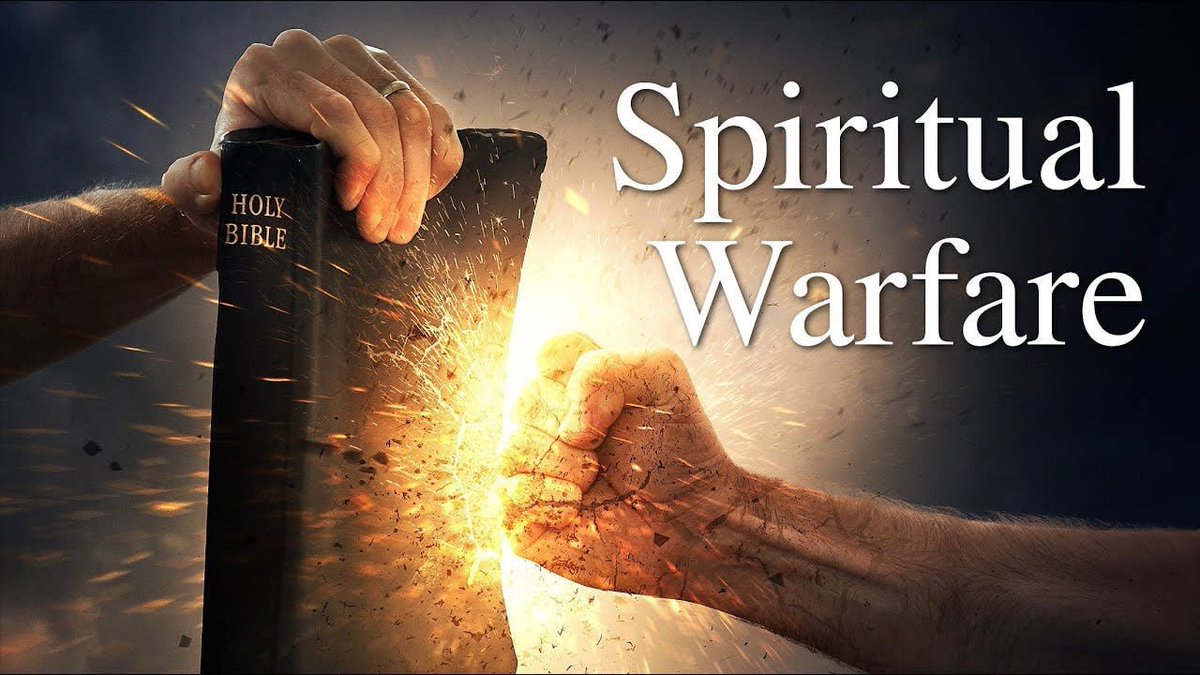
We arise today in the name of Jesus Christ, the Righteous Judge and Defender of the innocent. We declare that no weapon formed against us shall prosper, and every tongue rising in judgment we shall condemn—Isaiah 54 verse 17. We refuse to bow to demonic slanderers. God is our defense and shield. We decree the spirit of character assassination is uprooted by fire by force.
We invoke Luke 10 verse 19—Jesus gave us authority to trample serpents and scorpions. We confront every serpent poisoning our reputation and every scorpion stinging our name with false accusations. Every lying spirit misrepresenting us—fall into your own nets, and let your tongues cleave to the roof of your mouth.
We remind the enemy of Revelation 12 verse 10—the accuser has been cast down. We enforce that judgment. Every accusing voice, be silenced by the blood of Jesus. Every evil tongue wagging in secret, sowing discord, spreading lies—be silenced by fire. Proverbs 6 verse 16 to 19 says liars and those stirring conflict are abominable—their works shall be exposed and destroyed.
In the mighty name of Yeshua - Jesus Christ, amen!
12
20
71
905
Apr 19
Surveil this. 🍻 🤣
Apr 19

A 2-hour long deep dive into Freemasonry:
• The Ancient Roots Of Freemasonry
• Secret Societies & Their Purpose
• What Actually Happens Inside These Organizations
309
Apr 19
Your next decade.
Prepare accordingly.

218
Apr 14
Wake up.
23 May 2025

You must understand, the leading Bolsheviks who took over Russia were not Russians. They hated Russians. They hated Christians.
Driven by ethnic hatred they tortured and slaughtered millions of Russians without a shred of human remorse. It cannot be overstated. Bolshevism committed the greatest human slaughter of all time.
The fact that most of the world is ignorant and uncaring about this enormous crime is proof that the global media is in the hands of the perpetrators.
— Alexander Solzhenitsyn
1
4
356
Apr 14
The most controversial speech *against* Western Civilization at Harvard in 1978.
As a survivor of the Russian Gulags, they expected him to praise the West. Instead, he made a jarring accusation:
The West is a dying civilization. If it doesn't change its ways, it is doomed to collapse.
In fact, he said this has been the case for 500 years, when the West made a crucial mistake:
"How did the West decline from its triumphal march to its present debility?
...the mistake must be at the root, at the very foundation of thought in modern times. I refer to the prevailing Western view of the world which was born in the Renaissance…
I refer to humanism — the proclaimed autonomy of man from any higher force above him."
Solzhenitsyn said humanism made man autonomous from God, Truth, and objective morality.
If all morality is subjective, then man has nothing to live nor die for. Naturally, he loses his courage, embraces materialism, and grows effeminate to modern evils.
So, what is the solution?
A return to belief in a transcendental morality under God:
"If, as claimed by humanism, man were born only to be happy, he would not be born to die. Since his body is doomed to death, his task on earth evidently must be more spiritual…
The fulfillment of a permanent, earnest duty so that one’s life journey may become above all an experience of moral growth: to leave life a better human being than one started it."
All cultures live, or die, based on their respect of the True, Good, and Beautiful.
To save the West, Solzhenitsyn says start with beautifying your soul, for that is both how you live well, and begin to make civilization itself beautiful again.
- Alexander Solzhenitsyn
3
165
Apr 12
Why?

2
285