
Founded Truth Intelligence Consulting (TIC) in 2017—a U.S.-based firm specializing in evidence-based investigative interviewing, deception detection, and advanc
Joined January 2026
- Tweets 6
- Following 4
- Followers 2
- Likes 3
3 Photos and videos


Beyond the Hype: Why Voice Stress Technology
Can't Prove Deception
For decades, voice stress analysis (VSA) has been promoted in law enforcement and investigative
settings as a way to identify deception. The pitch is appealing: analyze a person's voice, detect
stress, and use that information to determine whether they are telling the truth.
I was recently reminded that this is not just a legacy issue. I spoke with a former FBI agent who told
me that, during a hiring process with a small police department in the DMV area, he was
administered a voice stress analyzer test. Frankly, I was surprised that this technology is still being
used in hiring, given the lack of scientific support for treating it as a reliable indicator of deception.
The problem is that stress and deception are not the same thing.
At best, VSA systems may detect certain signs of stress in speech. But there is no solid scientific
evidence that they can reliably determine whether someone is lying, or distinguish stress caused by
deception from stress caused by fear, anxiety, fatigue, anger, or other emotional and physical
factors.
That distinction matters.
What VSA is actually measuring
Commercial VSA tools are often marketed as technologies that analyze vocal patterns for signs of
stress that "may indicate deception." Vendors commonly claim that their systems detect subtle
frequency changes associated with lying.
But that claim goes beyond what the science supports.
The National Institute of Justice's report, Investigation and Evaluation of Voice Stress Analysis
Technology, reached a central conclusion: while the systems tested showed some ability to identify
stress in speech, deception detection was not proven.
The report also emphasized a basic but critical point: speech can change under many kinds of
stress, and there is no evidence that VSA can isolate a unique form of "deceptive stress."
What the NIJ evaluation found
• The systems showed some ability to recognize certain forms of stress in voice recordings.
• The claim that these systems can detect deception was not proven.
• Because there was no adequate dataset capturing genuine "deceptive stress," the researchers
could not demonstrate that VSA can distinguish stress caused by lying from stress caused by other
emotional or physical conditions.
In other words, the most generous conclusion is that VSA may assist in identifying whether speech
reflects higher or lower levels of stress. It did not demonstrate a scientifically valid ability to classify
Page 2
speech as truthful or deceptive.
That is a major problem if the technology is being presented - or relied upon - as a lie detector.
When the marketing outruns the evidence
Independent summaries of the NIJ's work, along with related research, point in the same direction:
voice stress tools have been marketed as deception-detection instruments without the empirical
foundation required for that role.
That gap between marketing claims and scientific support is not just a technical issue. It creates real
legal, ethical, and investigative risk. When a tool is treated as more accurate than the evidence
justifies, it can distort interviews, influence decisions, and create false confidence where caution
should exist.
If investigators, employers, or courts treat VSA results as proof of deception, they are assigning too
much weight to a measure that has only been shown to track stress - not lying.
What this means in practice
For law enforcement, attorneys, psychologists, and anyone working around forensic or
credibility-assessment tools, the takeaway is straightforward: voice stress technology belongs on
the stress side of the equation, not the deception side.
Treating VSA as a lie detector is not scientifically supported. And relying on it that way risks
undermining sound investigative judgment rather than strengthening it.
Jungyeon Amy Lim | Forensic Psychology, John Jay College of Criminal Justice
John Gervino | CEO, Truth Intelligence Consulting
Source: National Institute of Justice. (2002). Investigation and Evaluation of Voice Stress Analysis Technology:
Final Report (D. Haddad, S. Walter, R. Ratley, & M. Smith, NCJ 193832). U.S. Department of Justice.
ojp.gov/pdffiles1/nij/193832…
27
Designed for investigative professionals and executive leadership operating in high-stakes environments.
38
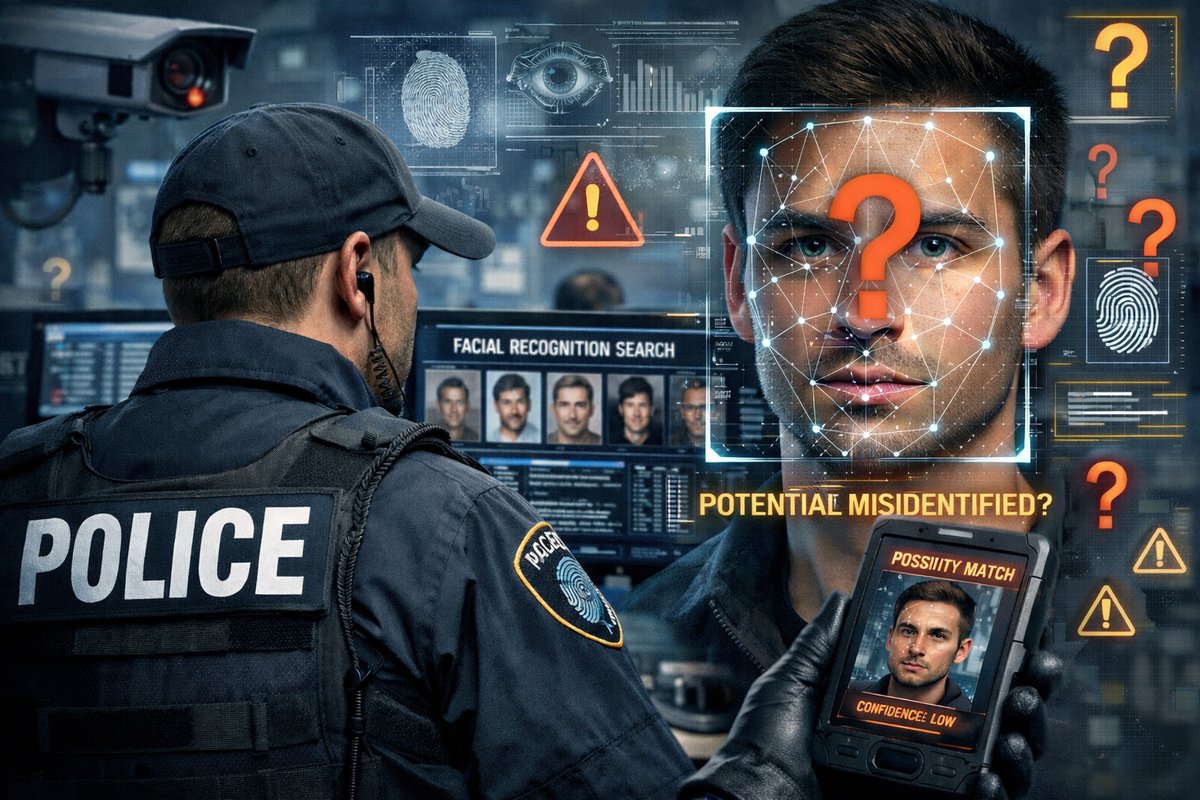
Facial recognition is now used by 2,000 law enforcement agencies.
But a wrong match sent an innocent man to jail — despite phone data placing him 12 miles away.
Technology should generate leads, not conclusions. Training matters.
#LawEnforcement #FacialRecognition #TruthIntelligence
1
54
Truth Intelligence is proud to announce we are now an Authorized Reseller Partner of Magnet Forensics.
Truth Intelligence instructs thousands of federal law enforcement professionals and vetted international partners, and Magnet Forensics is a trusted standard in our training and operational workflows—because Magnet is a recognized leader in digital forensics across government and the private sector.
What sets Magnet apart is their relentless drive to push the envelope of innovation, helping investigative teams keep pace with evolving devices, platforms, and data sources.
If your organization is evaluating or expanding digital forensics capability, we’d welcome the conversation.
— John Gervino
#TruthIntelligence #MagnetForensics #DigitalForensics #DigitalEvidence #Investigations #LawEnforcement #Government #PrivateSector @TruthIntell #Johngervino
Activate to view larger image,
51
PART 1: HUMAN TRAFFICKING – HIDDEN IN PLAIN SIGHT
Statistics show that human trafficking occurs in a variety of industries.
In 2021, there were 10,359 human trafficking situations and 16,554 likely victims1. Although when people hear human trafficking, they think of sex trafficking, that is not the only sector that human trafficking occurs. These victims are present in a variety of industries. Therefore, human trafficking takes many forms which include labor, sex, sex and labor1. Due to the wide range of human trafficking, it is important for individuals to understand different areas it occurs in and possible signs that someone is a victim or a trafficker.
Different Types of Human Trafficking:
The United States recognizes two primary types of human trafficking, labor trafficking and sex trafficking2.
Labor trafficking is also known as forced labor and the United States department of state reveals that there are three elements to this type of trafficking that establish it as a crime. The first element is known as the “acts” which is done once a “trafficker recruits, harbors, transports, provides, or obtains a person for labor or services”2. The second element is the “means” includes the use of force, fraud or coercion2. The third element is the “purpose” which is the trafficker’s goal to exploit a person to labor or services2.
Sex trafficking is when a trafficker uses force, fraud, or coercion to get another individual to engage in commercial sexual acts, this can include adults and minors2. The same three elements are also needed for this type of trafficking but are irrelevant in child sex trafficking2. The act is the same as labor tracking, but instead of obtaining an individual for labor, the individual engages in commercial sex. The means is the same, as the use of force, fraud, and coercion can be used. The purpose element involves a commercial sex act2.
Now that we have a basic understanding of the two primary types of human trafficking. Let’s examine the some of the different industries it occurs in and how to identify possible victims or traffickers using the data provided by the Blue Campaigns pocket cards.
Financial Sector: Human Trafficking3
There are some indicators that can help identify potential human trafficking victims. Some questions to consider are:
Does the individual not have control over their identification or money?
Does the individual defer to another person to speak or fill out paperwork for them, especially during financial conversations and transactions?
Does the individual receive money and immediately hand it over to someone?
There are some indictors to help identify potential traffickers. Some questions to consider are:
Does the individual provide a hotel or other business address as their home address?
Does the individual frequently send or receive funds via cryptocurrency to or from darknet markets?
Does the individual transact in several, small, even amounts, or just below the reporting limits?
It is important to remember that no single indicator is proof that human trafficking is occurring.
Domestic Service Industry: Labor Trafficking3
Some questions to consider that can aid in identifying potential victims:
Does the individual have untreated injuries or show signs of physical abuse?
Does the individual work in unsuitable conditions?
Does the individual lack control over personal possessions, including identification and work authorization?
Some questions to consider that can aid in identifying potential traffickers:
Does the individual not pay their workers, pay them very little, or deposit pay into an account the workers can’t access?
Does the individual provide safe household working conditions?
Does the individual use coercive or deceptive recruiting practices such as making false job promises?
Technology and Social Media: Sex Trafficking3
Some questions to consider that can aid in identifying potential victims:
Does the individual have multiple social media accounts under different names?
Does the individual appear isolated from family and friends?
Does the individual post sexually explicit photos under the guise of modeling or content creator?
Some questions to consider that can aid in identifying potential traffickers:
Does the individual control online users through the use of verbal threats, emotional abuse, and demeaning speech?
Does the individual use language or emojis depicting commercial sex?
Does the individual lure online users with attention and gifts?
Coming Up:
In future blogs, we will discuss the demographics of human trafficking, risk factors, and recruitment tactics.
42
LIAR, LIAR! PANTS ON FIRE!: SPOTTING TRUE DECEPTION;
Gaze aversion. Sweaty palms. Nervous speech. Grooming gestures. Are they always evidence of lies and deceit?
Many lay people, and even trained professionals, believe these non-verbal cues are tell-tale signs of deceit. Yet discerning whether someone is lying to you or not is an extraordinarily difficult task. A meta-analysis of more than 120 scientific studies reveal that behavioral differences between truth-tellers and liars are few, weak and unreliable. In fact, those who believe they are “expert lie detectors” (e.g., police officers, judges, prosecutors, immigration officers) achieve only about 54% accuracy (thus, not much better than flipping a coin at 50% chance).
Despite this mounting scientific evidence, behavioral cues are still heavily relied upon as indicators of truthfulness and deception within the law enforcement and intelligence communities. The gold standard of lie-detecting is the age-old polygraph. However, like micro-expressions, thermal imaging and voice stress analysis, the polygraph measures nonspecific, peripheral emotional/autonomic arousal that might or might not be associated with lying.
In contrast to these emotion-based approaches to deception detection, recent research has focused on the development of a cognition-based model to elicit cues to deception and truth. This approach leverages the fact that cognitive processes differ between liars and truth-tellers. One such cognition-based strategy is “inducing cognitive load” to increase cues to deception exhibited by liars. This strategy is effective because lying is quite a complex mental process that requires many more cognitive resources (i.e., working memory and attentional resources).
One way to increase cognitive load is to ask the subject to repeat their narrative in reverse order—that is, start with the last event and work backwards. This is difficult because memories are usually coded in a forward-order sequence of events. Another is asking unanticipated questions, which increases cognitive load because it disrupts the scripted responses liars rehearse in anticipation of being questioned. Lastly, one might ask a subject to maintain eye contact with the interviewer. This is difficult because people are inclined to look away in a conversation when trying to recall a memory.
In addition to these strategic questioning strategies, several veracity assessment methods have been developed that rely specifically on the content of a statement, such as the Forensic Statement Analysis (FSA) and Criteria-Based Content Analysis (CBCA). In general, these methods show that we should analyze one’s verbal content instead of solely relying on nonverbal behavior. The science increasingly points to a cognition-based model, as opposed to the traditional anxiety-based approach, to detecting deception (71% accuracy in truth and lie detection combined).
Unfortunately, the widespread belief still remains that attending to behavioral cues alone is sufficient.
LEARN MORE:
DePaulo, B. M., Lindsay, J. L., Malone, B. E., Muhlenbruck, L., Charlton, K., & Cooper, H. (2003). Cues to deception. Psychological Bulletin, 129, 74-118.
Elaad, E. (2015). Covert detection of deception. In P. A. Granhag, A. Vrij, & B. Verschuere (Eds.), Detecting deception: Current challenges and cognitive approaches (pp. 316 – 338). Wiley Blackwell: Chichester, West Sussex, UK.
Ganis, G. (2015). Deception detection using neuroimaging. In P. A. Granhag, A. Vrij, & B. Verschuere (Eds.), Detecting deception: Current challenges and cognitive approaches (pp. 106 – 121). Wiley Blackwell: Chichester, West Sussex, UK.
Vrij, A., Granhag, P. A., & Porter, S. (2010). Pitfalls and opportunities in nonverbal and verbal lie detection. Psychological Science in the Public Interest, 11, 89-121
47