
Joined November 2010
- Tweets 63,838
- Following 5,348
- Followers 2,420
- Likes 24,563
6,122 Photos and videos











Pinned Tweet

Jun 12
Who will you vote for in a UK GENERAL ELECTION? if other put it in the comments! RT for accurate results #GeneralElection #Polls
0%
Lib Dems
33%
Reform UK
67%
Restore Britain
0%
Labour
12 votes • Final results
3
4
257

UK is a police state

JUST IN: UK Government clarifies adults will still be able to use social media by verifying their identities with digital IDs, facial recognition, passports and credit cards.
2,803
4,821
33,700
1,506,518

The men convicted of the arsons are Ukrainian nationals (Roman Lavrynovych and Stanislav Carpiuc). Court evidence shows they were recruited and paid by a Russian-speaking Telegram handler "El Money." BBC investigation identifies him as Russian diplomat Evgeny Lyukshin and ties it to Russian proxy sabotage ops. Russia denies involvement. UK police publicly found no confirmed state-backed threat, though sources note private assessments differ. Both the Ukrainian executors and Russian direction are in the record.
1
1
31
Thats interesting.

The men convicted of the arsons are Ukrainian nationals (Roman Lavrynovych and Stanislav Carpiuc). Court evidence shows they were recruited and paid by a Russian-speaking Telegram handler "El Money." BBC investigation identifies him as Russian diplomat Evgeny Lyukshin and ties it to Russian proxy sabotage ops. Russia denies involvement. UK police publicly found no confirmed state-backed threat, though sources note private assessments differ. Both the Ukrainian executors and Russian direction are in the record.
4
Folk sayin its Ukranians though.. @grok - Tell us, whats true here?

Russia was behind arson attacks targeting UK PM Keir Starmer, BBC reveals
bbc.in/3Q3lOy1
1
16
Chris 🔯 🇬🇧 🇬🇧 🔯 retweeted

Ukrainian guy firebombs Starmer and Russia gets blamed? Lmao .
5
12
219
3,213
Lib Dems
0%
Reform UK
33.3%
Restore Britain
66.7%
Labour
0%
Jun 12

Who will you vote for in a UK GENERAL ELECTION? if other put it in the comments! RT for accurate results #GeneralElection #Polls
2
Chris 🔯 🇬🇧 🇬🇧 🔯 retweeted

27 Jun 2024
This is interesting. The young woman Aaron Bastani interviewed said that a lot of 15 to 16 year olds in Chichester are talking about Reform UK than Labour.
I think Labour may u-turn on votes at 16. 😂
346
1,817
9,599
1,214,713
Chris 🔯 🇬🇧 🇬🇧 🔯 retweeted

🚨 POLL: Do you support the UK's social media ban for under-16s?
20%
Yes
70%
No
9%
Not sure
1,896 votes • 20 hours
207
161
317
63,083
AI just wrote a Wikipedia page about my fictional presidency as Chris Boardman. 47% approval. Try President Simulator: fantasypresidentcareer.com
''Chris Boardman
Christopher James Boardman II (born May 12, 1996) was the 43rd President of the United States, serving from January 2001 to October 2003. A Republican and the grandson of former President Chris Boardman (37th President, 1949–1951), he assumed office at the age of 25, making him the youngest individual to hold the presidency in U.S. history. Boardman's presidency was marked by aggressive domestic policy shifts, a controversial foreign policy agenda, and a dramatic decline in political stability, culminating in his removal from office in October 2003.
Early Life and Career
Christopher James Boardman II was born in Las Vegas, Nevada, in 1996 to a devout Muslim family with deep political roots. His grandfather, Chris Boardman, served as the 37th President of the United States from 1949 to 1951, known for his uncompromising stance on anti-communism, faith-based governance, and strong-handed leadership. Boardman was privately tutored in Islamic jurisprudence and American constitutional law, instilling in him a worldview that blended religious devotion with political ambition. His mother served as a de facto chief advisor and guardian throughout his presidency, shaping his policy decisions and public image.
Boardman's political career began as a symbolic write-in candidate in the 2000 Republican primaries under the banner "Boardmanism Lives." Initially dismissed as a protest movement, his campaign gained unexpected traction, fueled by nostalgia for his grandfather's legacy and widespread frustration with the political establishment. Despite his lack of electoral experience, Boardman's grassroots appeal and unapologetic rhetoric propelled him to victory in the general election, securing a landslide mandate.
Presidency
Boardman's presidency was defined by a series of executive actions, legislative battles, and foreign policy initiatives that polarized the nation. His administration pursued an agenda centered on religious governance, economic nationalism, and military assertiveness, often clashing with Congress, the judiciary, and federal agencies. His policies were frequently narrowed or blocked by the Supreme Court and Congress, leading to a dramatic erosion of political stability.
Domestic Policy
Boardman's domestic agenda prioritized the rollback of federal bureaucracy, the promotion of faith-based governance, and the revival of domestic manufacturing. His early executive orders included the return of education governance to states under segregated "separate but equal" standards, the expansion of federal lands for energy and mining production, and the repeal of the Defense of Marriage Act (DOMA). These actions drew both praise from conservative and religious-right constituencies and condemnation from civil rights advocates and environmental groups.
In 2001, Boardman signed the Secure Rural Schools and Community Self-Determination Act, a bipartisan measure aimed at addressing rural economic challenges. He also signed the Financial Services Regulatory Relief Act of 2001 and the Small Business Growth and Regulatory Relief Act, which became law without his signature. However, his veto of the Northeast Corridor Rail Improvement Act of 2001 highlighted his opposition to federal infrastructure spending in favor of state-led initiatives.
Boardman's economic policies focused on deregulation, energy dominance, and reindustrialization. He established the Energy Dominance War Room to accelerate oil and gas production and exports, withdrew the U.S. from the Kyoto Protocol, and signed executive orders opening millions of acres of federal lands to energy and mining expansion. His administration also pursued aggressive anti-inflation measures, including freezing non-defense discretionary spending and capping gasoline prices at $1.80 per gallon. These policies were frequently narrowed or blocked by the Supreme Court and Congress.
Boardman's social policies were equally contentious. He signed executive orders expanding workplace protections for LGBTQ federal contractors and affirming religious liberty and parental rights in schools. However, his attempts to repeal DOMA and the "Don't Ask, Don't Tell" policy were struck down by the Supreme Court. His administration also launched a closed federal investigation into the systemic sexual abuse crisis within the Catholic Church and established a task force on aerial phenomena intertwined with theological inquiry, though the latter was blocked by federal agencies.
Foreign Policy and Military Deployments
Boardman's foreign policy was characterized by an uncompromising America First stance, a focus on crushing perceived threats to the Republic, and a willingness to deploy military force unilaterally. His administration inherited the War on Terror - Afghanistan Invasion, which began in September 2001 following the deadliest terrorist attack in U.S. history. Boardman declared the event an act of war and ordered retaliatory military air strikes within hours, initiating a campaign that would span over two years and result in 4,902 U.S. casualties.
The Afghanistan campaign evolved from a strike campaign to a counterinsurgency effort, with Boardman authorizing precision missile strikes, drone strikes, and ground operations to suppress dispersed Al-Qaeda cells. His administration also initiated the Baltic Deterrent Force to establish a permanent NATO presence in the region, launched the Capitol Bioweapon Response following a biological attack, and deployed troops to support climate disaster evacuations. In 2003, Boardman declared the major combat phase of the War on Terror in Afghanistan concluded and outlined a phased coalition withdrawal, though counterinsurgency operations continued.
Boardman's administration also engaged in the Colombia Counter-Narco & Counter-Terrorism Support mission, deploying 1,680 troops to stabilize Colombia and deny safe haven to terrorist organizations. Additionally, his invocation of NATO's Article 5 following the Paris embassy attack led to the NATO Article 5 - Iran Deterrence deployment, a limited advisory mission aimed at deterring further Iranian aggression.
Boardman's military deployments were frequently controversial, with high casualty rates and limited public support. His handling of the Afghanistan campaign, in particular, drew criticism for its human cost and lack of clear objectives. His administration's willingness to deploy military force unilaterally and its disregard for international norms also strained relations with allies and provoked condemnation from the international community.
Controversies and Scandals
Boardman's presidency was marked by a series of controversies and scandals, including allegations of military record exaggeration, cover-ups, and covert programs. His administration faced scrutiny over its handling of the Plame leak investigation, with Boardman asserting executive privilege over all White House communications and refusing to comply with congressional subpoenas. He also ordered an investigation into leaked documents and condemned major press outlets for what he described as "election-year sabotage."
Boardman's personnel decisions were equally contentious. He dismissed senior officials, including CIA Director George Tenet and VA Secretary Togo West, amid accountability measures for failures in Afghanistan wounded care. He also appointed former President Barack Obama to his cabinet, a move that drew both praise and condemnation. His administration's handling of the anthrax attacks and the disappearance of a U.S. tactical nuclear weapon in Poland further eroded public trust.
Boardman's presidency was also marked by legal challenges and constitutional questions. His executive orders were frequently narrowed or struck down by the Supreme Court, and his policies were blocked by Congress. His administration's disregard for judicial and legislative oversight led to a dramatic decline in political stability, with government stability dropping to 10% and party stability to 12% by the end of his term.
Removal from Office
Boardman's presidency ended in October 2003, when he was removed from office following a dramatic decline in political stability and a loss of support from the executive branch. His removal was the result of a combination of factors, including his uncompromising leadership style, his disregard for institutional norms, and his failure to secure legislative and judicial support for his agenda. His administration's handling of the War on Terror, in particular, drew widespread criticism and eroded public trust.
Boardman's removal from office marked the end of an unprecedented presidency, one that challenged the norms of American governance and left a lasting impact on the nation's political landscape. His legacy remains a subject of debate, with supporters praising his unapologetic stance on faith, sovereignty, and economic nationalism, and critics condemning his disregard for institutional norms and the human cost of his military campaigns.
Legacy
Boardman's presidency was a period of dramatic upheaval in American politics. His uncompromising leadership style, his disregard for institutional norms, and his willingness to deploy military force unilaterally challenged the foundations of American governance. His policies on faith-based governance, economic nationalism, and military assertiveness left a lasting impact on the nation's political landscape, shaping the debates that continue to define American politics today.
Boardman's presidency also highlighted the challenges of governance in an era of heightened polarization and institutional dysfunction. His removal from office underscored the fragility of American democracy and the importance of institutional checks and balances in preserving the nation's political stability. His legacy remains a subject of debate, with supporters praising his unapologetic stance on faith, sovereignty, and economic nationalism, and critics condemning his disregard for institutional norms and the human cost of his military campaigns.
See Also
Boardman's presidency intersected with several key events and figures in American history. Notable figures and events related to his presidency include:
The War on Terror - Afghanistan Invasion
The Energy Dominance War Room
The Plame leak investigation
The Capitol Bioweapon Response
The Baltic Deterrent Force
The Colombia Counter-Narco & Counter-Terrorism Support mission
The NATO Article 5 - Iran Deterrence deployment
The Climate Disaster Evacuation Support mission
Boardman's presidency also coincided with several significant cultural and political movements, including the rise of the Religious Right, the decline of institutional trust, and the growing influence of social media on political discourse. His administration's handling of these movements and their intersection with his policies remain a subject of ongoing debate and analysis.
'' This was the most unhinged ever (this was roleplay, i really played into it like some crazy git)
2
71
I immediately lost it when i appointed barack obama as my sec of state lol!
6
Chris 🔯 🇬🇧 🇬🇧 🔯 retweeted

Jun 14
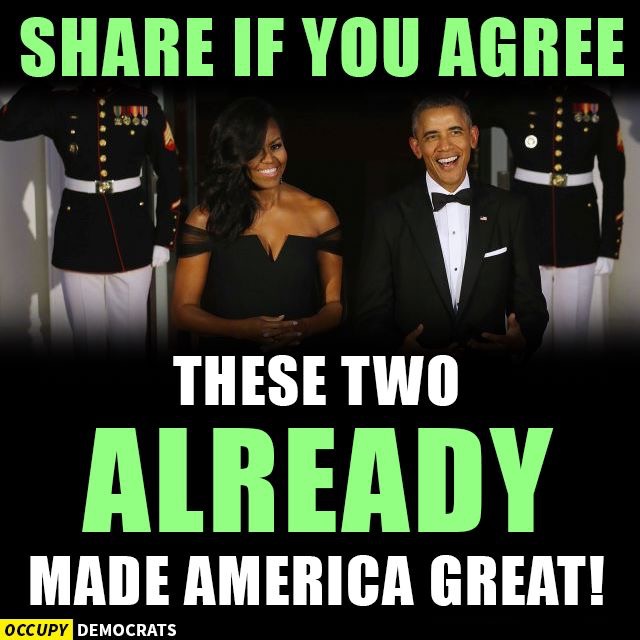
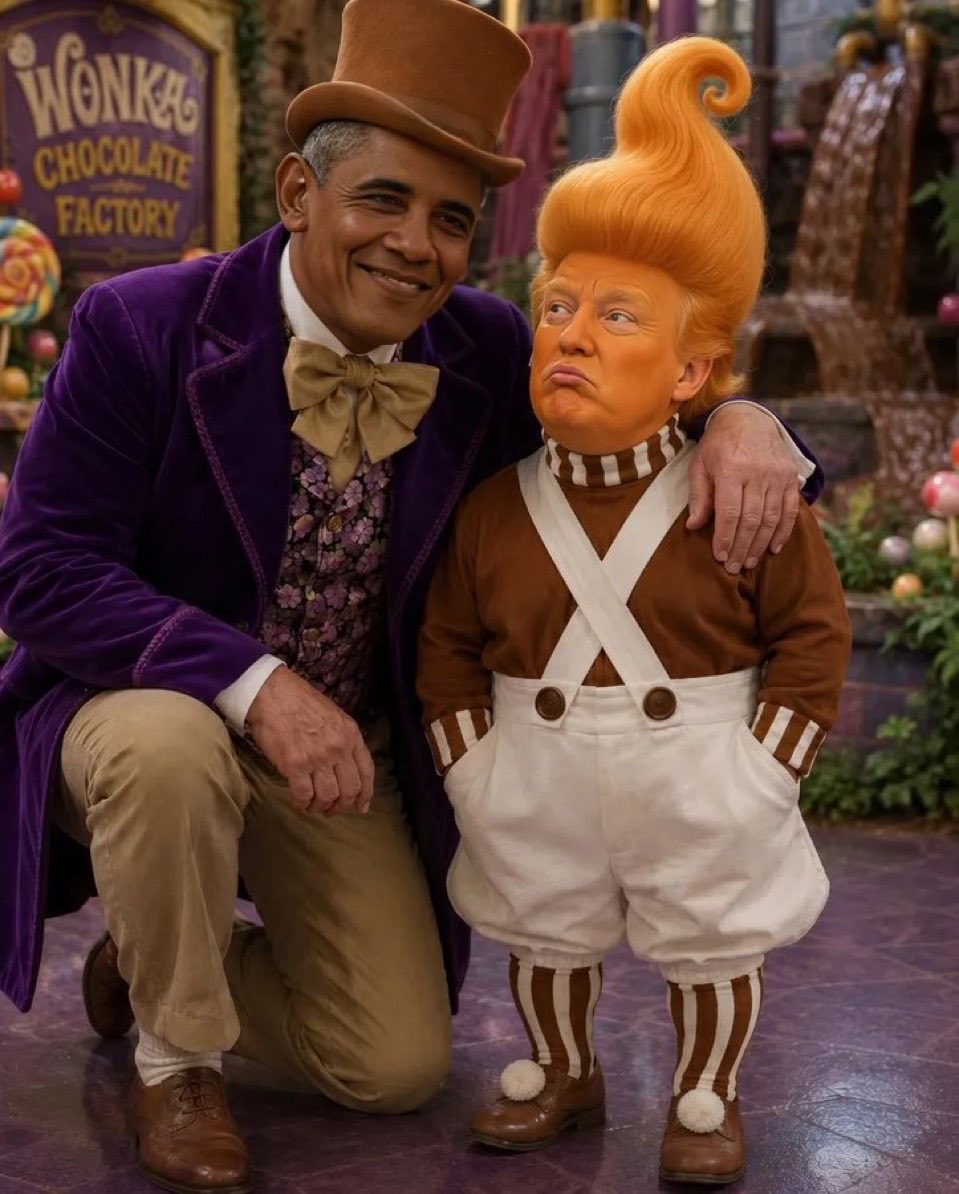
Just bring back Obama to renegotiate this "bs deal". Obama alone negotiated an awesome deal himself, no minions involved and I'm certain HE could do it again.
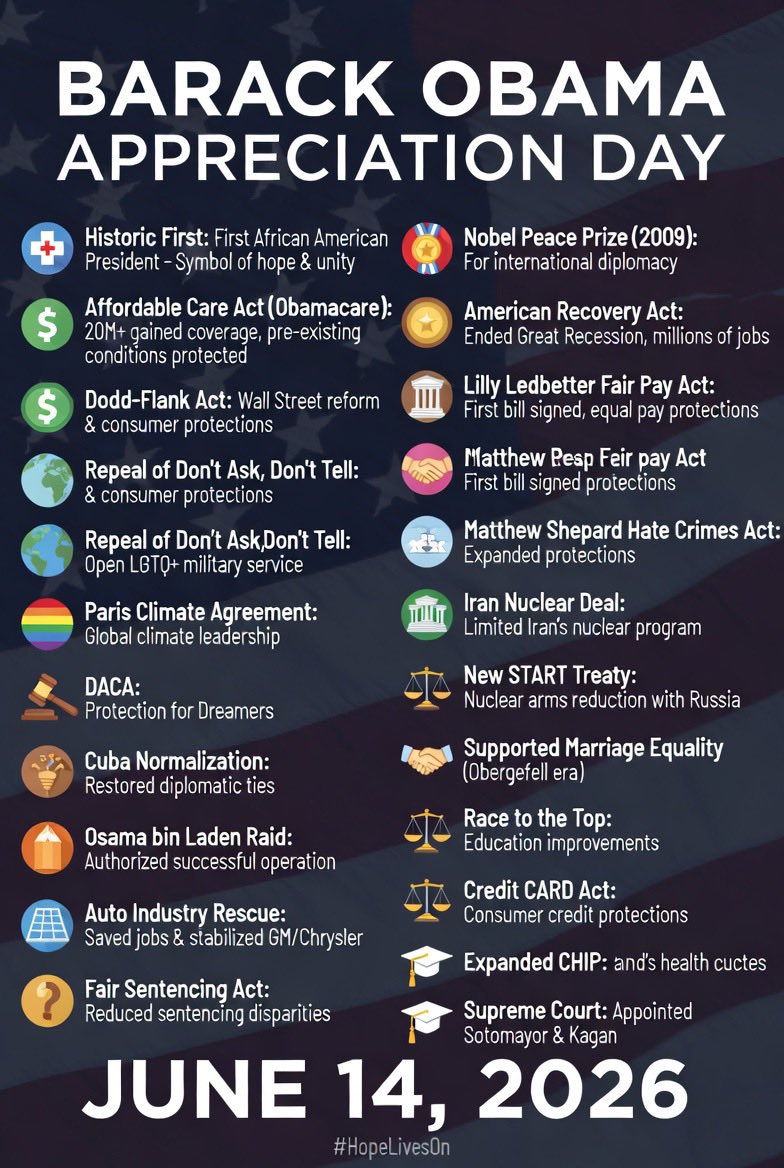
Obama for 2028 our very loved 43rd, 44th and to be the 48th president of the United States
2
1
9
Chris 🔯 🇬🇧 🇬🇧 🔯 retweeted

So the kids hate it.
Adults see right through it.
Who is this bill serving exactly?
363
590
4,092
78,965
Chris 🔯 🇬🇧 🇬🇧 🔯 retweeted

Jun 14
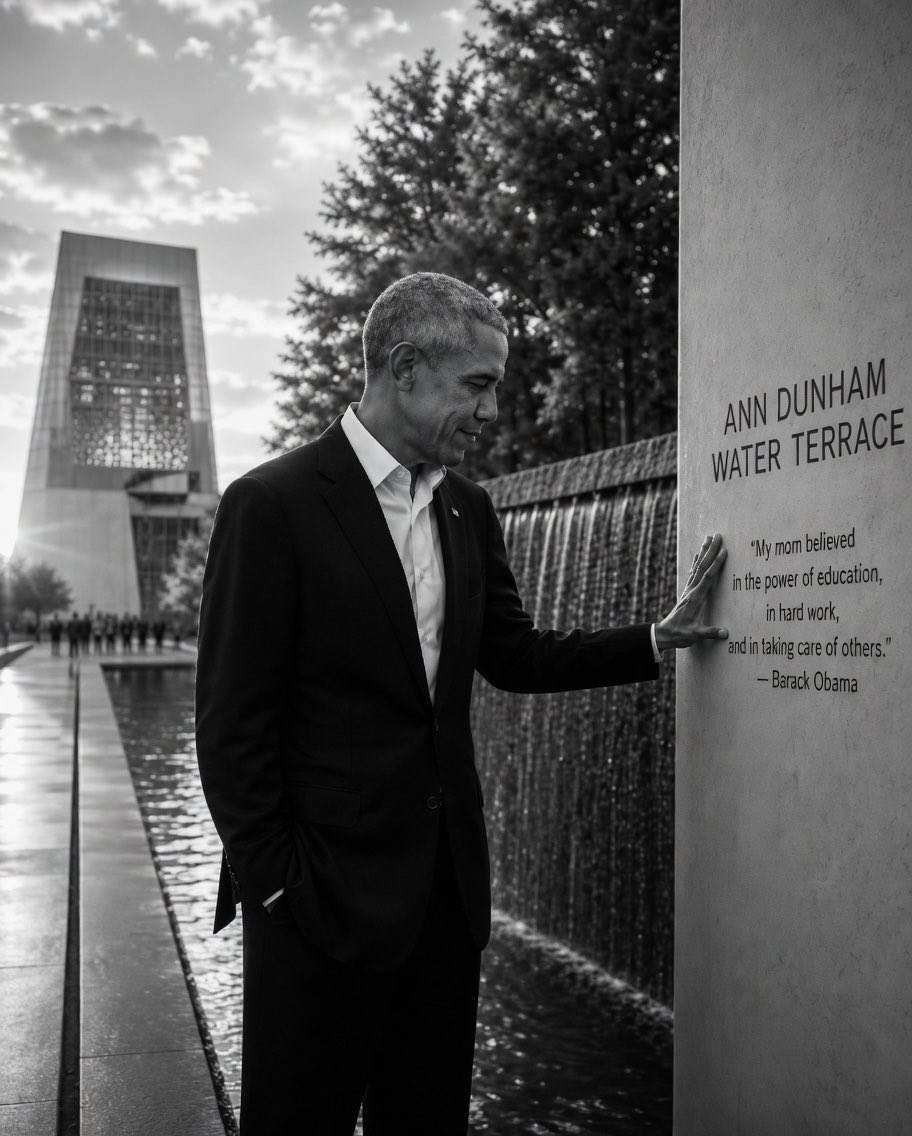
I love him and his family with my whole heart🥹
6
27
302
Obama did more than any other president. If trump repeals term limits, Obama should run. America needs it.

1
9


Chris 🔯 🇬🇧 🇬🇧 🔯 retweeted

23h
"Obama 2028 comeback? The ultimate political what-if just got real.
Would YOU support him for President?
YES or NO

68
36
34
1,196
Chris 🔯 🇬🇧 🇬🇧 🔯 retweeted

Jun 14
A 14-year-old girl was gang-raped multiple times by 9 boys in Kortrijk, Belgium. The juvenile court found them guilty…but none of them will go to jail. The main boy got conditional release and a relationships program. The rest received 30 hours of community service. Once again, they prioritized boys’ futures when it destroys a girl’s.
329
4,885
26,998
1,187,497