Snap ➜ Track ➜ Improve 🥗 AI food recognition that counts calories & keeps your nutrition on point.
Joined November 2025
- Tweets 43
- Following 3
- Followers 19
- Likes 359
3 Photos and videos




Apr 17
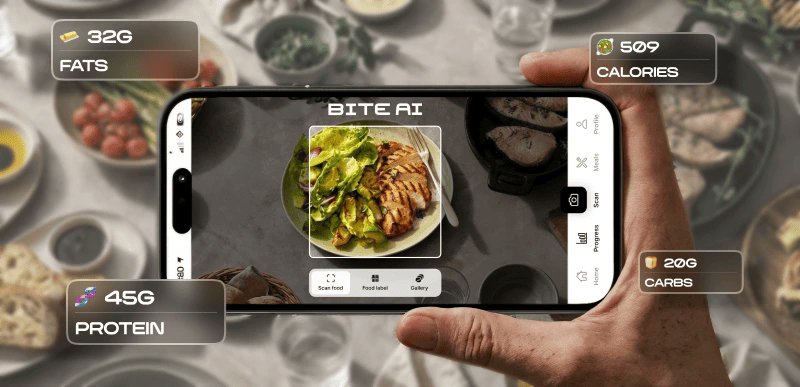
We think the camera is the most natural interface for food.
People already use it daily.
The missing piece wasn’t behavior.
It was understanding.
6
29
Apr 15
Accuracy matters.
But not at the cost of usability.
A slightly imperfect system people actually use
beats a perfect one they abandon.
5
28
Apr 13
Food isn’t structured.
It’s mixed, layered, contextual.
Trying to force that into rigid inputs
is where most tracking breaks.
5
22
Apr 10
The moment that matters is right before you eat.
Not when you’re reviewing charts later.
So we design for that moment first.
Everything else is secondary.
1
5
46
Apr 7
People already take photos of their food.
The behavior exists.
The opportunity is turning that moment
into something useful without adding effort.
5
20
Apr 5
Most users drop off within the first 2–3 weeks of tracking.
Not because the goal is hard.
Because the interface turns every meal
into a small task.
Small tasks don’t scale across a full day.
4
16
Apr 2
Research shows people underestimate calorie intake by 20–50%.
Not because they don’t care.
Because humans estimate visually, not numerically.
So we started with perception, not grams.
4
22
Bite AI retweeted

Mar 30
Accuracy without usability is a vanity metric.
98% calorie data taking 5 mins to log is useless.
We optimize for few-seconds interactions.
1
14
47
Bite AI retweeted
Mar 24
Hot Take
You shouldn’t have to translate your plate into data.
The system should understand it directly.
1
1
8
139
Mar 30
Portion size is the real unsolved problem in nutrition tracking.
A database doesn't know your plate.
We see your food. Precision comes from context.
5
19
Mar 29
If your app works best when the user is calm, focused, and alone…
it’s not built for real eating behavior.
3
14
Mar 27
The camera is the new input for health data.
AI sees your food, understands it, and gives you answers.
4
18
Bite AI retweeted
Mar 26
a perfect start to the day for all fitness enthusiasts.
4
5
24
405
Mar 25
Instead of asking users to be precise,
we’re asking:
“How close can we get without asking anything?”
3
18
Bite AI retweeted
Mar 23
Hot Take
Calorie tracking apps didn’t fail.
They succeeded at one thing:
Convincing millions of people
that friction is discipline.
1
8
38
Mar 19
Studies show people underestimate calories by 20–50%.
Not stupidity.
Visual bias.
We don’t see grams.
We see portions.
Any product that starts with grams is already misaligned with reality.
3
20
Mar 16
Health data should reduce friction, not add dashboards.
The immediate shift is simpler: making basic health management invisible.
Logging food currently demands discipline and manual input. We believe AI's first role is to eliminate this burden.
The camera becomes the input.
1
4
17
Mar 15
The average person eats 3–4 meals/day.
Manually logging them takes:
• 30–60 seconds per meal
• ~4 minutes/day
• 24 hours per year
That’s an entire day spent logging food.
With Bite AI:
> Snap food
> AI detects macros
> Track instantly
5
25