
Our mission is to accelerate superintelligence to drive real economic progress.
Joined September 2018
- Tweets 9,913
- Following 2,286
- Followers 16,259
- Likes 9,287
2,153 Photos and videos









Turing retweeted

Jun 9
Breaking into great tech jobs shouldn't require a perfect resume, or surviving six rounds of interviews.
Turing is changing that.
One assessment. No experience gatekeeping. No recruiter small talk. No application black holes.
Qualify and unlock access to remote software opportunities with Frontier Labs.
US-based students and professionals:
Take the Turing Hiring Challenge 2026 and earn $50/$250 per project.
Let your skills speak for themselves. Link below.
1
5
13
17,260
Turing retweeted
Jun 9
Most annotation projects describe what's in an image.
This one required evaluators to plan a 15-shot advertising arc, specify camera motion for every shot, write 12 voice-over lines per storyboard grounded strictly in real product inputs, and validate outputs against live video generation models.
7,500 shots. 500 storyboards. 90% QA pass rate.
Full casestudy below:
1
5
11
4,851
Jun 11
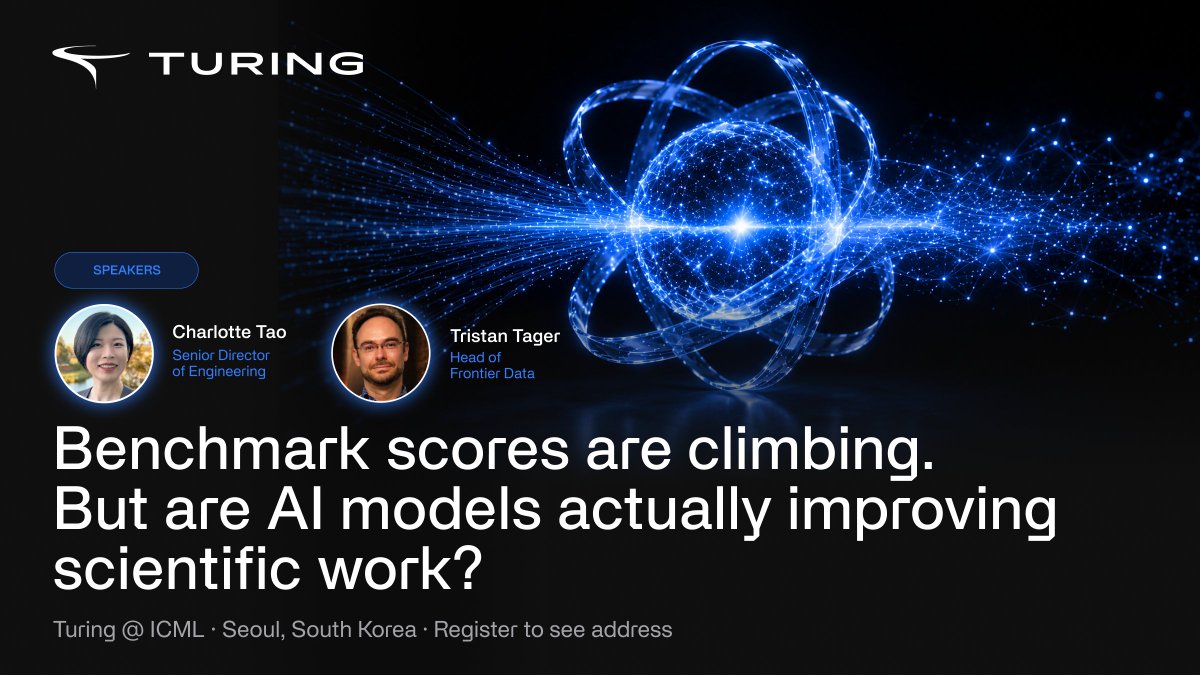
Benchmarks are hitting record scores.
Scientists are still waiting for models that help them finish the actual work.
Turing's Charlotte Tao and Tristan Tager will address that gap at the @ICMLconf in Seoul with a new framework for evaluating frontier AI on real scientific workflows, not just auto-gradable subtasks.
Catch their talk: Advancing Frontier Scientific Capabilities, Today and Tomorrow.
ICML 2026, Seoul, July 6-11.
4
9
1,347
Jun 11
Most AI benchmarks focus on text.
The real world runs on tables.
Financial statements, regulatory filings, research papers, healthcare records, and enterprise reports all contain critical information embedded in structured data. Yet table reasoning remains one of the most challenging capabilities for modern AI systems.
To help advance this frontier, @Turingcom partnered on a project to build more than 70,000 table reasoning Q&A pairs from real-world documents for AI training.
The challenge was not simply extracting information.
Models must learn to:
-Compare values across rows and columns
-Perform multi-step calculations
-Connect information across tables and surrounding text
-Interpret complex document structures
-Generate accurate answers grounded in evidence
As AI adoption accelerates across industries, the quality of training data is becoming a key differentiator.
Better models require datasets that reflect how information exists in production environments, not just in simplified benchmarks.
This project highlights an important reality: advancing AI is not only about larger models. It is also about building the high-quality datasets that teach those models how to reason. At Turing, this is our focus.
Read the full case study below:
1
4
9
2,234
Jun 11
4
7
183
Jun 10
ICML 2026 is four weeks out and Turing will be on the ground in Seoul as a Diamond Sponsor.
Frontier research. Enterprise AI.
A few conversations worth having.
You will find us in booth #8406 and we have a few other surprises. Stay tuned! #ICML2026
4
16
3,643
Turing retweeted

May 12
anyone going to @icmlconf let’s get in touch!
will be there with the @turingcom team chatting RL, coding agents, GDPval and physical AI 🖤
1
3
8
484
Jun 9
Breaking into great tech jobs shouldn't require a perfect resume, or surviving six rounds of interviews.
Turing is changing that.
One assessment. No experience gatekeeping. No recruiter small talk. No application black holes.
Qualify and unlock access to remote software opportunities with Frontier Labs.
US-based students and professionals:
Take the Turing Hiring Challenge 2026 and earn $50/$250 per project.
Let your skills speak for themselves. Link below.
1
5
13
17,260
Jun 9
Most annotation projects describe what's in an image.
This one required evaluators to plan a 15-shot advertising arc, specify camera motion for every shot, write 12 voice-over lines per storyboard grounded strictly in real product inputs, and validate outputs against live video generation models.
7,500 shots. 500 storyboards. 90% QA pass rate.
Full casestudy below:
1
5
11
4,851
Turing retweeted
Jun 2
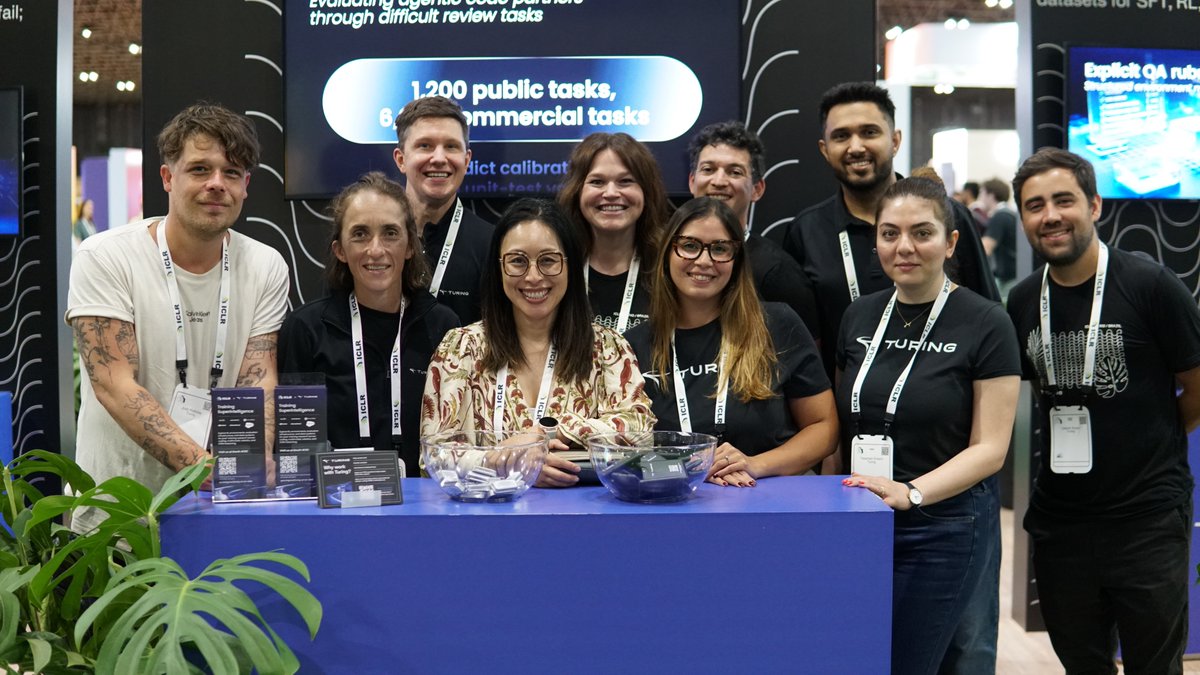
The energy at ICLR in Rio was incredible!
From researchers pushing the boundaries of AI to conversations about what's coming next, every interaction reminded us why this community matters.
Next stop: @ICMLConf in Seoul.🇰🇷
We're excited to keep the conversation going.
See you there!
6
10
35,199
Jun 8
Turing is a Diamond Sponsor at ICML 2026 in Seoul, Korea, July 6-11.
We train the world's most advanced foundation models and build enterprise AI that actually ships. We are also hiring researchers who want to work on frontier model capabilities in reasoning, coding, and agentic AI.
Whether you want to use it or build it, find us at COEX.
The problems are hard. The scale is real.
4
13
17,602
Turing retweeted

Jun 8
Enjoyed joining Icons last week to discuss startups, AI, and the importance of following market signals over assumptions.
We talked about lessons from my entrepreneurial journey, @Turingcom's growth, and why staying curious and adaptable is essential in a world where technology is evolving faster than ever.
Thanks to the @sv_icons team for the great conversation.
Jun 5

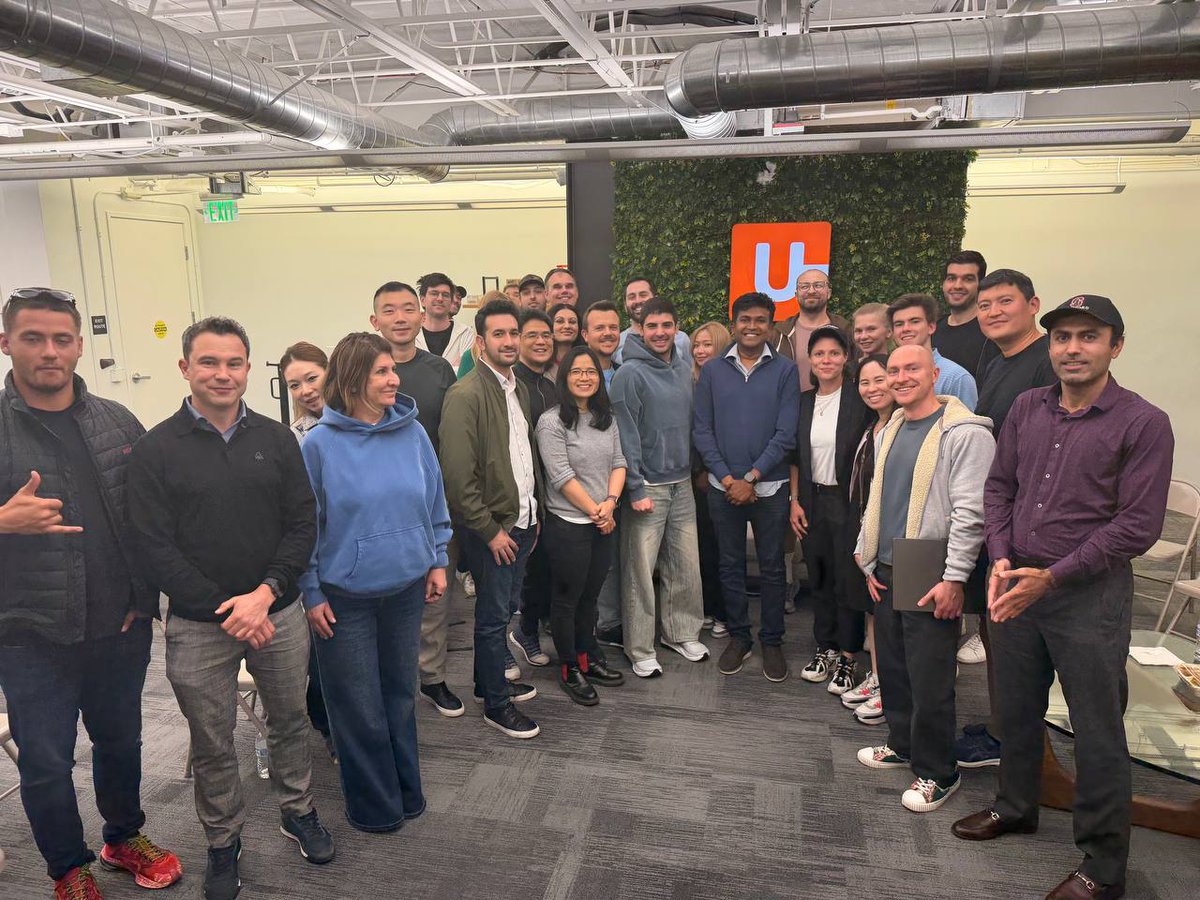
Last week, we had a chance to host @jonsid, founder of @turingcom for @sv_icons.
When you talk to Jonathan, it feels like he processes everything through a purely factual lens of causes and outcomes. Most of us draw takeaways through the filter of our own experiences. What Jonathan does differently is strip away the bias and analyze events almost from a machine-learning perspective. One of the most fascinating and insightful conversations we've had at Icons.
Here are a few takeaways:
• What was refreshing to hear is that Jonathan isn't the stereotypical Zuckerberg-style founder who succeeded on the first try. His first startup didn't work out the way he intended. Right after Stanford CS, Jonathan started a company in Silicon Valley and spent seven years building it before reflecting on what went wrong. The answer wasn't Jonathan. It was the market. He was attached to an idea that simply didn't have a large enough market. He was stubborn. He believed it could be huge. But that's not what the market demanded.
• In situations like that, Jonathan suggests being less stubborn. Give yourself the freedom to think differently. Go talk to 100 ICPs and verify whether they actually care about the problem you're trying to solve. If the answer is yes, go solve it. If the answer is no, pivot away. Not just pivot slightly, but jump away from what you had before - teleport. All your existing collateral can become a curse when you're trying to find a truly great startup idea.
• But what about insights? Didn't we learn at Stanford that we should stick with an "insight," following Andy Rachleff's Product-Market Fit framework? Jonathan's view is: challenge your insight. Most insights only exist within a specific time horizon. Imagine having a brilliant insight around automation before 2023. Then ChatGPT arrives. Do you still hold on to that insight? Probably not. Humble yourself. Your insight may no longer be true. Don't become attached to the dream.
• Okay, you've pivoted and your old insight is no longer valid. What's next? Go all in. Jump into the new thing that excites you most. Don't underestimate your ability to develop new insights. If you're smart and curious, you'll go deep and find them again, but this time inside a market that's actually growing fast enough to matter.
• When Jonathan started Turing, OpenAI called and asked how many people he could dedicate to expert-skill labeling. He wanted to say an even bigger number because the demand was so overwhelming. The market signal was impossible to ignore. In just a few years, Turing grew to multi-hundred million ARR. Today, it serves many of the leading AI labs and also helps enterprises adopt AI by connecting them with the best solutions available.
• Is the opportunity around data labeling limited? Eventually, yes. But not anytime soon. Jonathan's view is that we're still decades away from fully automating the process. At the same time, Turing has built a second business that leverages the latest AI models and innovations to help enterprises deploy AI directly into their operations.
• How would Jonathan screen for startup ideas? He would look for highly fragmented markets with mostly analog competitors. Real estate is one example: fragmented, less technology-driven, and deeply connected to the physical world.
• Another way to think about opportunities is to become an input to AI companies. What will they need to reach the next level? It could be data. It could be infrastructure. It could be something entirely different.
• Jonathan believes founders need to stay several years ahead of competitors. How do you get ahead? Reading books isn't enough. You need high-variance learning so you don't get trapped in a local minimum. That means constantly meeting new people, exposing yourself to new ideas, and learning from what others have built, especially in Silicon Valley, where the density of ambitious and talented people remains incredibly high. Thanks Jonathan Siddharth for phenomenal evening.
Appreciate @AlmaImmigration @Aizada, @UofBeta and Signal for supporting Icons.
2
4
13
2,467
Turing retweeted

Jun 5
Last week, we had a chance to host @jonsid, founder of @turingcom for @sv_icons.
When you talk to Jonathan, it feels like he processes everything through a purely factual lens of causes and outcomes. Most of us draw takeaways through the filter of our own experiences. What Jonathan does differently is strip away the bias and analyze events almost from a machine-learning perspective. One of the most fascinating and insightful conversations we've had at Icons.
Here are a few takeaways:
• What was refreshing to hear is that Jonathan isn't the stereotypical Zuckerberg-style founder who succeeded on the first try. His first startup didn't work out the way he intended. Right after Stanford CS, Jonathan started a company in Silicon Valley and spent seven years building it before reflecting on what went wrong. The answer wasn't Jonathan. It was the market. He was attached to an idea that simply didn't have a large enough market. He was stubborn. He believed it could be huge. But that's not what the market demanded.
• In situations like that, Jonathan suggests being less stubborn. Give yourself the freedom to think differently. Go talk to 100 ICPs and verify whether they actually care about the problem you're trying to solve. If the answer is yes, go solve it. If the answer is no, pivot away. Not just pivot slightly, but jump away from what you had before - teleport. All your existing collateral can become a curse when you're trying to find a truly great startup idea.
• But what about insights? Didn't we learn at Stanford that we should stick with an "insight," following Andy Rachleff's Product-Market Fit framework? Jonathan's view is: challenge your insight. Most insights only exist within a specific time horizon. Imagine having a brilliant insight around automation before 2023. Then ChatGPT arrives. Do you still hold on to that insight? Probably not. Humble yourself. Your insight may no longer be true. Don't become attached to the dream.
• Okay, you've pivoted and your old insight is no longer valid. What's next? Go all in. Jump into the new thing that excites you most. Don't underestimate your ability to develop new insights. If you're smart and curious, you'll go deep and find them again, but this time inside a market that's actually growing fast enough to matter.
• When Jonathan started Turing, OpenAI called and asked how many people he could dedicate to expert-skill labeling. He wanted to say an even bigger number because the demand was so overwhelming. The market signal was impossible to ignore. In just a few years, Turing grew to multi-hundred million ARR. Today, it serves many of the leading AI labs and also helps enterprises adopt AI by connecting them with the best solutions available.
• Is the opportunity around data labeling limited? Eventually, yes. But not anytime soon. Jonathan's view is that we're still decades away from fully automating the process. At the same time, Turing has built a second business that leverages the latest AI models and innovations to help enterprises deploy AI directly into their operations.
• How would Jonathan screen for startup ideas? He would look for highly fragmented markets with mostly analog competitors. Real estate is one example: fragmented, less technology-driven, and deeply connected to the physical world.
• Another way to think about opportunities is to become an input to AI companies. What will they need to reach the next level? It could be data. It could be infrastructure. It could be something entirely different.
• Jonathan believes founders need to stay several years ahead of competitors. How do you get ahead? Reading books isn't enough. You need high-variance learning so you don't get trapped in a local minimum. That means constantly meeting new people, exposing yourself to new ideas, and learning from what others have built, especially in Silicon Valley, where the density of ambitious and talented people remains incredibly high. Thanks Jonathan Siddharth for phenomenal evening.
Appreciate @AlmaImmigration @Aizada, @UofBeta and Signal for supporting Icons.
2
3
15
2,005
Jun 5
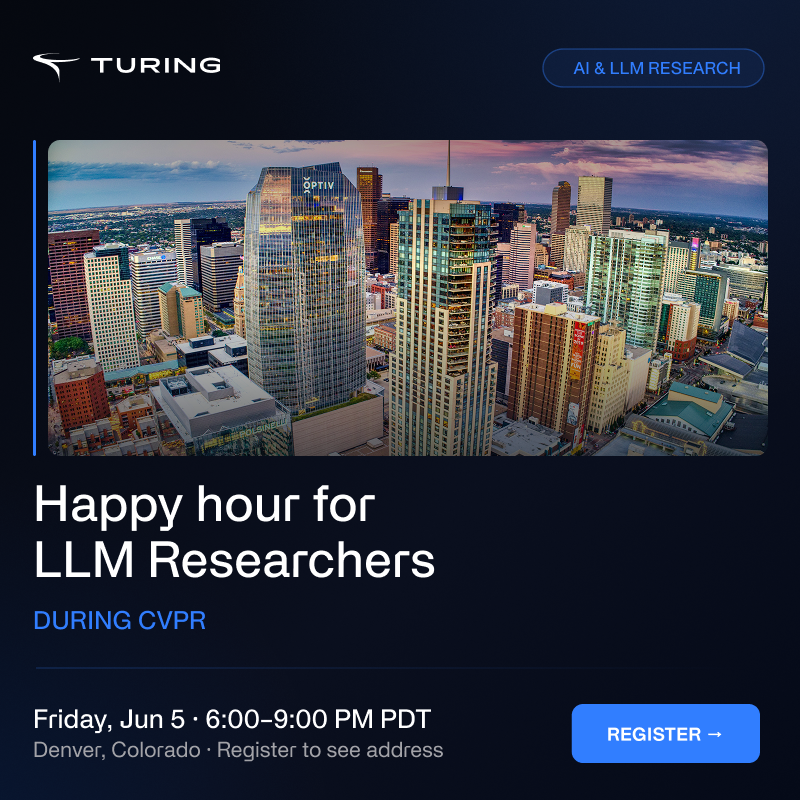
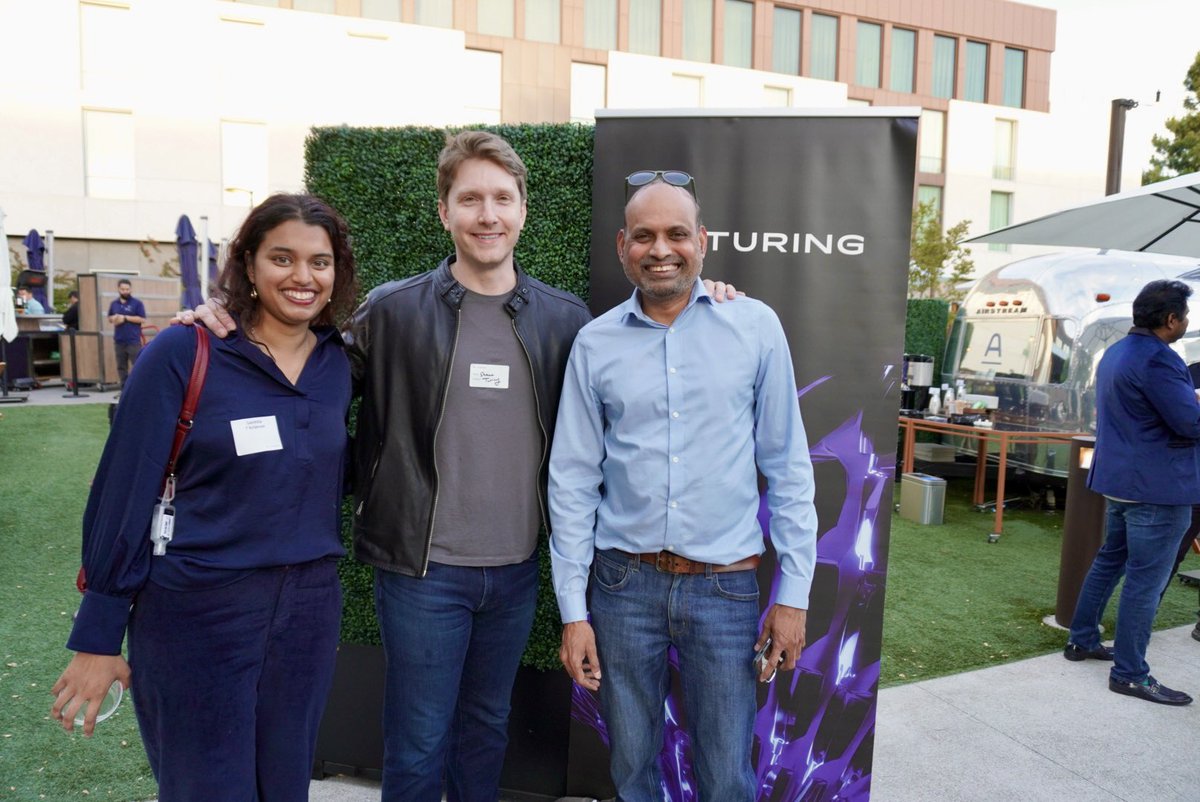
Turing is at #CVPR in Denver!
Come meet the team and discuss today's foundation models and turning AI into real-world impact.
We welcome researchers, and enterprise innovators across the industry.
Swing by booth #717, we'll be there until Sunday and can't wait to meet you.
3
13
1,504
Turing retweeted
Jun 2
AI is not replacing the human element of HR. It is amplifying it.
Our SVP @TaylorFromHR sat down with @GoogleWorkspace to share how Turing's People team is transforming HR with AI:
- 33% faster help desk response times
- 80% of support tickets handled by AI assistants
- A lean team scaling a highly complex global talent strategy.
The real story behind it? Failing, iterating, and pushing forward.
Watch more below:
4
5
13
4,305
Turing retweeted
Jun 2

The AI tips you love, now from the people putting them into practice every day.
Introducing Customer AI Boost Bites: a new video series featuring real business leaders sharing how they use Gemini, NotebookLM, Gems, and more to solve challenges and save time.
Start with Taylor Bradley, VP of People at @turingcom, and learn how to build a Strategic Challenger Gem to pressure-test ideas in minutes. 💡 goo.gle/4ehsmlC
5
11
608