
Your go-to hub for UK construction trends, updates, and expertise.
Joined July 2023
- Tweets 711
- Following 319
- Followers 76
- Likes 691
115 Photos and videos







May 26
14 years in. Still not ready for this.
I've watched UK construction swallow recessions, material crises, and labor shortages without blinking. But what's moving through the industry right now is different. Not faster. Different in kind.
The Climate Change Committee just confirmed it.
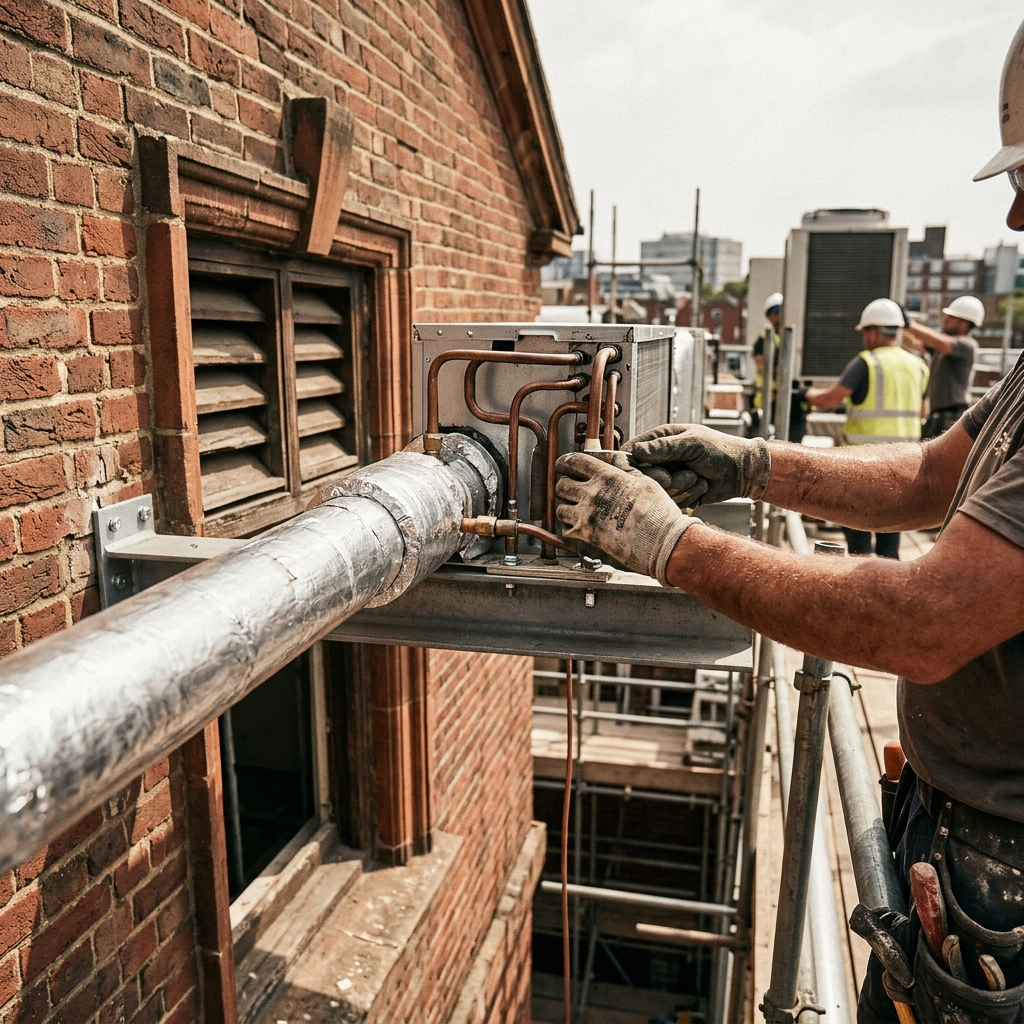
By 2050, UK buildings will need air conditioning as standard infrastructure. Not a luxury. A life-saving necessity backed by government policy.
Southern England. Heatwaves exceeding 40°C regularly. The worst ones pushing past 45°C.
I spent years engineering climate control for Ford, Audi, and Jaguar facilities. Buildings designed for extreme industrial conditions. Desert climates. Thermal loads I calculated in my sleep.
I never thought I'd run those same calculations for a British school.
But here we are.
Summer 2022. Temperatures hit 40°C for the first time in recorded UK history. Over 3,000 people died early deaths in England and Wales.
Three thousand people.
92% of existing UK homes are at risk of overheating. In 30°C conditions, the inside of a typical UK home rises 5 degrees in three hours. Double the rate seen in mainland Europe.
We built homes designed to trap warmth. That design is now killing people.
By 2050: 10,000 additional heat-related deaths per year.
That's not a climate projection. That's a construction failure.
I learned this the hard way on a Jaguar facility in Spain. We designed extensive natural ventilation. Thermal chimneys. Night purging systems. Beautiful passive design.
It worked perfectly until ambient temperatures exceeded 38°C for consecutive days.
The building absorbed so much heat that natural ventilation couldn't keep up. Nighttime temperatures stayed above 25°C. Night cooling became useless.
We had to retrofit mechanical cooling. The cost was three times what it would have been to design it in from day one.
That's the UK's future.
Opening windows doesn't help when outdoor air is hotter than indoor air. Tree shade doesn't cool a bedroom at night when the building has been absorbing heat all day.
Physics doesn't care about our sustainability preferences.
The committee is calling for mandatory air conditioning in hospitals within 10 years. Schools within 25 years. Care homes.
Here's what I'm doing differently on every project now:
I ask "How will this building perform at 45°C?" before I ask about insulation values.
I run overheating assessments using 2050 climate projections even when they're not required.
I'm reserving electrical capacity for cooling systems in buildings where I'd never considered it five years ago.
And I'm having uncomfortable conversations with clients. About energy. About trade-offs. About the gap between sustainability ideals and the reality of keeping people alive.
The choice isn't between sustainability and air conditioning anymore.
It's between smart cooling powered by renewables and preventable deaths every summer.
The timeline is set. Hospitals first. Then care homes. Then schools.
Every project you're designing now will face 2050 conditions before it's demolished.
The question isn't whether to adapt. It's whether you do it before or after the regulations force you to.
What question are you asking at the start of your projects right now?
13
May 22
Strip back the basics: remember everyone is human. Good days, bad days, sleepless nights, frustrations – they're all part of it. Talk to them, connect over coffee or a meal. When you see people as humans first, everything changes. That's true leadership.
4
May 18
England has the land. It just won't touch it.
There are 1.6 million homes planned for Green Belt land.
Most of them are going nowhere.
Not because the need isn't real.
Because the politics of touching it has paralyzed the whole system.
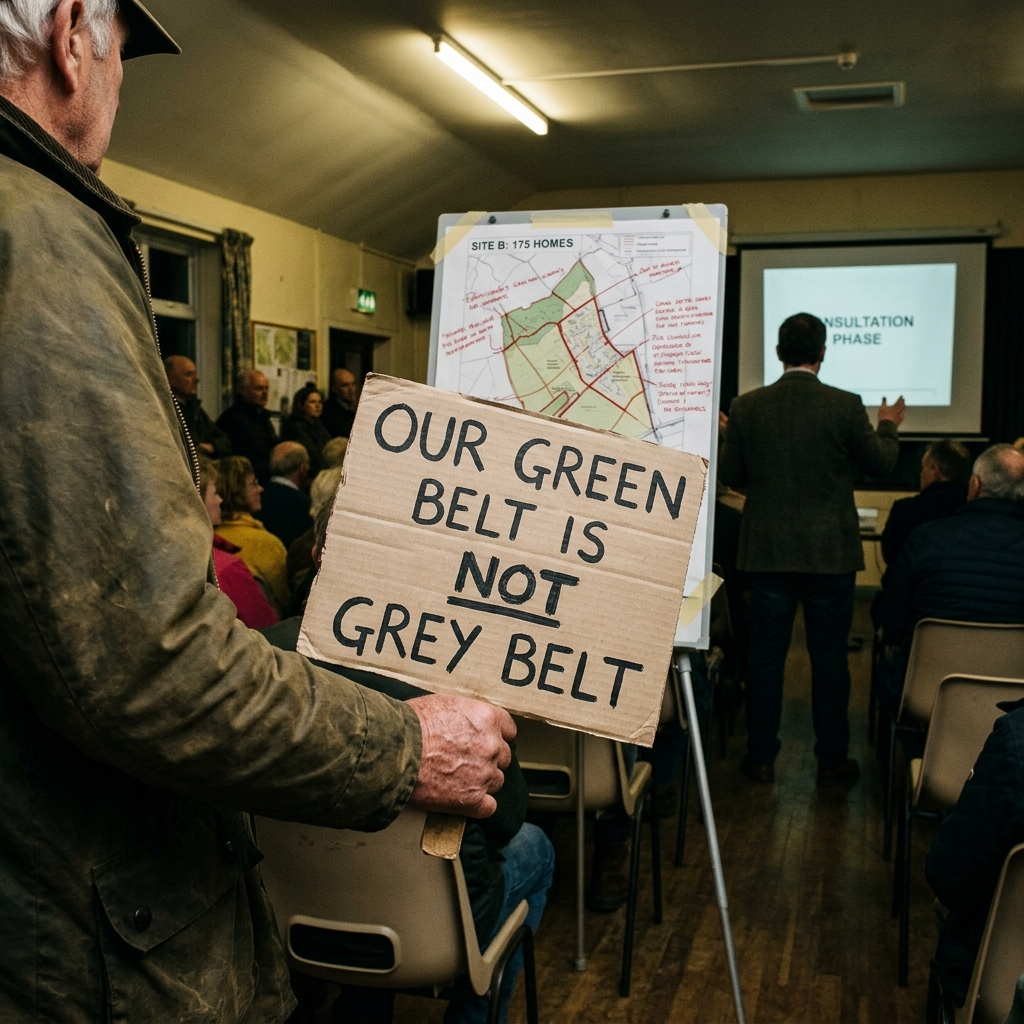
In Brixham, a developer proposed 175 homes with 30% affordable housing, wildlife habitat improvements, and flood mitigation.
Protesters showed up. An anti-development candidate won the council by-election.
In Grays, Persimmon consulted residents on 200 homes with shared ownership, biodiversity gains, and low-emissions transport.
Hundreds signed the petition against it anyway.
In Worcester, 650 to 800 homes proposed at Church Farm.
Councillors drawing lines in the sand before a single brick was laid.
England is short 6.5 million homes compared to similar European countries.
We have 440 homes per 1,000 people. The European average is 542.
And yet.
England has more than 300,000 planning permissions for homes sitting unbuilt.
Enough to keep going for years at current building rates.
The bottleneck isn't land.
It isn't money.
It isn't planning law.
It's community acceptance.
Communities have learned how to organize.
They flip council seats.
They launch petitions.
They mobilize fast.
And honestly? They're not wrong to push back.
Schools are full. GP surgeries have waiting lists. Roads are congested. Infrastructure planning hasn't kept pace with housing ambition for decades.
The December 2024 NPPF introduced Grey Belt — lower-quality green belt land that can now be developed under specific conditions.
Mandatory affordable housing. Infrastructure investment. Public green spaces.
The framework exists.
But framework and trust are two different things.
Developers who show up with genuine commitments to infrastructure and affordability will move forward.
Developers who treat community engagement as a checkbox will stall.
I've been watching these battles play out across England.
The land was never the problem.
The question is whether the industry can earn permission to use it.
31
May 16
Hitting burnout can make you question what brings you joy. It's a powerful exercise to ask if the things that once lit you up still serve you. Time to recalibrate. #SelfCare #BurnoutRecovery
8
May 14
15
May 13
Every person is a human being with good and less-than-desirable moments. Remember that. If you can connect with them, share a drink or a meal, everything else falls into place. #Leadership #Teamwork
2
May 12
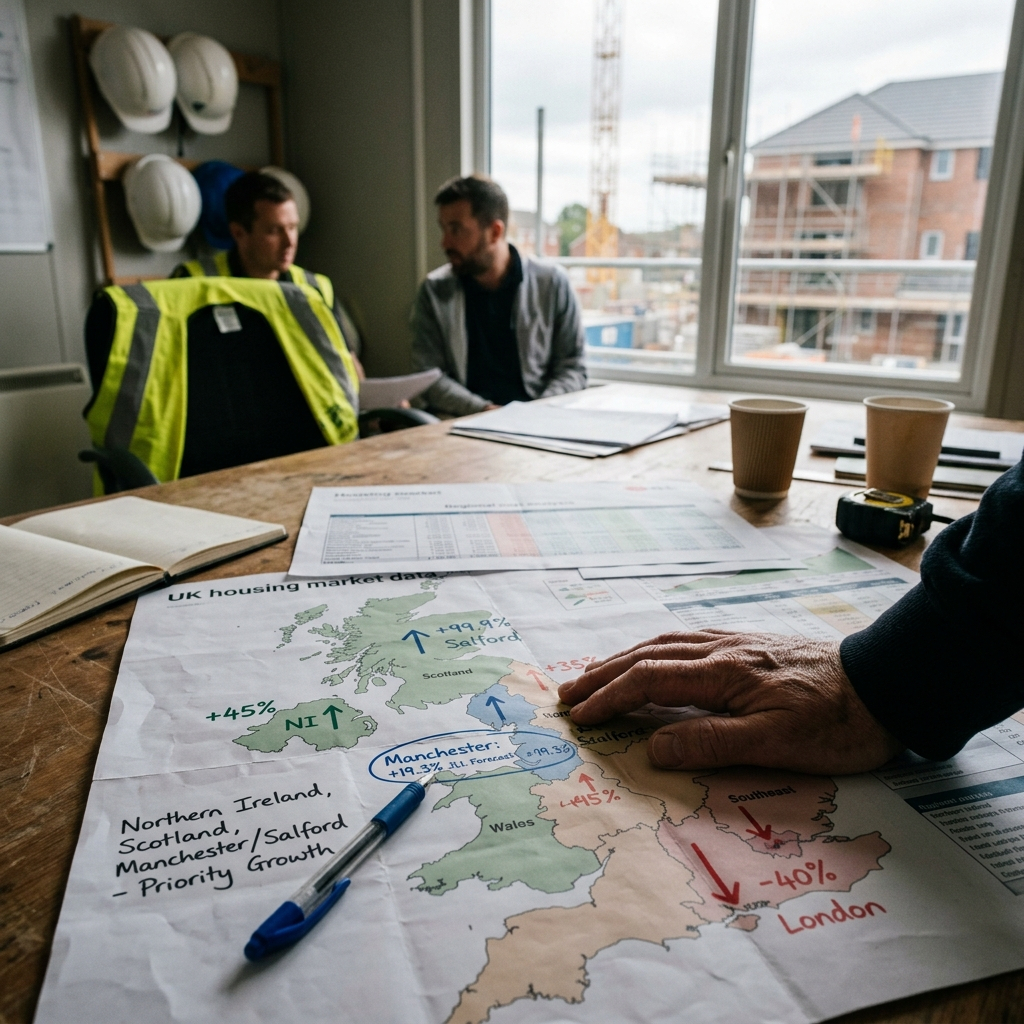
There is no UK housing market anymore.
There are several. And they are moving in completely different directions. The single-market assumption is the most expensive belief left in UK construction.
Northern Ireland prices climbed 45% between Q1 2020 and Q4 2025.
The wider UK grew 27%.
That is an 18-point gap. Not a rounding error. A fracture.
Manchester delivered 95.6% price growth over the past decade. Salford hit 99.9%. Oldham came in at 92.2%.
London surveyors reported 40% downward forecasts over the same period.
These are not the same market.
The force driving it is simple. Affordability.
When median London prices require household incomes most buyers do not have, demand does not disappear. It relocates.
It goes to places where a young professional can actually buy.
Ancoats. Levenshulme. Hulme. Salford Quays. These neighborhoods are growing because the economics work there.
JLL forecasts Manchester property prices to rise 19.3% cumulatively between 2024 and 2028. Second-highest among UK cities.
Northern Ireland, Scotland, the Northwest. Positive forecasts.
London, the Southeast, East Anglia. Sustained downward pressure.
The firms already moving into growth markets are securing land and building local supply chains now. The window for easy entry is closing.
If 80% of your pipeline is in markets with negative forecasts, that is a concentration risk.
The market did not change. It split.
The question is which side of that split your next 12 months are built on.
29
May 12
Sharing strategies I've personally explored and found helpful. My focus is on what has served me, hoping it serves you too. Whether it's a specific journal, handwritten or digital, the key is the practice itself. #PersonalGrowth #SelfImprovement
1
5
May 11
The most crucial mindset shift for construction leaders? Stay curious. Be curious about yourself and the world. Everything else changes, but curiosity endures. #Leadership #Curiosity
7
May 10
Beware the cocky guy who *thinks* he can do a job vs. the competent one who *knows*. True confidence stems from mastery, not bravado. Overconfidence, however, can lead to costly mistakes, like crashing into a warehouse. #Confidence #Competence #LessonsLearned
7
May 10
With only 2-3 first aiders on-site, training everyone on essential first aid and mental health support is crucial. Basic knowledge for those in need makes a huge difference. #FirstAid #MentalHealth
4
May 10
People often hide their struggles behind smiles and laughter. It's hard to know when someone is truly suffering, as support systems can be absent. This highlights a tragic case of prioritizing profit over people, where individuals become disposable.
3
May 9
No two brains think alike. Even identical twins, born minutes apart, have different thought processes. This fundamental difference is the starting point for curiosity and understanding. #Curiosity #Mindset
1
8
May 8
Don't just look at pictures; create videos! See the full story and how it's made. Adding 3D videos to documents is the next step in dynamic content. #VideoCreation #3DContent
6
May 8
Some businesses drive profits by exploiting people, then taking care of them if there's anything left. The right way? Take care of your people, and they'll build the business. #BusinessStrategy #Leadership
9
May 7
Building rapport is key with everyone, from the cleaner to the director. You never know what people are going through, so a little connection can brighten their day and make it more pleasant. #Connection #Empathy
9
May 7
True connection comes from genuine interest, not just affordability. Focus on service and conversation – simple acts can change lives. Money is a tool, not the root of evil; let your primary goal be helping others. #Service #Connection #Mindset
16
May 6
The courage to speak up when something isn't right can lead to crucial conversations. "Hey, I read this and it doesn't sit well. Do you want me to fail?" This opens the door to preventing failure before it starts. #Communication #Feedback #Leadership
10
May 6
Started building websites at 14 after a cousin taught coding and web design. After his passing, I carried on his passion, taking web design more seriously. #WebDesign #CodingJourney
8
May 6
Building a company where employees feel like owners. This approach fosters shared ownership and genuine care, making everyone feel as valued as the founder. #CompanyCulture #EmployeeOwnership
8