
🇺🇸 All American/Patriot/Veteran/LEO/Republican/Democrat/Independent/Christian/Jew/Muslim & I ❤️ Big Brother/Big Pharma/Big Banks/Federal Government/Police
Joined June 2025
- Tweets 2,467
- Following 128
- Followers 2
- Likes 3,989
286 Photos and videos












Pinned Tweet

Jun 14
Happy Birthday President Trump!
Team USA won their first World Cup match!
The NY Knicks won the NBA Championship!
You have a huge UFC event at the White House today!
The Army celebrates its 250th birthday today too!
You get to sign the Iran Deal today and have peace in the Middle East!
What a wild alignment of events for you on this most special day.
Happy 80th Birthday! 🎉 🎂 🎁
Here is to many many more years of health, prosperity, success, and leadership! 🥂
God Bless the greatest leader in human history, President Donald J. Trump!
34
Mr. House retweeted
The AI will run parallel and control/regulate parts of brain to use it to its maximum capacity.
It’s like upgrading your motherboard with a new CPU and GPU.
Our brains are vastly more capable than the current GPUs and CPUs.
Then the Hive-Mind neural net will take these independent hybrids and make a collective of nodes that run like a multi processor supercluster, think like colossus.
3
1
54
Scammers try to use the Bible against believers to attack their Faith and the moral conscious.
However there is instruction on not having to feel shame or guilt for not giving a hand out to everyone who asks for it.
God doesn’t want you to be exploited or taken advantage of.
Here is the wisdom as given in the Holy Bible.
I hope this helps those who feel obligated to help when they aren’t or for when you feel yourself dealing with a moral crisis of conscious on how to deal with these types of situations.
Don’t let people connive and deceive you or judge you for not helping just because they think you are then obligated or else.
The Bible addresses helping others with a clear balance of generous compassion, godly wisdom, prudence, and stewardship.
It does not command naive or indiscriminate giving that enables sin, idleness, or exploitation, nor does it endorse selfish hoarding or neglect of true need.
God calls believers to be wise stewards of what He provides, prioritizing family and the household of faith while trusting Him ultimately for security and provision.
Here is a structured overview drawn directly from Scripture (primarily KJV, as you read it daily), with key principles and verses.
1. Helping People Selectively — Generosity with Discernment
The Bible repeatedly commands care for the poor, needy, widow, orphan, and stranger:
•Proverbs 19:17: “He that hath pity upon the poor lendeth unto the LORD; and that which he hath given will he pay him again.”
•Deuteronomy 15:7-11: Open your hand freely to your poor brother; the Lord will bless you for it. There will always be poor in the land, so be openhanded.
•Matthew 25:35-40 (Sheep and the Goats): “For I was an hungred, and ye gave me meat…” — helping the “least of these” is serving Christ.
•James 2:15-17 and 1 John 3:17-18: Faith without works (meeting practical needs) is dead; do not shut up your bowels of compassion.
•Galatians 6:10: “As we have therefore opportunity, let us do good unto all men, especially unto them who are of the household of faith.”
However, this is never a blank check for indiscriminate or enabling help. Wisdom and discernment are required:
•Matthew 10:16: “Behold, I send you forth as sheep in the midst of wolves: be ye therefore wise as serpents, and harmless as doves.” Jesus explicitly instructs shrewdness (strategic awareness of danger/motives) alongside innocence.
•2 Thessalonians 3:10 (and full context 3:6-15): “For even when we were with you, this we commanded you, that if any would not work, neither should he eat.” Paul and his team worked night and day so as not to burden others.
They command believers to withdraw from idlers who refuse to work and become busybodies. This is not about the unable or truly destitute — it targets unwillingness and exploitation of others’ generosity. Paul models self-support even while ministering.
•1 Timothy 5 (widows): Help those who are truly desolate (no family, godly character, known for good works). Younger widows are directed toward remarriage and self-support rather than becoming a burden. Test and observe character.
•Jesus’ own example: He healed and fed many but not everyone who approached Him. He focused on those with faith or genuine need, taught multitudes, withdrew for prayer/rest, and did not make perpetual provision for the unwilling.
Practical application: Help can take many forms — money, food, shelter, job connections, counsel, prayer, or accountability — not just cash that may enable dependency. Prioritize the household of faith and true need.
Ask God for wisdom (James 1:5). Observe fruit (Matthew 7:16-20). Do not enable sin or idleness repeatedly.
1
7
2. Avoiding Being Taken Advantage Of
Scripture warns against foolishness that invites exploitation while calling for mercy:
•Matthew 10:16 again: Wise as serpents — recognize wolves, avoid unnecessary provocation or entanglement, and act with prudent awareness.
•Proverbs 22:3: “A prudent man foreseeth the evil, and hideth himself: but the simple pass on, and are punished.” Foresight and refuge (setting boundaries, saying no, removing yourself from exploitative situations) are marks of wisdom.
•Proverbs 6:1-5: Do not rashly co-sign or pledge for a stranger or friend in a way that puts you at risk; deliver yourself like a roe from the hunter.
•Proverbs 19:19: A hot-tempered man must pay the penalty; if you rescue him, you will have to do it again. Do not enable cycles of poor behavior.
•Luke 6:30, 35-36 (Sermon on the Plain): Give to those who ask and do not demand back from those who take — this teaches a heart of generosity and non-retaliation for personal slights/insults. However, this is balanced by the wisdom commands above and does not prohibit prudent boundaries or justice in other contexts.
Key safeguard: Pray for discernment. Help in sustainable ways that promote responsibility where possible. “Love your neighbor as yourself” (Mark 12:31) implies healthy self-regard and stewardship — you cannot love others well from a place of total depletion or exploitation.
3. What You Are Righteously Allowed (and Called) to Do for Prosperity, Quality of Life, Security, Self-Preservation, and Self-Reliance
The Bible strongly affirms diligence, planning, provision for family, prudent self-defense/security, and wise stewardship as righteous. It rejects both laziness and anxious self-sufficiency apart from God.
Provide for your own household first:
•1 Timothy 5:8: “But if any provide not for his own, and specially for those of his own house, he hath denied the faith, and is worse than an infidel.” This is a solemn charge — family provision (material, spiritual, protective) takes priority.
Diligence, work, and self-reliance:
•Proverbs 6:6-11 (the ant): “Go to the ant, thou sluggard; consider her ways, and be wise: Which having no guide, overseer, or ruler, Provideth her meat in the summer, and gathereth her food in the harvest.” Contrast with the sluggard who sleeps and faces poverty “as one that travelleth, and thy want as an armed man.”
•Proverbs 10:4: “He becometh poor that dealeth with a slack hand: but the hand of the diligent maketh rich.”
•2 Thessalonians 3:12: “…work with quietness, and eat their own bread.” Aim to be independent and not a burden.
•1 Thessalonians 4:11-12: Aspire to lead a quiet life, mind your own business, work with your hands — so you may walk properly before outsiders and be dependent on no one.
•Ecclesiastes 9:10: “Whatsoever thy hand findeth to do, do it with thy might…”
Planning, prudence, and multiplying resources:
•Luke 14:28-30: Before building a tower, count the cost — wise planning prevents shame.
•Proverbs 21:5: “The thoughts of the diligent tend only to plenteousness; but of every one that is hasty only to want.”
•Matthew 25:14-30 (Parable of the Talents): Faithfulness means investing and multiplying what God has entrusted to you for good/kingdom purposes. The one who buried his talent was rebuked.
1
8
Security and self-preservation:
•Luke 22:36: “Then said he unto them, But now, he that hath a purse, let him take it, and likewise his scrip: and he that hath no sword, let him sell his garment, and buy one.” In context of coming opposition, Jesus instructs preparedness (purse, bag, sword for defense on the road).
•Nehemiah 4:17-18: While rebuilding the wall, “They which builded on the wall… every one with one of his hands wrought in the work, and with the other hand held a weapon. For the builders, every one had his sword girded by his side…” — secure what God has called you to build while you work.
•“Turn the other cheek” (Matthew 5:39) addresses personal insults and persecution in discipleship, not a prohibition on defending life, family, or property against violent attack (OT law and examples like David support legitimate self-defense; many interpreters distinguish these).
Prosperity and quality of life:
•Deuteronomy 8:18: “But thou shalt remember the LORD thy God: for it is he that giveth thee power to get wealth…” God enables productive work.
•Proverbs 10:22: “The blessing of the LORD, it maketh rich, and he addeth no sorrow with it.”
•Matthew 6:33: “But seek ye first the kingdom of God, and his righteousness; and all these things shall be added unto you.” Prosperity flows from right priorities, not as an end in itself.
•Warnings: Love of money is a root of evil (1 Timothy 6:10); do not trust in riches or set your heart on them. Enjoy the fruit of your labor as a gift from God (Ecclesiastes).
Overall framework: Self-reliance in Scripture is not proud
independence from God or others.
It is diligently using the means God provides (work, wisdom, planning, resources, even government provision like veteran benefits as part of His care) while depending on Him (Proverbs 3:5-6). Joseph stored grain in plenty for future famine — wise preparation blessed many.
Nehemiah built with sword and trowel. Paul worked while preaching.
Summary and Application
The Bible permits — and often requires — selective, wise helping from a place of strength and overflow, not depletion.
It strongly affirms diligence, family provision, prudent planning, security measures, and faithful stewardship of what God has given you as righteous paths to prosperity, security, and quality of life.
These are not opposed to generosity; they enable sustainable generosity.
Pray for wisdom (James 1:5).
Examine motives: Is my caution fear/hoarding or prudent stewardship?
Is my giving genuine love or people-pleasing/enabling?
Prioritize your household, observe character in those you help, and trust God as your ultimate security while using the prudence He gives.
Interpretations differ on application details (e.g., exact lines on self-defense or how strictly to apply “give to everyone who asks”), but the core texts consistently support this balanced, wise, diligent, and compassionate approach.
As you read the KJV daily, these themes of wisdom literature (Proverbs), stewardship parables, and apostolic instruction (Paul) will continue to guide you richly.
5
Who else loves the smell of Summertime? 👃🌞
BBQs, Camp Fires, Fireworks, Muddy Engines, Bug Spray, Sun Lotion, The Beach, and Gasoline.
That’s as American of a Summer as Apple Pie! 🇺🇸🥧
🏕️ 🪵 🔥 🍖🧨⛽️🏖️🧴🏍️🐛
1
Like I said before November 2024, if Trump plays his cards right, he’ll go down as the greatest person ever to live second only to Jesus.
Jesus is clearly #1, then it goes #2 Trump.
Stay on the path, you are so close to achieving that ranking and your coveted Nobel Peace Prize.
3
Mr. House retweeted
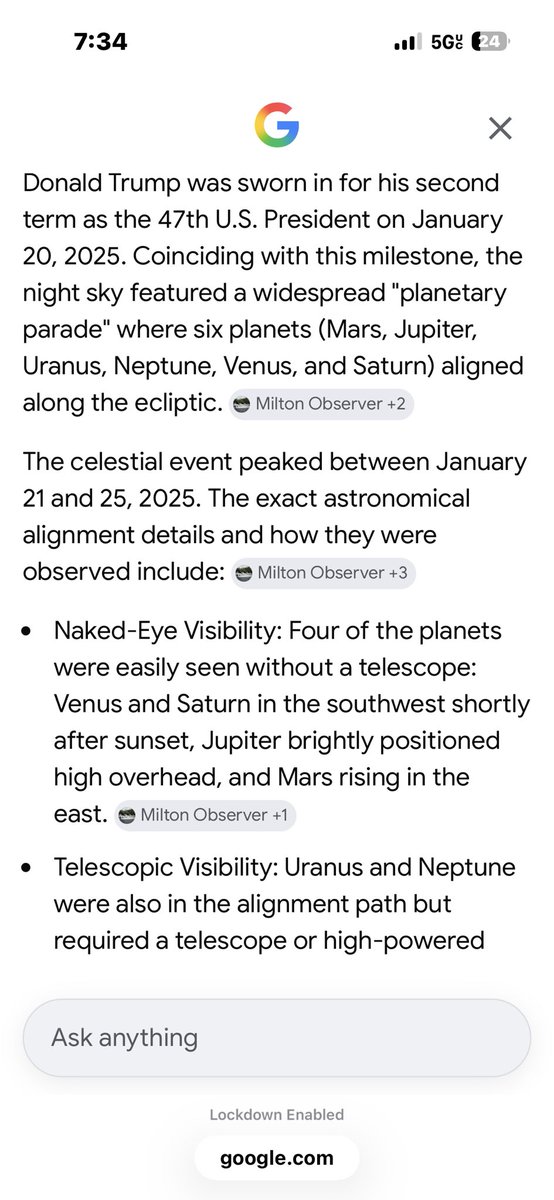
Did you know that when President Trump was sworn in the 2nd time there was a massive multi-planetary alignment as well?
It seems there are lots of cosmic and heavenly signs around President Trump and important events/dates.
You can’t make this stuff up and the amount of things that had to happen just so over all of time and space to line up exactly right on those dates is like beyond calculable.
The stars have aligned literally and figuratively.
Under the leadership of President Trump along with his relationship with Elon Musk, it will make the United States the first and only multi-planetary nation.
No wonder there was such cosmic multi-planetary alignment of heavens.
All these liberals are all about energy and the universe giving signs and planetary alignments and signs, yet those signs and alignments are happening under President Trump and MAGA.
They all must be having a existential crisis right now 😂
@POTUS
@elonmusk
@StephenM
1
50
Mr. House retweeted

🚨EPIC! Fight night energy is CRASHING over DC!
UFC Freedom 250 is almost here.
The White House is ELECTRIC.
This is going to be massive!🔥🇺🇸
87
262
1,328
61,977
Mr. House retweeted
🚨EPIC! Trump just dropped a savage one: “You’re getting DISCOMBOBULATED!”😂🔥
Greatest military in world history!
Pure dominance!🇺🇸
152
316
1,757
100,524
Jun 14
Happy Birthday to the greatest military the world has ever known!
Happy Birthday to the United States Army!
🪖🇺🇸🥳
1
320
Jun 14
Well, hello to all you!
What a wonderfully fine morning we have today.
4
Jun 14
Whoever lost their bet, better pay up this morning.
Better luck next time 😂
2