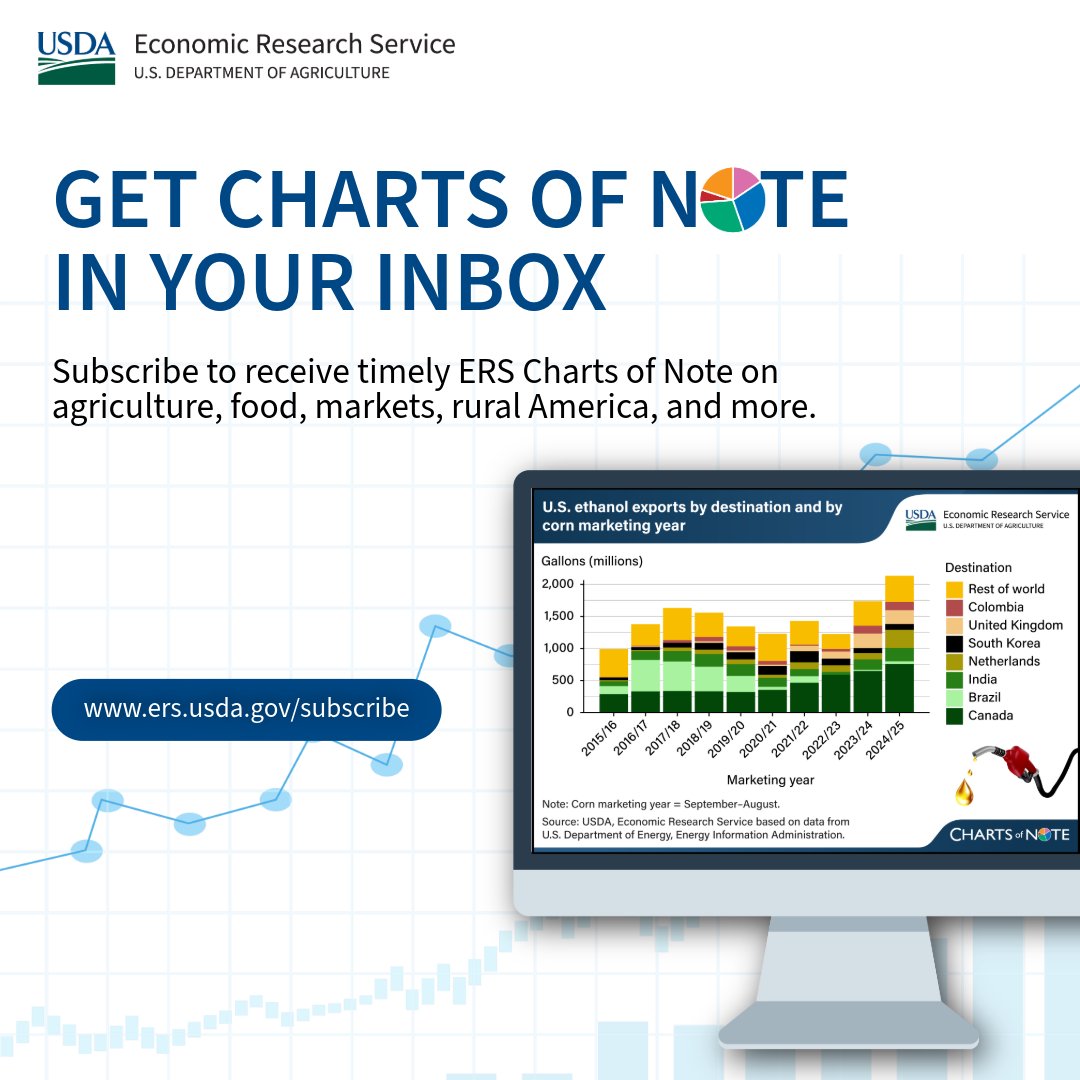
Data update: Feed Grains Database
Contains statistics on four feed grains (corn, grain sorghum, barley, and oats), foreign coarse grains (feed grains plus rye, millet, and mixed grains), hay, and related items. Explore the latest: ers.usda.gov/data-products/f….
Data Update: Wheat Data
Contains statistics on wheat— including domestic wheat data by class as well as international wheat statistics. Learn more: ers.usda.gov/data-products/w….
Data Update: Season-Average Price Forecast
This data product uses futures prices to forecast the U.S. season-average price received by farmers for corn, soybeans, wheat, and cotton. Learn more: ers.usda.gov/data-products/s….
Data Update: U.S. Agricultural Trade Data
Contains current and historical data on U.S. agricultural exports and imports.
See latest update: ers.usda.gov/data-products/f….
Data Update: Livestock and Meat International Trade
Contains monthly and annual data for imports and exports of live cattle, hogs, sheep, and goats, as well as beef and veal, pork, lamb and mutton, chicken meat, turkey meat, and eggs. Learn more: ers.usda.gov/data-products/l….
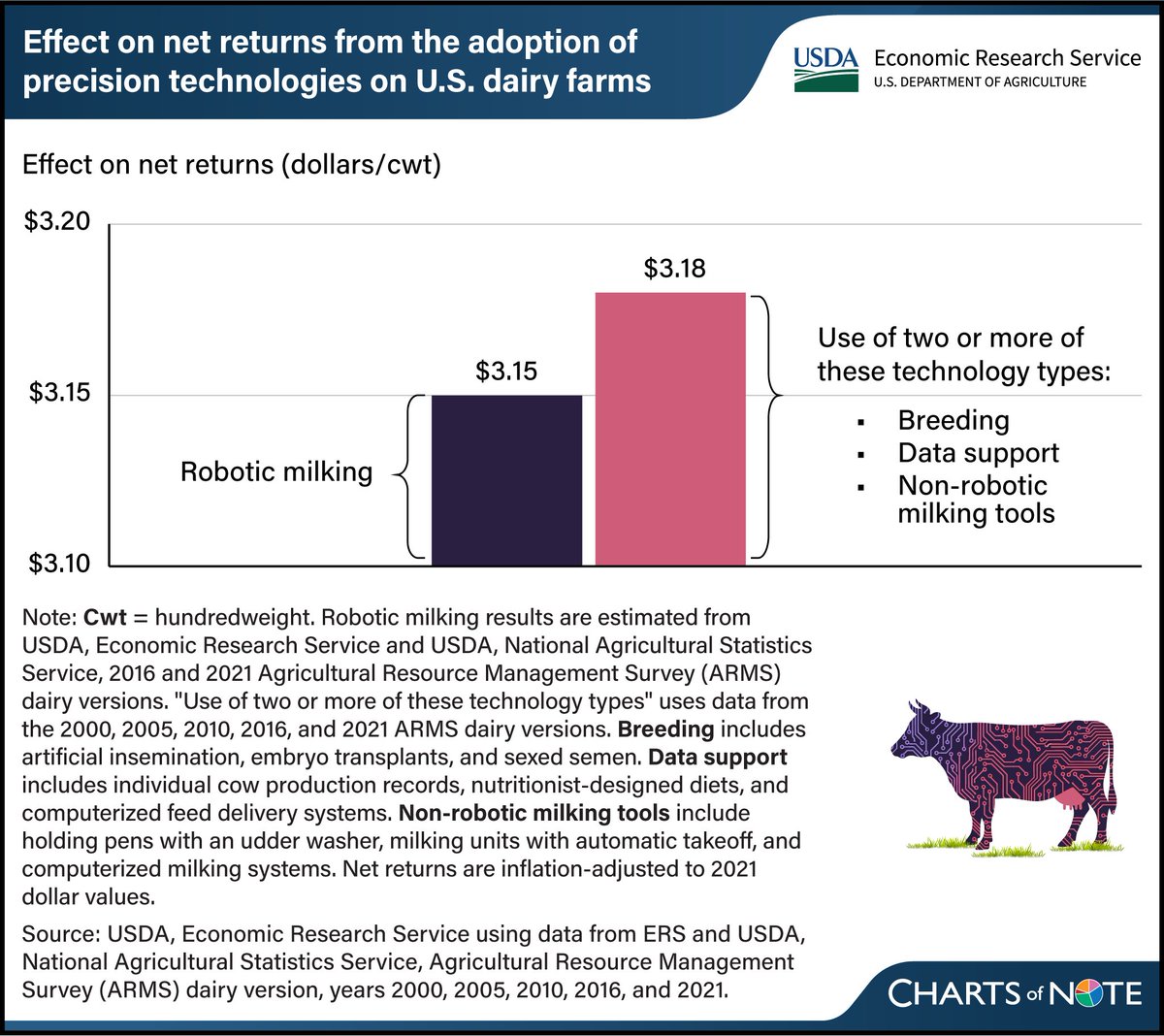
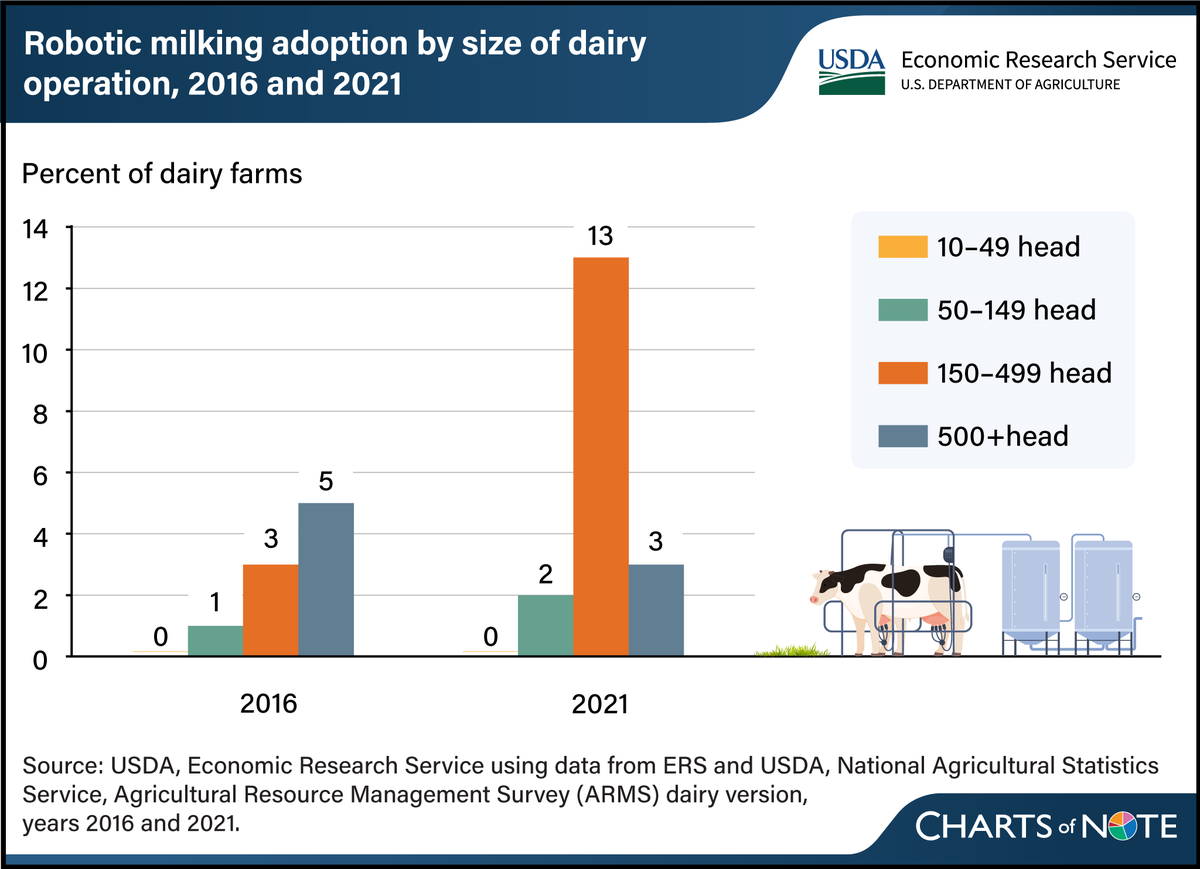
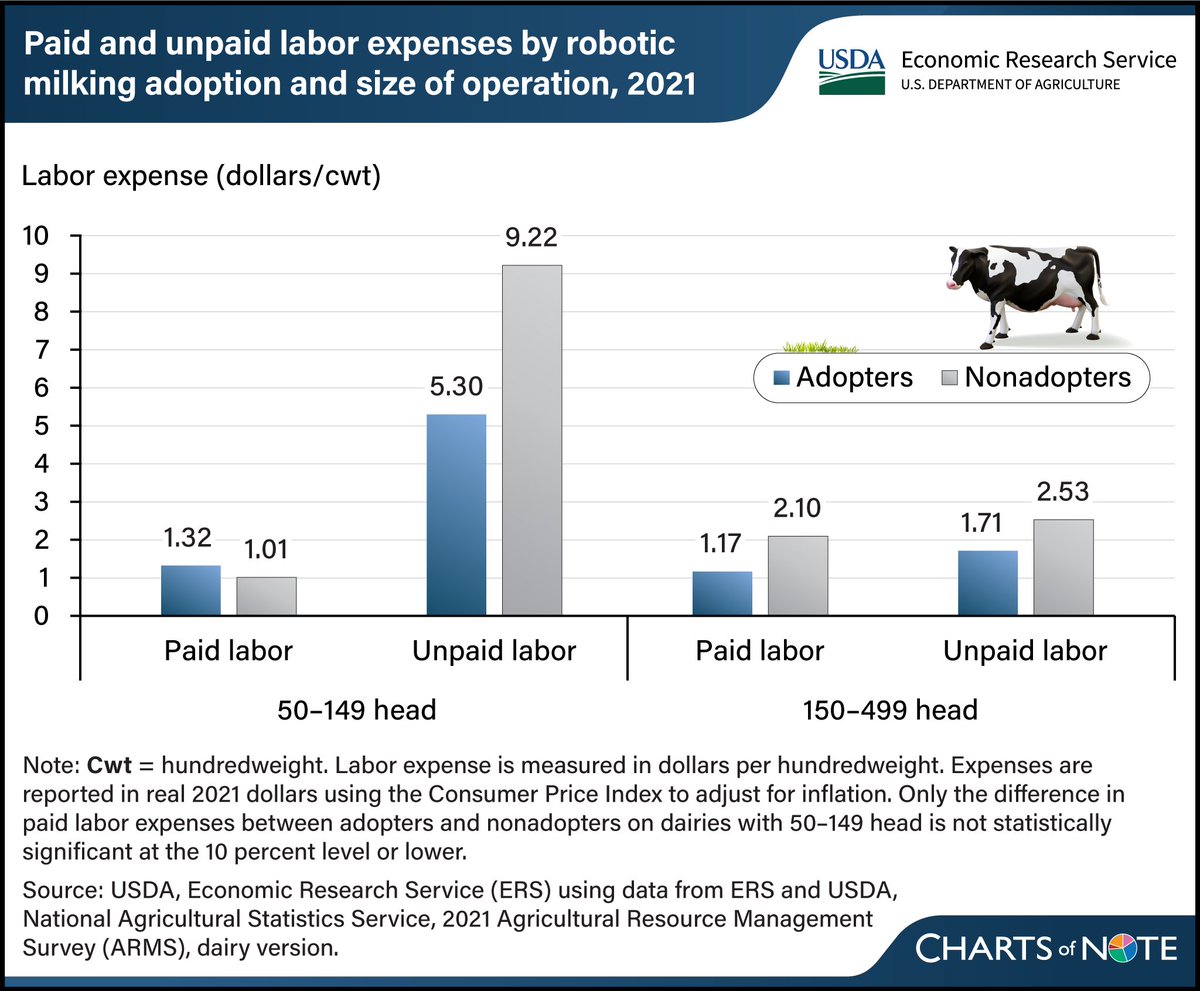
Robotic milking and other precision dairy technologies improve profitability. Learn more in this Chart of Note: ers.usda.gov/data-products/c….
ALT Bar graph showing the effect on net returns (dollars/hundredweight) from the adoption of precision technologies (robotic milking v. use of two or more of breeding, data support, and non-robotic milking tools technology types.
June is Dairy Month 🥛, and if you’re looking for dairy stats, @USDA_ERS has you covered. From production to consumption and trade, ERS data and analysis offer insight into the U.S. dairy sector.
Follow this thread throughout the month for Dairy by the Numbers.
ALT Graphic with the USDA Economic Research Service logo at the top. Large text reads 'Dairy' with smaller text 'By the Numbers.' Faded background image shows dairy cows standing in a field. Three icons appear along the bottom labeled Production, Consumption, and Trade.
Dairy by the Numbers: Production
ERS Dairy Data offer a comprehensive look at U.S. milk production, including key indicators such as milk per cow, supply and use, consumption, trade, and prices. Learn more: ers.usda.gov/data-products/d….
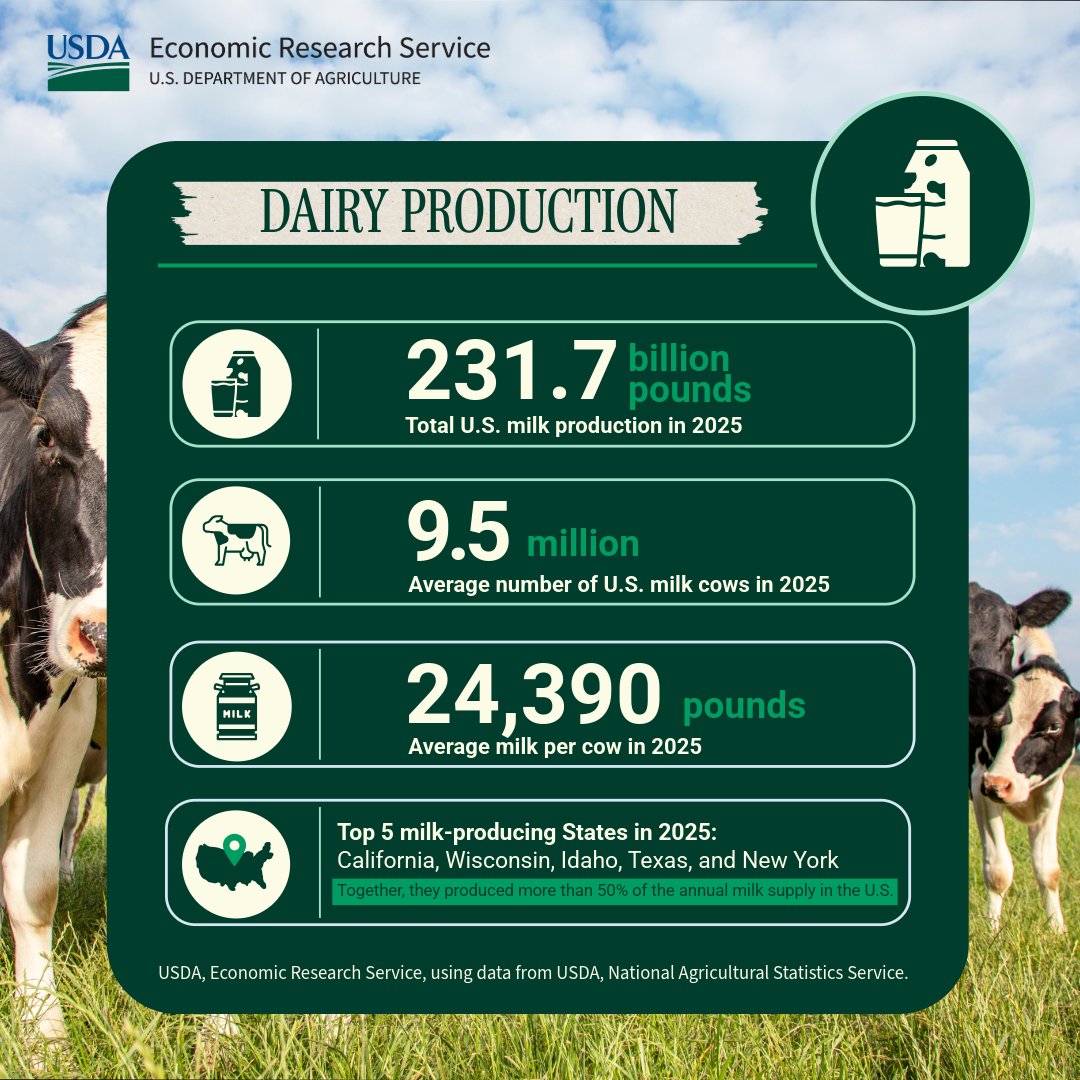
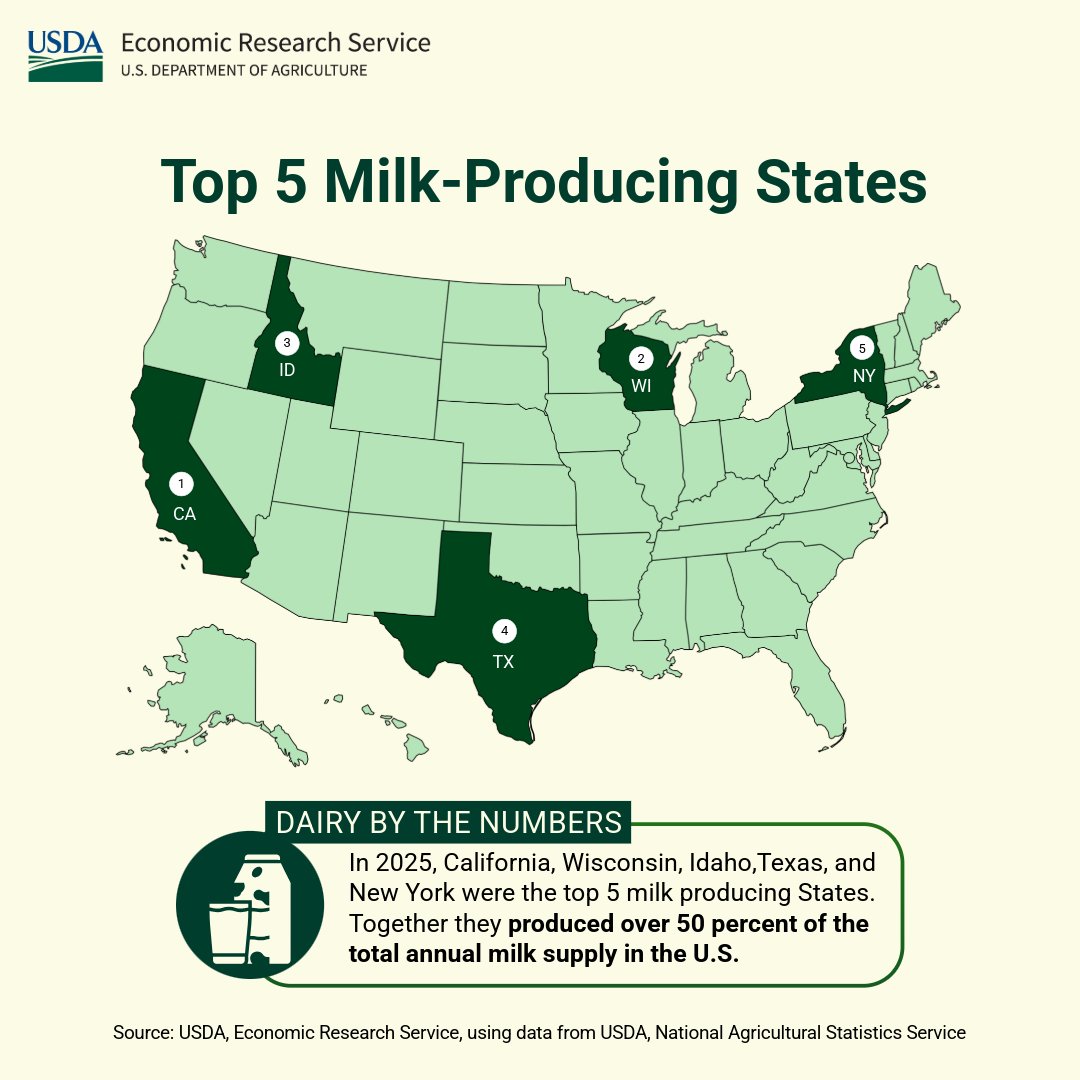
ALT Graphic titled 'Dairy Production' with the USDA Economic Research Service logo at the top. Background shows dairy cows in a grassy field under a blue sky. Statistics include: '231.7 billion pounds — Total U.S. milk production in 2025'; '9.5 million — Average number of U.S. milk cows in 2025'; '24,930 pounds — Average milk per cow in 2025.' A box at the bottom lists the top five milk‑producing States in 2025: California, Wisconsin, Idaho, Texas, and New York, noting they produced more than 50% of annual U.S. milk supply.
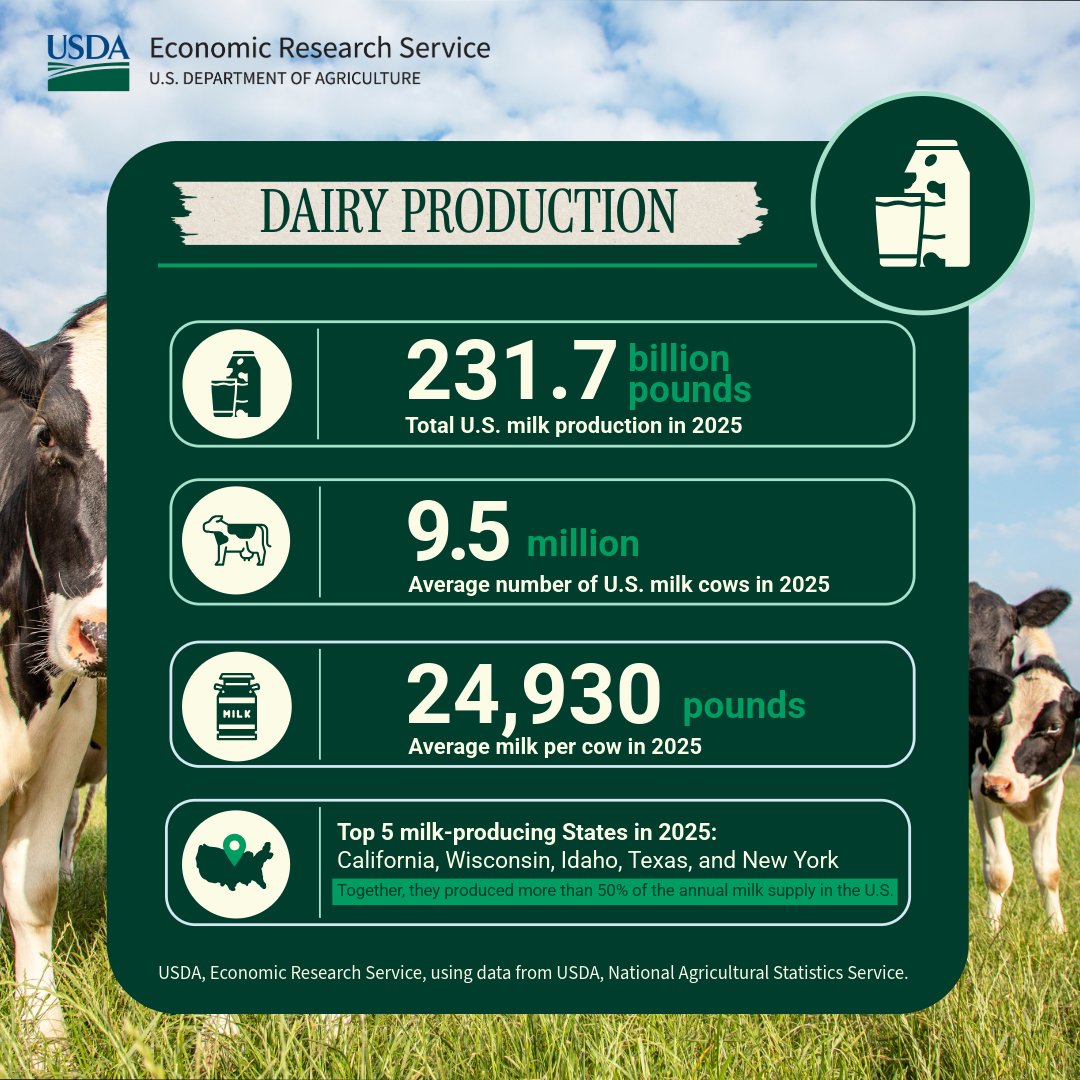
Correction: Our National Dairy Month post yesterday listed the 2025 average milk per cow as 24,930 lbs. The correct figure is 24,390 lbs.
ALT Graphic titled 'Dairy Production' with the USDA Economic Research Service logo at the top. Background shows dairy cows in a grassy field under a blue sky. Statistics include: '231.7 billion pounds — Total U.S. milk production in 2025'; '9.5 million — Average number of U.S. milk cows in 2025'; '24,390 pounds — Average milk per cow in 2025.' A box at the bottom lists the top five milk‑producing States in 2025: California, Wisconsin, Idaho, Texas, and New York, noting they produced more than 50% of annual U.S. milk supply.
ERS’s May Oil Crops Outlook features a special article on how U.S. biofuel policies are expected to expand the use of vegetable oils and fats for biofuels production.
Learn more: ers.usda.gov/publications/pu….
The May 2026 Oil Crops Outlook analyzes the major changes and events in the world market for oilseeds and oilseed products based on the current World Agricultural Supply and Demand Estimates.
Learn more: ers.usda.gov/publications/pu….
Happening Today!
Join us today at 1:00 p.m. ET for our Data Training Webinar on the Resource Requirements of Food Demand. Learn how water, energy, and employment are used across the food supply chain—from farm to fork.
Register / Join: ers.usda.gov/newsroom/events….
ALT Graphic announcing a USDA Economic Research Service Data Training Webinar titled ‘Resource Requirements of Food Demand.’ The event is scheduled for June 4, 2026, at 1 p.m. Eastern Time. The background features blue gradient tones with a faint image of charts and graphs. The URL www.ers.usda.gov/data-training-webinars appears at the bottom.
Join our next Data Training Webinar on the Resource Requirements of Food Demand to learn how water, energy, and employment are used across the food supply chain—from farm to fork.
Register today: ers.usda.gov/newsroom/events….
ALT Graphic announcing a USDA Economic Research Service Data Training Webinar titled ‘Resource Requirements of Food Demand.’ The event is scheduled for June 4, 2026, at 1 p.m. Eastern Time. The background features blue gradient tones with a faint image of charts and graphs. The URL www.ers.usda.gov/data-training-webinars appears at the bottom.

#NationalOliveDay. Eating olives and using olive oil in cooking and foods has been practiced for centuries, and consumption of olives and olive oils continues to increase in the U.S. -- especially with its associated health benefits. According to @USDA_ERS, California leads the nation in growing olives with about 70 percent of the state’s olive bearing acreage dedicated to olive oil production. Check out more from the USDA's Economic Research Service at: ers.usda.gov/sites/default/f…
Data Update: Food Expenditure Series
Current and historical data that measures the U.S. food system, quantifying the value of food acquired in the U.S. by type of product, outlet, and purchaser.
Learn more: ers.usda.gov/data-products/f….
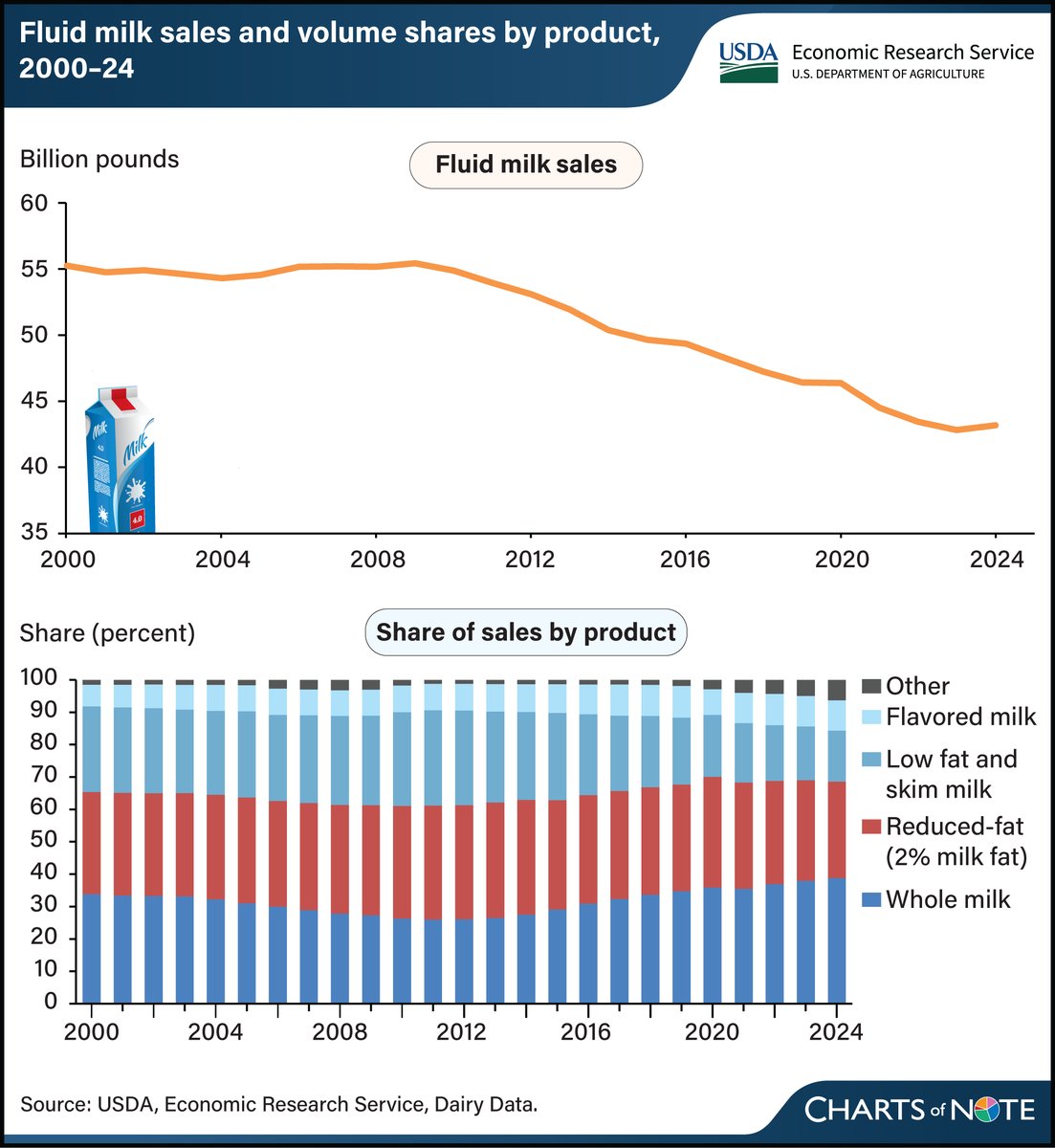
ICYMI: Whole milk share rises amid long-term decline in total fluid milk sales. Learn more in this Chart of Note: ers.usda.gov/data-products/c….
ALT A line graph showing fluid milk sales from 2000 to 2024, followed by a stacked bar chart showing share of sales volume by fluid milk products from 2000 to 2024.
Interested in exploring ERS dairy data and how to use it?
Check out our Dairy Data Training Webinar for a walkthrough of per capita consumption trends, fluid milk sales, supply and demand data, and more: ers.usda.gov/newsroom/trendi….
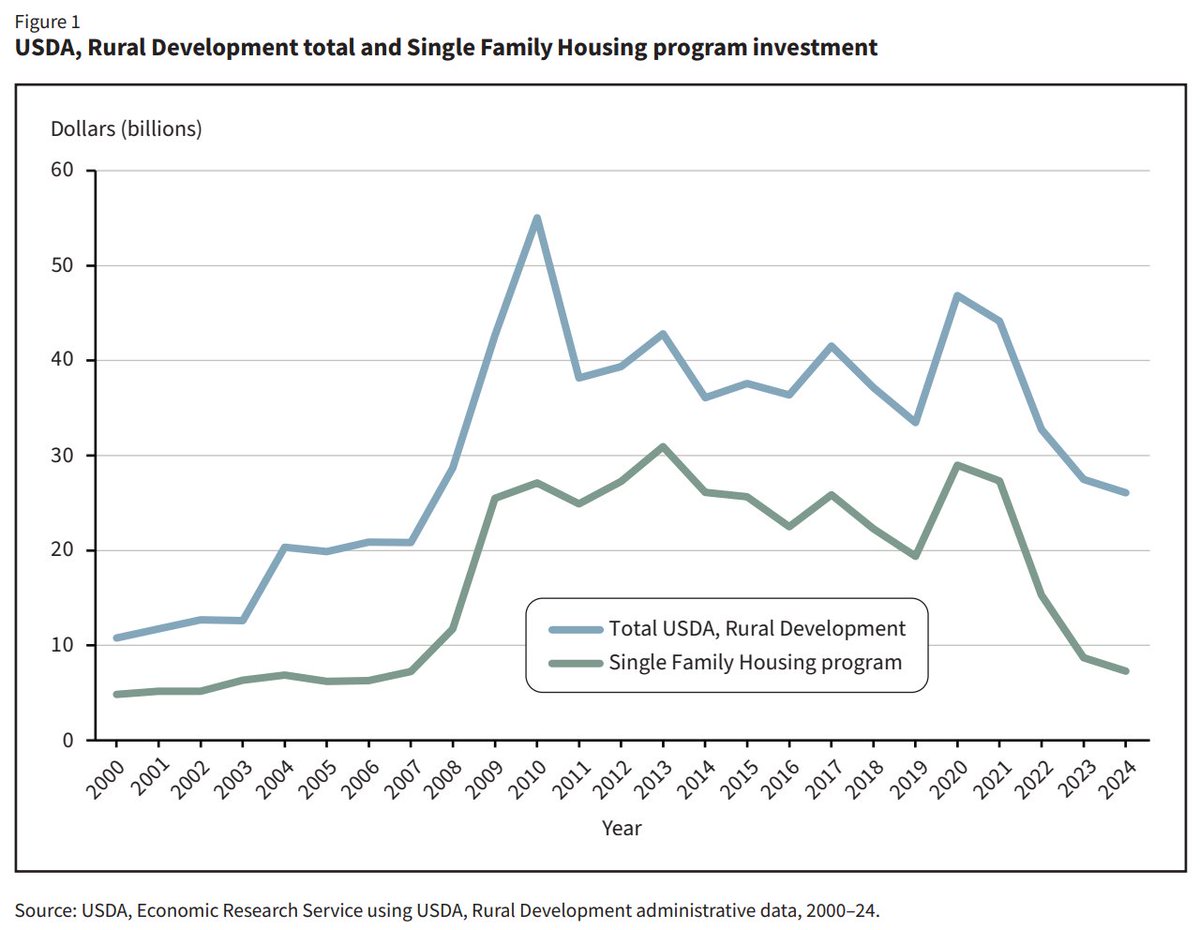
ERS analysis of 2000–2024 data shows that Single‑Family Housing received the largest share of @usdaRD funding, followed by electric, water, and business programs.
Follow this thread to learn more! 🧵
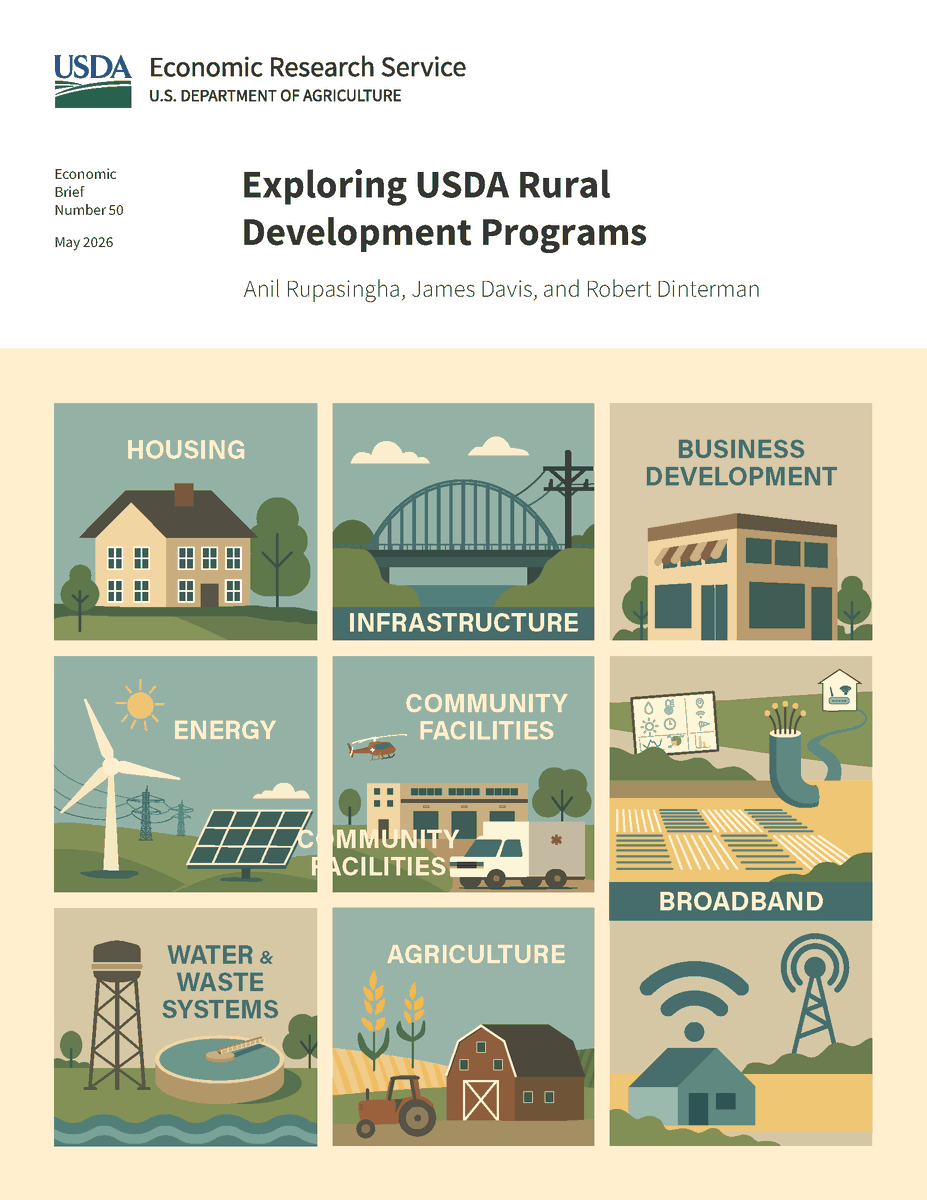
ALT Cover of the USDA Economic Research Service report titled ‘Exploring USDA Rural Development Programs.’ The top half shows the title and authors Anil Rupasingha, James Davis, and Robert Dinterman. The lower half features nine illustrated panels representing Rural Development program areas: housing, infrastructure, business development, energy, community facilities, broadband, water and waste systems, and agriculture.
This report presents an overview of USDA's Rural Development investments, including a national profile of programs, their geographic distribution, and associations between RD investment and several key economic indicators.