
Leading the pace of logistics to move the world’s goods.
Joined September 2016
- Tweets 2,769
- Following 230
- Followers 5,960
- Likes 3,180
943 Photos and videos




Jun 12
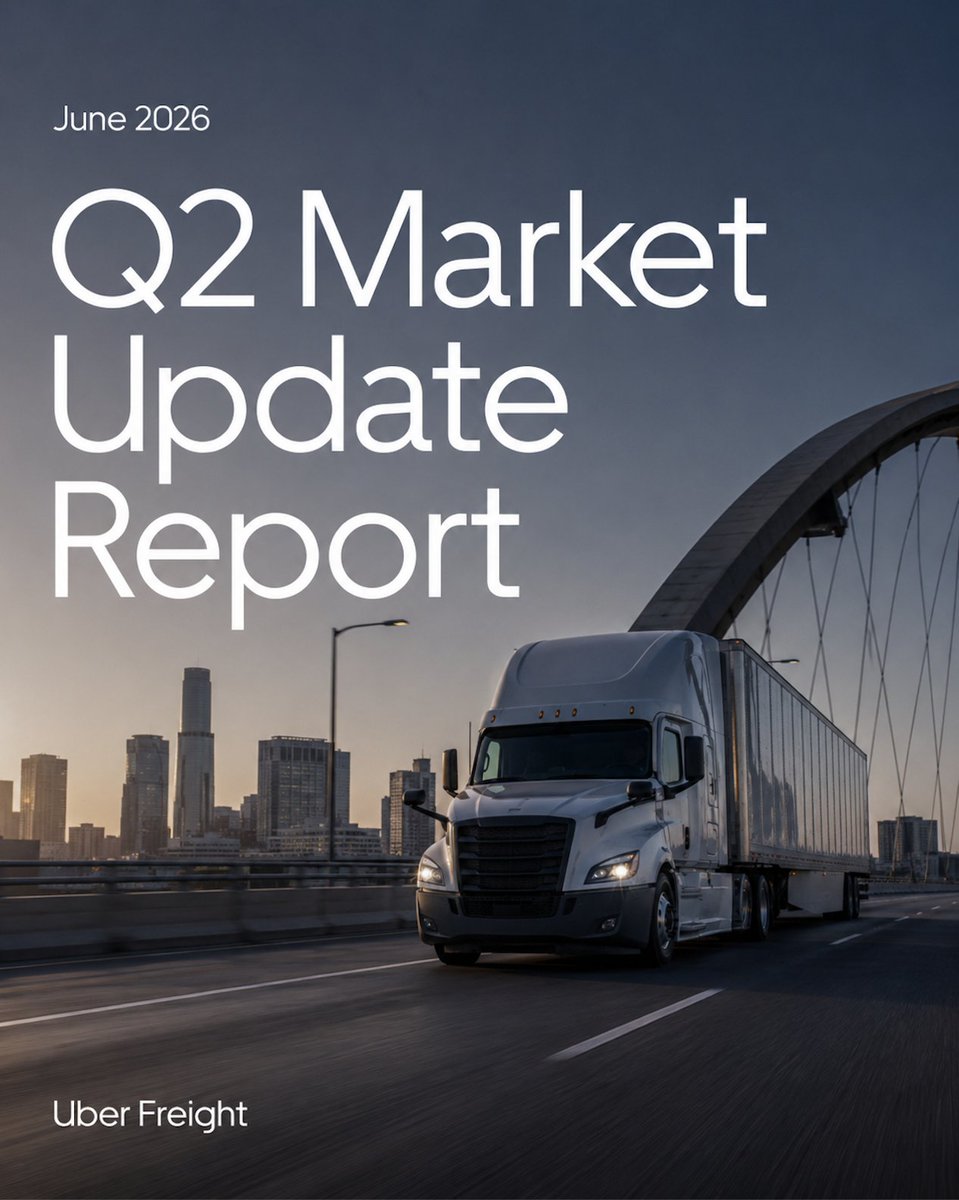
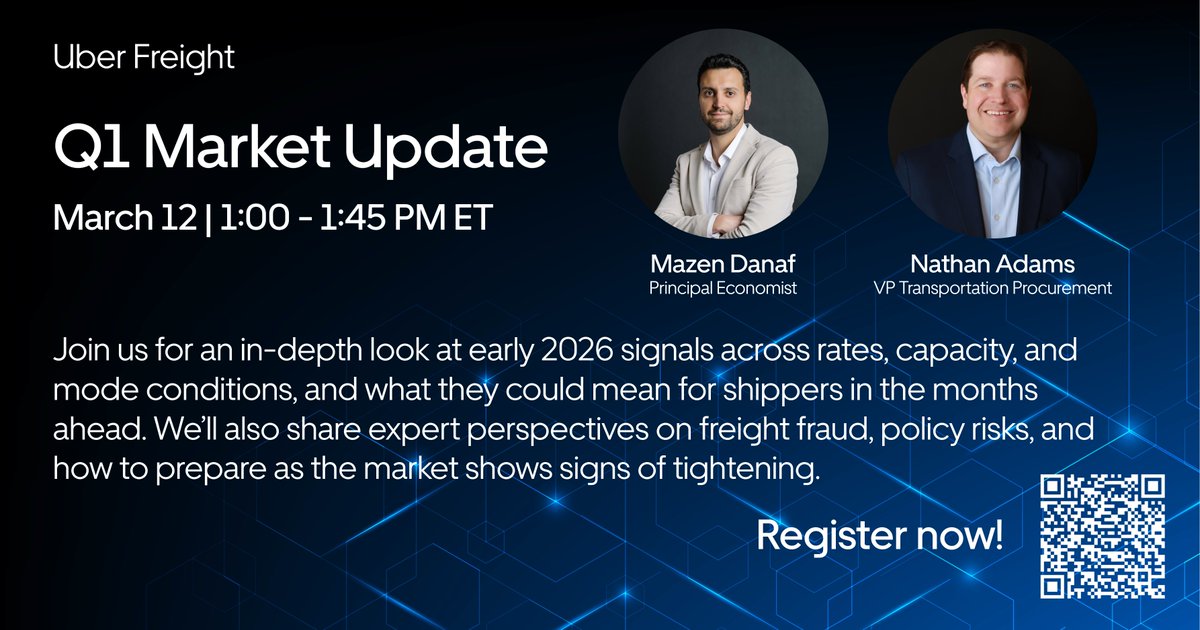
When capacity tightens, it can be tempting to rethink the entire RFP process.
But more bid events do not always mean better outcomes.
Nathan Adams, VP of Transportation Procurement at Uber Freight, shares why shippers may be better served by staying on schedule, isolating critical lanes early, and giving carriers the operational clarity they need to price accurately.
For more shipper recommendations and insights on today's freight market, explore the Q2 Market Update: uberfreight.com/en-US/resour…
3
98
Jun 12
Every year, produce shippers expect the market to follow a familiar cycle: volumes climb through spring, peak in summer, and ease off in fall.
This year is different. The market isn't following the typical cycle—and it's on track to be the hardest season since 2021.
Several forces are pushing conditions beyond seasonal norms, making now the time for shippers to act.
Find out what's changed and how to get ahead before it impacts your operations: uberfreight.com/en-US/blog/p…
1
89
Jun 11
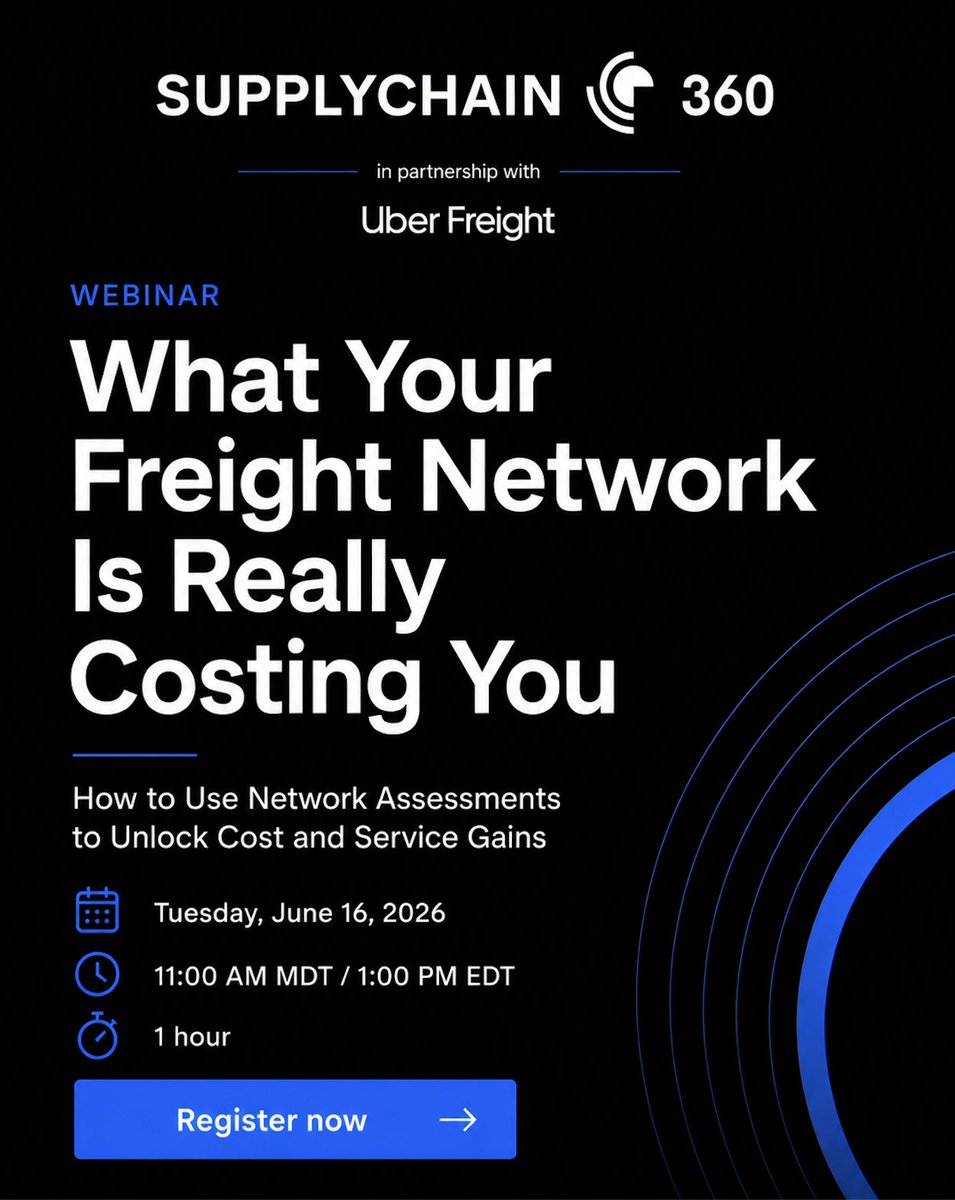
Most freight networks are constantly being adjusted. Fewer are being assessed end to end.
That gap can make it harder to see where cost is leaking, where service issues are structural, and which changes will actually move the business.
Join Uber Freight experts Derek L. Browning and Dave Young, alongside Marlene Clark of EssilorLuxottica, for a SupplyChain360 webinar on June 16 to learn how network assessments can help your team turn lane, mode, carrier, and exception data into practical cost and service opportunities.
Register here: app.livestorm.co/supplychain…
71
Jun 8
If you're a shipper trying to plan for the second half of 2026, the market isn't giving you much time.
Multiple pressures are hitting simultaneously, and unlike previous market cycles, these aren't expected to reverse quickly. With capacity tightening and costs rising, the window to adjust H2 strategies is narrowing faster than most shippers realize.
Find out what's driving each of these pressures and what to prioritize now: uberfreight.com/en-US/blog/q…
1
2
102
Jun 4
Protecting H2 margins may come down to how quickly shippers act.
Fuel costs, shifting capacity, and new tariff refund opportunities create pressure points that can impact planning, procurement, and network strategy.
The bigger question is which actions will matter most in the months ahead.
Get the market insights and shipper recommendations: insights.uberfreight.com/hub…
5
116
Jun 3
Shippers are heading into H2 with more questions than answers.
Where is capacity tightening? How should teams think about rates? Which modal shifts are worth watching before procurement decisions get locked in?
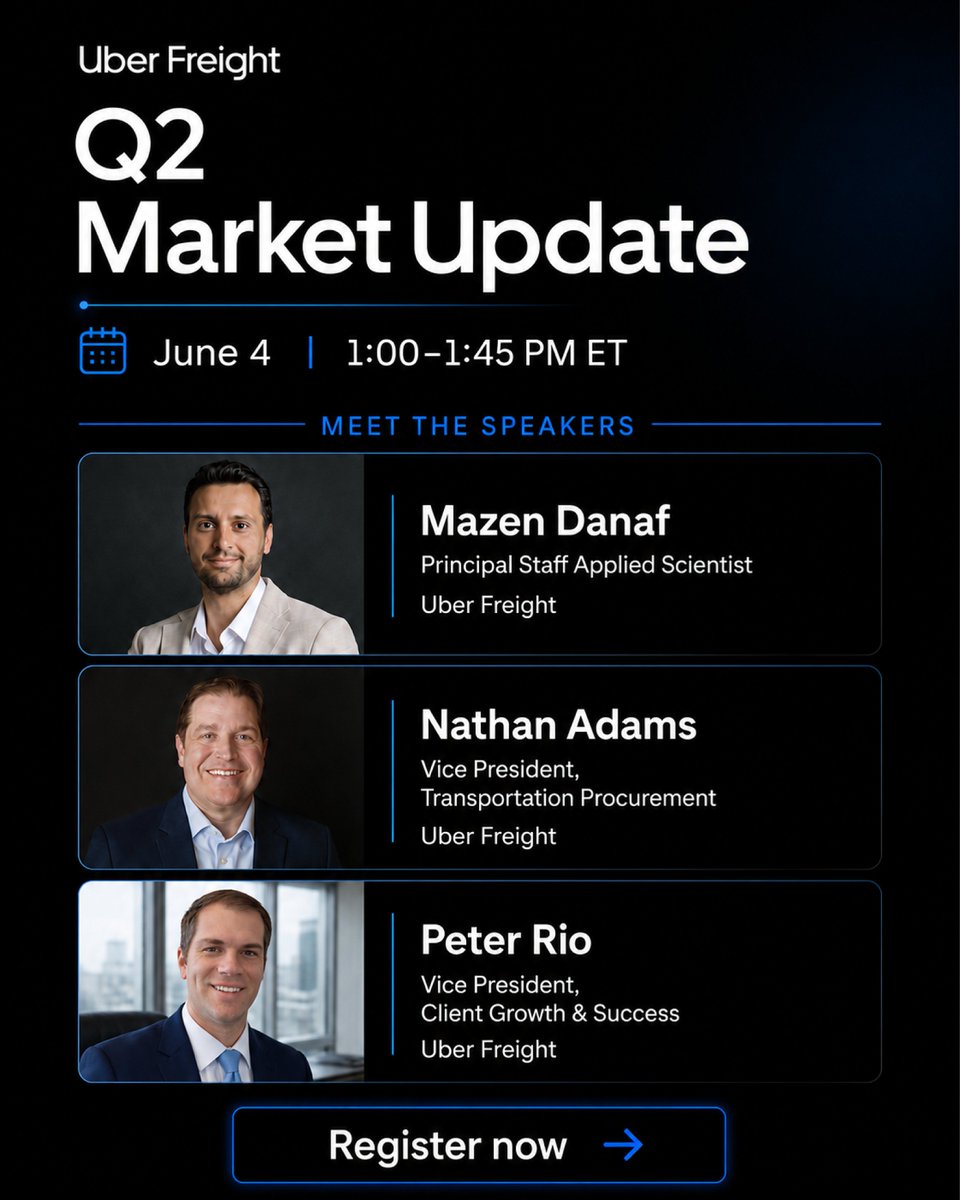
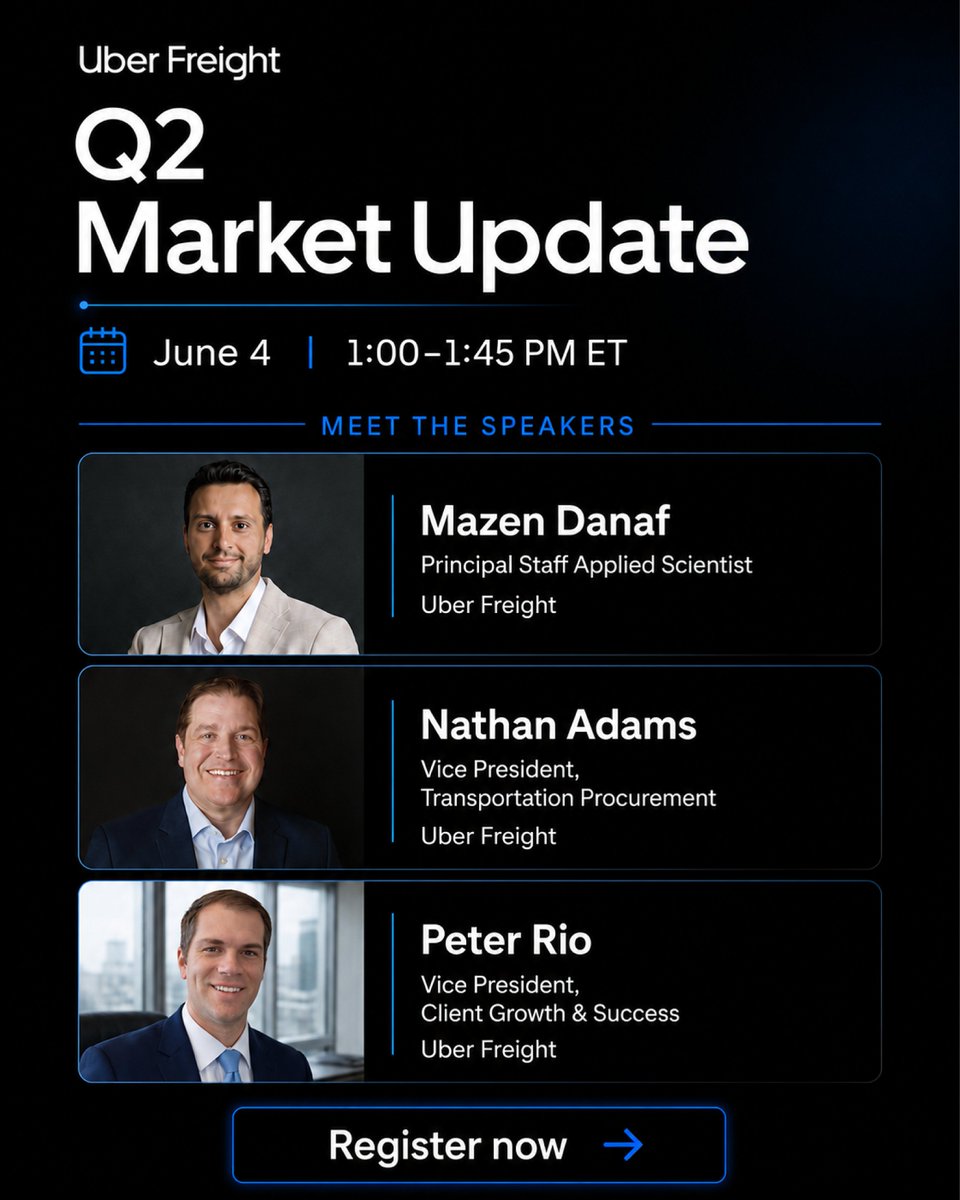
Tomorrow, Mazen Danaf, Nathan Adams, and Peter Rio will break down the market dynamics shaping the second half of the year and what they could mean for shipper strategy.
Join the Q2 Market Update webinar: web.cvent.com/hub/events/447…
3
131
May 27
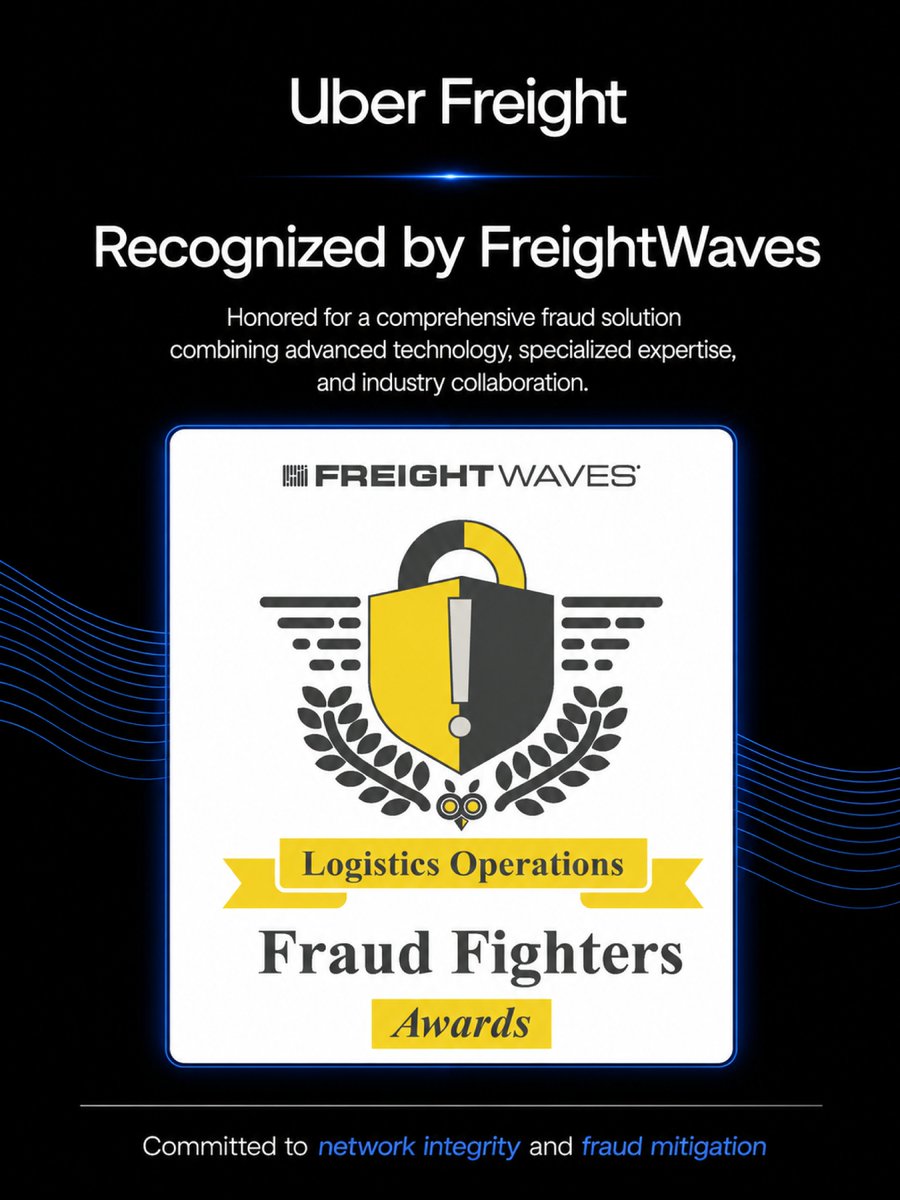
As fraud tactics and operational scrutiny continue rising across the freight industry, the importance of continuous monitoring, strong operational oversight and industry coordination has never been greater.
Uber Freight was honored to be recognized by @FreightWaves in the 2026 Fraud Fighters Awards for efforts supporting operational integrity and fraud mitigation across our freight network.
Our approach combines ongoing carrier monitoring, layered operational safeguards, compliance tooling and collaboration across the broader freight ecosystem to help customers navigate an increasingly complex operating environment.
We’re grateful to the teams, partners and industry organizations working every day to strengthen the resiliency of the freight network.
Congrats to all of the companies recognized this year: freightwaves.com/news/freigh…
4
136
May 19
The freight market continues to shift heading into the second half of the year.
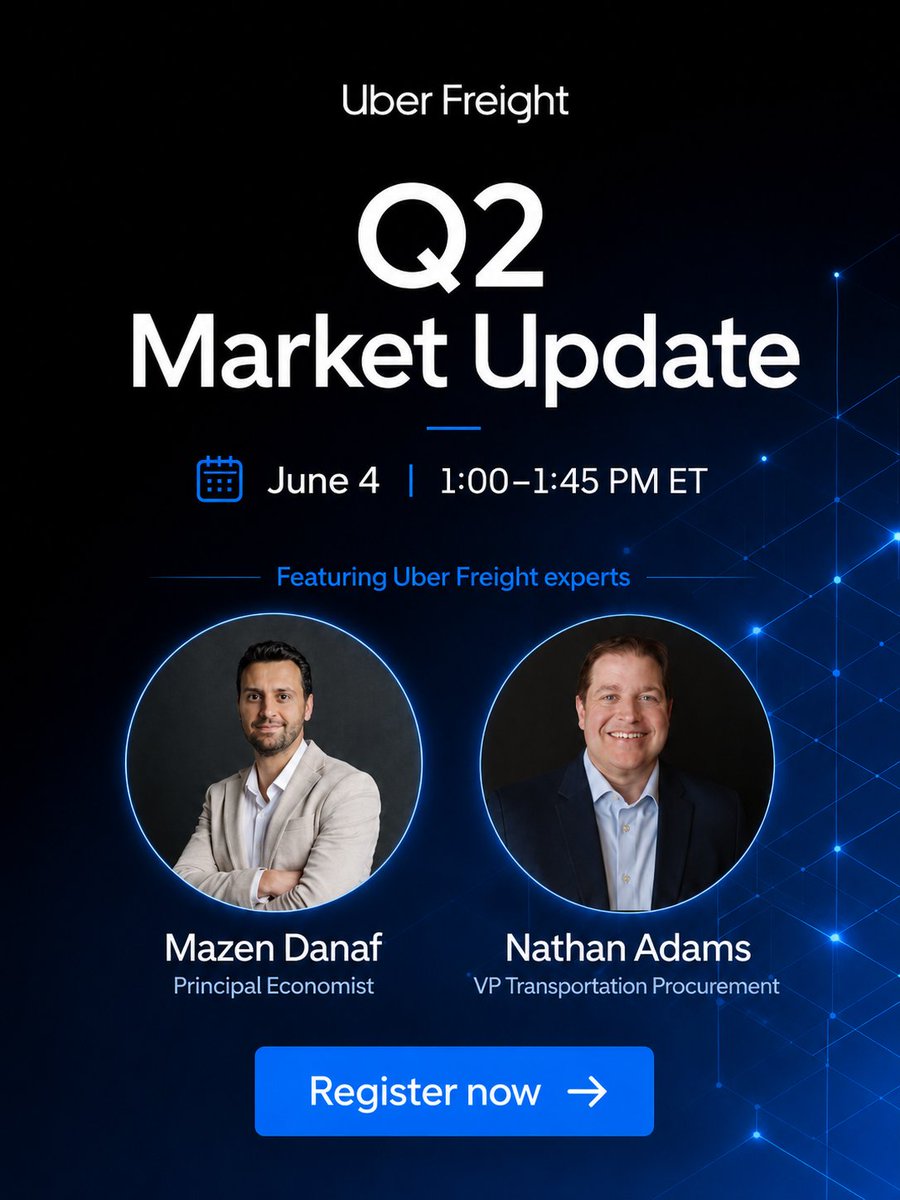
Join Uber Freight experts Mazen Danaf, Nathan Adams, and Peter Rio on June 4 for our Q2 Market Update webinar as they break down the latest signals across rates, capacity, modal trends, procurement strategy, and shipper planning.
Drawing on insights from one of the world’s largest managed transportation networks, the team will share what they’re seeing in the market today—and what shippers should be preparing for next.
Register here: web.cvent.com/hub/events/447…
1
150
May 13
Economic headwinds, fluctuating capacity, and pricing volatility continue to test global supply chains.
Navigating these disruptions in today’s freight market requires strategic foresight—do you have the insights you need?
Join Uber Freight experts on June 4 for our Q2 Market Update webinar. Drawing on data from our own network, they’ll break down the latest market disruptions, rate and modal trends, and share actionable guidance to help shippers prepare for the months ahead.
Register here: web.cvent.com/hub/events/447…
1
135
Uber Freight retweeted

@Uber just posted strong Q1 earnings 💪and there's a lot to feel good about @UberFreight, too
We outperformed on gross bookings - returning to growth for the 1st time in 2 years, to quote @dkhos - and maintained cost discipline in a market that was working against our margins.
7
2
46
7,055
Apr 28
At Uber Freight, carriers are a critical part of how we deliver consistent outcomes across our network. Each year, we recognize the carriers who not only move freight reliably but also help improve performance across lanes, modes, and customers.
Our 2025 Carrier of the Year Award winners represent a diverse set of carriers, from owner-operators to large national fleets, who deliver strong, measurable results and contribute to a more connected, efficient freight network.
Congratulations to all of this year's winners, and a big thank you to every carrier in our network. Your work keeps supply chains moving and enables better outcomes for our customers every day.
Head to our blog to see the full list of winners: uberfreight.com/en-US/blog/u…
2
2
205
Apr 23
Cross-border freight between the U.S. and Mexico is becoming more complex, making early planning essential for shippers to stay ahead.
While nearshoring is driving demand, capacity is tighter than it appears. Much of what looks available is concentrated in high-security, high-compliance corridors. Combined with a growing shortage of drivers, increasing carrier onboarding timelines, and evolving compliance requirements—the time to solidify a strategy is now.
At Uber Freight, our cross-border experts are seeing three trends:
1. Shippers are procuring earlier than usual: Mini-bids and early Q3 planning are signaling that the market expects further tightening.
2. Freight flows are regionalizing: Northwest lanes are increasingly electronics and machinery; northeast lanes skew transportation equipment and metals.
3. Policy and compliance are reshaping freight strategy: Evolving requirements, like MVE, are increasing complexity, costs, and the need for audit-ready operations.
What should shippers do now? Lock in capacity before you need it, build a diversified carrier base with proven compliance track records, and stay flexible on pricing and routing as the market shifts.
For more cross-border insights, check out our Q1 Market Update Report: insights.uberfreight.com/hub…
194
Apr 17
Partnership at scale looks different.
It’s not just about moving freight. It’s about building a more connected network that can support shifting demand, multiple modes, and long-term growth.
Here’s how that shows up in practice with @SamsungUS:
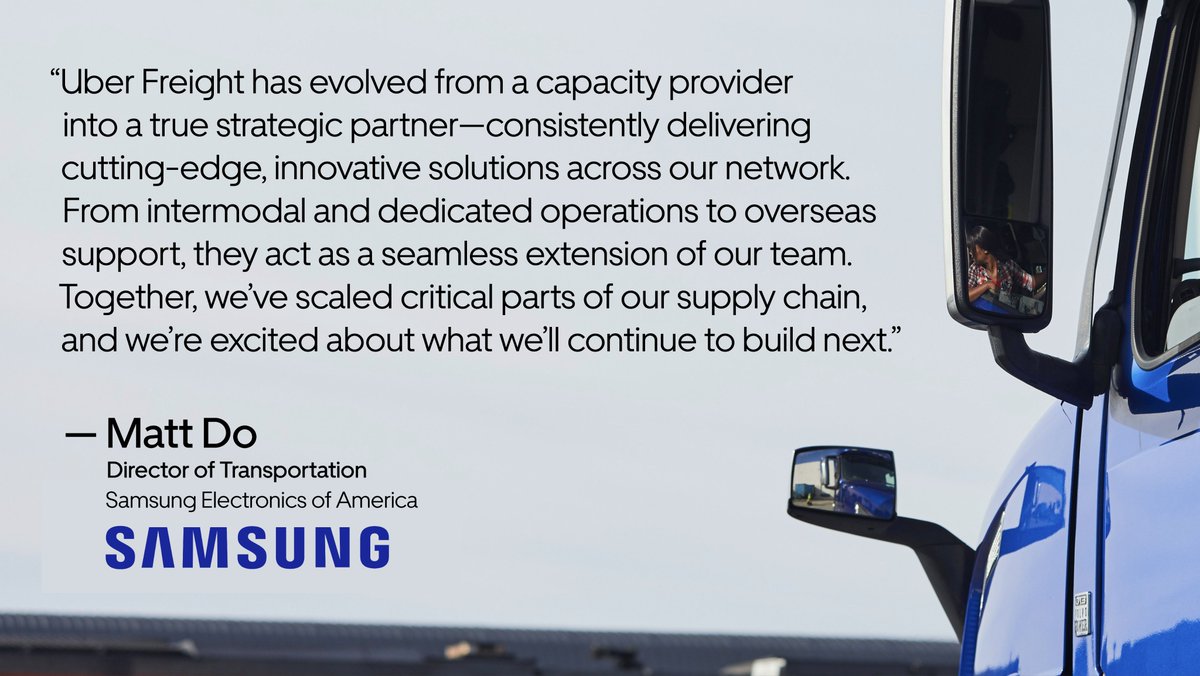
“Uber Freight has evolved from a capacity provider into a true strategic partner—consistently delivering cutting-edge, innovative solutions across our network. From intermodal and dedicated operations to overseas support, they act as a seamless extension of our team. Together, we’ve scaled critical parts of our supply chain, and we’re excited about what we’ll continue to build next.”
Matt Do, Director of Transportation, Samsung Electronics America
See how we support strategic capacity at scale:
uberfreight.com/en-US/soluti…
3
243
Apr 13
Shipment sizes are shrinking and more freight is moving across shared-capacity modes. The economics that once made full truckload the default are shifting, and networks designed around a single mode are absorbing the cost of that mismatch.
The shippers managing this transition most effectively are running FTL, LTL, intermodal, and spot as one connected system.
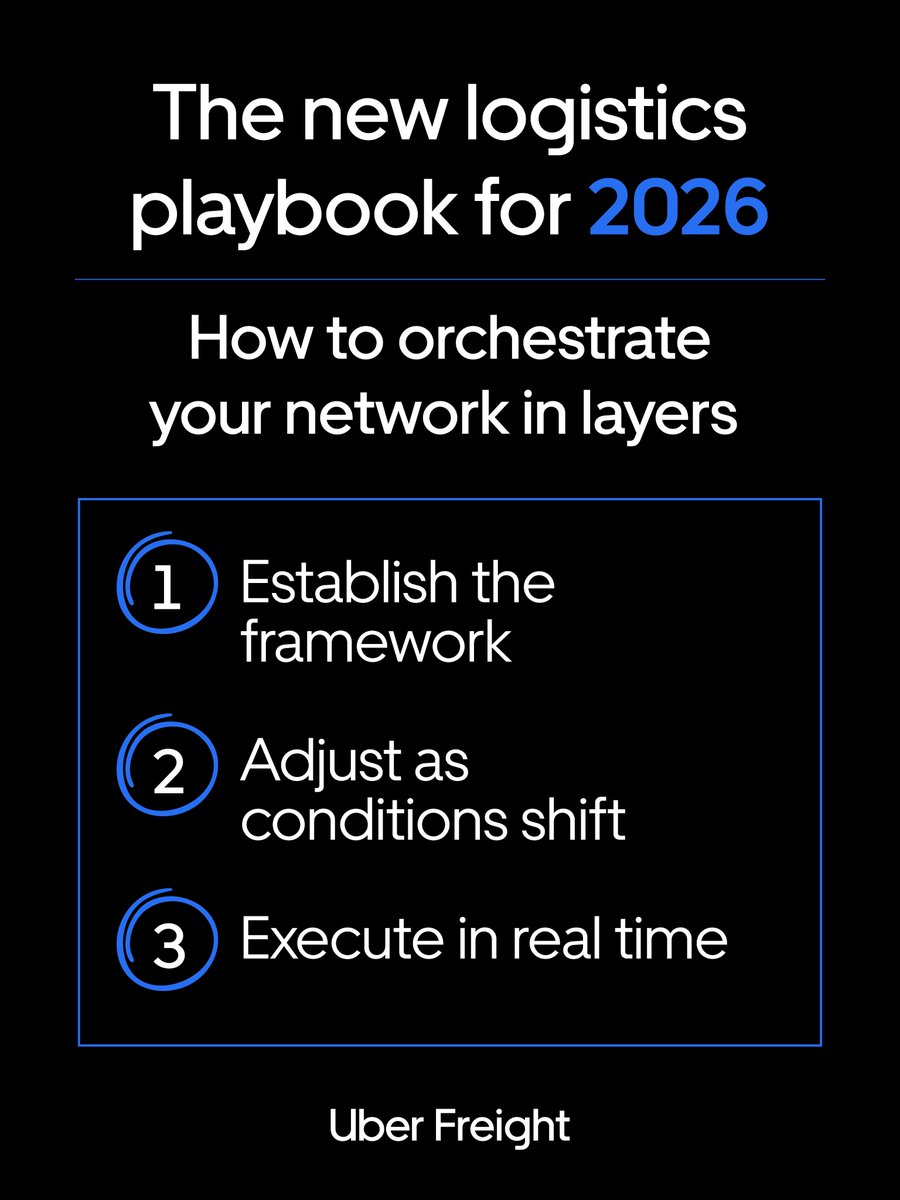
Here's what that looks like across three layers:
1. Strategic layer: Establish the framework. Annual bid events, core carrier selection, and high-level mode mix set the foundation. This is where long-term cost and service targets get locked in and where the parameters for every decision that follows are defined.
2. Tactical layer: Adjust as conditions shift. Quarterly or monthly lane adjustments based on volume changes and performance data keep the network calibrated between strategic events. This is where mode eligibility gets reassessed and where lane-level corrections compound into network-wide savings.
3. Operational layer: Execute in real time. Spot coverage, re-routing, mode shifts, and service recovery happen at this layer. But in a connected network, those decisions draw on the strategic and tactical framework above rather than starting from scratch each time.
When these layers work together, shippers can flex between FTL, LTL, intermodal, and spot as conditions change without losing control of cost or service.
Read more about how shippers are putting these strategies into practice in the new logistics playbook for 2026: uberfreight.com/en-US/blog/n…
1
175
Apr 7
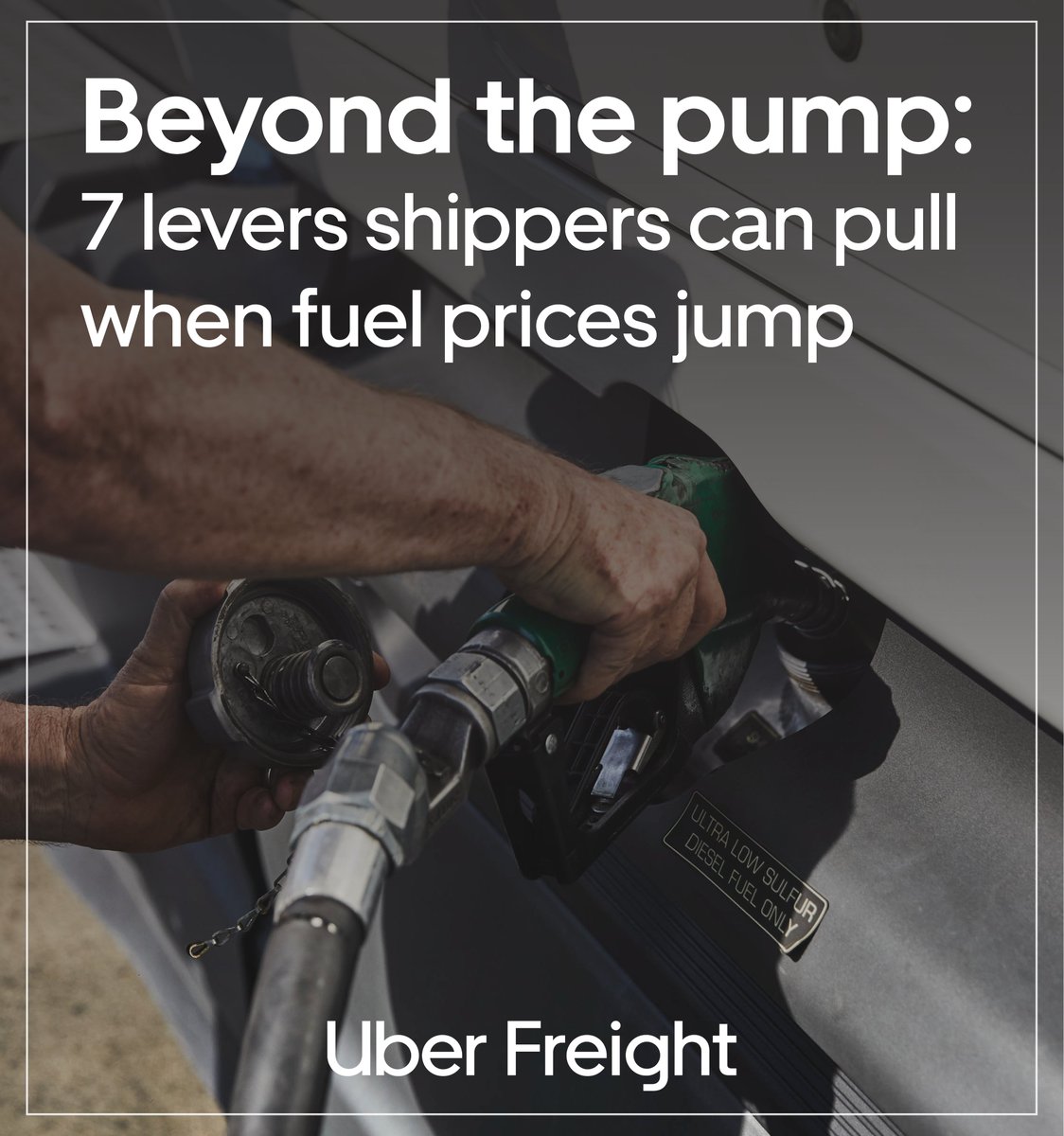
Fuel prices are surging, and shippers can no longer simply pass along costs.
The question now is: How do you structurally use less fuel while protecting yourself from overpaying during volatility? At Uber Freight, we connect data, capacity, and execution across our network to better identify options as conditions change.
Here's what we're recommending to customers right now:
1) Shift the right lanes to intermodal to reduce costs and cut emissions.
2) Separate fuel from linehaul and enforce a fuel matrix.
3) Increase trailer utilization to reduce fewer half-empty loads.
4) Design for consolidation, not just speed.
5) Engineer out empty and waste miles that add unnecessary costs.
6) Evaluate low-emissions and EV options where it makes sense.
7) Use data to continuously rebalance your mode mix and utilization strategy.
Learn more in our latest blog: uberfreight.com/en-US/blog/b…
3
206
Mar 27
The end of the quarter is coming up fast, making now the perfect time to plan for what comes next.
In our Q1 Market Update, we break down the latest market data and share practical steps shippers can take to navigate disruptions and build a more flexible, resilient network.
Watch the replay to learn more ⬇️ youtu.be/4sB2BC3qXqc
1
287
Uber Freight retweeted

Mar 20
Awesome few days on the ground with the @UberFreight team and some of our valued customers
The business has great momentum thanks to @RebeccaTinucci and her LT. I’m more confident than ever we’re going to surprise folks with the impact we’re going to have modernizing logistics
Mar 20

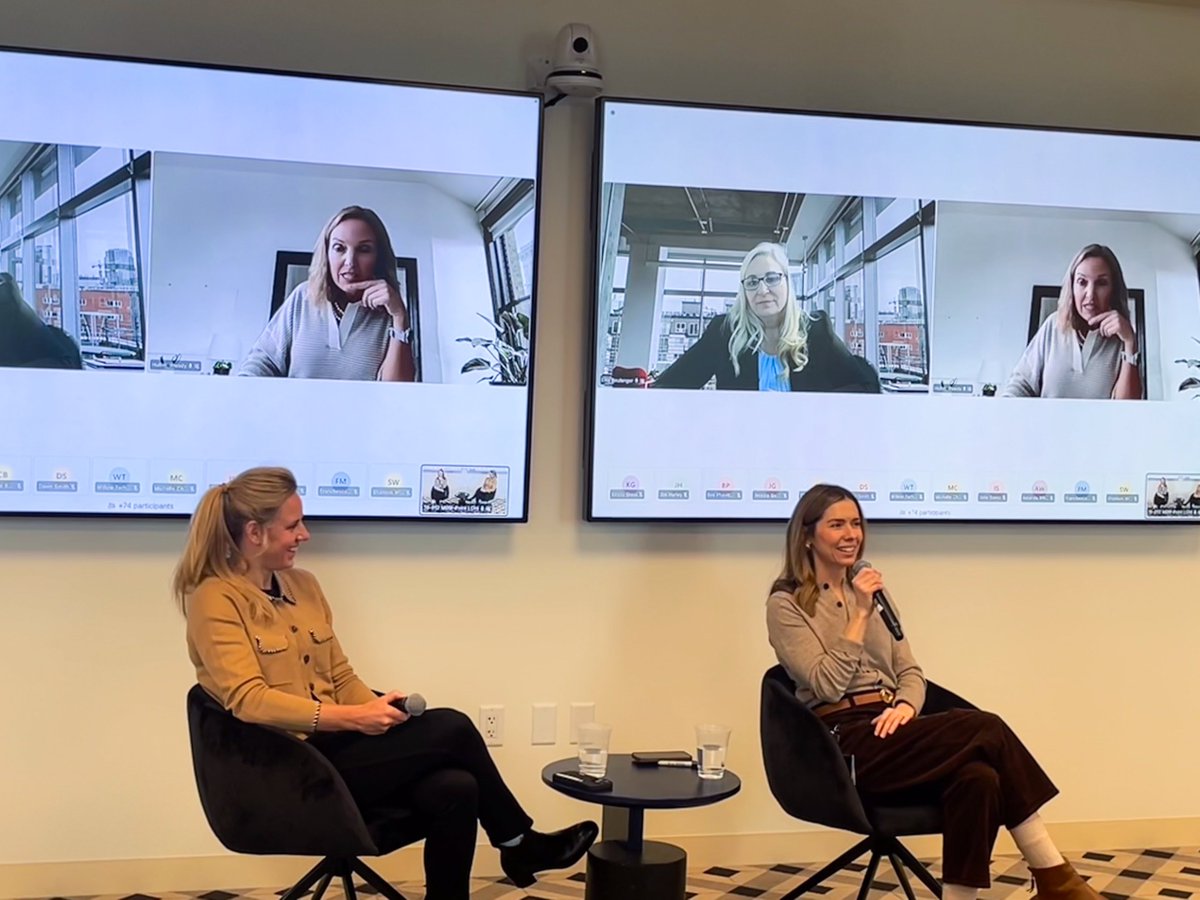
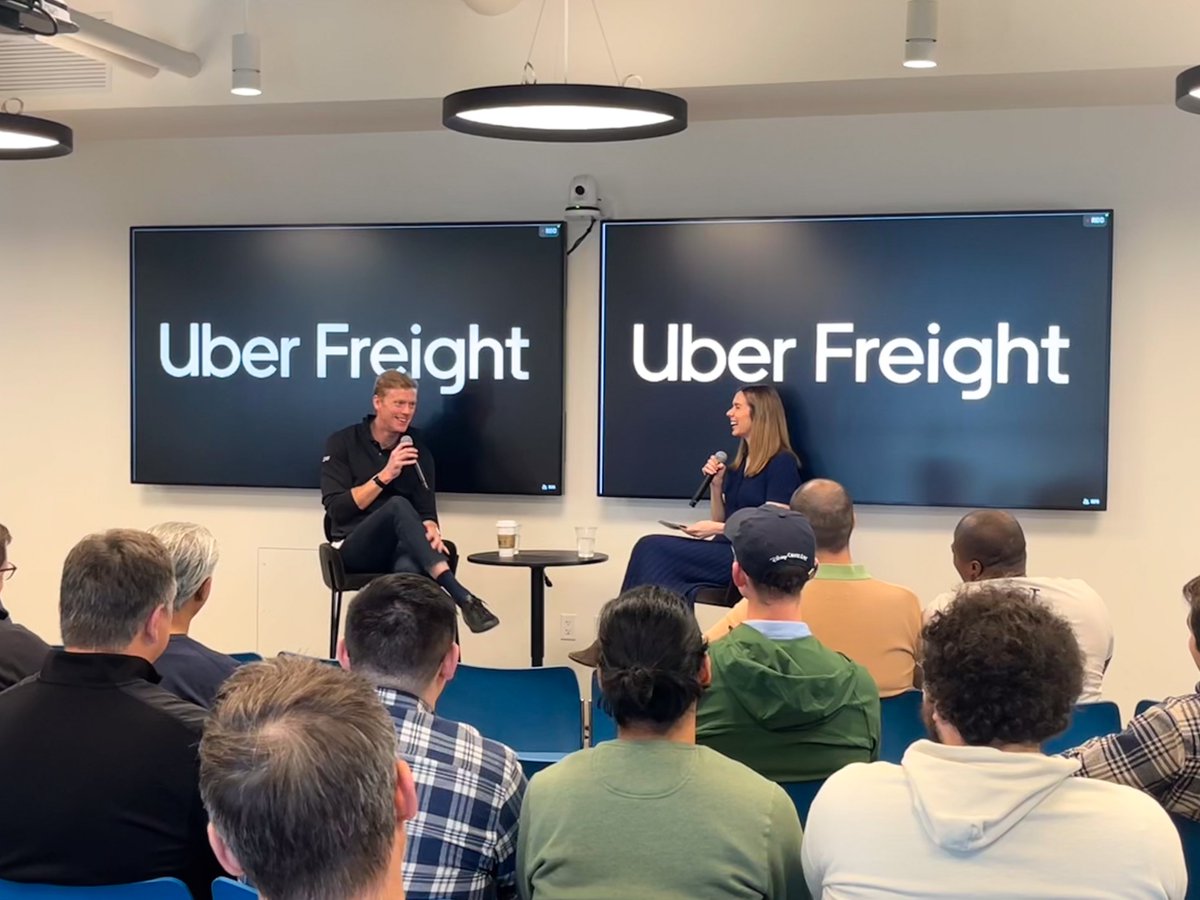
Closing out a great week in Chicago with the Uber Freight team.
Our leadership group spent time together deepening our strategy for the year ahead; we hosted a Women in Leadership conversation with customers and executives, and the company gathered for our Global All Hands.
Thanks to @Uber President & COO @andrewgordonmac for joining @RebeccaTinucci for a fireside conversation with the team, always valuable to connect leadership across the broader Uber platform.
2
2
36
3,894
Mar 20
Closing out a great week in Chicago with the Uber Freight team.
Our leadership group spent time together deepening our strategy for the year ahead; we hosted a Women in Leadership conversation with customers and executives, and the company gathered for our Global All Hands.
Thanks to @Uber President & COO @andrewgordonmac for joining @RebeccaTinucci for a fireside conversation with the team, always valuable to connect leadership across the broader Uber platform.
1
1
8
2,786
Mar 13
Complexity is the theme of 2026. With average U.S. tariffs at their highest levels since 1943 and cargo fraud rising 11% industry-wide, shippers are being forced to rewrite their playbooks in real-time.
Shippers are responding by shortening planning cycles and leaning into flexibility to navigate a "downward bias with high volatility" market.
In our latest report, we break down the key takeaways from the Uber Freight Q1 Market Update, from the impact of Middle East tensions on fuel to the 40,000 annual carrier exits we’re projecting.
Read it here: uberfreight.com/en-US/blog/f…
140
Mar 10
It’s long been standard in logistics for people to review almost every document in the payment process. That work is repetitive, time‑consuming, and takes teams away from the issues that actually need their judgment.
We built DocAI to change that.
DocAI automatically reviews and verifies shipment documents, checking each one against shipment data in real time and moving it forward for payment when everything matches. No manual review for routine cases just faster, more consistent processing.
The result:
✔️ Faster carrier payments
✔️ Higher billing accuracy
✔️ 100% document audit coverage
✔️ More time for our teams to focus on complex issues, not paperwork
This is operational transformation from the inside out.
See how DocAI is reshaping our payment and audit engine: uberfreight.com/en-US/blog/f…
142