
.
Joined February 2019
- Tweets 38,380
- Following 938
- Followers 1,042
- Likes 214,286
1,395 Photos and videos












BigRex retweeted

Jan 5
2 important dots to connect:
1986: IMF Structural Adjustment Program in Nigeria mandates Babangida to liberalise Nigeria's news media and information space. Foreign ownership and funding of mass media is permitted in Nigeria for the first time.
2026: 40 years later, after 2 generations of post-SAP Nigerians have been marinated in American-funded news, "education" and entertainment media for their entire lives, most Nigerians now believe they are Deputy Americans, and hold their primary allegiance to a country they have never been to on another continent. They now support openly imperialist actions by the US and would happily grind their own mothers into paste if the US president tells them to.
Bonus point: The US government owns 17% of the IMF, which requires an 85% voting majority to take decisions. This means the US holds veto power in the IMF, and the IMF is functionally an extension of US foreign policy.
86
1,399
2,976
244,888

14h
I hope it’s crystal clear now.

JUST IN: 🇳🇬 IMF has told the Nigerian government to impose fuel and telecom taxes on Nigerians, to increase government revenue.
Nigeria is currently the number 1 country with the lowest quality of life.


8
14h

So if Peter Obi becomes President, banditry and terrorism will end?
Please stop being pedestrian...
14h
Real talk!
Jun 14

Banditry is not surviving in Northern Nigeria merely because of government failure. It is surviving because the North, over time, has built an ecosystem that allows it to thrive.
Behind the man with the gun, there is often a village that fears him or protects him. There is a relative who knows where he sleeps. There is an informant who watches the road. There is a supplier who sells him fuel, food, motorcycles, or ammunition. There is a negotiator who profits from ransom. There is a praise singer who turns him into a legend. There is a politician who makes statements after every tragedy and returns to silence. And there is an educated northern public that can trend gossip or sex scandals for days but treat mass abduction like bad weather.
That is the part we do not like to say.
The forest did not create banditry. It simply gave it room to grow.
Banditry in Northern Nigeria did not begin today. Long before today’s headlines, northern trade routes and rural frontiers had a history of armed raids, cattle theft, attacks on traders, and criminal gangs operating in places where authority was weak.
That is one of the ironies of our history. Many people today, especially in Southern Nigeria, look at banditry and conclude that Nigeria should break apart. Yet insecurity along northern routes was one of the problems colonial rule claimed it was trying to solve when Nigeria was amalgamated in 1914.
Colonial authorities quickly discovered that the frontier was far less obedient than the maps they drew. Trade routes were disrupted by raids and ambushes. Traders and herders faced harassment. Rural authority was weak. Roads were unsafe. Violence had already become part of the region’s political economy. Even Lugard himself had some skimishes with armed bandits.
So the problem is old.
What changed was the scale, the weapons, the money involved, the collapse of local restraints, and the weakness of the modern state.
The modern form of banditry did not begin with mass kidnappings or attacks on schools Either. It started in ways that seemed smaller and easier to ignore.
In many rural parts of Zamfara, Katsina, Sokoto, Kebbi, and neighbouring areas, the first signs were cattle theft, highway robbery, and revenge attacks between communities. One man’s cattle would be stolen. Another group would retaliate. Villages accused one another of helping criminals. Violence gradually escalated.
This was the environment that produced men like Kundu and Buharin Daji.
Today, they are remembered as notorious bandit leaders. But before they became feared names, they emerged from communities already struggling with insecurity, poverty, and weak government presence.
In those communities, cattle were not just livestock. They were savings, school fees, food, and family wealth.
Losing fifty cows could mean losing everything.
At the same time, many people felt abandoned by the state. Some villages rarely saw police officers. Others believed security agencies only arrived after attacks had already happened. Many felt the courts were too slow or too corrupt to provide justice.
Then communities formed vigilante groups to defend themselves.
In many places, people welcomed them because they were desperate for protection. Nobody should mock people for trying to survive when the state has failed them. But over time, some vigilantes were accused of targeting entire Fulani communities instead of focusing on criminals. Others were accused of killing suspects without trial or punishing innocent people for crimes they did not commit.
Whether every accusation was true or not, the stories spread.
Young men heard that relatives had been beaten, arrested, or killed. They heard that Yan Sakai groups treated every Fulani man as a suspect. They heard that nobody would protect them. They believed nobody would listen to them.
Every abuse became evidence.
Every dead relative became a story.
Every injustice became a recruitment tool.
That does not excuse banditry. But It explains how it grows.
Some men entered the bush claiming self-defence. But to survive in the forest, they needed guns. Guns cost money. So they stole cattle. The stolen cattle were sold to buy more weapons. The more weapons they bought, the stronger they became. The stronger they became, the more young men joined them.
What may have started as a claim of self-defence slowly turned into organised crime.
But that was one doorway into banditry.
Another doorway was greed.
Not everyone entered the bush with a grievance. Some people simply saw that violence had become profitable. A man with a gun could steal cattle, collect levies, block roads, command fear, settle scores, and become more powerful than the honest farmer or herder trying to survive.
Once crime begins to pay more than work, society has already started advertising criminal life to desperate young men.
Then the cycle began feeding itself.
A man buys weapons for “self-defence.” Then he needs boys to carry those weapons. The boys need food. The food needs money. The money comes from cattle rustling. The rustling brings retaliation. The retaliation brings more weapons. More weapons bring more recruits. More recruits bring more mouths. More mouths bring more raids.
At some point, the original excuse dies, but the business continues.
That is how a grievance becomes an economy.
From there, the violence became more organised. Cattle rustlers became armed commanders. Armed commanders became negotiators. Negotiators became local power brokers. Eventually, some became men that governments found themselves bargaining with.
This is where figures like Dogo Gide and Awwalun Daudawa enter the story. They represent the stage where banditry moved beyond cattle rustling and rural raids and became a full ransom economy.
Roads became dangerous. Villages became sources of taxation. Farmers paid levies before harvesting crops. Travellers became targets. Schools became opportunities.
Daudawa’s role in the Kankara school abduction changed the trajectory of modern banditry. It showed that abducting schoolchildren could generate far more attention, pressure, and profit than traditional kidnappings.
Kankara opened the floodgates.
Bandit leaders across the region watched the panic, the headlines, the negotiations, and the pressure on government. What once seemed extraordinary quickly became a template. Schools became targets. Children became bargaining tools in a criminal economy.
But there is a question that should bother anyone who thinks seriously about this problem.
How do hundreds of schoolchildren get moved across difficult terrain by men on motorcycles and disappear into forests for days or weeks? How do armed men move, feed themselves, communicate, negotiate, and avoid capture across vast territories?
The answer is simple.
Bandits do not operate alone.
They rely on informants. They rely on people who know the terrain. They rely on suppliers. They rely on people who help them sell stolen cattle and buy weapons. They rely on negotiators who contact families and governments during ransom discussions. They rely on relatives, sympathisers, and terrified communities where silence has become a survival strategy.
As the Minister of Defence put it, the people around them are the oxygen of the business.
That is the ecosystem.
The men carrying the guns are only one part of it.
In many cases, people around them know who they are, where they operate, who supplies them, and who benefits from their activities. Some stay silent because they are afraid. Others stay silent because they are related to them. Some profit from the system. Others simply do not want trouble.
That is one reason banditry is so difficult to defeat.
But this ecosystem is not only about food, fuel, weapons, and informants. It also has a cultural side.
For generations, northern societies have had traditions of celebrating powerful and feared men. Figures like Kasu Zurmi and Gambo belonged to an older culture in which outlaws could become larger than life through stories, songs, and folklore.
Modern banditry inherited that tradition and adapted it.
Today, singers such as Late Suraju, Adamu Ayuba, Hamadu Makaho, Malam Jaka, Megari, and others help circulate the names of contemporary bandit leaders. The medium has changed, but the function remains the same. The criminal is transformed into a figure of prestige.
That matters because prestige attracts followers.
A young man is more likely to join a movement when its leaders are treated as powerful men rather than ordinary criminals. The praise song becomes part of recruitment. It becomes part of intimidation. It becomes part of the mythology that keeps the ecosystem alive.
Social media has only expanded the reach of that mythology.
The videos of bandits displaying weapons, cash, motorcycles, and armed escorts are not random acts of vanity. They advertise power. They project invincibility. They reinforce the status of particular commanders within the hierarchy of banditry.
But this is where the argument must leave the forest and enter the city.
Yes, communities around bandits have questions to answer. Some people are terrified. Some are trapped. Some are benefiting. Some know who supplies information. Some know who suddenly became wealthy. Some know which houses receive suspicious visitors. Some know which young men disappeared into the bush and later returned with money, motorcycles, women, and guns.
But the problem is not limited to rural communities.
The educated North also bears responsibility because too many of us have become accustomed to northern suffering.
A leaked chat can dominate discussion for days. A celebrity scandal can dominate discussion for days. Social media drama can dominate discussion for days. Yet villages are attacked, students are kidnapped, farmers are taxed by criminals, highways become unsafe, and entire communities are displaced, only for public outrage to disappear almost immediately.
We have attention.
We simply waste it.
That is why I struggle when people say the North lacks media power. The problem is often not the absence of a voice. The problem is how that voice is used.
We can spend endless hours discussing gossip, politicians, celebrities, tribal disputes, religious arguments, and social media controversies. But when farmers are paying taxes to criminals before harvesting their crops, many people suddenly lose interest.
That silence matters because banditry benefits when society quickly moves on. It benefits when attacks become routine news. It benefits when politicians know public anger will fade within days.
Compare this with Southern Nigeria. The South is far from perfect. It has its own problems, hypocrisies, and distractions. But when insecurity affects some southern communities, the public reaction is often different. People organise. Unions speak out. Community leaders are pressured to respond. The media keeps the issue alive.
In the North, we have become used to horror.
That is not resilience.
It is decay.
There is nothing admirable about becoming comfortable with the abnormal. The more we normalise it, the easier it becomes for leaders to ignore it. The easier leaders ignore it, the stronger the criminals become.
The farmer who cannot farm affects food prices in the city. The trader who cannot travel affects markets. The child who cannot attend school affects the future. A village paying levies to bandits is not buying peace. It is financing future violence.
Banditry does not stay in the forest.
The first thing we must do is strip away the romance.
The bandit is not a hero. He is not a defender. He is not a freedom fighter. He is not protecting any community by taxing poor villagers, kidnapping travellers, destroying farms, and turning schoolchildren into bargaining chips. Whatever grievance may have existed at the beginning has long been overwhelmed by criminality.
The second thing is to confront the ecosystem around him.
Praise singers are not harmless entertainers. Informants are not minor actors. Negotiation rackets must be exposed. Communities that knowingly protect criminals must face consequences, while innocent communities must be protected from vigilante abuse.
Security operations must be firm without becoming ethnic revenge. Traditional leaders must be held accountable. Rural economies must be rebuilt so that young men do not see the bush as their only path to power.
And the educated North must stop acting like spectators.
If we can make gossip trend, we can make the names of attacked villages trend. If we can spend days arguing about celebrities, we can spend days demanding action from governors. If we can organise political rallies, weddings, naming ceremonies, and religious gatherings, we can organise sustained pressure around insecurity.
This is not about blaming victims. Many northern communities are trapped between bandits, vigilantes, poverty, and a failing state.
But a society that wants to survive must tell itself the truth.
These men do not come from nowhere.
They come from communities. They rely on relationships. They depend on information, supplies, money, prestige, fear, and silence.
Until the North confronts the entire ecosystem, we will keep chasing the man with the gun while ignoring everything that allows him to keep fighting.
2
14h
Muritala Muhammed opposed the US, sided with Cuba against South Africa/US allied forces in the Angolan war.
Ten days later he was ass*ssinated.
Personally I don’t really like him because of what he did during the Nigerian civil war but anyone who can give the US President the middle finger must have had balls of steel.
Respect to Him.
Jun 14

"Is it the CIA that told your govt to tax their citizens?"
"CIA 😂😂😂"
Dead brains walking🤡
2
1
10
245
16h
From where to where ?

🚨💣 EXCLUSIVE: Real Madrid reach verbal agreement to sign Marc Cucurella from Chelsea, HERE WE GO!
Verbal agreement in place between all parties, player too — he’s the left back wanted by Mourinho. Details to follow.
Cucurella leaves #CFC and joins Madrid after World Cup. ⚪️🇪🇸

1
16h
Beats me how he doesn’t have at least one Ballon d’Or.

2
Jun 13
“Make I work for am one day him fit change my story”
Lollll
Jun 13

Dino Melaye gateman no fit afford to sort 3k for mechanic to come service his cars…. Says the kind of people Nigerian politicians are💔💔
37
Jun 12
Argooooo 🤦🏿♂️🤦🏿♂️🤦🏿♂️
Misumidaaa!!!
Few of the many Korean languages i know

44
Jun 11
Something Something Abacha’s military regime

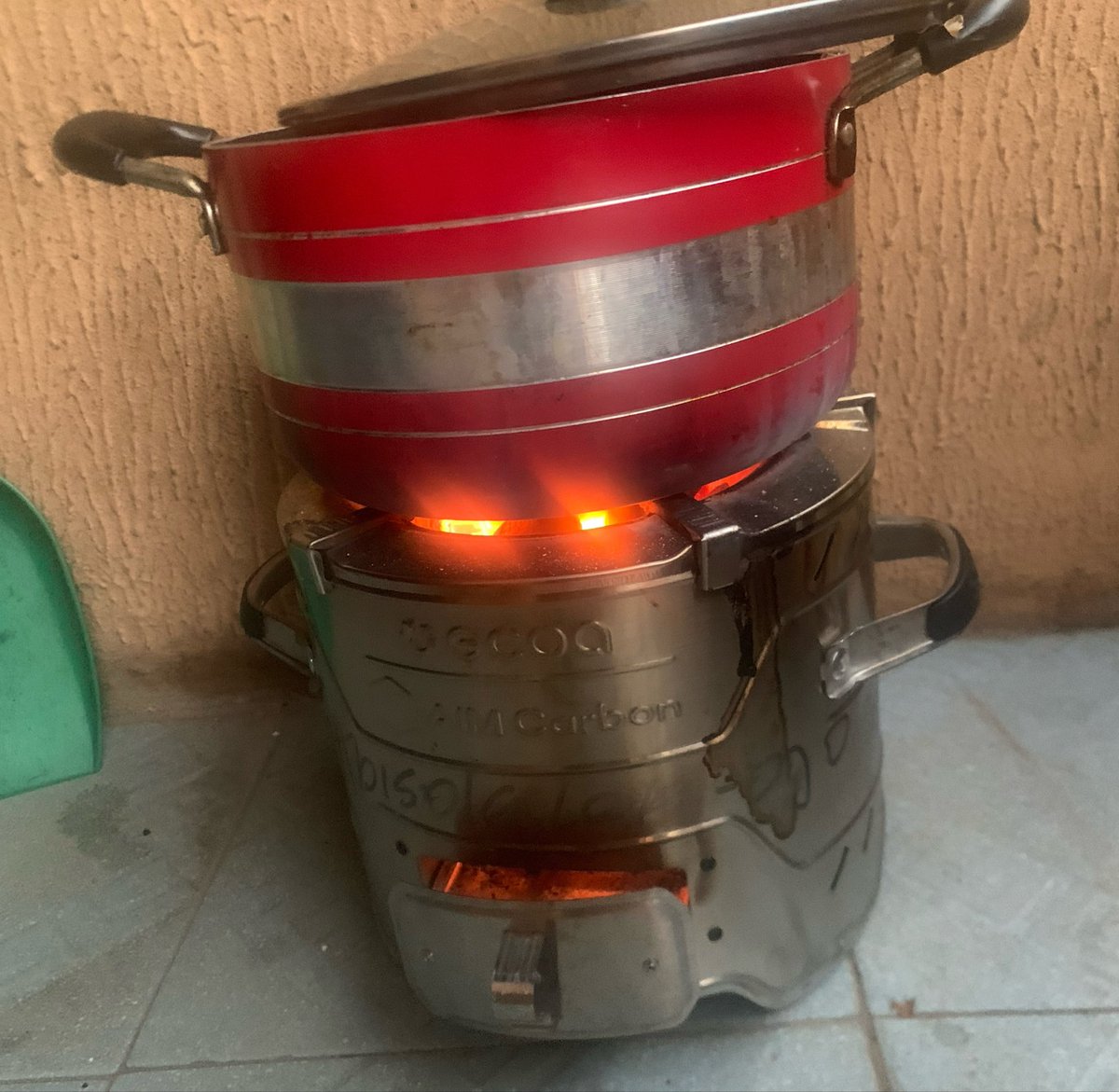
2000 Naira per Kg of gas? When One bag of charcoal is 6k! I don go buy coal pot.
5
Jun 9
I can relate like!
Jun 8

No entiendo cómo puede ser. Vi a Michael Jackson morir, a Maradona morir, a Pelé morir, a la reina Isabel morir; vi pasar a tres papas. Sobreviví a una pandemia, vi el comienzo de internet. Vi el CD cambiar a Spotify, vi cambiar el DVD a Netflix, vi pasar del teléfono fijo a un iPhone. Y estoy viendo el surgimiento de la IA. Y solo tengo 30 años.
1
BigRex retweeted

Jun 7
doing things that makes you forget you have a phone >>>>>>>>
472
11,583
65,117
1,338,483
BigRex retweeted

Jun 6
All these years, they fed us Russian, Chinese, Iranian, propaganda when it was actually Israel.
312
7,899
47,665
423,053
BigRex retweeted

The Iranian navy, which has been destroyed eight times, has apparently closed the Strait of Hormuz again, because the United States, for the seventh time, won the war that wasn’t a war, so now the United States has to open the Strait of Hormuz that was already open before the not-war began.
The not-war began because Iran had uranium that was totally, completely, beautifully obliterated, so they can’t build the nuclear bomb they weren’t building, which is why the United States had to start the not-war it definitely didn’t start.
Now the United States, which has nuclear weapons, is threatening to use nuclear weapons to stop Iran from getting nuclear weapons, because nuclear weapons are far too dangerous for countries with nuclear weapons to allow other countries to have.
If the United States saw the United States doing what the United States does in other countries, the United States would invade the United States to liberate the United States from the tyranny of the United States.
2,705
34,528
103,409
3,517,785
BigRex retweeted

May 9
if you have a strong faith of buying your first car this year, retweet. 🔃
479
20,745
37,423
714,401

Jun 2
Believe in Karma yet Pablo T became my President against my wish
Funny Lots 😅
Jun 2

You want me to believe in karma when the slave owners entire bloodline has been rich since 1450😂
10
Jun 2
Chelsea is Like Nigeria, Sometimes she makes us proud and sometimes she gets on our last nerves so we show our disapproval through curse words, bants and sometimes protests but that doesn’t mean a rival country/opponent has the right to do same.
We No be Mate Please!
Jun 2

Can we all agree that Chelsea fans are bullies?
Not in a bad way though cos we bully other fanbase to keep them in check for societal sanity.
By the way, we start with ourselves though cos why not?
Doesn’t charity begin at home?😂😂
1
2
42