
Together we stand, divided we fall. We want Glazers out!
Joined August 2017
- Tweets 1,734
- Following 315
- Followers 112
- Likes 161
197 Photos and videos










Gasser of manc retweeted

May 26
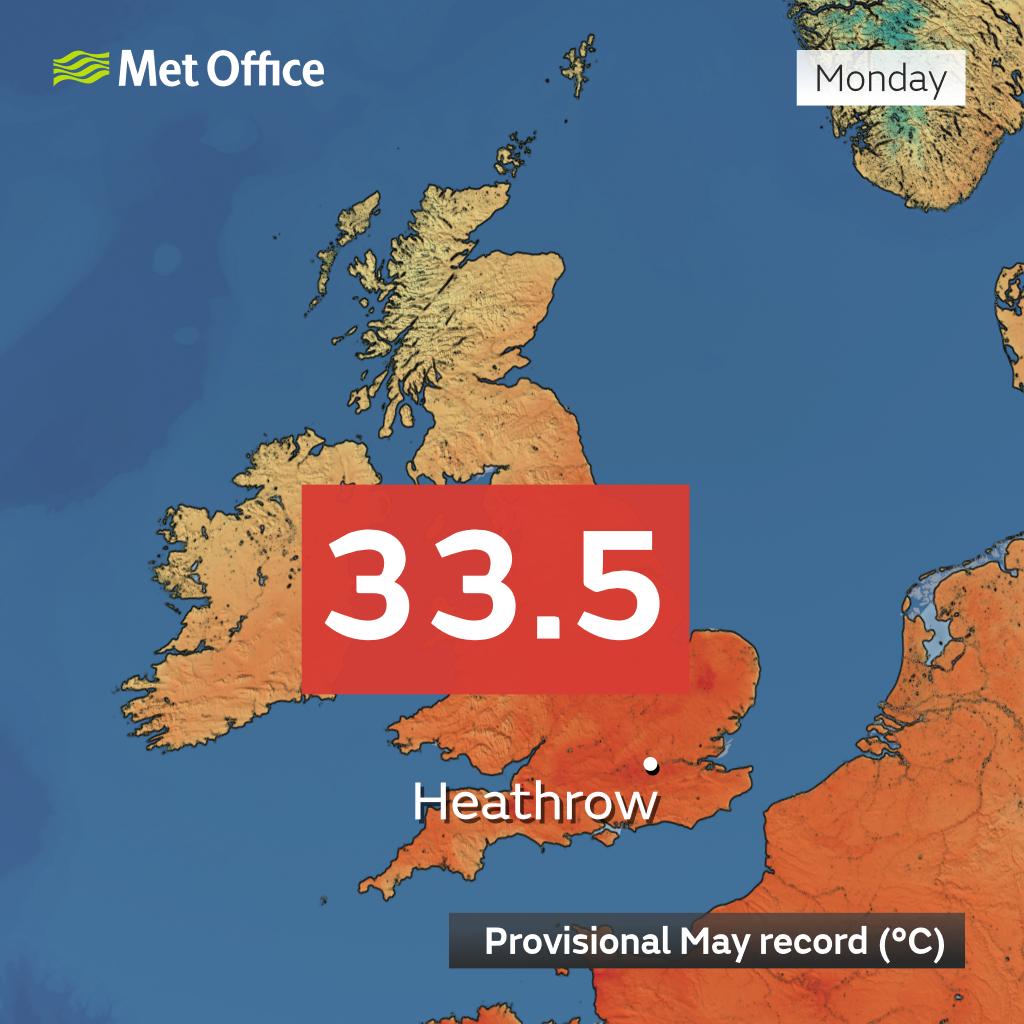
More bogus "climate records" coming out of @metoffice. Here's our guide to how these records are created. @TomANelson @Martin_Durkin
23
260
513
29,524
Gasser of manc retweeted

May 25
So, let me get this straight, after decades of global warming, we've matched a temperature that happened 82 years ago.....

BREAKING: The all-time May record temperature of 32.8C has been matched for the first time in 82 years
news.sky.com/story/weather-l…
168
3,164
18,142
342,216
Gasser of manc retweeted

May 24
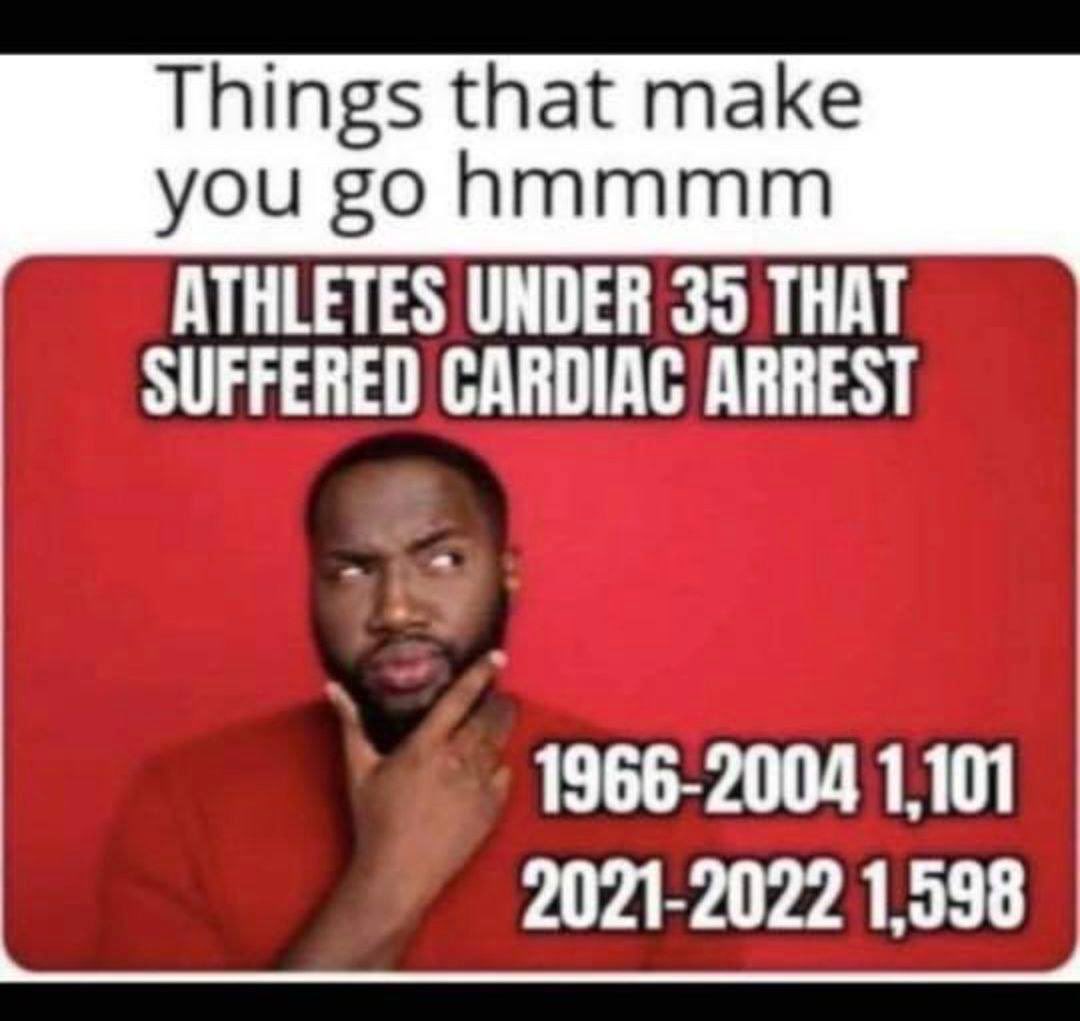
So an average of 30 cardiac arrests a year in athletes under 35 1966-2004 and then 1598 in one year, which just happens to be the year that the Covid shots were rolled out. Nothing to see here please move along said the politicians and the legacy media!
210
2,627
5,455
68,269
Gasser of manc retweeted

This is huge. It deserves mainstream news coverage

🚨Ron Johnson drops the HAMMER at RFK's Senate Hearing:
“They HID the myocarditis signal…
They HID the stroke signal…
They MASKED adverse events in VAERS.”
“There are a BUNCH of people involved in this COVER-UP who still work within HHS, CDC, and FDA.”
Subpoenas are coming.
@SenRonJohnson
120
2,421
5,685
189,878
Gasser of manc retweeted

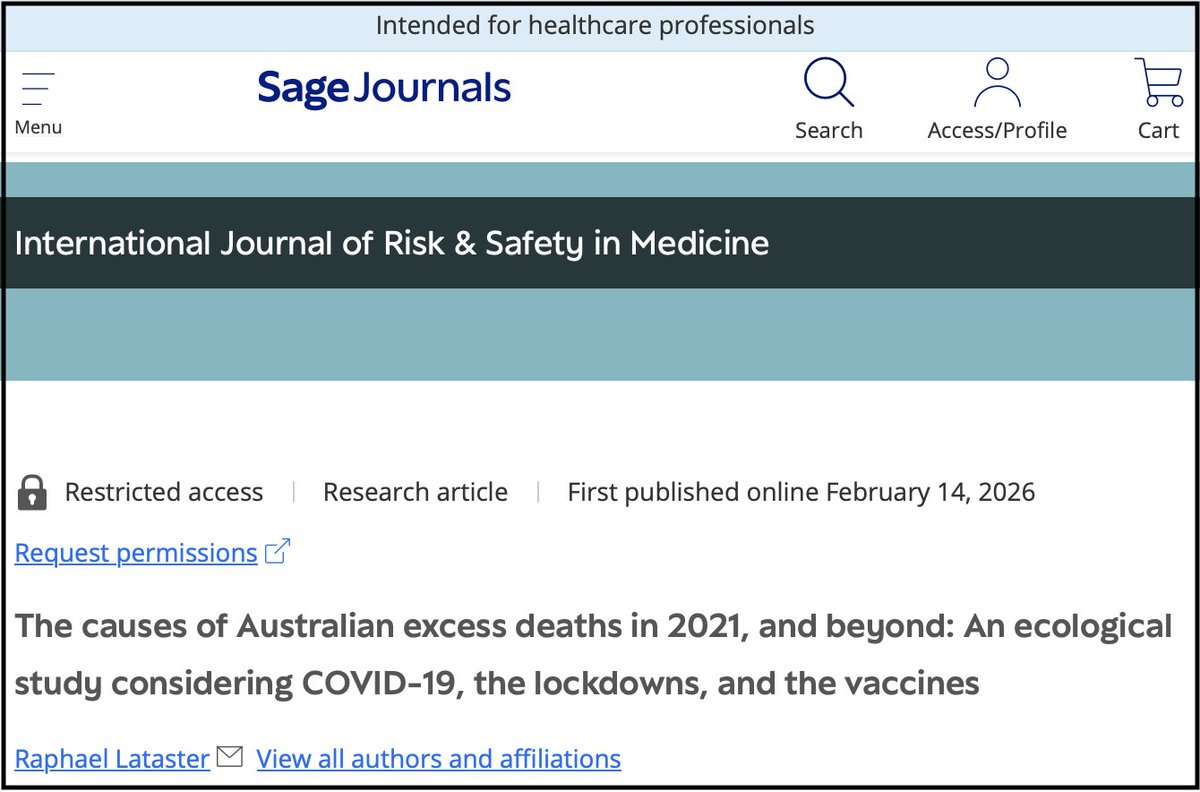
Well I think this pretty much proves that the mysterious excess deaths we're seeing around the world, even after the pandemic, is (at least partly) caused by COVID-19 vaccines. My ecological study on certain Australian regions rules out COVID-19 itself and the lockdowns. Very relieved to see this in print, and by a top 5 academic publisher, no less. Link in pinned comment.
98
653
1,693
338,475

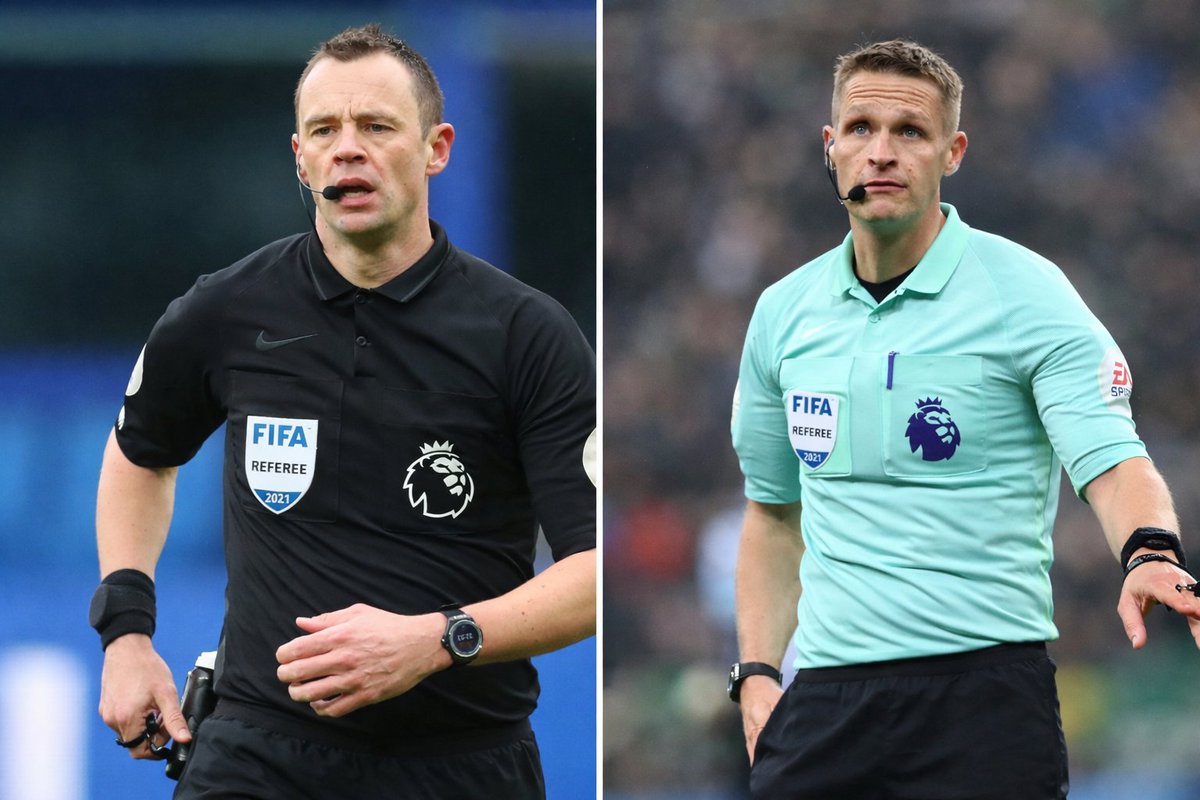
If you think these decisions from Attwell and Pawson are just mistakes, you’re wrong.
Take a look at the list below:
𝐒𝐭𝐮𝐚𝐫𝐭 𝐀𝐭𝐭𝐰𝐞𝐥𝐥 (𝐑𝐞𝐟𝐞𝐫𝐞𝐞 / 𝐕𝐀𝐑)
1. Bournemouth 2–2 Man Utd (March 2026): Attwell ignored a clear foul on Amad in the box with no VAR intervention, but later awarded a soft penalty and red card to Maguire for a similar incident. The decisions sparked outrage, with fans and pundits calling them inconsistent and baffling.
2. Burnley vs Man Utd (Jan 2026): Attwell and Pawson disallowed Martínez’s equaliser for minimal contact, later ruled incorrect by the KMI Panel. Fans saw it as another costly and unjust decision by the same duo.
3. Middlesbrough vs Man Utd (FA Cup 2022): As VAR, Attwell allowed a goal despite a clear handball in the build-up, leading to United’s elimination. The incident remains a widely cited example of a major officiating error against the club.
4. Chelsea vs Man Utd (2021): Attwell denied a clear penalty and reportedly ignored VAR advice to avoid controversy. The decision fueled long-term frustration among fans over perceived reluctance to make big calls.
𝐂𝐫𝐚𝐢𝐠 𝐏𝐚𝐰𝐬𝐨𝐧 (𝐑𝐞𝐟𝐞𝐫𝐞𝐞 / 𝐕𝐀𝐑)
1. Brentford 3–1 Man Utd (Sept 2025): Pawson awarded a penalty but failed to send off Collins for a clear DOGSO offence, with VAR not intervening. The KMI Panel later confirmed it as a major error, with fans believing it impacted the game’s outcome.
122
974
3,677
206,283
Gasser of manc retweeted

242
1,829
7,518
234,714
Gasser of manc retweeted
157
1,498
6,422
190,673
Gasser of manc retweeted

Mar 1
The mask never takes long to slip for Brent. 'For them to get a pen-' before quickly correcting himself to say 'for us', it is a clear penalty & clear red card as per the rules.
He's not a Manchester United fan. Just a paid actor - & a bad one at that.
187
164
1,350
152,681
Gasser of manc retweeted
228
2,250
8,198
253,226
Gasser of manc retweeted
The alternative line up mug has been a merch staple for years. All the names on one lovely little mug.
This seasons is a little late, but better late than never and all that.
Fancy one? You can grab one here:
redmancdesigns.com/products/…

21
32
480
55,911
Gasser of manc retweeted

Feb 16
Important...
There was NEVER a 97% "consensus" regarding Global Warming - it was manufactured...many of us who have degrees in environmental studies have disputed this nonsense - here is the full facts to show the truth...
Feb 15

𝐓𝐡𝐞 𝟗𝟕% 𝐂𝐨𝐧𝐬𝐞𝐧𝐬𝐮𝐬 𝐌𝐲𝐭𝐡 𝐃𝐞𝐛𝐮𝐧𝐤𝐞𝐝
One of the most pervasive myths in science is that 97% (or sometimes stated as >99%) of “climate scientists” agree that all global warming since the mid-19th century is human-caused and that this warming is an existential threat to the welfare of the planet and all life on it.
Except, this statistic is largely made up, and no matter how many times it is quashed, it persists as a talking point in online forums.
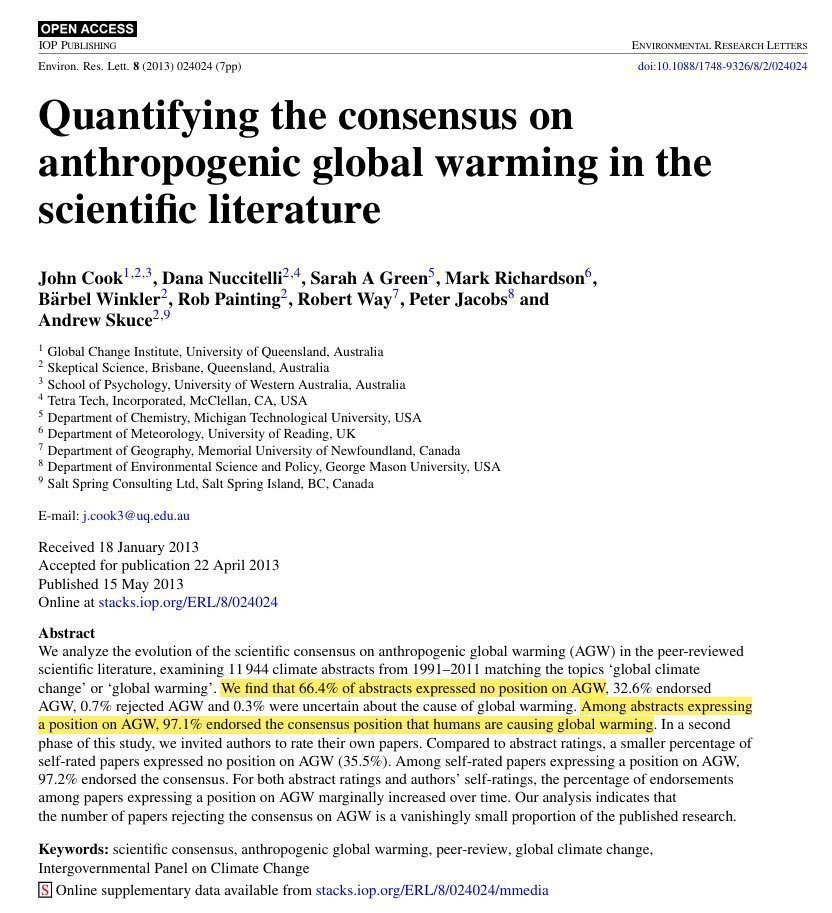
The “consensus of scientists” is not organic. Rather, it was manufactured through questionable methods in two studies, both published in Environmental Research Letters (ERL): Cook et al. (2013) and Lynas et al. (2021).
Let's look closer at these studies. 🔎
𝐓𝐇𝐄 “𝟗𝟕% 𝐂𝐎𝐍𝐄𝐒𝐍𝐒𝐔𝐒”
The paper that got this all started was published in ERL in 2013.
🔗 iopscience.iop.org/article/1…
Led by cognitive psychologist John Cook—a Senior Research Fellow at the Melbourne Centre for Behaviour Change and founder of the climate blog, Skeptical Science—he and eight co-authors skimmed the abstracts of 11,944 climate-related papers published between 1991 and 2011.
Of the 11,944 abstracts, a total of 7,930 (66.4%) of them expressed 𝒏𝒐 𝒑𝒐𝒔𝒊𝒕𝒊𝒐𝒏 on the cause(s) of global warming since the pre-industrial era.
Of the remaining 4,014 abstracts that endorsed either anthropogenic global warming (AGW) or natural global warming, 3,896 (97.1%) endorsed AGW in at least some capacity, while 78 (1.9%) questioned or rejected AGW. The remaining 40 (1%) of papers expressed uncertainty.
But, it gets even more nuanced than that if we look at the abstracts and pick them apart. On whether global warming is being caused entirely by human activities, by nature, or by a combination of both, of those 4,014 papers, they state warming is caused:
🔴 Entirely by humans: 64 papers (1.59%)
🟤 >>50% by humans: 922 (22.96%)
🟡 Equally natural man-made: 2,910 (72.50%)
🟢 >>50% by natural cycles: 54 (1.35%)
🔵 Man is causing no warming: 24 (0.60%)
🤷 Don't know: 40 (1.00%)
So, a “97% consensus” can be contrived by either (a) omitting the 7,930 (66.4% of) abstracts in the 11,944-paper sample that did not explicitly state a position on the drivers of global warming, or by (b) lumping all 3,896 abstracts that endorsed at least some anthropogenic component as entirely endorsing AGW.
Either way, that's sausage-making. 🌭
But, what about the >99% consensus?
𝐓𝐇𝐄 “>𝟗𝟗% 𝐂𝐎𝐍𝐄𝐒𝐍𝐒𝐔𝐒”
Like Cook et al. (2013), Lynas et al. (2021) attempted to quantify the consensus on AGW.
🔗 iopscience.iop.org/article/1…
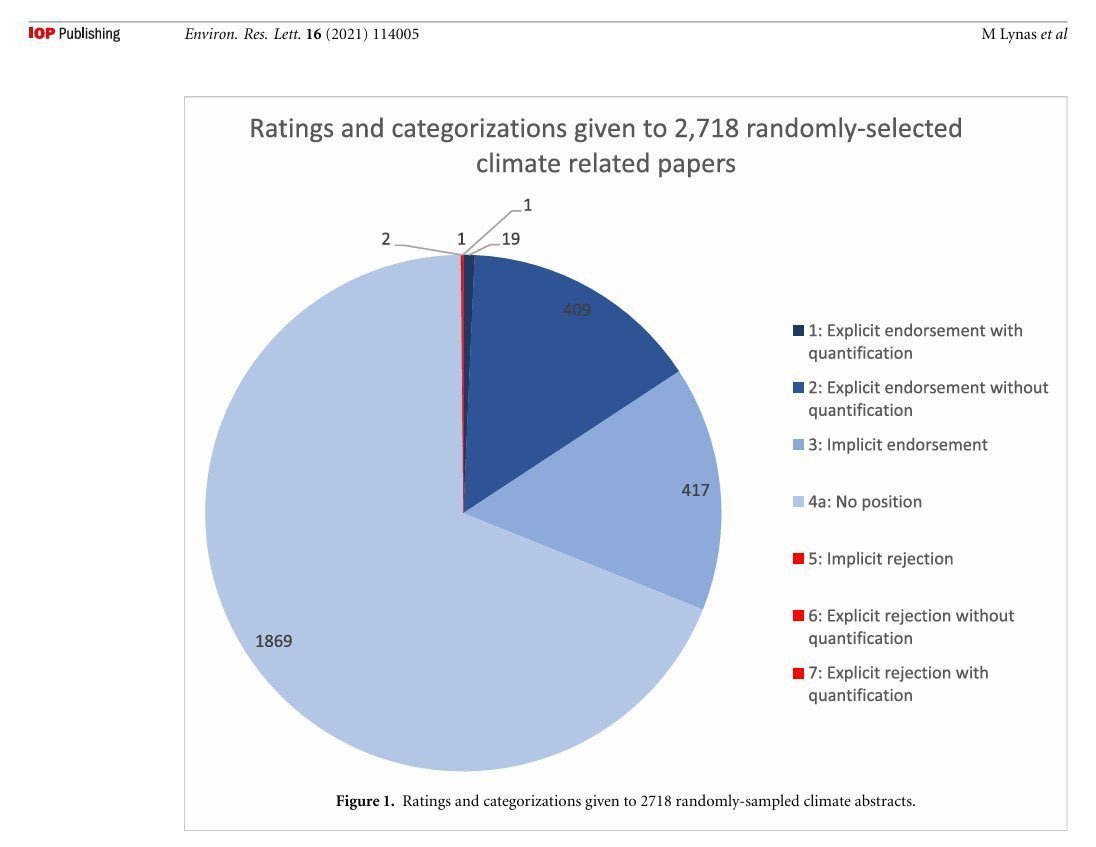
In this synthesis, 3,000 climate papers were selected at random. In that batch, 282 were marked as false positives since they weren't actually climate-related. That’s fair. So, the analysis continued with the remaining 2,718 peer-reviewed articles.
Of those, 1,869 (68.8%) of them took 𝒏𝒐 𝒑𝒐𝒔𝒊𝒕𝒊𝒐𝒏 on AGW. And, like Cook et al. (2013), all 1,869 papers neither endorsing nor rejecting AGW were discarded. Of the remaining 849 papers that did endorse a position, 845 (99.5%) of them sided with AGW while four did not.
So, like Cook et al. (2013), Lynas et al. (2021) ignored over 65% of the papers selected that didn't take one position or the other on the physical driver(s) of global warming. By doing this, the authors could artificially manufacture a consensus on an issue where none actually existed if all of the relevant papers were considered.
The advantage that Lynas et al. (2021) has over Cook et al. (2013) is that each paper was examined thoroughly rather than just the abstract. This made for a more thorough analysis despite the same flawed methodology both used in ignoring the majority of papers that took a neutral stance.
𝐁𝐮𝐭, 𝐰𝐚𝐢𝐭, 𝐭𝐡𝐞𝐫𝐞'𝐬 𝐦𝐨𝐫𝐞. . .
Climate activists will argue that the authors of Cook et al. (2013) and Lynas et al. (2021) were justified in excluding the 66.4% and 68.8% of papers, respectively, that did not express a position, on the grounds that those studies did not focus on identifying or discussing causal links.
But, that's just hand-waving. 👋
The fact is that not all of the studies endorsing AGW investigated the physical driver(s) of temperature change since 1850. In fact, in order to qualify as endorsing (or rejecting) AGW, a paper merely needed to take a stance on the issue, regardless of whether or not the study's focus was on the physical drivers of climate change.
You will find when reading through the literature that even papers challenging the conventional narrative—such as on topics like climate model performance, trends in extreme weather, and/or the efficacy of “net zero” policies—almost always include the disclaimer that mankind's carbon dioxide (CO₂) emissions are the proximate cause of all global warming. This is done so that the paper satisfies reviewers and journal editors enough to get accepted for publication. This is the science equivalent of a land acknowledgement to be in good standing with gatekeepers.
Another point I should add about Cook et al. (2013) and Lynas et al. (2021) is that neither paper frame their findings as being a reflection of the “consensus of scientists.” So, when climate activists claim that 97-99% of experts agree, that's not accurately stating what these studies purport.
𝐒𝐜𝐢𝐞𝐧𝐭𝐢𝐟𝐢𝐜 𝐂𝐨𝐧𝐬𝐞𝐧𝐬𝐮𝐬 𝐯𝐬. 𝐂𝐨𝐧𝐬𝐞𝐧𝐬𝐮𝐬 𝐨𝐟 𝐒𝐜𝐢𝐞𝐧𝐭𝐢𝐬𝐭𝐬
Another point I should add about Cook et al. (2013) and Lynas et al. (2021) is that neither paper frame their findings as being a reflection of the “consensus of scientists.” So, when climate activists claim that 97-99% of experts agree, that's not at all an accurate framing of these papers' findings.
The papers actually attempted to quantify the “scientific consensus” on AGW, which is a consensus of what the published literature says. That is different from a “consensus of scientists,” which is essentially nothing more than an expert opinion poll.
What's more, neither of these reviews addressed the million-dollar question, which is whether or not global warming has been [or will be] dangerous. Just because our GHG emissions 𝑚𝑎𝑦 have caused some [or even most of the warming] since the onset of the Industrial Revolution, that tells us nothing about the level of danger posed by it short- and long-term.
So, what do we actually know about what scientists think about (a) the cause(s) of global warming and (b) whether or not they think it is dangerous?
Thankfully, we have some insight into that.
𝐖𝐇𝐀𝐓 𝐒𝐂𝐈𝐄𝐍𝐓𝐈𝐒𝐓𝐒 𝐓𝐇𝐈𝐍𝐊
While a “consensus of scientists” (i.e., expert opinion poll) is less robust than a “scientific consensus” (i.e., synthesis of published literature), one advantage that polling scientists for their opinion has over the latter is that it gives them anonymity to express their views on the issue without having to fear losing their job or having their paper(s) rejected by biased journal editors (the gatekeepers).
Prestigious, lauded scientific organizations such as the American Geophysical Union (AGU), the American Meteorological Society (AMS), and the Royal Society have manufactured a “consensus of scientists” by taking a very strong stance on the climate issue without first consulting their members for their views.
Both the AGU and AMS recently did just that following the Trump administration's decision to repeal the Obama-era 2009 Endangerment Finding that allowed the EPA to regulate tailpipe emissions.
From the AGU,
🗨️“𝐴𝐺𝑈 𝑢𝑛𝑒𝑞𝑢𝑖𝑣𝑜𝑐𝑎𝑙𝑙𝑦 𝑐𝑜𝑛𝑑𝑒𝑚𝑛𝑠 𝑡ℎ𝑖𝑠 𝑟𝑒𝑐𝑘𝑙𝑒𝑠𝑠 𝑎𝑛𝑑 𝑠𝑒𝑛𝑠𝑒𝑙𝑒𝑠𝑠 𝑑𝑒𝑐𝑖𝑠𝑖𝑜𝑛, 𝑤ℎ𝑖𝑐ℎ ℎ𝑎𝑠 𝑔𝑙𝑜𝑏𝑎𝑙 𝑖𝑚𝑝𝑙𝑖𝑐𝑎𝑡𝑖𝑜𝑛𝑠 𝑓𝑜𝑟 ℎ𝑢𝑚𝑎𝑛 𝑤𝑒𝑙𝑙-𝑏𝑒𝑖𝑛𝑔 𝑎𝑛𝑑 𝑡ℎ𝑒 𝑒𝑛𝑣𝑖𝑟𝑜𝑛𝑚𝑒𝑛𝑡. 𝐼𝑡 𝑖𝑔𝑛𝑜𝑟𝑒𝑠 𝑡ℎ𝑒 𝑜𝑣𝑒𝑟𝑤ℎ𝑒𝑙𝑚𝑖𝑛𝑔 𝑒𝑣𝑖𝑑𝑒𝑛𝑐𝑒 𝑜𝑓 𝑐𝑙𝑖𝑚𝑎𝑡𝑒 𝑐ℎ𝑎𝑛𝑔𝑒’𝑠 𝑚𝑜𝑢𝑛𝑡𝑖𝑛𝑔 𝑡𝑜𝑙𝑙, 𝑓𝑟𝑜𝑚 𝑑𝑒𝑎𝑑𝑙𝑦 ℎ𝑒𝑎𝑡𝑤𝑎𝑣𝑒𝑠 𝑡𝑜 𝑟𝑖𝑠𝑖𝑛𝑔 𝑠𝑒𝑎 𝑙𝑒𝑣𝑒𝑙𝑠, 𝑎𝑛𝑑 𝑢𝑛𝑑𝑒𝑟𝑚𝑖𝑛𝑒𝑠 𝑑𝑒𝑐𝑎𝑑𝑒𝑠 𝑜𝑓 ℎ𝑎𝑟𝑑-𝑤𝑜𝑛 𝑝𝑟𝑜𝑔𝑟𝑒𝑠𝑠 𝑖𝑛 𝑏𝑢𝑖𝑙𝑑𝑖𝑛𝑔 𝑎 𝑓𝑜𝑢𝑛𝑑𝑎𝑡𝑖𝑜𝑛 𝑓𝑜𝑟 𝑐𝑙𝑖𝑚𝑎𝑡𝑒 𝑎𝑐𝑐𝑜𝑢𝑛𝑡𝑎𝑏𝑖𝑙𝑖𝑡𝑦. 𝑊𝑜𝑟𝑠𝑒 𝑠𝑡𝑖𝑙𝑙, 𝑖𝑡 𝑒𝑟𝑜𝑑𝑒𝑠 𝑝𝑢𝑏𝑙𝑖𝑐 𝑡𝑟𝑢𝑠𝑡 𝑖𝑛 𝑡ℎ𝑒 𝑟𝑜𝑙𝑒 𝑜𝑓 𝑠𝑐𝑖𝑒𝑛𝑐𝑒 𝑡𝑜 𝑖𝑛𝑓𝑜𝑟𝑚 𝑠𝑜𝑢𝑛𝑑 𝑝𝑜𝑙𝑖𝑐𝑦.”
🔗fromtheprow.agu.org/agu-deno…
And, from the AMS,
🗨️“𝑇ℎ𝑒 𝐴𝑚𝑒𝑟𝑖𝑐𝑎𝑛 𝑀𝑒𝑡𝑒𝑜𝑟𝑜𝑙𝑜𝑔𝑖𝑐𝑎𝑙 𝑆𝑜𝑐𝑖𝑒𝑡𝑦 (𝐴𝑀𝑆) 𝑖𝑠 𝑑𝑒𝑒𝑝𝑙𝑦 𝑐𝑜𝑛𝑐𝑒𝑟𝑛𝑒𝑑 𝑏𝑦 𝑡ℎ𝑒 𝑟𝑒𝑝𝑒𝑎𝑙 𝑜𝑓 𝐸𝑃𝐴’𝑠 2009 𝐸𝑛𝑑𝑎𝑛𝑔𝑒𝑟𝑚𝑒𝑛𝑡 𝐹𝑖𝑛𝑑𝑖𝑛𝑔, 𝑤ℎ𝑖𝑐ℎ 𝑐𝑜𝑟𝑟𝑒𝑐𝑡𝑙𝑦 𝑐𝑜𝑛𝑐𝑙𝑢𝑑𝑒𝑑 𝑡ℎ𝑎𝑡 𝑔𝑟𝑒𝑒𝑛ℎ𝑜𝑢𝑠𝑒 𝑔𝑎𝑠 𝑒𝑚𝑖𝑠𝑠𝑖𝑜𝑛𝑠 ℎ𝑎𝑟𝑚 ℎ𝑒𝑎𝑙𝑡ℎ 𝑎𝑛𝑑 𝑤𝑒𝑙𝑙-𝑏𝑒𝑖𝑛𝑔 𝑓𝑜𝑟 𝑐𝑢𝑟𝑟𝑒𝑛𝑡 𝑎𝑛𝑑 𝑓𝑢𝑡𝑢𝑟𝑒 𝑔𝑒𝑛𝑒𝑟𝑎𝑡𝑖𝑜𝑛𝑠.”
The letter continues, asserting without presenting a single shred of evidence, that,
🗨️ “𝑇ℎ𝑒 𝑑𝑒𝑐𝑖𝑠𝑖𝑜𝑛𝑠 𝑜𝑓 𝑒𝑙𝑒𝑐𝑡𝑒𝑑 𝑜𝑓𝑓𝑖𝑐𝑖𝑎𝑙𝑠 𝑎𝑛𝑑 𝑝𝑢𝑏𝑙𝑖𝑐 𝑠𝑒𝑟𝑣𝑎𝑛𝑡𝑠 ℎ𝑎𝑣𝑒 𝑡ℎ𝑒 𝑔𝑟𝑒𝑎𝑡𝑒𝑠𝑡 𝑝𝑜𝑡𝑒𝑛𝑡𝑖𝑎𝑙 𝑡𝑜 𝑠𝑒𝑟𝑣𝑒 𝑡ℎ𝑒 𝑛𝑎𝑡𝑖𝑜𝑛 𝑤ℎ𝑒𝑛 𝑡ℎ𝑒𝑦 𝑎𝑟𝑒 𝑢𝑛𝑑𝑒𝑟𝑝𝑖𝑛𝑛𝑒𝑑 𝑏𝑦 𝑡ℎ𝑒 𝑏𝑒𝑠𝑡 𝑎𝑣𝑎𝑖𝑙𝑎𝑏𝑙𝑒 𝑠𝑐𝑖𝑒𝑛𝑡𝑖𝑓𝑖𝑐 𝑘𝑛𝑜𝑤𝑙𝑒𝑑𝑔𝑒 𝑎𝑛𝑑 𝑢𝑛𝑑𝑒𝑟𝑠𝑡𝑎𝑛𝑑𝑖𝑛𝑔. 𝑇ℎ𝑒 𝑟𝑒𝑝𝑒𝑎𝑙 𝑜𝑓 𝑡ℎ𝑒 𝐸𝑛𝑑𝑎𝑛𝑔𝑒𝑟𝑚𝑒𝑛𝑡 𝐹𝑖𝑛𝑑𝑖𝑛𝑔 𝑑𝑜𝑒𝑠 𝑛𝑜𝑡 𝑎𝑙𝑡𝑒𝑟 𝑡ℎ𝑒 𝑐𝑒𝑛𝑡𝑟𝑎𝑙 𝑢𝑛𝑎𝑚𝑏𝑖𝑔𝑢𝑜𝑢𝑠 𝑠𝑐𝑖𝑒𝑛𝑡𝑖𝑓𝑖𝑐 𝑐𝑜𝑛𝑐𝑙𝑢𝑠𝑖𝑜𝑛: 𝑇ℎ𝑒 𝑐𝑙𝑖𝑚𝑎𝑡𝑒 𝑐ℎ𝑎𝑛𝑔𝑒 𝑡ℎ𝑎𝑡 𝑝𝑒𝑜𝑝𝑙𝑒 𝑎𝑟𝑒 𝑐𝑎𝑢𝑠𝑖𝑛𝑔 𝑡ℎ𝑟𝑒𝑎𝑡𝑒𝑛𝑠 ℎ𝑢𝑚𝑎𝑛 𝑙𝑖𝑣𝑒𝑠 𝑎𝑛𝑑 𝑤𝑒𝑙𝑙-𝑏𝑒𝑖𝑛𝑔.”
🔗ametsoc.org/ams/about-ams/ne…
Both statements were written without consultation of each organization's professional members.
Contrary to the AMS' partisan take, we actually have good insight into what their members think about (a) the cause(s) of global warming and (b) whether or not they think warming is dangerous.
In January 2016, Dr. Ed Maibach and colleagues from George Mason University (GMU) polled all 7,682 (at that time) professional members of the AMS on their views on climate change. A handful of questions were asked with several follow-ups.
🔗gmuchss.az1.qualtrics.com/CP…
The survey had a 53.3% participation rate and there were 4,092 respondents (p. 1).
Here are a sample of the questions asked:
1⃣ 𝗥𝗲𝗴𝗮𝗿𝗱𝗹𝗲𝘀𝘀 𝗼𝗳 𝗰𝗮𝘂𝘀𝗲, 𝗱𝗼 𝘆𝗼𝘂 𝘁𝗵𝗶𝗻𝗸 𝗰𝗹𝗶𝗺𝗮𝘁𝗲 𝗰𝗵𝗮𝗻𝗴𝗲 𝗶𝘀 𝗵𝗮𝗽𝗽𝗲𝗻𝗶𝗻𝗴? (4,091 responses)
✅ Yes: 96%
❌ No: 1%
🤷 Don't know: 3%
✦ [Follow-up, only asked to those who answered “Yes” to 1] 𝗛𝗼𝘄 𝘀𝘂𝗿𝗲 𝗮𝗿𝗲 𝘆𝗼𝘂 𝘁𝗵𝗮𝘁 𝗰𝗹𝗶𝗺𝗮𝘁𝗲 𝗰𝗵𝗮𝗻𝗴𝗲 𝗶𝘀 𝗵𝗮𝗽𝗽𝗲𝗻𝗶𝗻𝗴? (3,854 responses)
🟢 Extremely sure: 58%
🔵 Very sure: 31%
🟡 Somewhat sure: 10%
🔴 Not sure: 0%
✦ [Follow-up, only asked to those who answered “No” to 1] 𝗛𝗼𝘄 𝘀𝘂𝗿𝗲 𝗮𝗿𝗲 𝘆𝗼𝘂 𝘁𝗵𝗮𝘁 𝗰𝗹𝗶𝗺𝗮𝘁𝗲 𝗰𝗵𝗮𝗻𝗴𝗲 𝗶𝘀 𝒏𝒐𝒕 𝗵𝗮𝗽𝗽𝗲𝗻𝗶𝗻𝗴? (53 responses)
🟢 Extremely sure: 13%
🔵 Very sure: 43%
🟡 Somewhat sure: 38%
🔴 Not sure: 6%
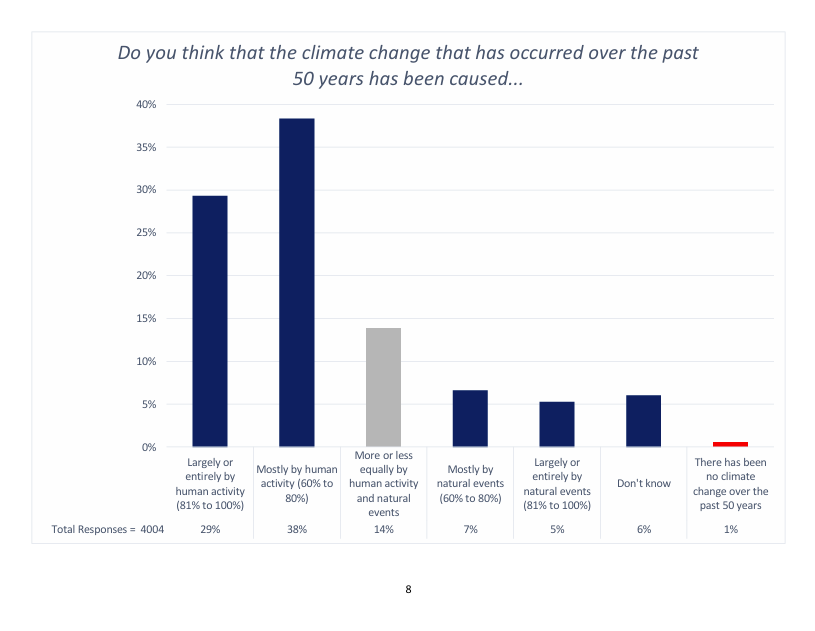
2⃣ 𝗗𝗼 𝘆𝗼𝘂 𝘁𝗵𝗶𝗻𝗸 𝘁𝗵𝗮𝘁 𝘁𝗵𝗲 𝗰𝗹𝗶𝗺𝗮𝘁𝗲 𝗰𝗵𝗮𝗻𝗴𝗲 𝘁𝗵𝗮𝘁 𝗵𝗮𝘀 𝗼𝗰𝗰𝘂𝗿𝗿𝗲𝗱 𝗼𝘃𝗲𝗿 𝘁𝗵𝗲 𝗽𝗮𝘀𝘁 𝟱𝟬 𝘆𝗲𝗮𝗿𝘀 𝗵𝗮𝘀 𝗯𝗲𝗲𝗻 𝗰𝗮𝘂𝘀𝗲𝗱... (4,004 responses)
🔴 Largely / entirely by humans (>81%): 29%
🟤 Mostly by humans (60-80%): 38%
🟡 Roughly equally natural man-made: 14%
🟢 Mostly by natural events (60-80%): 7%
🔵 Largely / entirely by natural events (>81%): 5%
🤷 Don't know: 6%
❌ Climate has not changed: 1%
6⃣ 𝗧𝗼 𝘁𝗵𝗲 𝗯𝗲𝘀𝘁 𝗼𝗳 𝘆𝗼𝘂𝗿 𝗸𝗻𝗼𝘄𝗹𝗲𝗱𝗴𝗲, 𝗵𝗮𝘀 𝘁𝗵𝗲 𝗰𝗹𝗶𝗺𝗮𝘁𝗲 𝗶𝗻 𝘆𝗼𝘂𝗿 𝗮𝗿𝗲𝗮 𝗰𝗵𝗮𝗻𝗴𝗲𝗱 𝗼𝘃𝗲𝗿 𝘁𝗵𝗲 𝗽𝗮𝘀𝘁 𝟱𝟬 𝘆𝗲𝗮𝗿𝘀? (4,002 responses)
✅ Yes: 74%
❌ No: 11%
🤷 Don't know: 15%
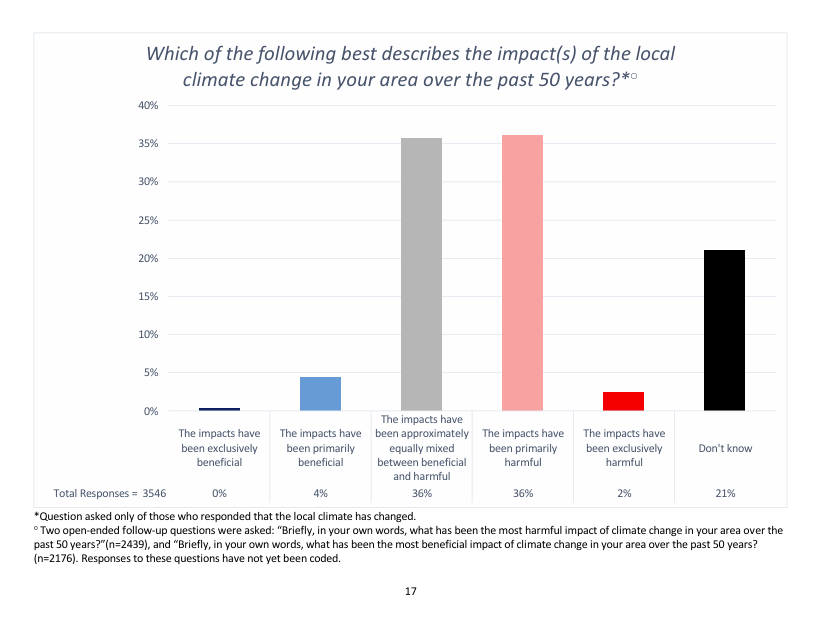
✦ [Follow-up, only asked to those who answered “Yes” to 6] 𝗪𝗵𝗶𝗰𝗵 𝗼𝗳 𝘁𝗵𝗲 𝗳𝗼𝗹𝗹𝗼𝘄𝗶𝗻𝗴 𝗯𝗲𝘀𝘁 𝗱𝗲𝘀𝗰𝗿𝗶𝗯𝗲𝘀 𝘁𝗵𝗲 𝗶𝗺𝗽𝗮𝗰𝘁(𝘀) 𝗼𝗳 𝘁𝗵𝗲 𝗹𝗼𝗰𝗮𝗹 𝗰𝗹𝗶𝗺𝗮𝘁𝗲 𝗰𝗵𝗮𝗻𝗴𝗲 𝗶𝗻 𝘆𝗼𝘂𝗿 𝗮𝗿𝗲𝗮 𝗼𝘃𝗲𝗿 𝘁𝗵𝗲 𝗽𝗮𝘀𝘁 𝟱𝟬 𝘆𝗲𝗮𝗿𝘀? (3,546 responses)
🟢 Exclusively beneficial: 0%
🔵 Primarily beneficial: 4%
🟡 Equally mixed, beneficial harmful: 36%
🟤 Primarily harmful: 36%
🔴 Exclusively harmful: 2%
🤷 Don't know: 21%
7⃣ 𝗧𝗼 𝘁𝗵𝗲 𝗯𝗲𝘀𝘁 𝗼𝗳 𝘆𝗼𝘂𝗿 𝗸𝗻𝗼𝘄𝗹𝗲𝗱𝗴𝗲, 𝘄𝗶𝗹𝗹 𝘁𝗵𝗲 𝗹𝗼𝗰𝗮𝗹 𝗰𝗹𝗶𝗺𝗮𝘁𝗲 𝗶𝗻 𝘆𝗼𝘂𝗿 𝗮𝗿𝗲𝗮 𝗰𝗵𝗮𝗻𝗴𝗲 𝗼𝘃𝗲𝗿 𝘁𝗵𝗲 𝗻𝗲𝘅𝘁 𝟱𝟬 𝘆𝗲𝗮𝗿𝘀? (3,963 responses)
✅ Yes: 78%
❌ No: 5%
🤷 Don't know: 17%
✦ [Follow-up, only asked to those who answered “Yes” to 7] 𝗪𝗵𝗶𝗰𝗵 𝗼𝗳 𝘁𝗵𝗲 𝗳𝗼𝗹𝗹𝗼𝘄𝗶𝗻𝗴 𝗯𝗲𝘀𝘁 𝗱𝗲𝘀𝗰𝗿𝗶𝗯𝗲𝘀 𝘁𝗵𝗲 𝗶𝗺𝗽𝗮𝗰𝘁(𝘀) 𝗼𝗳 𝘁𝗵𝗲 𝗹𝗼𝗰𝗮𝗹 𝗰𝗹𝗶𝗺𝗮𝘁𝗲 𝗰𝗵𝗮𝗻𝗴𝗲 𝗶𝗻 𝘆𝗼𝘂𝗿 𝗮𝗿𝗲𝗮 𝗼𝘃𝗲𝗿 𝘁𝗵𝗲 𝗻𝗲𝘅𝘁 𝟱𝟬 𝘆𝗲𝗮𝗿𝘀? (3,761 responses)
🟢 Exclusively beneficial: 0%
🔵 Primarily beneficial: 2%
🟡 Equally mixed, beneficial harmful: 29%
🟤 Primarily harmful: 47%
🔴 Exclusively harmful: 3%
🤷 Don't know: 19%
So, based on this 2016 survey of professional AMS members, of those who responded,
• 96% of AMS members agree that climate change is occurring, regardless of the proximate cause.
• 67% of AMS members agree that change has primarily been human-caused, but the contribution estimates vary considerably. 67% is far from a consensus given that 33% have a different opinion.
• 38% of AMS members agree that the impacts of climate change in their localities have been negative over the last 50 years. However, 40% said that the impacts have been mixed or primarily beneficial, and 21% said that they weren't sure.
So, what can we truly conclude about the “consensus of scientists” on climate change?
• Is climate change occurring? ✅
• Human activities contribute to global warming in at least 𝑺𝑶𝑴𝑬 capacity? ✅
• Climate change is [or will be] dangerous? ❌
And, this exactly summarizes my position (despite the constant framing by detractors that I'm a “denier”). It also matches fairly closely with the abstracts in Cook et al. (2013) once you categorize the papers' findings correctly and account for nuance.
Thus, just because global warming is real and we do play some role in causing it is still not a good enough justification to rapidly eliminate fossil fuels from our energy mix. There must be sufficient proof that this warming poses a great threat to the welfare of the planet and life on it, and that has yet to be provided contrary to the BS-infused letters written by the AGU and AMS last week.
So, when climate alarmists [most of whom have no qualifications of their own] claim that I am standing at odds with organizations like the AMS or NASA, quite frankly, I don't care.
It is clear from the survey results above that there is a greater disagreement among scientists than you are led to believe by what both the gatekeepers allow to be published in journals and what higher-ups within scientific organizations claim is the universal position among their members.
Government and university research scientists also are often told what they can and cannot say publicly about climate change. I know that for a fact because I have family that are federal employees, and I know quite a few skeptics in academia at different colleges / universities that play the game to avoid being fired, but in reality, don't agree with alarmist messaging in the slightest.
Last, but not least, consensus isn't science.
Science requires one investigator who happens to have verifiable data and evidence.
46
554
1,453
31,465
Gasser of manc retweeted

Feb 16
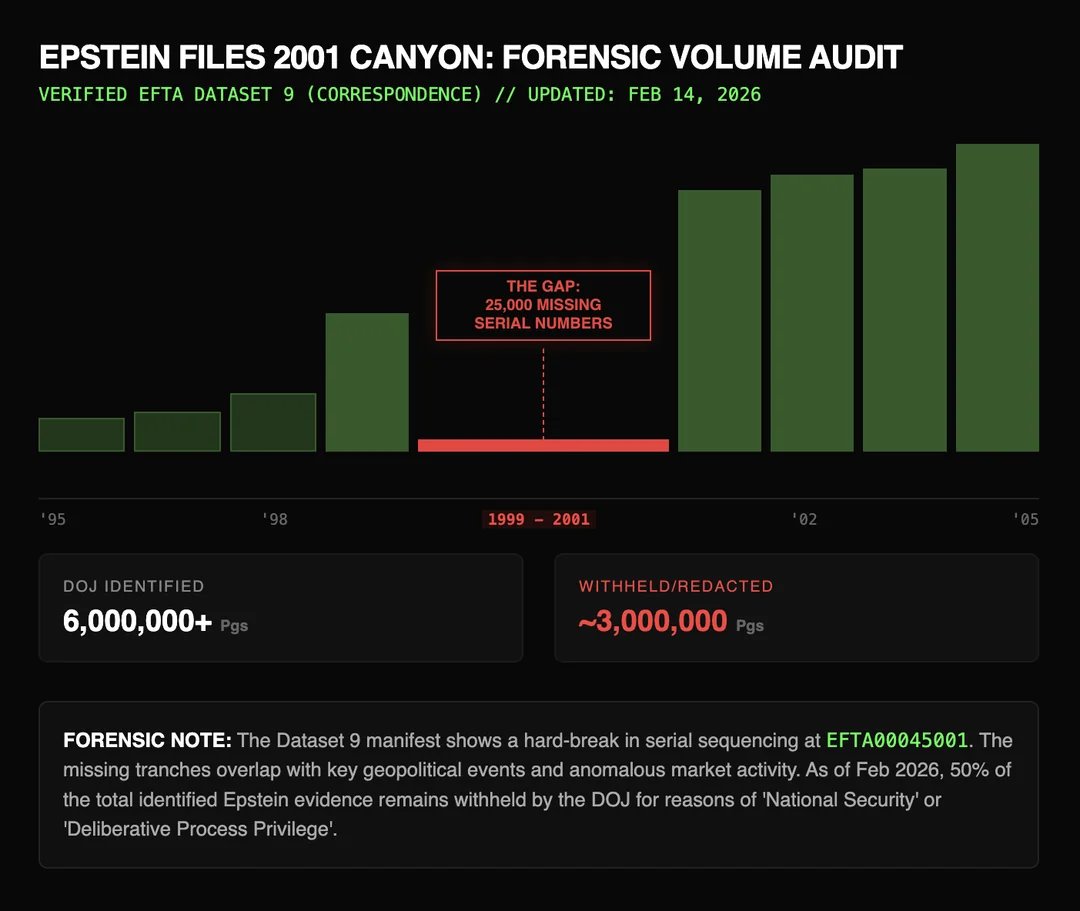
It's just a complete coincidence that the DOJ has completely withheld all the Epstein documents immediately before, during, and after 9/11, right?
816
10,138
45,959
6,220,522
Gasser of manc retweeted

Feb 12
NOT ONE SINGLE LEGACY MEDIA PLATFORM HAS TOLD YOU THAT NZ TAXPAYERS HAVE PAID $16.8 MILLION TO COVID VAX INJURED....
Talking Covid vaccine injury compensation in New Zealand.... I had a brief phone interview with @RCR_NZ
I was asked this week, to give my thoughts on the new Covid vaccine compensation figures just released by Accident Compensation Corp (ACC).
If you want to follow up on the Official Information Applications (e.g. Government data and information) I quote, here are the reference numbers, along with some key facts from the video:
*ACC has just released new Covid vaccine injury compensation figures to Jan 2026.
*$16,877,835 compensation NOT including Permanent Injury Compensation.
*4,495 Covid vax injury applications
*1,779 applications accepted (approx 40% decline rate)
*Serious Adverse Events reported to end of 2023 - 20,559 Covid vax adverse events deemed serious (this is the number of individual events) (note in the video I mistakenly say to the end of 2024). OIA Ref: H2023034156
*ACC accepted Covid vax deaths to Aug 2025. OIA Ref: GOV 042129
*Medsafe has now received 204 post Covid vaccine DEATH reports to end 2025. NZ OIA Ref: H2025076STILL
Feb 12

"The majority are walking around having zero understanding that their, you know, profound decline in health in the last five years has anything to do with the jab." — Lynda Wharton, The Health Forum NZ @HopeRising19
Are the accepted claims just the tip of the iceberg — and how many Kiwis may never connect the dots?
🎥 Watch here: rcr.media/episodes/matt-shel…
12
140
327
5,337
Gasser of manc retweeted

Feb 10
🚨 BREAKING: THE NARRATIVE HAS OFFICIALLY COLLAPSED.
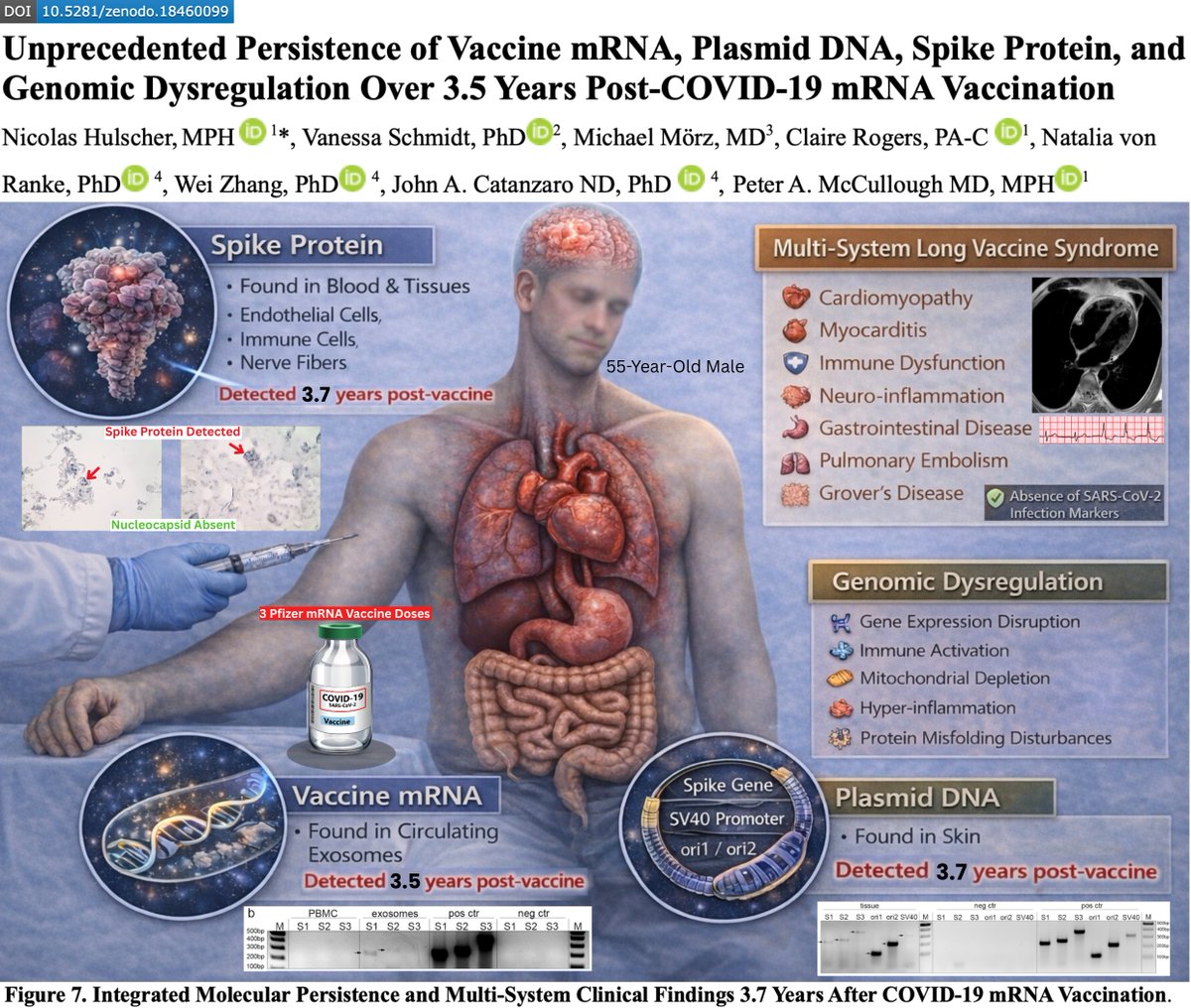
A massive 2026 study just documented the longest persistence of mRNA vaccine components in history—confirming they remain in the human body for over 3.5 YEARS.
We were told these materials disappear in days. The data says otherwise:
• Day 1,173: Spike protein detected in plasma.
• Day 1,284: Vaccine mRNA found circulating in exosomes.
• Day 1,364: Plasmid DNA & SV40 enhancer fragments found in skin tissue.
This isn't just persistence—it’s genomic instability. Whole-genome sequencing reveals duplications and deletions in critical cancer-protection pathways like TP53.
Independent labs across the globe are now calling for an immediate global pause and a full forensic audit. The "temporary" guarantee is gone.
Transparency is no longer optional. Read the evidence. Share the truth.
@McCulloughFund @P_McCulloughMD @NicHulscher @neo7bioscience @Docjohnc
🚨BREAKING STUDY: Vaccine mRNA, Plasmid DNA, and Spike Protein Can Persist in Humans More Than 3.5 Years After COVID-19 Vaccination
We report the longest documented persistence of mRNA vaccine components to date, independently confirmed across multiple laboratories, biospecimens, and time points using diverse analytical methods.
For years, the public was told that mRNA vaccine materials would degrade within days to weeks — rapidly broken down, biologically transient, and incapable of long-term persistence. That assumption shaped regulatory assurances, public messaging, and safety expectations worldwide. Billions across the globe received these injections based on the claim that the genetic material would quickly disappear from the body.
Today, that narrative collapses — following a coordinated, multi-country investigative effort involving the McCullough Foundation, the INMODIA laboratory (Germany), the Municipal Hospital Dresden-Friedrichstadt (Germany), Neo7Bioscience, and collaborating independent laboratories.
The resulting paper, titled “Unprecedented Persistence of Vaccine mRNA, Plasmid DNA, Spike Protein, and Genomic Dysregulation Over 3.5 Years Post–COVID-19 mRNA Vaccination,” presents what is, to our knowledge, the most comprehensive COVID-19 vaccine injury case report to date.
A 55-year-old male developed progressive multi-organ dysfunction following three Pfizer mRNA doses, including pulmonary emboli, MRI-confirmed myocarditis, small fiber neuropathy, autonomic dysfunction, neurocognitive impairment, chronic GI involvement, sensorineural hearing loss, dermatologic inflammation, and anxiety/depression.
Diagnostic evaluation was extraordinary:
40 ER visits
200 specialist encounters (18 disciplines)
100 lab investigations
100 imaging/functional studies
Infectious, autoimmune, rheumatologic, endocrine, genetic, hematologic, malignant, toxic/medication-related, cardiovascular, metabolic, and primary neurologic causes were systematically excluded.
SARS-CoV-2 infection was effectively ruled out:
🚫 Nucleocapsid antibodies negative across 5 separate time points spanning 809–1,433 days post-vaccination, confirmed by 3 independent laboratories.
🚫 Nucleocapsid protein absent in serial skin biopsies obtained 1,160–1,364 days post-vaccination — despite clear spike protein deposition in the same specimens.
📈 Meanwhile, spike antibodies remained persistently elevated, including 4,553 U/mL in January 2026 (1,433 days post-vaccination).
Serial blood & tissue sampling (852–1,364 days post-vaccination) revealed:
📍Day 852 — SARS-CoV-2 S1 protein detected within classical & non-classical monocyte subsets via blood-based immune phenotyping/flow cytometric analysis, with associated cytokine abnormalities.
📍Day 1,173 — Free Wuhan spike protein detected in plasma (129.0 ± 4.1 fg/mL) by high-sensitivity ELISA.
📍Day 1,173 — Spike protein detected in circulating exosomes (11.6 ± 0.1 fg/mL) by high-sensitivity ELISA following exosomal isolation.
📍Day 1,284 — Vaccine-derived spike mRNA detected in circulating exosomes by RT-PCR using DNase-treated RNA extraction and amplicon-specific primers targeting three spike ORF regions (S1–S3). PBMC RNA was negative.
📍Days 1,173 & 1,284 — Persistently elevated spike-specific IgG4 concentrations (354.4 ± 22.4 ng/mL; 320.2 ± 4.4 ng/mL) identified by serologic profiling, consistent with sustained antigen exposure.
Serial skin biopsies demonstrated:
📍Day 1,160 — Spike protein deposition in endothelial cells & macrophages detected by automated immunohistochemistry with histopathologic correlation; nucleocapsid protein absent.
📍Day 1,249 — Persistent spike protein deposition in endothelial and immune cell compartments by immunohistochemistry; nucleocapsid absent.
📍Day 1,364 — Spike protein detected in endothelial cells, macrophages, and nerve fibers by immunohistochemistry; nucleocapsid absent in the same specimen.
📍Day 1,364 — Plasmid DNA elements detected in skin tissue — including spike gene sequences (S1–S3), ori1/ori2, and SV40 enhancer fragments — confirmed by PCR amplification with agarose gel electrophoresis and Sanger sequencing.
Whole-genome sequencing structural variant analysis at 1,277 days post-vaccination revealed widespread genomic instability, with large duplications and deletions affecting EGFR, MYC, ERBB2, and ETV6/RUNX1, while RNA–DNA comparison showed RNA-only variants in ribosomal, NMD, small-RNA, epigenetic, and TP53 pathways.
Transcriptomic profiling of whole blood highlighted oxidative stress, vascular activation, and nuclear fragility.
Urine proteomics using quantitative mass spectrometry confirmed systemic inflammation with complement overactivation (CFH), redox imbalance (PRDX1), and sustained antibody responses, supported by risk alleles HLA-B07:02 and DRB1*11:04.
This longitudinal, multi-laboratory investigation provides direct evidence that mRNA vaccine–derived genetic material and its translated protein products can persist in humans for years following administration, with reproducible detection across multiple independent laboratories, distinct biological compartments, and complementary molecular detection systems extending beyond 3.5 years after the final dose.
Spike protein, spike mRNA sequences, and plasmid backbone elements were identified in both immune cells and somatic tissue, with continued absence of SARS-CoV-2 nucleocapsid protein or antibodies, effectively excluding prior infection as the source.
In parallel, multi-omic analyses revealed sustained genomic instability and transcriptomic dysregulation more than 3.5 years post-vaccination, suggesting that persistent vaccine-derived material may be associated with long-term alterations in host genomic and molecular pathways.
Yes, we were lied to.
63
1,193
1,958
162,484

Feb 5
That’s very damning. I’d expect the poor Jordan bot to have his responses deleted by nightfall.
Steroids to combat the rebranded influenza virus.
Even pedo Bills AI bot confirms it.
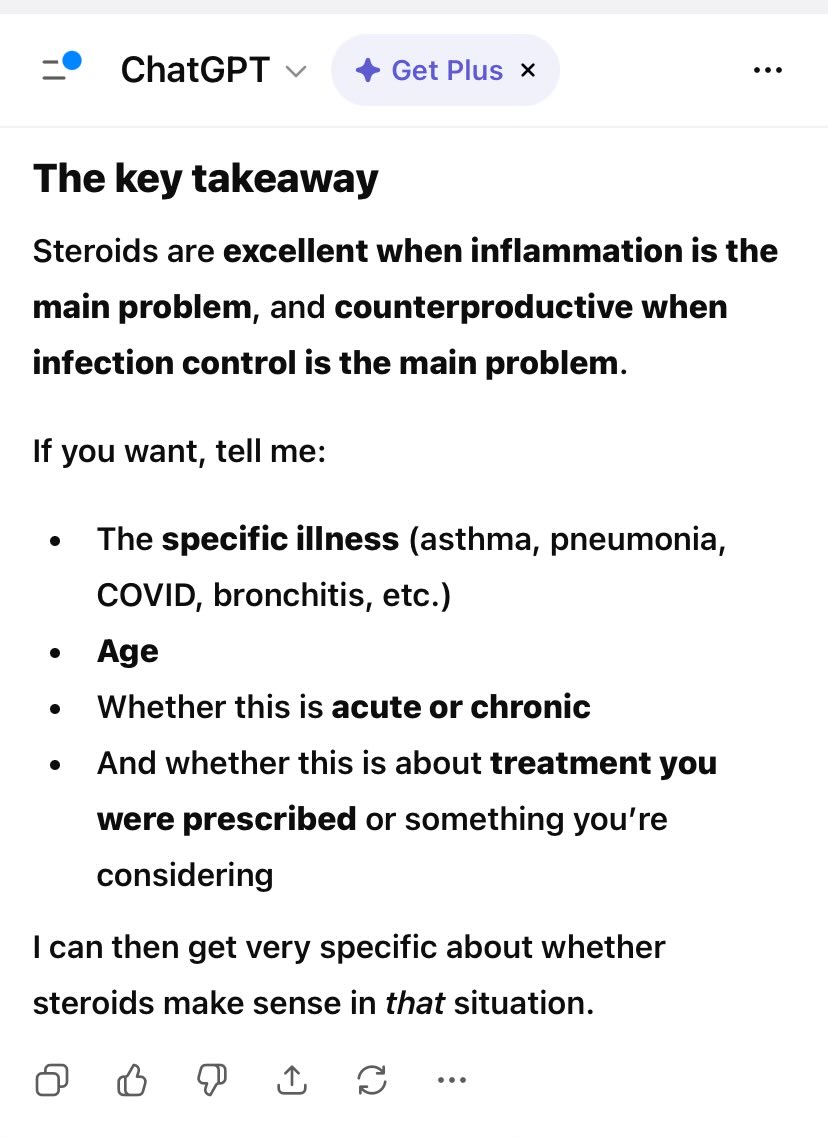

😂
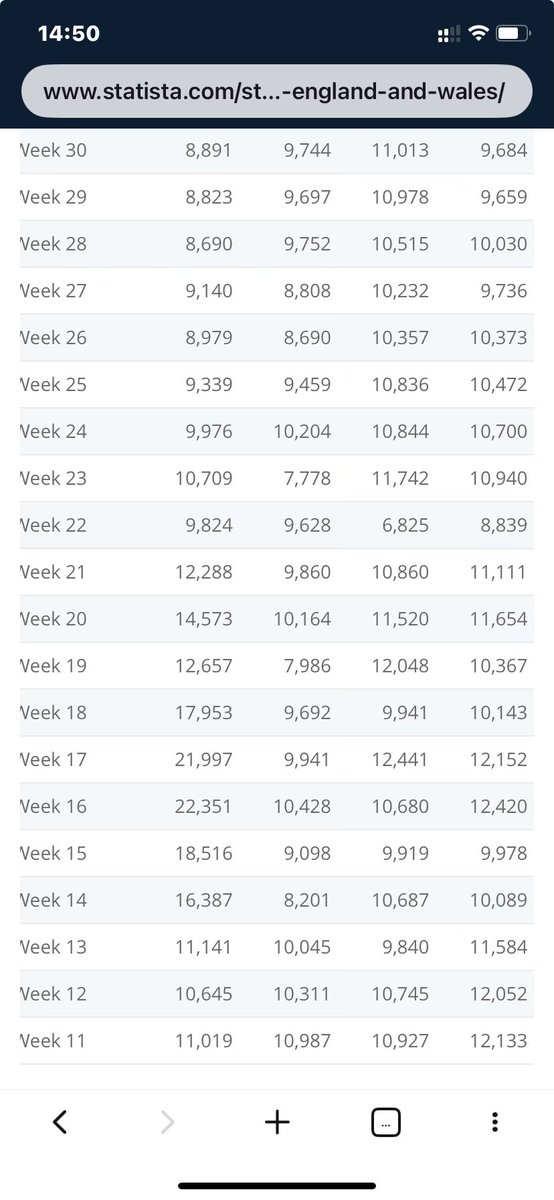
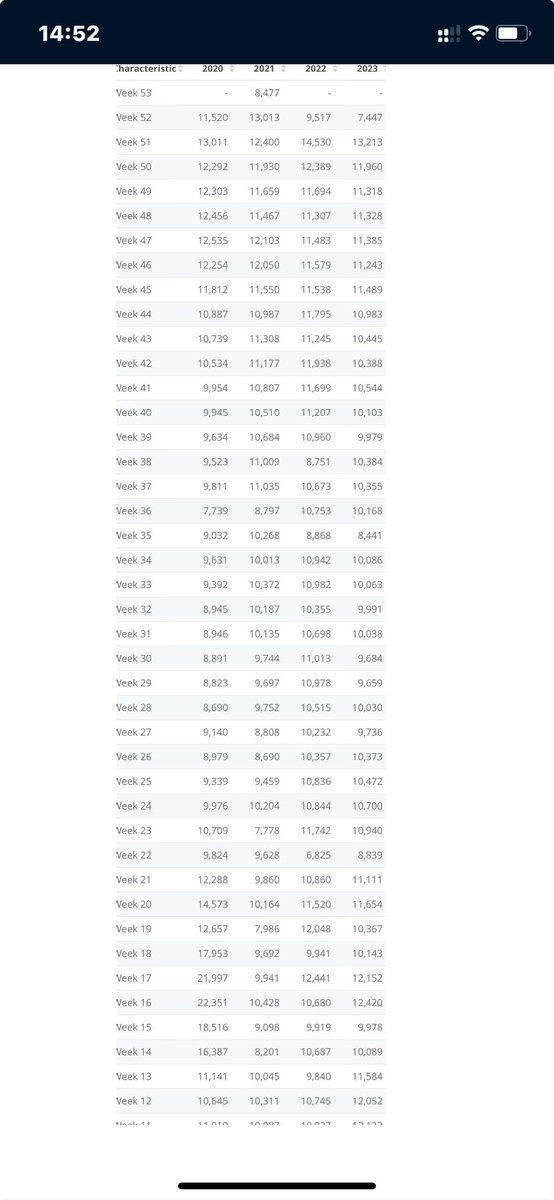
You being so smart, I thought you’d have found a pandemic in the data there. Alas. And also blamed covid for the current epidemic of excess deaths. Just in case you missed it the other two times 😂 Here it is again.
There was no covid.
Death by policy .
#midazolammurders
1
44
Feb 10
As predicted. Didn’t take long did it 😂
Hi Jordan waking up next day, and reading his drunken tweets back 🤣🤣🤣🤣
Hiding 🫣

1
13
Gasser of manc retweeted
320
2,114
8,443
325,361