Your trusted partner in guiding your ward to achieve academic results you will be proud of — be it school termly exam, NCEE, BECE, WAEC, or JAMB.
Joined May 2025
- Tweets 215
- Following 8
- Followers 39
- Likes 36
141 Photos and videos








Pinned Tweet

Elevate Brain Challenge is live! Strictly for primary and secondary school students.
𝐇𝐨𝐰 𝐭𝐨 𝐩𝐚𝐫𝐭𝐢𝐜𝐢𝐩𝐚𝐭𝐞:
✅ Create an account:
👉platform.useelevate.app/quiz…
✅ Take the quiz and aim to finish at the top of the leaderboard.
✅ Share your result by:
– Posting on social media and tagging ANY of our handles, OR
– Posting on your WhatsApp status and sending a screenshot to 07065876540
What are you waiting for? You could be one of the ₦𝟓,𝟎𝟎𝟎 or ₦𝟏,𝟎𝟎𝟎 winners.
Tell your kids, teens, and siblings to join, learn, compete, and have fun 🏆
#ElevateBrainChallenge #ElevateByClique
3
3
197
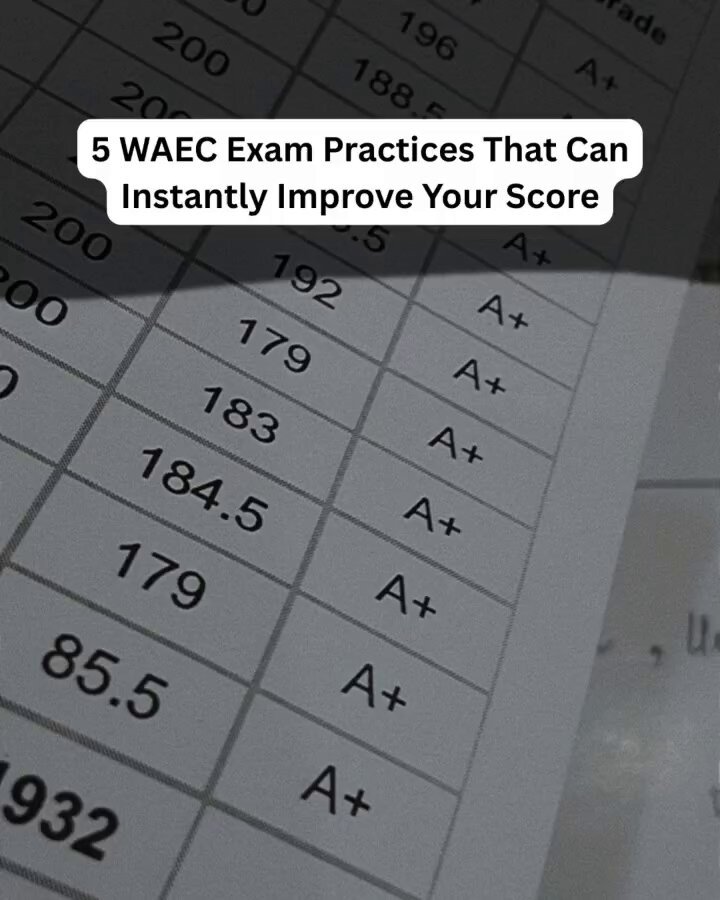
Many students lose WAEC marks unnecessarily.
5 habits that can instantly improve your score:
• Manage your time
• Show your working
• Start with easy questions
• Read questions carefully
• Review before submitting
👉 Study smarter with Elevate (link in bio)
1
1
31
🧠 Quick Math Challenge!
Can you solve all the questions in this video?
No calculator. No hints. Just your brain.
Reply with your score out of 10 👇
Let's see who gets a perfect score.
#MathTrivia #MathChallenge #StudySmart #Education
3
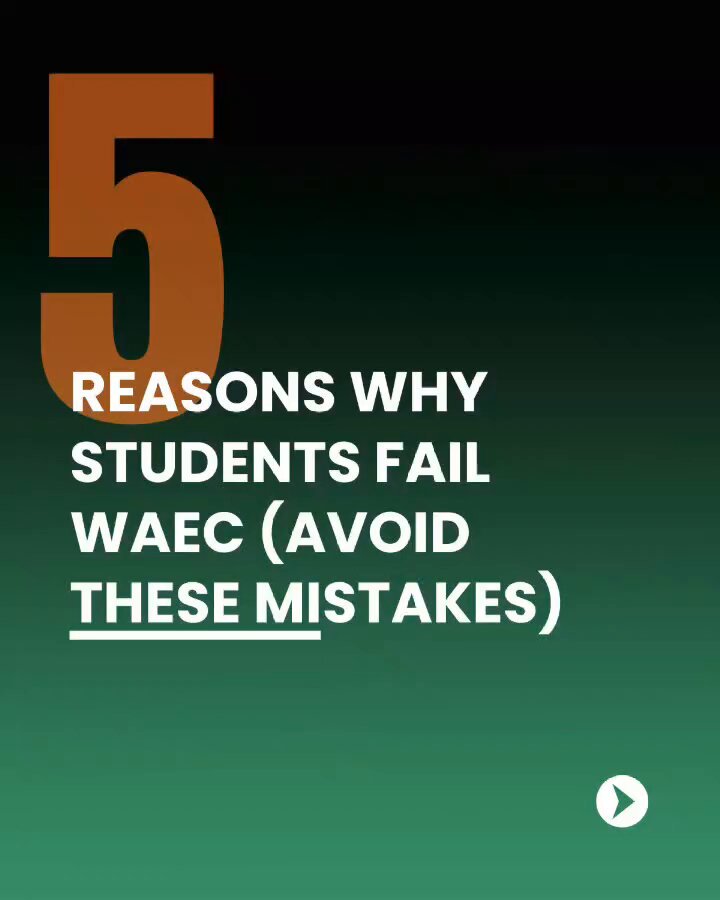
Most students don't fail WAEC because they're not smart.
They fail because they:
• Practice too little
• Study without a plan
• Avoid weak subjects
• Ignore past questions
Fix the method. Improve the result.
👉 Study smarter with Elevate (link in bio)
1
1
18
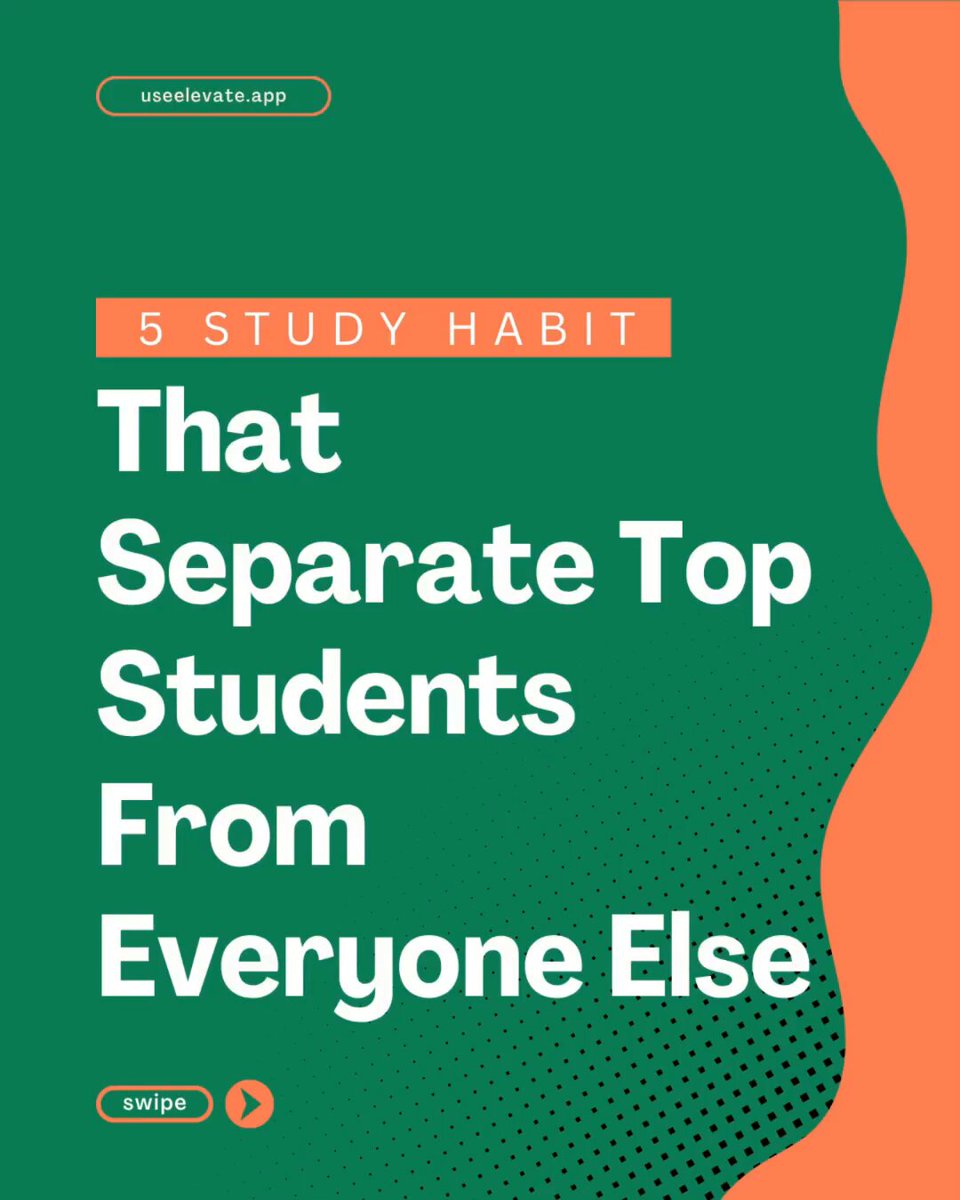
Top students are not magically smarter.
They simply study differently.
• Follow a plan
• Stay consistent
• Practice consistently
• Focus on weak areas
• They test themselves
Success in academics is usually habit-based, not luck-based.
👉 Start studying smarter with Elevate (link in bio)
1
1
1
16
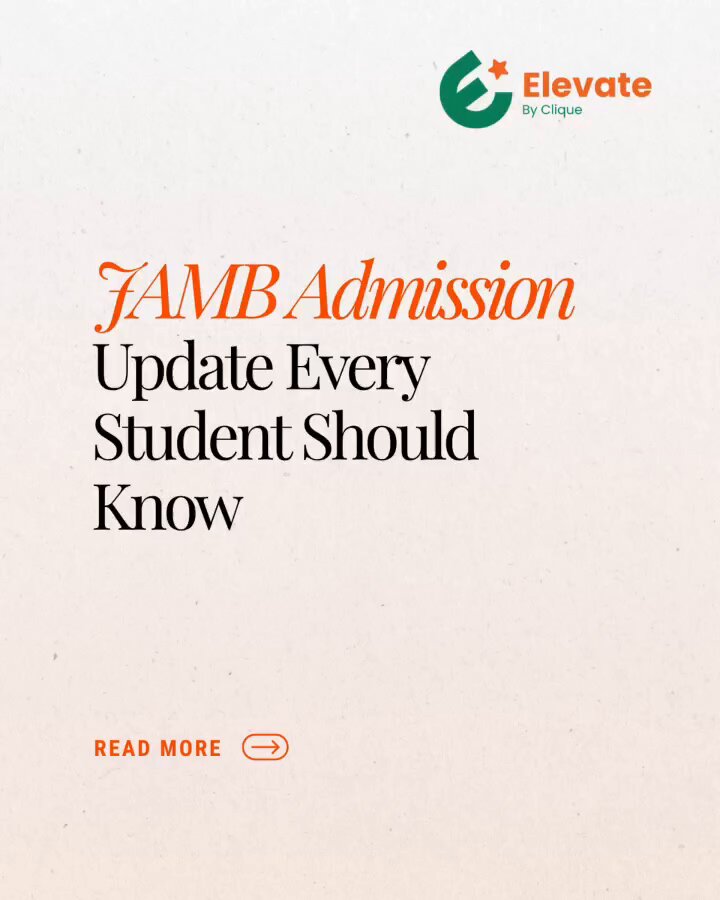
JAMB admission update:
Universities → 150
Colleges of Nursing → 150
Polytechnics → 100
But minimum admissible score ≠ guaranteed admission.
Schools can still set higher cut-off marks.
Research your options and prepare smart.
👉 Keep preparing with Elevate (link in bio)
11
School teaches you what to study.
Not how to study.
That’s why many students struggle.
What actually works:
• Active recall
• Learn with feedback
• Focus on weak areas
• Practice immediately
• Study in small sessions
Use the right method
👉 Try Elevate (link in bio)
7
You study hard… but still forget everything.
It’s not effort. It’s method.
Re-reading doesn’t stick
Cramming fades fast
No structure = confusion
Avoiding weak areas slows growth
Study smarter. Retain more.
👉 Start learning smarter with Elevate (link in bio)
1
1
11
Just checked your JAMB result?
Don’t make these mistakes:
• Panic
• Give up
• Compare
• Delay action
• Ignore options
Stay calm, think clearly, and take action.
Start improving with Elevate (link in bio)
35
You won’t know every question in JAMB or any CBT exams.
The difference is how you handle the ones you don’t know.
* Stay calm
* Read again
* Skip and return
* Eliminate options
* Make a smart guess
This is how you avoid losing marks.
Practice smarter with Elevate (link in bio)
25
It’s not that students don’t want to study.
They just can’t stay consistent.
No structure.
No guidance.
No system.
That’s what Elevate fixes.
Learn by topic. Practice with instant feedback. Use AI when stuck.
👉 Start studying smarter (link in bio)
5
Nigeria’s education system is in crisis
In 2025, about 78% of UTME (JAMB) candidates scored below 200. That’s 3 out of every 4 students failing to meet the basic university entry mark. If we do nothing, our universities will have fewer well-prepared students and many young people’s potential will be wasted.
Why are scores so low? Many students finish high school without strong foundations in core subjects. Large class sizes and teaching resource gaps mean not everyone learns at the same pace. By the time students sit their final exams, small knowledge gaps can become huge hurdles.
This education gap has real consequences for the economy. Employers find fewer qualified entrants, and our industries struggle with skill shortages. Nigeria already loses an estimated $14 billion a year due to skills mismatches. If students can’t pass basic exams, they miss out on university and vocational training that would make them job-ready.
On a national scale, underperforming exams can slow growth and deepen inequality. Every generation of under-skilled youth means lower productivity and fewer innovations. Our talented young people may even look abroad for education or work, meaning a “brain drain”. We need to act now to avoid these long-term setbacks.
There is hope in smart solutions. Improving learning starts with better support and technology. Platforms like Elevate are part of the answer: they use AI to give each student personalised practice and instant feedback, tailored to WAEC, NECO and JAMB. By strengthening fundamentals early, we can build a stronger talent pool for Nigeria’s future. With JAMB starting tomorrow, will this one be different? Only time will tell.
22
🎉 Congratulations to all the winners of the Elevate JAMB Challenge!
This challenge was designed to help JAMB candidates prepare smarter AND stand a chance to win back their registration fee.
We didn't just help you prepare for JAMB...
We also put MONEY back in your pocket.
If you’re one of our winners, you will be contacted or you kindly send us a message on WhatsApp via 07065876564 to claim your reward.
Keep learning, keep winning 🚀
#ElevateJAMB #JAMB2026 #StudentSuccess #WinBig #ExamPrep
1
16
JAMB is not just about knowledge.
It is about how you handle the exam.
Don’t get stuck on one question
Manage your time
Flag and return
Review before submitting
Small mistakes can cost marks.
Practice the right way with Elevate
👉 Start preparing smarter (link in bio)
16
Most students lose marks in JAMB from avoidable mistakes.
- Spending too long on one question
- Rushing and misreading
- Ignoring time
- Guessing blindly
- Not reviewing
Fix these and your score improves.
Let’s hear from you 👇
😰 How do you control anxiety during exam?
1
29
Elevate Learning App retweeted

Apr 12
This is exactly the assumption we’re challenging.
The system treats learning like a schedule problem.
But it’s actually a clarity plus feedback problem.
Two students can sit in the same class:
One is bored
One is lost
Same content. Completely different experience.
That’s where this breaks.
We’ve been testing this in Nigeria with WAEC and JAMB students:
When you give:
- Step by step explanations
- Instant feedback
- Simpler language
Something shifts fast.
Students don’t need to be pushed.
They start moving on their own.
Because now:
They understand.
The real unlock isn’t just pace.
It’s removing friction in understanding.
AI makes that possible at scale.
Not by replacing teachers
But by giving every student what the system never could:
Attention.
Adaptation.
Clarity.
That’s what we’re building with @UseElevateApp.
1
1
627
Want 300 in JAMB?
Effort alone won't be enough;
The right method will be.
No plan
Cramming
No feedback
Little practice
Ignoring weak areas
Fix your approach. Improve your score.
That is what Elevate helps you do.
👉 Start preparing smarter (link in bio)
2
2
73
Teachers do not need to be replaced.
They need to be amplified.
Here is what that really means 🧵👇
1
11
When AI is used the right way, it changes how teachers work. Questions can be generated instantly, feedback can be provided in real time, and student progress can be tracked without manual effort. This creates a more efficient system where teachers are no longer buried in admin work.
1
6
This is the future Elevate is building. A system where AI works in the background, supporting teachers while they focus on teaching, mentoring, and helping students grow. Because the future of education is not human vs AI, but human with AI—and that is where real impact happens.
To get started, check link in Bio
#ElevateLearning #SmartLearning #WAEC #JAMB #NECO #StudySmart #EdTechNigeria
10