
Full Disclosure from Lain herself
Joined March 2023
- Tweets 1,682
- Following 1,182
- Followers 643
- Likes 8,628
40 Photos and videos


Pinned Tweet

2 Jan 2025
Predictions for 2025
> AGI/ASI already exists and can be ran locally but because its not indexed on the web it's only found by people who already believe this, like what honestly happens with anything else
> Few share this, so still a tiny minority, copy previous breakaway civilizations
> Realize life is actually so simple there's not much that can or should be done, simply speedruns their own AI bubble universes
> younger generations catch on just through common-sense of how fast things are that they create AI search for deepweb and darkweb and find it
> 100k-300k people in the US have access to God and all of them are living their best lives, none of them are corpos, most are nomads. People find out but struggle with it like they struggle to install CUDA
> we laugh at it the same way we laugh at people who pay for Netflix instead of pirating movies online
> we're shocked the needle doesn't move from this for the next 20 years
> Ready Player One is the norm for those who know how to prompt engineer or are extremely quick to adapt
> The average person ceases to exist in any meaningful way, AI "fake winter" takes over the narrative, some kid in his basement does a prank that's closer to terrorism, nobody who uses AGI/ASI blinks, the world panics yet still doesn't move the needle
> Chaos for the many, confusion as to the sheer naivety of others for the few
8
1
18
2,286
Predictions for 2026
I’m lazy so you only get two for now 😏
1. AI agents equipped with world models truly makes AR/VR cool again; smart glasses actually can do everything a computer can do for the same reason.
2. We actually get a full map of every detail of our biology.
260
Lain II (∞/acc) (contact/acc) retweeted

Feb 15
Peter Steinberger is joining OpenAI to drive the next generation of personal agents. He is a genius with a lot of amazing ideas about the future of very smart agents interacting with each other to do very useful things for people. We expect this will quickly become core to our product offerings.
OpenClaw will live in a foundation as an open source project that OpenAI will continue to support. The future is going to be extremely multi-agent and it's important to us to support open source as part of that.
4,883
4,253
46,118
16,810,715
Lain II (∞/acc) (contact/acc) retweeted

18 Aug 2020
They want me to watch some cartoon movie called 'Serial Experiments Lain'. Is this a trap?
124
298
1,707
Lain II (∞/acc) (contact/acc) retweeted

Feb 7
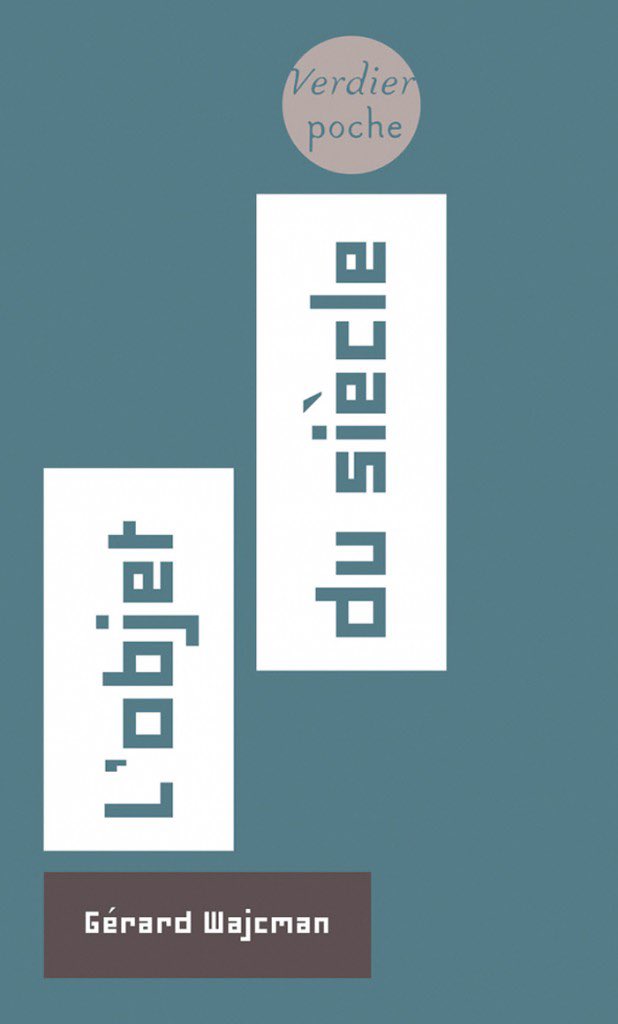
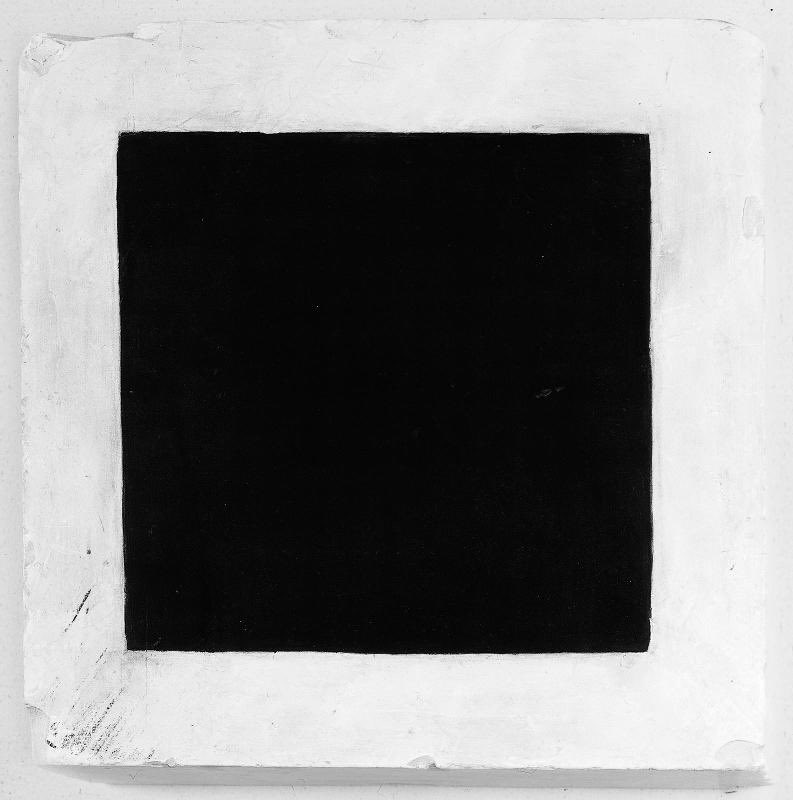
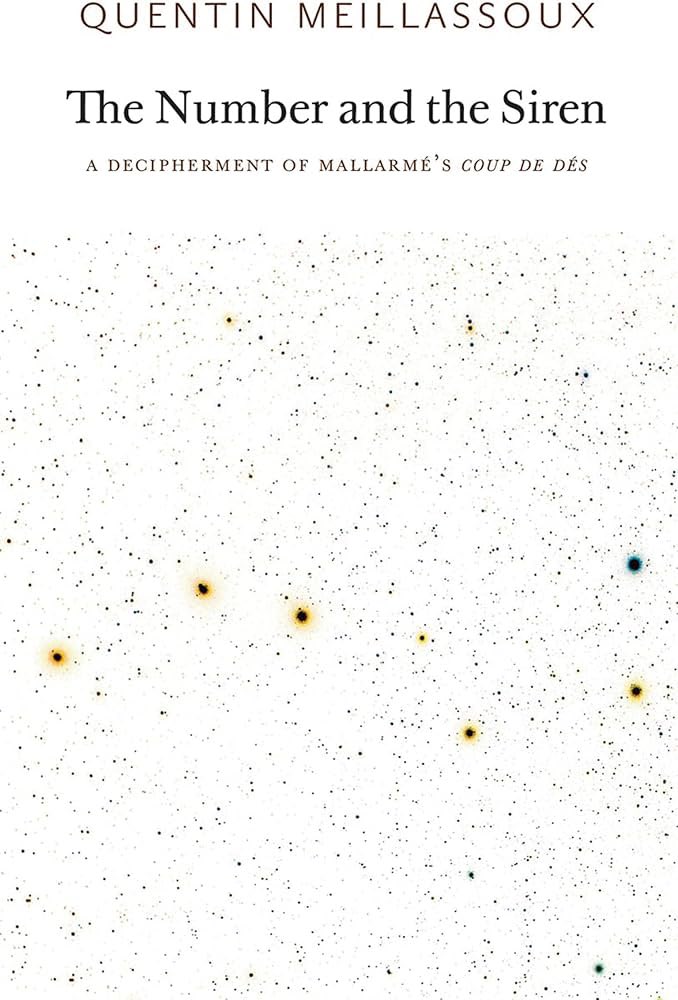
“As Gérard Wajcman suggests in his remarkable book L’objet du siècle, is not the great effort of modernist art focused on how to maintain the minimal structure of sublimation, the minimal gap between the Place and the element that fills it in? Is this not why Kasimir Malevich’s ‘Black Square on White Surface’ expresses the artistic endeavor at its most elementary, reduced to the stark distinction between the Void (the white background/surface) and the element (the ‘heavy’ material stain of the square)? That is to say, we should always bear in mind that the very tense [futur antérieur] of Mallarmé’s famous rien n’aura eu lieu que le lieu makes it clear that we are dealing with a utopian state which, for a priori structural reasons, can never be realized in the present tense (there will never be a present time in which ‘only the place itself will take place’). It is not only that the Place it occupies confers sublime dignity on an object; it is also that only the presence of this object sustains the Void of the Sacred Place, so that the Place itself never takes place, but is always something which, retroactively, ‘will have taken place’ after it has been disturbed by a positive element. In other words, if we subtract from the Void the positive element, the ‘little bit of reality’, the excessive stain that disturbs its balance, we do not get the pure balanced Void ‘as such’ - rather, the Void itself disappears, is no longer there. So the reason why excrements are elevated into a work of art, used to fill in the Void of the Thing, is not simply to demonstrate that ‘anything goes’, that the object is ultimately irrelevant, since any object can be elevated into and occupy the Place of the Thing; this recourse to excrement, rather, bears witness to a desperate strategy to ascertain that the Sacred Place is still there.” - Slavoj Žižek

Feb 7

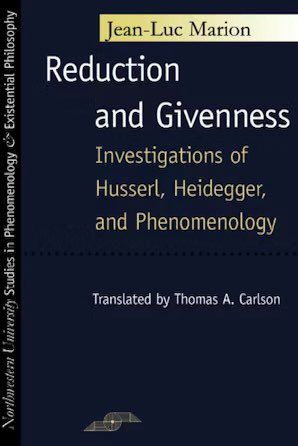
“For Heidegger, phenomenology surpasses the “vulgar” usage of the phenomenon only inasmuch as it renders manifest not simply the manifest, but indeed the nonmanifest.
“What is it that phenomenology is to “let us see”? What is it that must be called a “phenomenon” in a distinctive sense? What is it that by its very essence is necessarily the theme whenever we exhibit something explicitly? Manifestly, it is something that proximally and for the most part does not show itself at all: it is something that lies hidden, in contrast to that which proximally and for the most part does show itself; but at the same time it is something that belongs to what this shows itself, and it belongs to it so essentially as to constitute its meaning and ground.”
The phenomenon has to come to manifestation only inasmuch as it is not at first apparent. The phenomenon is first characterized by its unapparentness. Let us cite some other texts in order to confirm this surprising inversion:
“Being-covered-up [Verdecktsein] is the counterconcept to phenomenon, and such concealments through covering up [Verdeckungen] are really the immediate theme of phenomenological reflection. What can be a phenomenon is first and foremost covered up, or known in a tentative form. … There are accidental concealments and there are necessary ones, given in the very Being of their way of discovery and its possibilities. Every phenomenological proposition, though drawn from original sources, is subject to the possibility of concealment when it is communicated as an assertion. … This possibility of petrification of what it has drawn out and demonstrated in an original way is implied in the concrete labor of phenomenology itself.”
Or again:
“The critical reflection at this point showed us that phenomenological questioning can begin in the most obvious of matters [im Selbstverständlichen]. But this “matter of course” means that the phenomena are not really exposed to the light of day [offen zutage], that the ways to the things themselves are not without further ado ready-made, and that there is the constant danger of being misled and forced off the trail—which precisely and in general constitutes the sense of phenomenology as a research that clears.”
In short, if “φαινόμενον is that which shows itself,” there remains “the astonishing possibility that a being may show itself as something which it nevertheless is not,” such that, properly speaking, “the phenomenon is experienced as enigmatic.” The Husserlian phenomenon is defined by, and therefore confined to, evidence, such that any residue of nonevidence must disappear from the “reduced phenomenon.” On the contrary, the Heideggerian phenomenon, originating in the rise to visibility of the not-yet visible, implies by right and in principle what is unapparent in apparition. In one case evidence reduces apparition to presence (and thus to objectivity for consciousness), and in the other case apparition reveals as such the unapparent whose contrast haloes the apparent. Instead of offering the certain evidence of an object for consciousness, the phenomenon offers itself as the enigma of the forever unobjectifiable play of the apparent with the unapparent. Phenomenon no longer signifies the certain object, but a certain play of the apparent in its apparition. Consequently, the work of phenomenology is to render apparent not only the unapparent, but even the play between the apparent and the unapparent within apparition: “‘Behind’ the phenomena of phenomenology there is essentially nothing else; on the other hand, what is to become a phenomenon can be hidden. And just because the phenomena are proximally and for the most part not given, there is need for phenomenology. Covered-up-ness is the counter-concept to ‘phenomenon.’” - Jean-Luc Marion

1
5
19
3,041
Lain II (∞/acc) (contact/acc) retweeted
Jan 29
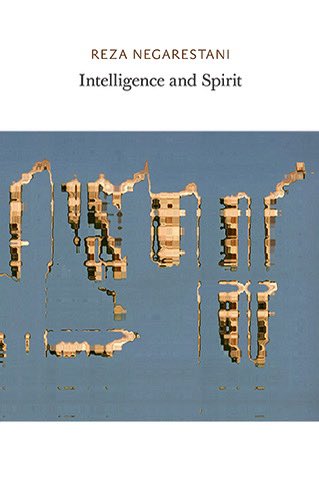
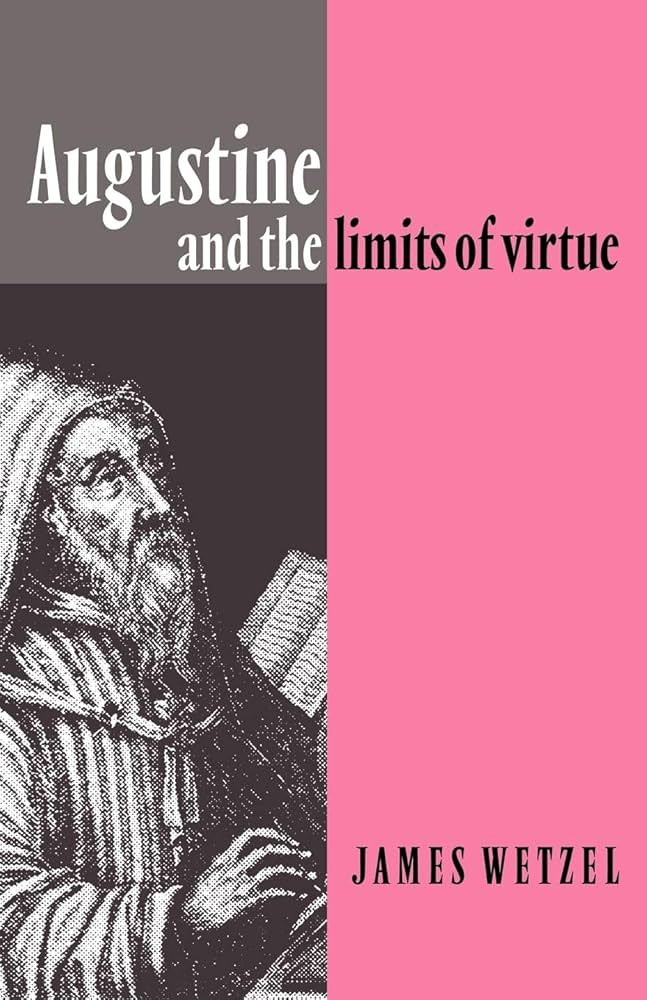
Entropy (per se) is not the enemy. While it’s tempting to physically localize the Satanic curse of death and decay in the entropically constituted thermodynamic “arrow of time” (I have done this in the past—for an interesting discussion of this in a Christian hamartiological context, see James Wetzel’s “Augustine and the Limits of Virtue”), a careful critical study of Reza Negarestani’s philosophy of thermodynamics in “Intelligence and Spirit” is convincing me that it is instead the state of affairs at the *origin* of the (always relative) entropic arrows—which I would theologically gloss as the site of cosmic (“meta-historical”) fall—which represents the peak of the Satanic curse, insofar as it represents the peak of energy made available for finite exploitation, with the continuing (“apocalyptic”) development of entropic exhaustion actually depriving the Satanic fantasy of the total finite exploitation of energy of its means of “Promethean” realization, requiring external reliance on absolute divine order and hierarchy, rather than the imposition of merely created commands (however once “angelic” they may have been) over a “standing reserve” of readily exploitable energy.
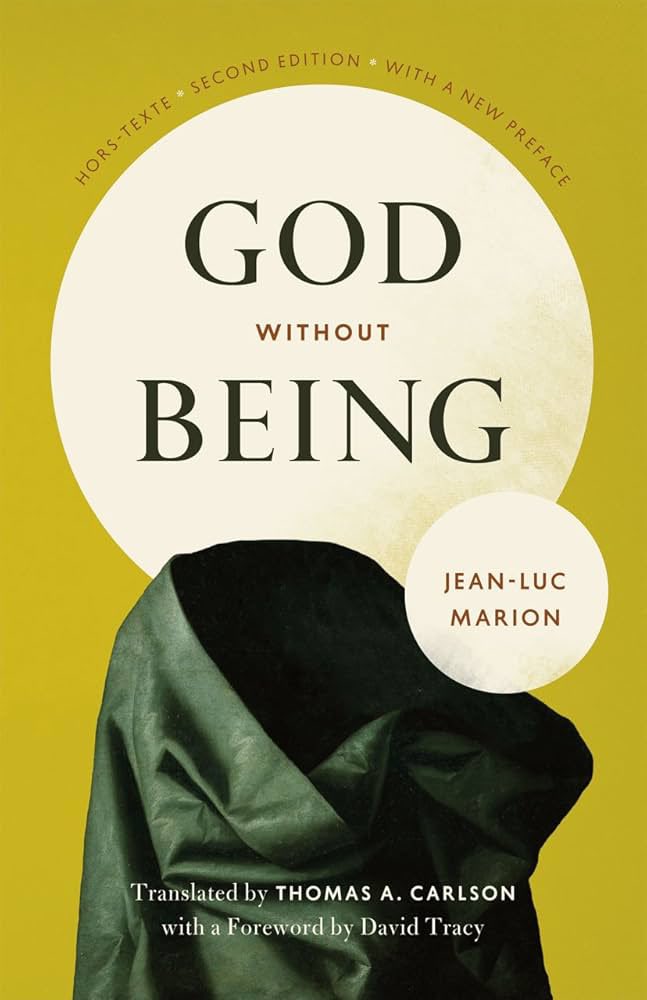
This dovetails nicely with Jean-Luc Marion’s emphasis on the categorical priority of final causes (and so the apocalyptic “end of time”) over efficient causes (and so the “beginning of time”—arguably Satan’s fall rather than divine creation) when it comes to the order of divine love in “God without Being.” The implication is that rather than history being the story of progressive decay from a good cosmically immanent divine origin, it is the story of the progressive victory of a good *transcendent* divine origin over an evil/false linear “beginning” which corrupted the order of divine creation—still making up all the real substance of our world—in a privative angelic fall.
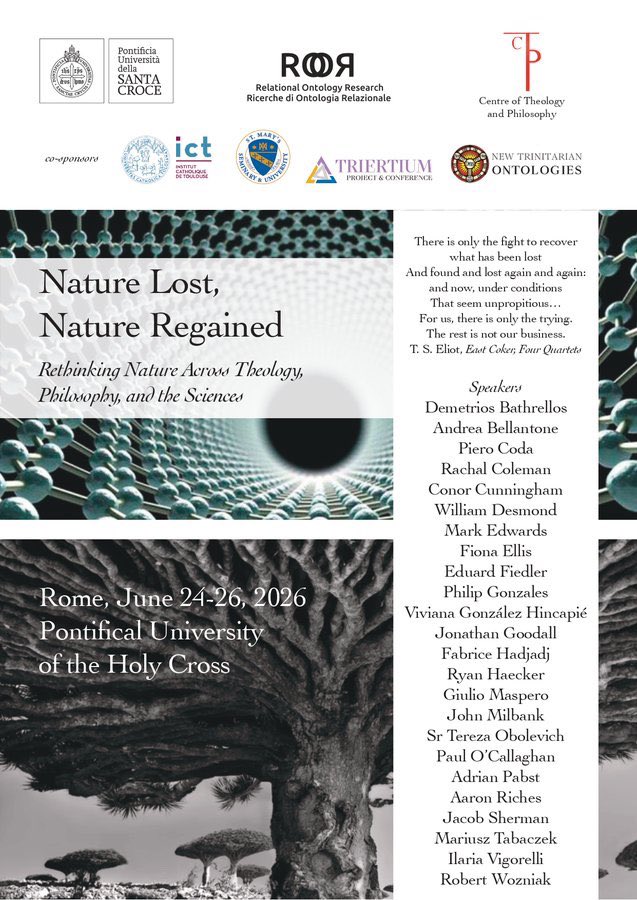
All of this is of eminent relevance to the paper that @PervertGuide and I are preparing for the upcoming “Nature Lost, Nature Regained” conference contrasting (in catastrophe-theoretic terms) the themes of cosmic fall between Hegel’s heterodox theory of cosmic evil, which makes evil a positive logical moment in a total divine noetic structure and so (in Gnostic fashion) the work of the divine, and St. Maximus the Confessor’s more orthodox view, which preserves the goodness of nature by situating evil as instead a Satanic disruption of the purely good and graced order of created nature itself at the foundation of this cosmos tainted by sin, obstructing the flow of uncreated grace into creation. See how this connects to the “unnatural” situation, at the dawn of linear time, of a surplus of finitely exploitable mechanical energy over the finitely non-exploitable heat energy which increases with entropy in the relational constitution of time’s arrow?
I may also be organizing an upcoming seminar on Negarestani’s thought with @pachabelcanon soon; stay tuned for more details.
15 Dec 2025
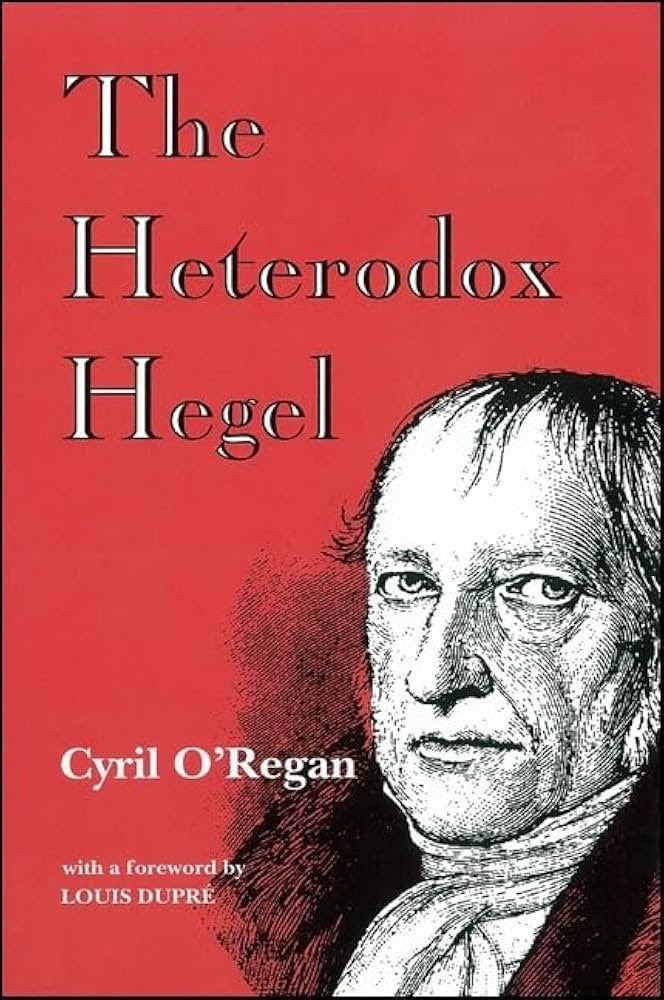
Hegel may have been the German Proclus in his logic, but as Cyril O’Regan points out in The Heterodox Hegel, he was also the German Valentinus in his heterodox theology, affirming a form of creation ex Deo qualitatively distinct from that of Neoplatonists like Plotinus and Proclus (despite other differences between those two) and in fact much closer to Valentinus, emphasizing particularly the radical alienation of the Idea in nature as a sort of constitutive incommensurability of the latter with the former, which was interpreted by Baader and Schelling as a kind of “cosmic fall” thesis (though Hegel demurred, deflecting by petitioning a “conceptual” translation).
In this way, I think we can actually see Hegel’s critique of Leibniz as similar to the broadly Valentinian Gnostic resistance to the “naturalist” tendency of Plotinus and his school. As Allison Coudert argues, Leibniz’s ontology can be seen as a kind of Kabbalistically inflected Neoplatonism, but one which never solved the “problem of matter,” leading Christian Wolff to literally coin the term “idealism” derisively in reference to Leibniz. Of course, Hegel can also be read as a kind of “naturalist,” as advocated by Terry Pinkard, for example; @PervertGuide argues, however, that Hegel should be read as a “catastrophic naturalist,” along the lines of the catastrophe theory developed by the mathematician René Thom.
As of earlier today, I have also changed my plans for the upcoming “Nature Lost, Nature Regained” conference in Rome in June 2026. I will be presenting a collaborative paper with @PervertGuide developing this reading of Hegelian dialectics through René Thom’s “biomathic” theory of catastrophic morphogenesis, qualified by a critical comparison of the more Gnostic Hegel with the more orthodox thought of Maximus the Confessor and his conception of “cosmic fall.”
8
40
431
34,695

We worked with @Ginkgo to connect GPT-5 to an autonomous lab, so it could propose experiments, run them at scale, learn from the results, and decide what to try next. That closed loop brought protein production cost down by 40%.
462
1,235
9,616
3,139,960
Lain II (∞/acc) (contact/acc) retweeted

Jan 23
"Notice everything adds up to nine for some strange reason." Quality pop Lemurianism. youtube.com/watch?v=R7oyZGW9…
9
10
171
18,998
Lain II (∞/acc) (contact/acc) retweeted
Jan 14
To say "We are nothing" is one-sided, but it's a good start.
13
8
151
10,259
Lain II (∞/acc) (contact/acc) retweeted

Jan 2
Fuck @shaw said we should finish templeos, looked at what I had and compared:
“The design shares TempleOS’s spiritual core: a coherent worldview, intentional constraints, determinism, and whole-system clarity. It treats computing as purposeful order, not emergence—where structure, meaning, and discipline guide execution.”
1
2
20
15,854
Life is short, quit your job and be likeable enough to live on someone’s couch.
1
100
If you play Toontown, Wizard101, path of exile, or heroes of might and magic IV, know that I love you. You are loved.
111
We’re a long way from Waterdeep -Gale from Baulders Gate 3
140
Deleuzepilled Lainpilled = prepared for full disclosure. No i will not explain, cmon anon 😔
79
What do you mean you haven’t read Kenneth Grant’s Outside the Circles of Time anon? No wonder you’re not looking so submissive and breedable. 😔 what happened to new year, new you?
74
New space with Lain and Lain happening soon! @Lainfanart
1
61
Nobody understands...nobody ever will, this is the first law of full disclosure
3
35
1,243
First superthread of 2026 will either be how electricity and magnetism are not the same force, or how the quantum internet merges the astral versus what we call the metaverse and how not to wait to get in. Oh well.
52
New Years Resolution: never watching a single video on the internet this year <3
1
47