
Joined February 2022
- Tweets 145
- Following 104
- Followers 587
- Likes 870
15 Photos and videos

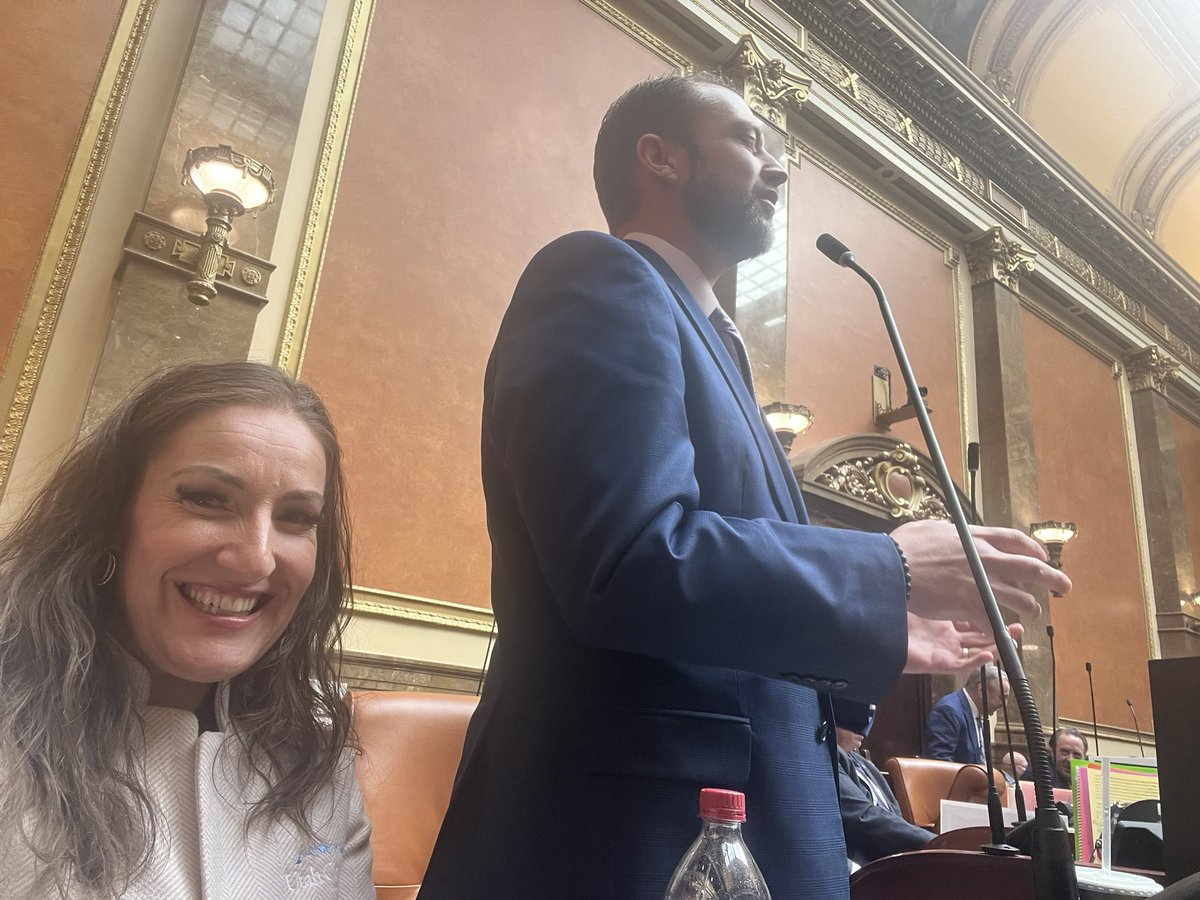



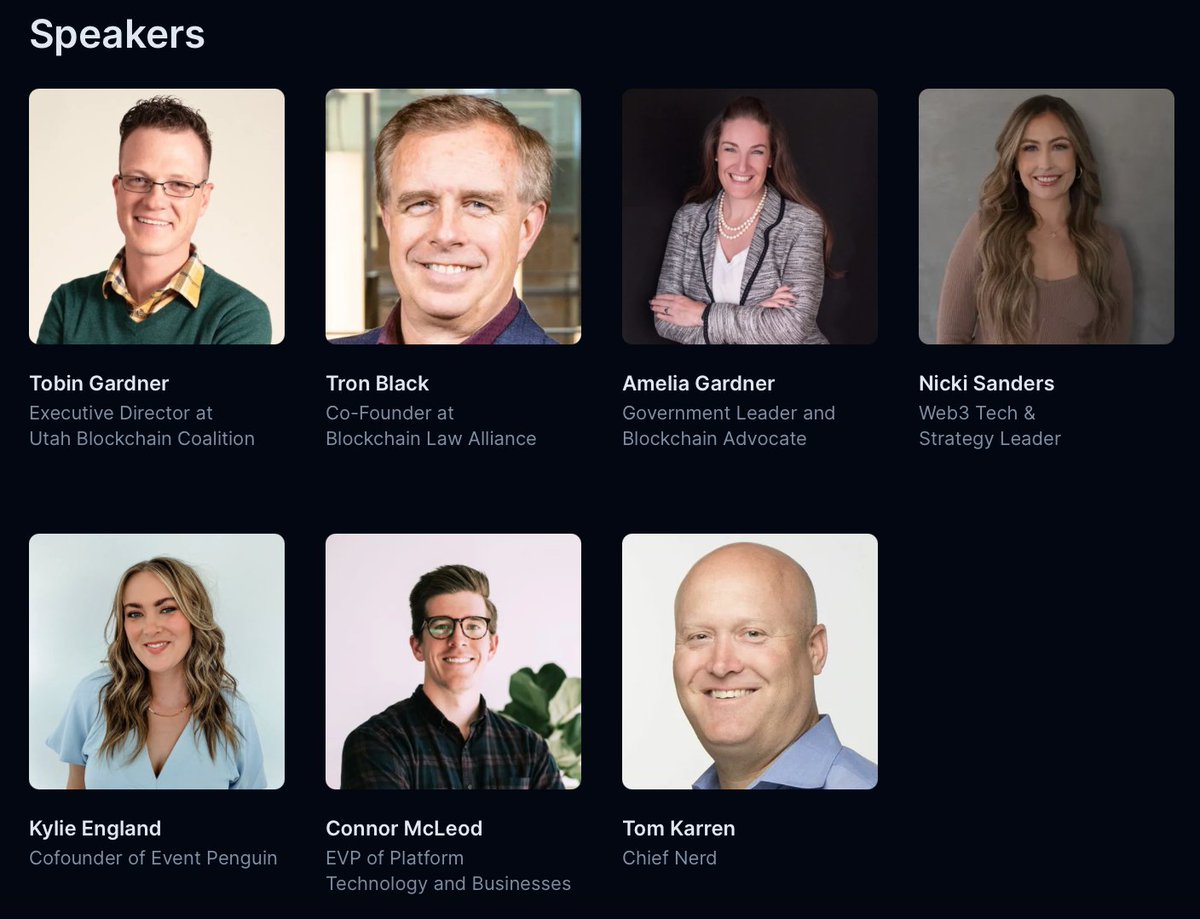


We're excited to partner with The Digital Chamber, the Utah Governor's Office of Economic Development, and Nucleus for a special blockchain event on June 18.
Join the conversation with policymakers, industry leaders, and builders.
RSVP: luma.com/e0ycmocz

1
1
2
127
There’s a visibility problem in blockchain.
The people with the biggest platforms are often the least involved in how this technology actually integrates into society. Meanwhile, the people doing the most important work are usually invisible.
UBC exists to help change that.
1
1
140
The question isn't whether blockchain will become part of everyday life. It's which states and which communities will have shaped how it works. Utah is choosing to be one of them.
1
5
194
Your grandkids won't know what a fax machine is. They also won't understand why you had to carry a physical ID card. Somewhere in between those two facts is the entire case for blockchain.
2
54
The next generation won't think of blockchain as "the crypto thing." They'll think of it the way we think of WiFi. It's just there. It just works. The work happening now is what makes that future possible.
1
44
Imagine a world where "trust me" isn't required. Where every claim is verifiable, every transaction is transparent, every record is tamper-proof. That's not utopia. That's infrastructure. And it's being built right now.
1
48
Five years from now, you'll verify your identity, your credentials, and your property ownership without a single phone call to a government office. Blockchain makes that possible. The policy is being written now.
3
69
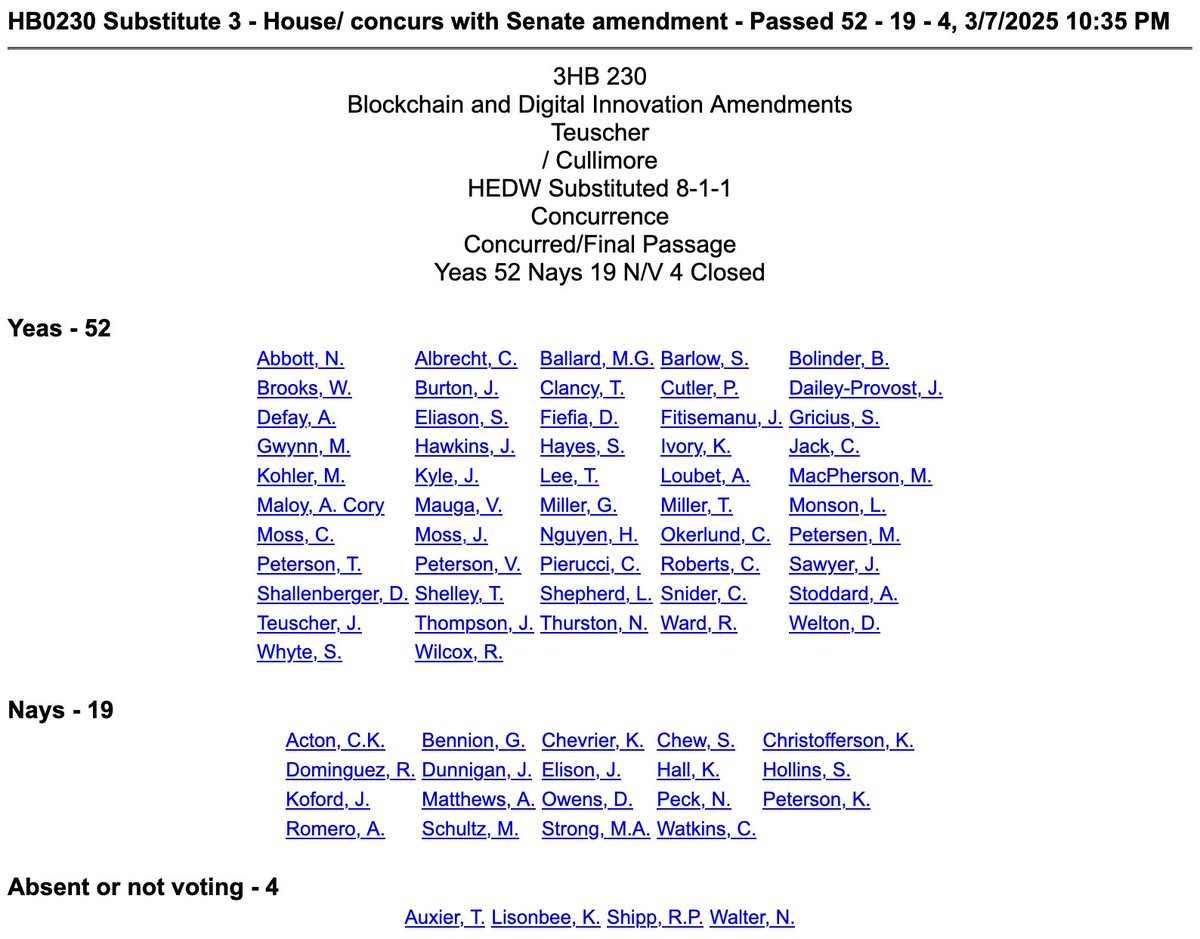
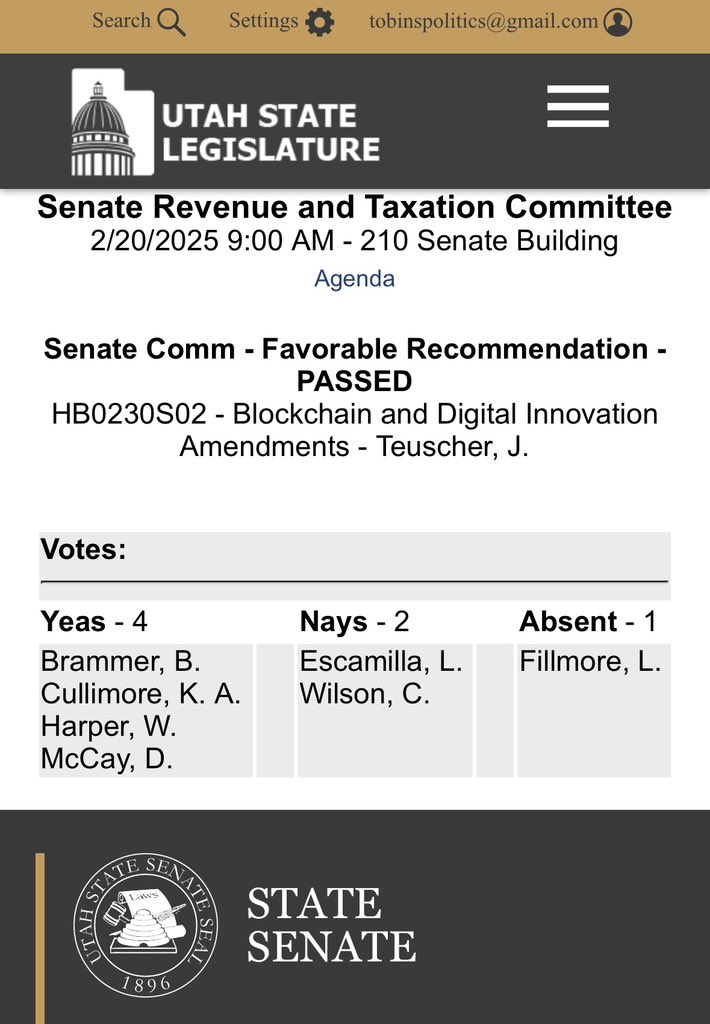
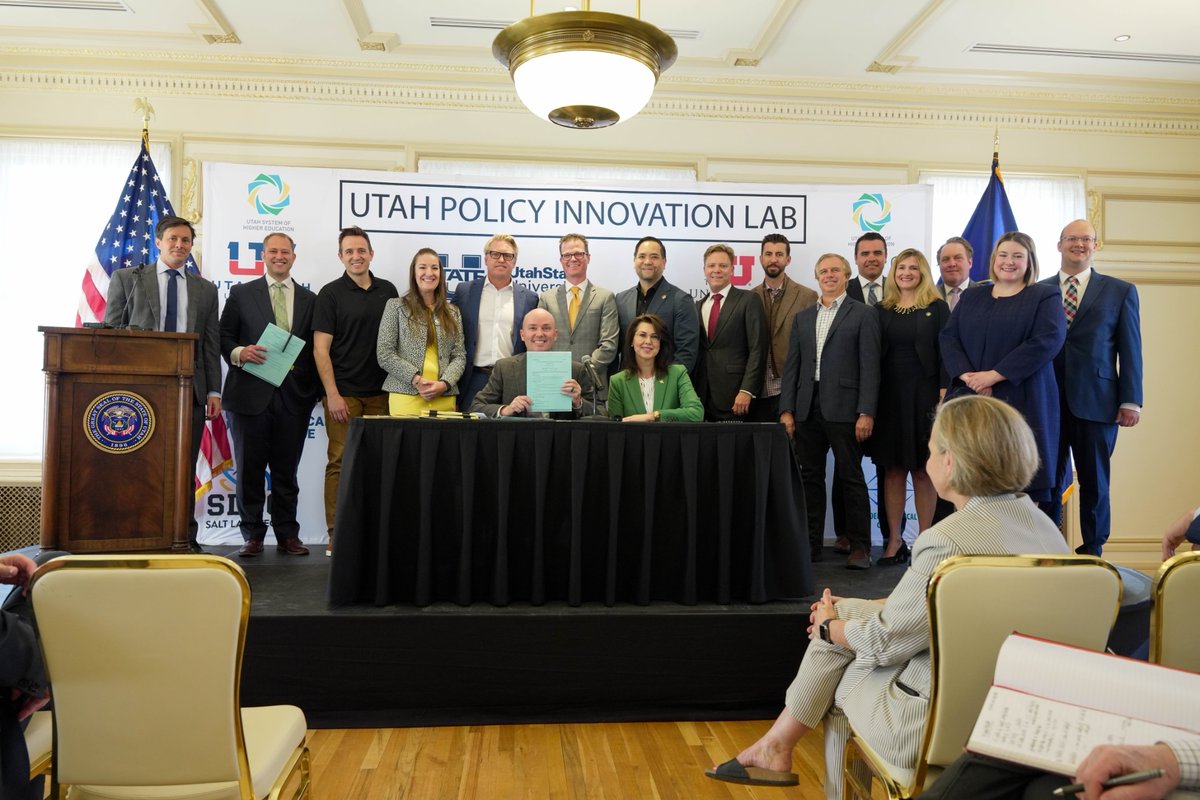
Utah's 2026 legislative session has been one of the most active for blockchain policy in the country, and the Utah Blockchain Coalition has been directly involved in every one of these:
2
1
1
250
Blockchain advocacy doesn't look like a keynote on a stage. It looks like a 7 AM meeting with a state senator's staffer. It looks like redlines on draft language. It looks like testimony at 2 PM on a Monday.
1
1
56
Utah is leading because people here are doing the work.
1
41
The dot-com bubble wiped out hundreds of internet companies. The internet didn't go anywhere. Blockchain is on the same trajectory. The hype fades. The infrastructure stays.
1
2
6
534
Blockchain won't replace banks. But it will make banking faster, more transparent, and more accessible. That's not a threat. It's an upgrade.
2
4
244
"Blockchain is just a database." Technically, a car is just a box with wheels. The difference is what it makes possible that nothing else can.
4
92
"Blockchain uses as much energy as a small country." That claim is based on one consensus mechanism and outdated data. The technology has moved significantly since that stat went viral.
1
77
We're a nonprofit. We don't sell tokens. We don't trade coins. We build the policy framework that makes blockchain work for everyone in Utah. That's the mission.
1
4
145