
Info from VA Puget Sound Health Care System. (Following a Twitter user does not signify VA endorsement.)
Joined July 2009
- Tweets 3,832
- Following 130
- Followers 1,899
- Likes 11
1,193 Photos and videos








The FIFA World Cup is expected to bring approximately 750,000 visitors citywide. We expect significant traffic congestion from mid-June through early July. To help alleviate patient access issues, we are encouraging patients to take advantage of telehealth appointments and to plan your travel accordingly.
Upcoming Game Schedule:
Monday, June 15: Belgium vs. Egypt at 12 noon
Friday, June 19: USA vs. Australia at 12 noon
Wednesday, June 24: Bosnia-Herzegovina vs. Qatar at 12 noon
Friday, June 26: Egypt vs. Iran at 8:00 PM
Playoff matches: July 1 and July 6 (teams TBD)
1
1
45

Jun 12
Sick of feeling like nothing’s working for your mental health?
Learn what might actually work for you: Mentalhealth.va.gov/about/in…
14
Jun 11
Join us tomorrow, June 12th, for the Women Veterans Health Fair at American Lake VA Medical Center (Building 9) from 10 a.m. to 2 p.m. Connect with women Veteran resources, participate in Whole Health workshops, and sign up for the raffle.
Questions or would like to schedule a mammogram or pap? Contact the Women Veterans Program by calling (206) 764-2441, e-mailing Sarah.Anderson29@va.gov, or sending a MyHealtheVet message to PUG_WH Women Veteran Program_WV
25
Jun 10
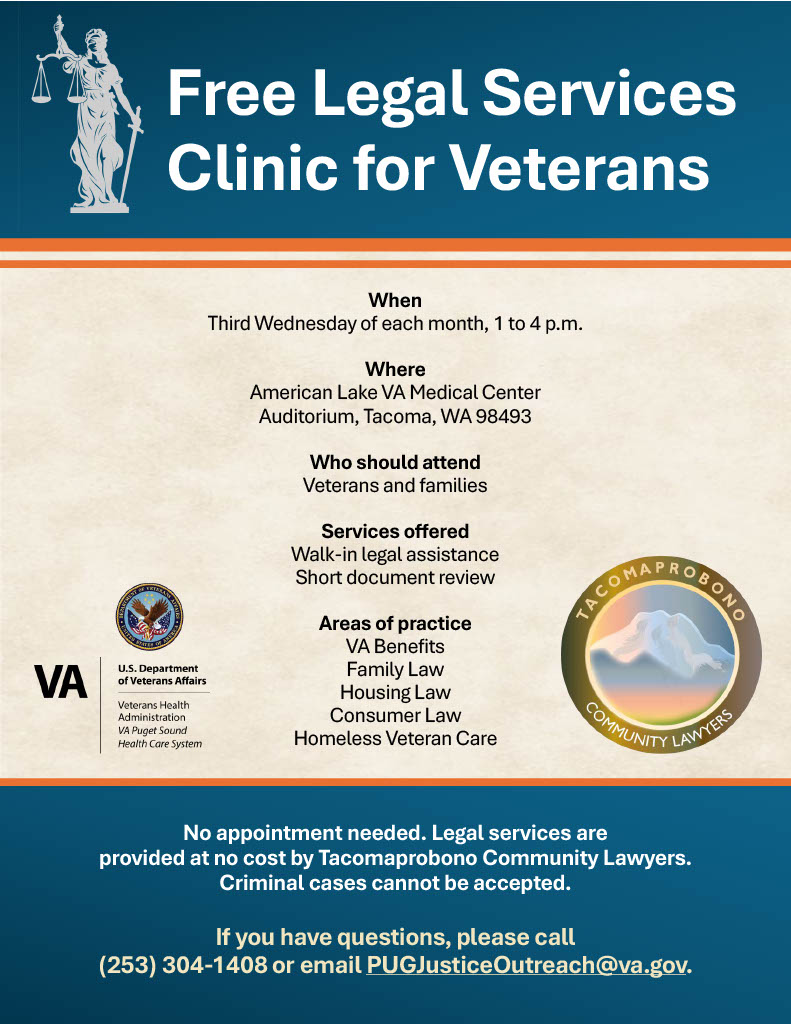
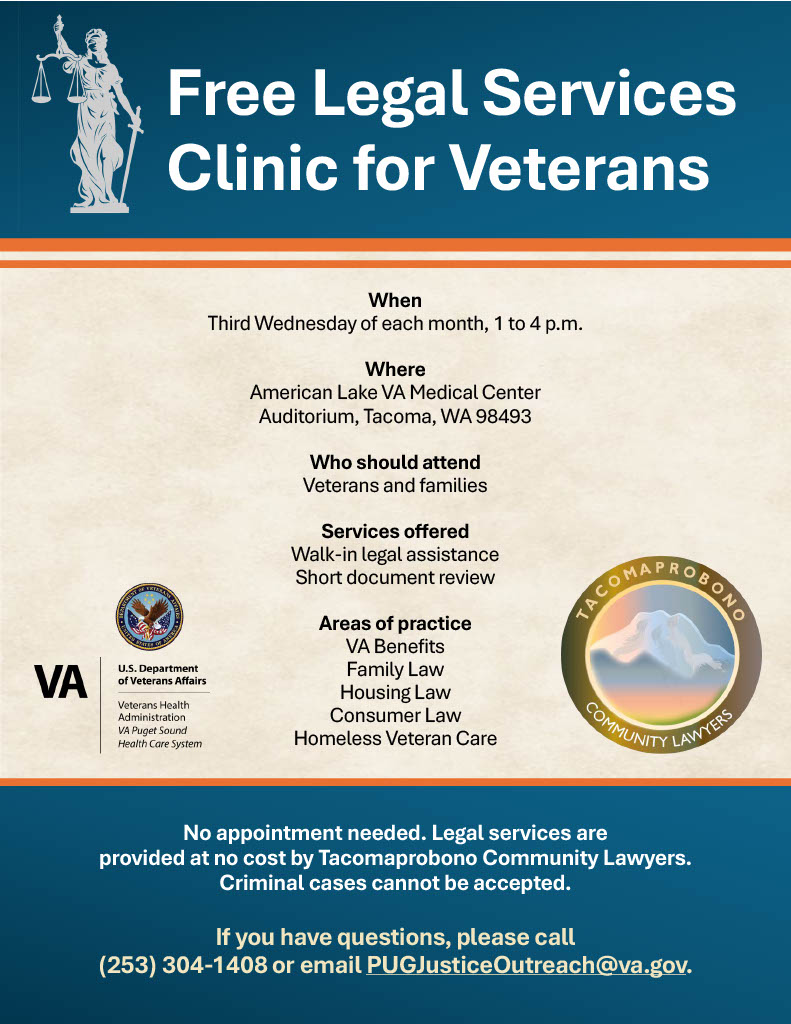
Need legal help with civil issues?
VA Puget Sound hosts a free legal clinic for Veterans at the American Lake VA Medical Center auditorium every third Wednesday of the month from 1 – 4 p.m. No appointment needed.
Walk in for help with VA benefits, family law, consumer, housing law, and homeless Veteran care.
77
Jun 10
The FIFA World Cup is expected to bring approximately 750,000 visitors citywide. We expect significant traffic congestion from mid-June through early July. To help alleviate patient access issues, we are encouraging patients to take advantage of telehealth appointments and to plan your travel accordingly.
Upcoming Game Schedule:
Monday, June 15: Belgium vs. Egypt at 12 noon
Friday, June 19: USA vs. Australia at 12 noon
Wednesday, June 24: Bosnia-Herzegovina vs. Qatar at 12 noon
Friday, June 26: Egypt vs. Iran at 8:00 PM
Playoff matches: July 1 and July 6 (teams TBD)
88
Jun 9
VA Puget Sound Health Care System receives top scores in latest CMS hospital ratings
Seattle — VA Puget Sound Health announced today that it received a 4-star rating in the Centers for Medicare & Medicaid Services’ annual Overall Hospital Quality Star Rating report.
CMS’ Overall Hospital Quality Star Ratings are based on five categories: mortality, safety of care, readmission, patient experience, and timely and effective care. A higher star rating, out of five, indicates better performance along these quality measures.
“Receiving a 4-star rating from CMS is a reflection of the dedication our entire team brings to caring for Veterans every day,” said VA Puget Sound Health Care System Executive Director Dr. Thomas Bundt. “This rating underscores our commitment to delivering safe, timely and high-quality care, and we are proud to contribute to VA’s continued nationwide excellence.”
Nationwide, 78% of VA hospitals that received a rating received an Overall Hospital Quality Star Rating of four or five stars in 2026.
This is the fourth consecutive year that VA has outperformed non-VA care, and the second year in a row that no VA hospital received a one-star rating. The percentage of VA hospitals receiving four or five stars has grown dramatically in the last two years:
•2023, 67%
•2024, 58%
•2025, 77%
•2026, 78%
View the star ratings for each facility and methodology for the ratings.
For more information, please contact VA Puget Sound Public Affairs at publicaffairspugetsound@va.gov.
This year’s CMS report is just one example of how VA is working better for Veterans. Among other improvements, VA has:
•Enrolled more than 125,000 new Veterans in VA health care in 2026.
•Opened 35 new VA health care facilities since Jan. 20, 2025, expanding health care access for Veterans around the country.
•Reduced the backlog of Veterans waiting for VA benefits by 70% since Jan. 20, 2025, after it increased 24% during the prior administration.
•Completed 82,083,918 direct care appointments in FY2025, up 4.1% from FY2024.
•Offered Veterans more than 2.5 million appointments outside of normal operating hours, giving Veterans more timely and convenient options for care.
•Permanently housed 51,936 homeless Veterans across the country in FY2025, the highest total in seven years.
1
57
VA Puget Sound retweeted
Jun 7
The FIFA World Cup is expected to bring approximately 750,000 visitors citywide. We expect significant traffic congestion from mid-June through early July. To help alleviate patient access issues, we are encouraging patients to take advantage of telehealth appointments and to plan your travel accordingly.
Upcoming Game Schedule:
Monday, June 15: Belgium vs. Egypt at 12 noon
Friday, June 19: USA vs. Australia at 12 noon
Wednesday, June 24: Bosnia-Herzegovina vs. Qatar at 12 noon
Friday, June 26: Egypt vs. Iran at 8:00 PM
Playoff matches: July 1 and July 6 (teams TBD)
1
92
Jun 8
Story – How one encounter changed a Veteran’s life
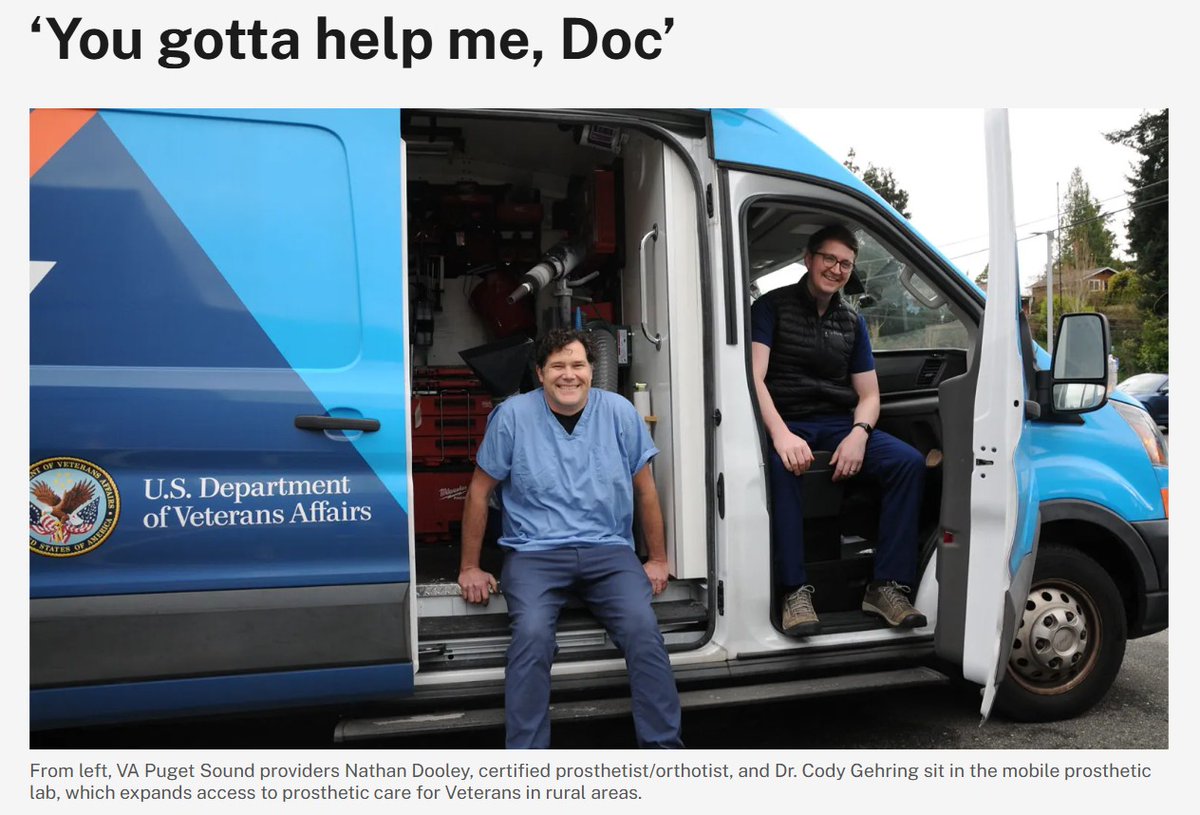
VA HPACT primary care provider Dr. Cody Gehring first met Veteran Tom in the parking lot of the Everett VA Community Clinic, where his HPACT team serves homeless and housing-insecure Veterans. Tom, in his 60s, was lying on the ground in tears beside his prosthetic limb.
“You gotta help me, doc,” he said. “My prosthetic doesn’t fit right.”
Tom had a below-knee amputation and a chronic wound on his stump that made it unsafe to wear his prosthetic. He needed specialty care, but access was difficult. He had no phone, was living in a car in the woods, and his PTSD worsened when travelling into the city.
When Dr. Gehring’s encouraged him to visit the local ER, Tom declined and left.
This type of situation is common for the population HPACT serves. “Anything that requires scheduled appointments falls apart quickly,” said Dr. Gehring. “We have to meet Veterans where they are, finding creative, flexible ways to meet their needs.”
Before Tom disappeared, Dr. Gehring convinced him to return to the clinic on a day when Nathan Dooley, a certified prosthetist/orthotist (CPO) for the local VA Mobile Prosthetic and Orthotic Care (MoPOC) program, would be onsite. “We’ll have someone here who can help you,” promised Dr. Gehring.
Weeks later, Tom returned asking for help.
Although same-day visits are difficult in a busy clinic, Dr. Gehring and Mr. Dooley prioritized his care. Each time Tom showed up, they adjusted their schedules to treat him.
“We asked, ‘What can we do right now that will help?’” said Dr. Gehring.
Tom’s goal was simple: to walk again. Over the next few months, he returned multiple times. While addressing his prosthetic needs, the team also used these visits to broaden his care — managing his blood pressure, connecting him with mental health and psychosocial services, and addressing his other unmet needs.
Fixing the prosthetic became the entry point. "Alleviating their knee pain, making their prosthetic fit, is often the reason they show up,” explained Dr. Gehring. “But it also gives us the opportunity to build trust and address everything else.”
After several months, Tom was walking again. His wound had healed, and he received a proper prosthetic fit. For the first time in years, his blood pressure was under control, he was engaged in mental health care and had moved into VA-supported permanent housing.
Today, Mr. Dooley provides home-based care using the mobile prosthetic lab, ensuring Tom can continue treatment without barriers.
“The Veteran would have not kept engaging with VA if it wasn’t for MoPOC,” said Dr. Gehring. “Despite ongoing challenges, he knows he can always turn to us.”
Note: the Veteran’s name was changed for privacy
VA Puget Sound providers Nathan Dooley, CPO, and Dr. Cody Gehring sit in the mobile prosthetic lab, which expands access to prosthetic care for Veterans in rural areas.
36
Jun 5
18
VA Puget Sound retweeted

Have you downloaded our Couples Coach App? Couples can improve communication and build trust in their relationship. Try exercises to practice active listening so you can navigate conflict better with your partner. Visit the VA App Store to learn more.

ALT A senior couple sitting together outdoors looking at a smartphone.
4
48
21
2,334

This Military Appreciation Month, Americans took a moment to say thank you, & from thousands of miles away, a service member stationed overseas wanted to say it back.
Send a message at uso.org/messages. It takes just a moment, but for our troops, it can mean everything.
4
6
35
1,030
VA Puget Sound retweeted

May 30
A #USCG helicopter crew from Astoria rescued 2 stranded fishermen around sunrise Sat morning near Shelton, WA. Ground party from @MasonCoSheriff was unable to reach the individuals and requested USCG assistance. The man and woman were transferred to EMS with no injuries reported.
2
8
110
6,699
VA Puget Sound retweeted
For 80 years, VA health care has been shaped by research and informed by Veterans’ experience, setting the foundation for a future of exceptional health care.
Every study and every advancement builds on the one before it—pushing Veteran care forward.
#VHA80 #Freedom250
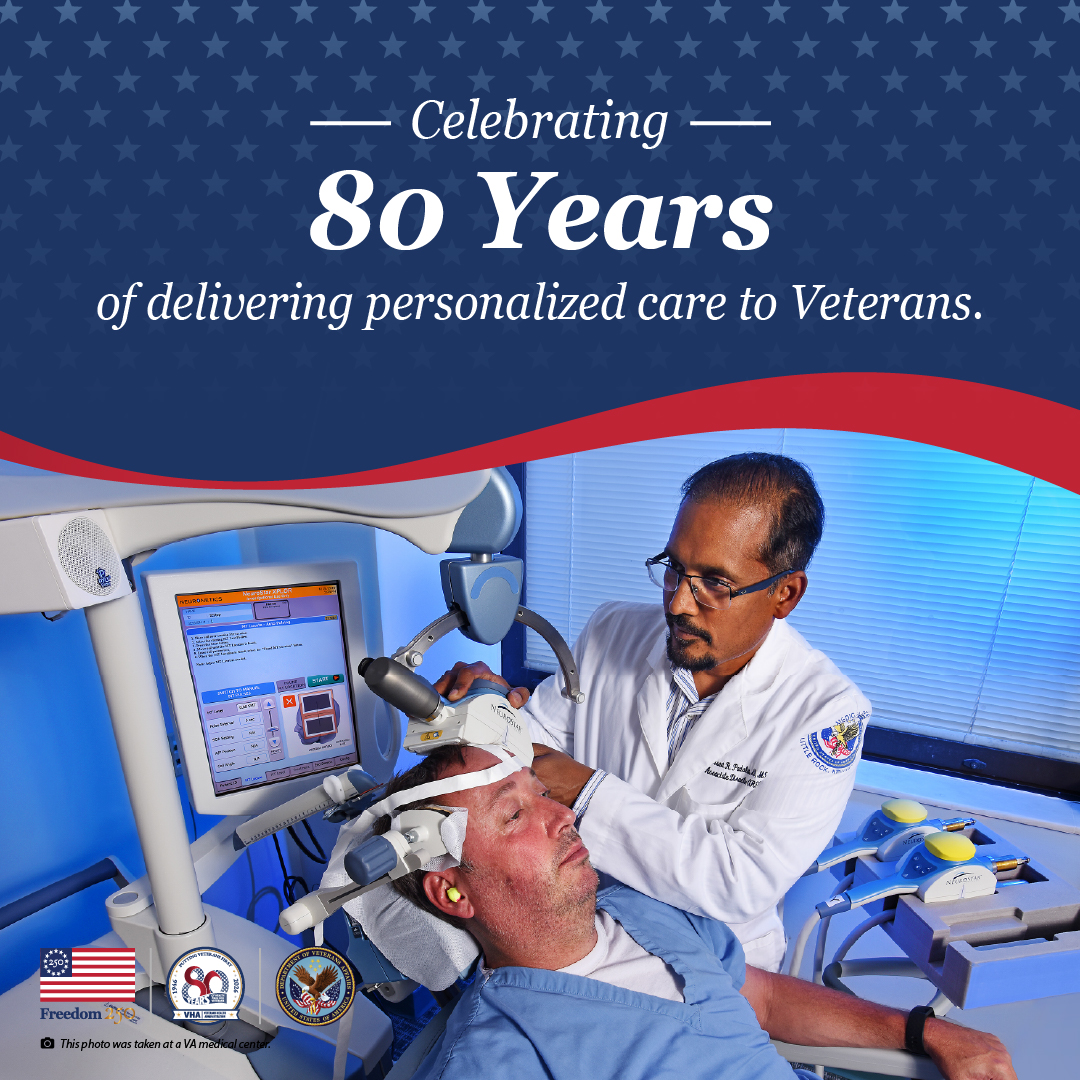
ALT Medical professional providing personalized care to a Veteran using advanced diagnostic equipment in a clinical setting.
11
68
63
2,673
VA Puget Sound retweeted

May 27
Through the Clinical Triage channel on VA Health Chat, Veterans can receive medical advice for non-life-threatening injuries or illnesses. To get started, download the app: mobile.va.gov/app/va-health-…
1
26
VA Puget Sound retweeted

May 29
Be the superhero you know you can be and unleash your powers of good by naming or updating your beneficiary designations! Your beneficiary can be one or more of your loved ones or even your favorite organizations, like the VFW! To learn more about beneficiary designations, visit: vfw.planmylegacy.org/unleash…. If you have any questions about using your superpower to designate the VFW as a beneficiary, be sure to contact the VFW Planned Giving Office at 816.968.1119 or plannedgiving@vfw.org.

2
6
300
VA Puget Sound retweeted

May 28
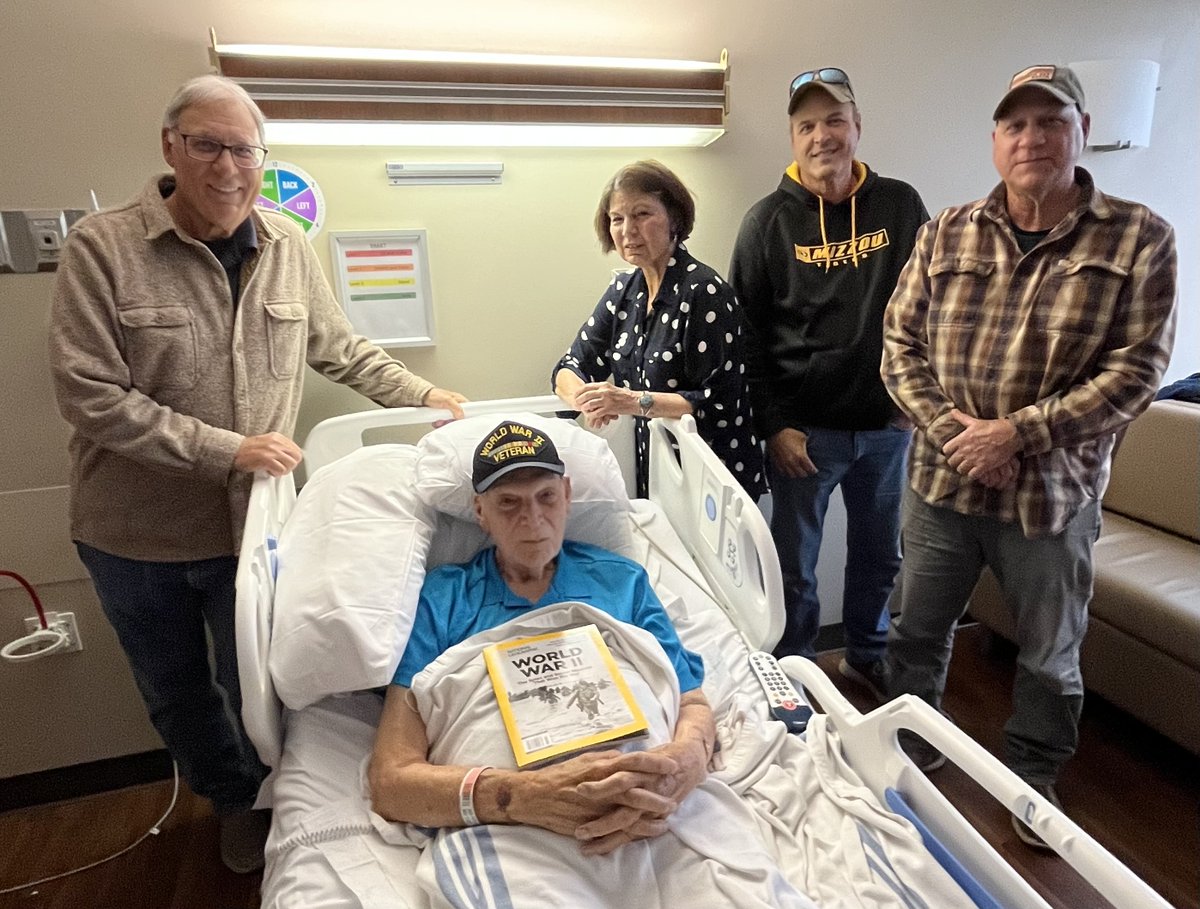
Centenarian recipient Joseph Vogliardo is a proud World War II Veteran who served with honor in the United States Army. His dedication, courage, and unwavering commitment to our nation reflect the very best of the Greatest Generation. We honor the legacy of service he carries with him by presenting him with a challenge coin and a letter from the Secretary of Veterans Affairs, Douglas A. Collins, as well as a challenge coin from KCVA Interim Executive Director, Paula Roychaudhuri. Mr. Vogliardo’s contributions helped shape the freedoms we enjoy today, and his life stands as a powerful reminder of the sacrifice and strength embodied by America’s Veterans. We extend our heartfelt thanks to Mr. Vogliardo for his time in service, his devotion to duty, and the example he continues to set for all of us. It is a privilege to recognize him and express our gratitude for all he has given in service to our country. #Veteran #KCVAVeteran #ThankYou
1
1
32
VA Puget Sound retweeted

Apr 18
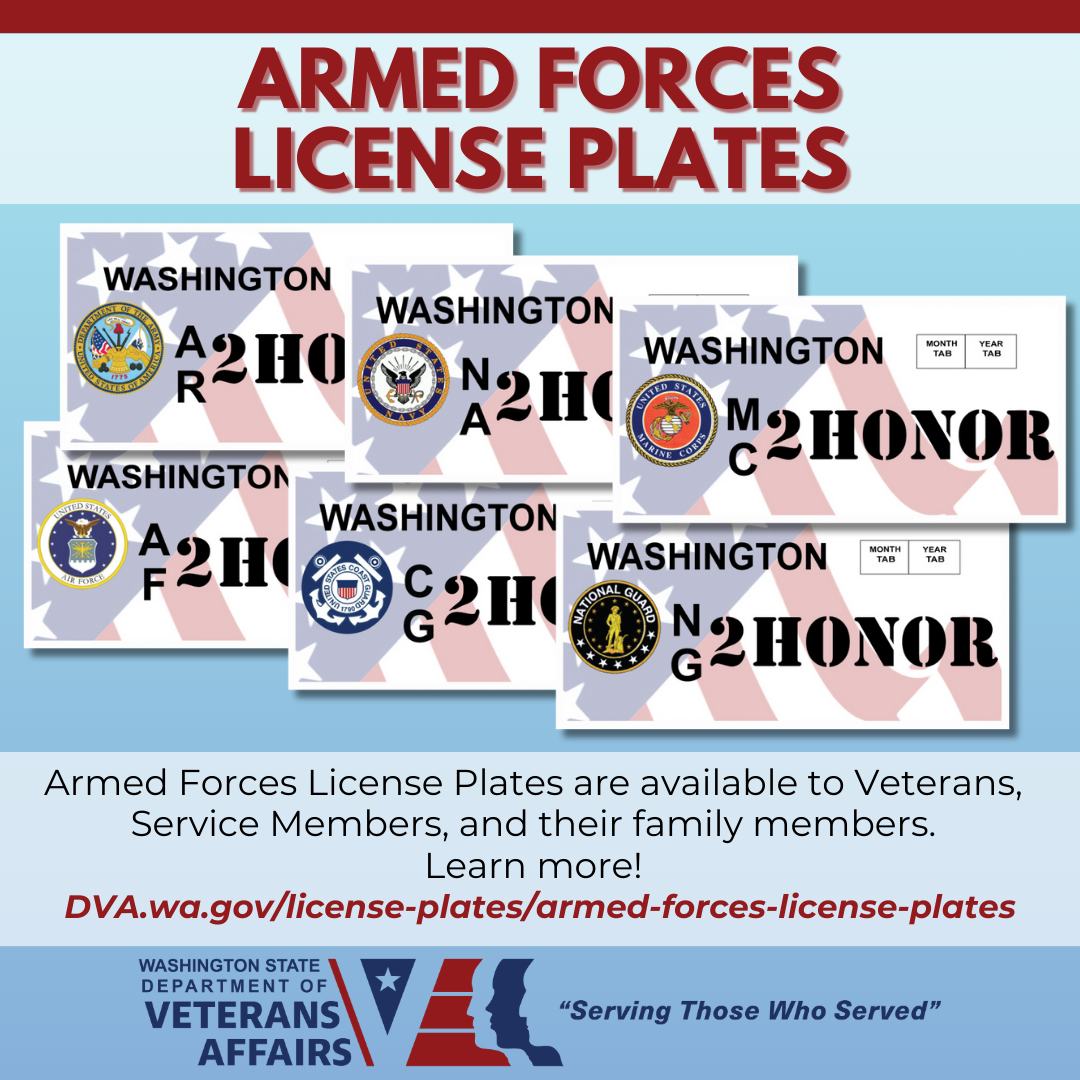
Celebrate service with an Armed Forces License Plate! Six styles, status stickers, and support for Veterans. More info: dva.wa.gov/license-plates/ar…
1
1
45