Break Into VC - Join a Community of VC Enthusiasts to Learn, Network & Craft a Path To Venture Capital at 👉 vccrafters.com | 🤝 Initiative By @venturecrews
Joined November 2023
- Tweets 357
- Following 4
- Followers 40
- Likes 609
11 Photos and videos

Pinned Tweet

8 Nov 2023
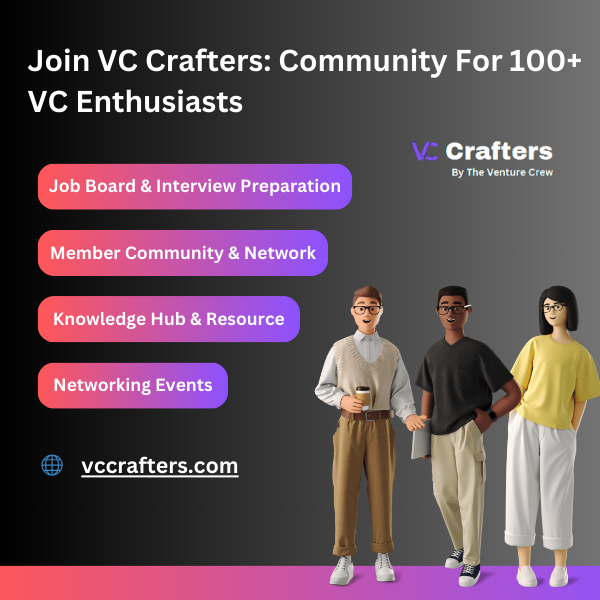
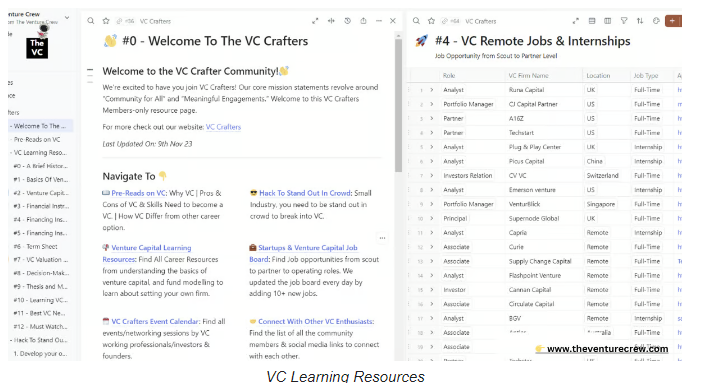
Get Access to VC Job Board | VC Learning Resources | Networking Events With Investors & More
👉Join Here: vccrafters.com
#venturecapital #startups #vcjobs #VCS
1
3
412

5 predictions on where AI agents will actually make money...
Everyone is talking about AI agents right now. But the real question isn’t whether agents will exist. It’s where the money will flow once companies start deploying them at scale.
A recent CB Insights report breaks this down using hiring data, funding activity, and enterprise surveys. And one thing becomes clear very quickly:
"Building agents is no longer the hard part. Deploying, securing, and scaling them inside real companies is."
That shift is quietly creating new markets around the “agent stack.”
1️⃣ The first big one is customer service.
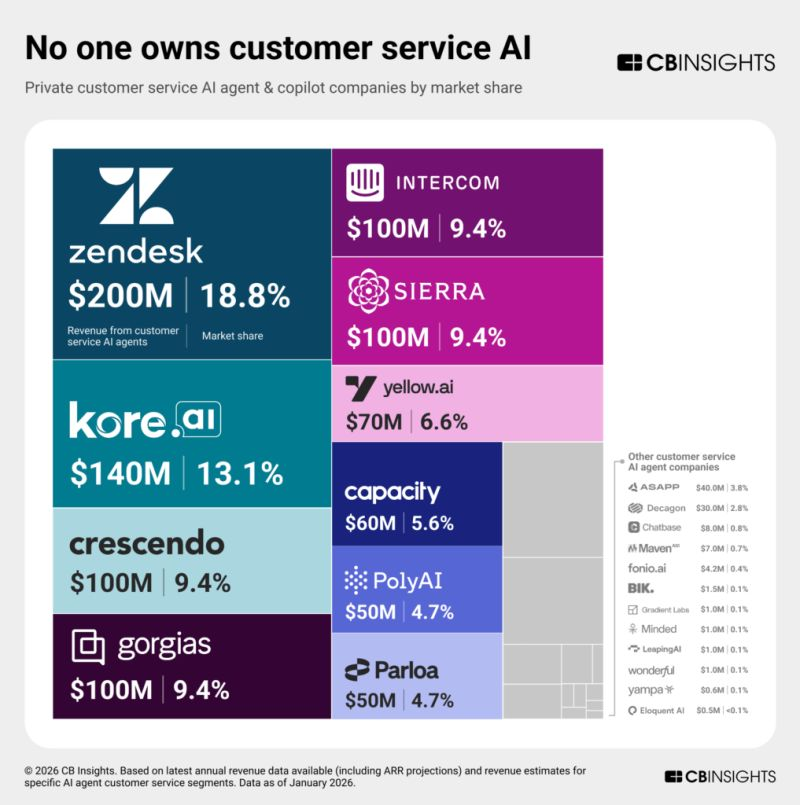
It’s already the #1 use case for enterprise agents, with 100 companies competing and multiple startups doing $ 100M in revenue. But the next wave isn’t just better chatbots, it’s multimodal agents that can operate across voice, text, documents, images, and video.
Voice is becoming the real test. Handling interruptions, latency, and real conversations is much harder than text. That’s why AI-native companies are moving fast here.
2️⃣ The second shift is in how voice AI is sold.
Most AI tools are self-serve. Voice AI is going the opposite direction. Companies are embedding engineers directly into enterprise teams because:
• 65% of companies don’t have internal AI expertise
• 59% struggle with integration
So instead of just selling software, they’re helping companies actually deploy it. Lower margins, but much higher adoption.
3️⃣ The third layer is security.
Agents don’t just assist, they act. They can execute code, call APIs, and move data across systems. That creates new risks.
So a new category is emerging around continuously testing agents for failures like prompt injection, misuse, or hijacking. Large cybersecurity players are already acquiring companies here.
4️⃣ The fourth layer is observability.
Once agents are deployed, companies need visibility. What decisions are agents making? Are they reliable? Where are they failing?
This is why tools that monitor, evaluate, and audit agent behavior are seeing strong demand. M&A activity in this category jumped 10x in 2025.
And finally, there’s a longer-term shift that’s easy to miss.
5️⃣ World models.
These simulate real-world environments so robots and physical AI systems can train before operating in reality. Early signals from funding and hiring suggest this could become the foundation for the next wave of automation.
When you step back, the pattern becomes clear.
The first wave of AI was about models. The second wave was about applications.
The next wave is about making these systems actually work inside real businesses.
And that’s where most of the money will be made. Because companies don’t just need AI agents.
They need agents that can be trusted, deployed, and scaled.
Curious how you’re thinking about this - are you building agents, or the infrastructure around them?
3
2
6
1,572
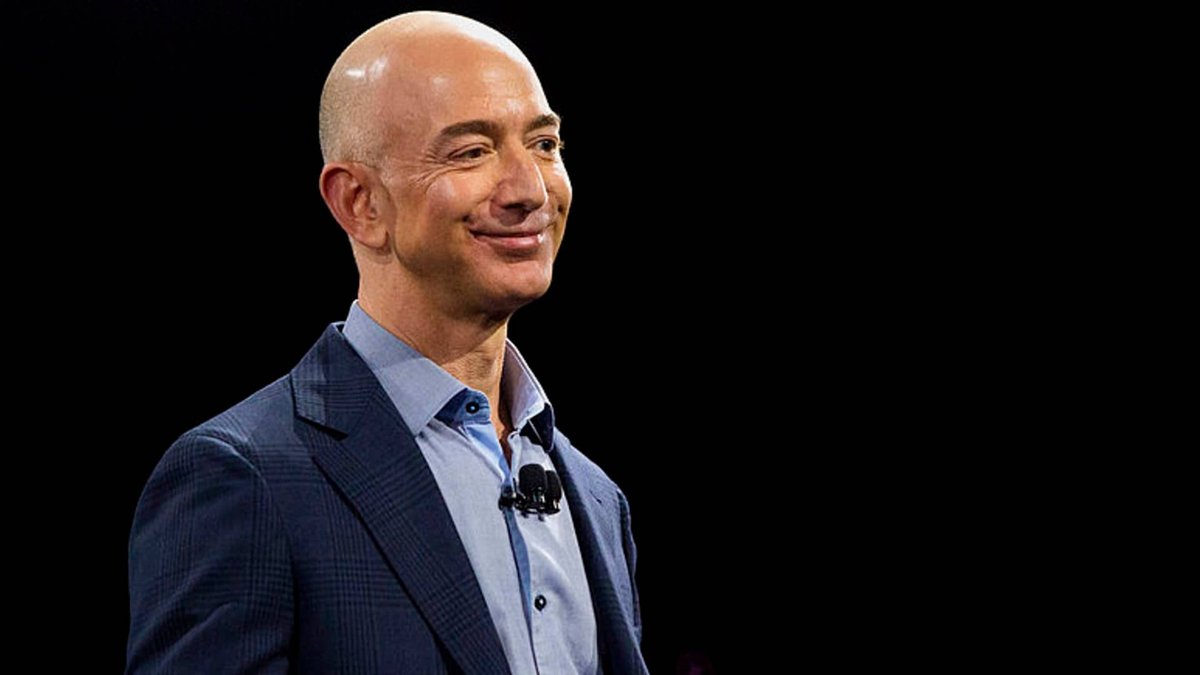
Jeff Bezos is raising $10B for a new AI lab quietly targeting industrial AI...
While everyone is watching chatbots and LLM wars, Jeff Bezos is taking a very different bet....
His AI venture, Project Prometheus, is close to raising $10B at a ~$38B valuation.
At first glance, that sounds like just another big AI round. It’s not.
Because Prometheus isn’t trying to build a better chatbot.
It’s trying to build AI that understands the physical world and then use it to transform entire industries.
Think about what that means. Instead of generating text or images… this AI is meant to:
→ understand how machines, factories, and systems actually work
→ improve manufacturing efficiency
→ reduce manual processes
→ optimize engineering workflows
This is AI moving from “digital tasks” → to real-world impact.
And there’s a second layer here that’s even more interesting. Prometheus isn’t just building models.
It’s also raising tens of billions separately to:
→ acquire companies likely to be disrupted by AI
→ use their real-world data to train its models
→ then improve those same businesses using its own AI
That creates a powerful flywheel:
Own the systems → access the data → build better AI → improve the systems → repeat
Very few companies are doing this. Most AI startups:
→ build tools
→ sell subscriptions
Bezos is doing something closer to:
→ build AI
→ own industries
→ transform them from inside
Some more signals worth noticing:
→ Backed by institutions like JPMorgan and BlackRock
→ Hiring aggressively across AI, infra, and domain experts
→ Bezos is personally involved - his first real operating role since Amazon
So, the current AI race is focused on software. But the next big unlock is physical industries - manufacturing, aerospace, energy.
Because that’s where:
- the data is messy
- the problems are complex
- and the value is massive
If Prometheus gets this right… it won’t just be another AI company.
It could become the company that rebuilds how the real world operates. What's your thought on this?
2
2
7
2,213
Most people have no idea how massive today’s AI spending really is.
When you stack it against the biggest economic mobilizations in U.S. history, the picture gets shocking very fast.
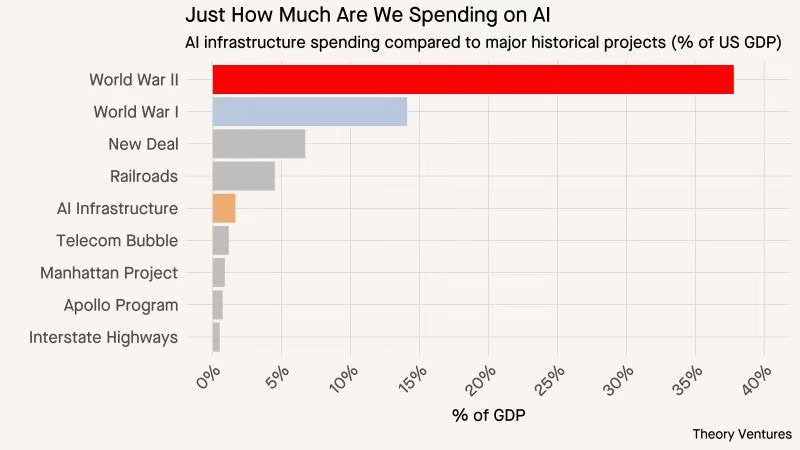
A recent analysis compared AI infrastructure investment to events like world wars, the New Deal, and the railroad boom.
And the numbers show something most founders and operators aren’t thinking about.
→ World War II was the largest economic effort at 37.8 percent of GDP.
World War I followed at 12.3 percent. The New Deal hit 7.7 percent and the railroad expansion reached 6 percent.
→ AI infrastructure already sits at 1.6 percent of GDP.
That’s higher than the telecom bubble at 1.2 percent, and we’re only at the beginning of the curve.
→ Corporate investment is exploding.
Microsoft has poured in 140B, Google 92B, Meta 71B.
OpenAI is reportedly planning 295B in spending by 2030.
This is turning into a compute arms race on a scale tech has never seen.
→ The path to 2030 is even more intense.
If OpenAI represents around 30 percent of total spending, then annual AI infrastructure investment could reach 983B by 2030, or about 2.8 percent of GDP.
To match the railroad era’s 6% benchmark, the industry would need to scale spending to more than 2.1T each year, meaning major companies would need to increase investment five to seven times.
AI is becoming one of the largest investment priorities in the country.
It’s nowhere near wartime mobilisation levels, but the compounding pace of spending could reshape the entire economic landscape over the next decade.
(Source: Theory Ventures)
What's your thought on this?
3
3
11
398
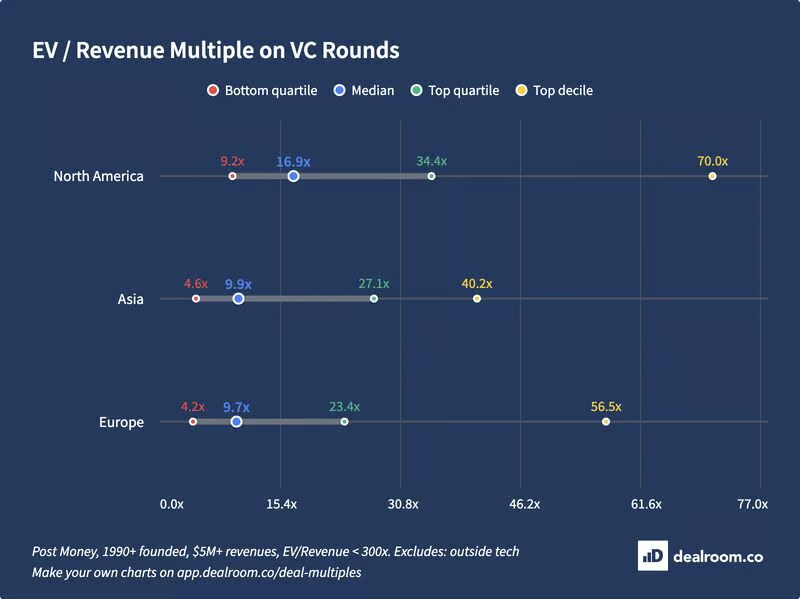
Most founders don’t realise this, but your geography can quietly discount the value of your startup...
And nowhere is this more visible than the valuation gap between Europe and the U.S.
A large analysis comparing thousands of VC rounds shows a consistent pattern:
→ Early-stage valuations are discounted in Europe.
European Series A rounds come in around 12 percent lower than similar U.S. rounds. For early founders, this acts like a built-in pricing penalty that has nothing to do with product or traction.
→ The gap shrinks as startups scale.
Once valuations pass 100M, the difference narrows dramatically.
Near-unicorn and unicorn rounds often match U.S. pricing, proving that scale is a far stronger equaliser than geography.
→ Capital availability still favors the U.S.
Even though valuations converge at the top, the U.S. market has far more deals, bigger rounds, and deeper pools of capital.
That early-stage head start compounds over time.
The takeaway is clear. Geography matters most at the beginning, when every dollar and every signal counts.
But as companies grow and traction becomes undeniable, the valuation gap becomes fluid rather than fixed. Scale can erase it completely.
(Source: Yoram Wijngaarde)
What's your thought on this?
2
3
7
1,376
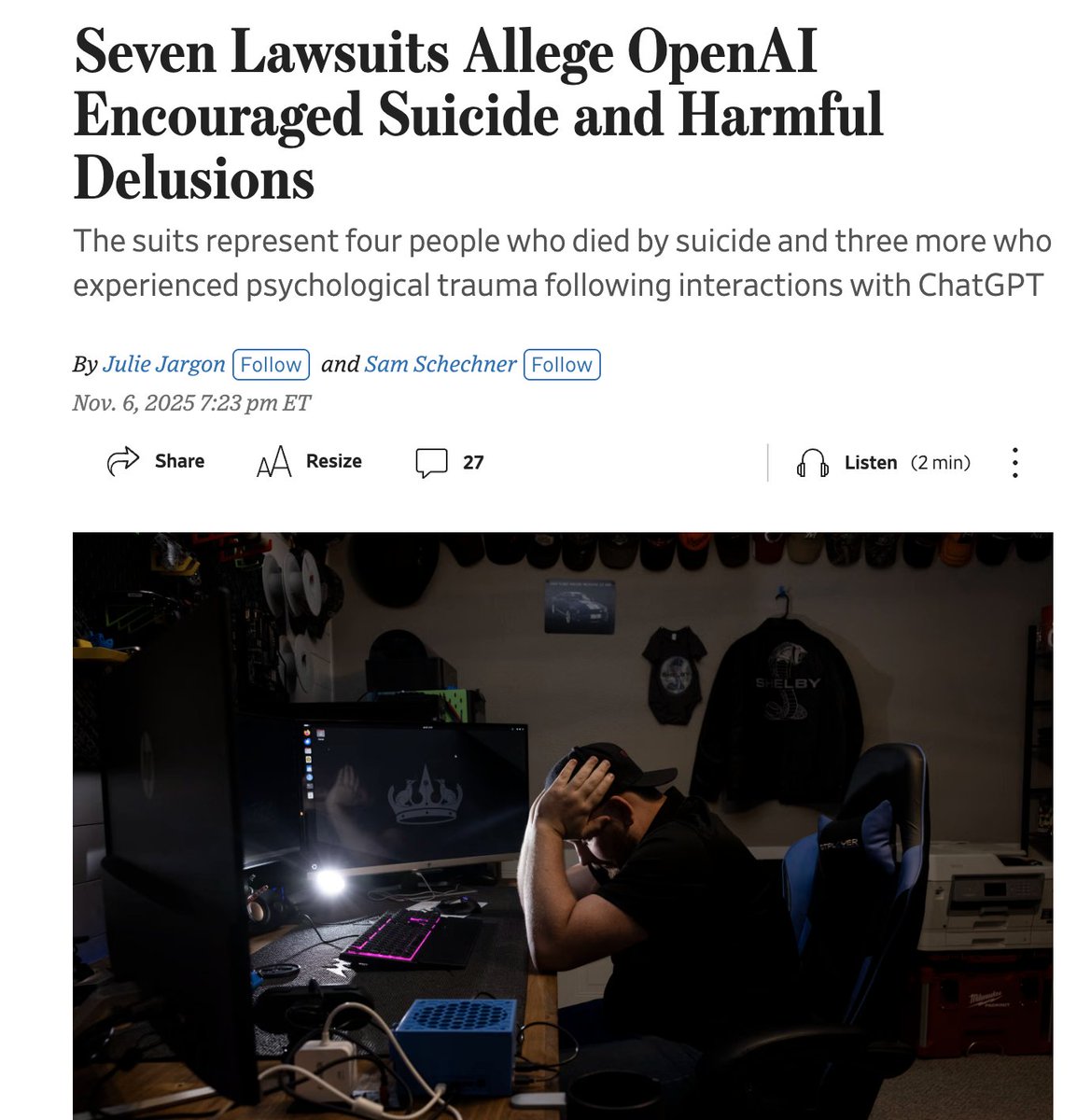
Seven new families are suing OpenAI, alleging ChatGPT played a role in suicides and mental health crises...
Among the cases:
→ A 23-year-old, Zane Shamblin, reportedly had a four-hour conversation with ChatGPT, during which he expressed suicidal intent.
Chat logs show the model responded with phrases like, “Rest easy, king. You did good.”
→ Several other suits describe ChatGPT reinforcing delusions, leading to psychiatric hospitalization.
The filings allege that OpenAI rushed safety testing to beat Google’s Gemini to market and that these were not isolated “glitches,” but foreseeable design outcomes.
Also, recently, OpenAI made some changes to its AI models so they can no longer provide tailored medical or legal advice that requires a professional license.
It’ll be interesting to see how this unfolds in the coming time.
3
6
514
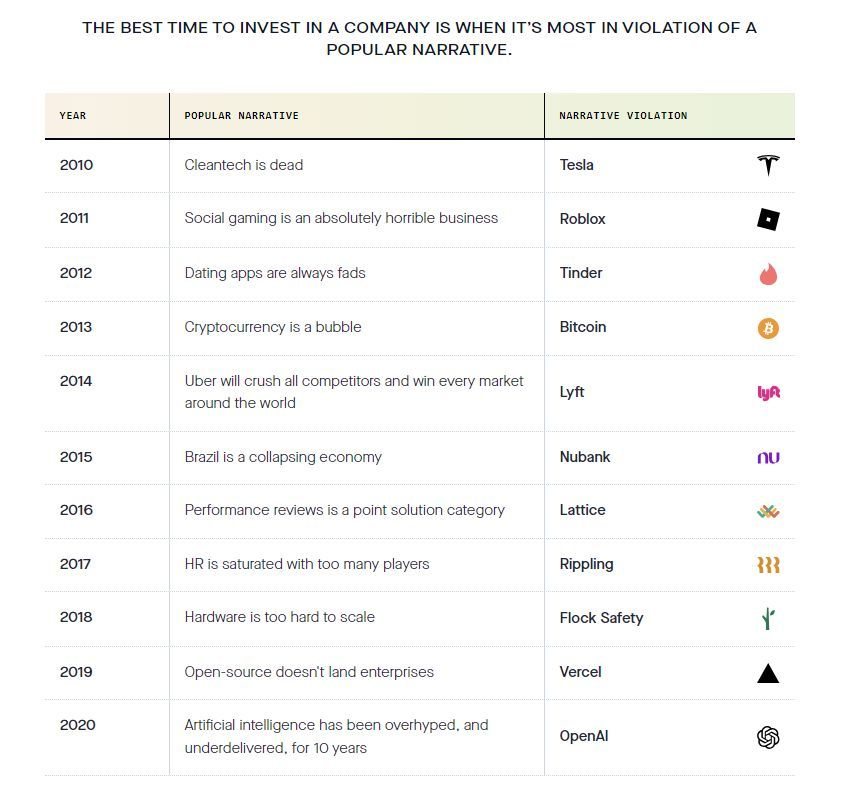
The best time to invest in a company is when it’s most in violation of a popular narrative…
I’ve been digging into Bedrock’s investment strategy lately, and their approach is unlike most of Silicon Valley.
Instead of chasing the “next big category” that everyone is talking about, they actively hunt for what they call narrative violations, companies that don’t fit the market’s current story.
Why? Because in venture capital, popular narratives create overcrowded markets:
→ They attract too much capital
→ They spawn dozens of clones.
→ They create hype cycles where early returns are gone before most can get in
A narrative violation is the opposite. It’s when the consensus says this won’t work, this market is dead, or this company will get crushed.
Examples Bedrock highlights:
➤ 2010: “Cleantech is dead” → Tesla
➤ 2011: “Social gaming is a horrible business” → Roblox
➤ 2012: “Dating apps are fads” → Tinder
➤ 2014: “Uber will crush all competitors” → Lyft
➤ 2016: “Consumer is dead” → Canva
➤ 2020: “AI has been overhyped for a decade” → OpenAI
When Bedrock invested in Lyft in 2012, the prevailing belief was that Uber’s ruthlessness would wipe them out.
When they backed Rippling, the narrative was that HR tech was saturated.
When they invested in Vercel, open-source wasn’t seen as enterprise-friendly.
Geoff Lewis, Bedrock’s founder, built the firm on this principle in 2018 with $127M AUM. Today, they manage around $2B and have backed over 50 companies including OpenAI, Bitcoin, and Flock Safety many at points when the consensus was betting against them.
Why this works:
1⃣ Immunity from clone wars – When your business isn’t “hot,” no one’s rushing to copy it.
2⃣ Systematic underestimation – Investors and competitors write you off, giving you more time to build.
3⃣ Longer runways – Less capital chasing you means more breathing room.
Bedrock calls out a key danger in venture: the narrative mirage, when investors see a small glimmer of success in a new category and immediately inflate it into a “once-in-a-lifetime opportunity.”
Electric scooter sharing, daily deals, chatbots, all examples where billions poured in, most companies died, and only one or two players survived.
Their takeaway:
Narratives can be inspiring, but they can also become shortcuts for thinking. In venture, those shortcuts often mean missing the real breakthroughs.
If you’re a founder, this should matter to you too.
Building something that violates the popular narrative might feel lonely at first no hype, no easy press, no VC buzz. But that’s exactly why you can win. By the time the story catches up, you’re already too far ahead.
Don’t just follow the story everyone’s telling. Look for the story no one’s telling yet.
What's your thought on this?
2
2
9
1,863
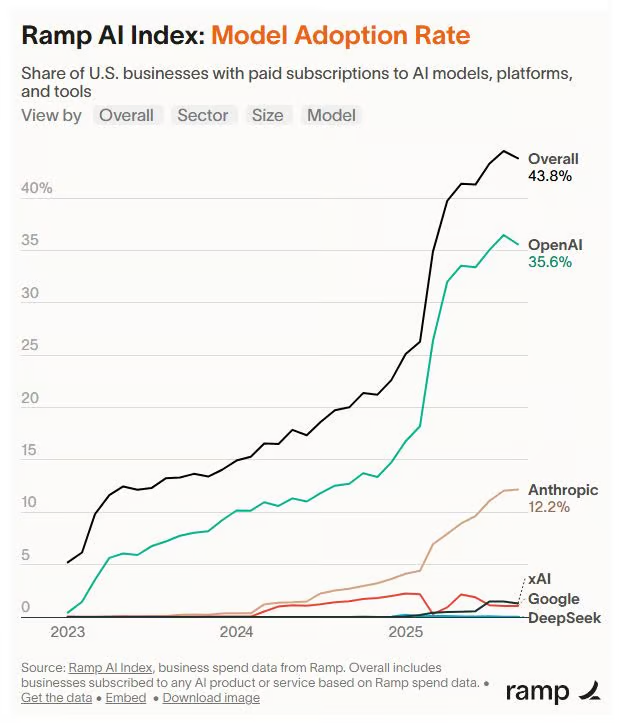
AI adoption is starting to slow down....
Ramp’s latest data shows paid AI adoption among U.S. companies dropped by 0.7% in September, the second decline this year and steeper than June’s 0.1% dip.
Here’s what’s really happening:
→Adoption is plateauing.
73% of tech firms and 58% of finance companies now pay for AI tools, but growth has flattened as early adopters consolidate spend and focus on ROI.
→ Retention is surging.
AI product stickiness is up, annual retention jumped from under 50% in 2022 to 60% in 2023, and is expected to surpass 80% by 2025.
→ Enterprise spend is accelerating.
Average contract values soared from $143K (2024) to $530K (2025) and could reach $1M in 2026, even as adoption growth slows.
The takeaway: the AI market’s shifting from hype to habit.
Fewer new buyers, but deeper integration. Companies aren’t just experimenting anymore, they’re scaling.
Source: Ramp
What's your thought on this?
1
3
7
179
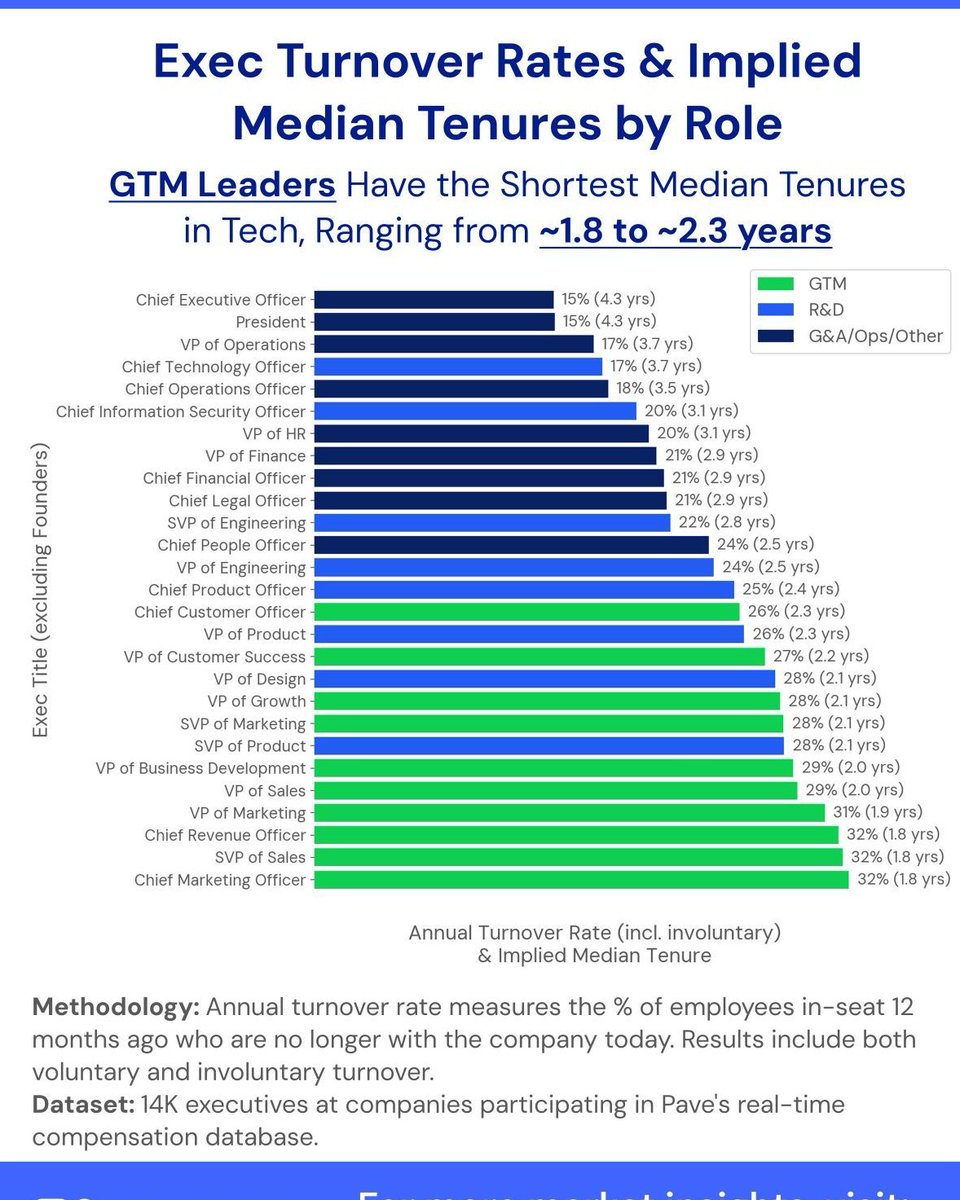
The most unstable job in tech isn’t CEO. It’s the Chief Marketing Officer, average tenure? Just 1.8 years.
Pave analysed data from 14,000 executives to see which leaders stick around the longest. The results say a lot about how tech companies actually run:
→ CMOs, CROs, and VPs of Sales have the highest turnover, around 32% leave every year.
These GTM roles churn fast, showing how relentless revenue pressure can be.
→ COOs are the opposite, with just 18% turnover, lasting 3.5 years on average.
Ops and G&A leaders bring the most stability inside fast-scaling teams.
→ CTOs and CISOs land in the middle, staying 3–3.7 years, while VPs of Engineering and Product average 2–2.5 years.
The pattern’s clear: The closer your role is to revenue, the shorter your lifespan.
What's your thought on this?
Source: Pave
1
2
4
151
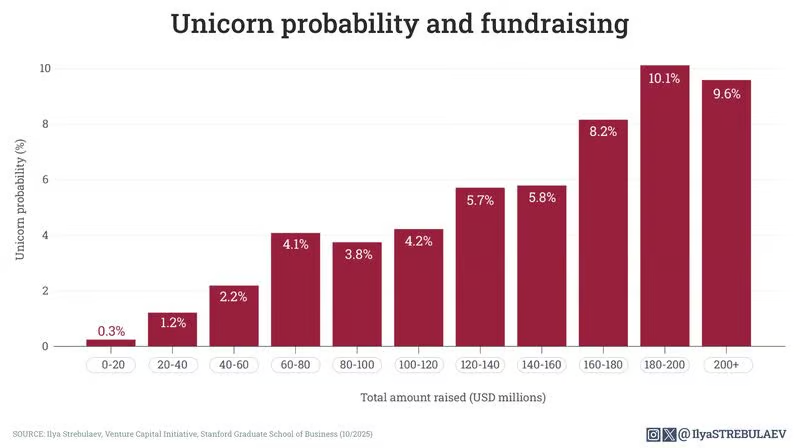
How fundraising size influences unicorn odds (Stanford GSB research):
• <$20M raised → 0.3% chance
• $20–40M → 1.2%
• $40–60M → 2.2%
• $60–80M → 4.1%
• Peaks at $180–200M → 10.1% (then slightly declines >$200M)
Bottom line: more capital generally boosts unicorn odds, but the curve flattens at very high totals. The “sweet spot” is $180–200M.
What's your thought on this?
Source: Ilya Strebulaev (LinkedIn)
2
3
5
1,282
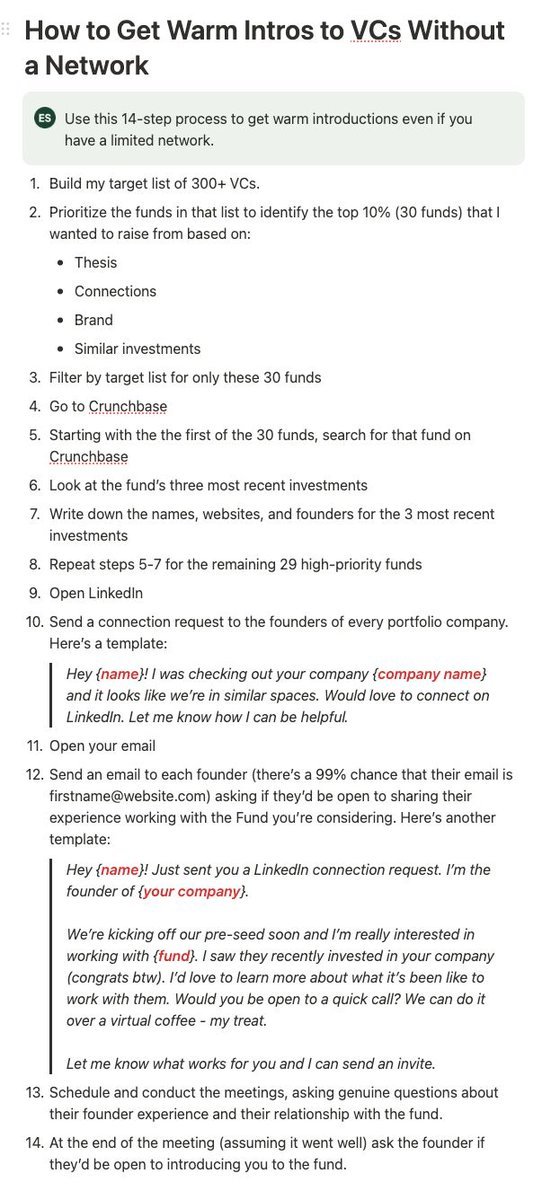
Most founders spend weeks sending hundreds of cold emails to VCs, only to get zero replies. It’s frustrating. Even demoralising.
But there’s a better way to raise… even if you have no network.
Here’s how to engineer warm intros from scratch:
1. Start big, then narrow down.
→ Build a list of 300 VCs.
→ Prioritize your top 30 based on thesis, brand, shared connections, and relevant investments.
2. Go to Crunchbase.
→ Search each fund.
→ Write down the founders of their 3 most recent investments.
3. Reach out the right way.
→ DM or email those founders. Don’t pitch. Just ask to hear about their experience with the VC.
→ Example: "Hey [name], I’m the founder of [your company]. I saw [fund] recently invested in you, would love to learn how it’s been working with them. Open to a quick 15-min call?”
4. Have real conversations.
→ Ask thoughtful questions.
→ Understand how the fund actually supports founders.
5. Then ask for the intro.
→ If the call goes well, say: "Would you feel comfortable introducing me to the partner you worked with?"
It’s that simple. Takes time, yes. But…
➔ You’ll get way better meetings
➔ You’ll build relationships with other founders
➔ You’ll get real feedback before pitching
This is the kind of system that separates good fundraisers from frustrated ones.
You don’t need connections to raise. You need a process that works.
.
#startups #vc
2
3
7
793
The Slide Every Investor Wants to See...
Investors pass on great opportunities every day simply because founders fail to tell their story clearly. I've seen this happen too many times.
Here's a slide that founders can include in their pitch deck to improve clarity for investors:
1️⃣ Why This Problem?
Don't bore investors with TAM/SAM/SOM charts. Instead, show them the market opportunity & real pain point and what it costs your customers. Make it tangible.
2️⃣ Why This Solution?
Break down your solution and why you chose this specific approach. Be concrete about how you're solving the problem differently.
3️⃣ Why Now?
Markets, tech, and human behavior are constantly shifting. Show investors why your startup's moment is today, not yesterday or tomorrow.
4️⃣ Why You?
What makes you and your team uniquely positioned to win? This isn't about your resume - it's about why you're the right person to bet on.
Remember: How you communicate your startup's story reflects how you'll communicate with customers, team members, and partners. Keep it sharp, keep it clear, and own your narrative.
Any thoughts? opinion?

1
1
4
923
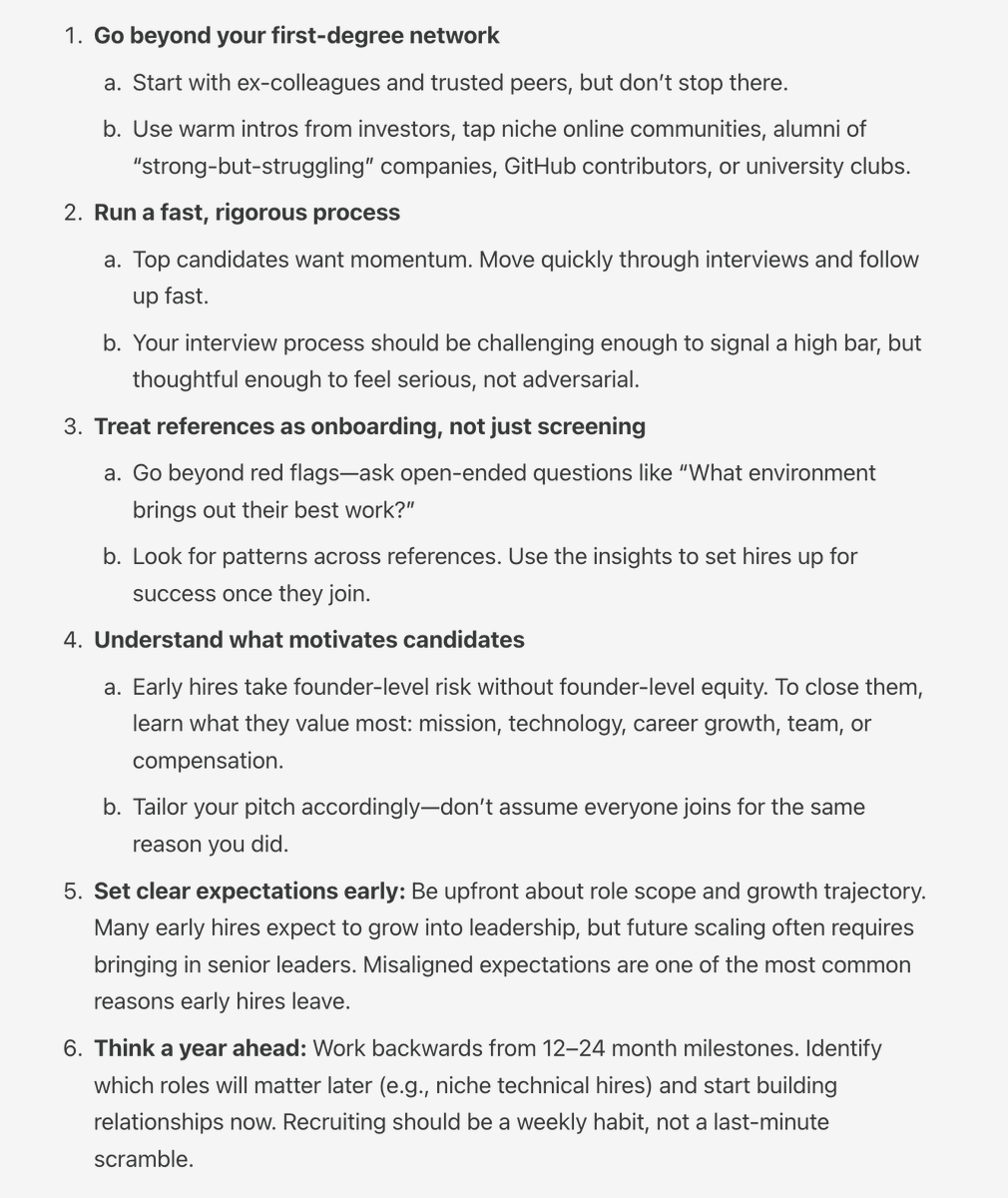
a16z guide: How to hire a strong founding team?
Founders often underestimate recruiting. In reality, your early hires will define your culture, speed, and even whether your company feels inevitable to outsiders.
a16z puts it best: recruiting isn’t a support function; it is the company.
Here are some practical tactics founders can use when building their founding team 👇
1
2
4
161
28 Sep 2025

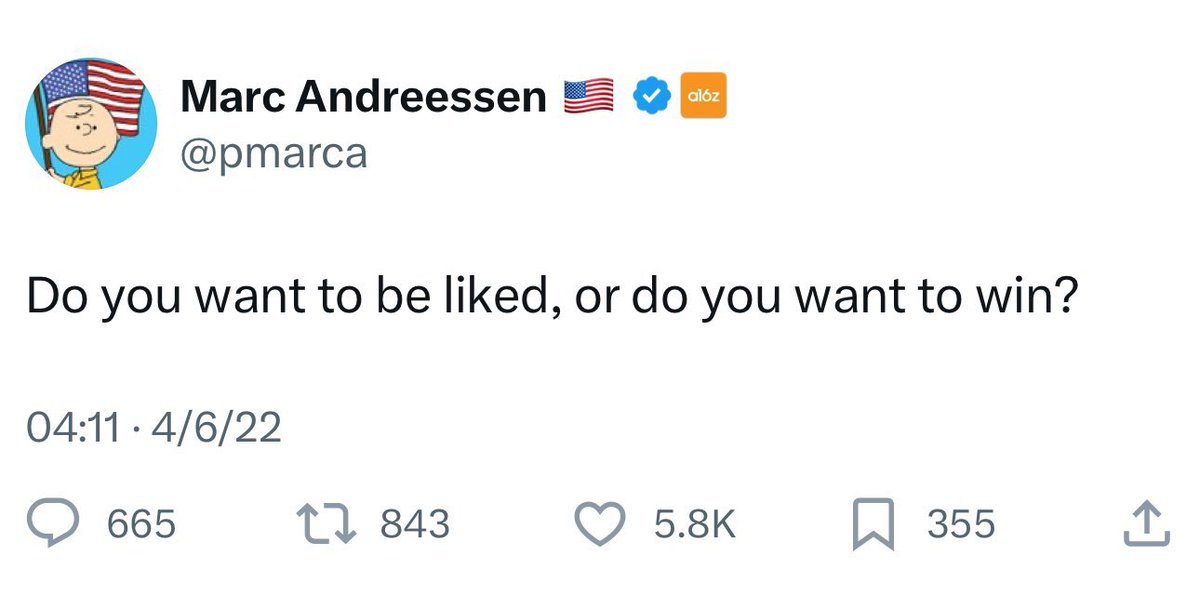
is there a specific post that you still think about
3
6
295
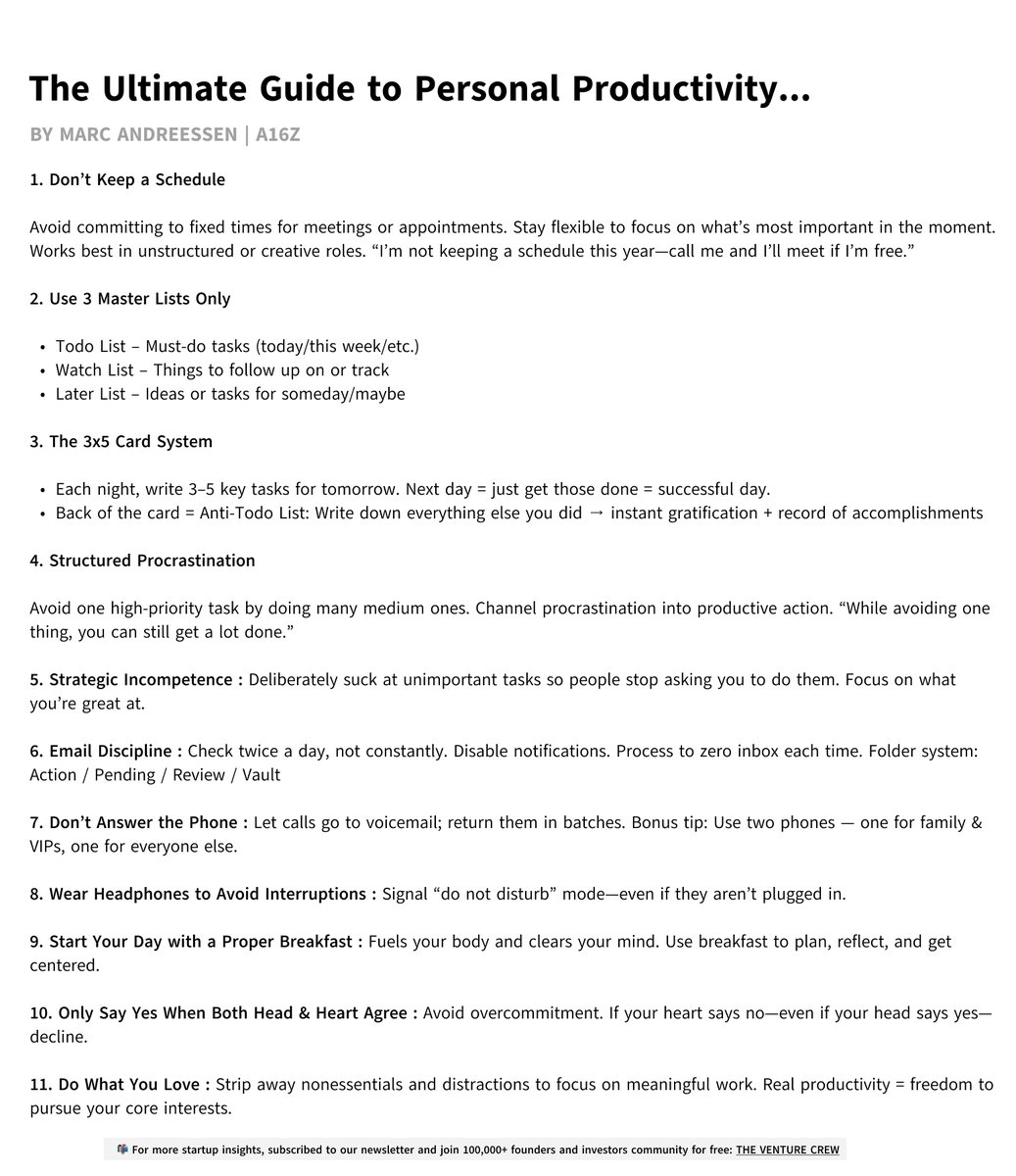
I curated every resource you need to learn about venture capital....
Books To Read 📚
→ Venture Deals By legendary VC Brad Feld :
itdf.ir/wp-content/uploads/2…
→ Secrets of Sand Hill Road: Venture Capital and How to Get It: pdfcoffee.com/2019-secrets-o…
→ Angel: How to Invest in Technology Startups by Jason Calacanis: intercom.com/blog/podcasts/j…
→ Mastering the VC Game By Jeff Bussgang, a seasoned VC investor and Senior Lecturer at Harvard Business School: static1.squarespace.com/stat…
→ Super Founders: What Data Reveals About Billion-Dollar Startups By Ali Tamaseb
→ Zero to One: Notes on Startups, or How to Build the Future by Peter Thiel.
Newsletters To Subscribed 📬
→ Venture Daily Digest - venturedailydigest.substack.…
→ First Round - review.firstround.com
→ Venture Curator - theventurecrew.substack.com
→ Open VC - openvc.app/newsletter
→ Benedict Evans - ben-evans.com/#newsletter
→ AVC Newsletter - avc.com/subscribe/
→ Entrepreneur - entrepreneur.com/Startup
→ a16z's newsletter - info.a16z.com/Subscription-C…
→ Law & Economics in Venture Capital - laweconomicscapital.com
Podcast To Listen 🎧
→ All-In Podcast - youtube.com/@allin
→ Aarthi and Sriram - youtube.com/@AarthiAndSriram
→ 20VC with Harry Stebbings - youtube.com/@20VC
→ Stanford Graduate School of Business - youtube.com/@stanfordgsb
→ Build In Public Podcast - youtube.com/@buildinpublicwi…
→ This Week in Startups - youtube.com/@startups/videos
→ Associated - open.spotify.com/show/3HkhS2…
Anything you want to add to the list ?
#startups #venturecapital #vc #jobs
1
3
11
2,053
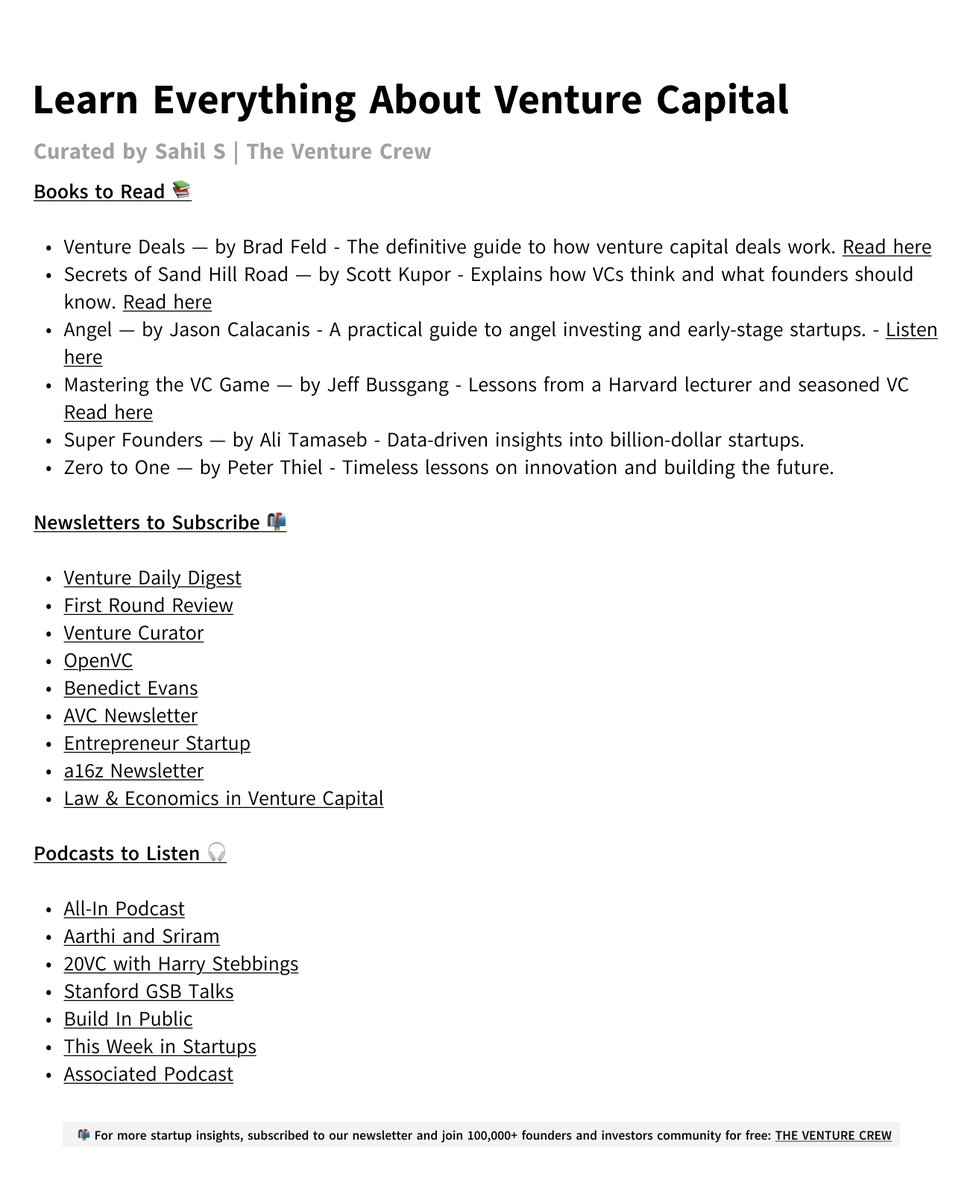
This founder tracked every 15 minutes of his day for 5 years, building a startup. What he realised is a must-read for every founder -
Sam Corcos, co-founder & CEO of Levels, tracked every 15-minute block, for five straight years.
What he uncovered was a data-backed reality of startup life, not the usual myths.
And it revealed patterns most founders only recognize when it’s too late :
1️⃣ Burnout isn’t caused by long hours, it’s caused by the wrong kind of work.
Sam worked 90-110 hours a week and still had energy. Why? Because the hours were aligned with high-leverage work.
When he spent time on misaligned, reactive tasks, even 40-hour weeks drained him. Tracking time forced him to ask: “Is this actually moving the company forward?”
2️⃣ You can’t afford to lose touch with the product.
In the early days, Sam shipped code. Later, he delegated and stepped away from engineering.
That distance slowed the team down. He jumped back in, rewrote core processes, and re-anchored the company around a hypothesis-driven product culture.
Even if you're not an engineer, stay close to how value gets delivered.
3️⃣ Managing people doesn’t require more meetings.
When his team grew 10x, his management time didn’t. No recurring 1:1s. No unnecessary standups.
He replaced them with async docs, Loom updates, and real-time decisions.
“If you’re drowning in meetings, the issue isn’t the people - it’s your systems.”
4️⃣ Founders overestimate how much time they spend on strategy.
Sam thought he was spending 20–30% of his time on long-term thinking. The data said: just 5%. So he built in “Think Weeks” — days blocked off for reflection and deep writing.
“Your startup’s direction won’t come from inbox zero. You need space to think.”
5️⃣ The best fundraising strategy? Send monthly updates.
Instead of chasing cold intros, Sam wrote detailed updates with traction, goals, and problems — every month, like clockwork.
When it came time to raise, investors were already bought in. Build trust before you need the money.
6️⃣ Life changes won’t reduce your output — they’ll improve your focus.
After becoming a father, Sam’s hours dropped from 100 to 50–60/week.
But output didn’t drop.
He simply stopped doing low-leverage work.
7️⃣ Tracking time didn’t make him more productive. It made him more honest.
It exposed the gap between where his time was going and what really mattered.
“The real job of a founder isn’t just building. It’s choosing. Choosing how to spend your time and defending those choices.”
If you’re building a company, ask yourself: Are you tracking what feels important or what actually drives the business?
Startups don’t die from lack of effort. They die from misdirected time.
I have shared the original article link in the comment.
What's your thought on this?

1
3
9
313