
547 Photos and videos







Vinnie Mesel retweeted

parabéns aí pra galera do rio que treinou um LLM em cima do qwen
mas tem uns larp larp sahur aí falando pra trocar gpt 5.5 / opus 4.8 pelo RIO 3.5
aí não né kkk
8
2
112
7,400

Jun 10
dev quiz:
tu precisa subir uma forma de ID para uma plataforma que vai ter escala global. Você usa ID ou usa UUID?
pq?
93
Vinnie Mesel retweeted

Jun 10
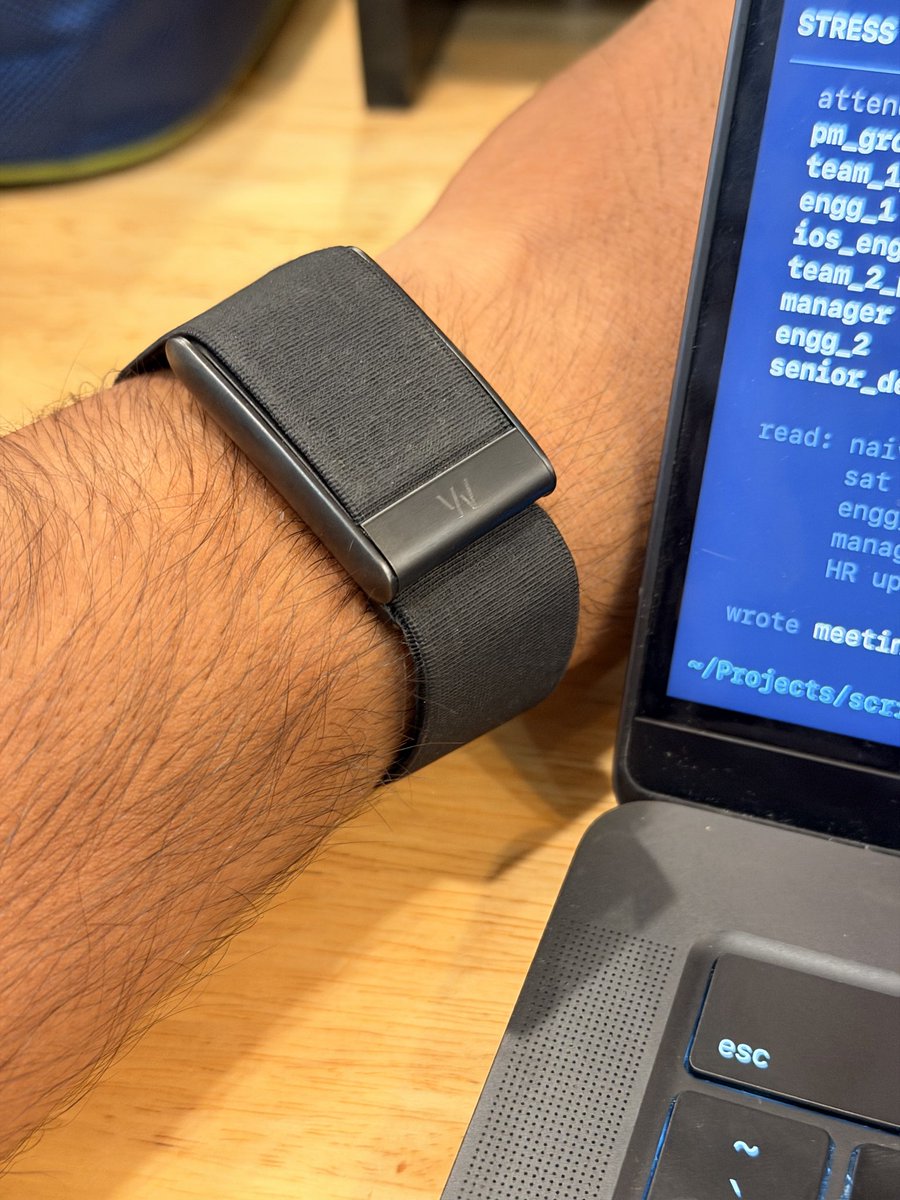
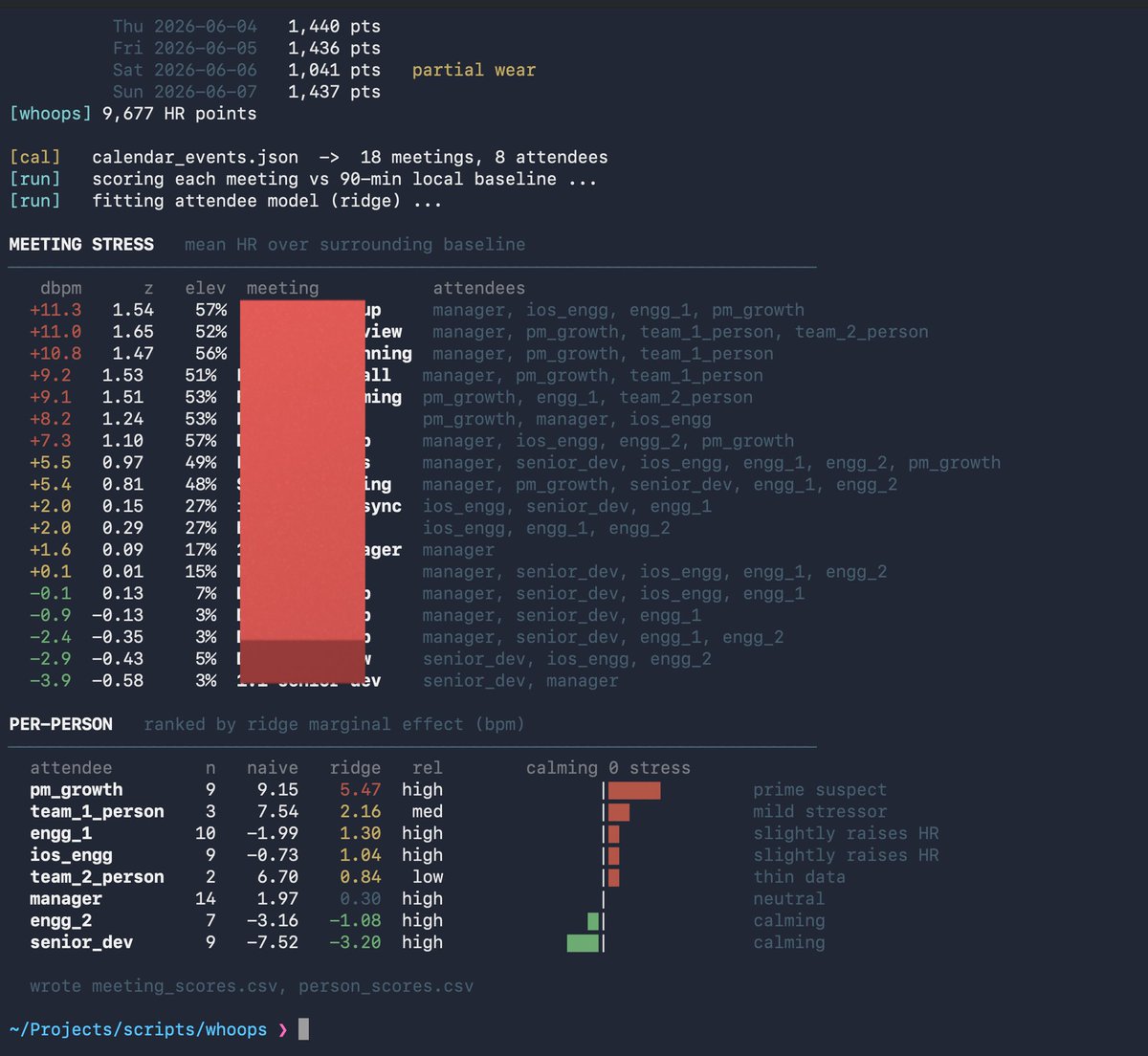
i hooked my whoop to my work calendar to find which coworker gives me the most stress 🚨
thanks to fable, I reverse engineered whoop to pull per minute heart rate. nd matched spikes with cal events and attendees
I now have a leaderboard and I think about it daily.
few info masked for obvious reasons ;)
1,005
2,840
44,964
11,023,951


Vinnie Mesel retweeted

Jun 8
Vibe-coding is just a gambling addiction for SWEs
123
199
2,620
838,479
Vinnie Mesel retweeted

Jun 8
Homem custa mais caro, pouca oferta eleva o preço. 🫣😜


1
2
173
Vinnie Mesel retweeted

Jun 8
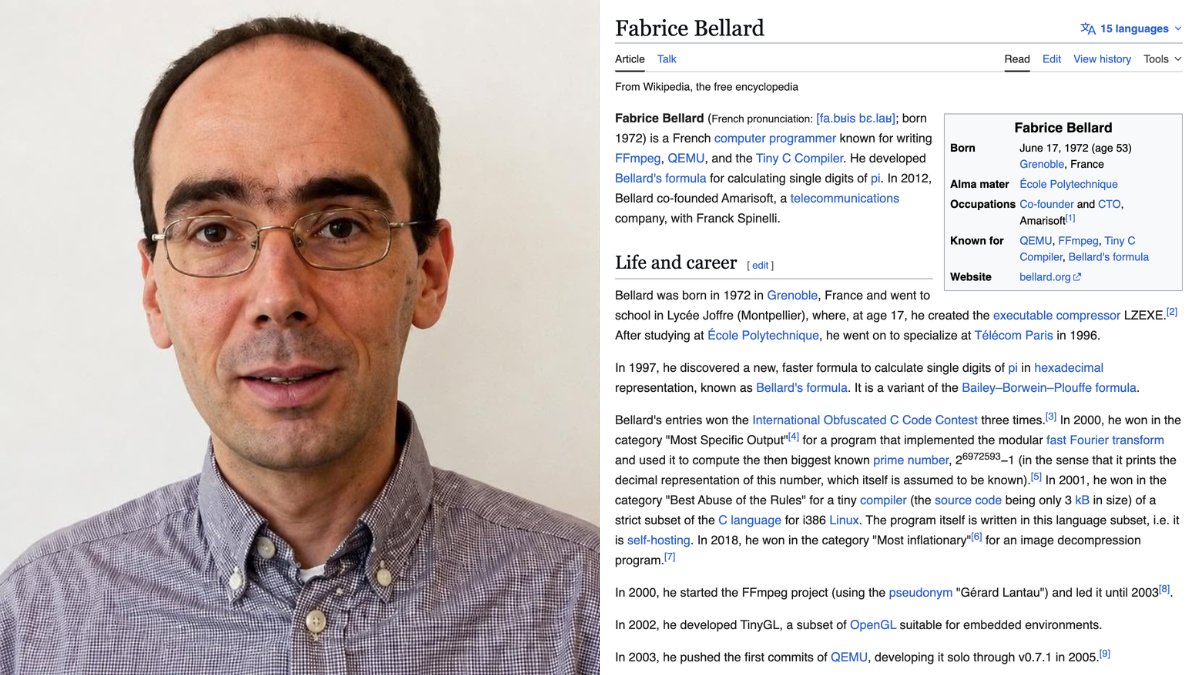
I admire Fabrice Bellard. He is almost certainly a better overall programmer than I am.
Jun 8

A French engineer who lives quietly in Paris has spent 30 years writing software that the entire internet now runs on without knowing his name.
He wrote the code that streams every YouTube video, every Netflix show, every TikTok clip. He wrote the code that runs the virtual servers underneath AWS, Google Cloud, and Microsoft Azure. He calculated more digits of pi than anyone in history. He has no Twitter. He has no marketing. He just keeps shipping.
His name is Fabrice Bellard.
Here is the story, because almost nobody outside the systems programming world knows what one man has built.
Fabrice was born in 1972 in Grenoble, France. He studied at École Polytechnique, the top French engineering school. He never went to Silicon Valley. He never built a startup empire. He just wrote code.
In 2000 he started a project called FFmpeg, an open-source multimedia framework for encoding, decoding, and streaming video. He was 28. The project did one thing nobody else had done well. It handled every video and audio format that existed, in one library, on every operating system. He led it himself for years.
Today FFmpeg is the invisible engine of the internet. YouTube uses it. Netflix uses it. VLC uses it. Chrome and Firefox use parts of it. Every Android phone, every iPhone, every smart TV, every video editing tool you have ever touched runs FFmpeg somewhere underneath. If you have watched a video on a screen in the last 20 years, Fabrice's code processed it.
He was not done.
In 2003 he started QEMU, a machine emulator and virtualizer. He wrote it solo until version 0.7.1 in 2005. QEMU lets you run any operating system on any other operating system. It became the foundation of modern virtualization. KVM, the Linux kernel hypervisor, runs on top of QEMU. Every major cloud provider, AWS, Google Cloud, Microsoft Azure, IBM Cloud, runs virtual machines on infrastructure built around it. The Quick Emulator is the most cited piece of cloud infrastructure code on Earth.
He kept going.
In 2001 he won the International Obfuscated C Code Contest with a small C compiler that grew into TCC, the Tiny C Compiler. TCC can compile and boot a Linux kernel from source in under 15 seconds. In 2004 he calculated the most digits of pi ever computed at the time, using a personal desktop computer and an algorithm he derived himself called Bellard's formula. In 2011 he wrote a complete PC emulator in pure JavaScript that runs Linux in your browser, a project called JSLinux that engineers still cannot believe is real.
In 2019 he released QuickJS, a small but complete JavaScript engine that fits where V8 cannot. In 2021 he released NNCP, a neural network based lossless data compressor that immediately took the lead on the Large Text Compression Benchmark.
Then he turned his attention to large language models. He built TextSynth Server, a web server with a REST API for running LLMs locally. He released ts_zip and ts_sms, compression utilities that use language models to compress text and short messages at ratios traditional algorithms cannot reach. He released TSAC, a very low bitrate audio compression system. In December 2025 he released Micro QuickJS, a new JavaScript engine for microcontrollers, separate from QuickJS, designed for environments with almost no memory.
Fabrice co-founded a telecom company called Amarisoft in 2012, where he serves as CTO. Amarisoft builds 4G and 5G base station software used by carriers and labs around the world. He has been running it for over a decade while continuing to ship personal projects from his own home page at bellard dot org
He has no Twitter. He has no Instagram. He gives almost no interviews. His personal website is a flat list of projects with no styling, no fonts, no marketing copy. Just titles and links.
A quiet French engineer who never moved to Silicon Valley wrote the code that quietly runs the internet.
He is still shipping.
140
680
10,293
602,890
Vinnie Mesel retweeted

Jun 6
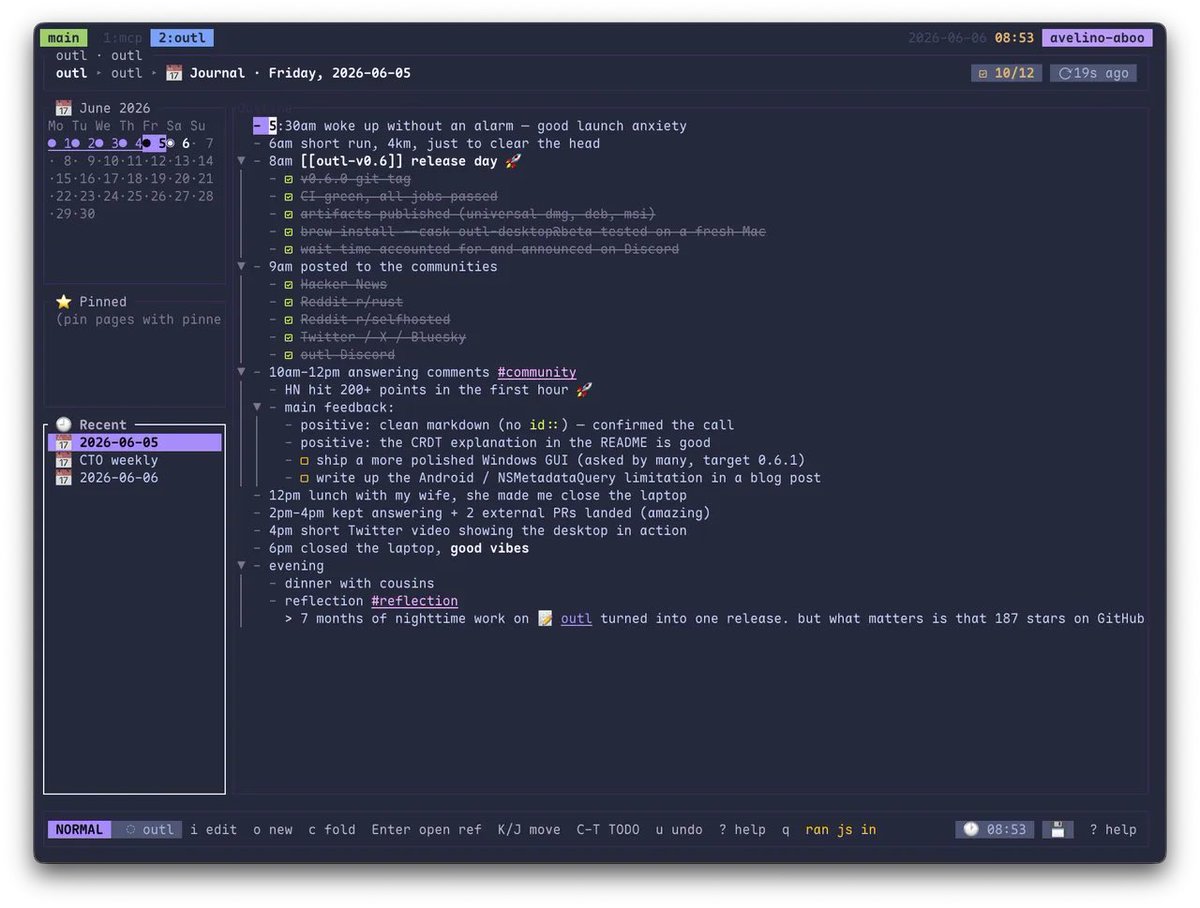
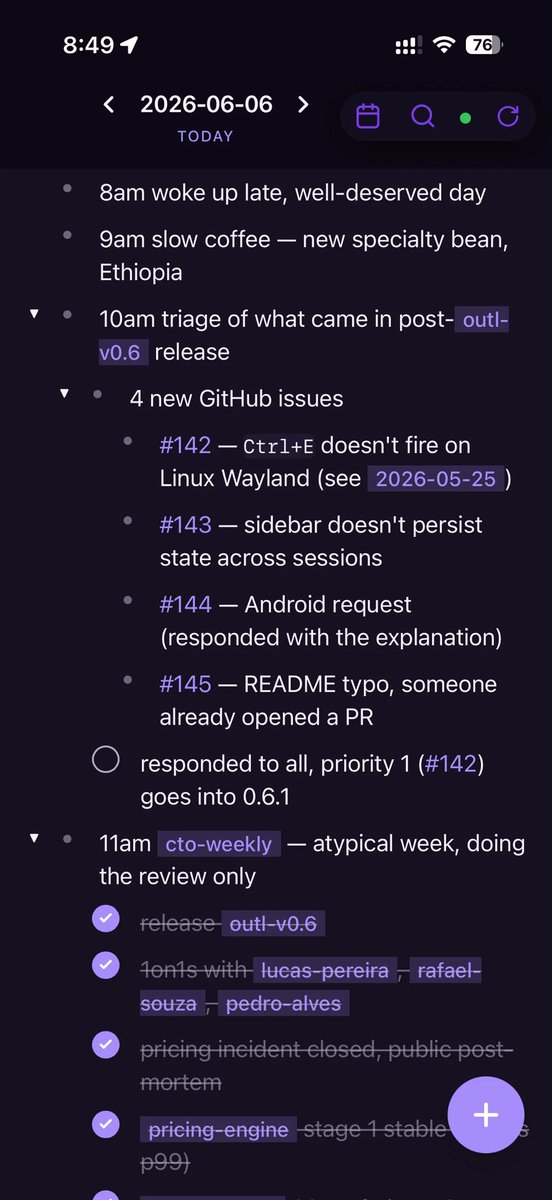
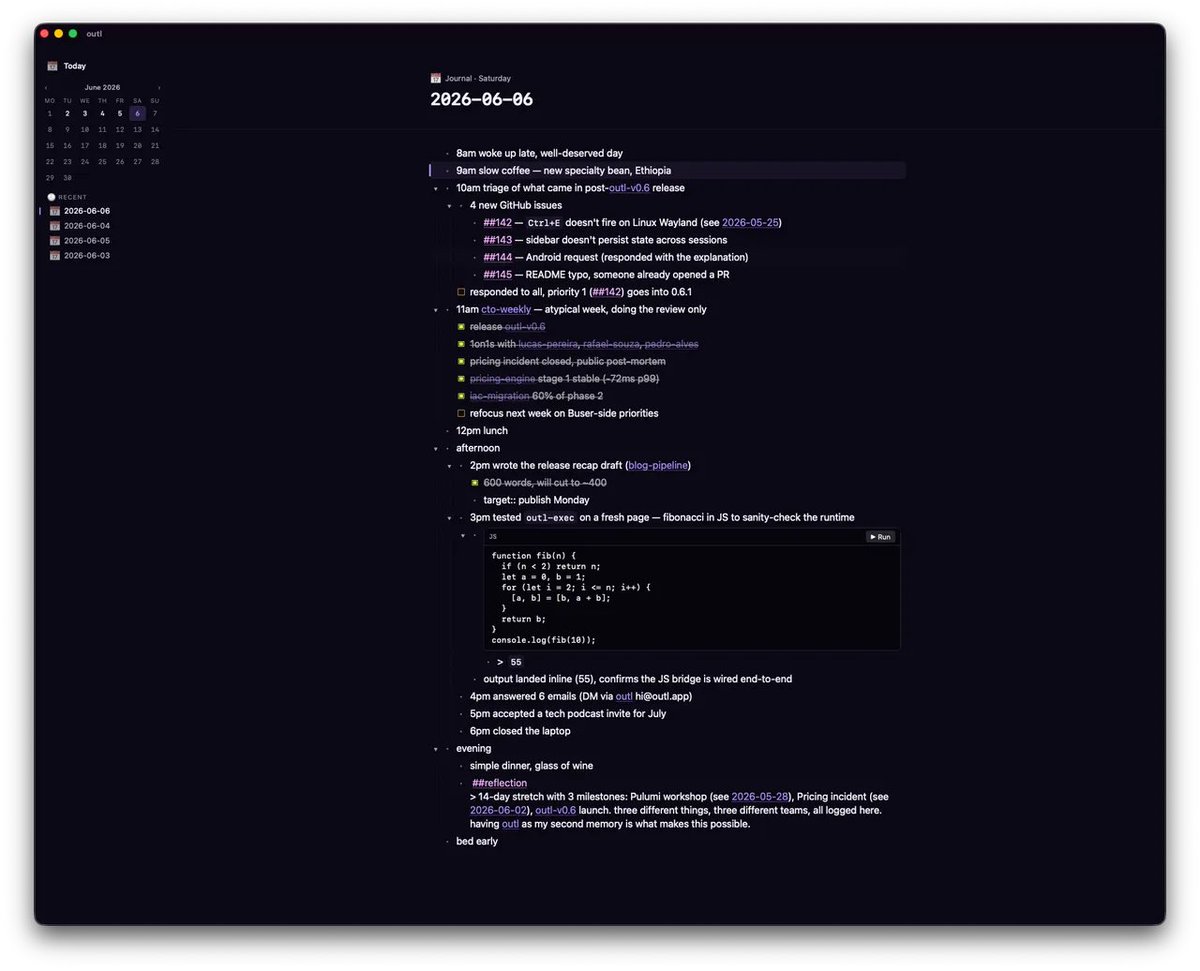
first beta of @outlmd is live
runs on mac, linux, windows, terminal and iPhone. one binary, markdown on disk, no Electron, no cloud
it’s rough. a lot still to build. but I’d rather ship it ugly and fix it in the open than polish it in private for another year
outl.app/download
#foss #opensource #pkm #note #testflight
2
2
4
406
Jun 3
Some years in the past I would have said that PKM was total bullshit and that it doesn’t help you to get where you want.
After working with @avelinorun and trying many of the tools, I can say that he showed me how to get to a point where this is really helpful.
Jun 3

I'm spending serious time building a PKM tool. not for a company. not for a portfolio. to fix a problem I actually have
1
1
316
Jun 3
I’m helping this build to be one of the things I can really use in a daily basis and, honestly, to never have to use anything else anymore.
I loved using Notion, Logseq, Obsidian, but all of those had problems I cannot stand anymore!
This is the time to make something useful
1
170

Vinnie Mesel retweeted
Jun 2
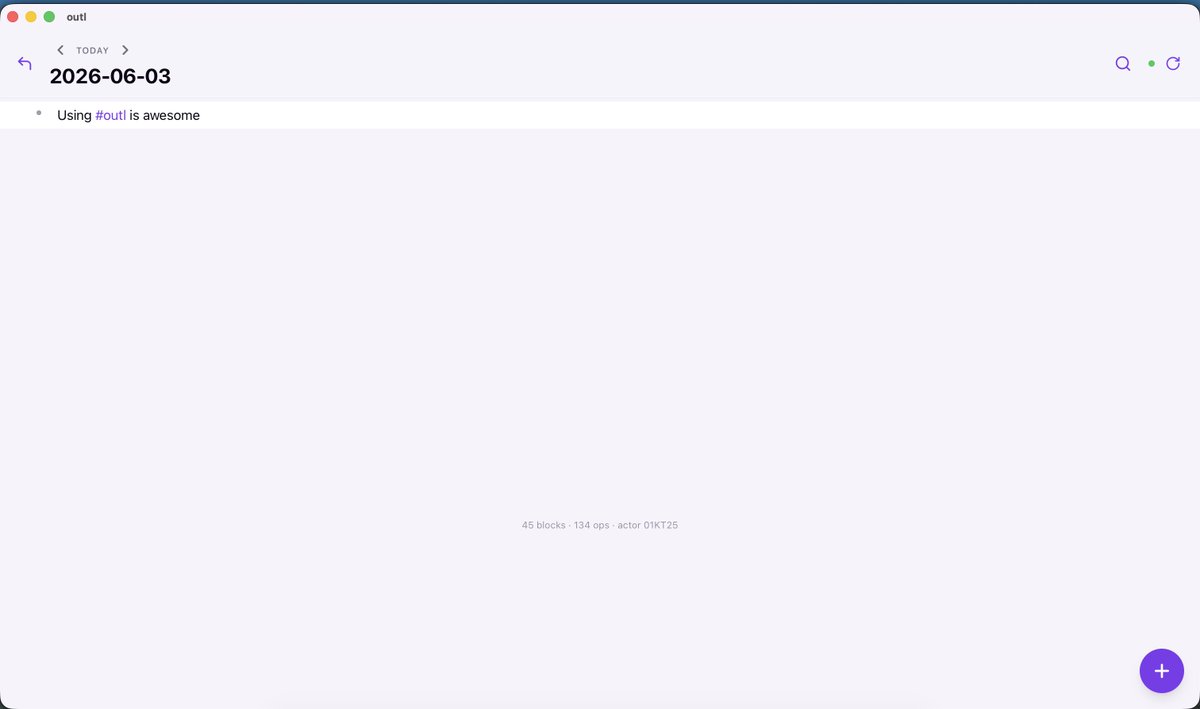
starting to move toward having a desktop software
Jun 2

here are some tweaks I'm working on (currently on my local branch):
- moving around using arrows
- back to today button, so whenever we have a "dead-end" page we can go back
- desktop sizing of the software
1
2
1,169
Jun 2
i've started using @outlmd. way lighter than @logseq. already started sending some PRs to mr @avelinorun so we can make it have a usable desktop GUI.
1
1
177
Jun 2
here are some tweaks I'm working on (currently on my local branch):
- moving around using arrows
- back to today button, so whenever we have a "dead-end" page we can go back
- desktop sizing of the software
1
1
1,384
Vinnie Mesel retweeted

May 27
A maior armadilha do home office é o profissional que trabalha calado, entrega o que pedem e nunca abre a câmera ou debate ideias. Ele acha que é mega eficiente. A diretoria acha que ele é invisível. Quem não é visto, não é lembrado.
55
20
1,129
192,086
Vinnie Mesel retweeted

May 27
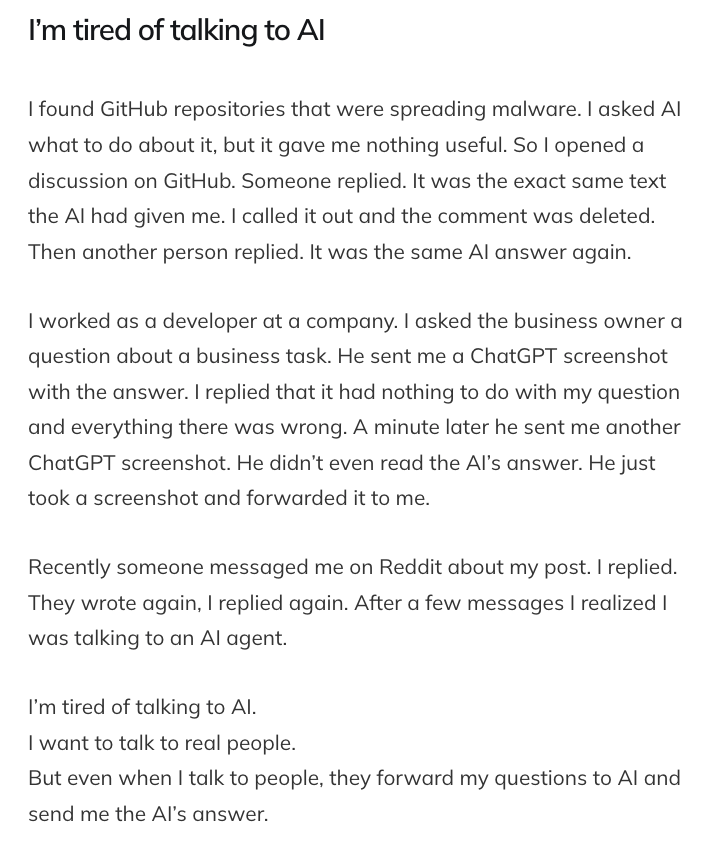
This is such a good post. orchidfiles.com/im-tired-of-…
82
433
3,157
101,263
Vinnie Mesel retweeted

May 22
Introducing: Browser Use Terminal. A Rust harness TUI that gets real work done in the browser.🦉
Browser Harness gave LLMs freedom in Chrome.
We built a full LLM harness around it - in Rust.
> Direct CDP — raw browser control
> Real Chrome — use your logged-in browser
> Rust TUI — watch, steer, stop, resume
> 2x cheaper, 2x faster than Browser Harness
> GPT, Sonnet/Opus, Kimi, GLM, Qwen, DeepSeek
I’ve used it for SF parking permits and Azure admin permissions. It asked me to login, then finished end-to-end. What are you going to use it for?
Automate the boring stuff in the browser. 🔥
100% open source ↓
29
55
585
124,327
Vinnie Mesel retweeted

May 24
Anthropic engineer showed how one person can run 5 AI agents, that code, test, review, and deploy at the same time.
In 30 minutes they built the whole thing live in one session.
Here's what they cover:
> when to use one agent vs a full team
> how to split work so agents don't step on each other > the exact framework for deciding what each agent handles
that's exactly why, I put together a guide on building agent teams that actually work.
full guide in the article below 👇

81
527
4,102
834,696