
Joined July 2023
- Tweets 230
- Following 381
- Followers 25
- Likes 828
47 Photos and videos






The difference between struggling for an hour and solving in 10 minutes is often just pattern recognition. Today was proof of that.
Day 14/45 of the #SDESheetChallenge by
@takeUforward_
completed!
Solved 3 important array problems. Learned how a few simple patterns can turn brute force solutions into optimal solutions.
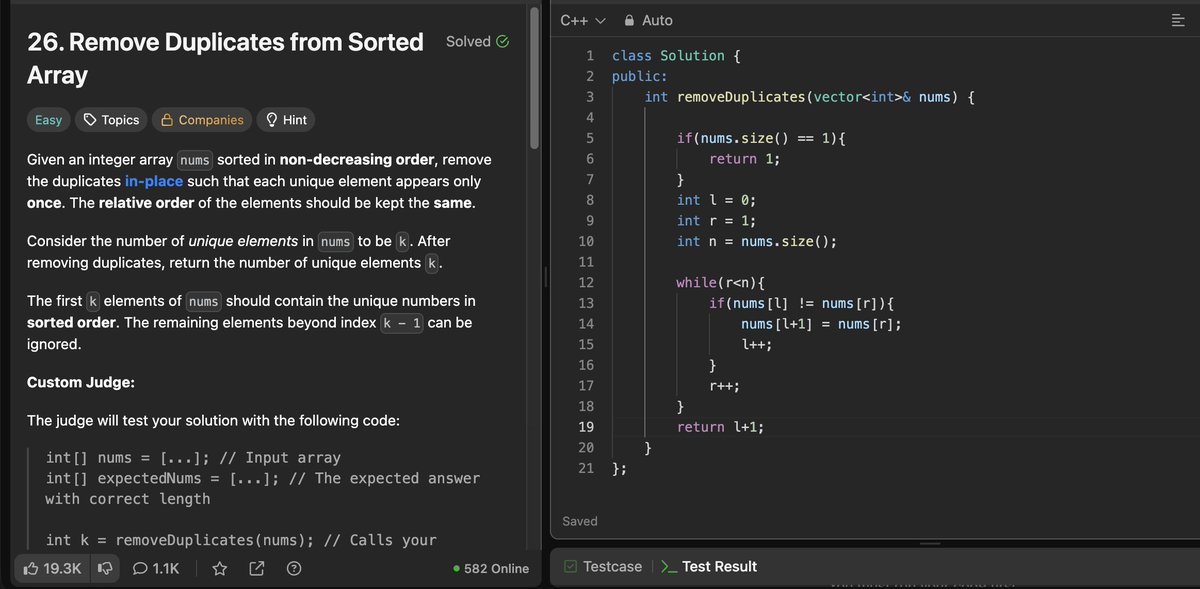
🔹 Remove Duplicates from Sorted Array (LeetCode #26)
Pattern: Two Pointers (Slow & Fast Pointer)
-> Key Idea:
Keep one pointer at the last unique element and another to scan the array. Whenever a new element is found, place it next to the previous unique element.
T.C: O(N)
S.C: O(1)
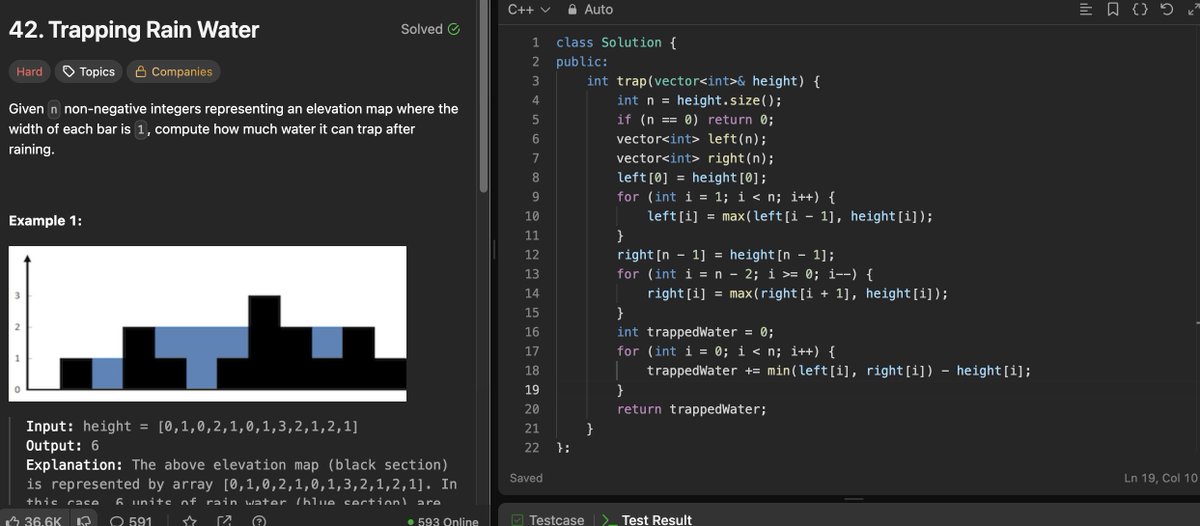
🔹 Trapping Rain Water (LeetCode #42)
Pattern: Prefix Maximum Arrays
-> Key Idea:
For every index, the trapped water depends on:
min(Max height on left, Max height on right) − Current height
Precompute left and right maximums and calculate the contribution of each bar.
T.C: O(N)
S.C: O(N)
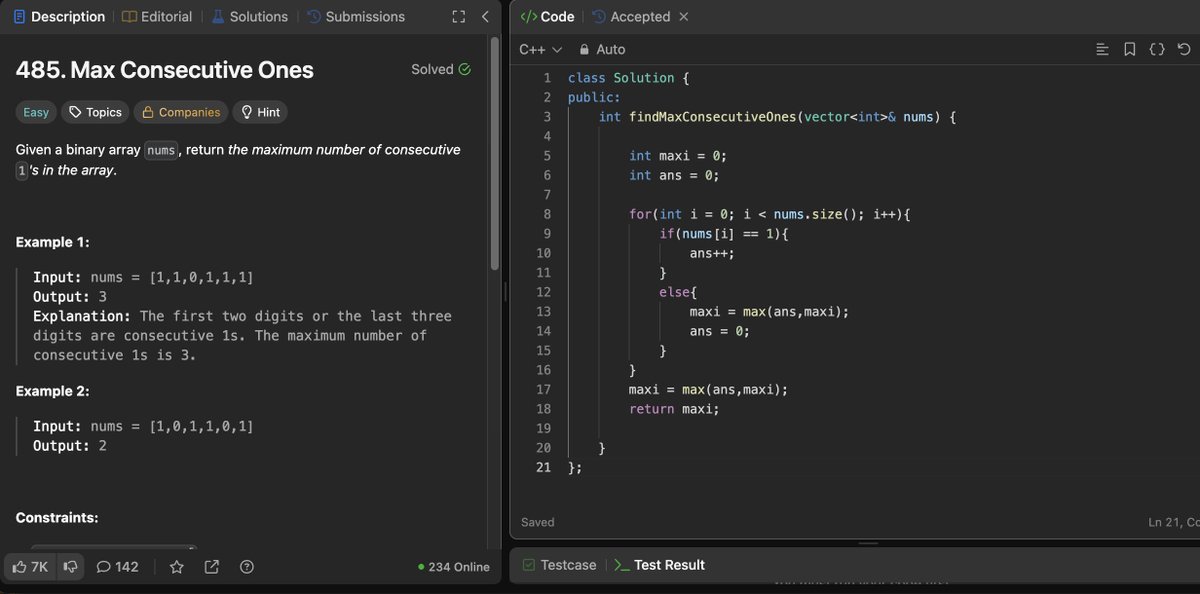
🔹 Max Consecutive Ones (LeetCode #485)
Pattern: Linear Traversal State Tracking
-> Key Idea:
Maintain the length of the current streak of 1's and keep updating the maximum streak seen so far.
T.C: O(N)
S.C: O(1)
Today's Takeaways :
✅ Two Pointers can perform in-place transformations without extra memory.
✅ Precomputing information (Prefix Max) can reduce repeated work from O(N²) to O(N).
✅ Sometimes the entire problem boils down to tracking a single state variable.
The biggest lesson today:
Most "hard" problems aren't hard because of implementation ,they're hard because the underlying pattern isn't immediately visible.
Which pattern took you the longest to master:
🔁 Two Pointers
🌊 Prefix Arrays
📊 State Tracking
1
39

Jun 13
3 problems. 3 patterns. 1 lesson: Hard problems become easy once you recognise the underlying pattern.
Day 13/45 of the #SDESheetChallenge by @takeUforward_ completed!
Today I solved 3 important Linked List & Array problems that taught me pointer manipulation and in-place transformations.
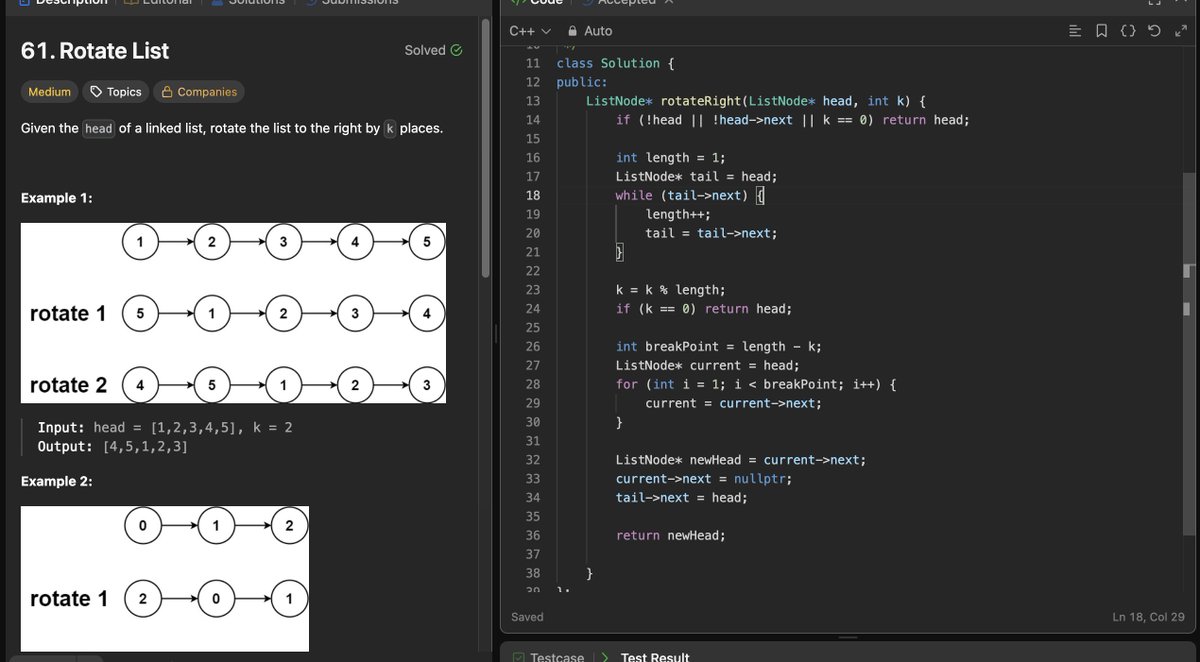
🔹 Rotate List (LeetCode #61)
Pattern: Linked List Traversal Circular Linked List
Key Idea: Find the length and tail of the list, connect the tail to the head to form a circular list, then break the circle at the (n-k)th node to get the rotated list.
T.C: O(N) & S.C: O(1)
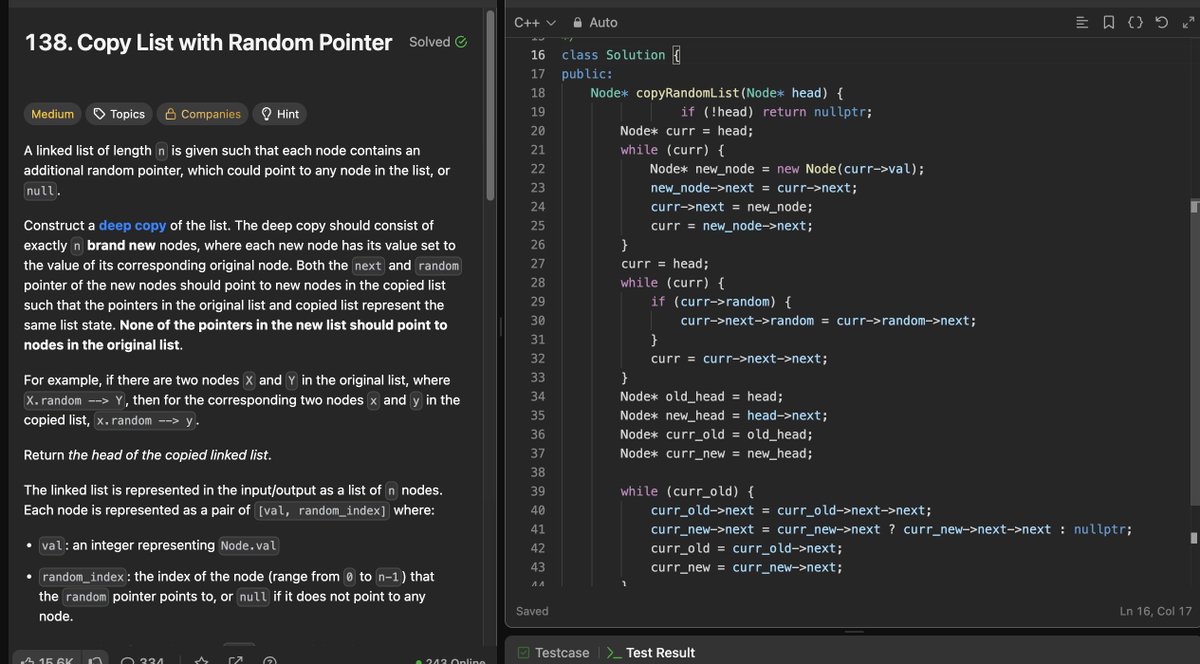
🔹 Copy List with Random Pointer (LeetCode #138)
Pattern: In-Place Node Interleaving
Key Idea: Insert a copy node after every original node, use the interleaved structure to assign random pointers in O(1) extra space, and finally separate the original and copied lists.
T.C: O(N) & S.C: O(1)
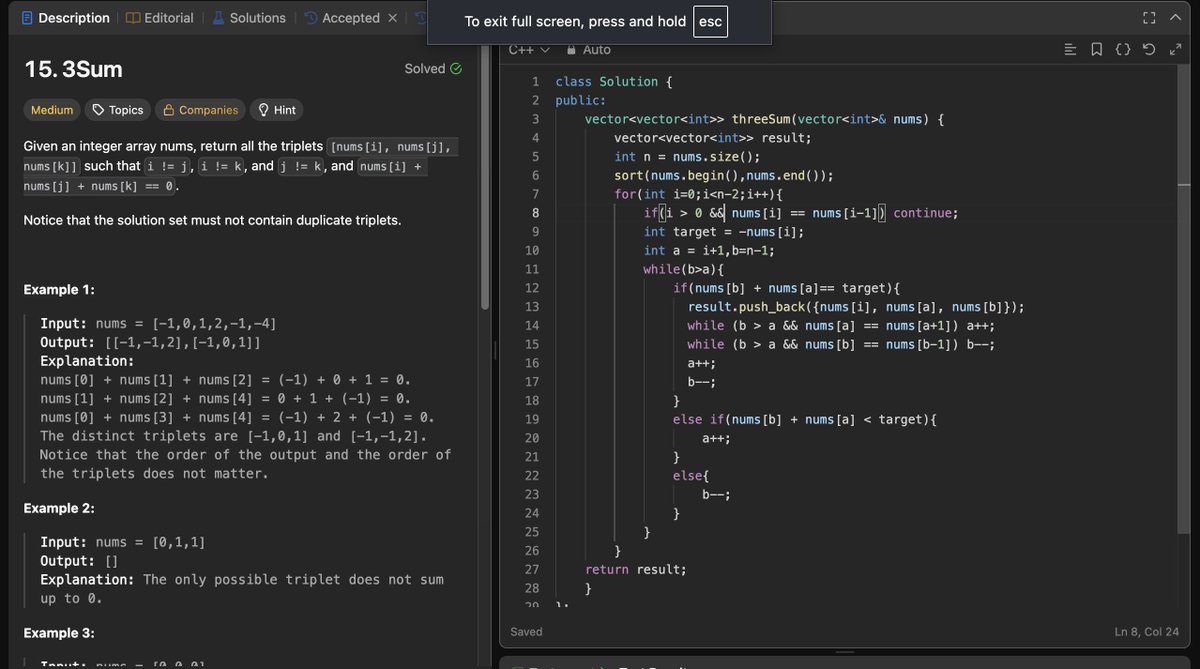
🔹3Sum (LeetCode #15)
Pattern: Sorting Two Pointers
Key Idea: Sort the array and fix one element at a time. Use two pointers on the remaining array to find pairs whose sum equals -nums[i]. Skip duplicates to avoid repeated triplets.
T.C: O(N²) & S.C: O(1) (excluding output array)
Today's problems reinforced three powerful interview patterns:
-> Converting a problem into a circular structure
-> Using in-place modifications to achieve O(1) space
-> Reducing brute force with sorting and two pointers
Many hard interview questions are just combinations of these fundamental patterns.
Which problem did you find the trickiest: Rotate List, Copy Random Pointer, or 3Sum?
1
3
43
Jun 12
Day 12/45 of the #SDESheetChallenge by @takeUforward completed!
Solved 3 important Linked List problems today:
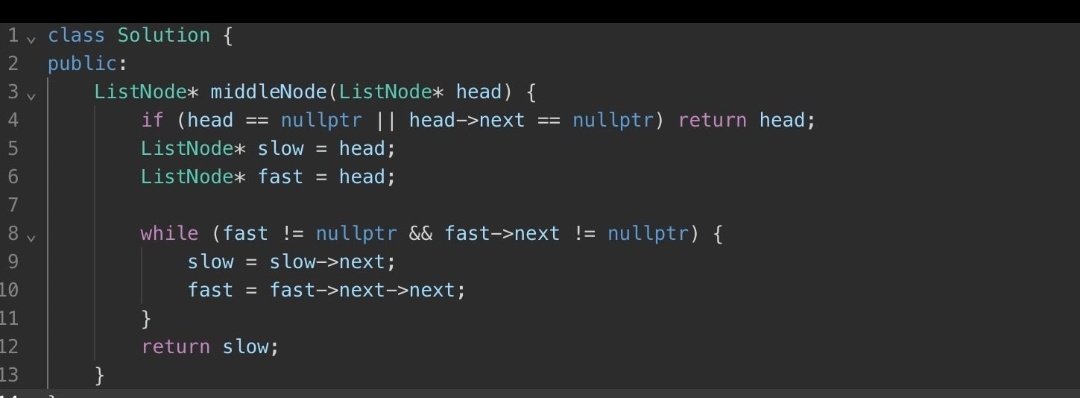
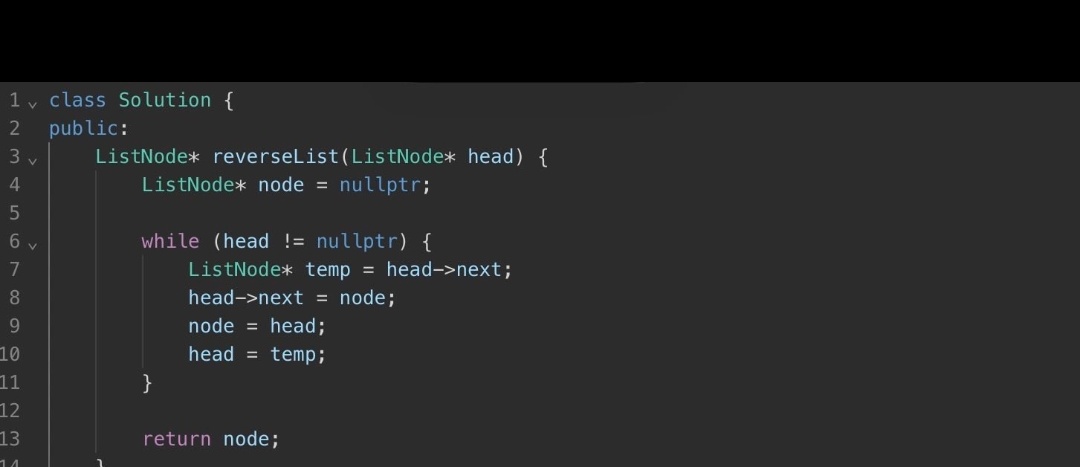
🔹 Palindrome Linked List
Pattern: Fast & Slow Pointers Reversal
Key Idea: Find the middle of the linked list using slow and fast pointers, reverse the second half, then compare both halves node by node. If all values match, the list is a palindrome.
T.C: O(N) & S.C: O(1)
🔹 Linked List Cycle II (Find Starting Point of Cycle)
Pattern: Floyd's Cycle Detection Algorithm
Key Idea: Use slow and fast pointers to detect a cycle. Once they meet, start another pointer from the head and move both one step at a time. The node where they meet again is the starting point of the cycle.
T.C: O(N) & S.C: O(1)
🔹 Flatten a Multilevel Doubly Linked List
Pattern: DFS Stack
Key Idea: Traverse the list and process child nodes first. Store the next node in a stack before diving into a child list. Reconnect nodes while maintaining proper next and prev pointers to flatten the structure into a single-level doubly linked list.
T.C: O(N) & S.C: O(N)
-> Today's focus was mastering advanced Linked List patterns involving cycle detection, in-place reversal, and multilevel traversal.
Consistent progress > Occasional motivation
#DSA #LeetCode
1
36
Jun 11
Day 11/45 of the #SDESheetChallenge by @takeUforward completed!
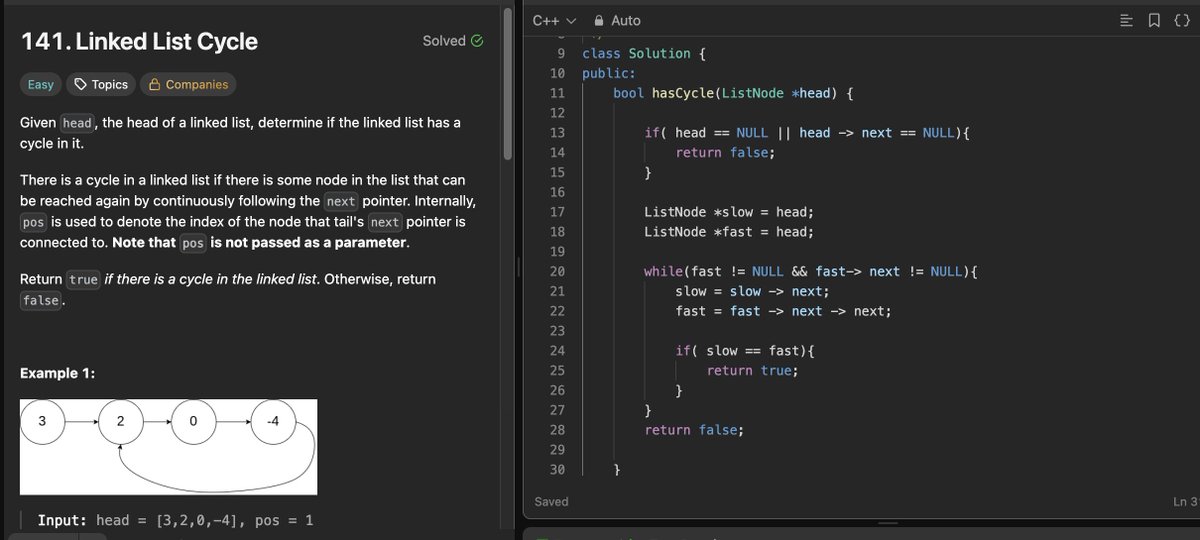
🔹 Linked List Cycle
Pattern: Floyd's Cycle Detection (Tortoise & Hare)
Key Idea: Use two pointers moving at different speeds. The slow pointer moves one step at a time while the fast pointer moves two steps. If a cycle exists, they will eventually meet; otherwise, the fast pointer will reach NULL.
T.C: O(N) & S.C: O(1)
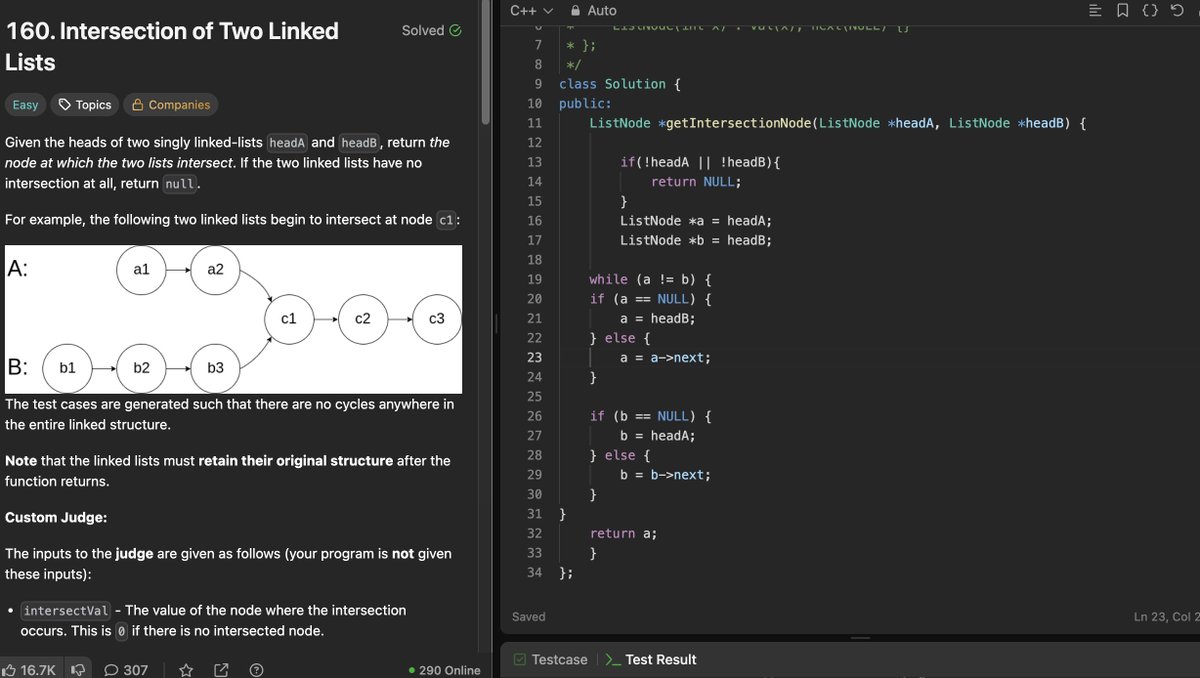
🔹 Intersection of Two Linked Lists
Pattern: Two Pointers (Pointer Switching)
Key Idea: Traverse both linked lists using two pointers. When a pointer reachs the end of one list, redirect it to the head of the other list. This equalises the distance travelled by both pointers, ensuring they meet at the intersection node (or become NULL if no intersection exists).
T.C: O(N M) & S.C: O(1)
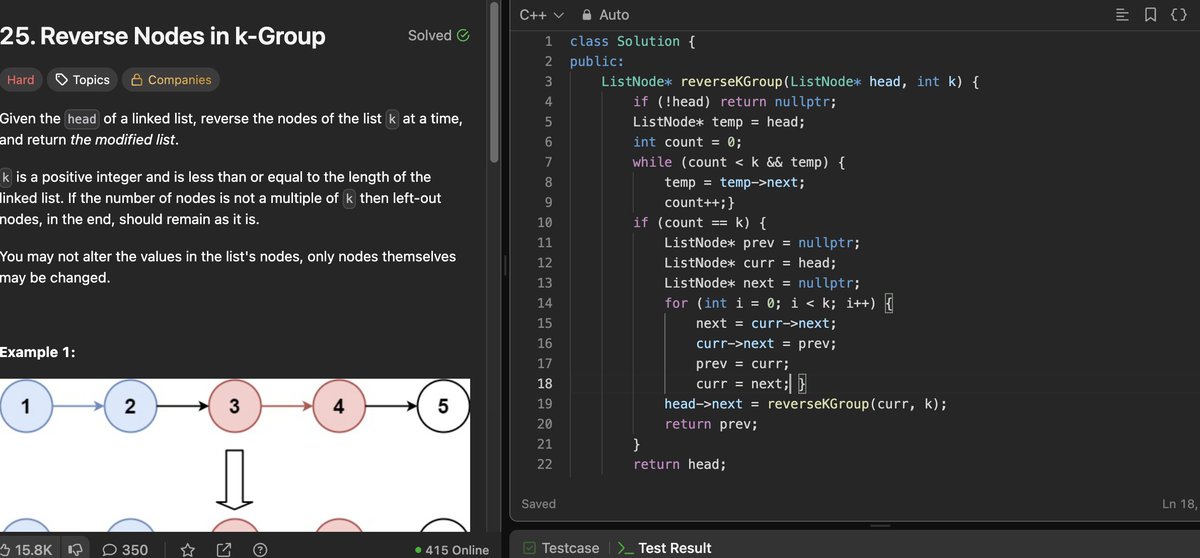
🔹 Reverse Nodes in k-Group
Pattern: Linked List Reversal Recursion
Key Idea: First check whether at least K nodes are available. If yes, reverse those K nodes using the standard linked list reversal technique. Recursively process the remaining list and connect the reversed group with the result of the recursive call. If fewer than K nodes remain, leave them unchanged.
T.C: O(N) & S.C: O(N/K)
34 more days to go...

1
45
Jun 10
Day 10/45 of the #SDESheetChallenge by
@takeUforward completed!
Solved 3 important Linked List problems today:
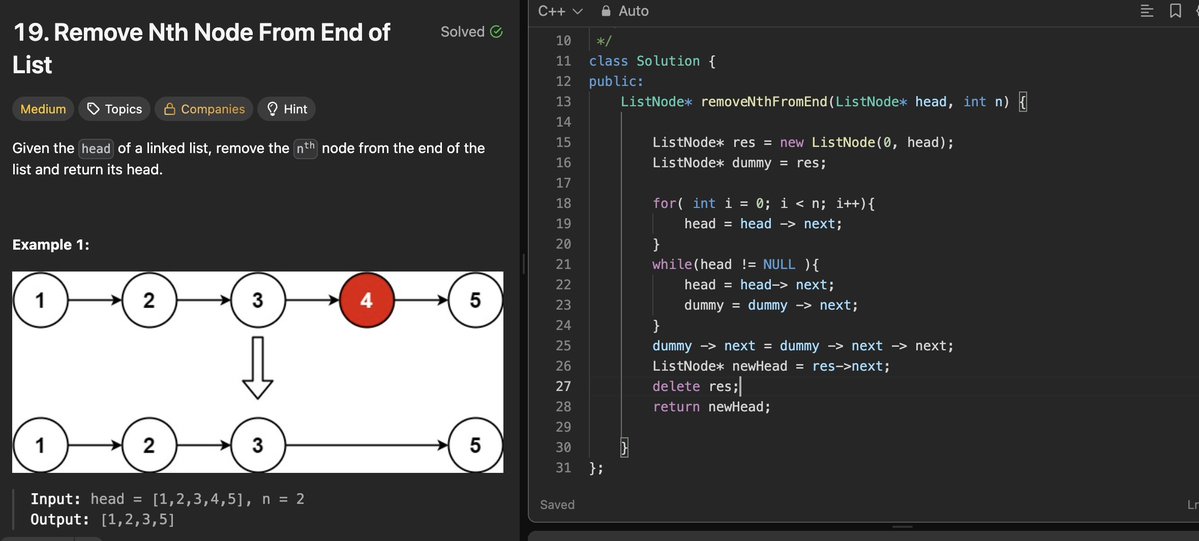
🔹 Remove Nth Node From End of List
Pattern: Two Pointers Dummy Node
Key Idea: Maintain a gap of N nodes between two pointers. Move the first pointer N steps ahead, then move both pointers together until the first reaches the end. The second pointer will be just before the node to be deleted. A dummy node helps hande edge cases like deleting the head node.
T.C: O(N) & S.C: O(1)
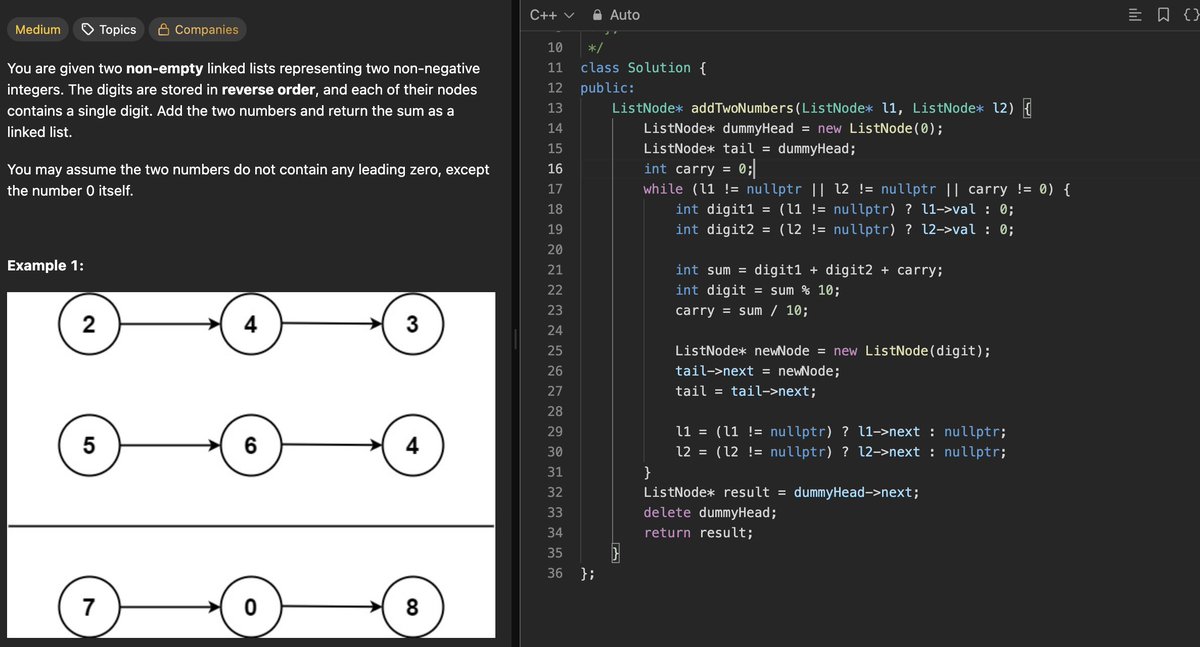
🔹 Add Two Numbers
Pattern: Linked List Traversal Carry Handling
Key Idea: Traverse both linked lists simultaneously and add respective digits along with the carry. Create a new node for each resulting digit and update the carry for the next iteration. Continue until both lists and the carry are exhausted.
T.C: O(max(N, M)) & S.C: O(max(N, M))
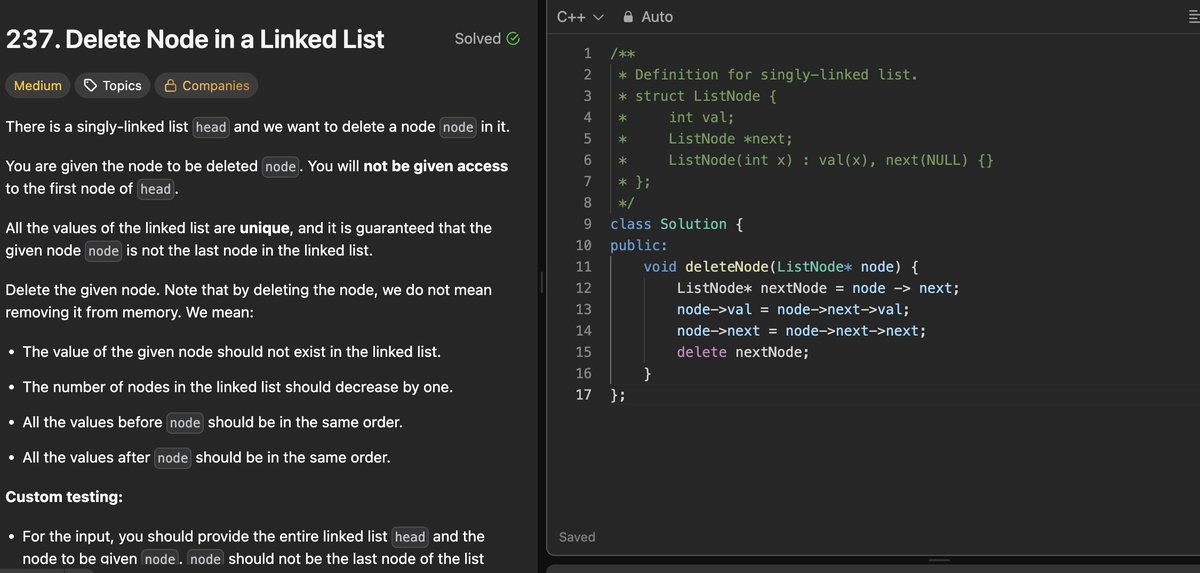
🔹 Delete Node in a Linked List
Pattern: In-Place Node Modification
Key Idea: Since access to the previous node is unavailable, copy the value of the next node into the current node and bypass the next node. This effectively removes the target node from the list.
T.C: O(1) & S.C: O(1)
Consistent progress > Occasional motivation
5
961
Gaurav retweeted
Jun 8
Day 8/45 of the #SDESheetChallenge by @takeUforward completed!
Solved 3 important problems today:
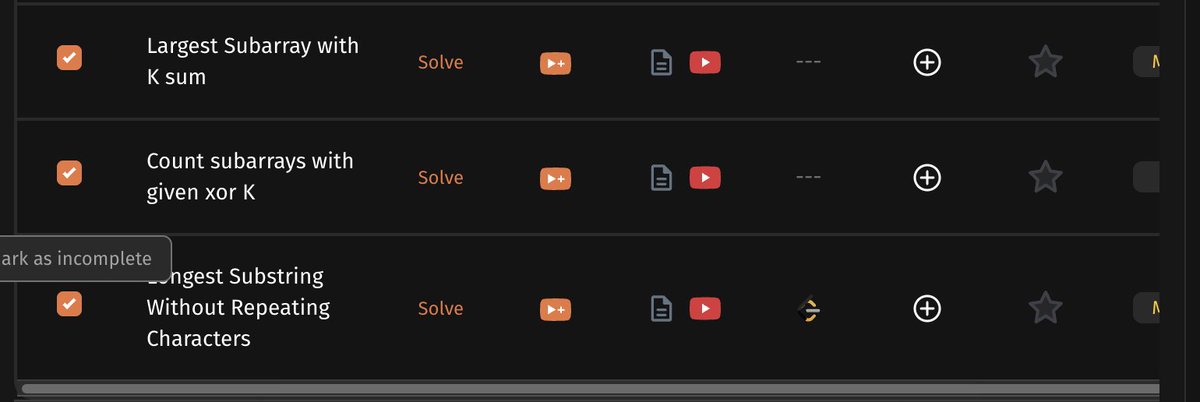
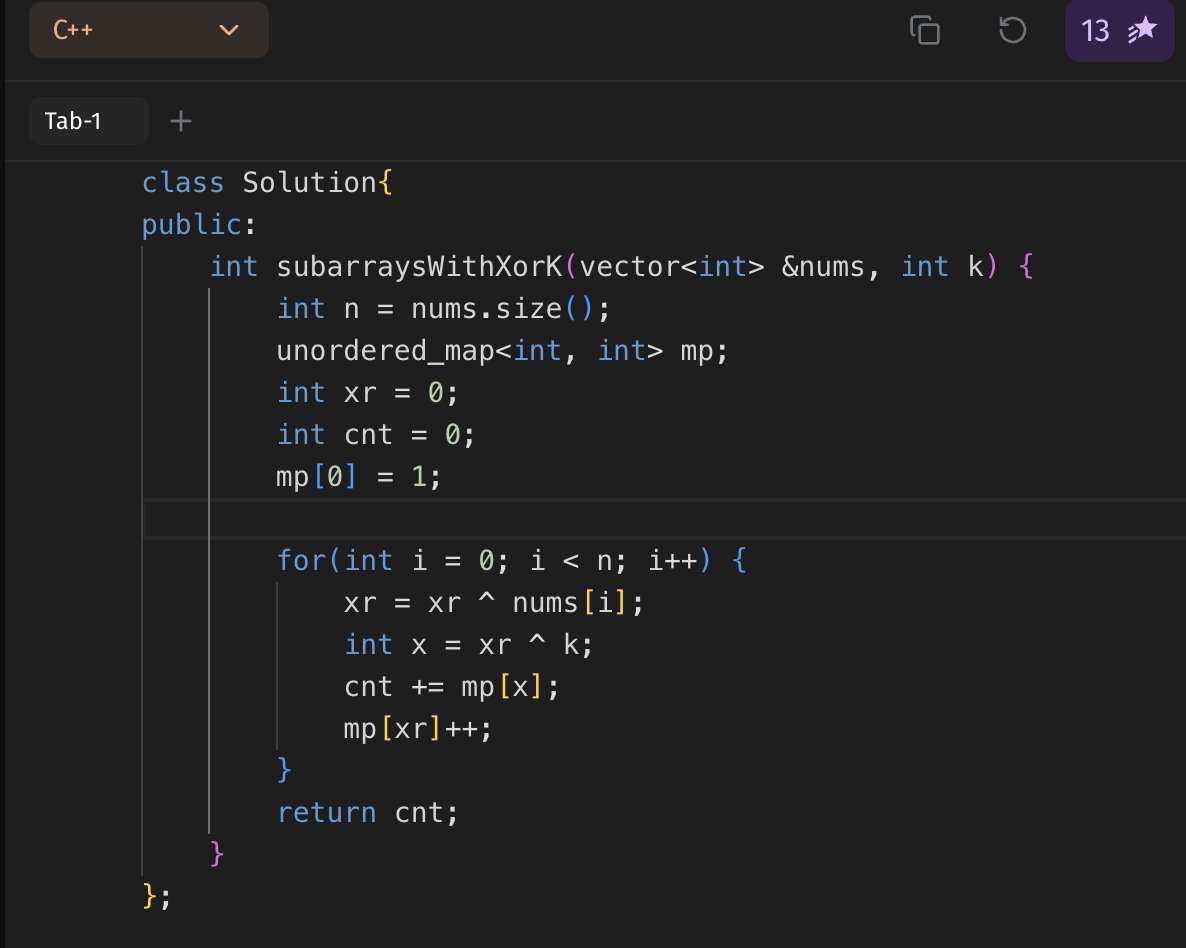
🔹 Count Subarrays with XOR K
Pattern: Prefix XOR Hash Map
Key Idea: Maintain the XOR of all elements seen so far. If the current prefix XOR is xr, then any previous prefix XOR equal to xr ^ K forms a subarray with XOR K. Store frequencies of prefix XORs in a hash map to count such subarrays.
T.C: O(N) & S.C: O(N)
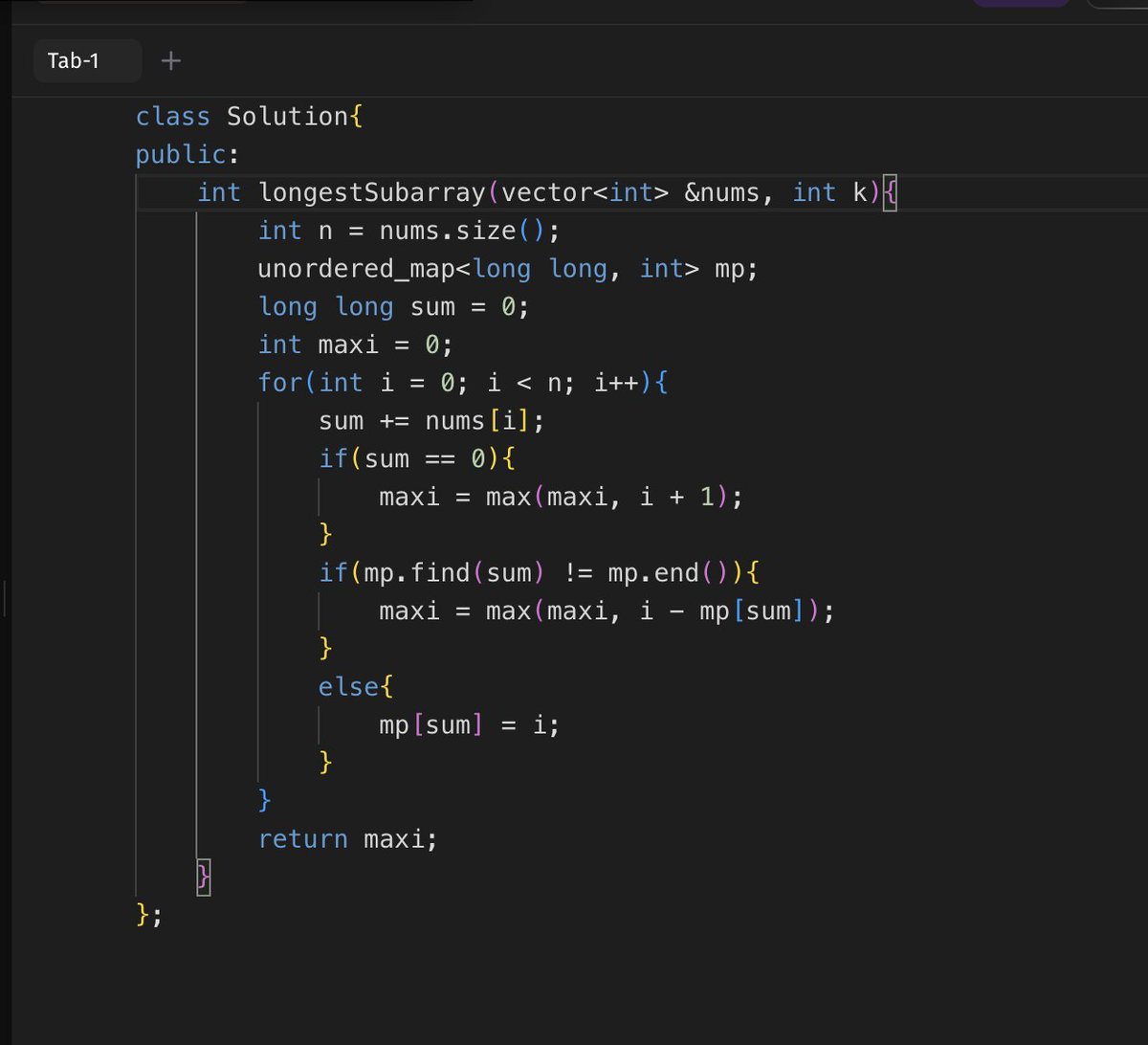
🔹 Longest Subarray with Zero Sum
Pattern: Prefix Sum Hash Map
Key Idea: If the same prefix sum appears at two different indices, the sum of elements between them is zero. Store the first occurrence of each prefix sum and use it to calculte the maximum zero-sum subarray length.
T.C: O(N) & S.C: O(N)
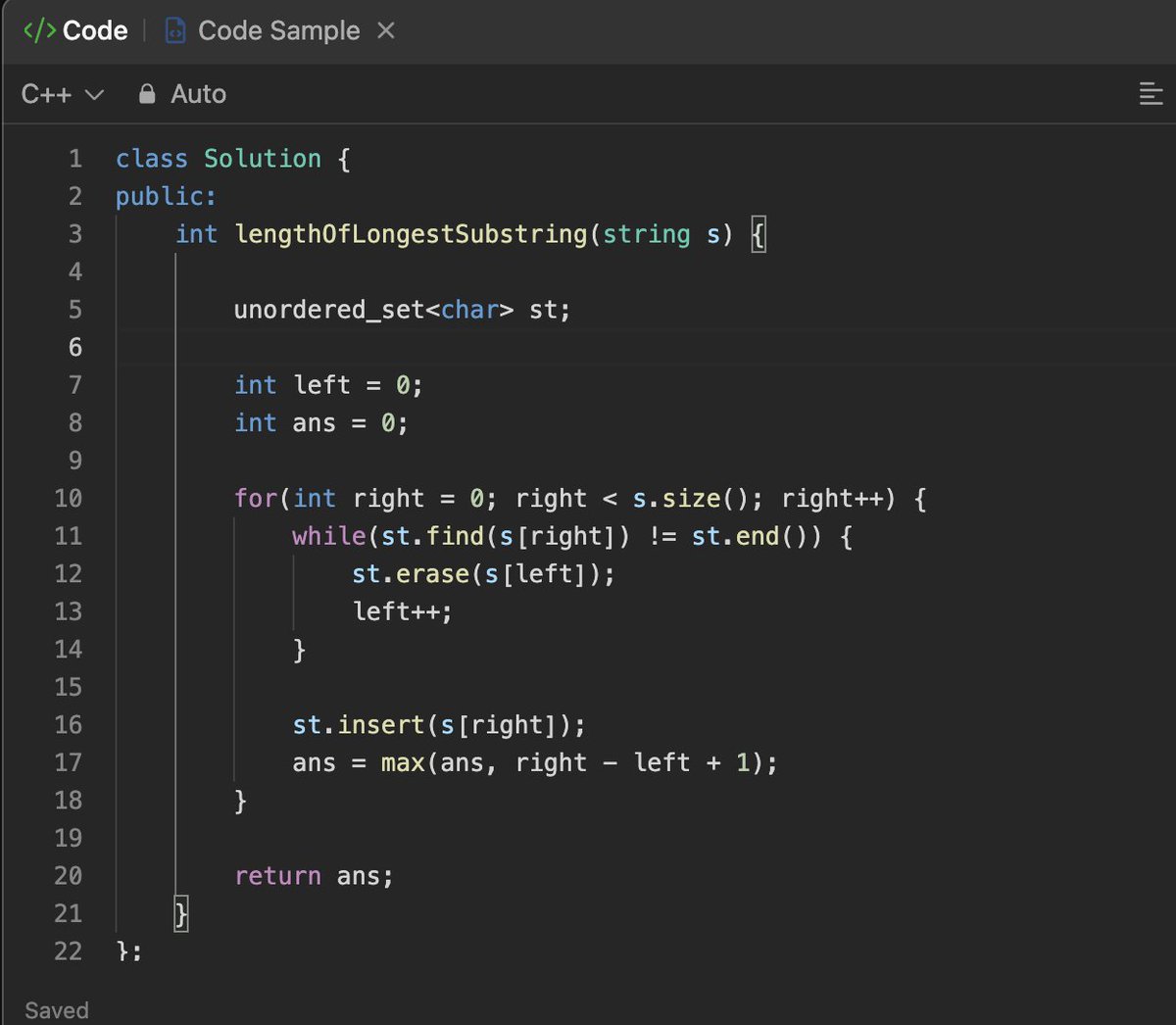
🔹 Longest Substring Without Repeating Characters
Pattern: Sliding Window Hash Set
Key Idea: Expand the window using the right pointer and maintain unique characters in a hash set. Whenever a duplicate character is found, shrink the window from the left until all characters become unique again.
T.C: O(N) & S.C: O(N)
Consistent progress > Occasional motivation
#DSA #LeetCode
1
1
76
Gaurav retweeted

Jun 8
Looks like hollywood ka rajamouli is making hollywood ki babuhali
Advance booking for IMAX live now for The Odyssey. @UniversalIND

101
68
1,492
344,148
Gaurav retweeted

Jun 7
12 End-to-End AI Engineer Projects in 2026
1) Production RAG Document Assistant
PDF/Q&A system with hybrid search (vector BM25), reranking, citations, and eval metrics. Use LangChain/LlamaIndex Pinecone/Chroma FastAPI.
Why recruiters love it: Solves hallucinations, enterprise staple.
2) AI Resume Screener & Matcher
Upload JD resumes —>> LLM parsing embedding similarity ranking dashboard. Add bias checks.
Pro move: Fine-tune a small model for domain-specific scoring.
3) Multi-Modal Chatbot (Text Image Voice)
Whisper for STT, GPT-4o/Claude vision, TTS. Add memory & tools.
Shows: Full multimodal pipeline.
Intermediate —>> Interview Magnet Tier
4) Autonomous AI Agent System (CrewAI/LangGraph)
Multi-agent workflow (e.g., research —>> summarize —>> email). With tool calling, planning, memory, and human-in-loop.ouEWE“LARGE”
5) Fine-Tuned Domain LLM Serving
Fine-tune Mistral/Llama on your data (LoRA/QLoRA) -->> quantize —>> serve with vLLM/TGI FastAPI. Compare cost/latency.
6) Real-time AI Monitoring & Observability Dashboard
Track LLM calls, latency, cost, hallucinations, drift. Use Prometheus Grafana LangSmith/Phoenix.
MLOps gold.
Advanced —>> “Senior AI Engineer” Tier
7) End-to-End MLOps Pipeline for LLM
Data versioning (DVC) —>> training (on cloud) —>> CI/CD deployment —>> A/B testing —>> rollback. Docker Kubernetes/GCP.
8) Voice AI Agent / Study Coach
Real-time conversation with interruption handling, knowledge base (RAG), personalized learning paths.
9) Multi-Agent Coding/Research Assistant
Agents that browse, code, debug, and iterate together. Add eval harness.
10) Hybrid Search Recommendation System
Combine traditional ML LLMs for personalized recs (e.g., content or jobs) with feedback loop.
11) Private/Local AI App (Ollama RAG)
Fully offline SLM app with local vector DB. Focus on privacy, quantization, on-device perf.
12) AI-Powered Enterprise Tool (e.g., Log Analyzer or Meeting Summarizer)
Ingest data —>> process with agents —>> actionable insights dashboard. Deploy with auth & RBAC.
Bonus Rules to Get Hired:
• Production-grade everything: eval sets, guardrails, rate limiting, cost tracking, error handling
• Deploy on Vercel/Render/Fly.io Cloud (AWS/GCP/Azure) - show metrics
• Killer READMEs: architecture diagrams, benchmarks, challenges & trade-offs, live demo link
• Write tests, use Docker, add CI/CD
• Track everything: tokens, latency, accuracy, $ spent
32
70
510
23,637




Jun 7
Day 7/45 of the #SDESheetChallenge by @takeUforward completed !
Solved 3 important array problems today:
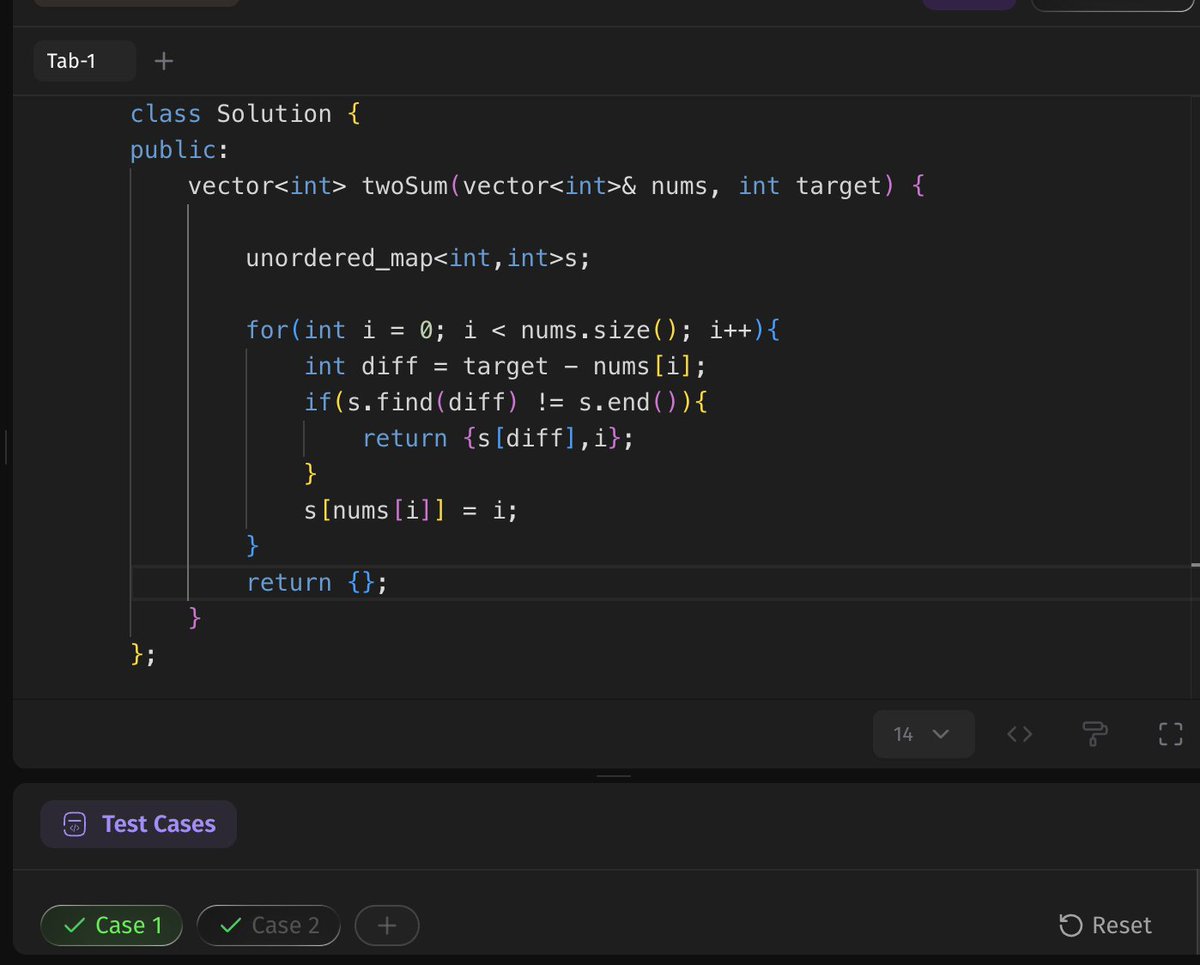
🔹 Two Sum
Pattern: Hash Map / Lookup Table
Key Idea: Store previously seen elements and check for the required complement in the hashtable.
T.C : O(N) & S.C: O(N).
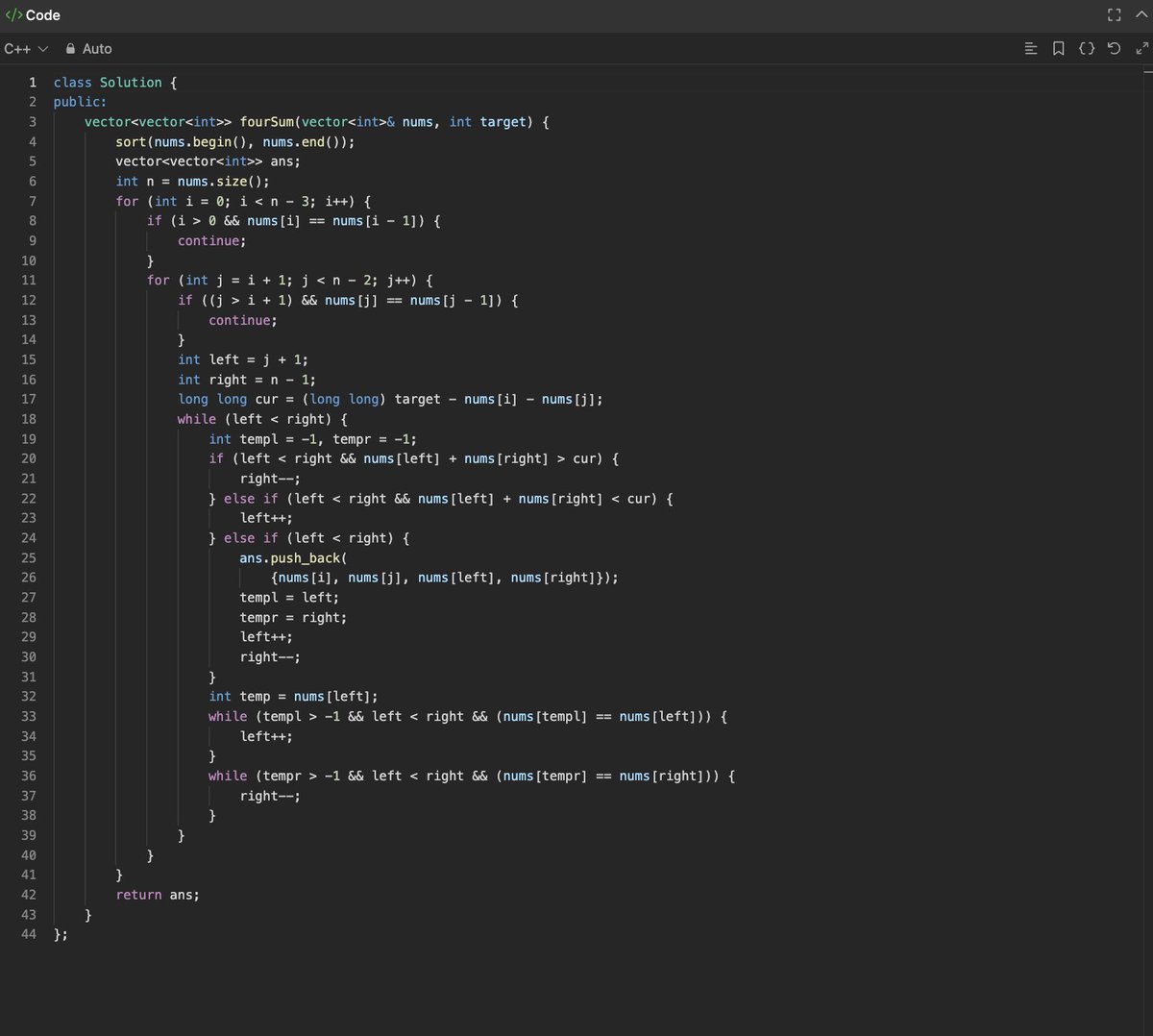
🔹 4 Sum
Pattern: Sorting Two Pointers
Key Idea: Fix two elements and use the two-pointer technique to find the remaining pair while handling duplicates efficiently.
T.C: O(N³) & S.C: O(N*no. of quadruplets).
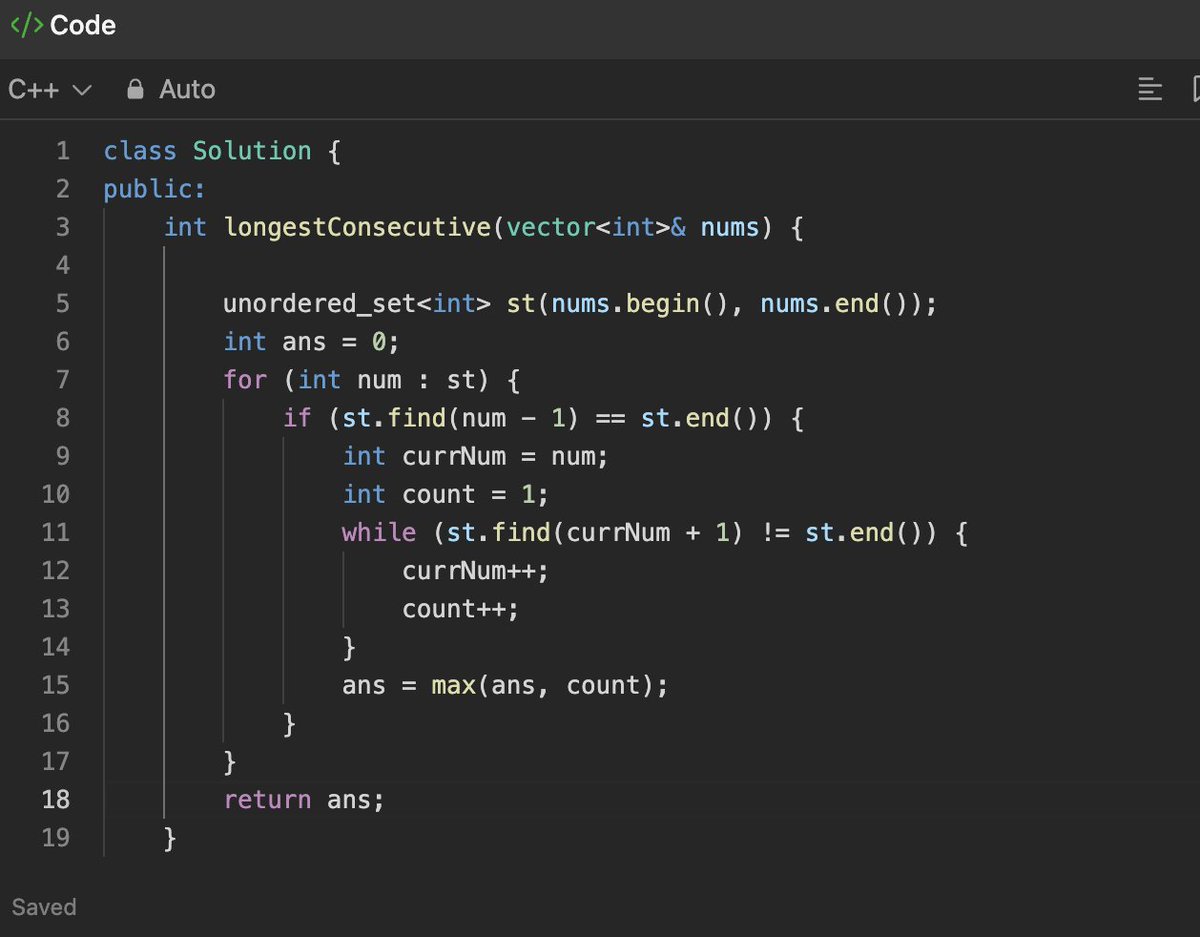
🔹 Longest Consecutive Sequence in an Array
Pattern: Hash Set / Sequence Detection
Key Idea: Store all elements in a hash set and only start counting from numbers that have no predecessor (num - 1). This ensures each sequence is traversed exactly once, achieving linear time complexity.
T.C: O(N). & S.C: O(N)
2
99
Jun 6
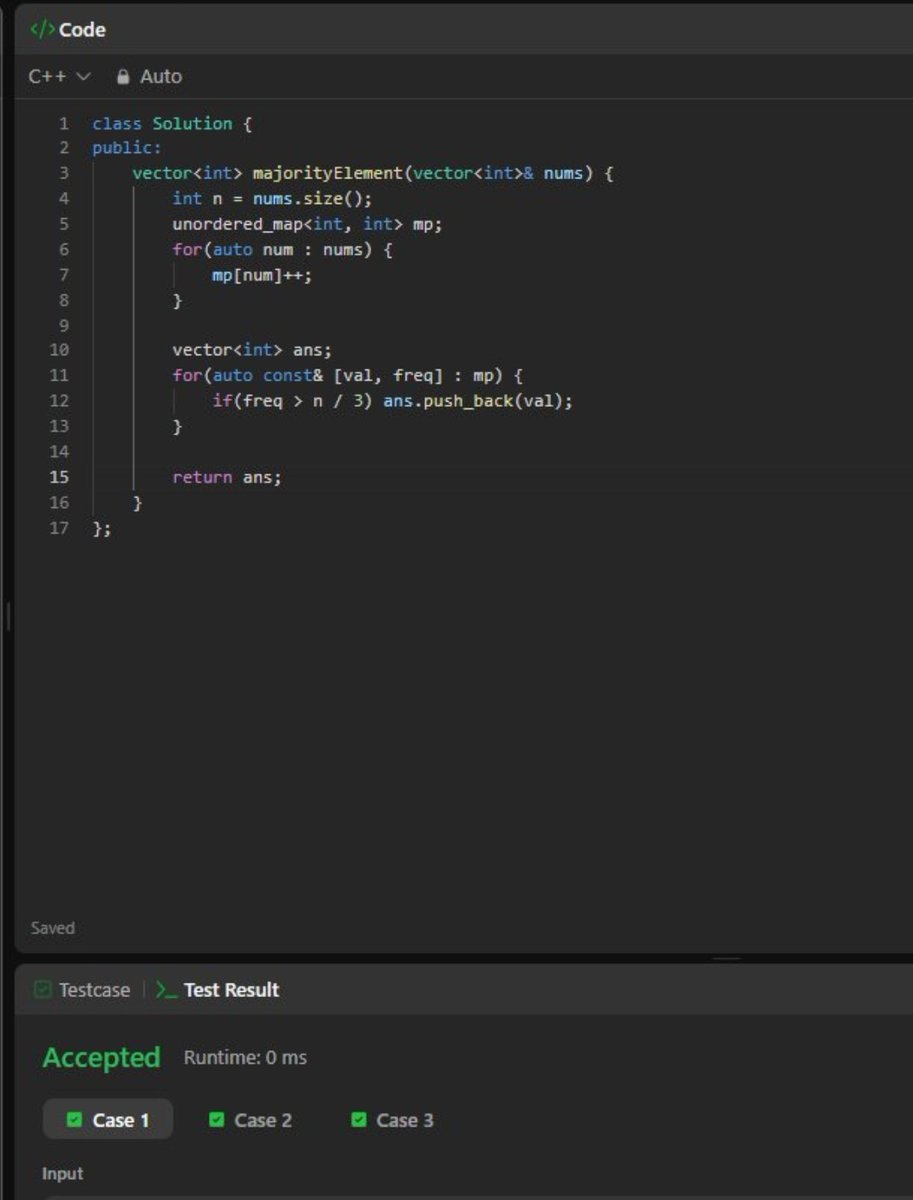
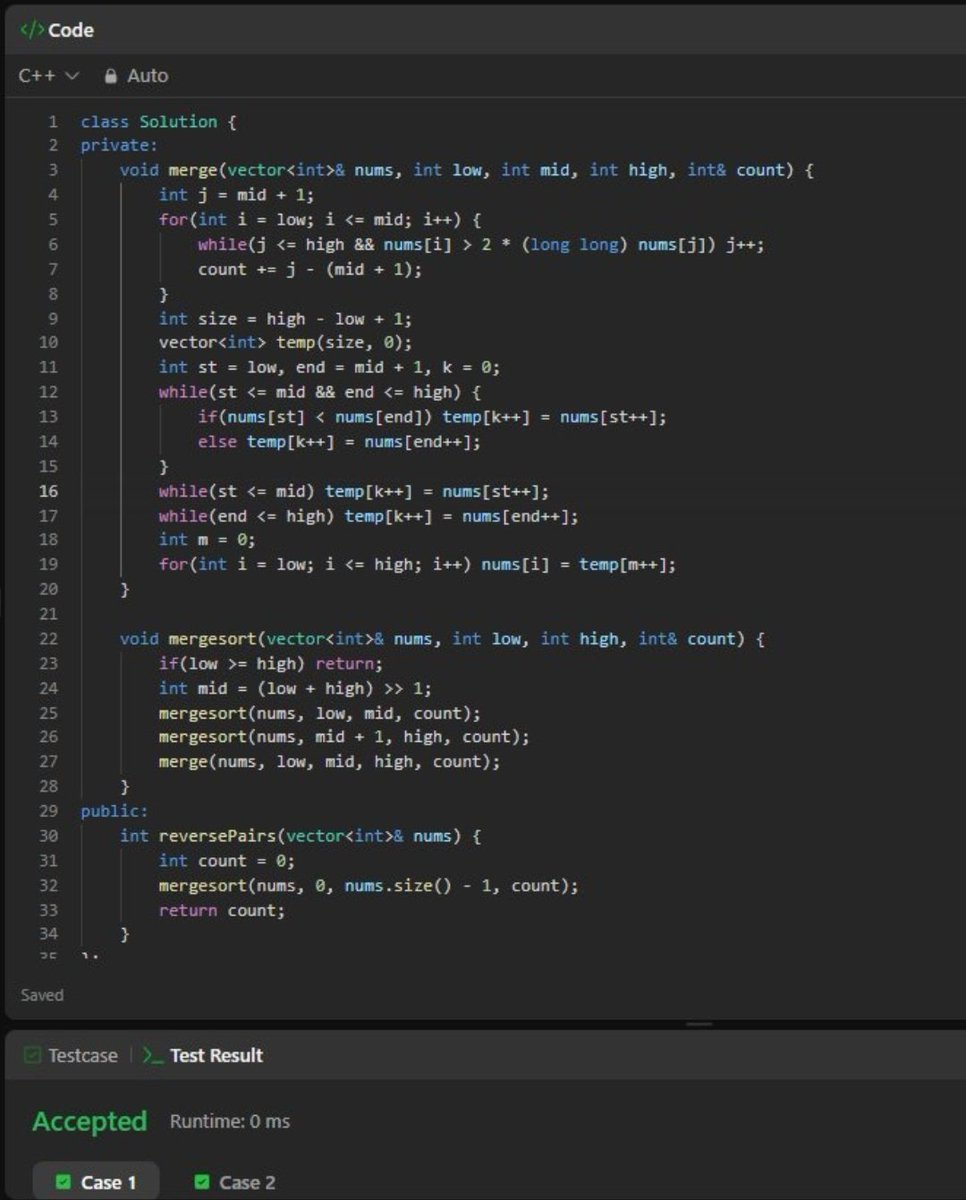
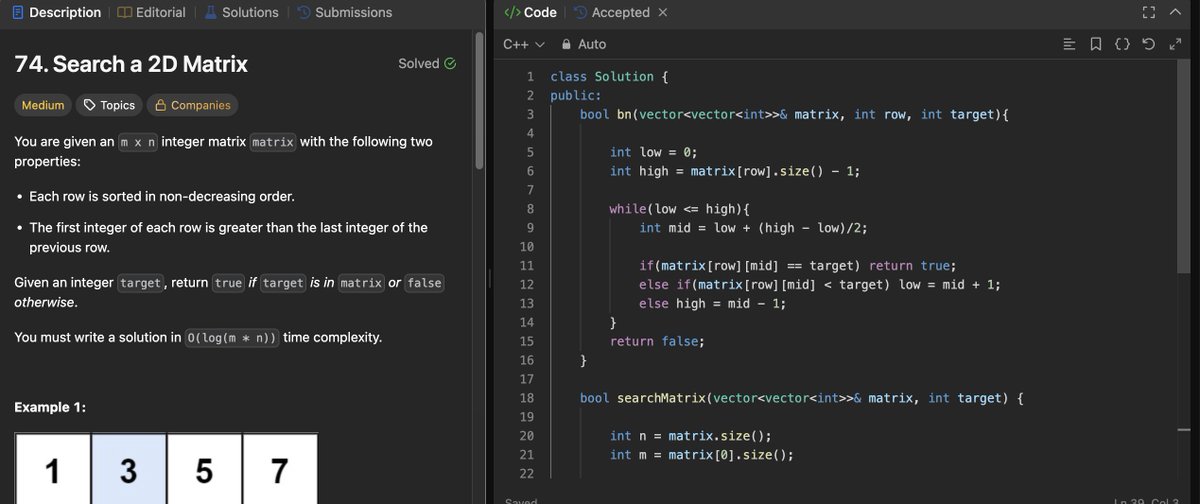
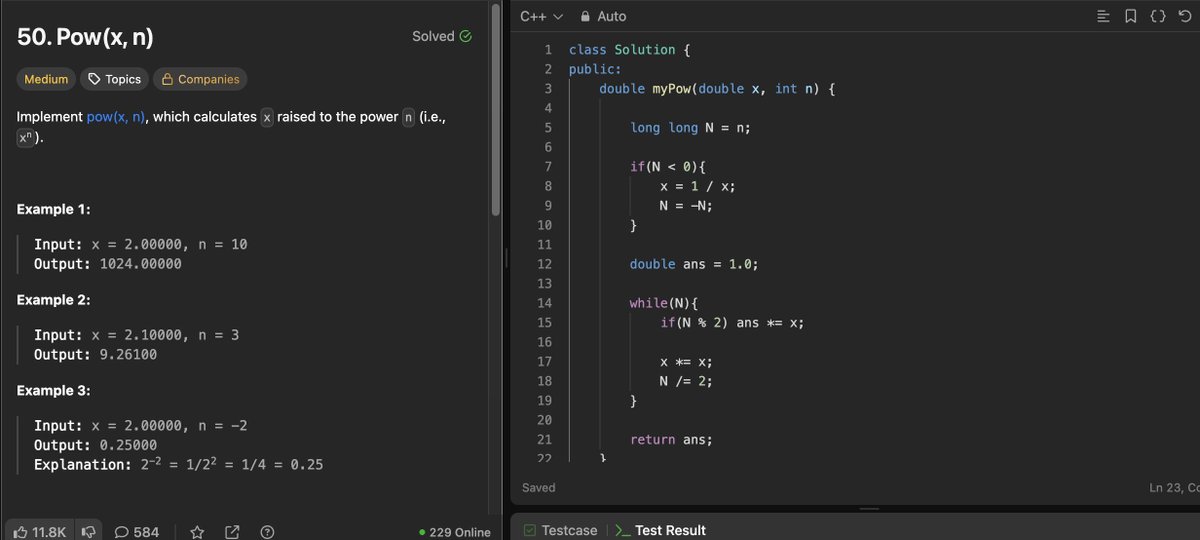
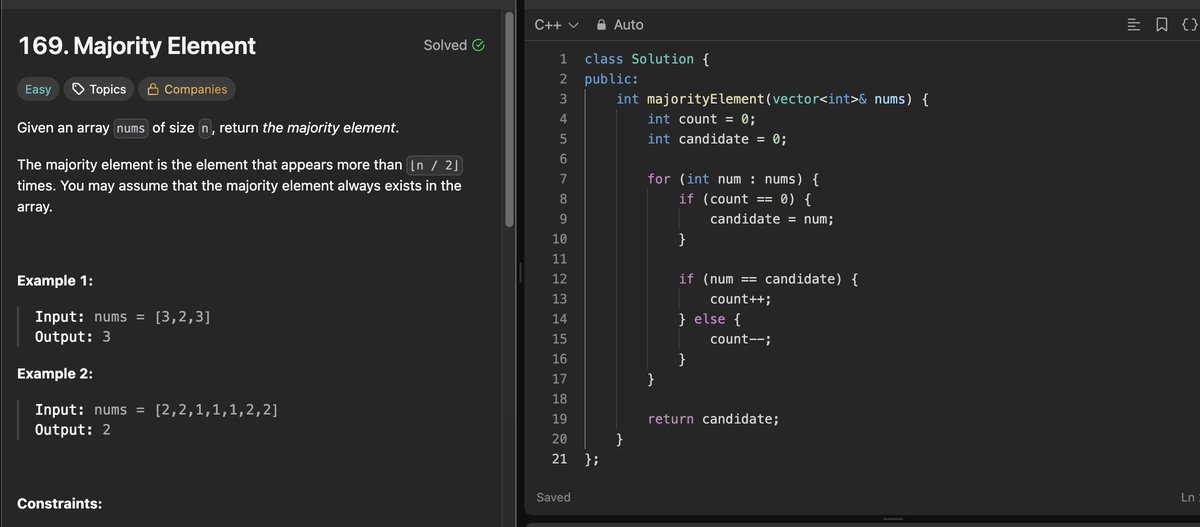
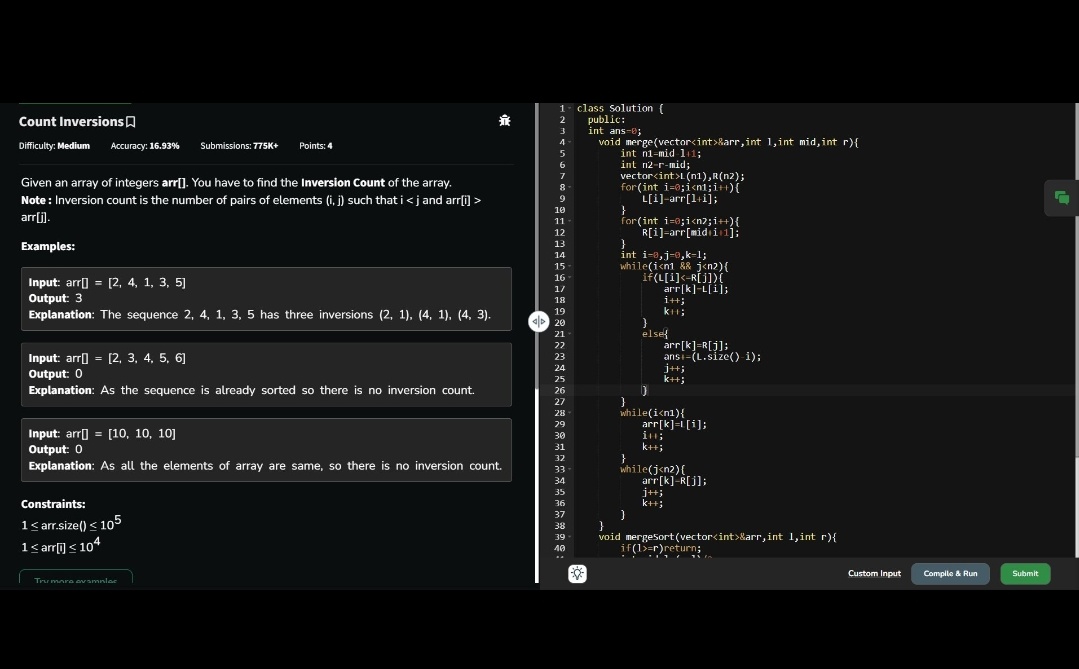
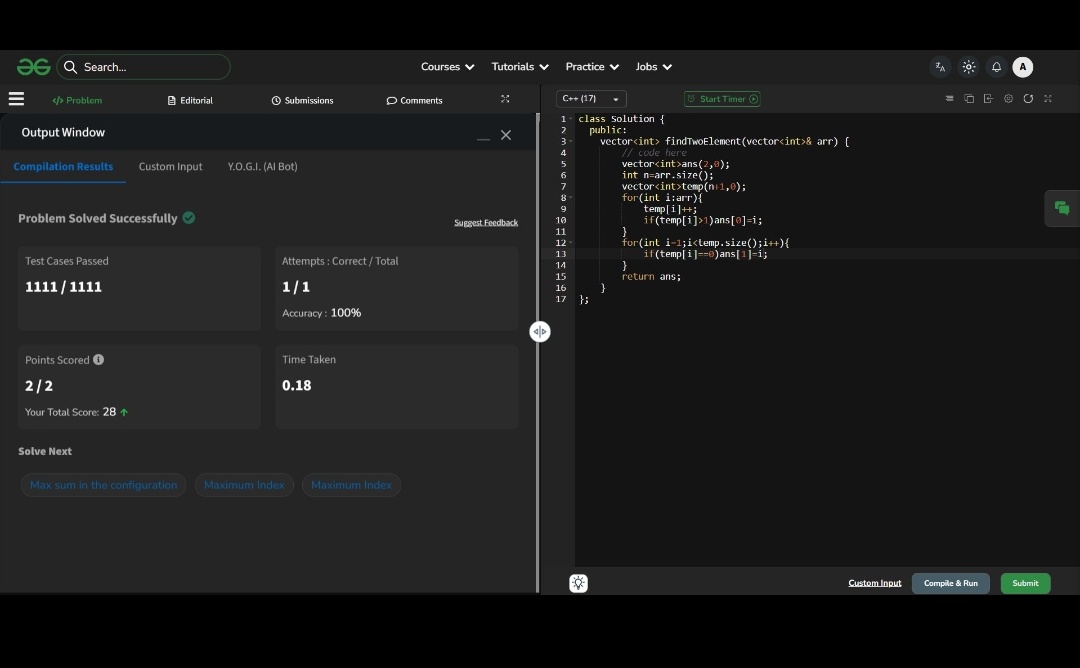
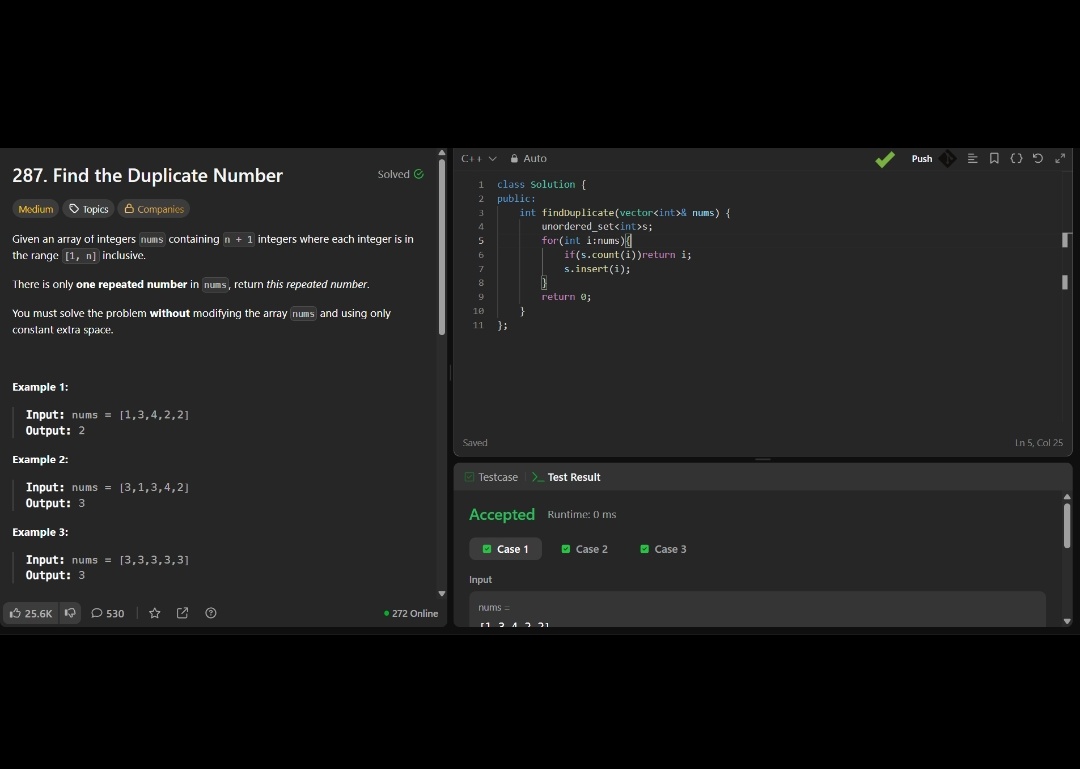
Day 6/45 of the #SDESheetChallenge with
@takeUforward is complete!
Going well so far💪😀
1
14
188
Jun 3
Day 3/45 of the #SDESheetChallenge with
@takeUforward
is complete!
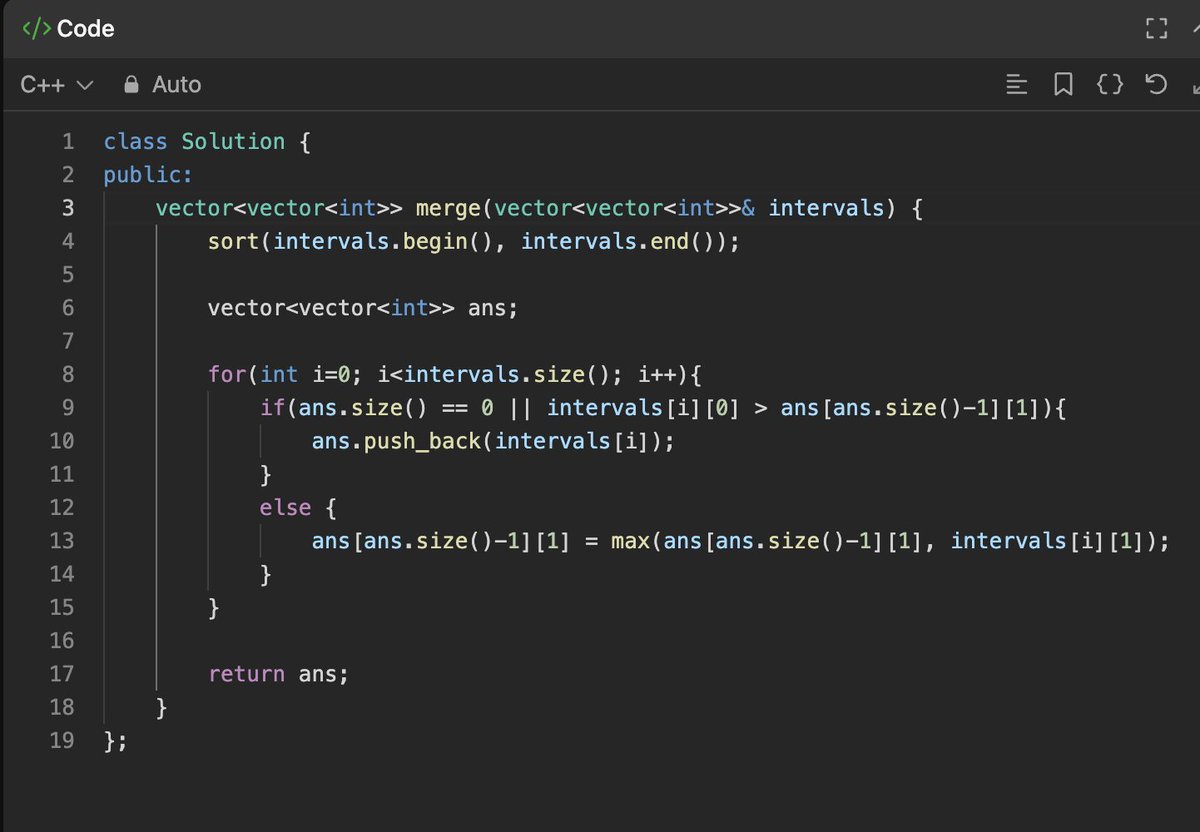
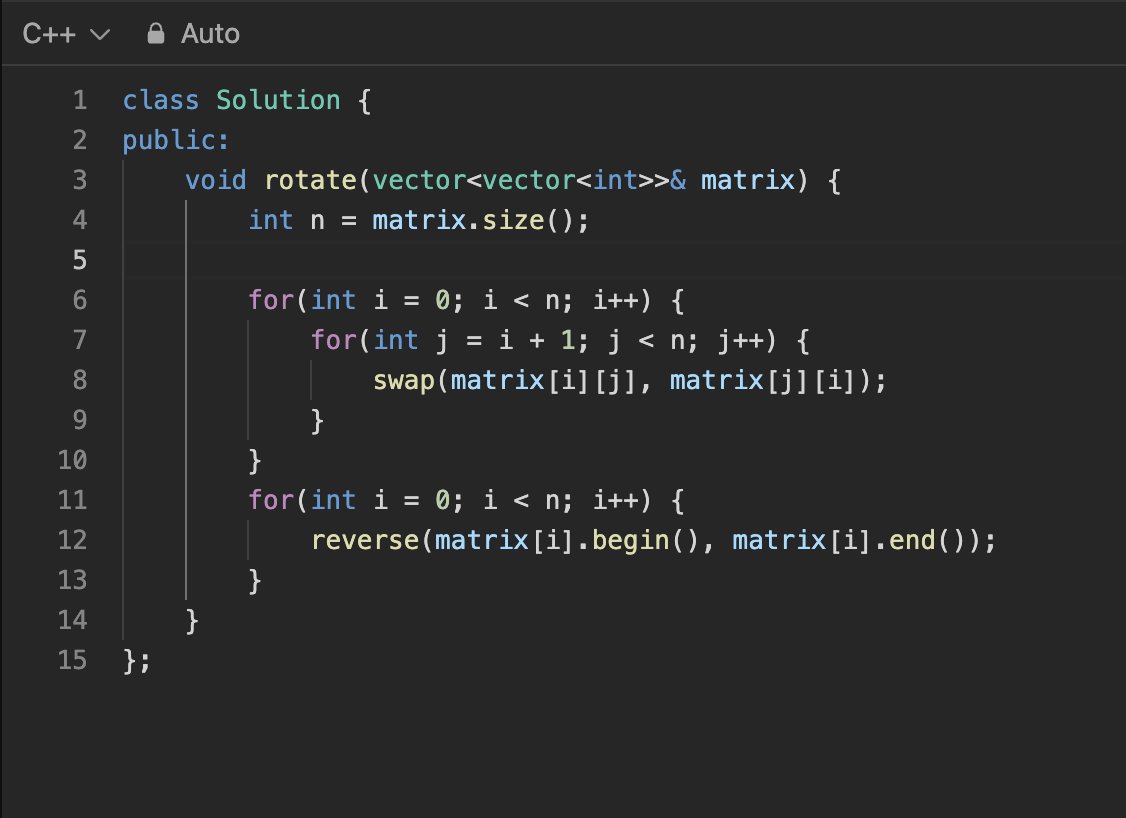
Solved 3 array problems today:
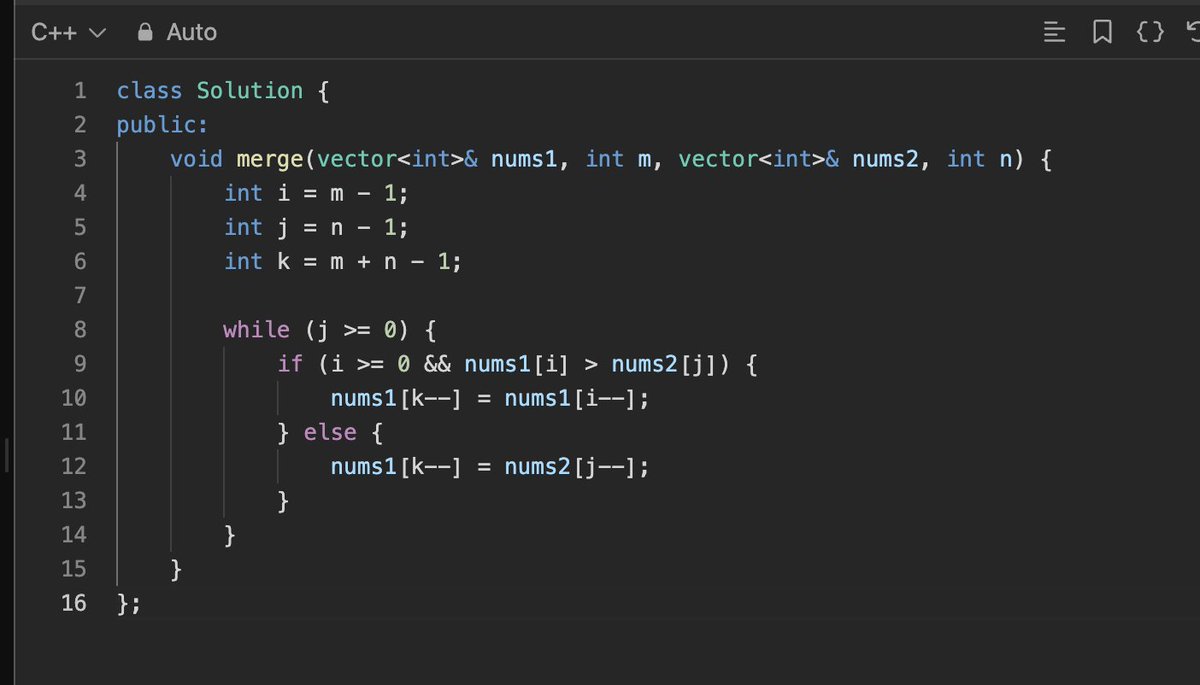
-> Merge Intervals
-> Rotate Image
-> Merge Sorted Array
25
Jun 2
Day 2 of the #SDESheetChallenge with @takeUforward is complete!
Solved 3 array problems today:
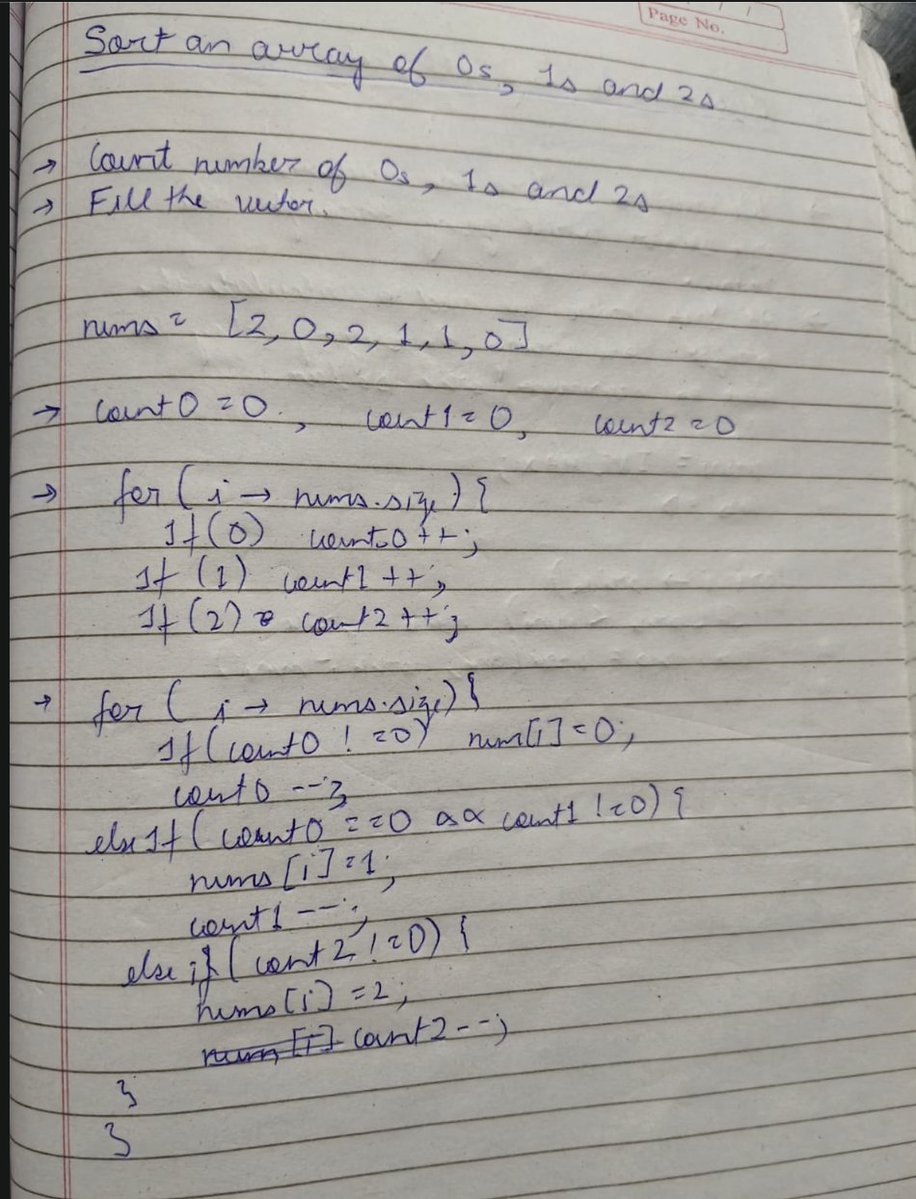
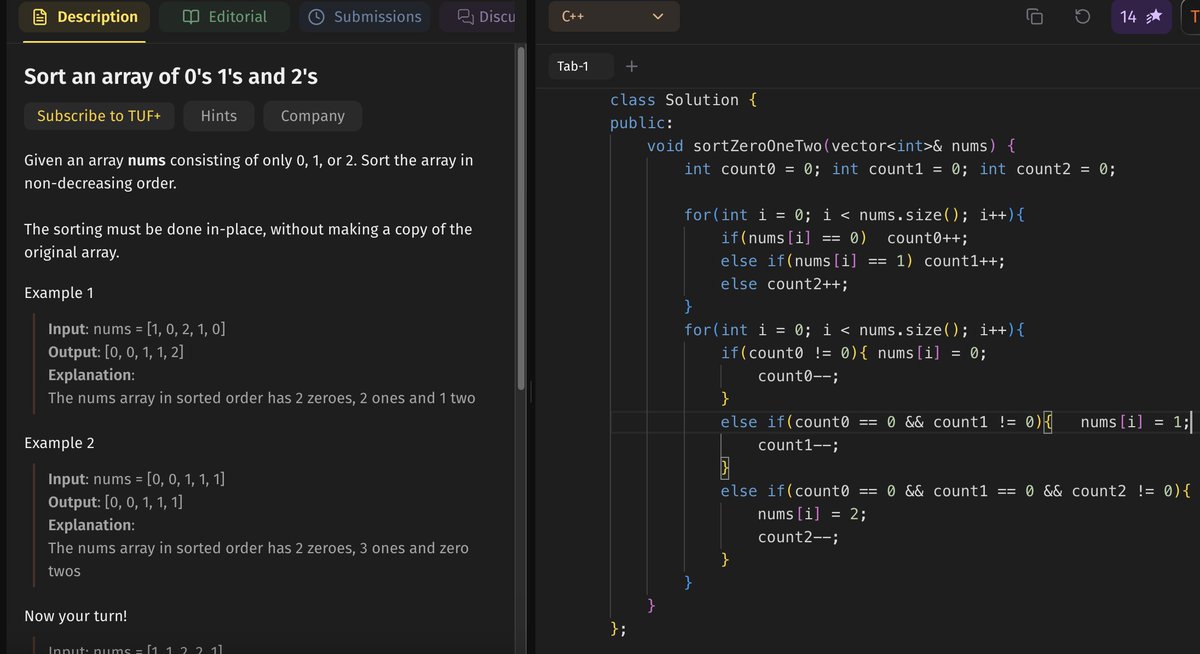
✅ Sort an Array of 0s, 1s and 2s
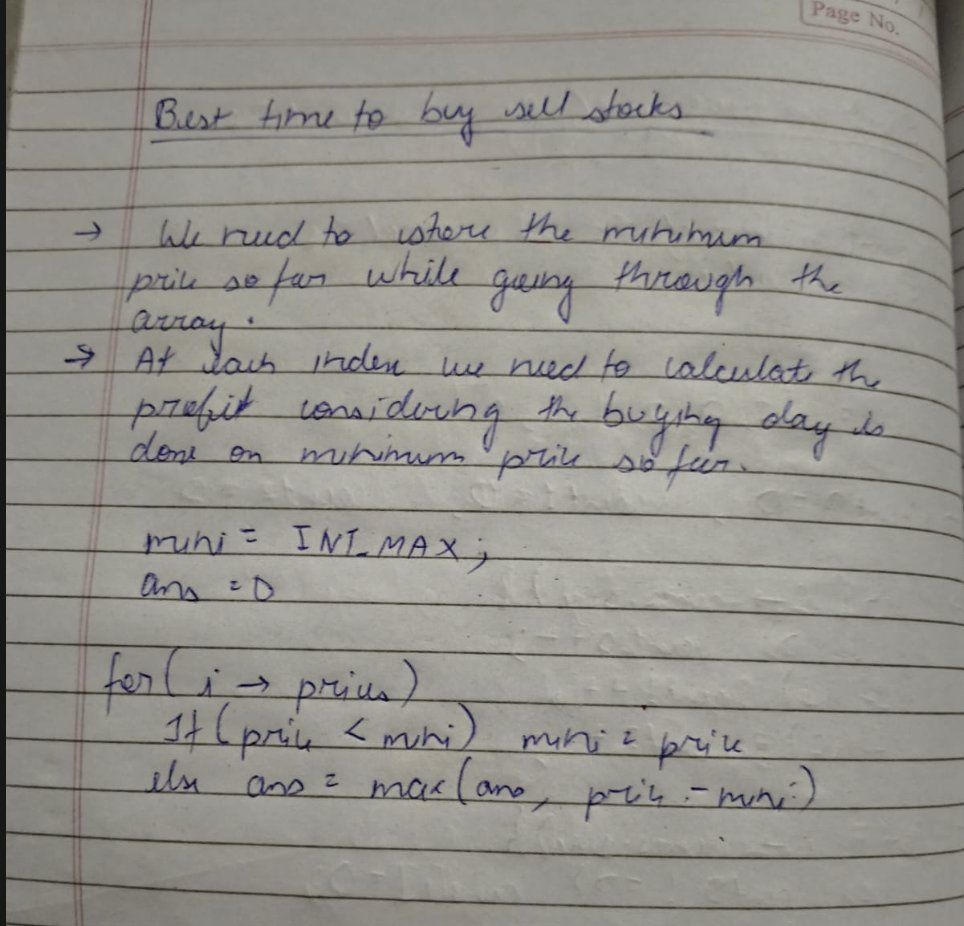
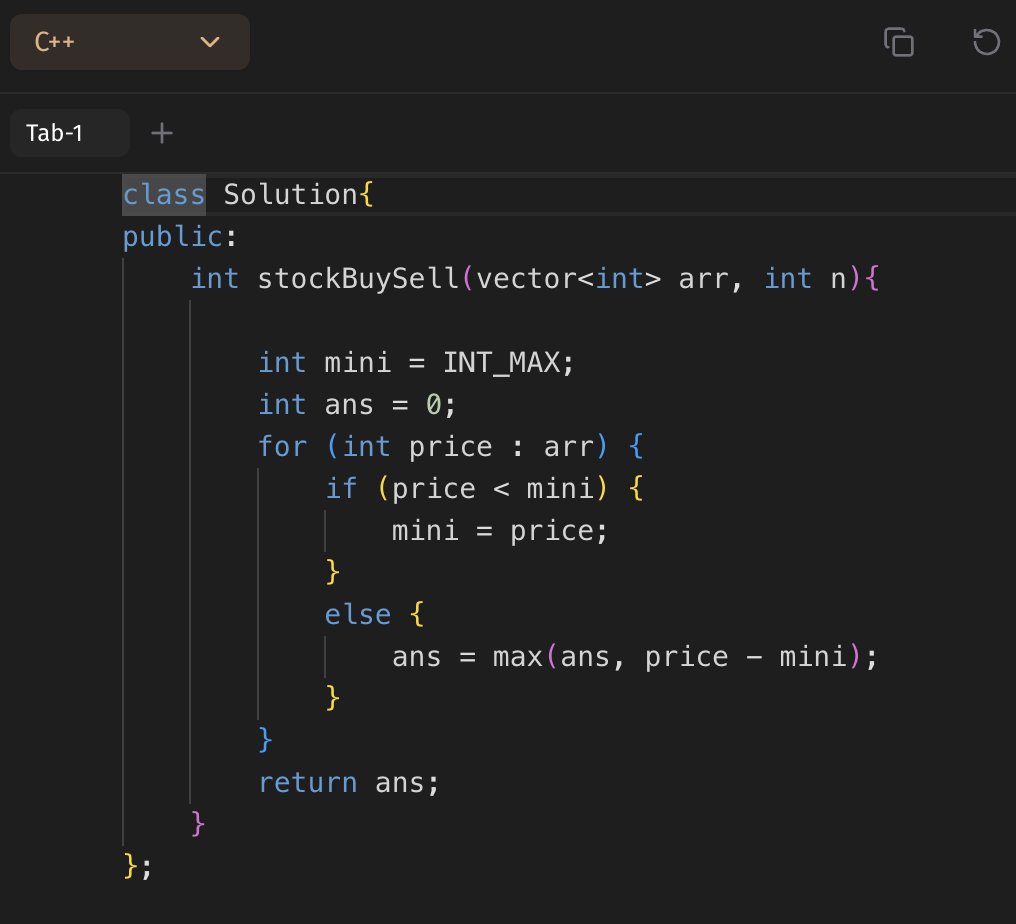
✅ Best Time to Buy and Sell Stock
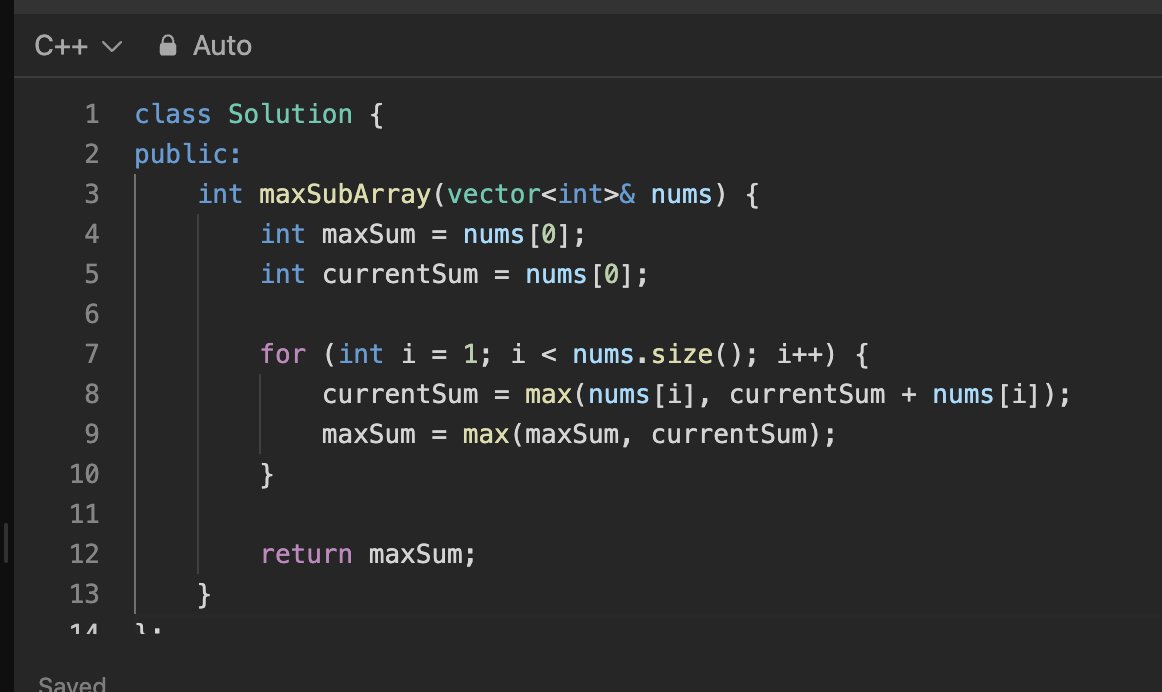
✅ Kadane's Algorithm (Maximum Subarray Sum)
Learned and revised important patterns like counting, prefix minimum tracking, and Kadane's Algorithm for optimising subarray problems.
6
1
49