
Joined March 2026
- Tweets 455
- Following 435
- Followers 335
- Likes 84
80 Photos and videos
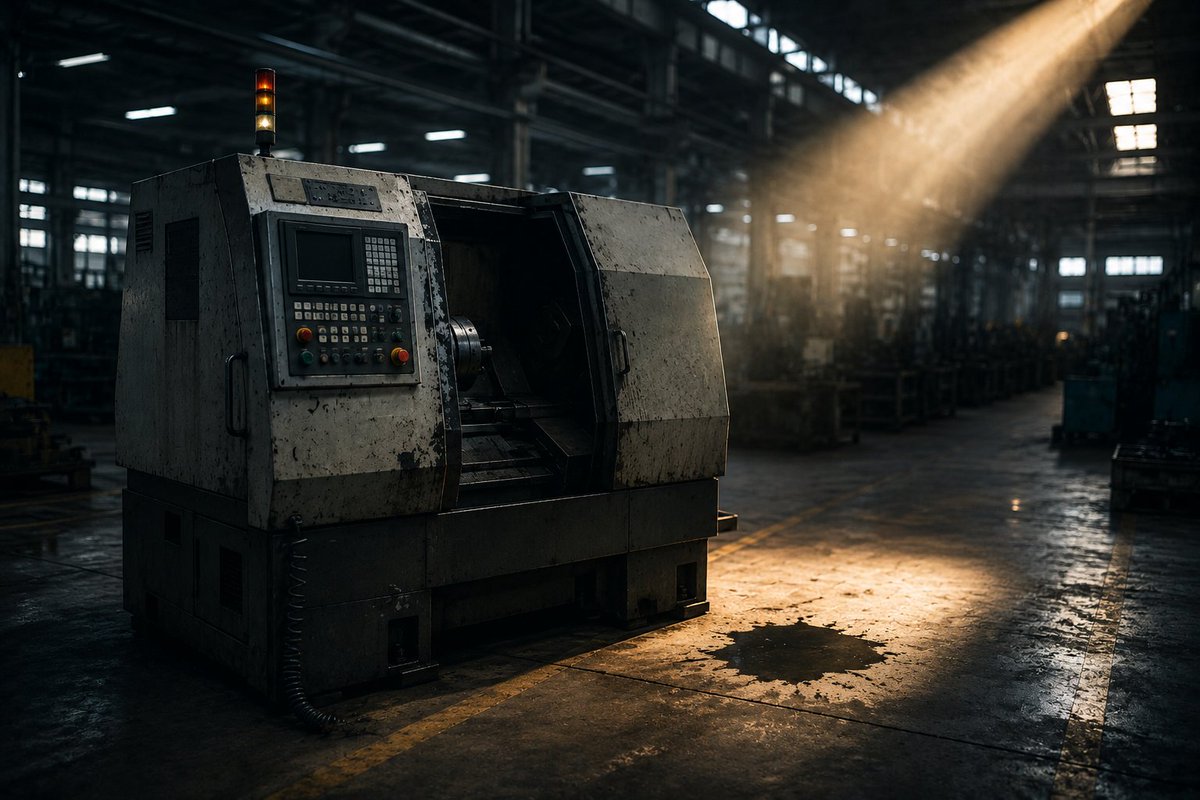
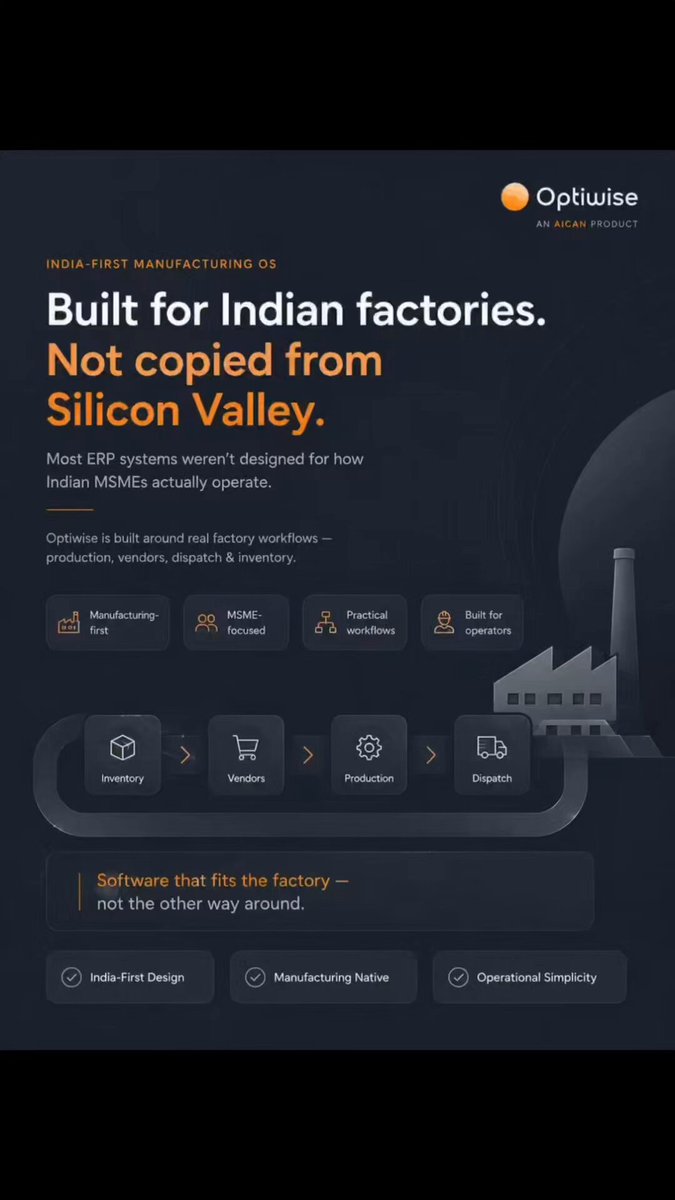
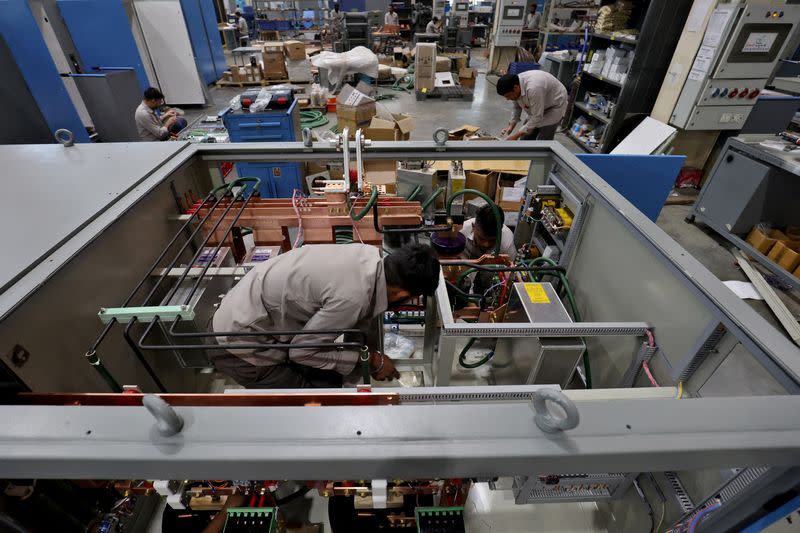
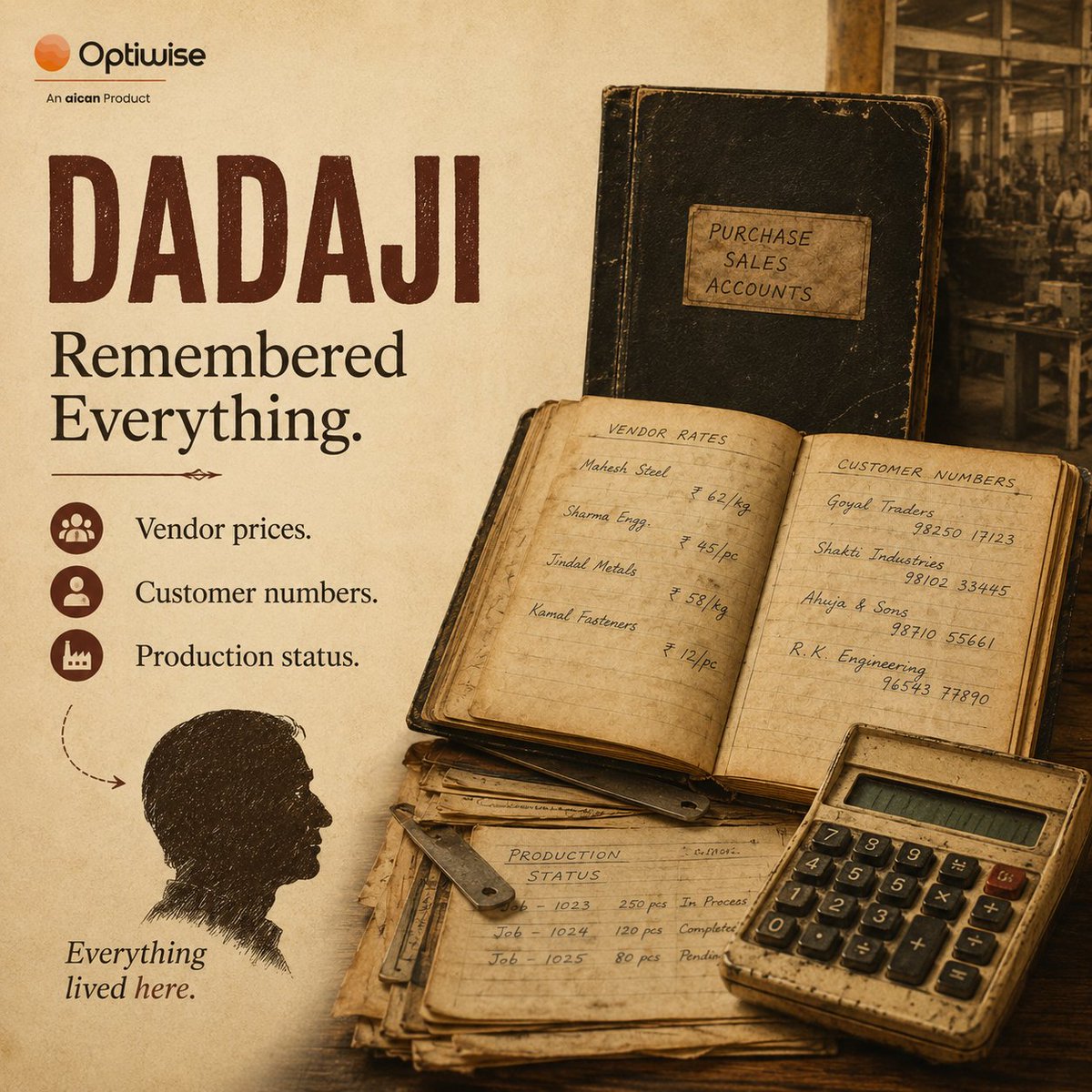
"Machine khada hai."
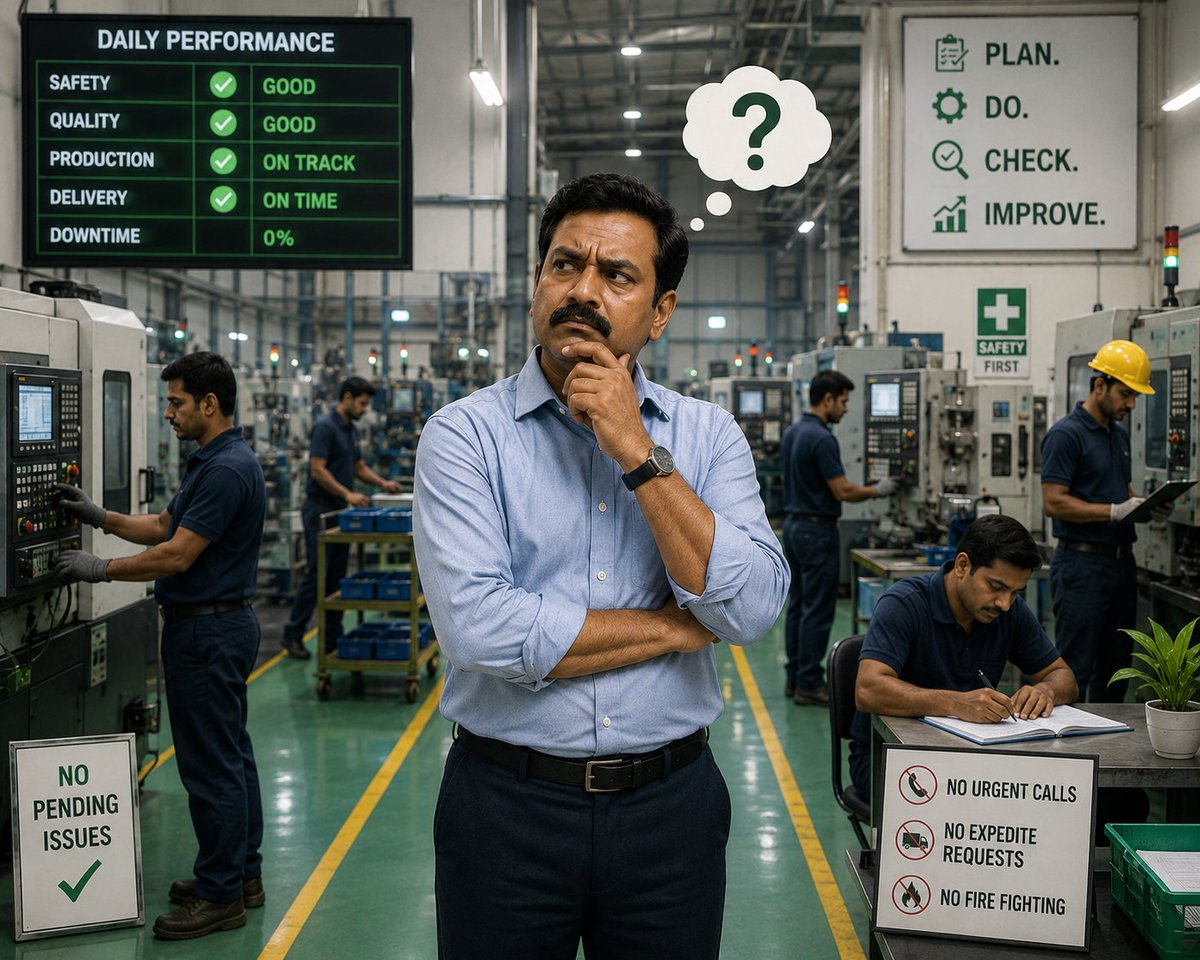
These three words can create more panic in a factory than a customer complaint, vendor delay, or management meeting.
Because idle machines don't just stop production.
They stop money.
19
Vedant Awasthi retweeted

Jun 13
This is big: all access to Mythos and Fable AI models disabled for everyone outside America.
First thoughts:
1. Technology is the ultimate weapon. National sovereignty, national security, all of it is now about technology.
2. Globalization is dead and Bharat must find her own way ahead.
We must keep these two ideas in mind.
What can our government do right now? Ensure that orgs in India embrace smaller models, both Indian and Chinese open source ones. With a bit of effort, we can make them work. Anyway, why pay money to people who don't even want to sell to you?
We must deepen our R&D. Sarvam has been on it and we have been on it but remember that the latest models cost not only huge GPU budgets to train, the GPUs themselves are restricted. So we can't afford the scale of money (of the order of $100 billion to even get in the game!) and even if we could come up with the money, we can't get all the GPUs. I would not like to ask the government to fund tens of billions of dollars on this anyway - the money has far better uses.
Zoho has been pursuing alternative R&D approaches that are far, far less expensive but by its nature cutting edge R&D takes time and we are patient. I am confident we will get there.
Any remaining people in India who have delusions about globalization should wake up now.
Jun 13

The US government, citing national security authorities, has issued an export control directive to suspend all access to Fable 5 and Mythos 5 by any foreign national, whether inside or outside the United States, including foreign national Anthropic employees.
The net effect of this order is that we must abruptly disable Fable 5 and Mythos 5 for all our customers to ensure compliance.
Access to all other Claude models is not affected.
We apologize for this disruption to our customers. We believe this is a misunderstanding and are working to restore access as soon as possible.
Read our full statement: anthropic.com/news/fable-myt…
726
3,169
12,391
1,949,272

Jun 13
Most companies don't have an AI strategy.
They have an AI anxiety problem.
2
1
50
Jun 13
You can see it everywhere.
People aren't implementing AI because they have a plan.
They're implementing AI because they're afraid competitors might.
Fear creates bad decisions.
The companies winning with AI usually start small:
One workflow.
One team.
One problem.
Then scale.
22
Jun 13
One thing I've noticed in many Indian MSMEs:
The problem isn't lack of opportunity.
It's fear of reinvestment.
A factory has a good year.
Cash starts coming in.
And immediately the discussions begin:
• Buy land
• Buy gold
• Buy another property
• Build another floor
Very little goes back into:
• systems
• technology
• process improvement
• capability building
And I understand why.
Physical assets feel safe.
They're visible.
They're tangible.
But here's the irony:
The businesses that grow the fastest often invest in things you can't see.
Better planning.
Better visibility.
Better execution.
Better systems.
The biggest difference between a ₹20 crore factory and a ₹200 crore factory is rarely machinery.
It's usually reinvestment behaviour.
One thinks:
"How do I protect this?"
The other thinks:
"How do I multiply this?"
Where do you think MSMEs should invest more aggressively today?
44
Vedant Awasthi retweeted

Jun 12
Manufacturing done right can employ 10x what the IT industry employees at peak today.
21
76
756
14,468
Jun 12
Indian manufacturers are a different breed 😂
Always expecting the worst.
Always preparing for the worst.
And somehow still optimistic.
Their vocabulary alone deserves a dictionary:
"Jugaad ho jayega."
"Material raste mein hai."
"Machine thoda mood mein nahi hai."
"Customer ko samjha lenge."
"Kal pakka dispatch hai."
Honestly, after handling vendors, customers, labor, inspectors, cash flow, breakdowns and politics daily...
Most factory owners could become excellent politicians.
1
53
Jun 12
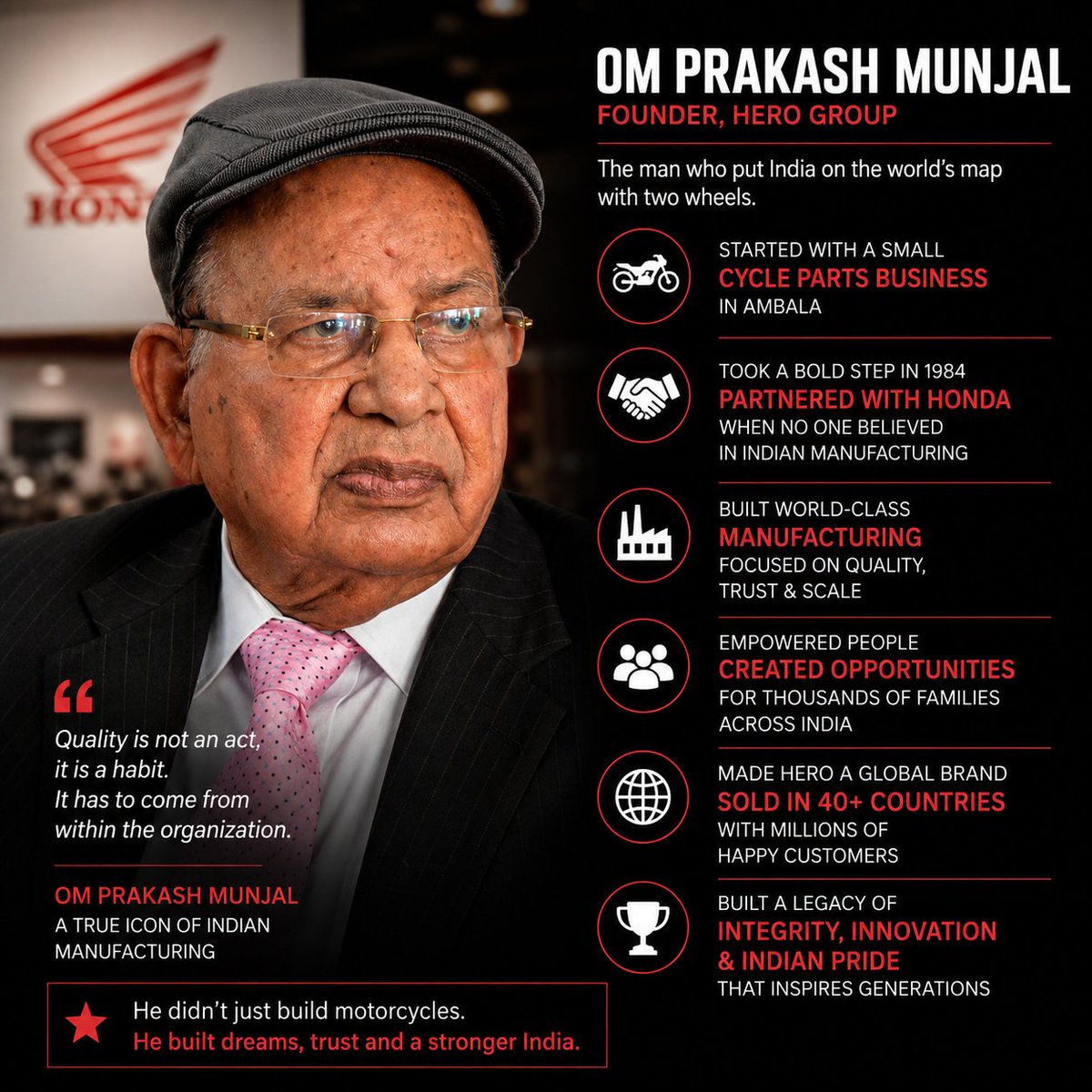
In 1983, India imported bicycles.
Today, India exports them to the world.
A big reason for that is one man:
Om Prakash Munjal.
But this isn't really a story about bicycles.
It's a story about consistency.
When the Munjal brothers started their business after Partition, they didn't have factories.
They didn't have capital.
They didn't have investors.
What they had was a small workshop making bicycle components.
That's it.
No grand vision deck.
No startup ecosystem.
No venture capital.
Just manufacturing.
In the early days, O.P. Munjal had a simple philosophy:
"If you promise delivery on Monday, deliver on Monday."
Sounds obvious.
But in manufacturing, reliability is a superpower.
Especially in a country where delays were considered normal.
While competitors focused on selling more,
Hero focused on something different:
Trust.
Dealers trusted them.
Suppliers trusted them.
Customers trusted them.
And over time, trust became a competitive advantage.
Most founders underestimate how powerful this is.
Everyone wants:
• Better marketing
• Better branding
• Better sales
Very few obsess over reliability.
But reliability compounds.
A dealer who trusts you places larger orders.
A supplier who trusts you gives better credit.
A customer who trusts you stays longer.
Over decades, these small advantages become massive.
Hero didn't become the world's largest bicycle manufacturer because it built the most advanced bicycle.
It became the largest because it built one of the most dependable manufacturing systems.
Day after day.
Year after year.
Decade after decade.
That's the part of manufacturing nobody talks about.
The magic isn't in breakthrough moments.
It's in boring consistency.
Producing quality repeatedly.
Delivering on time repeatedly.
Keeping commitments repeatedly.
Today, many MSMEs are chasing AI, automation, and digital transformation.
And they should.
But none of those replace the fundamental manufacturing principle that built companies like Hero:
Do what you said you would do.
Every single time.
A simple question for factory owners:
Would your customers describe your business as innovative...
or dependable?
Because in manufacturing, the second answer is often worth far more.
1
7
118
Jun 12
The world spent 20 years rewarding pure software.
Now AI is pushing value back into the physical world.
Robotics. Manufacturing. Energy. Defense. Logistics.
The next generation of founders will need to understand reality, not just screens.
Jun 12

The future belongs to people who understand both atoms and bits.
Not just software.
Not just hardware.
Both.
26
Jun 12
The future belongs to people who understand both atoms and bits.
Not just software.
Not just hardware.
Both.
39
Vedant Awasthi retweeted

Jun 11
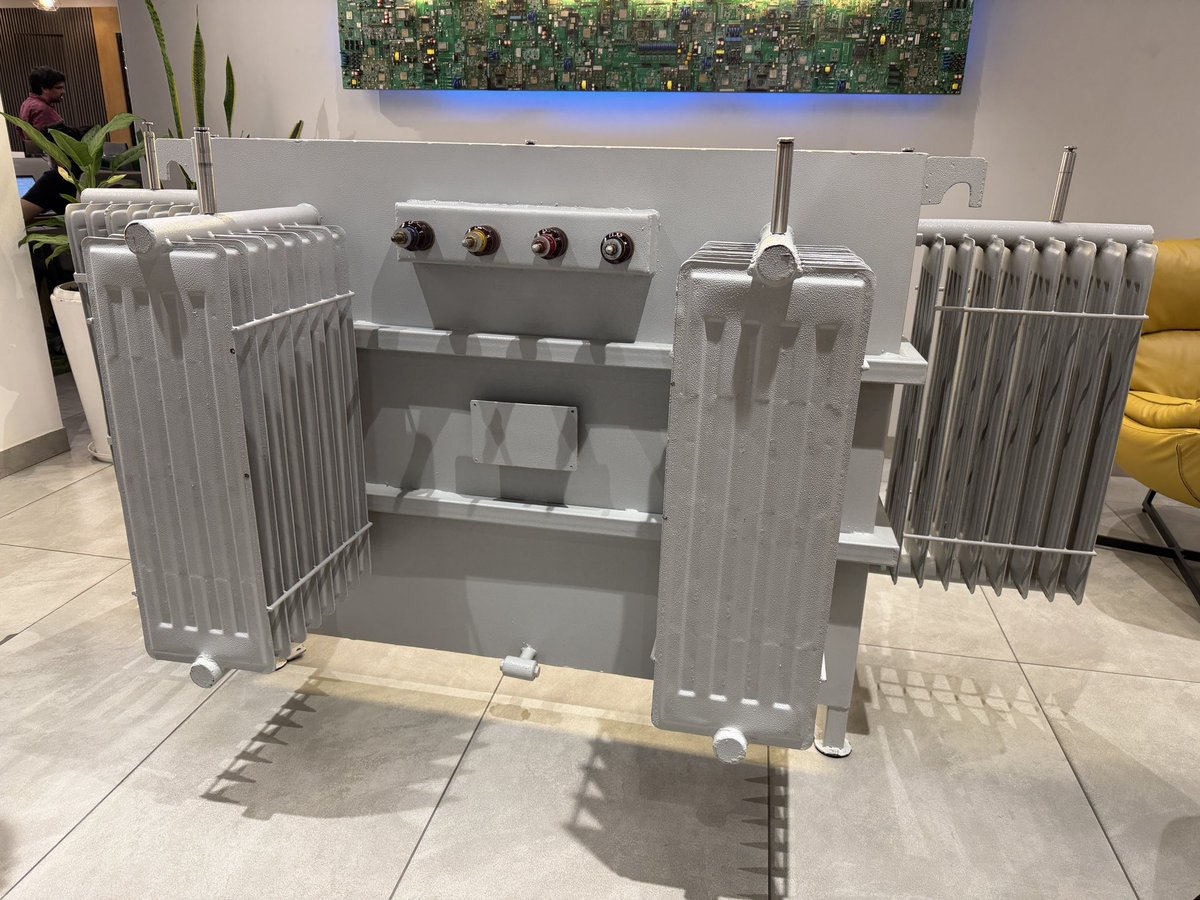
Walked into a hardware startup. The reception table is a transformer. The wall behind it is every PCB they’ve ever made.
No mission statement needed!
19
65
1,234
34,090
Vedant Awasthi retweeted

🚨Precision manufacturing startup Ethereal Machines has closed a $28.5 million Series B round led by Avataar Ventures, with participation from Peak XV Partners, Intel CEO Lip-Bu Tan, and Blume Ventures, as it seeks to expand manufacturing capacity and strengthen India's domestic capabilities in advanced engineering and industrial production.
The fresh capital will be deployed across five priorities, including the construction of a 300,000 sq. ft. manufacturing facility near Bengaluru, development of India's first proprietary multi-axis CNC controller, expansion of its AI-powered factory software platform Vesper, growth in semiconductor manufacturing and global expansion through dedicated teams in the US and Europe.
moneycontrol.com/news/busine…
4
129
628
41,480
Jun 11
Every company loses knowledge when someone leaves.
Processes disappear.
Context disappears.
Relationships disappear.
The companies that capture organizational memory will become incredibly valuable.
AI is becoming the operating system for memory.
20
Jun 11
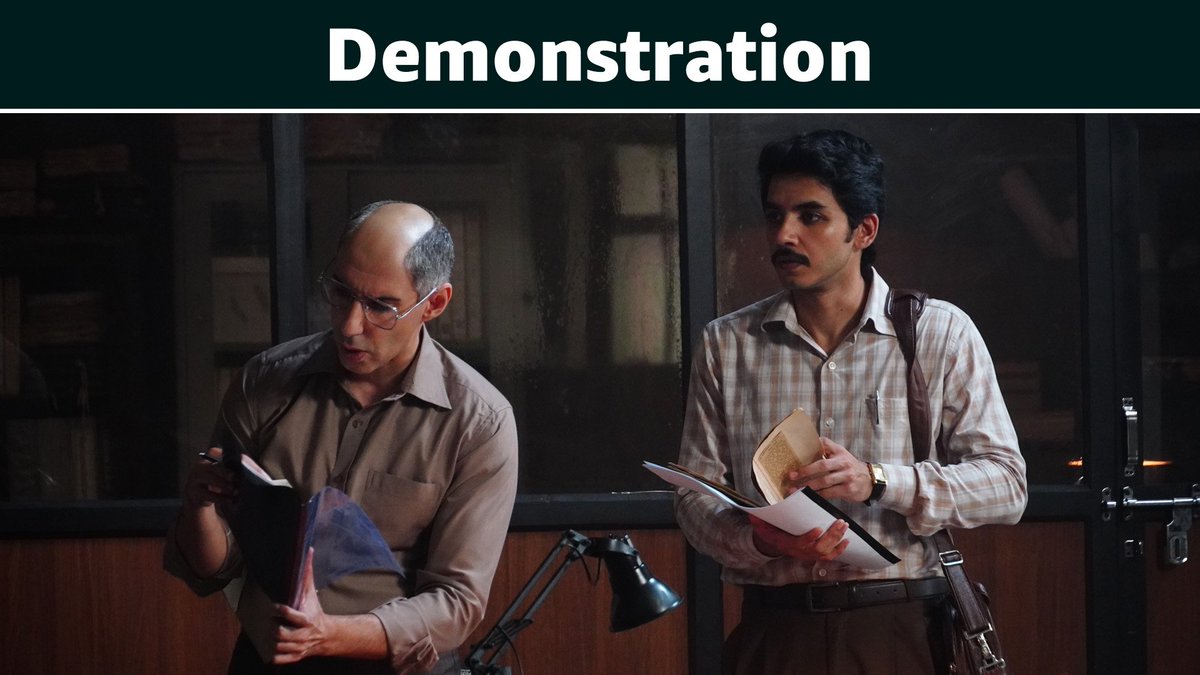
Watched Made in India: A Titan Story this weekend.
One line from the series stayed with me:
"Discussion nahi. Demonstration."
Such a simple concept.
Yet one of the most powerful lessons for entrepreneurs and manufacturers.
Most businesses spend too much time discussing possibilities.
Very few demonstrate outcomes.
I've seen this firsthand while building Optiwise.
Selling an AI-native ERP in India is not easy.
And honestly, it shouldn't be.
For a factory owner, changing systems is a big decision.
The problem is that most software is sold through discussions.
Sales presentations. Feature lists. PowerPoint slides. Future promises.
Everyone discusses what the software can do.
The real problems only appear during implementation.
That's where most projects fail.
Over the years, we've learned something important:
Customers don't need more discussions.
They need demonstrations.
Not just product demos.
Flow demonstrations.
Show them:
how planning will happen
how purchase will work
how production will be tracked
where bottlenecks will come
what will change for operators
what will change for management
The moment people can visualize their actual operations inside a system, decisions become much easier.
And surprisingly, many times we ourselves realize that we're not the right fit.
Which saves months of frustration for both sides.
This principle applies far beyond software.
In manufacturing, in sales, in leadership, in product building.
People rarely believe what you say.
They believe what you show.
Discussion creates interest.
Demonstration creates conviction.
52
Vedant Awasthi retweeted

Jun 10
India's manufacturing gap is not a skills problem.
Walk into any industrial cluster in Rajkot/Ludhiana & you'll find people doing precision work that would impress any global OEM.
The gap is in who we decide deserves capital, recognition, and a path to scale & it wasn't them.
2
3
10
160
Vedant Awasthi retweeted
Jun 9
The most underrated skill in hardware is knowing when the product is ready for the real world & when it isn't.
Shipping too early destroys trust that takes years to rebuild. Too late means someone else defines the category.
And that judgment is earned only through iteration.
1
1
7
140
Jun 10
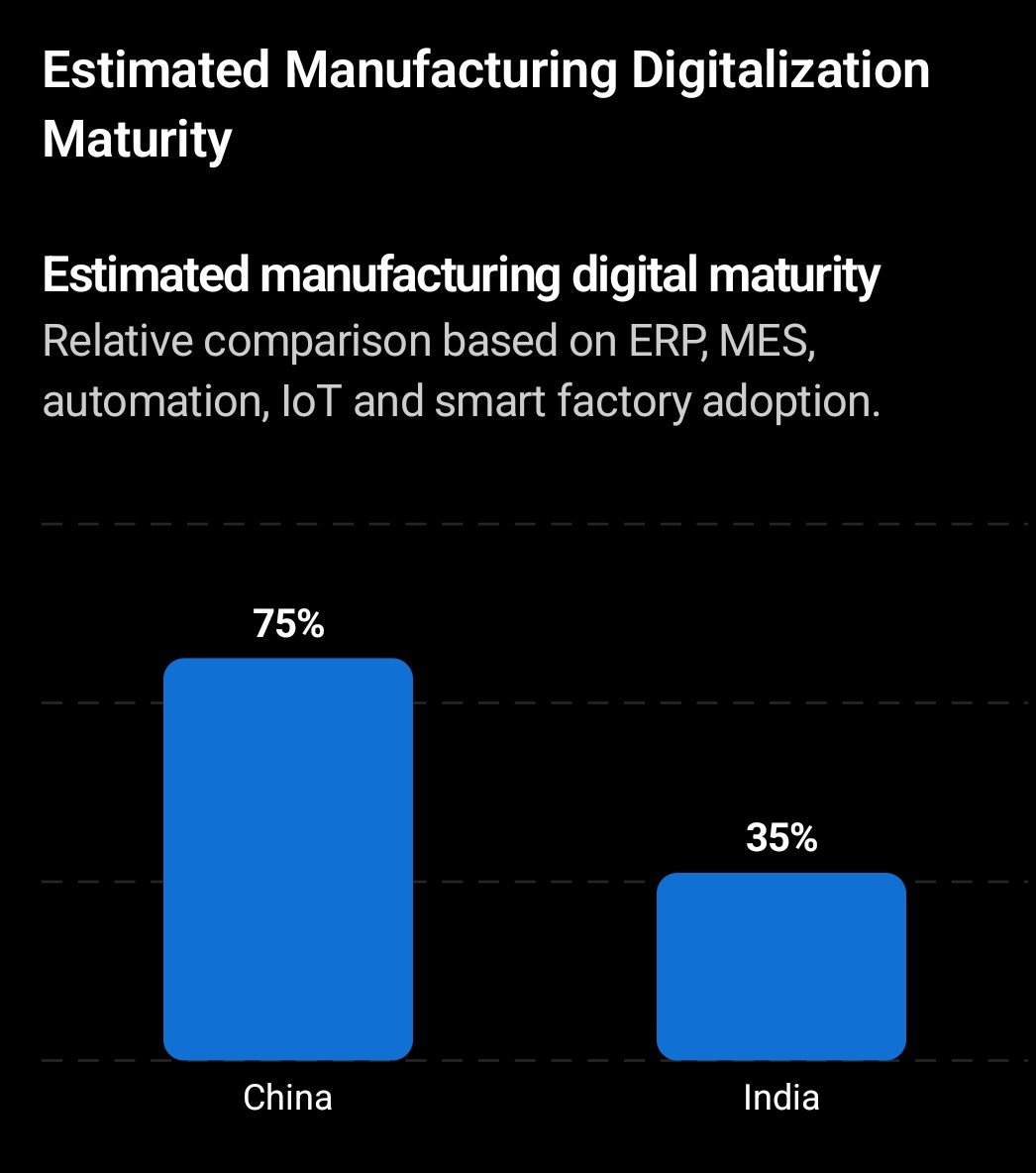
The biggest manufacturing lesson I learned wasn't in India.
It was in China.
What surprised me wasn't the technology.
It wasn't robots.
It wasn't AI.
It was operational discipline.
Even relatively small factories had:
• live visibility
• digital records
• clear processes
• predictable execution
Nothing looked revolutionary.
But everything worked.
And that's the part most people miss.
Manufacturing competitiveness is rarely built through breakthroughs.
It's built through consistency.
India has incredible entrepreneurs.
Incredible engineers.
Incredible operators.
What we're missing is systems.
Not everywhere.
But at scale.
Imagine what happens when millions of MSMEs stop operating through WhatsApp groups, memory, and follow-ups.
Imagine if every factory owner could spend more time improving the business than chasing updates.
That's the opportunity.
Not just for Optiwise.
For Indian manufacturing itself.
The next decade won't belong to factories with the cheapest labor.
It will belong to factories with the fastest decision-making.
Do you think Indian manufacturing can close that gap within 10 years?
1
1
49
Jun 10
Copying Western systems won't cut it. China succeeded because they built infrastructure tailored strictly to their own geography and resource realities.
India has a completely unique landscape—literally and figuratively. Borrowed blueprints won't solve homegrown challenges. We need ground-up, indigenous systems built specifically for our context. 🇮🇳
#aicanoptiwise
#AtmanirbharBharat #TechSovereignty #Growth
2
2
67
Jun 9
Many people still think China wins because labor is cheaper.
That was true years ago.
Today, factories win because decisions happen faster.
Problems are identified faster.
Suppliers respond faster.
Production changes happen faster.
Speed compounds.
Jun 9
China's manufacturing advantage isn't labor.
It's decision speed.
48
Jun 9
China's manufacturing advantage isn't labor.
It's decision speed.
79