
Calling for an end to institutional discrimination against women in CofE which is unjust, untrue to the Gospel & unsafe. womenandthechurch.org/.
Joined June 2012
- Tweets 6,067
- Following 5,896
- Followers 7,589
- Likes 2,862
479 Photos and videos





Pinned Tweet

Do you want a #BishopofLondon who views & treats men & women as equals?
Or do you want one whose position is that women should be under the authority of men?
The latter cd happen, & only public opinion can stop it now.
Please sign & share the petition:
change.org/p/a-petition-conc…
3
3
781
Interesting story in Normal Women by @PhilippaGBooks when she says that the Bishop of Bath & Wells authorised women in the Catholic Church in England in 14thC to act as priests. This was during the Black Death, of course, when a man might not be available to give the last rites.
1
3
15
1,959
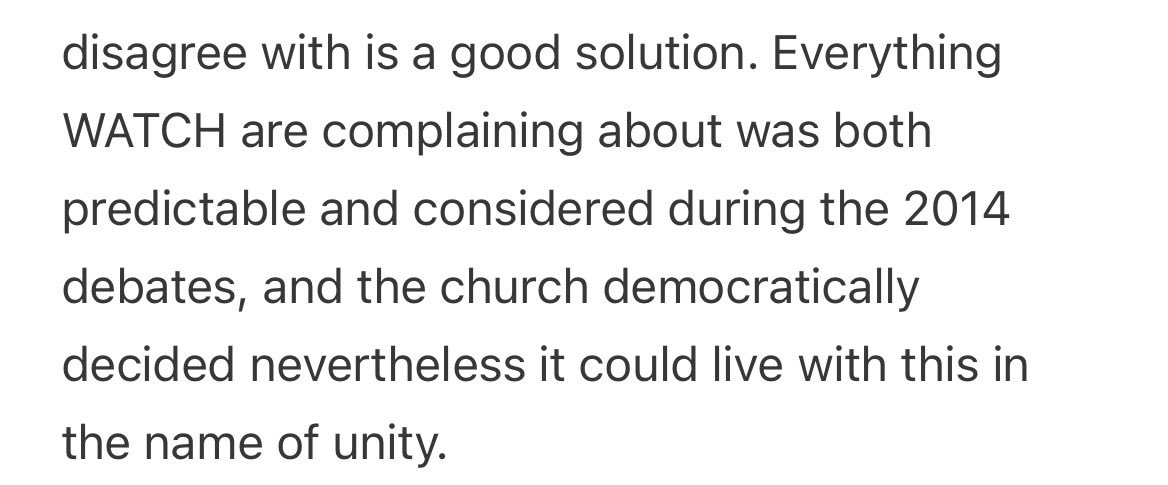
Tim Wyatt in his Critical Friend blog is incorrect, ignoring what we’ve >>>repeatedly>>>> pointed out:
the terms of the 2014 settlement
have not been observed.
We are ‘complaining’ about it.
It was not predictable.
1
1
609
Read Michael Hampson’s encouraging blog about misogyny in Bible translation.
womenandthechurch.org/blog
2
2
543
Women and the Church retweeted

May 12
Come to Women's Voices Conference this Thursday In Liverpool - tickettailor.com/events/wome… - and hear my speech:

1
1
2
265
Women and the Church retweeted
May 11
I'll be speaking at the Women's Voices conference this year in Liverpool on Thurs 14 May on what it means to be Christian and female today. Headline speaker is @TauntonBish, Interim Bishop of Liverpool Ruth Worsley. You can get tix here: tickettailor.com/events/wome…
1
4
298
Let's not sleepwalk into having a Bishop of London who does not ordain women. Please, men and women, sign this petition to say we don't want this. c.org/nq7StfSPV9
2
1
260
‘real change was never polite’ - thanks for the reminder @nakedpastor Please risk not being polite by signing this petition and saying no a bishop of London who doesn’t ordain women c.org/9SYPKFYLcy

People love celebrating historic protests while ignoring that real change was never polite. Civil rights, anti-apartheid, justice movements… they all required people willing to make noise, cause waves, and disrupt the status quo.

1
1
363
Women and the Church retweeted
Do you want a #BishopofLondon who views & treats men & women as equals?
Or do you want one whose position is that women should be under the authority of men?
The latter cd happen, & only public opinion can stop it now.
Please sign & share the petition:
change.org/p/a-petition-conc…
3
3
781
Women and the Church retweeted

May 4
🎧Podcast: @LucySixsmith talks to @MadsDavies about 'When the Music Fades: Power, surrender and the Soul Survivor generation'
Listen on our website 👇
Or on your preferred platform at: pod.fo/e/40b103
churchtimes.co.uk/articles/2…
4
7
685
Women and the Church retweeted

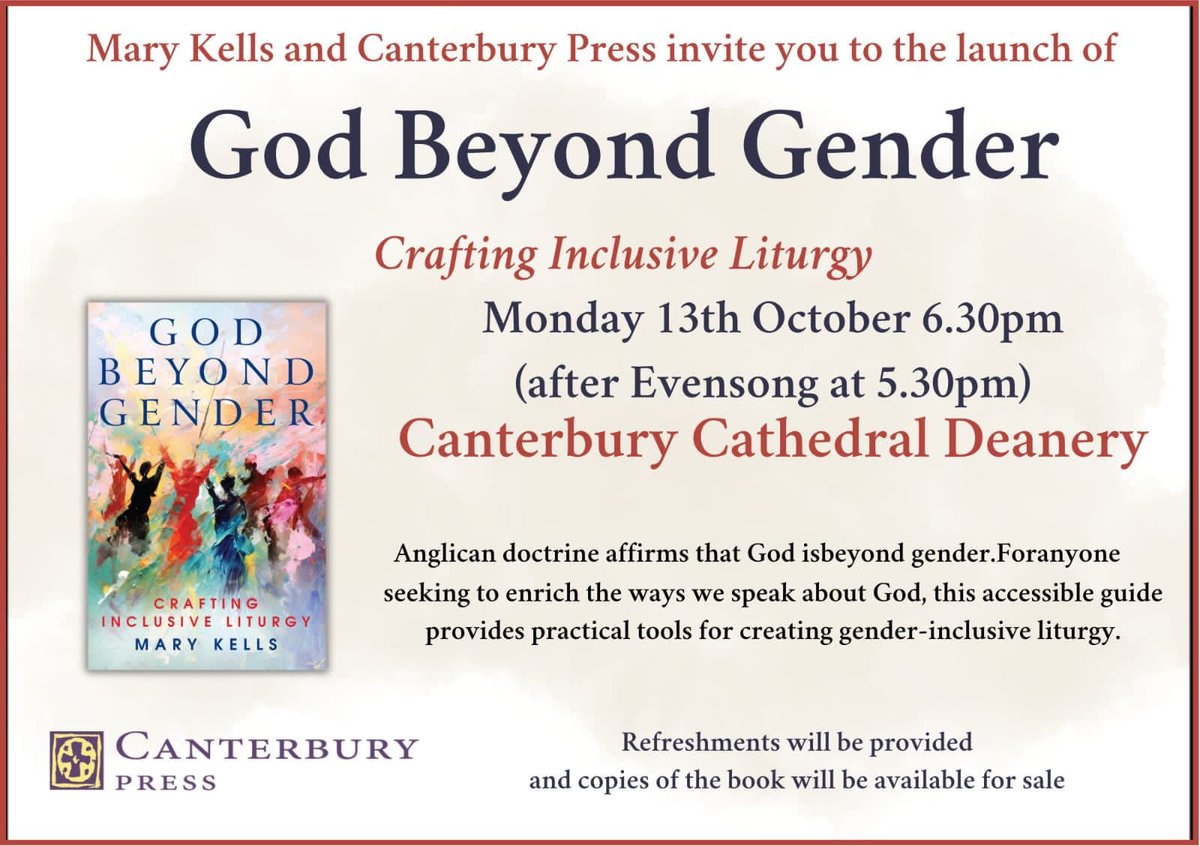
Pre-order here canterburypress.hymnsam.co.u….
Published end of May.
Book launches June/July - details to follow

1
4
7
477
3
1
5
5,507
Is it possible that a man cd be made #BishopofLondon who opposes equality for women in the @churchofengland
when #MutualFlourishing is known,
despite the omertà, to have been one sided, & leaders haven’t implemented the review recommendations which wd be a minimal precondition.

Let's have a Bishop of London who ordains women and accepts the spiritual authority of our archbishop of Canterbury - please, Anglicans, sign this petition to say this is what we want for the biggest diocese in our country c.org/y6TgNJ9QMY
2
4
5,537
Women and the Church retweeted

Apr 30
Christianity and patriarchy do not mix.
3
6
375
Apr 29

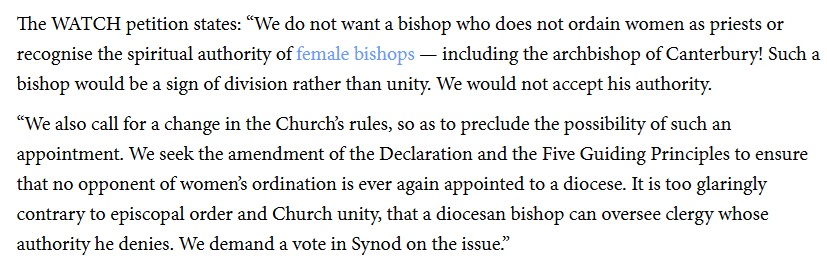
A petition calling for a bar on the appointment of diocesan bishops who do not accept the ordination of women has been launched by Women and the Church (WATCH).
churchtimes.co.uk/articles/2…
1
687
Men! This isn’t just a women’s thing. Please sign to say you don’t want a bishop of London who doesn’t ordain women or accept the authority of our archbishop of C change.org/p/a-petition-conc…
1
4
510
Let's have a Bishop of London who ordains women and accepts the spiritual authority of our archbishop of Canterbury - please, Anglicans, sign this petition to say this is what we want for the biggest diocese in our country c.org/y6TgNJ9QMY
1
3
6
2,431
Women and the Church retweeted
Apr 24
A petition concerning the next bishop of London - please help ensure that we have a bishop who ordains women c.org/78gyTPWpFc via @UKChange
1
1
374
Women and the Church retweeted

Many conversations about change @churchofengland focus on “mindset”, “structure” or “culture.” But if we examine how preferment actually works, we see that “advancement” depends on being recognised and affirmed by those already in authority.
Over time, that creates a quiet but powerful signal: Be supportive. Be safe. Don’t push too hard. No one has to say it explicitly. People just learn it. It creates at its absolute worst a culture of sycophancy.
Over time those learned behaviors take on the feeling of wisdom, “good judgement,” and “faithfulness” and the barometer of the “orthodoxy” required of those who will lead in the next generation. Then those same people become the ones discerning and selecting this next generation too…..
So the system doesn’t just reward certain behaviours but it also it reproduces them.
As @MartynPercy argues in this incisive article that is not necessarily because anyone intends it to, but because the installation (structures, incentives, expectations) shapes how people think and act within it.
Moments of leadership transition, like the installation of a new Archbishop, often raise hopes for change. But installation theory poses a much harder question:
What if the deeper issue isn’t the individual, but the system they inherit and operate within?
That has real implications for how the Church responds to:
• safeguarding and abuse
• whose voices are heard or sidelined
• and how questions of fuller inclusion are handled
If the underlying conditions don’t change, the outcomes probably won’t either and it really doesn’t matter who is in post.
For a deeper exploration of this idea, this article is well worth reading: New Installation, Same Old Problems | Journal of Anglican Studies | Cambridge Core
2
2
2
1,202
Women and the Church retweeted

Mar 29
Ah yes, the Timothites who think a specific instruction to a specific church about a specific issue is more important than anything else in the Bible when it comes to women serving in the clergy.
1
1
523