
Head of Professional Services at Semrush. Former Disney, LinkedIn, Idealab. SEO / Digital Marketing. ⚾️Padres 🏈⚡️Chargers ✌Trojans ⚽️USA 🇺🇸
Joined April 2008
- Tweets 1,649
- Following 1,837
- Followers 1,188
- Likes 14,043
37 Photos and videos







William Sears retweeted

14 Apr 2025
Stronger together 🐘
Elephants have the unique ability to feel sounds through their feet and formed an "alert circle" during the 5.2 magnitude earthquake that shook Southern California this morning. This behavior is a natural response to perceived threats to protect the herd.
137
1,083
5,375
311,812
William Sears retweeted

9 Mar 2025
Solid game yesterday. Went 3 for 3, with a triple and two singles, driving in 2 runs. Also drew a walk. 5-1 win over Providence. @The_CAAdvantage @CAARainel10 @LorasBaseball
1
4
347
William Sears retweeted

21 Feb 2025
"I always hesitate to bring my political beliefs into this space. I don’t think my listeners would expect that from me and some of you will find it disappointing: not what you were looking for... "
[1 of 2]

4,935
10,499
52,682
2,420,499
William Sears retweeted
1 Oct 2024
Some swings from the Arizona fall classic this past weekend. 4-10 during the event with a couple stolen bases. Played really solid defense at shortstop as well . @CAARainel10 @GBGbaseballUSA
1
2
5
736
William Sears retweeted

25 Jul 2024
GBG NAVY 2025 - Skyler Sears - IF - 2025. Lean build. Moves well. Looks to catch FB out front. Tight barrel turn.
3
5
1,295

27 Jul 2024
If you have ADD 🙋🏻♂️ dealing with customer service via chat when the other side is slow to respond is a STRUGGLE.
2
117
5 Jun 2024
Huge congratulations to @marcustober and his team at @semrush on the launch of Semrush Enterprise! A ton of brains and hard work resulting in a huge leap forward for large business SEO.
businesswire.com/news/home/2…
1
2
211
William Sears retweeted

4 Jun 2024
I want to give a big shout out to my guy @dejanseo who was my anonymous source for the algo docs leak.
He found them weeks before us and even got a Google Bug Bounty for turning the leak in.
Here's his story in own words:
dejanmarketing.com/i-have-on…
27
49
258
43,079
William Sears retweeted

26 May 2024
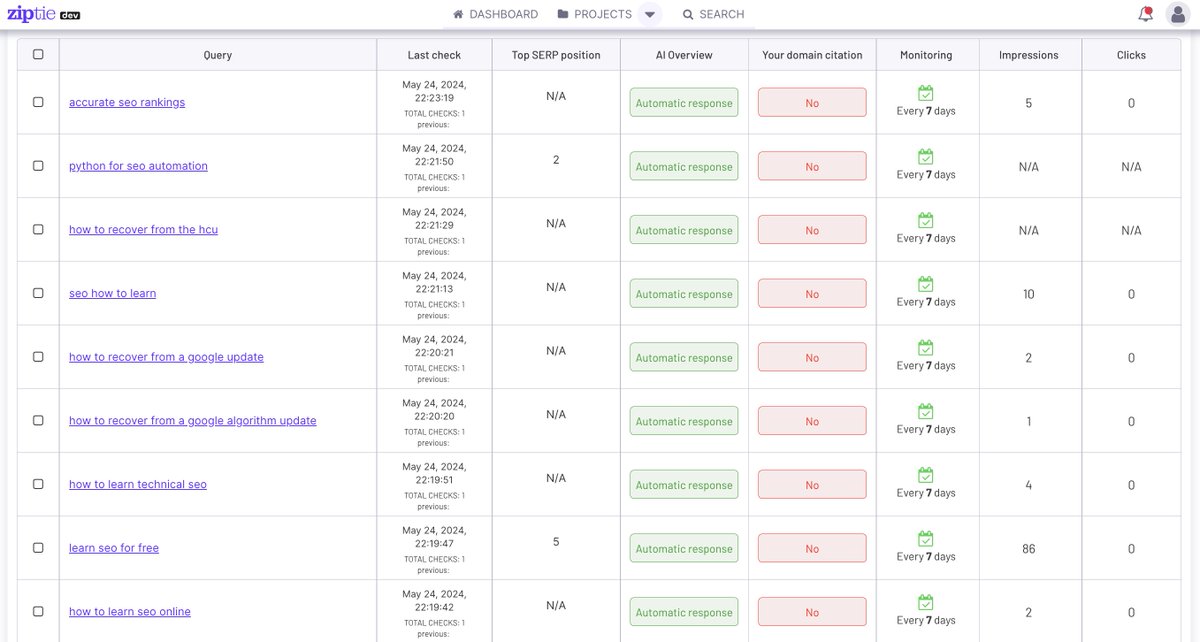
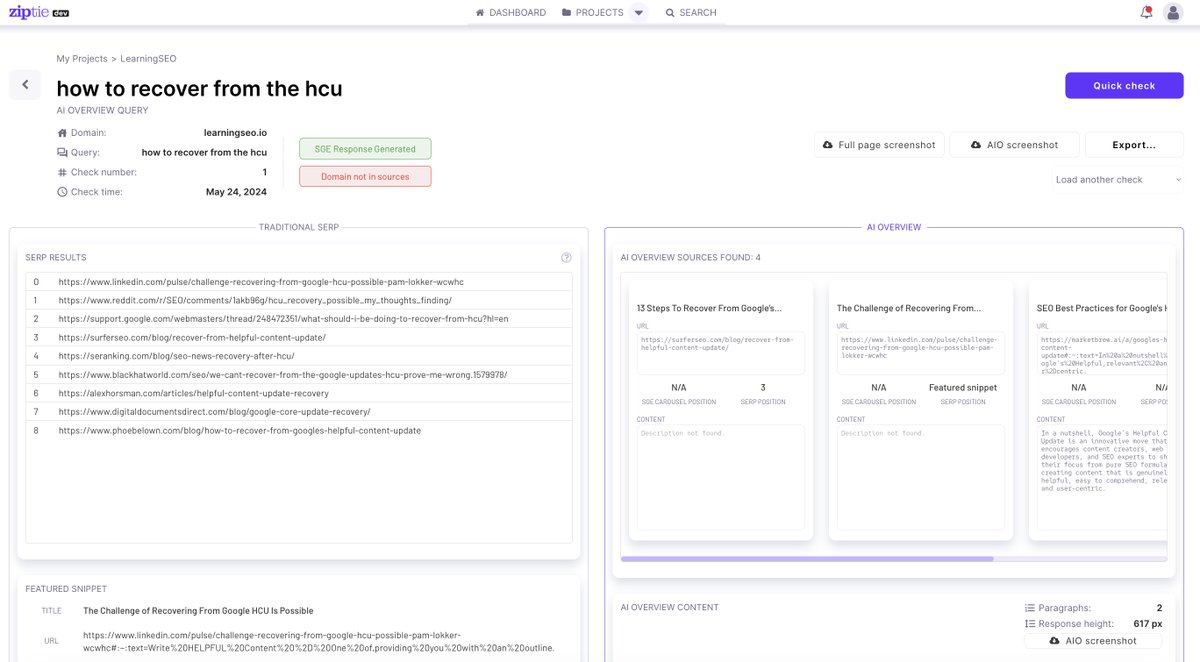
Which of all of your site's queries actually trigger AI Overviews? @ziptiedev actually allows you to identify them in bulk! Just take a look at the screenshots 👀 They have a free trial, check it out: ziptie.dev/
PS: ZipTie is the work of the awesome @TomekRudzki & @bart_goralewicz 👏

2
11
37
5,510
24 May 2024
RT @Hobo_Web: Hobo SC (beta) is now out. It's Search Console in Sheets for SEO audits, basically.
If you want a FREE limited copy to test…
138
17 May 2024
. @aleyda When they say “No action is needed for publishers to benefit from AI Overviews.” I think they mean to say “No action is needed for publishers to get screwed by AI Overviews.”
17 May 2024

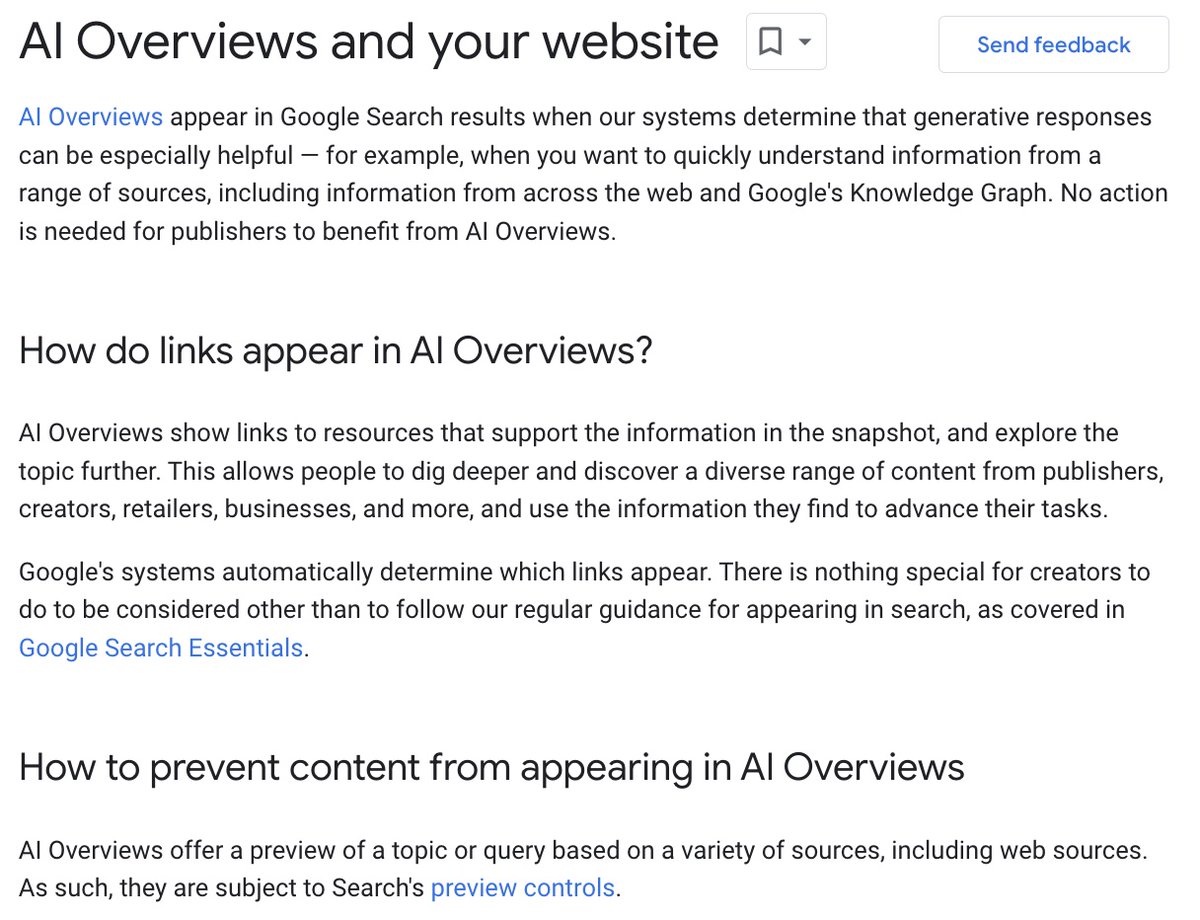
New Google's AI Overviews Documentation in @googlesearchc 👀👇
* AI Overviews appear in Search results when Google's systems determine that generative responses can be especially helpful when you want to quickly understand information from a range of sources.. including from across the web and Google's Knowledge Graph.
* No action is needed for publishers to benefit from AI Overviews.
* Google's systems automatically determine which links appear. There is nothing special for creators to do.
* AI Overviews offer a preview of a topic or query based on a variety of sources.. they are subject to Search's preview controls (nosnippet)
More: developers.google.com/search…
/ht @martinibuster
2
212
12 May 2024
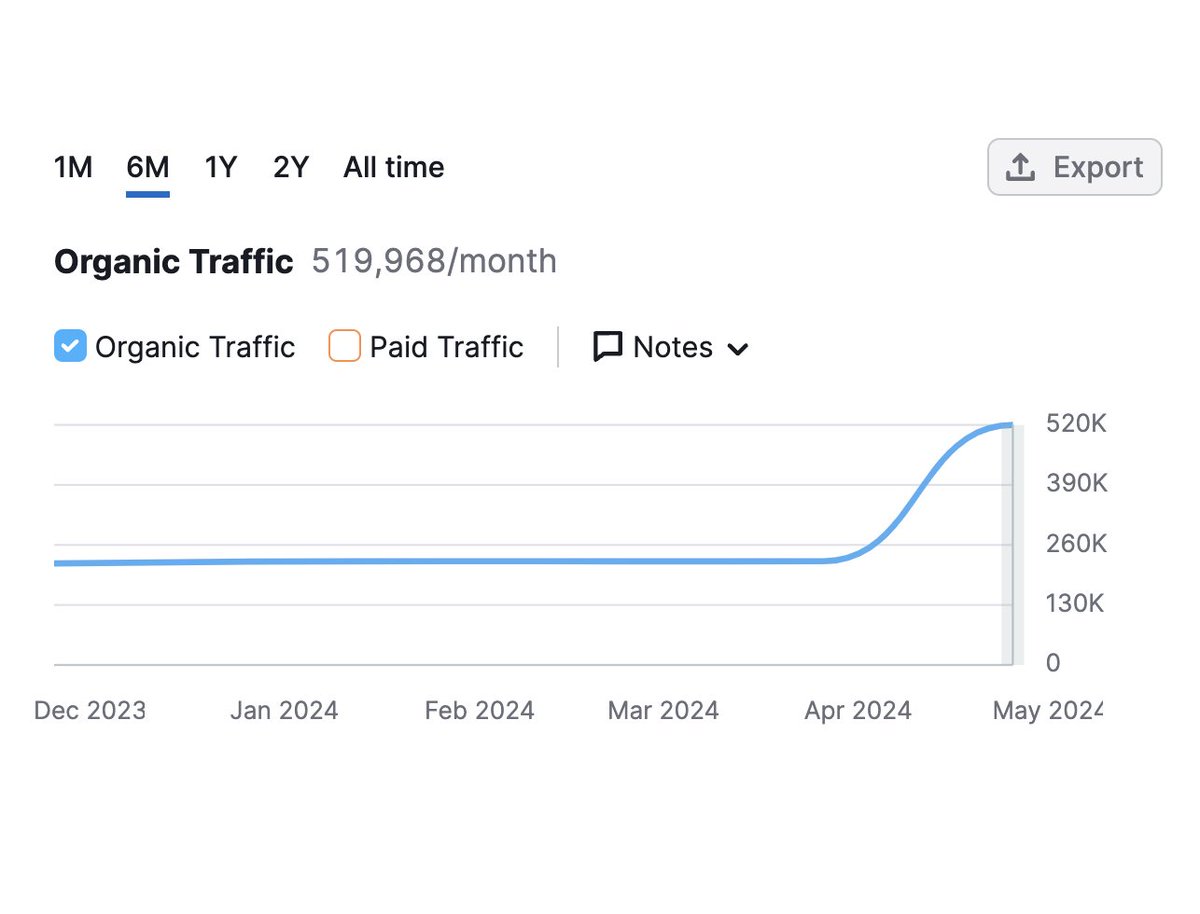
.@brodieseo I’m happy for your client that there was a recovery. 📈
Google would tell you today (as they will always tell you) that today’s algo is better than yesterday’s—they are “always improving”.
So if today’s algo is better than yesterday’s, that implies that yesterday was worse than today. If today (the latest data point in your graph) is more or less the same as it was some time ago (about spring of 2020, from what I see in your graph), it is in some sense a reversion. (I realize that under the hood much will have changed with the algo over that stretch, but the net result seems to be equivalent in traffic.)
Now if your site is actually substantially better now than it was when it was “punished” (for roughly two years, it looks like), then fine.
But I’ve seen plenty of sites get punished by an algo update, but then—without any material change to the website—recover completely months down the road. So the same website was punished for months by what Google would now acknowledge was an inferior algorithm (since today’s is better). 📉📈
So in those cases, what infuriates me is the (sometimes MASSIVE) damage to the business during the period of time Google’s algo was admittedly “worse” than it is today, and, from the net effect, worse than it was two years ago. Traffic crushed, revenue lost, jobs eliminated, projects abandoned, business shuttered by an "evolution" in the algo that was worse than it was and, supposedly worse than what we have today. 📉🤯
9 May 2024

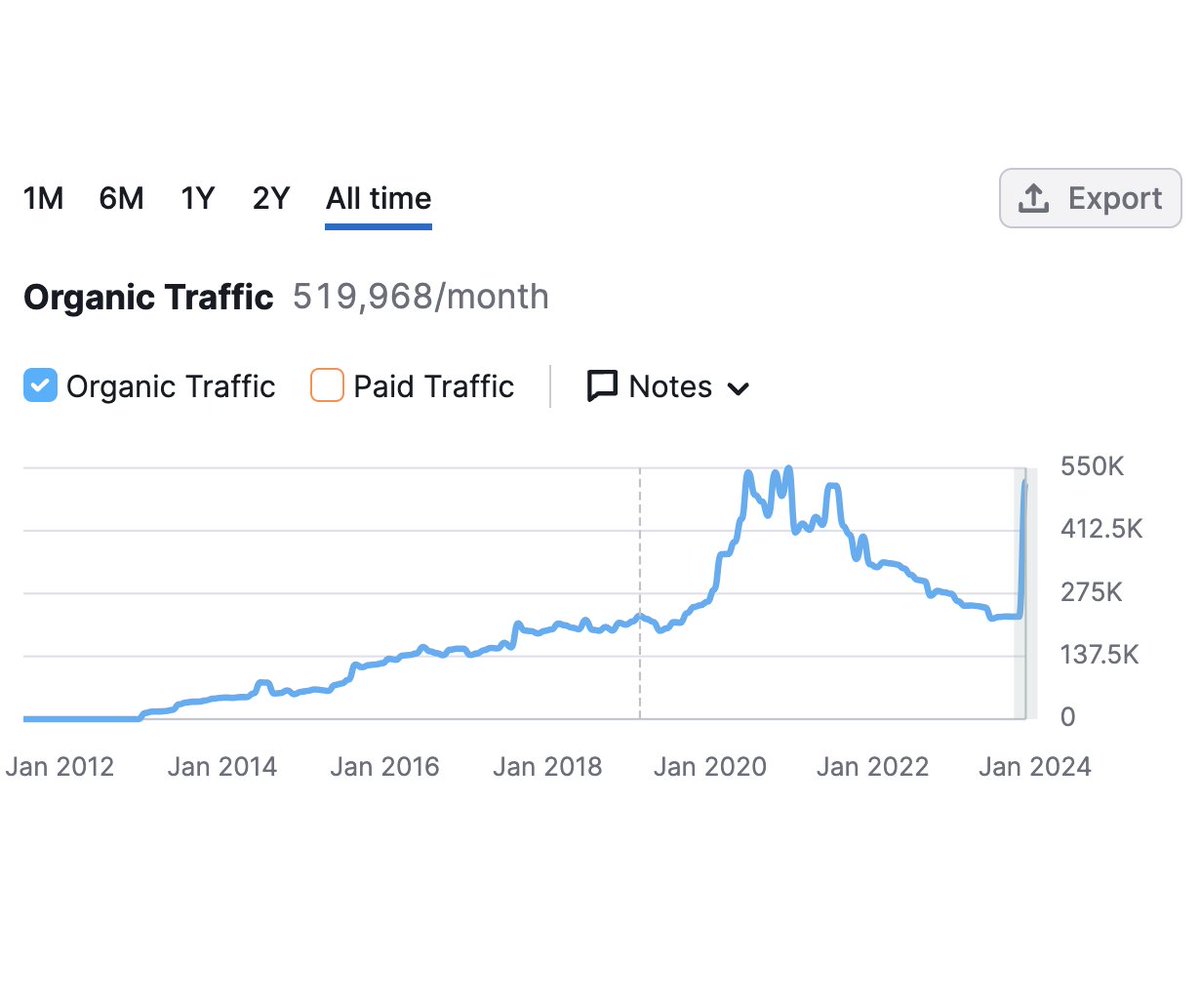
OK, screenshot proof of the change. Household name eCommerce brand in Australia. Complete recovery in rankings, back to #1 for most important queries. Was in a meeting at their head office when this hit – we were all in shock. This feels deserved based on the work we've put in.
9
1,127
William Sears retweeted
8 May 2024
New post from the king on @screamingfrog's new custom JavaScript extractions why it's a game changer for SEO
I give you: Vector Embeddings Is All You Need
ipullrank.com/vector-embeddi…
9
51
174
40,427
8 May 2024
I’ve heard people defending the bolt-on coupon subdomains from publishers (like LA Times/CNN/etc, who don’t have any editorial oversight/contribution to the coupon section) by saying that (paper) newspapers have long distributed coupons.
The difference, in my view, is that in the old school approach, the coupon distributors were paying for reach with the **newspaper’s** audience. This online approach is a gambit where the coupon publisher is paying for **Google’s** audience via exploitation of the news publisher’s domain authority. Big difference.
It’s not like the coupon provider approached LA Times hoping that LA Times users would navigate over to the coupon section in any significant number. This has always been purely a play to exploit for the rankings boost to get more of Google’s audience.
Heck, back then, the coupon provider was paying for the distribution of the coupons. The paper coupons would be delivered to driveways via the newspaper’s paperboys. But nowadays, these digital coupon directories are not even hosted by the publisher. It’s simply a DNS entry to point the hostname to the coupon provider’s servers.
So equating coupons.{publisher}.com to an insert of paper coupons thrown into newspaper subscriber’s driveways is far from an apples to apples comparison.
I hear the argument that if the content is good, it’s good, irrespective of where it is hosted. Probably the best solution is simply for search engines to de-value the signal boost from the association with the host website (unless the host is actively creating and managing the content), and evaluate the coupon (or whatever) directory/subdomain on its own merits solely.
@Marie_Haynes @lilyraynyc @rustybrick @searchliaison
5
4
14
3,314
William Sears retweeted
28 Apr 2024
2 hard hit balls in our last game of the season against Oxnard. Including a game tying ground rule double in the 6th. @gvhs_baseball @CAARainel10 @The_CAAdvantage
1
4
7
878
William Sears retweeted
30 Mar 2024
2 hits in our series against canyon including a double off the center field wall @CAARainel10 @The_CAAdvantage @gvhs_baseball
2
8
1,002
William Sears retweeted

24 Feb 2024
Another interesting ‘25 SS Skyler Sears from Golden Valley HS @SkylerSears5
5’11 175 lbs
Good swing w/feel for barrel
Collected 2 hits (one off Schneider)
BB
On time w/good approach
Solid defender who can stick on dirt
Solid overall skill set
@PrepBaseballCA
1
4
9
4,146
5 Feb 2024
.@Pechnet I like your bio! Made me feel old though, as I can flex that I’ve been online since my Novation AppleCat II 300 baud modem. The AppleCat was the Ferrari of modem cards for your Apple ][ . It could do 1,200 baud in half duplex!
1
1
176
William Sears retweeted

15 Nov 2023
Padres pitcher Yu Darvish and his wife pays their respects to Padres owner Peter Seidler at a public memorial at Petco Park Tuesday afternoon.

19
299
3,445
735,827
William Sears retweeted

14 Oct 2023
The world needs to know: we are at war with Hamas, NOT the people of Gaza.
5,737
10,238
35,989
3,578,645