
Helping STEM students win grad school admits & job offers • SoP, CVs, Interviews made easy • Academic scientist & mentor
Joined August 2019
- Tweets 871
- Following 89
- Followers 197
- Likes 87
40 Photos and videos

Pinned Tweet

18 Mar 2024
Hello, I'm Waleed, but most people call me Timber.
I'm currently in my final year of Ph.D. studies.
What I do:
1- Assist students with graduate school applications, by helping them to:
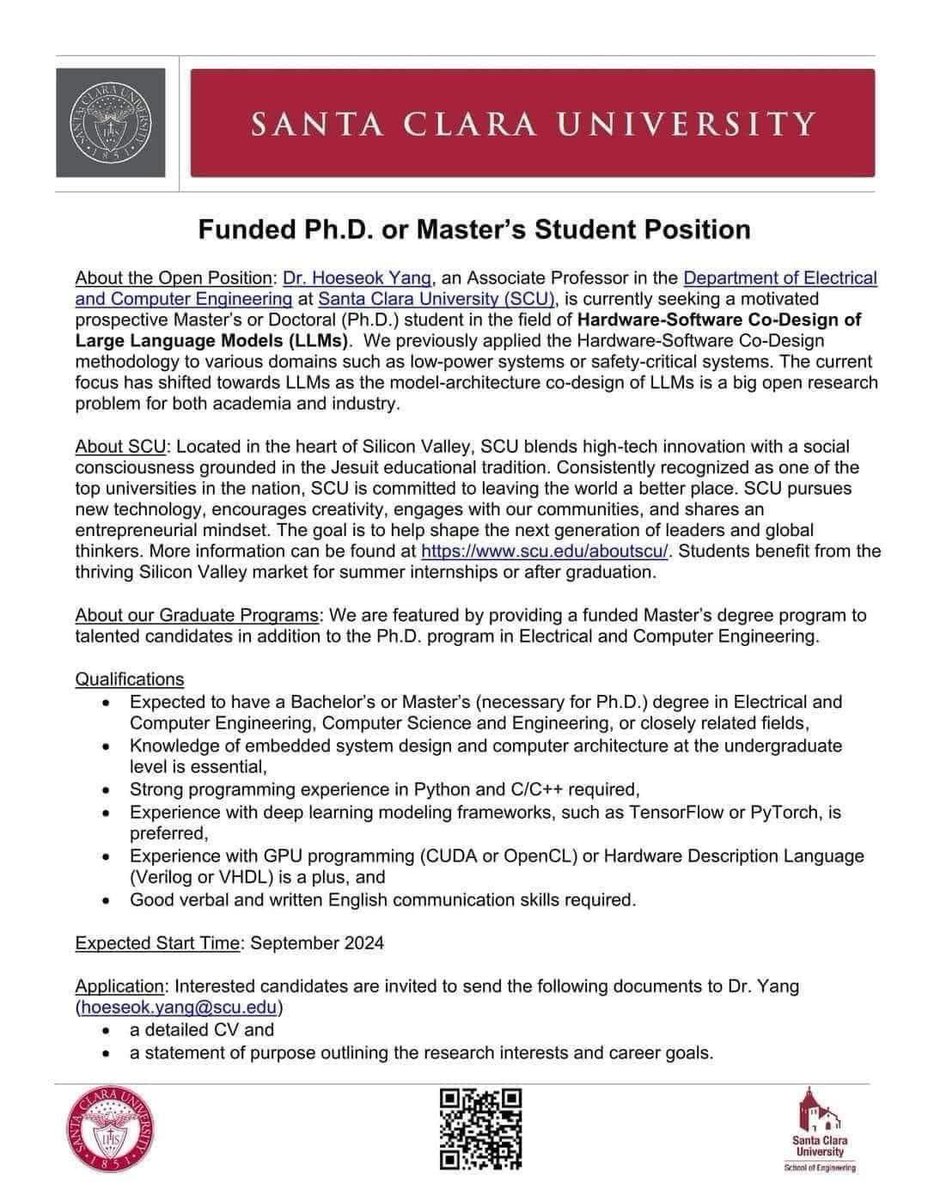
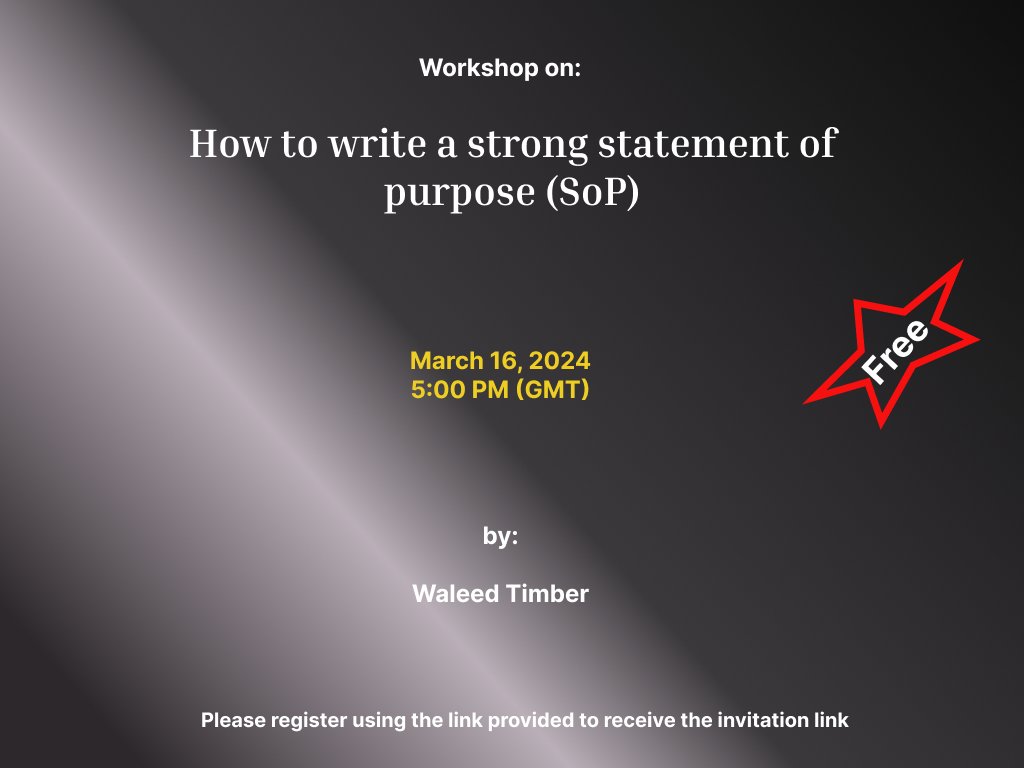
* Craft compelling Statements of Purpose (SoP).
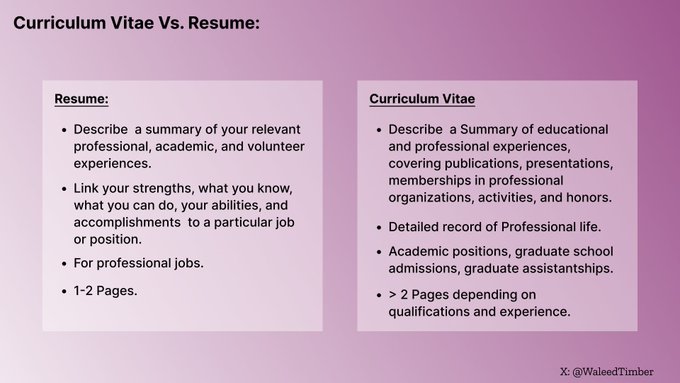
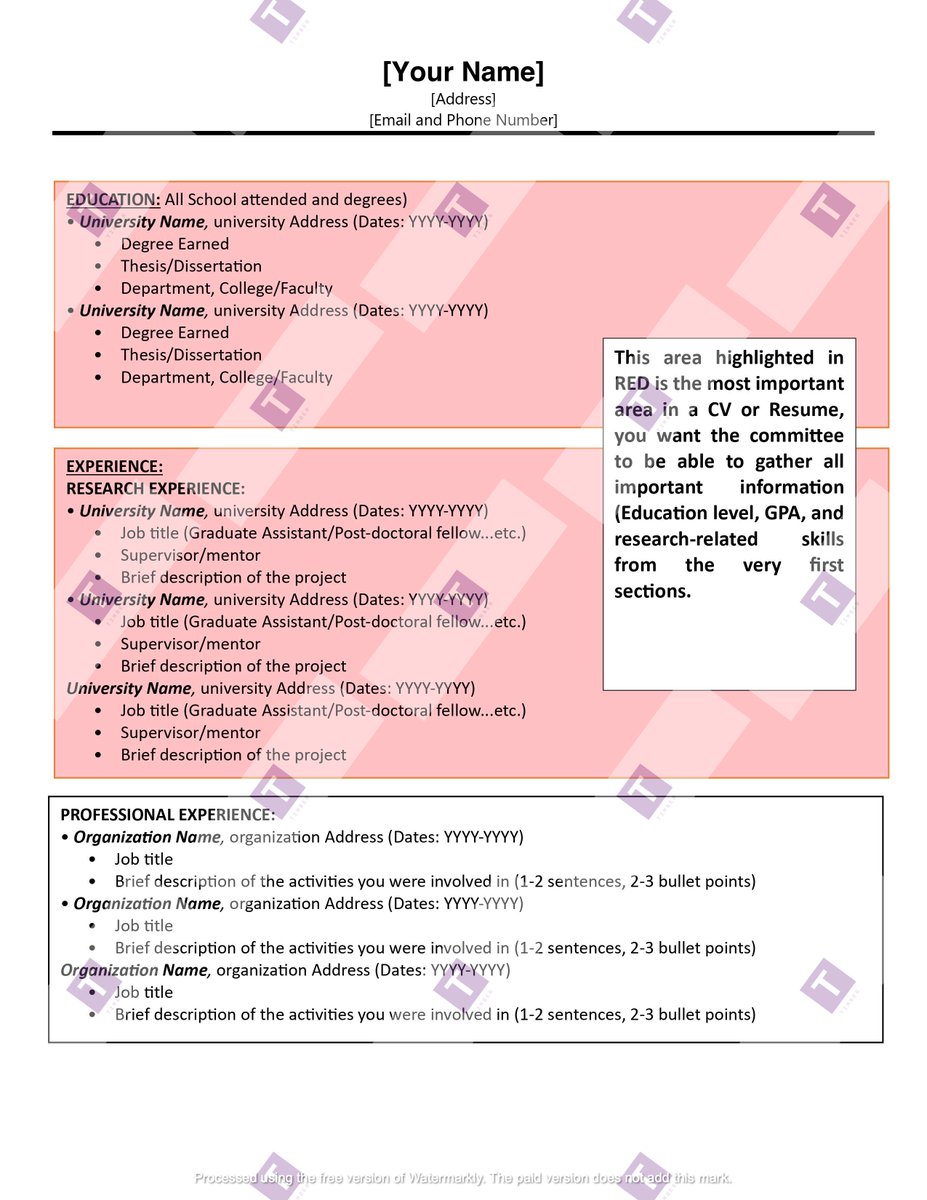
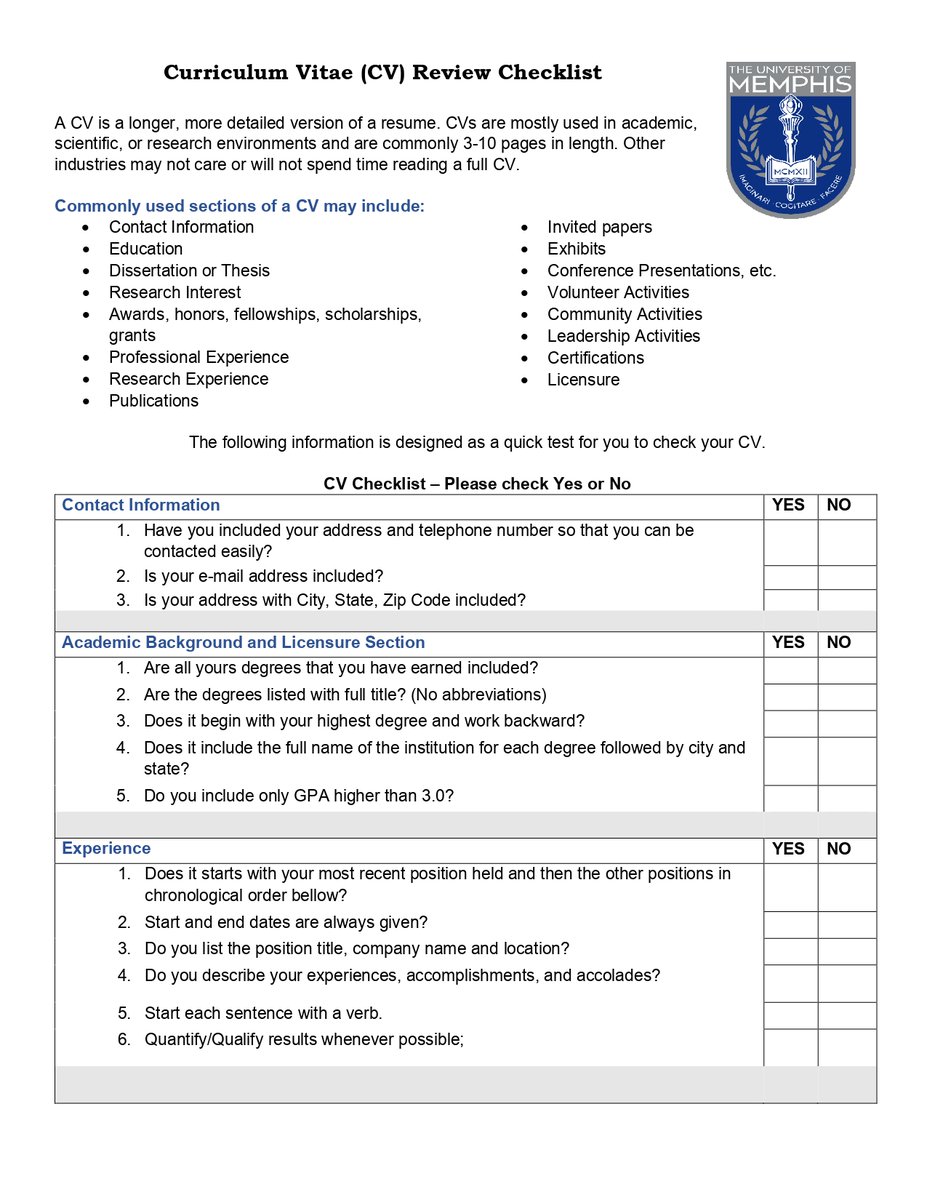
* Write strong academic CV.
* Plan and implement effective application strategies.
2- Guide graduate students through their academic journey by offering planning tips, writing advice, and time management strategies.
_______________________________
If you need help with any of the above:
- DM me so we can start working on your application, make sure to follow so I can DM you back.
- Subscribe for my email newsletter: waleedtimber.substack.com/ for useful tips and advices.
1
922
Timber retweeted
31 Jul 2025
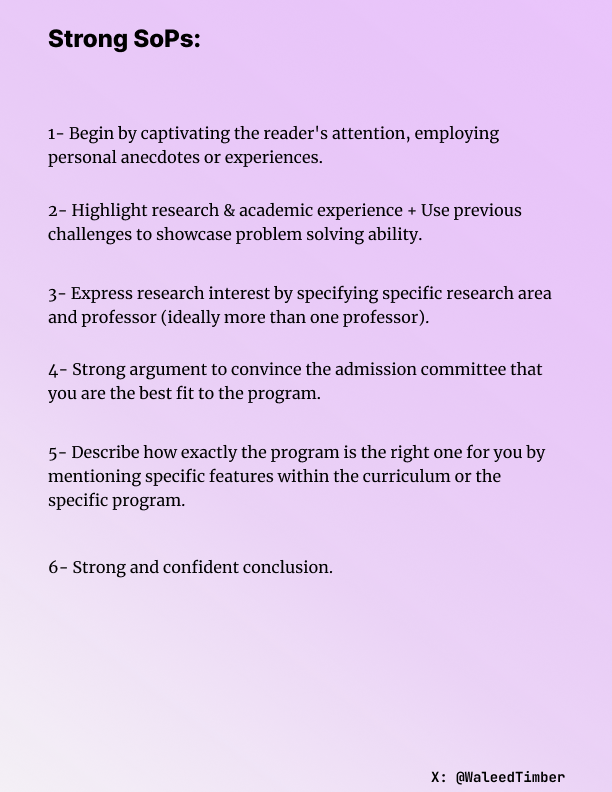
Most SoPs sound the same because most applicants don’t dig deep.
If you want yours to stand out, do this:
• Explore the program’s website thoroughly. Look beyond the admission tab.
- Check “About Us,” curriculum, faculty bios, and the “Why Us” section if they have one.
• Take notes on what actually makes this program unique.
- Which faculty member’s work aligns with yours?
- What resource or track excites you?
• Then, don’t just list names. Show them how their mission or research fits your goals.
- Echo their language without copying it.
This hits way harder than a generic SoP with a few names swapped in.
_______________________________________
👉 If you want more tips on writing a compelling SoP and a strong academic CV, follow @WaleedTimber
1
124
Timber retweeted
30 Jul 2025
Most STEM grads struggle in behavioral questions during interviews
Not because they lack skills, but because they can't articulate their impact.
They describe what they did... and stop there.
Using the STAR method is what will help you tell a compelling story:
1- S = Situation
Briefly explain the context
What was the challenge? where and when did it happen?
2- T = Task
What was your role? what were you responsible for?
Be specific about your contribution.
3- A = Action
What did you do to address the situation?
Focus on though process, decisions, and technical/problem-solving skills.
4- R = Results
And this is where most grads drop the ball.
Don't just say "it worked". Show the impact.
It doesn't have to be numerical. A better workflow, smother team dynamic, or client satisfaction are all valid outcome.
And remember:
• Make it relatable: tell a story the interviewer can visualize.
• Avoid hypothetical and exaggerated stories: they are easy to spot
____________________________
Follow @WaleedTimber for more STEM-related job advice
1
67
Timber retweeted
26 Jul 2025
Most grad school rejections aren’t about your GPA.
They’re about strategy, timing, and how well you tell your story.
Here’s how I went from MS to PhD offers in the U.S. — and how you can do it too:
1. Don’t apply randomly — apply strategically.
I used a tiered approach:
1 program from the Top 30 (US News)
1 from the 30–60 range
2 from the 60–100 range
This gave me a smart balance of reach, match, and safety options.
2. A strong SoP can carry your entire application.
I didn’t write a generic essay.
I showed how each program fit my goals — faculty, research areas, and long-term vision.
Make it personal. Make it intentional.
3. Start early. Start smart.
I gave myself time to:
Draft and revise SoP CV
Request strong rec letters
Get feedback from people who’ve done it before
No last-minute scrambling = fewer mistakes and more confidence.
4. Focus on what you can control.
You can’t change your undergrad GPA.
But you can improve your writing, tighten your CV, and get guidance from those ahead of you.
5. Don’t do it alone.
The best advice didn’t come from Google — it came from people who already succeeded.
Their input helped me polish my application and avoid rookie errors.
Bottom line:
🎯 Apply with strategy
🕒 Start early
🧠 Sharpen your story
🤝 Ask the right people for help
📣 If you’re applying to grad school soon:
Follow me for more tips on SoPs, CVs, and applications.
📩 DM me if you want to work 1-on-1 on your Statement of Purpose or CV — I’ll help you tell your story the right way.
Let’s get you that admit 🎓
1
1
84
Timber retweeted
25 Jul 2025
STEM graduates: your resume communicates your experience.
Your cover letter communicates your perspective.
It gives you space to:
• Connect your skills to the role
• Articulate your value
• Explain how past roles shaped the way you think.
Strong applications don’t just list—they Narrate.
Follow @WaleedTimber for more job application strategies that work in STEM.
1
69
Timber retweeted
24 Jul 2025
Here’s one reason why your grad school application get rejected 👇🏻
16 Jul 2025

Applied to multiple grad schools in the US with no luck?
You did everything right? CV, recommendation letters, decent IELTS/TOEFL scores, strong grades... yet no admissions?
I can help!!
This issue is likely your Statement of Purpose (SoP).
Most students write generic, boring SoPs that fail to grab the admission committee's attention.
📌One powerful secret to grab the attention of the admission committee is:
💡Put the most relevant, impressive, and eye-catching part of your profile in the top half of your SoP.
This could be:
✅A standout skill (hard or soft)
☑️A major accomplishment
✅A unique experience
BUT...
🚨It has to be relevant to the program you are applying to!
🔖Remember, committees sift through hundreds of applications and often skim. if you don't hook them early, your strengths may never be seen.
✍️Add flavor
✍️Lead with impact
🪝That's your hook!
if you like this:
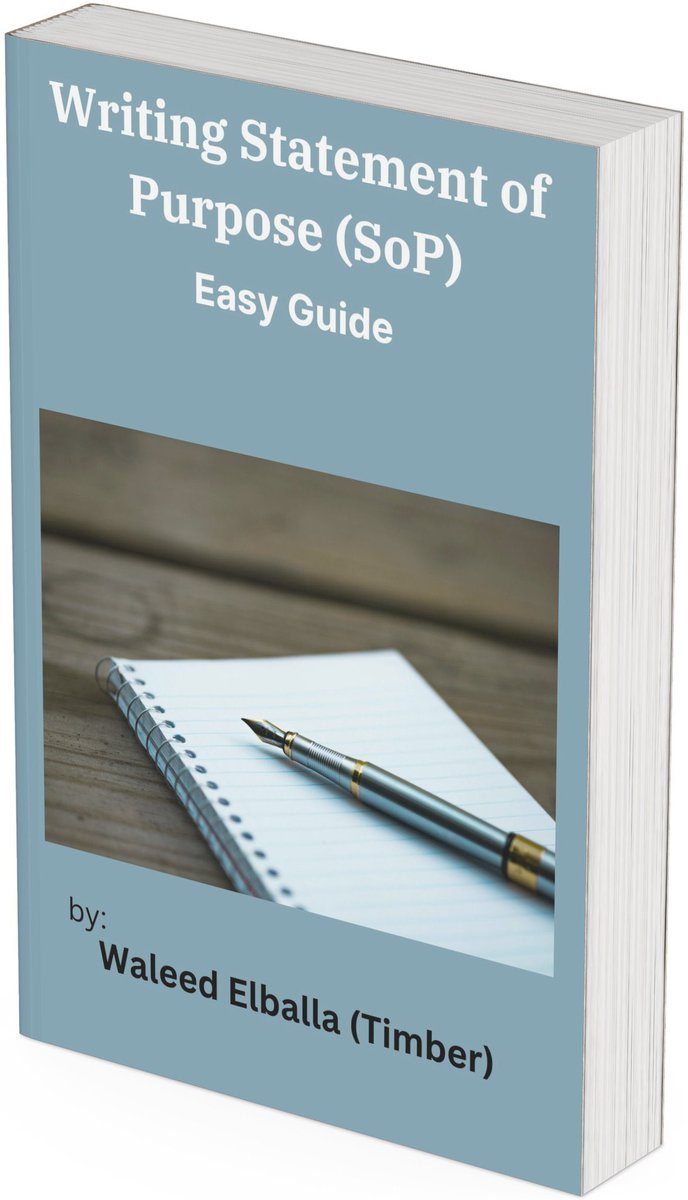
🎯Check my Full SoP guide: payhip.com/b/izV8K
📩DM me if you need help
🔁Share with your friends
1
99
Timber retweeted
23 Jul 2025
You don’t need to rewrite your resume 50 times.
You just need a smart tailoring process. Here’s mine—step by step (STEM grad edition):
• I start by carefully reading the required skills and key responsibilities.
These tell me exactly what the employer values most and guide every edit I make.
• I use job-title-specific resume templates I built myself.
This saves time and gives me a focused starting point for tailoring.
• I usually reorder and tweak existing bullet points.
But if something doesn’t fit, I replace it with a more relevant one based on the job post.
• I choose which experiences to highlight based on how the job post is written.
The order and emphasis in the posting help me decide what to push forward.
• Most grads either under-tailor (don’t update key skills) or over-tailor (change everything).
What worked for me is updating the Summary of Qualifications section first—it sets the tone.
• If you don’t have a summary section, add one.
Avoid using “Objectives”—they’re outdated and don’t offer much value.
• I make sure the most relevant experience is visible.
Don’t let your best fit for the job get buried halfway down the page.
• One extra tip: Rank your skills as Advanced / Intermediate / Basic.
It helps with keyword coverage and gives hiring managers quick insight into your strengths.
• Most importantly—don’t lie.
Never add skills or experience you don’t have. It’s easy to detect, and it hurts your credibility.
________________________________________________
Follow @WaleedTimber for more grounded resume job hunt tips for STEM grads.
1
66
Timber retweeted
23 Jul 2025
STEM grads: most resumes never reach a human.
They get filtered by ATS bots. Here's how to beat them:
• Use free scanners like Indeed’s ATS tool
→ See if your resume is ATS-friendly.
• Match keywords from the job post
→ Use the exact terms they list.
• Tie keywords to real experiences
→ Show how you’ve applied those skills.
• Use standard headings basic formatting
→ ATS prefers “Experience,” “Education,” etc.
• Avoid colors, tables, or fancy fonts
→ ATS can’t read visuals—keep it clean.
Follow me @WaleedTimber for more job hunt tips tailored to STEM grads.
1
1
70
Timber retweeted
21 Jul 2025
🎓 The last 6–8 months of graduate school can feel like working two full-time jobs:
📘 One: Finishing your dissertation
📄 Two: Applying for jobs
Here’s how to survive that storm — without burning out:
1- Time-block like your sanity depends on it
• Mornings/afternoons = research & writing.
• Evenings = job search & networking.
• Protect your focus.
2- Prioritize rest — seriously
• Nothing is worth more than your health.
• Sleep well. Take real breaks. You can't hustle your way through burnout.
3- Rejection hurts — don’t let it define you
• You’re not alone. It stings, but it’s not personal.
• Feel it, then move forward.
4- Bad market? It’s not just you
• Even with connections, jobs are scarce.
• That doesn’t mean you’re not good enough. It just means keep going.
5- Expect to doubt yourself
• Imposter thoughts will creep in.
• Your confidence will shake.
• Start each day fresh — hope is a strategy, too.
If you’re in this phase right now:
"You're doing a lot. You’re not behind. You're not broken. You’re building something. Keep going."
1
79
Timber retweeted
21 Jul 2025
What helped me land more academic interviews wasn’t luck!
It was job search strategy—especially tailored documents like my cover letter, teaching philosophy, and research statement.
I made it to final rounds in industry too.
But academia responded better—because my materials spoke their language.
If you’re stuck between academia and industry, the way you present your story makes all the difference.
——————-
🎯 I share practical job hunt tips.
👉 Follow me @WaleedTimber to get ahead—without the guesswork.
1
77
Timber retweeted
20 Jul 2025
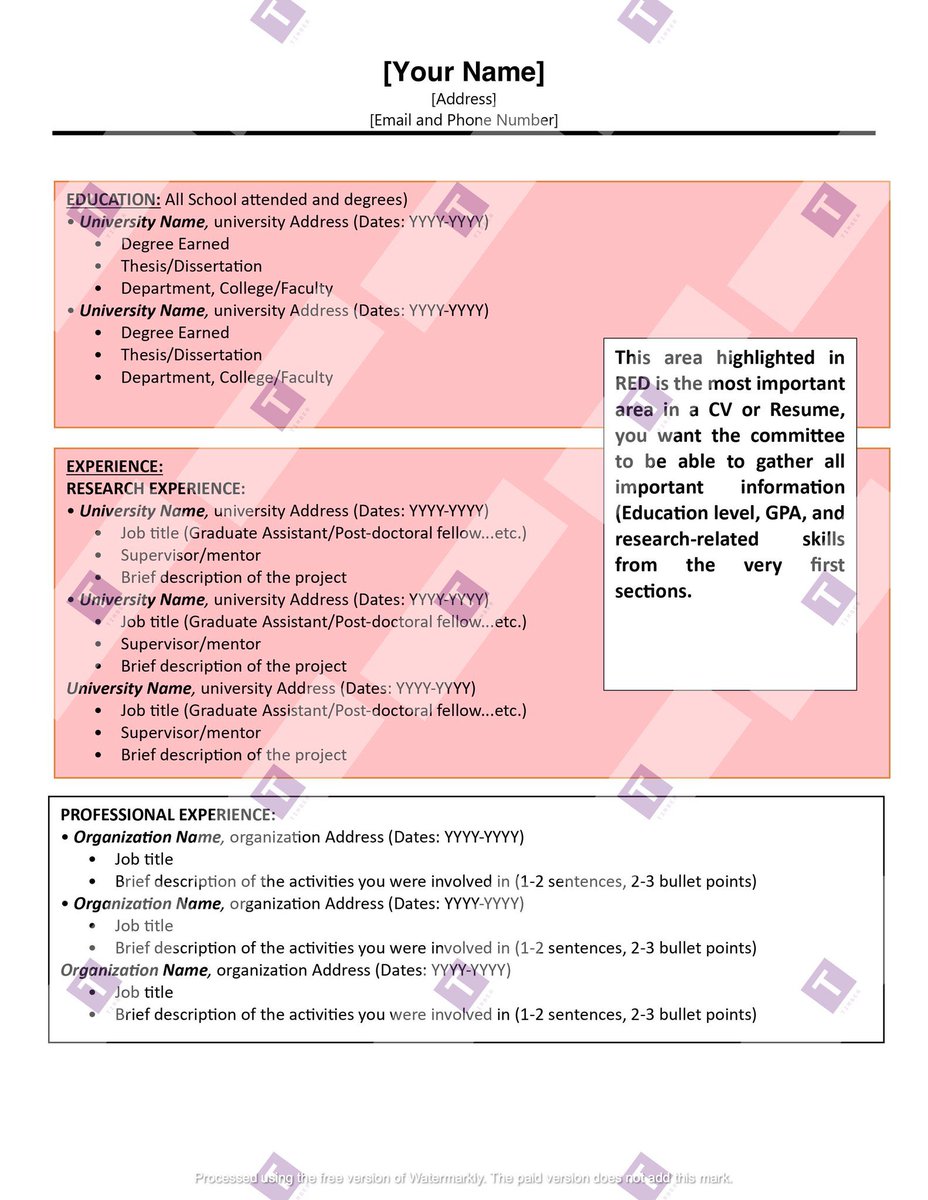
🔥 Your academic CV is costing you admissions!
Most students bury their best work at the bottom.
Grad committees never even see it...
Grad committees skim dozens of apps. If your top half doesn’t hook them, they’ll move on.
When my mentees moved their relevant wins up, many got into multiple programs.
___________________
👉 Follow me @WaleedTimber & subscribe to my newsletter (waleedtimber.substack.com/) for more tips
1
110