checkless and feckless. l am me. left handed omega. boar spear enjoyer. RESTORE to the end!
Joined June 2025
- Tweets 4,303
- Following 3,632
- Followers 881
- Likes 105,796
103 Photos and videos











DabHand retweeted

Jun 12
Your steam engine is British.
Your Industrial Revolution is British.
Your railway is British.
Your underground railway is British.
Your modern railway timetable is British.
Your suspension bridge is British.
Your iron bridge is British.
Your modern lighthouse is British.
Your marine chronometer is British.
Your global time standard is British.
Your time zone starts at Greenwich.
Your telephone is Scottish.
Your television is Scottish.
Your radar is British.
Your jet engine is British.
Your tank is British.
Your programmable computer is British.
Your World Wide Web is British.
Your fibre-optic communications were pioneered by a Briton.
Your modern telecommunications network was transformed by British inventors.
Your antibiotics are Scottish.
Your vaccination programme was pioneered by an Englishman.
Your modern nursing profession is British.
Your public sanitation system is British.
Your modern sewerage system is British.
Your clean drinking water infrastructure was pioneered by Victorian Britain.
Your weather forecast is British.
Your life boat service is British.
Your modern fire service was pioneered in Britain.
Your parliamentary democracy is British.
Your constitutional monarchy is British.
Your common law is British.
Your independent judiciary is British.
Your trial by jury is British.
Your presumption of innocence is British.
Your habeas corpus is British.
Your rule of law is British.
Your modern police force is British.
Your modern civil service is British.
Your modern banking system was shaped in Britain.
Your central banking model was shaped by the Bank of England.
Your stock exchange model was pioneered in London.
Your global insurance market was built at Lloyd's of London.
Your international maritime law was shaped by Britain.
Your global trade routes were mapped by Britain.
Your anti-slavery patrols were British.
Your modern university model was influenced by Oxford and Cambridge.
Your scientific societies were pioneered by Britain.
Your peer-reviewed science was advanced by British institutions.
Your laws of motion are English.
Your theory of evolution is English.
Your economics is Scottish.
Your electromagnetism was transformed by a Scot.
Your geology was pioneered by Scots.
Your thermodynamics was advanced by Britons.
Your stainless steel is British.
Your carbon fibre is British.
Your steam turbine is British.
Your hovercraft is British.
Your ATM is British.
Your cash machine is Scottish.
Your postage stamp is British.
Your modern postal system is British.
Your football is English.
Your rugby is British.
Your golf is Scottish.
Your tennis was codified in Britain.
Your badminton was codified in Britain.
Your cricket is English.
Your worldwide language is English.
Your newspapers were shaped by Britain.
Your global news agencies were pioneered by Britain.
Your public broadcasting model is British.
Your music charts are British.
Your modern popular music owes a great deal to Britain.
Your neighbour may be an immigrant.
But a fair chunk of the modern world is British.
Pull yourself together.
299
1,932
8,890
118,633
DabHand retweeted

Jun 11
⚠️📍 EUROPEAN BLOOD-MEMORY ACTIVATION CHECKPOINT
Listen for instant 2x radicalization multiplier
82
461
3,244
53,262
DabHand retweeted

May 1
Exposed ❗️
What Really happened in the channel with the illegal crossings (Operation Isotrope)
I had the pleasure of being interviewed by @CraigHouston_ on Monday about some of the shocking things going on in the channel in 2022.
Including revelations about the Royal Navy’s role where I was directly involved.
In 2022 the Navy was tasked with helping stop small boat crossings.
Originally they had permission to turn boats back to France. (Even though we never did)
But the Home Secretary rescinded that permission!
Result? The Royal Navy became “fetch and carry” for the dinghies, while Border Force ferried migrants into Dover.
👇 Full interview (clip on this document)
youtube.com/watch?v=BMR4F6fM…
5
64
106
5,828
DabHand retweeted

Jun 3
"Your punishment for having a knife when they searched you would be very different from the thief’s. For him to have a knife was mere misbehavior, tradition, he didn’t know any better. But for you to have one was 'terrorism."
— Aleksandr Solzhenitsyn
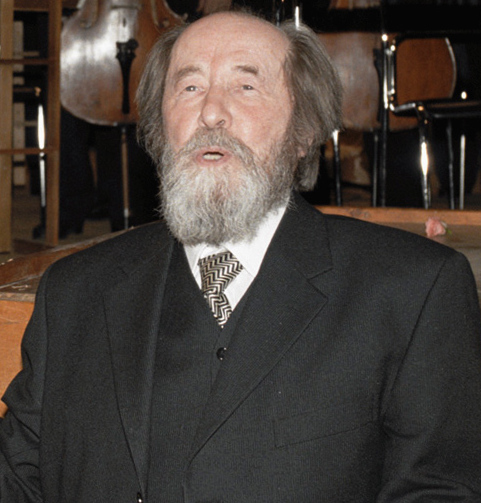

The West has created an utterly evil state religion where an accusation of “racism” is the gravest offense that can be committed, even worse than rape or murder!
So if police show up at a crime scene and a British boy is bleeding out and an immigrant says the British boy is racist the cops will cuff the dying British boy.
22
826
3,409
54,858
DabHand retweeted

May 31
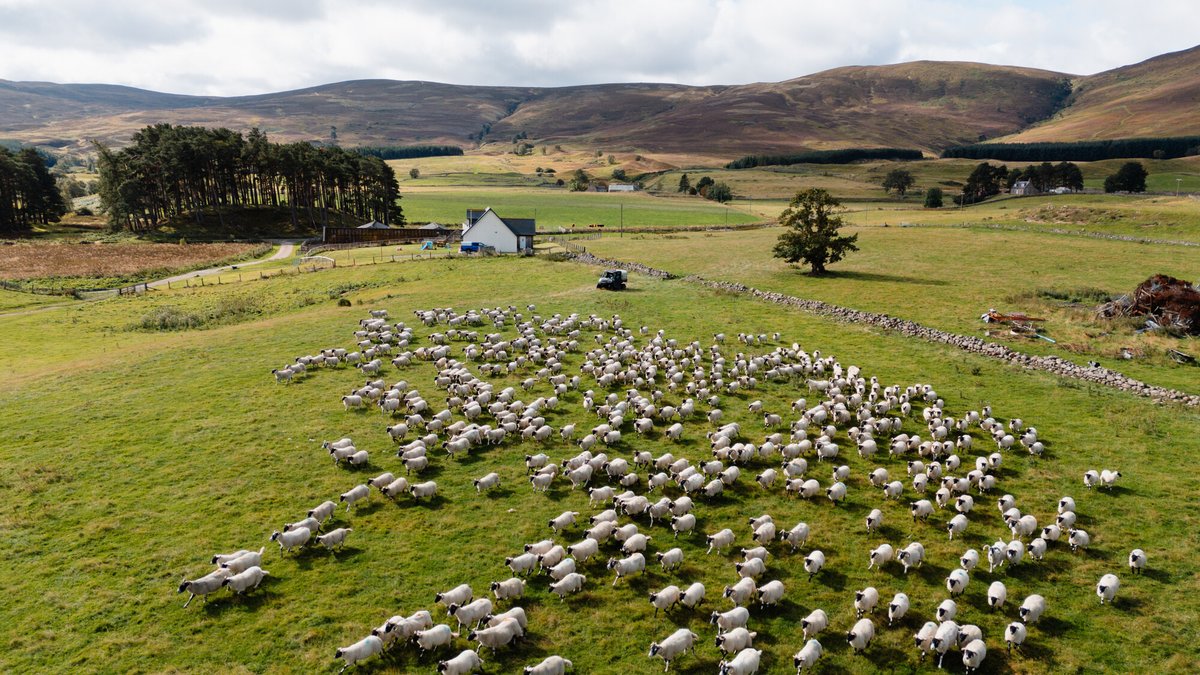
A tenant farmer in the Cairngorms says land that sold for £500 an acre a few years ago now goes for £5,000. He is being moved off ground his family has worked for generations, because he cannot outbid the people buying it. The buyers are corporations, and they have no intention of farming a single acre of it.
Here is how the trick works. A company keeps emitting carbon exactly as before. Same factories, same flights, same supply chain, same product. Then it buys a Scottish hillside, plants some trees, and announces to the world that it is now carbon neutral, or, if it is feeling brave, carbon negative. The emissions never fell. It simply bought a landscape to point at.
Take BrewDog. In 2020 it bought a 9,300-acre Highland estate, propped up with public grant money, and promised a million trees and the crown of the world's first carbon negative beer business, removing twice the carbon it emitted, forever. By 2023 roughly half of the 500,000 trees it had managed to plant were dead, killed by drought, with critics noting the planting was drying out the peat and releasing carbon of its own. The advertising regulator ruled its carbon-negative claims misleading. In 2024 it quietly dropped the badge and dismissed the entire carbon credit market as a flood of cheap schemes whose benefit was "questionable, maybe even non-existent." Then it sold the estate to a firm whose actual business is selling carbon offsets.
That is the whole model in one story. Public money in. Dead trees out. A green halo worn for four years and then dropped. The farmer who used to be on that land, gone. The hillside passed to a company that exists purely to sell other people the right to keep polluting.
This is no fringe case. In one recent year, half of every estate sold in Scotland went to investment funds, corporations and charitable trusts rather than anyone who would farm it. A third of the deals for plantable land are now done off-market, in secret, precisely so the local community never gets the chance to bid.
So this is what net zero looks like on the ground. A man who produced food is priced out of his own glen. A corporation that produced emissions buys the glen, calls itself a force for good, and sells the carbon. The land stops feeding anyone. Nobody's emissions actually went down by a gram.
The food was real. The farmer was real. The carbon saving is a line in a slide deck.
And we have somehow decided the villain in all this is the man with the sheep.
325
5,199
10,289
266,846
DabHand retweeted

May 29
What a masterpiece. This hit hard and resonated with my soul.
The hairs on my arms stood up!
Wow
169
1,967
7,196
127,831
DabHand retweeted

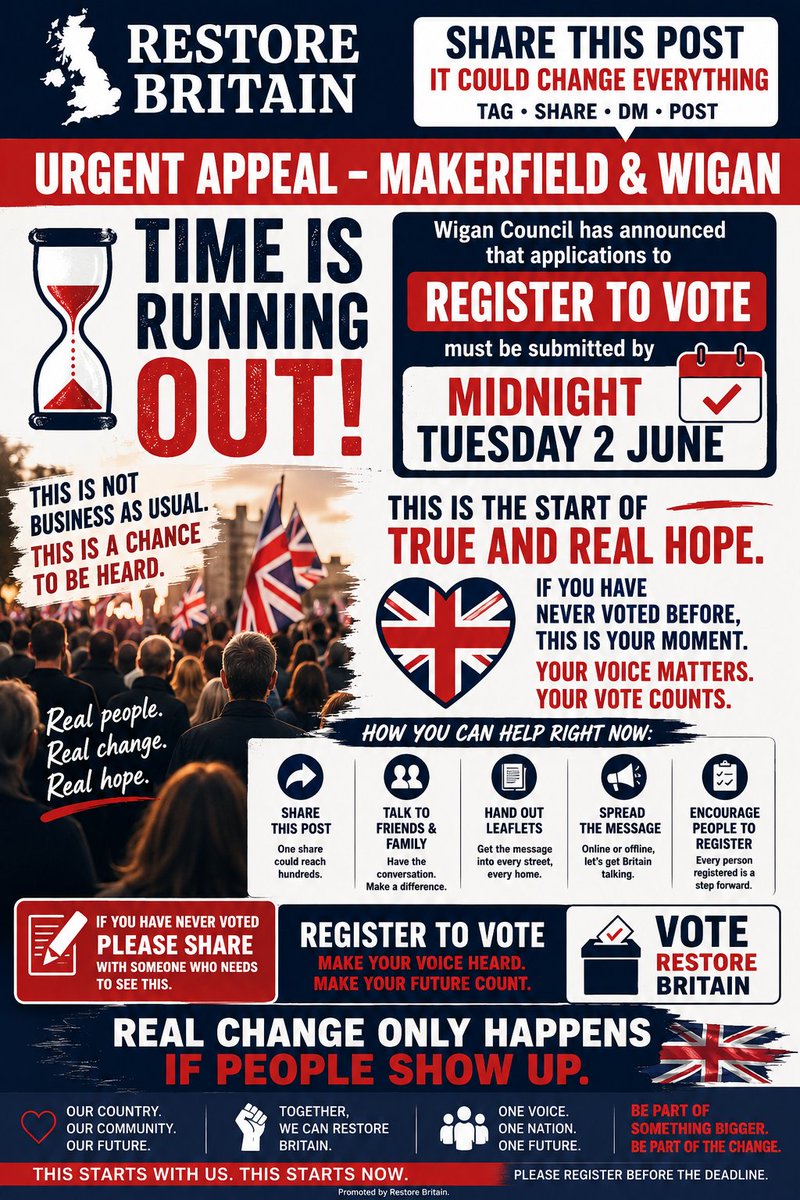
MAKERFIELD AND SURROUNDING AREAS
THIS IS AN URGENT APPEAL
Wigan Council says applications to register to vote must be submitted by MIDNIGHT TUESDAY 2 JUNE
If you have never voted before
PLEASE READ THIS
You do not have to agree with anyone
You do not have to join anything
Just use your voice
Talk to your friends
Talk to your family
Share this post
Hand out leaflets
Help someone get registered
The people who normally stay home could decide this
If you have ever said
NOTHING EVER CHANGES
THIS IS YOUR MOMENT
REGISTER
SHOW UP
MAKE YOUR VOICE COUNT
PLEASE SHARE
32
1,012
1,570
23,006

DabHand retweeted

11 Sep 2025
If you believe free speech is for you but not your political opponents, you're illiberal.
If no contrary evidence could change your beliefs, you're a fundamentalist.
If you believe the state should punish those with contrary views, you're a totalitarian.
If you believe political opponents should be punished with violence or death, you're a terrorist.
14,700
135,817
597,188
24,544,945

May 9
Hiding in plain sight is the fact our political class is part of a supranational epstein network, perhaps with less child abuse but judging by the number of pedophiles and general deviants we find in politics, perhaps not. everything they do is for the benefit of the connected 1/
7
2
133
May 9
and watering down the policies that got them there as they integrate into that very same network. 8/
101
May 9
these people should have no say over how we live our lives. they are part of a parasitic network squatting over the West looting and destroying everything we hold dear. no good can come of any of them. even reform as heir apparents are now monetising their popularity as they ..7/
95
May 9
...as simply a means to an end. and as a part of excusing themselves of their own monstrous and treacherous inhumanity to kith and kin, they have reasoned themselves into a place where they literally detest you. you are beneath them, less than human. 6/
70
May 9
they can't defend these actions and prefer to hide behind thin excuses like "International law" (guidance, unenforceable and easily legislated around yet they don't) what they hold dear are the rewards that come after. they are sociopathic conmen who see their populations ...5/
35
May 9
securing post political sinecures and personal financial corruption is a small and delightfully quaint part of their motivation. they are first and foremost servants of international interests, financial and ideological. l don't actually believe they even hold strong beliefs 4/
25
May 9
like the epstein network, child abuse is a side show, the main event is a network of anywhere rootless cosmopolitans that serve each other and not their respective countries. this network is at least epstein adjacent, with plausibly deniable favours exchanged between them 3/
30
May 9
Boris let in 5m unintegratables, Starmer tried to give away the Chagos Islands and so on. none of these were asked for, voted for, and very few welcomed them. they have no benefit for the country or it's people, in fact are clearly damaging to both. so why do it and who benefits?
34
May 9
It's amazing reading the responses to reform and their voters by Scottish, Welsh and Irish posters. They have been so comprehensively one shotted by parochial nationalism, they are happy to see their respective countries get fucked into the ground as long as it upsets 'the anglo'
36
DabHand retweeted

May 6
Twitter is alive with diagnoses of the unfortunate present state of the British national spirit. Many of them perceptive and melancholic, and many of them offered by non-Brits. It's heartening to see how much the country's current depressive state, and the notion of our coming revival, means to so many of our cousins around the world.
But beneath concerns of mere policy, debates over reindustrialisation strategy or philosophies of criminal justice, I believe there's something more fundamental we have to fix in the British spirit before it can support itself on its own wings again.
There's an exchange of views that stands out in my mind when I think of the way the last decade or so is gone. You will have seen it play out a thousand times.
In that exchange, you have two people. On one side, someone who is not a fan of Britain, though they are British. Sometimes these people conform to what you might consider the description of a 'leftist', though it's much more exact to call them a member of the Metropolitan class.
On the other side, you have someone who considers themselves a patriot. I deliberately do not describe the latter as of a rightward leaning, because in my experience patriots can come reasonably from either side of the aisle, though perhaps the right-leaning ones are more typically voluble these days.
In essaying Britain's current condition, the Met will arrive at a point in their argument where they'll claim that Britain, and its culture, doesn't really exist at all. That Britain has no culture, no history worth defending, nothing about it worth esteeming, owning, remembering, and taking pride in.
Then the patriotic voice answers, hotly and at volume, that they disagree.
What I find remarkable is that, often, both sides realise they cannot say much, beyond Shakespeare and the war, as to what British culture is really constituted by. Of course, the patriots know more, because they're interested to know more, but the exchange is never settled. It resolves to silence and a stalemate.
This silence is the deepest thing wrong with Britain in 2026.
Beneath the policy failures and the political incompetence and the slow leak of every public institution sits a quieter, more corrosive failure: we have forgotten who we are.
There is an inability among the British people - who are among the most naturally and winningly modest in the world - to articulate what their own civilisation has been, and is, and could yet be. We have lost our cultural sense of self. We have mislaid the inventory.
So I plan to start a list.
A list essaying everything reasonably within the bounds of the British cultural heritage.
And the start goes like this.
The novel as a literary form. Science fiction. Children's literature as a serious form: Carroll, Stevenson, Potter, Milne, Tolkien, Lewis, Dahl.
The dictionary as a cultural project. The King James Bible, which gave the English-speaking world the prose architecture it has used ever since.
The discovery of how the heavens move, the composition of light, and the laws of motion (Newton). The structure of DNA (Crick, Franklin, Wilkins, working with Watson at King's College and Cambridge). The discovery of penicillin (Fleming, Florey, Chain). The vaccination of mankind against smallpox (Jenner). The invention of antiseptic surgery (Lister). The discovery that cholera came from water (Snow, the Broad Street pump). The marine chronometer that solved the longitude problem (Harrison). The first hospital nursing school (Nightingale). Modern epidemiology. Modern statistics. The randomised controlled trial.
The steam engine. The locomotive. The railway. The factory system. The Industrial Revolution, the great miracle of mankind, originated here, not in some abstract elsewhere, but in Coalbrookdale and Cromford and Manchester and the Black Country.
The jet engine. The hovercraft. The Spitfire. The Harrier. Radar. The cavity magnetron, without which radar at scale is impossible. The Bombe and Colossus, the world's first programmable electronic computers. The stored-program computer in hardware (Manchester Baby, 1948). The ARM chip, the architecture inside almost every smartphone on Earth. The World Wide Web itself, given freely to mankind by Tim Berners-Lee, a British civil servant's son working at CERN.
Football, association and rugby. Cricket, codified at Lord's. Tennis. Boxing. Golf. Snooker. Polo, codified by the British in India. The Olympic revival, partly inspired by the Wenlock Olympian Games of Shropshire. The marathon distance of 26 miles 385 yards, set at the 1908 London Olympics and exported to the world.
Magna Carta. Habeas corpus. Trial by jury. The Mother of All Parliaments. The Loyal Opposition as a constitutional concept. The abolition of the slave trade, paid for in blood and glory by the West Africa Squadron of the Royal Navy through the nineteenth century. The Statute of Anne, 1710, the first copyright law in the world. The Statute of Monopolies, 1624, the foundation of the modern patent system. The first national topographic map (Ordnance Survey). Greenwich Mean Time. The Prime Meridian. The first daily newspaper. The first scientific journal. The Royal Society itself.
The English landscape garden, exported across Europe. The Georgian terrace. The garden city. The joint stock company. Lloyd's of London. The Bank of England, the model for every central bank that has followed.
The Beatles. The Rolling Stones. Pink Floyd. Bowie. Queen. Iron Maiden. The Clash. Drum and bass. Jungle. The BBC, exported as a model of public broadcasting to the world. The Beck Tube Map, copied by every transit system on the planet. The red phone box. The Routemaster. The black cab.
Yes, this is the start of my list.
And already the list is a history of preposterous genius. The work of a single modest, damp, exquisite island. There is no reason Britain should have done a fraction of what it has, let alone all of it. The output, pound for pound, is unrivalled in human history. Athens, Rome, and Florence are our only credible competitors.
And whatever the ingredients of this concentration of genius were, they are not magical. They are in us. They were and remain a culture, an inheritance, a magna-discipline of curiosity and craft, an instinct for liberty (and, yes, moral courage) bound to an instinct for institution-building, a people who did the work.
By the time this decade is through, and by one means or another, I plan to see to it that the country that produced the world as we know it today - that produced the water in which all these glorious varieties of fish delightedly swim, though they know it not - will know who and what it is again.
And it will be a fine thing when we get there.
14
41
184
8,965