
Joined May 2024
- Tweets 394
- Following 182
- Followers 91
- Likes 173
20 Photos and videos




Pinned Tweet

8 Apr 2025
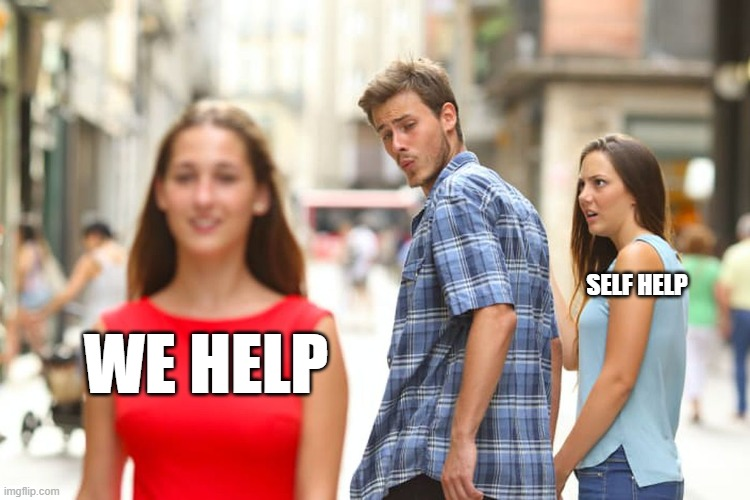
What is WeHelp?
The goal is to get everyone in the habit of helping. To do this we are starting WeHelp clubs in school.
How can I help?
Start a WeHelp Club. We all want to help, but need organization and an excuse. Whether at school or work - create a club and you will be surprised by all the ways people think of to help.
Call your mother. The Harvard Grant study found that men with strong relationships with their mother earned $87,000 more. I'll add to this that calling your mother adds years on to her life. Look up empty nest syndrome.
Join our community, like, and subscribe!
84
Jan 28
In 2023 almost 25% of American adults ate every meal alone on a given day, up from 17% in 2003; among under-30s the share has nearly doubled
6
Mark - WeHelp retweeted

4 Nov 2025
Makes sense. I'll explain on CWSA today.
4 Nov 2025

New Study: Helping Others Slows Cognitive Decline by Up to 20% | University of Texas at Austin
Regularly volunteering or helping others outside the home can slow cognitive aging by 15–20%.
Meaningful social connections may do more than lift spirits, they may help preserve the mind. Researchers from The University of Texas at Austin and the University of Massachusetts Boston have discovered that spending regular time helping others outside the home can slow cognitive decline in middle-aged and older adults.
The study followed more than 30,000 U.S. adults over a 20-year period and found that those who volunteered or offered informal help to neighbors, relatives, or friends experienced 15%–20% less cognitive decline associated with aging. The benefit was strongest among individuals who spent around two to four hours each week assisting others. These findings, published in Social Science & Medicine, were supported by the National Institute on Aging at the National Institutes of Health and the Eunice Kennedy Shriver National Institute of Child Health and Human Development.
“Everyday acts of support — whether organized or personal — can have lasting cognitive impact,” said Sae Hwang Han, an assistant professor of human development and family sciences at UT who led the study. “What stood out to me was that the cognitive benefits of helping others weren’t just short-term boosts but cumulative over time with sustained engagement, and these benefits were evident for both formal volunteering and informal helping. And in addition to that, moderate engagement of just two to four hours was consistently linked to robust benefits.”
This research is among the first to explore both formal volunteering and more casual acts of assistance, such as driving a neighbor to a medical appointment, babysitting grandchildren, mowing a lawn, or helping someone prepare taxes. While roughly one in three older Americans participates in formal volunteer programs, more than half routinely provide help to others in their lives through these informal efforts.
Informal Help, Real Impact
“Informal helping is sometimes assumed to offer fewer health benefits due to its lack of social recognition,” Han said. But in fact, “It was a pleasant surprise to find that it provides cognitive benefits comparable to formal volunteering.”
The researchers used longitudinal data from the national Health and Retirement Study, examining results from a representative sample of U.S. residents over the age of 51 dating back to 1998. The new study, which controlled for other contributing factors in volunteerism and helping behaviors such as wealth, physical and mental health, and education, found that age-related cognitive decline slowed as people began and sustained helping behaviors. That data suggests that greater gains may be expected in people who make helping behaviors a part of their routine, year over year.
“Conversely, our data show that completely withdrawing from helping is associated with worse cognitive function,” Han said. “This suggests the importance of keeping older adults engaged in some form of helping for as long as possible, with appropriate supports and accommodations in place.”
The paper offers the latest case for bringing a public health lens to discussions about volunteerism, helping and strengthening neighborhood relations, particularly in later life when diseases associated with cognitive decline and impairment, like Alzheimer’s, tend to set in.
Helping as a Buffer Against Stress and Inflammation
Another recent study, also led by Han, found that volunteering buffered the adverse effects of chronic stress on systemic inflammation — a known biological pathway linked to cognitive decline and dementia. The effect was especially pronounced among people with higher levels of inflammation.
Together, the two studies’ findings suggest that helping behaviors can help boost brain health, whether by reducing the physiological wear and tear associated with stress or by fortifying social connections that bring psychological, emotional, and cognitive benefits of their own. In the context of an aging society and increasing concerns about loneliness and isolation, the findings also provide an important basis for continuing to involve people in opportunities to help, even once cognitive decline has set in.
“Many older adults in suboptimal health often continue to make valuable contributions to those around them,” Han said, “and they also may be the ones to especially benefit from being provided with opportunities to help.”
Read more:
scitechdaily.com/new-study-h…

61
164
1,507
112,499

Mark - WeHelp retweeted
10 Apr 2025
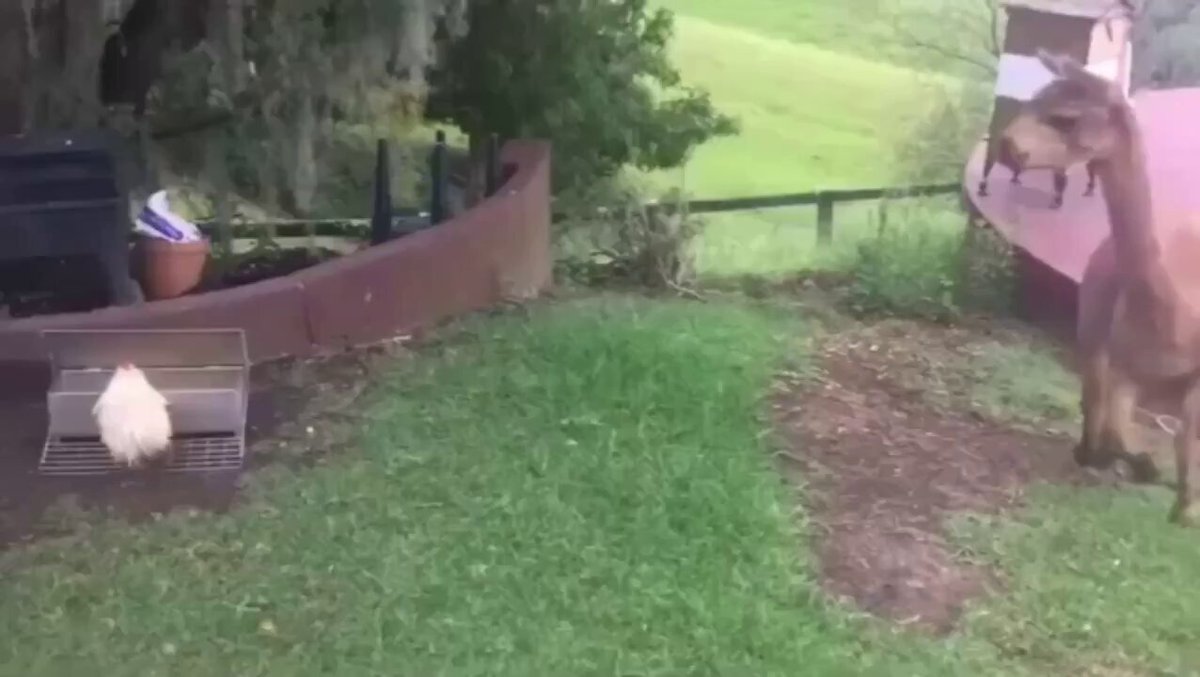
Beautiful instance of #WeHelp
youtube.com/watch?v=v13gFW87…
1
51

Mark - WeHelp retweeted

13 Mar 2025
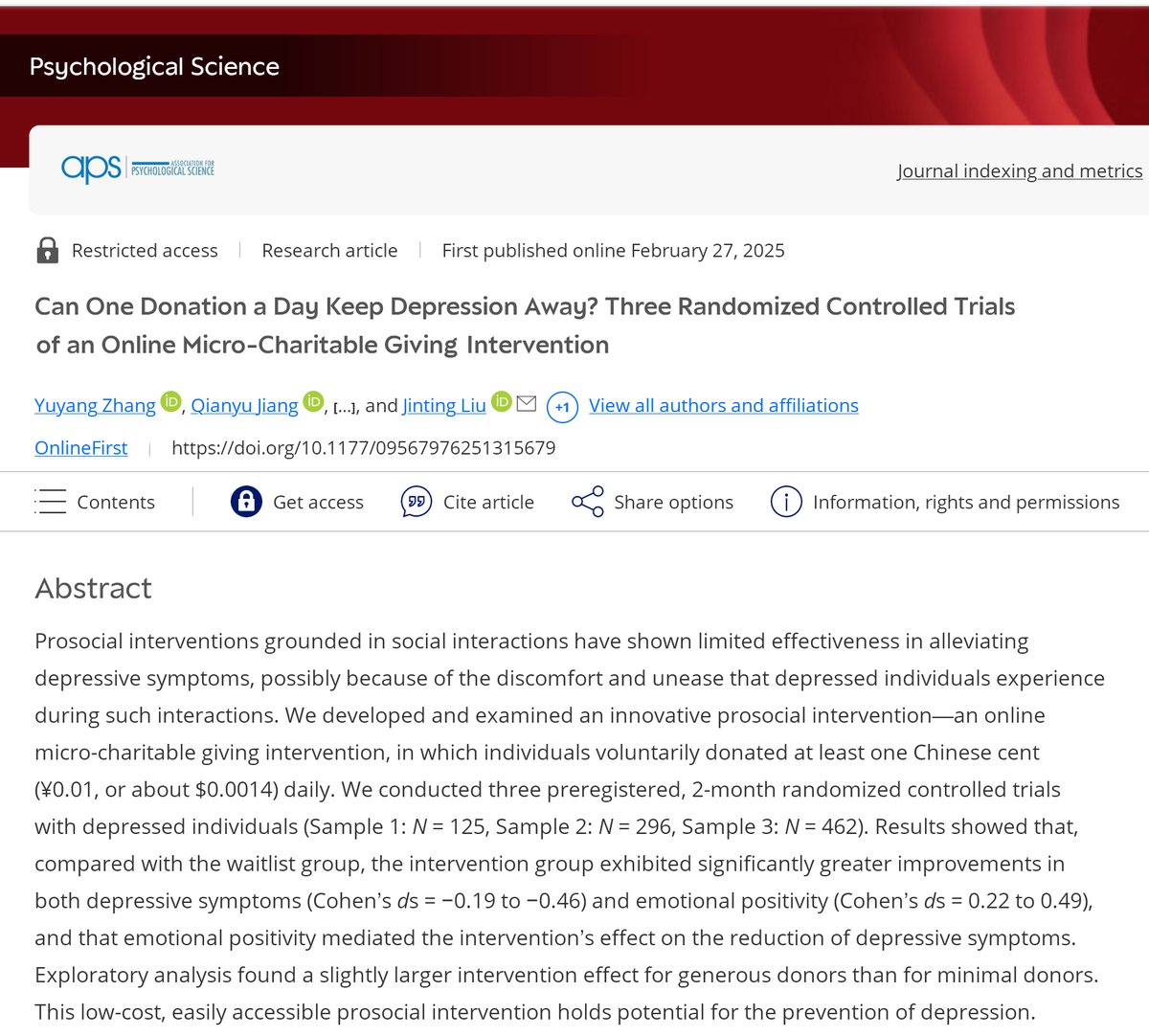
Generosity is an anti-depressant.
Depressed people were randomly assigned to give less than a penny a day to charity. Over the next 2 months, moods improved and depression declined. The more they gave, the better they felt.
Even small acts of kindness elevate mental health.
96
930
3,839
728,647
23 Dec 2024
If you want to be rich, count up the worth of your friends and family
3
27