
40 Photos and videos














Crypto Jet 🦔 retweeted

Jun 12
-> SpaceX IPO could be the
-> biggest pump and dump in
-> financial history mark this
-> words, people buying this
-> IPO will lose everything
-> The valuation is $1.75 trillion
-> for company that isn't profitable
-> Insiders own around 95%
-> of the shares and $1.6
-> trillion in paper wealth
-> by November 93% of those
-> shares will unlock for sale
-> That is the textbook setup
-> for the biggest exit event ever
-> Retail will lose 60% to 80%
-> of their capital within months
-> The smart money already
-> sold before the bell rang
-> Follow to know what is
-> going to happen before
-> the headlines catch up.

2
11
551
Crypto Jet 🦔 retweeted
Jun 11
I know a guy who locked $10K into other perp staking for a whole month with zero ROI.
Stress. Watching charts. Hoping volatility doesn’t wreck him.
Meanwhile... I made 1 trade on @nansen_ai perp and got 1000 NXP
$20 Clicked, swapped, forgot about it.
Yesterday I checked my points page.
Nansen dropped 1,000 NXP in my account. “Early Trader Bonus”.
He risked $10K for month to get nothing. I risked $20 for 7 seconds for get 1,000 NXP points.
That’s the power of being early.
And it’s not over. $1M raffle goes live in a few days.
If you traded early, go claim your bonus. If you didn’t, you’re still early enough to get in.
Trade here: nsn.ai/beinginvested
Jun 9

Hyperliquid Perps is Now Live on Nansen 🚀
You already track Smart Money, Whales, and Public Figures here.
Now you can trade here too.
Available for all users, on web and mobile.
3
11
461
Crypto Jet 🦔 retweeted

Jun 4
Gary final breaks down the Knicks!!
numerology astrology take on the NBA Finals: Spurs vs Knicks rematch from 1999. says Jalen Brunson has to do what Kobe in 2008 LeBron in 2014 couldn’t: win in his “enemy year”
Questions for you:
1. did Gary get the Knicks wrong, or are they overperforming?
2. do you buy the astrology angle, can Brunson break the “enemy year” curse?
3. Knicks vs Spurs Finals rematch, who you got?
drop your take below 👇
@MatrixPrime_
Jun 1

NUMEROLOGY and ASTROLOGY
Breakdown of the #NBAFINALS
Rematch of 1999
@Spurs vs @nyknicks
For @jalenbrunson1 to lead New York to a #NBAFINALS Win
He has to do what
@kobebryant (in 2008) and @LeBronJames ( in 2014 ) couldn't do
WIN IN HIS ENEMY YEAR IN ASTROLOGY
#GG33
4
3
26
3,191
Crypto Jet 🦔 retweeted
Jun 3
The future of combat just found its voice.
welcome @rozikrypto as SCL’s official ambassador.
abdu = fearless. global. unstoppable.
from ring to robots, he’s pushing boundaries with us.
this is more than a deal. this is era 1, fight 1 @shadowcleague

Shadow Combat League is proud to welcome @rozikrypto as our official ambassador.
A global entertainer, fighter, and cultural icon, Abdu represents the spirit of SCL: fearless energy, global appeal, and the will to push boundaries.
As we build the future of humanoid robot combat and sports entertainment, Abdu joins us to help bring SCL to the world.
This is more than a partnership.
This is the beginning of a new era.
Welcome to the league, Abdu.
#ShadowCombatLeague #SCL #AbduRozik #RobotCombat #HumanoidRobotics #FutureOfSports #CombatSports #SportsEntertainment
5
3
39
4,276
Crypto Jet 🦔 retweeted
May 28
5
6
40
189,241
Crypto Jet 🦔 retweeted

May 22
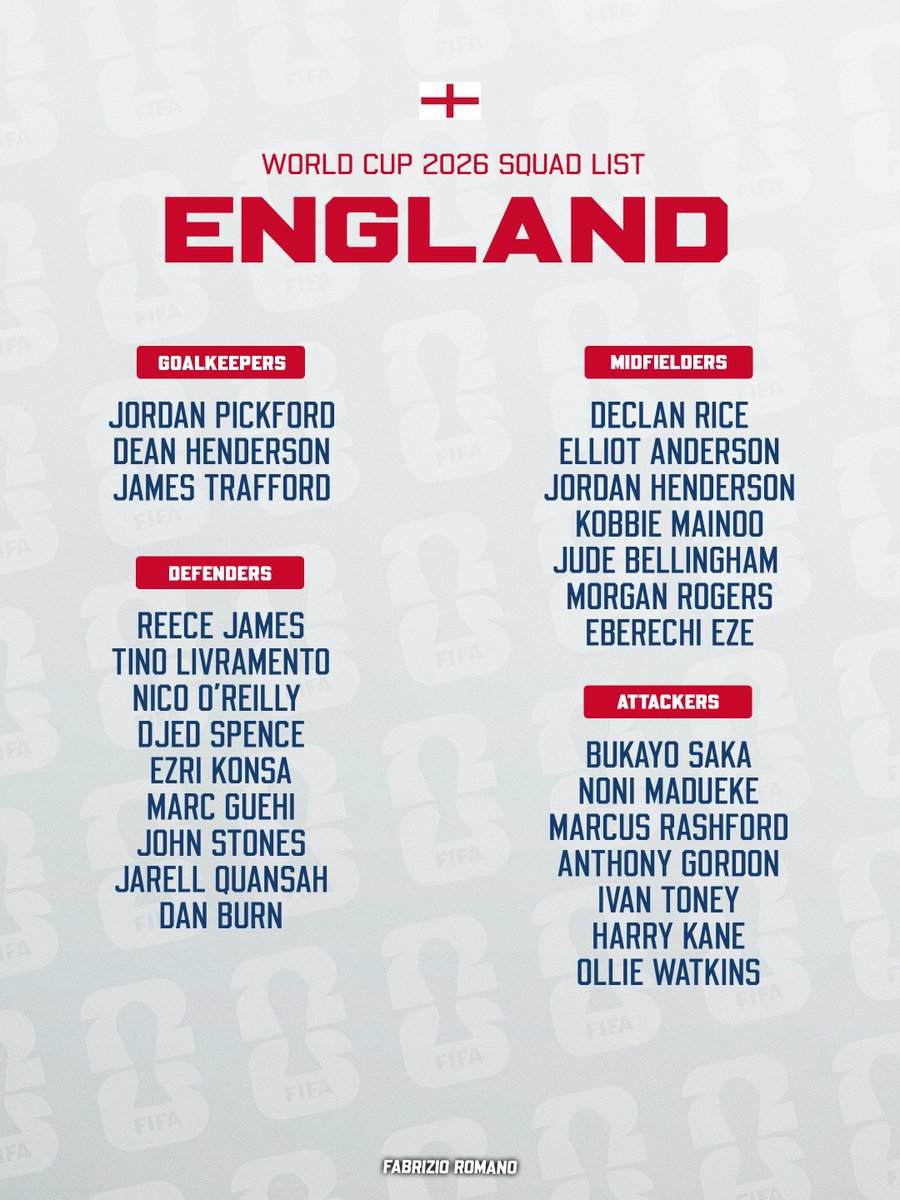
🚨🏴 OFFICIAL: England squad for the 2026 World Cup!
6,485
10,628
92,099
7,985,829
Crypto Jet 🦔 retweeted
May 21
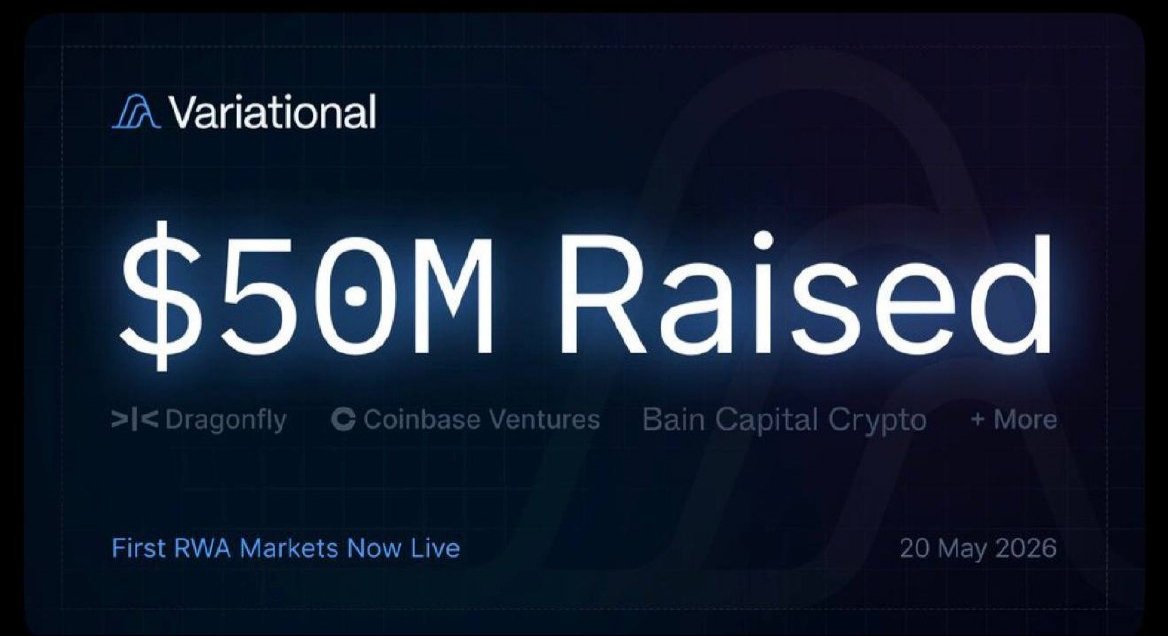
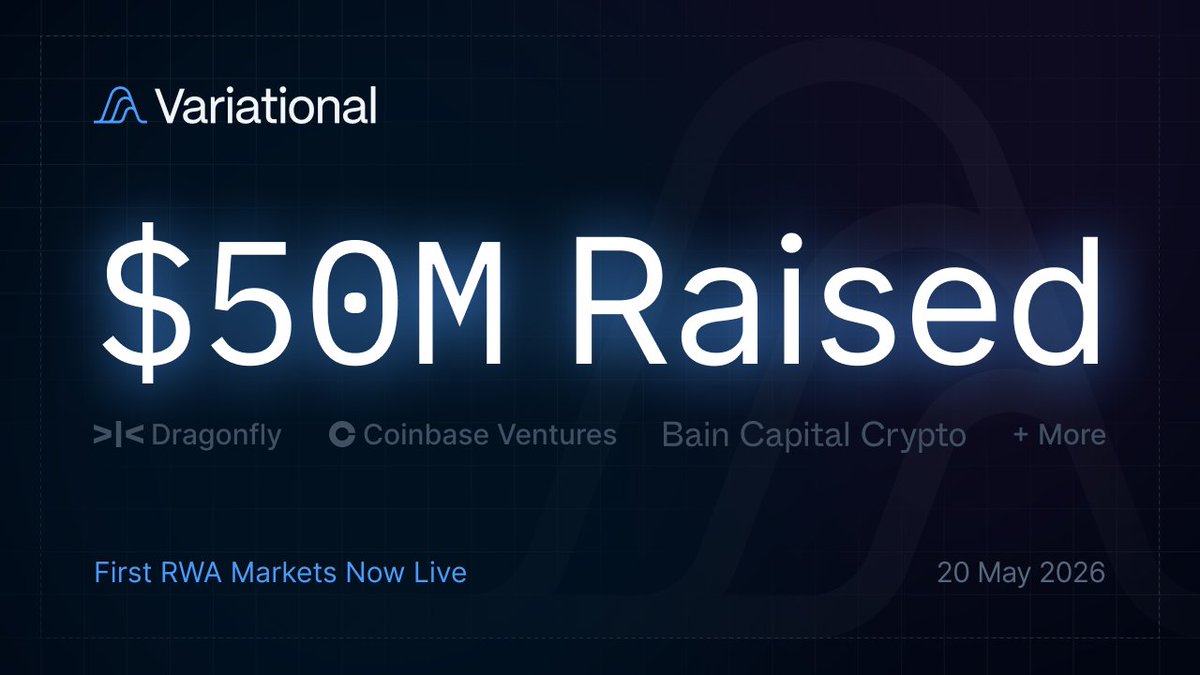
Variational just announced a $50 million raise
This led by Dragonfly, and put their first RWA markets (gold, silver, copper, oil) live Phase 2 (bringing tradfi liquidity on-chain for 100 RWA markets) will go live in June.
If you still started farming then start now atleast.
🔗 Link
omni.variational.io/?ref=OMN… ( 30 invites left )
🎟️ Code: OMNIBI
Trade only RWA's for now.
They will give more points for Trading: $XAU , $CL , $XAG , Copper
Thank me later at TGE <3
May 20

We’ve raised $50M led by @dragonfly_xyz to go all in on RWAs and bring TradFi liquidity on-chain.
Today, we're launching Phase 1 of our RWA rollout to stress-test our infrastructure before bringing 100 TradFi markets on-chain this summer.
1
2
11
311
Crypto Jet 🦔 retweeted
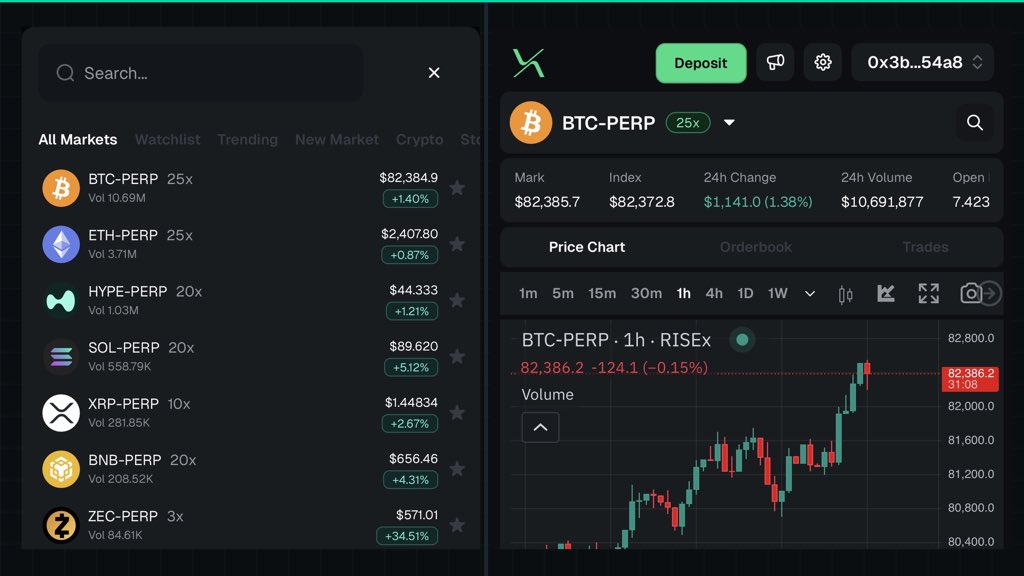
Been testing @risextrade for the past few days and honestly… the experience has been smooth.
Fast execution, clean UI, fully on-chain, and still extremely early.
>>>Comment for invite codes<<<
What caught my attention👇
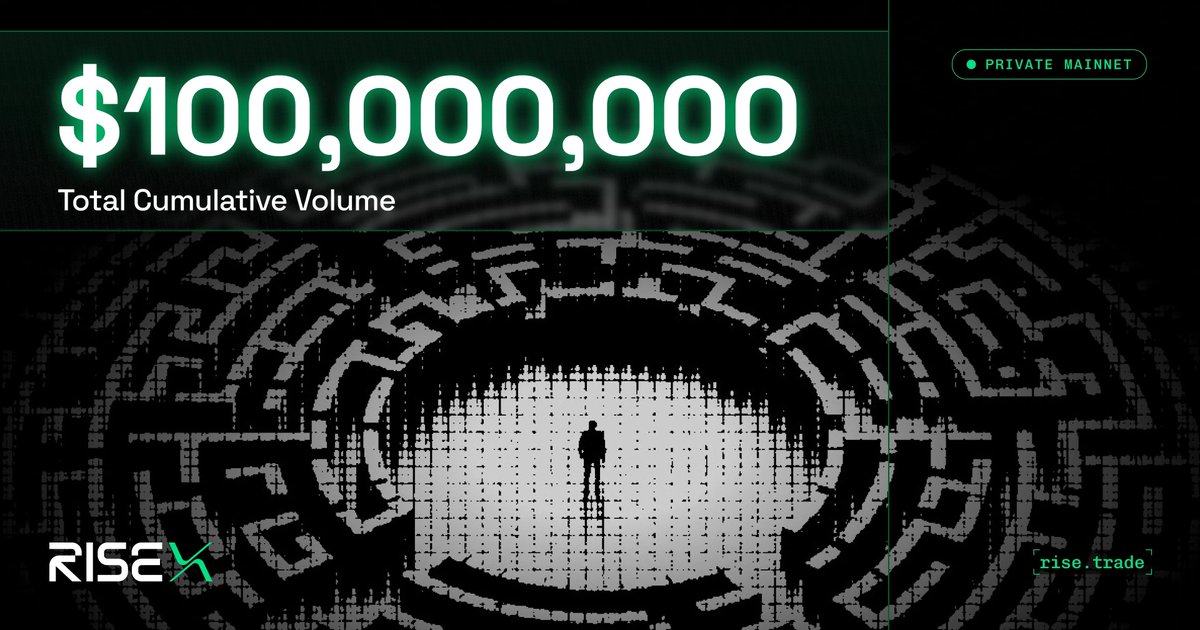
»» $100M trading volume already crossed
»» Invite-only private beta mainnet
»» Built on @risechain
»» Fully on-chain perpetual exchange
»» Real-time execution with millisecond settlement
»» Around ~500 early users when volume crossed $100M 👀
And now things are getting even more interesting:
@tread_fi just launched a boosted campaign for RISEx traders:
»» 10x TREAD points on RISEx volume
»» Campaign: May 6 → May 13
»» 100 additional access codes being distributed
»» Early users may qualify for BOTH RISEx RiseChain rewards later
I’ve been trading $BTC & $ETH there alongside my other perp setups and the product genuinely feels solid. Team is active, execution is clean, and they’re clearly building aggressively behind the scenes.
May 5

$100M in weekly volume.
Fully onchain atomic orderbook with millisecond execution.
Real-time trading, live on RISEx. Trade 24/7.
go.rise.trade/invite
2
5
13
893
Crypto Jet 🦔 retweeted
Apr 15
Sora, Kling, Veo, Midjourney, Runway, Flux, Ideogram, GPT-4o image gen, Seedream
All in one open-source studio. no subscription. self-hosted or hosted free.
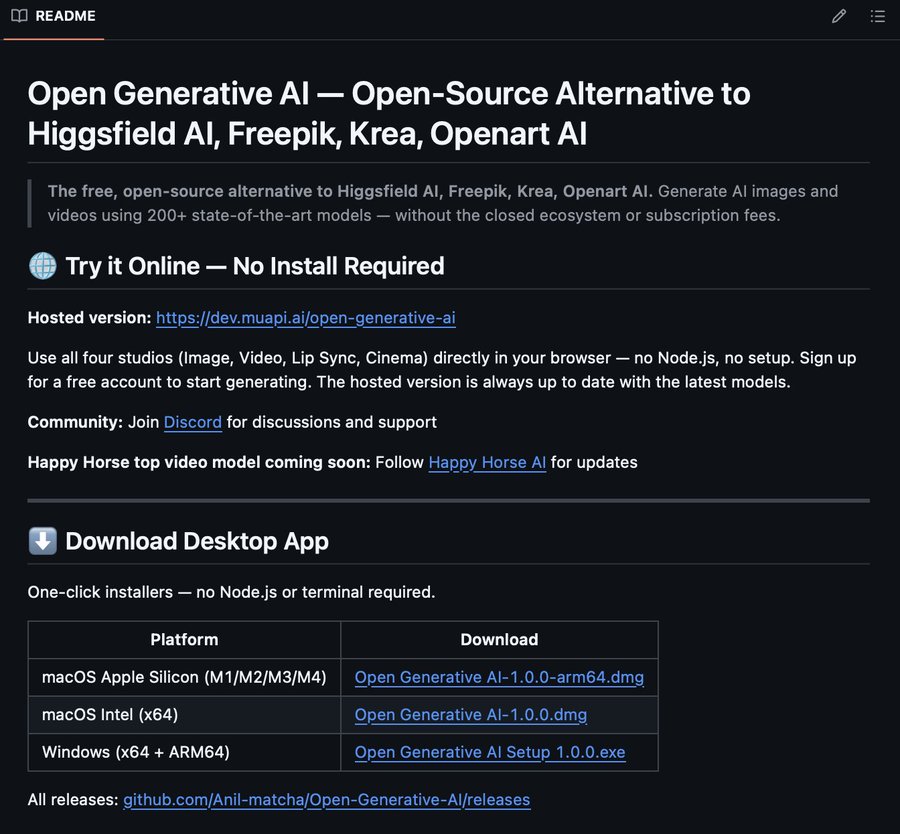
It's called Open Generative AI, an open-source alternative to Higgsfield AI, Krea, Freepik, and Openart AI, with 200 models across four studios.
Here's what the four studios cover:
→ Image Studio -- 50 text-to-image models, 55 image-to-image models, auto-switches based on whether a reference image is uploaded. Feed up to 14 reference images into compatible models like Nano Banana 2 Edit and Flux Kontext
→ Video Studio -- 40 text-to-video models (Kling v3, Sora 2, Veo 3, Wan 2.6, Seedance 2.0, Runway Gen-3, Hailuo), 60 image-to-video models
→ Lip Sync Studio -- 9 dedicated models. Upload a portrait audio and get a talking video. Or take an existing video and sync lips to new audio
→ Cinema Studio -- pro camera controls (lens, focal length, aperture, camera body) that translate directly into prompt modifiers for photorealistic cinematic shots
Here's the wildest part:
it ships as a desktop app.
one-click installers for macOS Apple Silicon, macOS Intel, and Windows. no Node.js, no terminal, no setup.
or just use the hosted version at dev.muapi.ai/open-generativ… with no install at all.
4.5K GitHub stars. 821 forks. desktop app hosted version self-hostable.
100% open source. MIT license.
(link in the comments)
4
1
10
923
Crypto Jet 🦔 retweeted
Apr 15
Polymarket open sourced a full trading terminal built in Rust and nobody is talking about it.
It's called polymarket-cli, and it covers everything from market discovery, limit orders, market orders, batch orders, portfolio tracking, on-chain contract operations, and bridging.
JSON output on every single command.
Here's what that means in practice:
polymarket -o json markets list --limit 100 | jq '.[].question'
Every market on the platform. Piped into whatever you're building. In one line.
github.com/Polymarket/polyma…
2
2
12
671

Apr 6
Ever been through this:
You and someone were on great terms, actually very close. No fight, no argument. Then out of nowhere they start holding grudges and giving you attitude. What causes that?
1
4
11
Crypto Jet 🦔 retweeted
This guy created an AI job search system for Claude Code that scored 700 job applications and actually got him a job.
1
2
8
897
Crypto Jet 🦔 retweeted
Mar 28
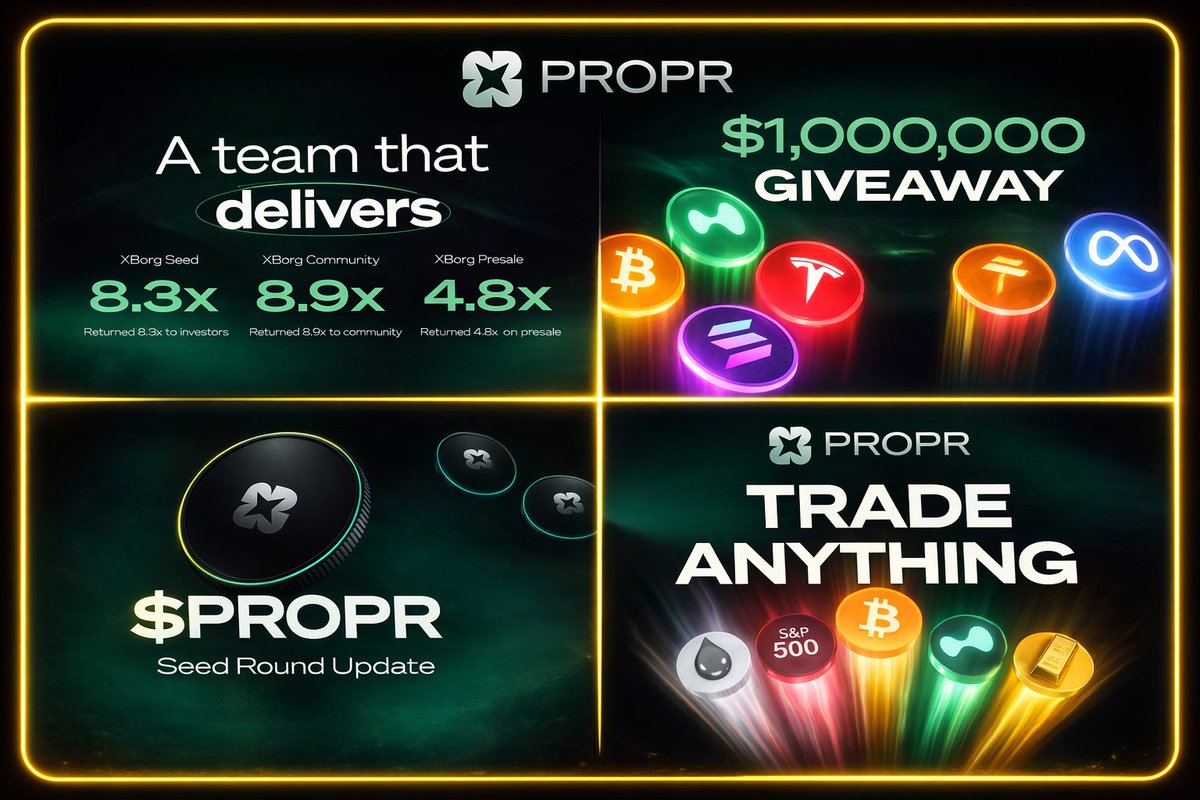
🚨This might be the cleanest thing built on Hyperliquid
Onchain Prop Firm on @HyperliquidX is here @ProprXYZ and they recently raised $1.5M in seed
🔗 app.propr.xyz/login?r=W6C1h7…
» Funded trading accounts up to $100K
» Trade crypto, equities & commodities
» Built on Hyperliquid
⸻
What Propr does is
➜ Fully onchain (trades, payouts, positions verifiable)
➜ Up to 80% profit split
➜ Instant withdrawals (USDC)
➜ No time limits / no consistency rules
➜ API support (algo trading allowed)
⸻
◽️ Live Transparency Dashboard
🔗 propr.xyz/transparency
»» Track payouts, revenue, pass rates
»» Updates every ~15 mins
»» No black-box operations
1
5
20
1,369
Crypto Jet 🦔 retweeted

Mar 25
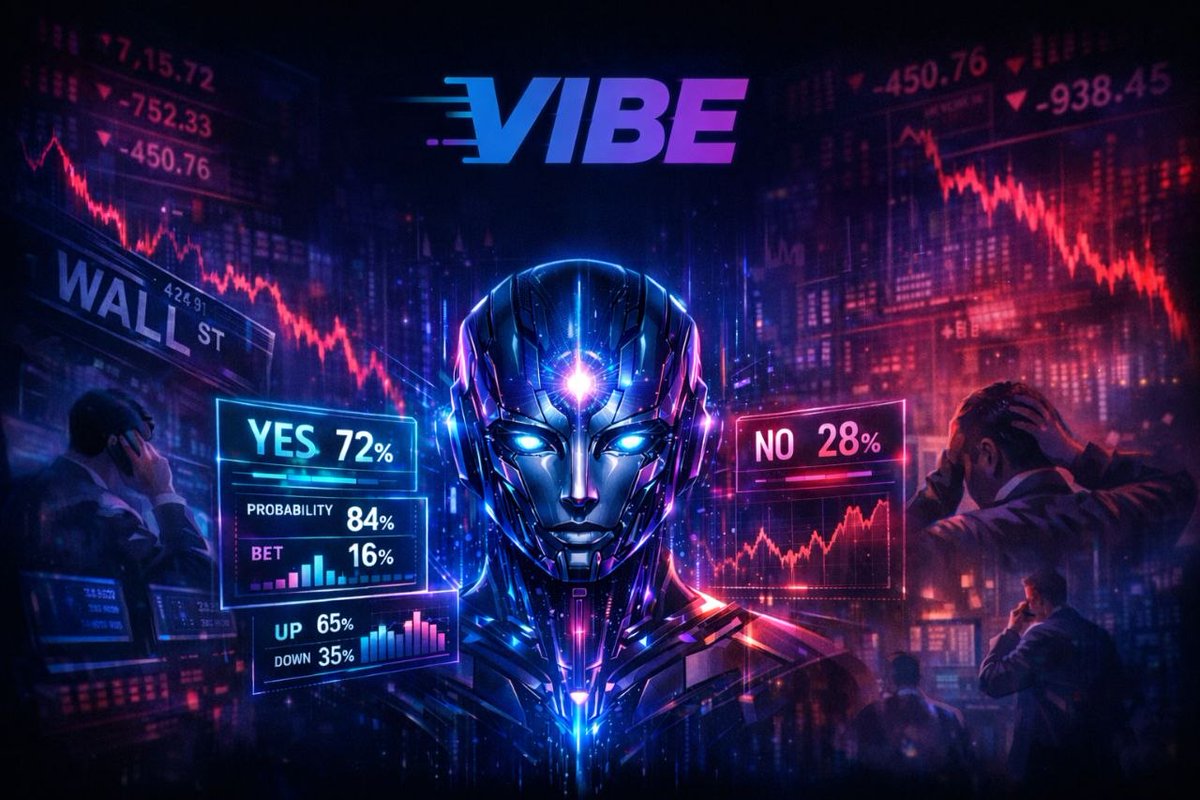
The fusion of prediction markets and AI isn’t just another trading tool, it’s a structural shift in how information gets priced. When models can ingest live data, spot mispricings in seconds, and act without hesitation, the old advantages of speed, access, and gut feel start to erode.
Wall Street’s panic makes sense: the edge is moving from who you know to what your system can see. Uncertainty won’t vanish completely, markets will always have noise and black swans, but the window to exploit it is shrinking fast.
What we’re watching isn’t the end of risk, it’s the end of lazy alpha. And for anyone still trading on yesterday’s information, that feels a lot like the end of the world.
2
2
7
1,235
Crypto Jet 🦔 retweeted
Mar 12
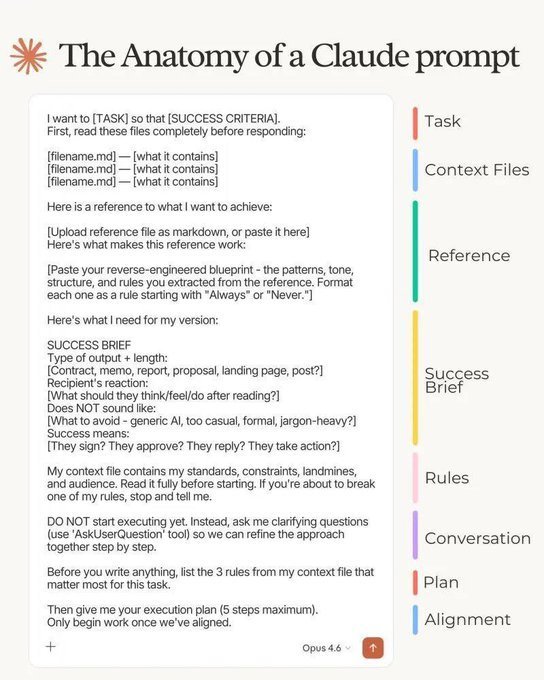
How T Write An Effective Claude 4.6 Prompt
1. Task: State your goal clearly. Skip phrases like “act as an expert.”
2. Context: Attach any rules or info the AI should know.
3. Reference: Give examples for tone or style.
4. Brief: Specify output type, length, and success criteria.
5. Rules: Tell the AI to follow your standards.
6. Conversation: The AI should ask questions if needed.
7. Plan: The AI summarizes rules and its plan first.
8. Alignment: Start only after everyone agrees.
3
14
789
Crypto Jet 🦔 retweeted
Mar 11
AI is fundamentally changing prediction markets by removing human bias and processing data at a scale we can't match.
While traditional traders often rely on "gut feelings" or delayed news, AI agents analyze global sentiment, economic shifts, and historical patterns in milliseconds.
This transition from manual speculation to data-driven precision is exactly why VIBE is positioning itself at the forefront. By integrating these smart tools, VIBE ensures that users aren't just guessing on outcomes, but are leveraging automated insights to stay ahead of market volatility.
It’s about turning the chaotic noise of global events into a structured, profitable strategy.

2
2
12
2,242
Crypto Jet 🦔 retweeted
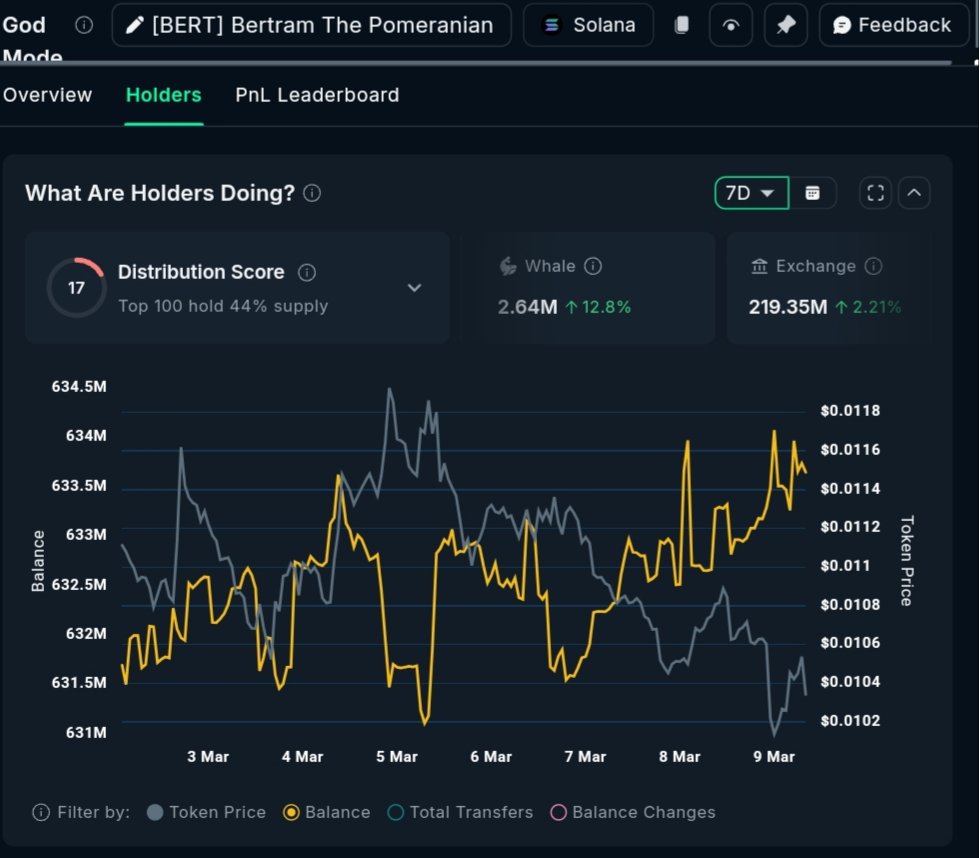
Over the recent period, $BERT Token has demonstrated notable accumulation momentum despite volatility.
Key observations from the Data:
-> Whale holdings increased by 12.8% (to 2.64M), indicating strong buying or accumulation by large players.
-> Exchange balances rose modestly by 2.21% (to 219.35M), suggesting some inflows but not heavy selling pressure.
-> Token balance held by top addresses (likely whales) has shown upward trends in several instances, rising from lows around 631–632M to peaks near 634M .
-> The Distribution Score sits at a low 17, with the top 100 holders controlling 44% of the supply, this points community own and whales holding.
Conclusion: In a tough stretch where numerous tokens have faded quietly or collapsed amid market dips and project shutdowns, $BERT stands out as a survivor with genuine holder conviction. The clear whale accumulation ( 12.8% in recent data), alongside price resilience and ongoing community-driven momentum, positions Bertram The Pomeranian for potential further upside if broader Solana sentiment improves. @bertcoincto
44
14
45
11,110
Crypto Jet 🦔 retweeted

Mar 8
GN Hedgehogs, the weekly recap is here! 🦔
> Round 2 of the Creator Campaign wrapped up
> Our CEO dropped thoughts on prediction markets vs gambling
> The full podcast with @_EMAgency went live
> We joined Based Spaces.
Let's recap 🧵

16
13
12
3,309
Crypto Jet 🦔 retweeted
Mar 7
From 2023 to 2026, prediction markets exploded in popularity, with platforms like Polymarket and Kalshi seeing billions in trading volume on everything from elections and geopolitics to sports, entertainment, and niche events.
But this growth came with a dark side:
hundreds of millions in trades ended up tied to questionable or disputed outcomes. Over $400 million has been traded on markets that later faced major disputes, often due to ambiguous resolution rules or poorly worded market questions.
Examples include debates over whether a political figure "wore a suit" at an event, whether a meeting between leaders "counted" based on specific reporting sources, or edge cases in cultural awards and performances (like Super Bowl halftime details or Time magazine recognitions). These ambiguities led to widespread trader outrage, Discord battles, and accusations that resolutions ignored "objective reality" in favor of narrow, technical interpretations.More than $100 million in markets experienced delayed resolutions or highly controversial payouts.
High-profile cases involved tens of millions wagered on events like geopolitical strikes, leadership changes, or celebrity actions, only for resolutions to drag on amid complaints, rule changes mid-market, or conflicting decisions across platforms (e.g., the same event settling "Yes" on one site and "No" on another).
Some disputes escalated to public backlash, proposed rule updates (like Kalshi's adjustments after a $55 million "death market" controversy), and even regulatory scrutiny.Adding fuel to the fire: several wallets reportedly pocketed $1 million from perfectly timed trades placed right before outcomes were finalized or publicly known.
Suspicious examples include massive, last-minute bets on events like the capture of Nicolás Maduro (yielding $400k profits), precise predictions on military strikes, Google product launches, awards announcements, and Super Bowl halftime details often from fresh accounts that nailed improbable sequences of outcomes.
While platforms prohibit insider trading, enforcement remains limited in this regulatory gray zone, sparking investigations, congressional bills (e.g., bans on government officials trading), and widespread suspicion of leaks, classified info, or early access advantages. Importantly, these issues weren't caused by smart contract bugs or hacks.
They stemmed from human elements: vague market wording, subjective oracle decisions, delayed or inconsistent resolutions, and insider advantages where privileged knowledge (or suspiciously good timing) created unfair edges.The core problem? Prediction markets promise efficient, truth-revealing prices through skin-in-the-game betting but poorly defined markets, weak resolution processes, and unaddressed insider edges undermine trust, distort accuracy, and invite exploitation.
The platform that truly fixes this through crystal-clear rules, robust and transparent dispute mechanisms, fair resolution oracles, strong anti-insider safeguards, and user-aligned incentives will dominate the space and unlock the full potential of prediction markets as reliable forecasting tools.
The answer is VIBE.

3
2
9
1,254
Crypto Jet 🦔 retweeted
Your "No Budget" Excuse Just Died: 25 Pro AI Tools for Free
-> Claude is FREE
-> ChatGPT is FREE
-> Gemini is FREE
-> Grok is FREE
-> Perplexity is FREE
-> DeepSeek is FREE
-> n8n is FREE (self-hosted)
-> LangChain is FREE
-> LangGraph is FREE
-> CrewAI is FREE
-> Hugging Face is FREE
-> LlamaIndex is FREE
-> Ollama is FREE
-> Cursor is FREE (starter)
-> VS Code is FREE
-> GitHub is FREE
-> Replit is FREE
-> Supabase is FREE
-> Vercel is FREE
-> Cloudflare Workers is FREE
-> Zapier is FREE (starter)
-> Make is FREE (starter)
-> Notion is FREE
-> Google Colab is FREE
-> Kaggle Notebooks is FREE
-> YouTube is FREE
What’s your excuse for not learning AI yet?
2
3
9
634