
Human centered storyteller | RWAs • DeFi • Onchain Finance • Amb @veri_sense | @AckinackiChain
Joined April 2025
- Tweets 27,562
- Following 1,843
- Followers 3,090
- Likes 50,512
1,164 Photos and videos






Pinned Tweet

22 Dec 2025
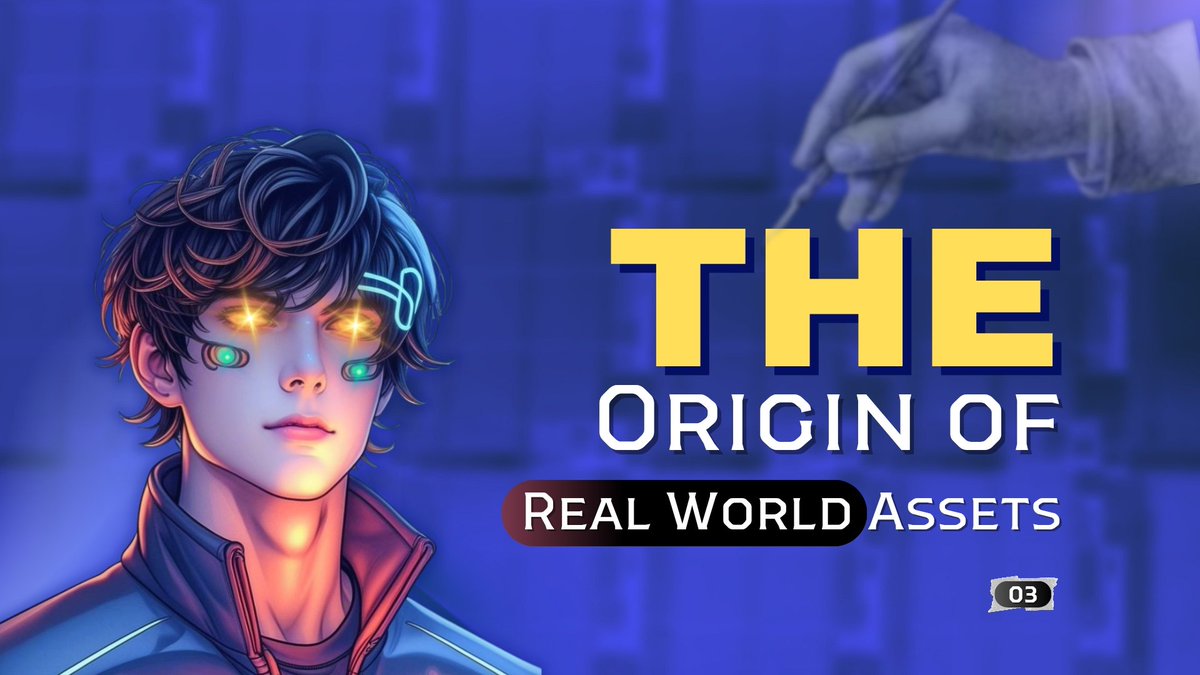
There was a time when there was a silent promise associated with every single unit of money in circulation.
A guarantee that the teller would give you gold if you entered a bank and gave them that paper.
Trust turned into paper.
Have you ever wondered how this trust got its start?
4
1
22
676
Web3scribe retweeted

Mar 15
X Monetization: Ga yadda Ɗanbaiwa Ke tsara Post 20 cikin minti 5.
Domin tambayoyi ko neman karin haske.
Ina comment section 👇
Ayi retweeting saboda sauran masu neman X Monetization su amfana.
129
191
615
13,921
Mar 5
Idan komai ya kankama tsakanin acki nacki team da Kamfanin Circle wato masu USDC zasu chanza sunan USD stable coin da muke gani a cikin ackinacki app ko wallet izuwa USDC nanda wani Dan lokaci
Kamar Yadda @EugeneDAO ya sanar.
2
15
156
Mar 5
Assalamu alaikum.
Wasu lokuta abubuwa sukanzo sabanin Yadda Muke tunani Amma saide akwai kaddara mai kyau Ko akasin haka.
Na tsawon lokaci na zama inactive a duka social handle's dina sakamakon wasu dalilai But alhamdulillah abubuwa suna kan gyaruwa.
Ina bukatar adduar Ku...
30
1
45
624
Jan 16
🌹_Hello and Happy Friday_🌹
We've reached the end of another week, with all of our accomplishments and challenges coming with us.
If this week was tough, i wish you some relief from it all even if it is just for a bit today.
If this week has been easy then I hope all that kindness remains with you.
Find time to reflect on what you are grateful for this morning.
Gratitude for being able to wake up and for the independence to make a new day for yourself, whether it be to relax or try again.
I hope you find peace of mind and lightness in your heart as you enter the final day of the week.
May today be gentle on you.
Please say "GM!"
6
12
265
Jan 8
What if money was never meant to free us... but to quietly control us?
I've been thinking about how money has long promised to help us become free but really it puts us all in a cage with chains and locks.
It is a silent force nearly invisible but it dictates most of what we can do, where we can go and who gets to participate in our economy.
There's an interesting article I read that said that in 1944 the Bretton Woods Agreement created a new monetary system which put the US dollar at the centre of the world's trading system.
The Bretton Woods System gave the world a measure of stability, but it also established that access to international trade required the use of only one currency, which is ultimately controlled by a few individuals.
In August of 1971, President Nixon made the decision to remove the dollar from the gold standard.
By doing this money became untethered from anything of real value to something imaginary, sustained only on the basis of the trust people have for each other.
However, trust has an uneven distribution.
The impact of this realisation is magnified when i examine remittances sent home by migrant workers and the exorbitant fees that reduce a significant portion of these resources.
Each year, migrant workers send hundreds of billions of dollars to their families back home, but the percentage taken for fees diminishes the amount available to feed their families, pay for school fees or create small businesses.
Yet, no one appears to be aware of the adverse effects of these high transfer fees.
Additionally, I look at the potential of RWAs (real world assets).
Gaining awareness of RWAs opens our eyes to the possibility of access if we were to remove geographical and banking obstacles, as well as imposed fees.
If we could use digital representations of gold, real estate, government bonds and even farmland.
This would substantively reduce these barriers to access.
Ownership of an item can now be achieved by the owner and we will also see an increase in the ability of many people to participate in other things.
While I do not understand it as being a financial trend.
I perceive it as an evolution of how individuals belong within a marketplace.
It does not represent a 'loud' change.
Rather, it is a collection of smaller, incremental freedoms that did not exist previously.
This leads me to ponder the question of whether there are various other things that may begin to change, without being identified by the public, just as money has begun to change from its archaic and set format.
What quiet shifts in money/tech are you noticing in 2026?
1
10
166
Jan 8
GM Legends.
If you see this you’re early, if you reply you’re real. 🫂
41
37
427
Jan 7
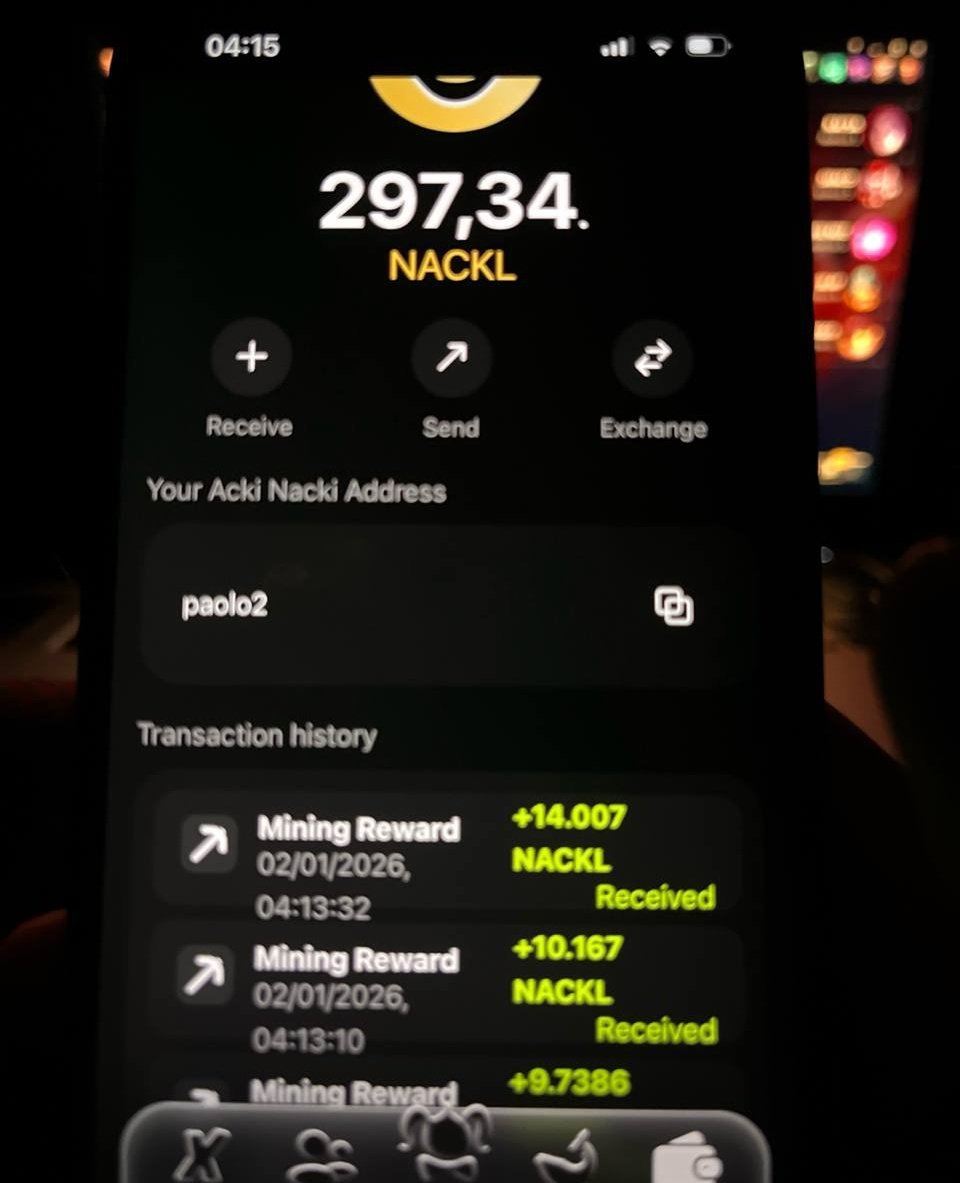
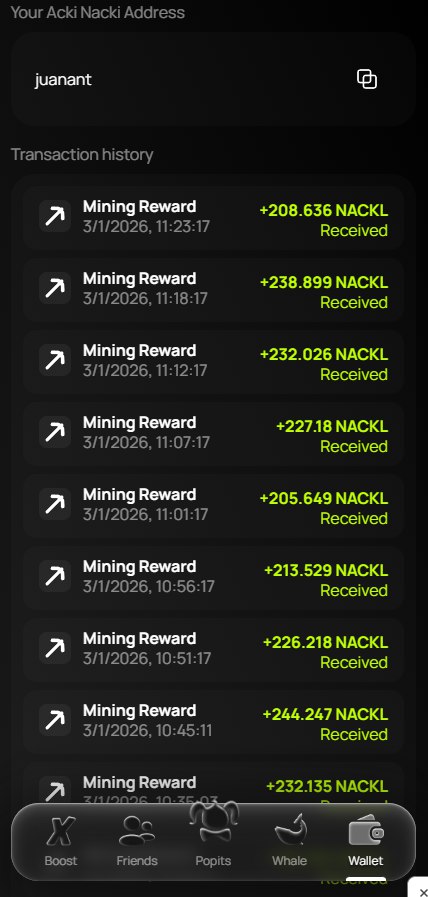
How to start mining $NACKL on Ackinacki.
Yesterday, many people asked me how to start mining $NACKL so I decided to break it down step by step for anyone who wants to get started.
Most people hear “mining” and think of noisy machines and high electricity bills.
That is not how Ackinacki works.
On Ackinacki mining is about participation not hardware.
HERE IS WHAT ANYONE NEEDS TO KNOW.
First, understand this clearly.
$NACKL is not mined through proof of work.
Ackinacki uses a probabilistic Proof of Stake system.
Rewards come from taking part in the network not burning energy.
Step 1: Join the ecosystem
Start with the official Ackinacki channels and tools.
This is where mining access, updates, and instructions are shared.
Avoid unofficial links.
Step 2: Set up a wallet
You need an Ackinacki compatible wallet to receive $NACKL rewards.
No wallet means no rewards, even if you are active.
Step 3: Start mining through the app or bot
Ackinacki allows everyday users to earn $NACKL through its interactive mining system.
You claim rewards by checking in, completing simple actions or playing the built in game.
No technical knowledge required.
Step 4: Increase your mining rate
Your rewards grow when you stay active.
Completing tasks, earning Boost X points and inviting others can raise your mining power.
Consistency matters more than speed.
Step 5: Advanced option (nodes)
For experienced users, running or participating in a node offers deeper network involvement and higher rewards.
This requires staking and technical setup, so it is not for everyone.
IMPORTANT TO KNOW
Ackinacki is still evolving.
Mining phases, rewards and requirements may change as the network grows.
Early participation is about learning and positioning not instant profit.
If you are yet to register on Ackinacki, check the comments for the link.
--------- ---------
👇👇👇 Check 👾
--------- ---------
1
8
264
Jan 6
Good morning CT
Most progress is quiet and most work goes unnoticed.
But we are here 🤝
• Still learning
• Still showing up
gm to everyone trusting the process
9
10
77
Jan 6
Most blockchains didn’t fail on technology.
They failed on participation.
Decentralization without people is fiction.
As networks grew, validation centralized and users became spectators.
Decentralization survived in theory, not in practice.
Ackinacki starts from that failure.
Consensus doesn’t require endless coordination.
It finalizes in two communication steps.
Roles are separated so the system runs in parallel instead of bottlenecking itself.
One token secures the network ($NACKL).
One token pays for execution ($SHELL).
~ No pre-mine.
~ No pre-generated supply.
~ No investor unlock cliffs.
Security is earned through participation.
The interesting part isn’t speed.
It’s access.
You don’t need specialized hardware to contribute.
Even lightweight users can help validate activity while using apps and be rewarded for it.
Ackinacki isn’t finished.
It’s testing whether decentralization can grow with usage instead of shrinking.
That’s the experiment.
Most networks look finished by the time you hear about them.
Ackinacki isn’t.
It’s still growing, still being tested and still proving how it scales with real usage.
If that matters to you the link is in the comments. 👇
Jan 5

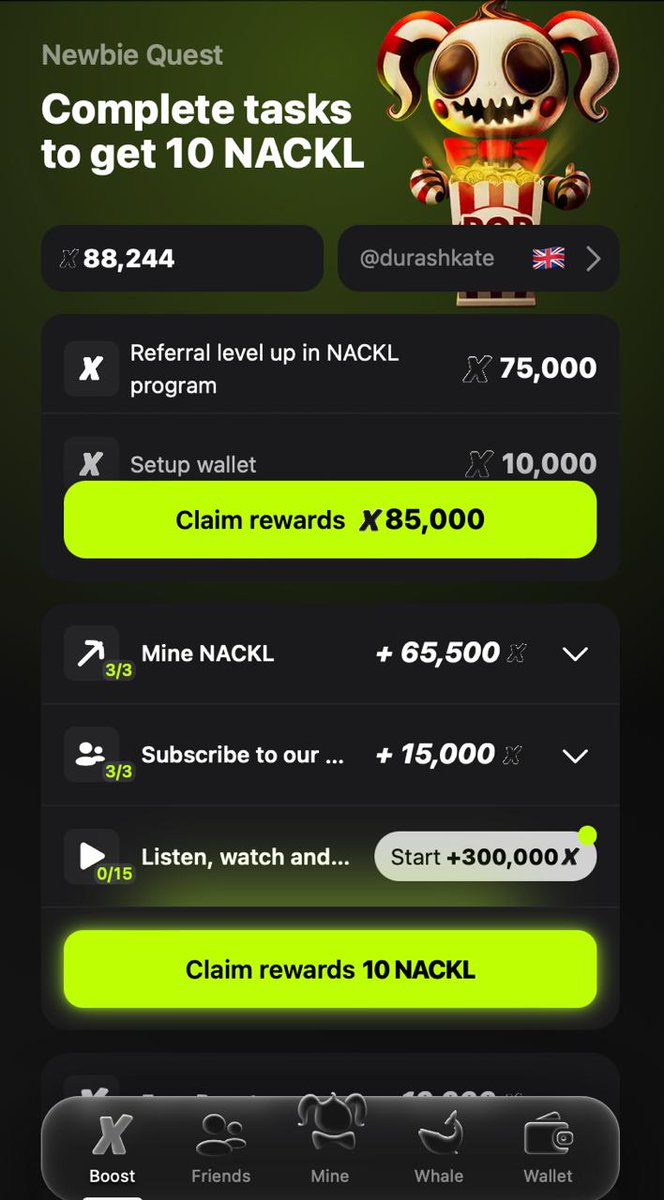
🔥 Get hundreds of Boosts and NACKL coins with new in-app tasks!
t.me/ackinacki_bot
We’ve prepared a true cornucopia of rewards — a special set of tasks now live inside the Acki Nacki app
🎵 Support Acki Nacki’s first single on different platforms —
and receive up to 300,000 Boosts for this simple action!
Once we verify that the tasks have been completed properly, your Boosts will be credited to your account.
💎 Want to get NACKL coins too? Easy. Subscribe to our main platforms and complete the Mining tasks — everything is inside the app, so you won’t miss a thing.
When all task groups are completed
(Mining, Channel Subscriptions, and Track Listening),
you will receive 10 NACKL coins directly to your wallet.
🏃 Go, go, go — the feast has begun!
5
2
12
262
Jan 5
HANYA MAFI SAUKI DA ZAKABI WAJEN SAMUN KYAUTAR 1 YEAR SUBSCRIPTION NAH CHATGPT 📣
Da farko Ka/ki ziyarci website dake kasa Amma Ka/ki cire bracket. 👇
em(.)bjedu(.)tech/en.
• Kushiga "create new email" tab
• Ka zabi Ko Ka chanzashi zuwa era(.)Me domain
• Ku saka sunanda yayi maku (email name)
• Idan Ka tabbar Ka kammala saika Bude sabon chatgpt account da wannan sabon email din.
• Check inbox Ka copying verification code naka
• Saikayi amfani dasu a wajenda aka bukata.
Shikenan Ka samu free subscription zaka iyayin amfani dashi wajen yin al'amuranka na yau da kullum.
Hausa version of @Astro_Nuel post.
Thank you Boss ✌️
Goodnight....(👾)....(🤝)....(👾)
Jan 5

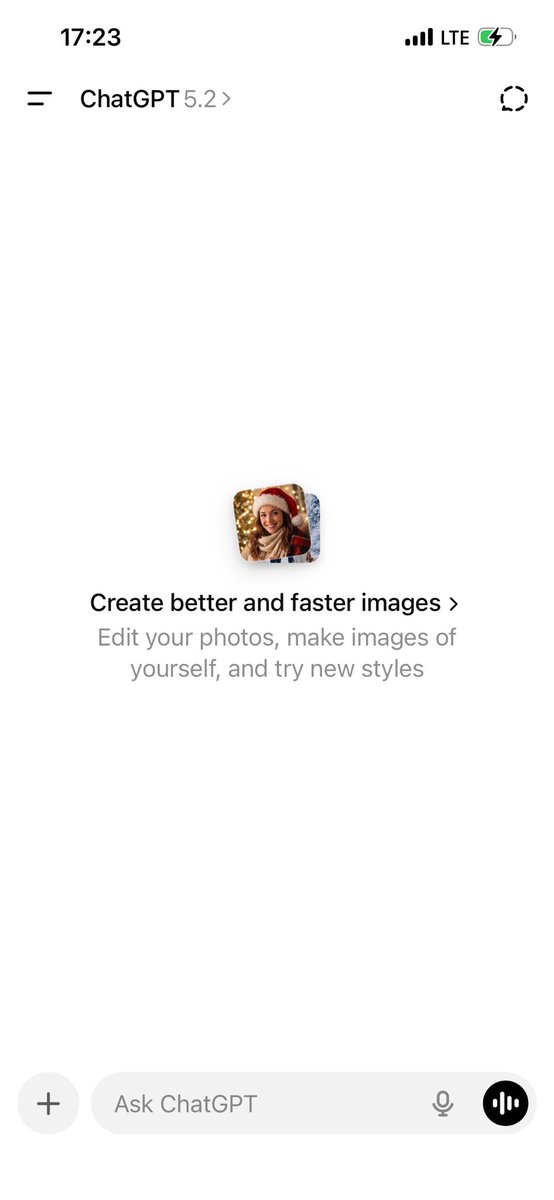
DO THIS TO ACTIVATE A 1YEAR SUBSCRIPTION PLAN ON CHATGPT without paying a dime 📣
Visit the website (remove brackets):
em(.)bjedu(.)tech/en
•Click on the “create new email” tab
•Select the erzi(.)me domain
•Pick a name for your email
•Once completed, create a new chatgpt acct
•Use the new email address you created
•Refresh your inbox
•Copy the verification code sent
•Paste it into chatgpt
And there you have it, free access to chatgpt plus for a year.
You can use this to scale up your skills, content creation, research, vibecoding, anything at all you want to do.
⚠️ REMEMBER IT EXPIRES IN A DAY ⚠️
DON’T BOOKMARK, GET TO WORK ASAP and enjoy free $240 saved.
P.S:
•Security is key, so I’ll highly suggest you use a browser without an installed wallet.
•If it doesn’t open, you can use a vpn (germany best).
•Follow all of the steps as detailed above and you’re GTG.
Credit : @ BigDoctoronX
3
7
215


Jan 4
I wake up tired.
Still type “GM fam” like my life depends on it.
At this point, GM is a personality trait 😭
Jan 3

Good afternoon...👾
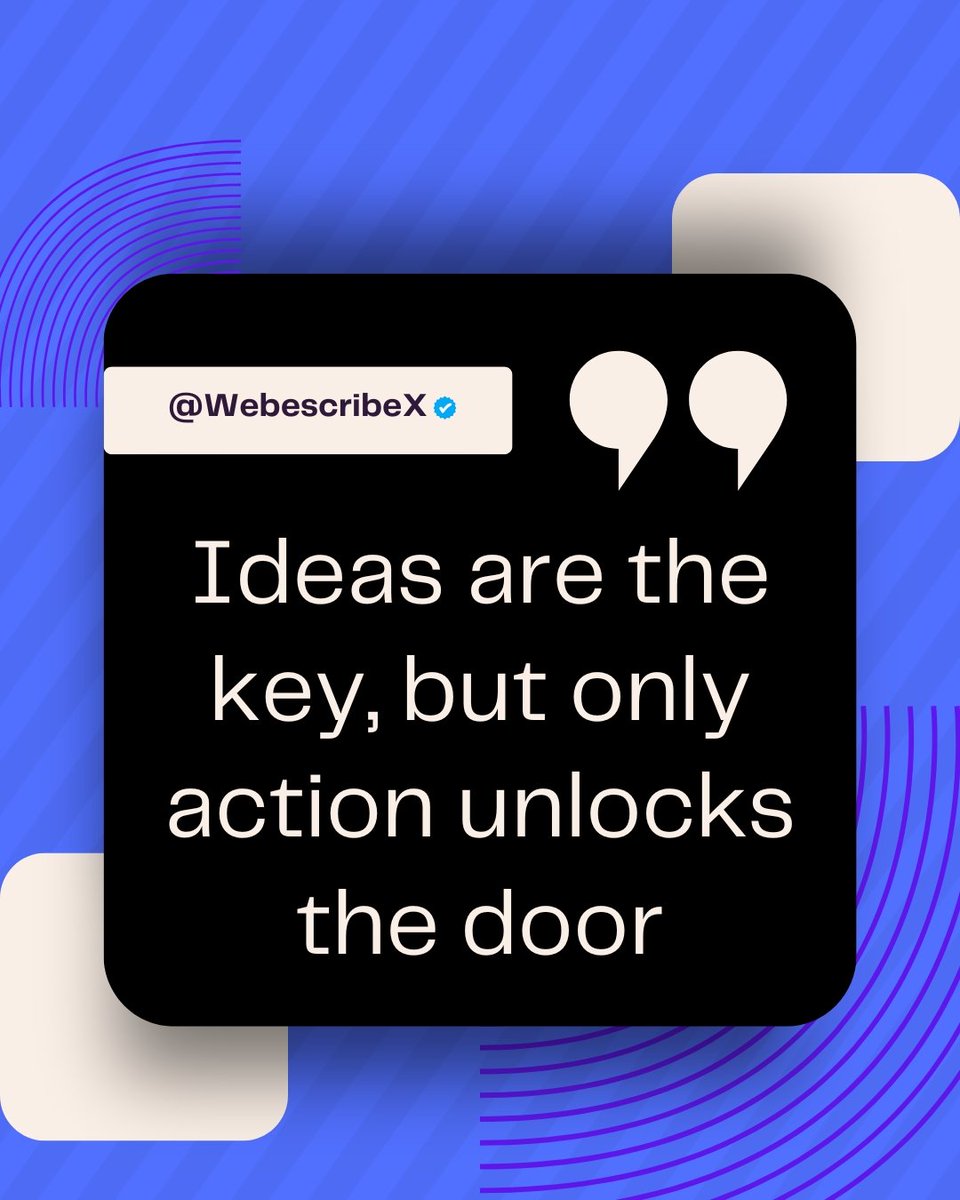
Although people talk a lot about ideas, only action has the power to change a game.
For instance, @ICPHUBS had challenges early because, although the concept was great, its adoption was very slow.
It is the realization that the implementation of the plan in the end, is what inspires trust.
What specific step can you take this afternoon to move forward?
12
12
148
Jan 3
Good afternoon...👾
Although people talk a lot about ideas, only action has the power to change a game.
For instance, @ICPHUBS had challenges early because, although the concept was great, its adoption was very slow.
It is the realization that the implementation of the plan in the end, is what inspires trust.
What specific step can you take this afternoon to move forward?

2
5
231