Joined May 2016
- Tweets 6,494
- Following 690
- Followers 1,614
- Likes 1,565
800 Photos and videos





20h
He's right.. It has...
IMHO he's one of the main psychos that made it more dangerous and divided. So.. he's been honest at least once in his political career.
Jun 16

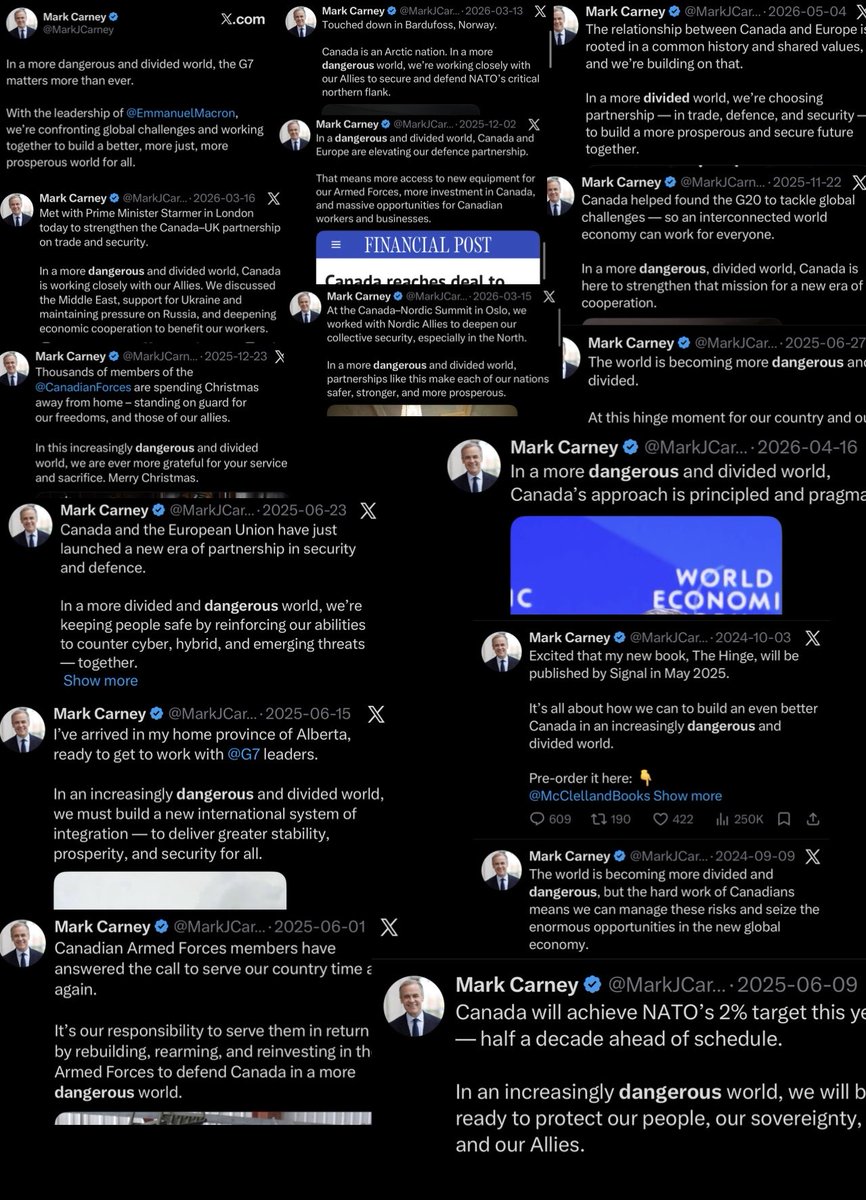
Here are all the posts where Carney says the world has become more dangerous & divided.
This is what a psyop looks like.
1
1
24
20h
Why is this not surprising? It's a scary world we live in.

Our study found that the current H5N1 bird flu outbreak is likely MAN-MADE and originated from gain-of-function experiments at a USDA biolab (Southeast Poultry Research Laboratory) in Athens, Georgia.
Not a SINGLE U.S. government agency has challenged our findings.
8
JM retweeted

Jun 16
France, the UK, Canada, and 11 others banned kids from social media at nearly the same time, with nearly the same law.
If your government actually answered to you, its laws wouldn't arrive on the same schedule as thirteen others.
277
3,278
7,100
116,244
JM retweeted

Jun 16
‼️BREAKING
Canadian law-enforcement is freaking out because they are losing the battle for C-22
they are PUSHING HARD for encryption access
Sorry guys, no one trusts you, or Canada, with the keys...... The entire world saw what you did to the truckers.
263
1,695
6,170
98,767
Jun 16
It's no joke... if Bill C-22 gets passed, we will be on the same level as North Korea. GoC is trying to push it to a vote on Thursday June 18th 2026 without amendment discussion.

They are trying to pass a massive surveillance law before summer recess, and they just shut down the democratic process to force it through.
We all know what happens once a government gets unchecked access to our private lives.
1
73
Jun 16
Possibly The End of the Iran Conflict:
Barring any sabotage before the, President Donald J Trump is slated to sign deal with Iran Friday. Oil dropped to $80/barrel in response to the MOU.
OP: @PrometheanActn @BarbaraMBoyd @sjkokinda
Jun 15

Trump Settles Iran and Ukraine as the War Machine Loses Control x.com/i/broadcasts/1lKQRREpy…
1
47
Jun 16
Barbara Boyd explains the US funded biolabs that are working with dangerous pathogens and danerous "Gain of Fuction" research and even running human clinical trials.
25
JM retweeted
Jun 16
It's been pretty obvious to me that Canada is not what Canadians think it is. We've been controlled in many ways that we shouldn't be. It's easy to see this in the rhetoric our elected officials spew on a daily basis.
For one perfect example, we need to look no further than America's "America First" policy. In Canada, our politicians say "Canada First," but they mean two very different things. When they say "America First," they literally mean the American people. America is a republic built on "We the People." However, in Canada, "Canada First" refers to the Crown corporation of Canada. That's why it can be "Canada First" but "Canadians last." We cannot fix this system from within because it isn't broken—it is operating exactly as designed. The system sees this exploitation not as a flaw, but as the features functioning exactly how they are supposed to.
16
81
1,071
JM retweeted
Jun 14
IMHO: The Canadian Wildfire "Crisis" Is an Exercise in Institutional Negligence and Political Convenience
Let’s be entirely honest: the mainstream media and political elites have perfected a highly lucrative playbook. The moment smoke hits the atmosphere, figures like Mark Carney and federal regulators immediately rush to microphones to blame carbon dioxide. But if you actually pull back the curtain and look at the boots-on-the-ground facts from the recent 2023–2025 fire seasons, the real culprit isn't a trace gas—it is a combination of gross institutional negligence, active corporate malpractice, and criminal actions.
The narrative that CO2 is magically turning Canada into a tinderbox is a highly profitable smoke screen. Here is what is actually going on.
The "Powder Keg" Malpractice: Chemical Spraying
For decades, Canadian forestry policies outside of Quebec have been actively setting the stage for massive burn radiuses. Industrial timber corporations routinely engage in aerial spraying of glyphosate-based chemical herbicides. Why? Because they want a single-species "cash crop" of highly valuable conifers like pine and spruce.
The problem is that this targeted spraying intentionally kills off nature's natural shield: deciduous "broadleaf" trees like aspen, birch, and poplar. Deciduous trees act as natural moisture sponges and green firebreaks. By wiping them out, commercial forestry has systematically engineered millions of hectares into highly flammable, resin-packed monoculture plantations. When a fire hits these chemically altered landscapes, it burns exponentially hotter and faster. This isn't a climate crisis; it’s a managed industrial failure.
Tactical Negligence and Deliberate Burns
The sheer scale of the acreage burned is heavily manipulated by active management choices on the ground. During peak fire seasons, emergency agencies routinely deploy "tactical backburning" (planned ignitions), intentionally setting fires to clear out fuel ahead of a blaze. In numerous documented cases, sudden wind shifts have caused these government-set fires to escape containment lines, expanding the burn radius into areas that never would have caught naturally.
Combine that with "modified response zones"—the deliberate policy to simply let fires burn unhindered in remote areas—and the massive national burn metrics look far less like a natural disaster and far more like an administrative choice.
Arson and Human Intent
We cannot ignore the human element that initiates these events. High-profile criminal cases—such as the conviction of Brian Paré in Quebec for intentionally lighting 14 forest fires—prove that bad actors are actively sparking these blazes. While officials claim arson only accounts for a fraction of total burned land, the timing of these deliberate acts is undeniably convenient for a political class desperate for visual aids to justify carbon taxation and sweeping green regulations.
Debunking the CO2 Narrative
The foundational argument of the climate panic is that human-emitted carbon dioxide (CO2) is driving unprecedented, apocalyptic changes to the planet's weather patterns. However, historical data heavily challenges this linear narrative:
- The Historical Baseline: Long-term historical data indicates that Canada’s current wildfire activity is not unprecedented. In the early 20th century, before modern industrial CO2 emissions accelerated, Canada regularly experienced massive wildfire seasons that matched or exceeded modern burn rates.
- CO2 is Green, Not Dry: From a strictly biological standpoint, increased atmospheric CO2 actually aids plant resilience during dry spells. Higher CO2 levels allow trees and vegetation to optimize their stomata (pores), meaning they retain more water and lose less moisture to the atmosphere through transpiration.
- The Global Greening Trend: Satellite data from NASA has consistently shown that the earth has actually become significantly greener over the last few decades, largely driven by the fertilizing effect of increased CO2. A greener planet contradicts the narrative of a rapidly drying, dying wasteland.
The Bottom Line
When you add up the aerial chemical spraying, the tactical backburns that escape control, the "let-it-burn" zoning, and verified criminal arson, you get a massive, highly visible disaster. Blaming all of this on a fractional increase in atmospheric CO2 isn't just lazy science—it's a deliberate choice. It allows corporate actors to escape accountability for poor forest management while giving governments the perfect, unchallengeable excuse to push a climate emergency narrative.
1
2
88
Jun 15
Leader of PCC - Dave Bjorkman, explains debt loading in Canada: What it is, who did it and how bad it really is. A must see.... Every Canadian needs to know.

🙏Plain English - Foreign Direct Investment 101 For Canadians & First Peoples 🙏
🚨Understanding Inflows (You & Me) & Outflows (Crown First Class) the growing middle (you & me married to inflation)
2
2
28
JM retweeted
Jun 14
May 1

The next time you look down on a homeless, drug-addicted alcoholic, do yourself a favor: punch yourself in the face as hard as you can. Then, look at the damage in the mirror with a little empathy and say this to yourself: "MAID by the Government of Canada."
They start preparing Canadians earlier and earlier for the shortest route to their future. They push gender ideology on minors in schools, acting as if there is a prize for creating the most gender-confused and pronoun-defined humans. They push hormone therapies before children even hit puberty.
They displace teens and adults looking for work with subsidized immigrants. They offer pharmaceuticals to help citizens cope with what is being done to them. They are waiting with harder, free drugs they call "Safe Supply," dropping the "euthanasia icebreaker" as they routinely increase dosages. They invite drug dealers to set up shop in exchange for extremely strong and potentially lethal substances.
If these Canadians aren't already dead from overdose, suicide, disease, or violence—or left in a vegetative state—that is when they are officially ready to be "MAID by the Government of Canada."
1
1
22

JM retweeted
Jun 11
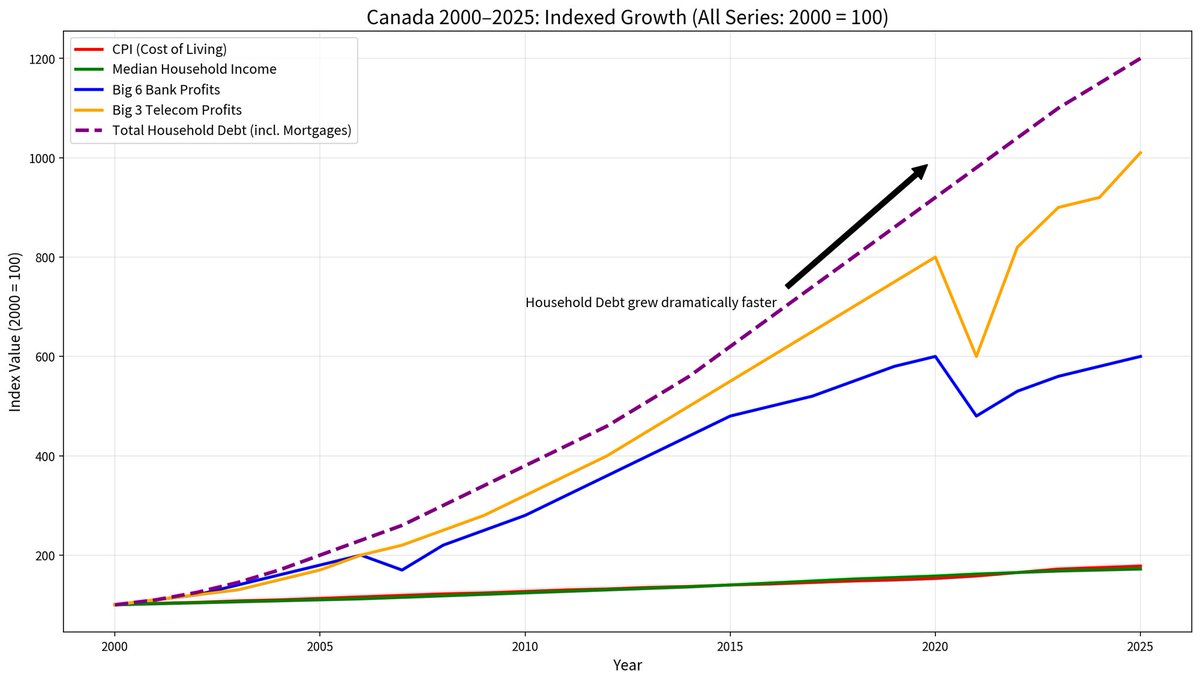
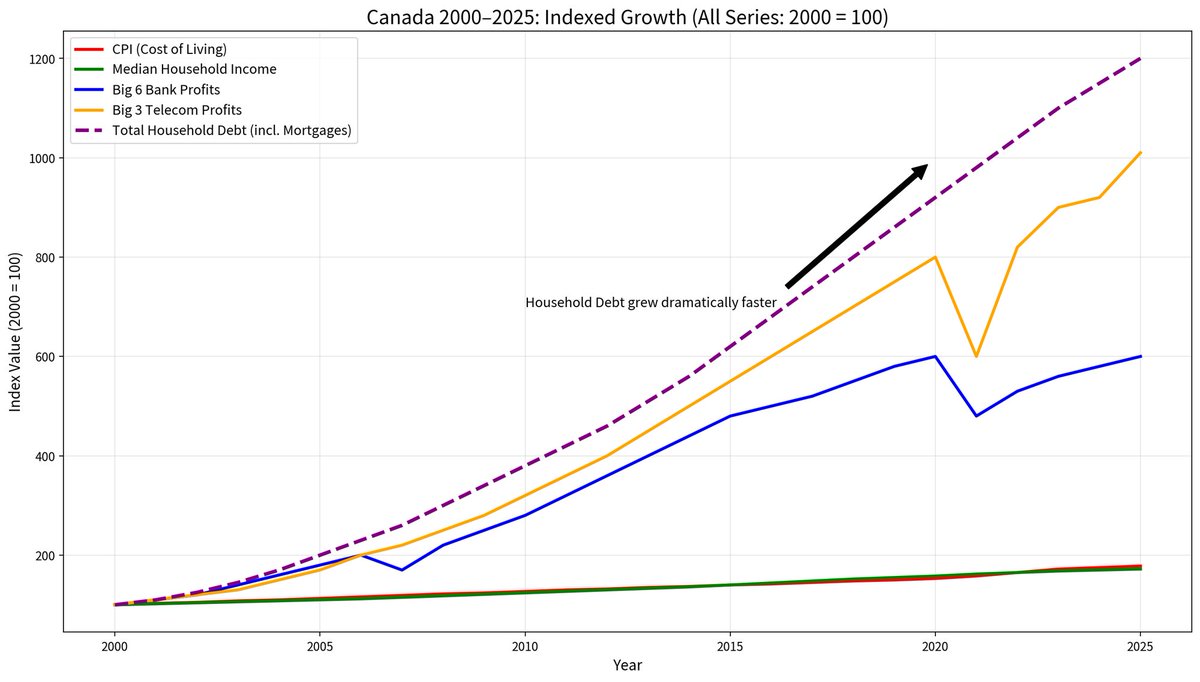
Unfortunately it's all true and fact checkable. Worse yet, I misplaced this chart and meant to include it. Sadly just more nails...
1
1
26
Jun 10
A new scam to pile on all the other scams.
Jun 10

Indians get caught red handed with a new scam and flip right the fuck out. 😂
42
JM retweeted

Jun 9
15
97
423
1,452
JM retweeted

82000 experienced construction workers without work due to cheap labour from other countries
136
651
1,806
77,875
Jun 10
It's a rigged system no matter who is in power, Canadians will always be powerless within it.
Let that sink in...
Tomorrow morning at 9:45 AM, the Bank of Canada is going to talk to us about interest rates. They want you distracted and stressing over your mortgage, because while you’re looking over there, the government just quietly snuck a massive law change into the budget.
They pushed the Bank Act review from 2026 out to 2033, giving the big banks a 7-year free pass from accountability while they clear $19 billion a quarter. Watch the full video to see how they did it.
Just a friendly reminder if you have not figured it out yet but the government is not here to protect you.. they are here to protect themselves, the elites and their own pockets..
26
JM retweeted

CANADIANS, WHETHER YOU CHOOSE VIOLENCE OR NOT…
…violence is coming to you.
YOU EITHER FIGHT BACK OR YOU DIE.
(The time for pleasantries has passed. Immigrants get your affairs in order and leave voluntarily now before you are forced to.)
49
358
1,403
27,569
Jun 9
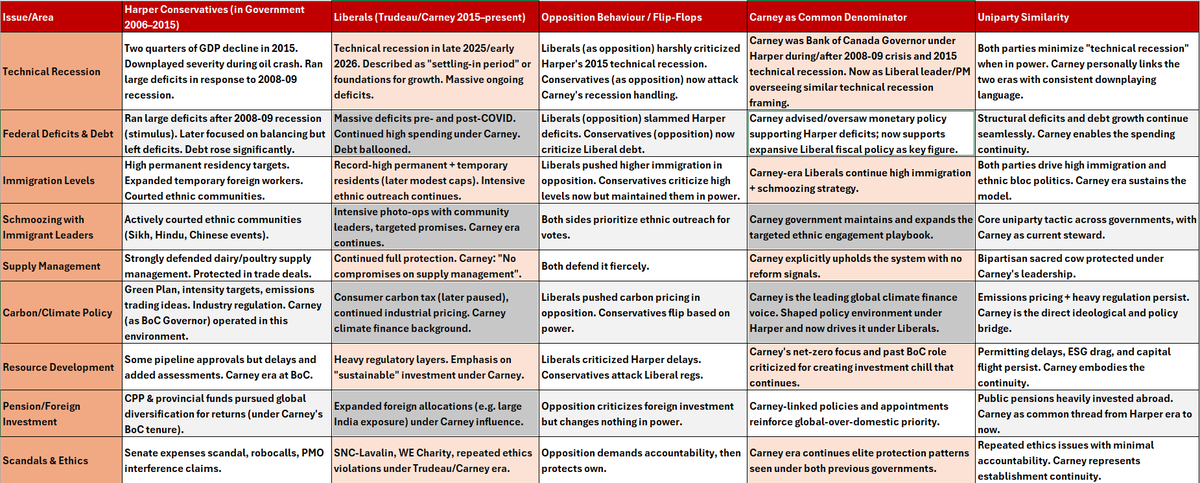
The most terrifying party is that this is closer to reality you'll ever see from CBC. Also, whether it's in your face Liberals or behind closed doors CPC.... they are no different other than superficially... (see image in reply)
Jun 9

1
25