
Building Web3 contents through Videography🎬🎥
Joined May 2024
- Tweets 5,734
- Following 1,320
- Followers 1,438
- Likes 26,390
289 Photos and videos






CREATOR.sol🪽 retweeted

May 21
📈 New Trading Campaign: @Onyx
🎁 Total Reward: $10,000 Weekly
🏆 Winners: For Everyone
⏳ Distribution: Weekly
🔗 Trade Now: app.onyx.live/trade/BTC
👀 How to Join?
• Register by connecting your wallet on @Onyx
• Earn points through trading & referrals
• Points are converted into weekly CASH rewards
• More points = higher rewards
💸 Rewards are distributed weekly based on total points earned by participants.
𝗗𝗶𝘀𝗰𝗹𝗮𝗶𝗺𝗲𝗿: Financial risks may be involved in airdrop activities. Always do your own research (DYOR) before joining any project!
🙌 #AirdropFam #FreeAirdrops #Onyx #Crypto #Airdrop #Giveaways #Web3
3,500
4,227
7,057
139,558

May 12
𝐇𝐎𝐖 𝐓𝐎 𝐒𝐓𝐀𝐑𝐓 𝐘𝐎𝐔𝐑 𝐘𝐎𝐔𝐓𝐔𝐁𝐄 𝐀𝐔𝐓𝐎𝐌𝐀𝐓𝐈𝐎𝐍 𝐉𝐎𝐔𝐑𝐍𝐄𝐘 🎙️
You can't miss this space for anything
-It's your turn to win
-It's your breakthrough
-It's you only chance at wealth
-It's the opportunity you've hoped for
MARK THE DATE🗓️✍️

Hi guys set your reminders.
x.com/i/spaces/1AxRnayVZMvxl
1
38
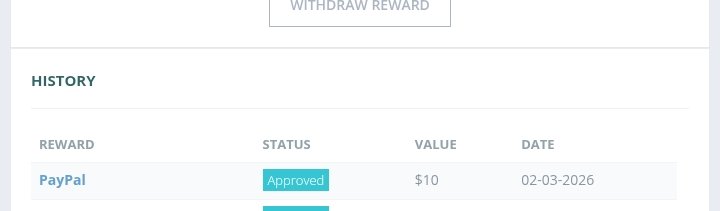
$10 Approved
Perfect way to start the month
If it's not too small for you
Follow @Web_3_Creator
Turn on notifications
Drop proff👇
1
3
169
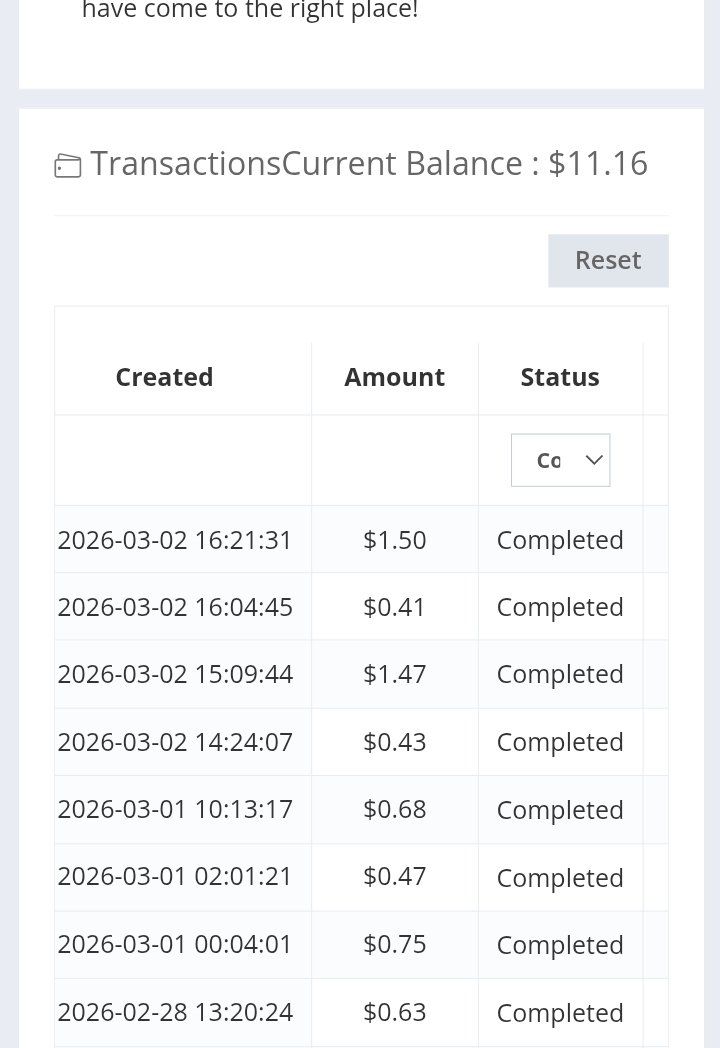
$11 made in less than 3days
If devs aren't paying, I run to my side hustle
Are you interested?
Follow @Web_3_Creator
Comment "Interested"
2
2
127
Feb 25
Another day to remind you that your idolo is a liar.
Your best bet to success
-Watch YouTube videos
-Buy a course
-Start becoming the best at something
-Don't give up
𝒲ℯ𝒷_3_𝒞𝓇ℯ𝒶𝓉𝑜𝓇 ✍️
1
3
43
Feb 25
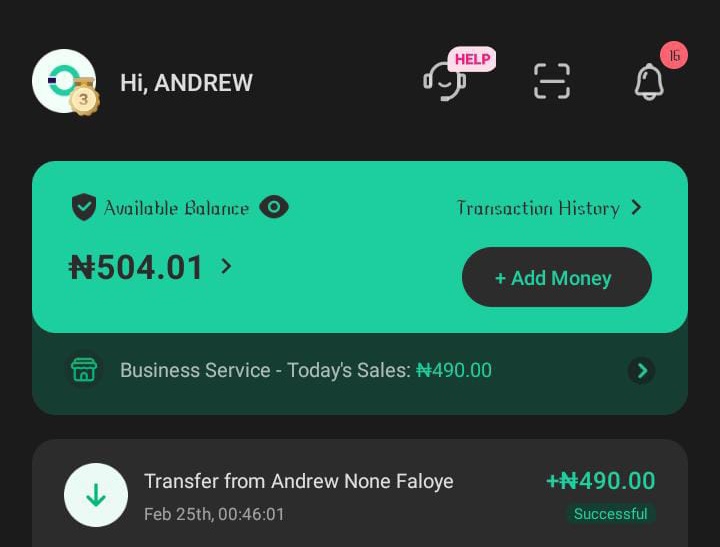
Quick N500 update
The app Is giving out free money
Grab yours before it's ends
🚀 Join PocketMoni!
Download the PocketMoni app using :
CODE: JKSDX
LINK:pocketmonibank.onelink.me/66…
2
55

81
25
94
5,839
Feb 20
I will shill Myself hard this season.
What do you do on the space?
1
7
57
Feb 16
I'm someone that would never be stingy with follows and comments
You engage me, I engage you
3
37
CREATOR.sol🪽 retweeted

Jan 27
Royaltiz is coming to @base to become the #1 consumer app.
> $15M revenue
> 200 athletes signed
> 220K users
Ready to trade your favorite stars?
8,826
6,221
8,907
154,836
CREATOR.sol🪽 retweeted
Jan 31
If you wait for the next LeBron James to be obvious,
you’re not early. You’re exit liquidity
7,741
6,127
7,264
85,149
Feb 16
🅖︎🅞︎🅞︎🅓︎ 🅝︎🅔︎🅦︎🅢︎ 🅑︎🅘︎🅑︎🅛︎🅔︎ 🅐︎🅟︎🅟︎
A work well done
I hope to be better though.
Give your honest reviews
#UGC #ContentMarketing #VideoViral
3
64
👉TYPES OF MARKETING 👈
Marketing is a massive, ever-evolving beast. To make it digestible, it’s easiest to look at it through two lenses: where it happens (Channels) and how it approaches the customer (Strategies).
Here is a breakdown of the primary types of marketing used today.
1.
The "Big Two" Approaches
Most marketing activities fall into one of these two philosophies:
* Outbound Marketing (Push): This is the traditional "loud" approach. The brand initiates the conversation by pushing a message out to a broad audience.
* Examples: TV commercials, cold emails, billboards, and radio ads.
* Inbound Marketing (Pull): This focuses on creating valuable content that draws customers in naturally when they are searching for a solution.
* Examples: Blog posts, SEO, and social media tutorials.
2.
Digital Marketing Categories
Since we live online, these are the most common types you'll encounter:
👉Search Engine Optimization (SEO): Optimizing a website so it ranks higher on Google for specific keywords.
👉Content Marketing: Creating videos, blogs, and ebooks to build trust rather than just selling.
👉Social Media Marketing: Using platforms like Instagram, TikTok, or LinkedIn to engage with audiences.
👉Email Marketing: Sending personalized messages to a list of subscribers to nurture leads.
👉Pay-Per-Click (PPC): Paid advertisements where you pay a fee each time someone clicks your ad.
👉Affiliate Marketing: Paying influencers or partners a commission for every sale they generate.
3.
Specialized & Modern Strategies
As technology and psychology evolve, more niche methods have emerged:
* Influencer Marketing: Partnering with individuals who have a dedicated following to endorse your product.
* Guerrilla Marketing: Using unconventional, low-cost, and high-impact tactics in public spaces to create "buzz" (e.g., a surprise flash mob or creative street art).
* Performance Marketing: A data-driven approach where brands only pay when a specific action—like a lead or a sale—is completed.
* Account-Based Marketing (ABM): A B2B strategy where marketing treats an individual high-value company like its own mini-market.
* Neuromarketing: Using neuroscience to track brain activity and eye movement to see how consumers actually react to ads.
4.
Traditional (Offline) Marketing
Don't count the "old school" out just yet. It still carries significant weight for local businesses and luxury brands:
* Print Marketing: Magazines, newspapers, and brochures.
* Direct Mail: Physical postcards or catalogs sent to your home.
* Event Marketing: Hosting or sponsoring conferences, trade shows, and pop-up shops.
> Pro Tip: Modern marketing is rarely just one of these. The most successful brands use an Omnichannel approach, meaning they provide a seamless experience whether the customer is on a phone, a laptop, or standing in a physical store.
1
9
396
#SuperBowl
I won't miss some of these events in coming years
Make I finish this school first
1
1
7
124
Jan 26
I've joined FanForce, where Creators and Fans join Forces.
@myfanforce uses AI-powered scores to measure the FORCE of every fanbase.
Just claimed my 100 Pulses and started earning Pulses. Join the FanForce community today!
Claim your referral code👇
V1R2EPKY
1
1
5
256
Jan 26
I just got accepted into the Web3Jobs institute Scholarship Program @web3jobsinc 😍
Excited to learn, build, and grow with this amazing community. Let's go!
You can start your application now
web3jobsinstitute.careers/da… x.com/web3jobsinc/status/201…

The Web3 Jobs Institute Scholarship is here.
Your chance to build and earn in the:
• Web3 space
• AI space
• Tech space
• Creator economy
Limited slots. Waitlist opens 11:00PM Tonight
Cohort begins Monday, January 26th.
If you’ve been waiting for a real chance to learn, earn, and grow this is it.
Get access to $200–$1,000 worth of tuition on
Register here: web3jobsinstitute.careers/da…
Limited Slots 💨
1
5
236
Jan 24
Sincerely speaking, this is exactly what web3 Jobbers face and this issue is about to be tackled by the @web3jobsinc
As a team member and contributor to this amazing innovation, I'll highly recommend you dont miss this opportunity
The problem is not that jobs or opportunities to make money are gatekept. although that is a part…
The real problem is that the skills how to actually do the job and deliver results are gatekept.
And let me be honest about what this has caused.
mostly we have been teaching on the TL how to find the job not how to do the job this has caused a lot of loopholes and guesses
So people trying to enter this space feel like there’s no hope for them.
They start thinking
Maybe these people making money are just capping or Maybe Web3 is not for me.
Which isn’t true.
Second, because Jobbers,contributors aren’t properly trained, projects are failing to hit KPIs.
There are marketing budgets available
Yet contributors are not being hired
But at the end of the day, there aren’t enough people who actually know how to execute.
So projects get tired of hiring.
Contributors get tired of applying.
And everyone loses.
Let me point this out
📌The problem is not lack of money(There is liquidity onchain )
📌The problem is not lack of willingness to work.
📌The problem is lack of people who know what to do and how to deliver.
And the few people who do know what to do?
They’re overwhelmed
They don’t have enough time.
Or they just gatekeep
All understandable
Because this space is growing so fast
This is exactly why we’re building @web3jobsinc
With transparency on-chain, and our learning Infrastructure you can see how the work is done.
How value is created.
How results are delivered.
From Our
Scholarship programs
Bootcamps
Paid courses
Free digital products
Institution and Talent Market
Across Web3, tech, AI, and the creator economy.
The Guessing Game Ends
Currently
A lot of work is happening behind the scenes and we’re extremely confident in what we’re building.
And today, we crossed 1,000 users.
That’s a huge milestone.
Lines upon lines the picture is coming together and I hope you are riding with us ❤️
1
4
87
Jan 22
We all saw the INFOFI meta come and go, we enjoyed it while it lasted. Guess the next wave?
KOLS3!!!
Projects don't need to go through the vigorous process of running campaigns. You can now Launch Ambassador campaigns on autopilot.
Ambassadors can now apply and get a specified amount of incentive without fear of not being paid
This solves a lot of problems both for Jobbers and Project owners.
What are you waiting for?
Join now!!: 🔗kols3.io

8
95