
Joined October 2012
- Tweets 220
- Following 37
- Followers 215
- Likes 55
38 Photos and videos







May 24
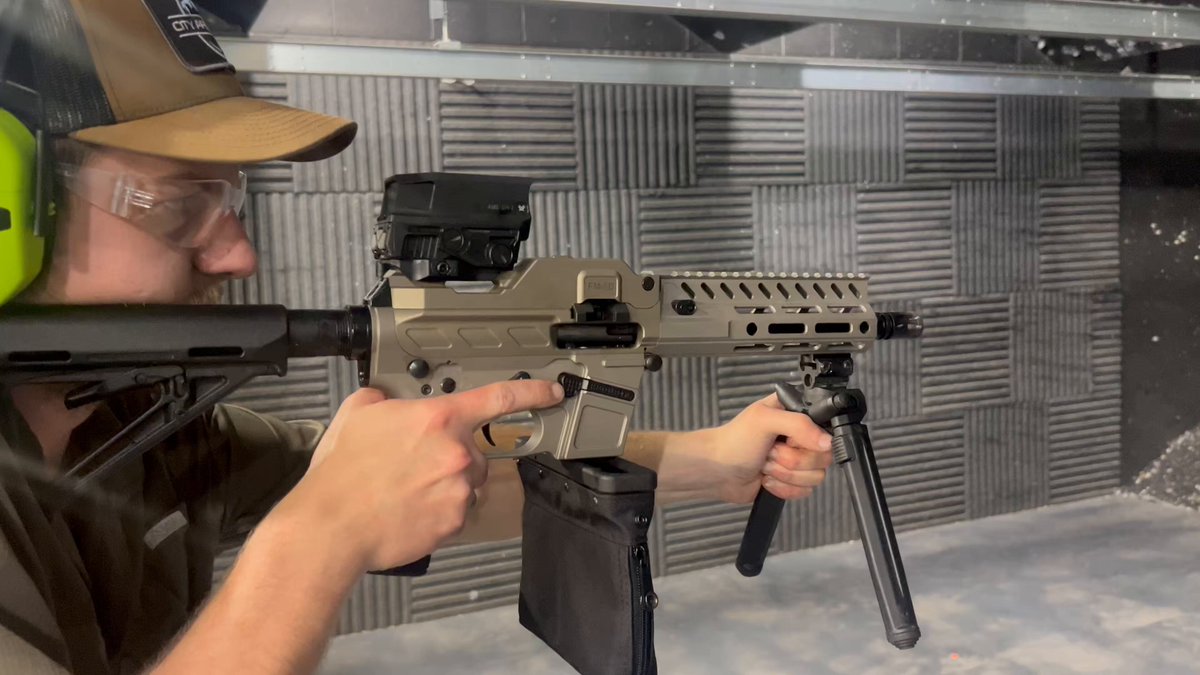
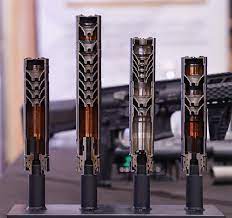
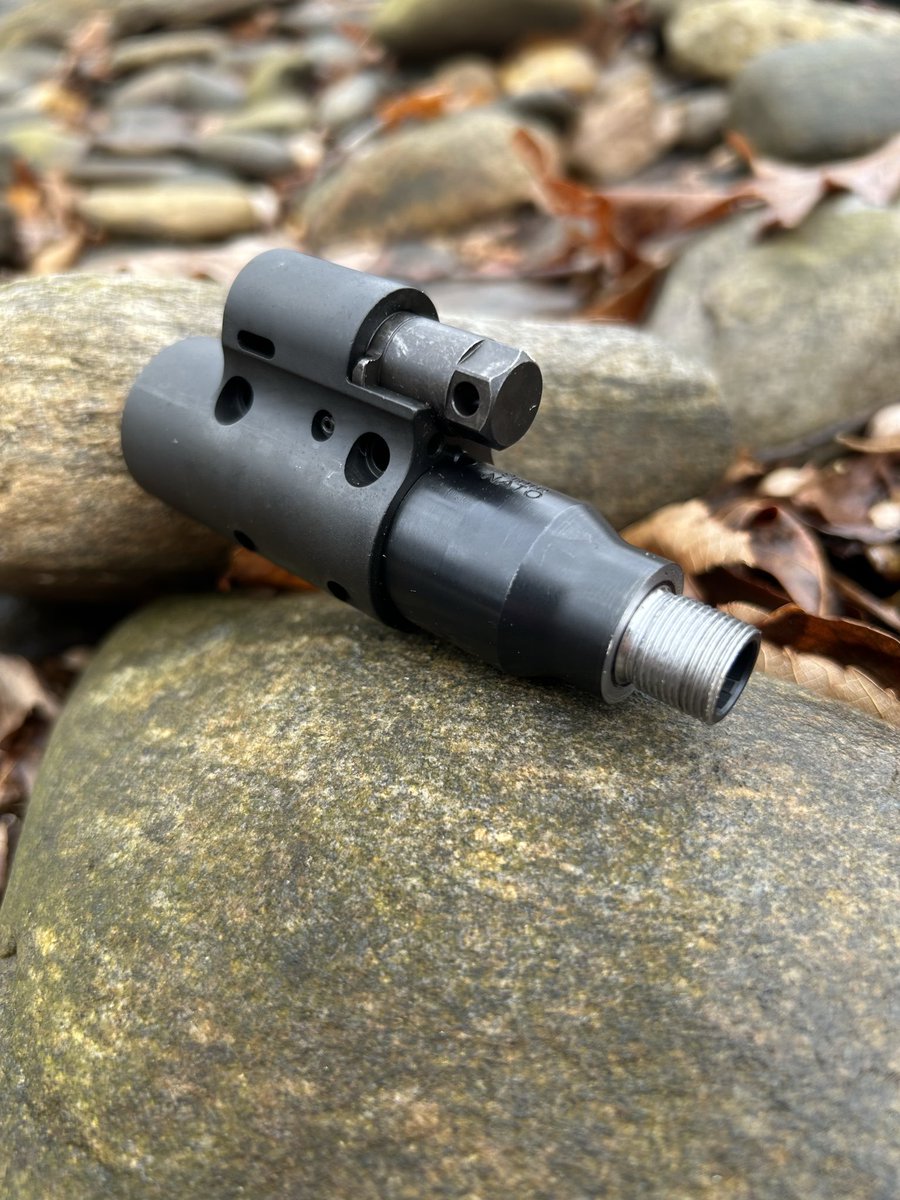
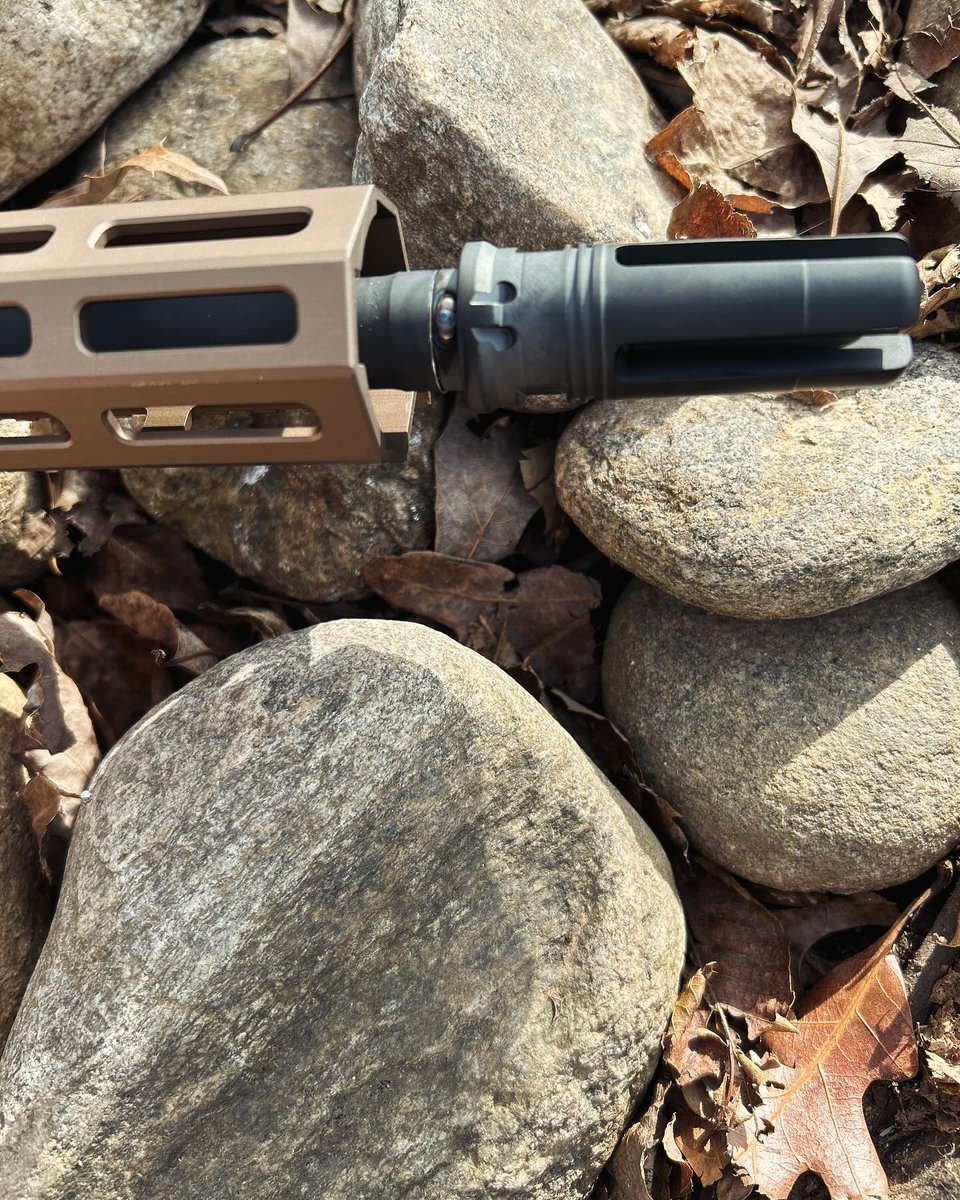
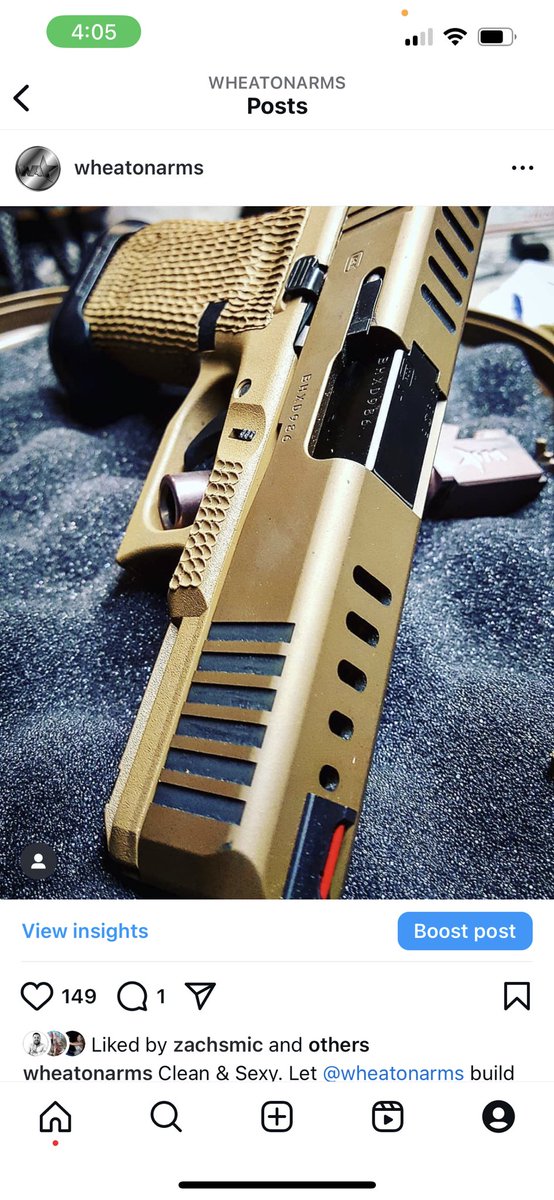
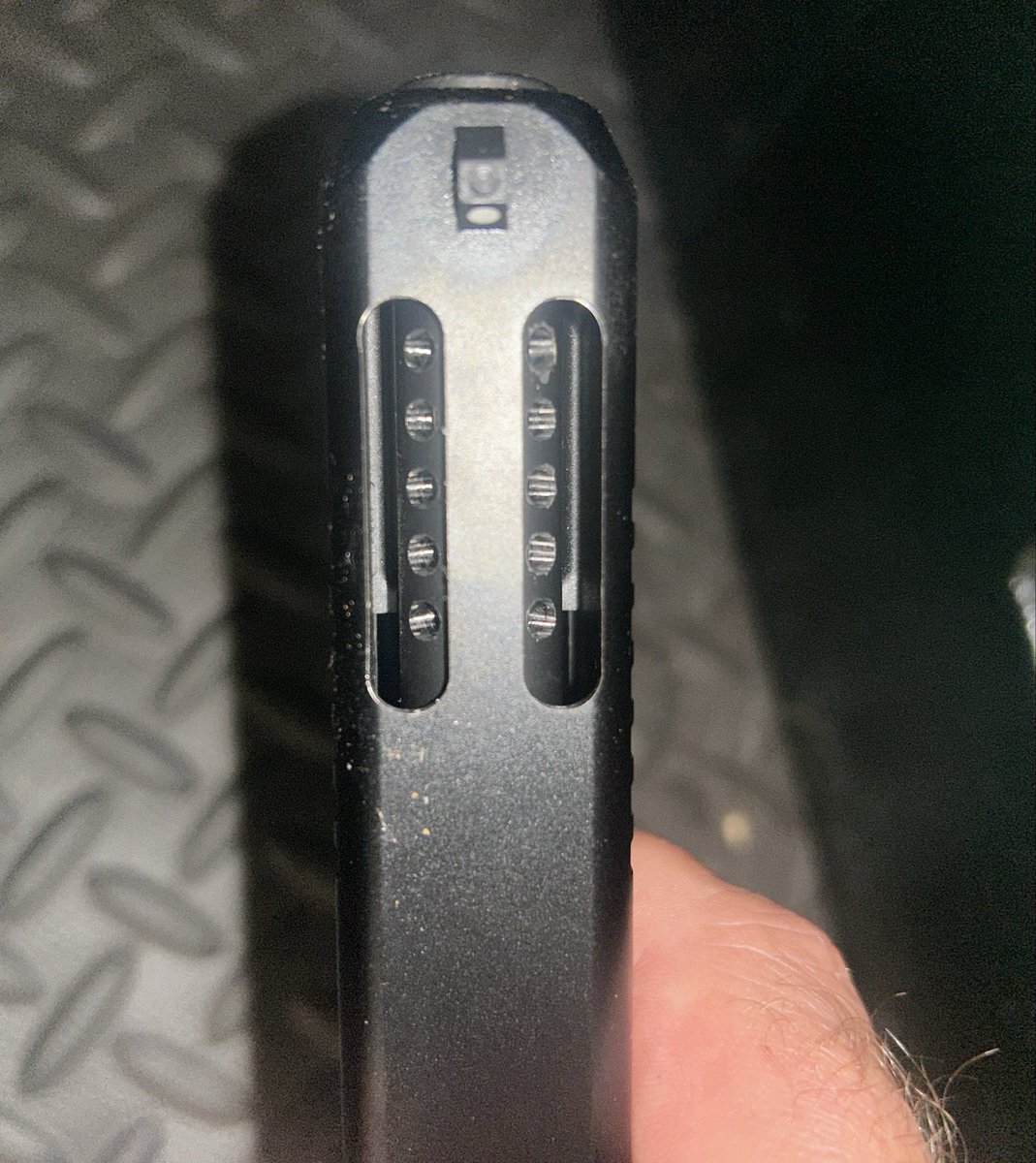
Is the Q Plan B HUB the best silencer rifle mount available?
1
1
35
May 17
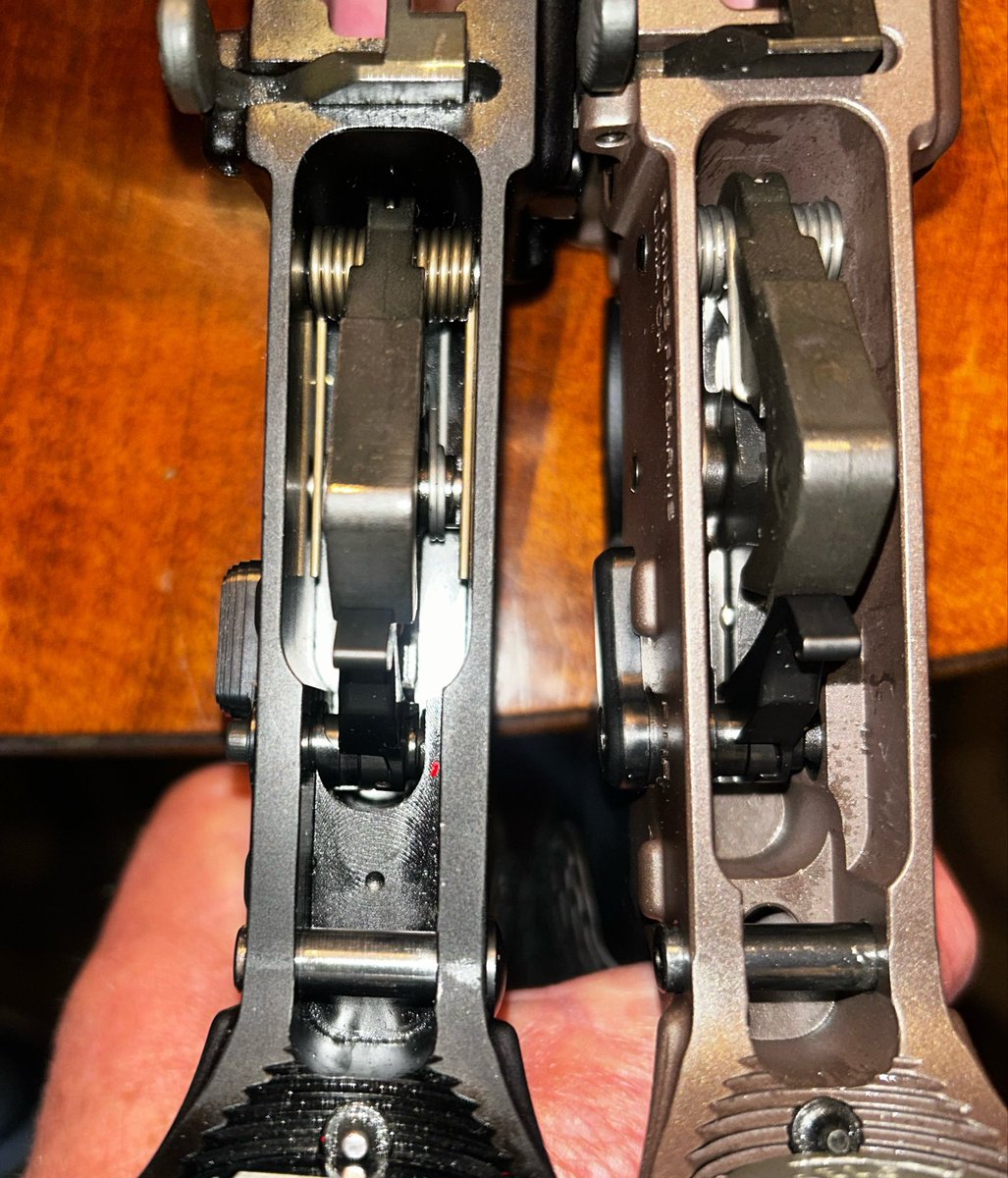
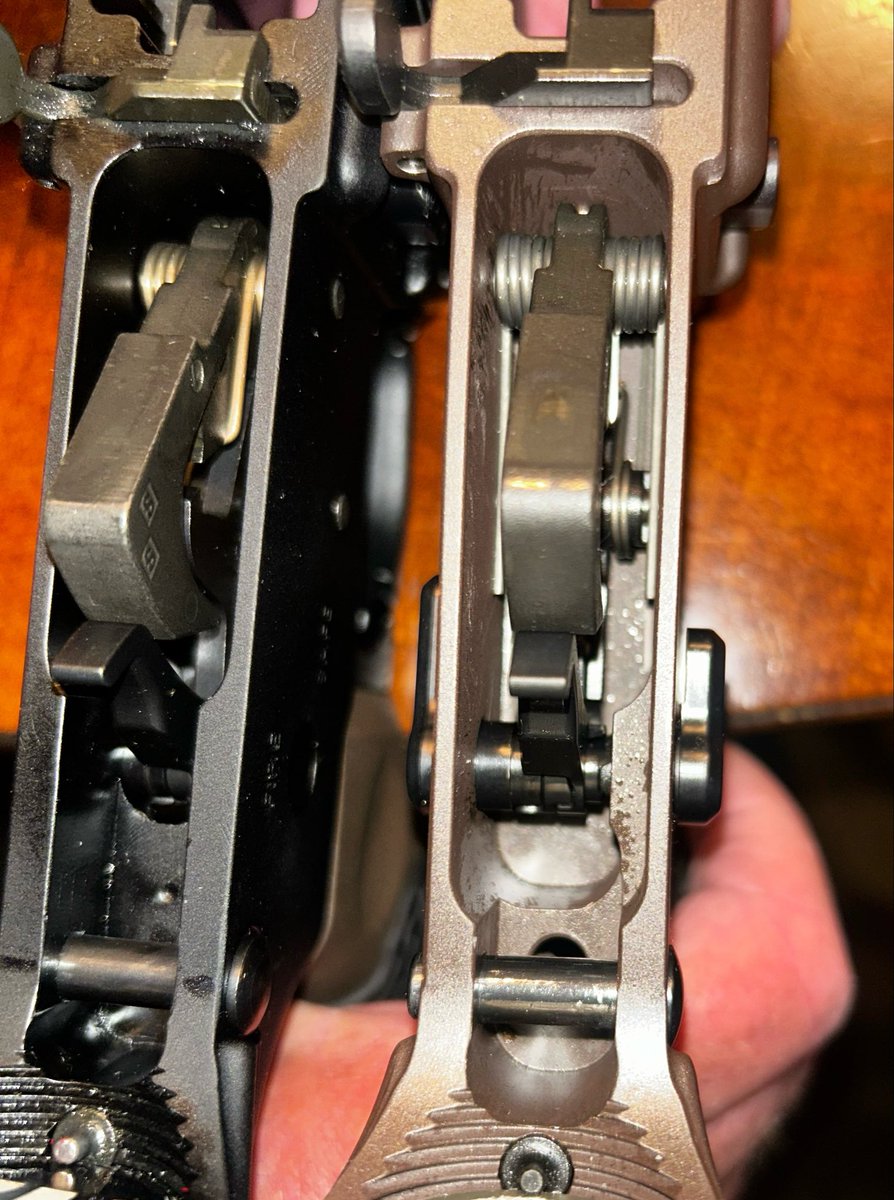
Not all lowers are created equal. Do your research before you buy a FRT thinking it will just drop in your “Mil-Spec” AR-15 receiver. Which lowers have you found that will not work with a FRT?
43
May 17
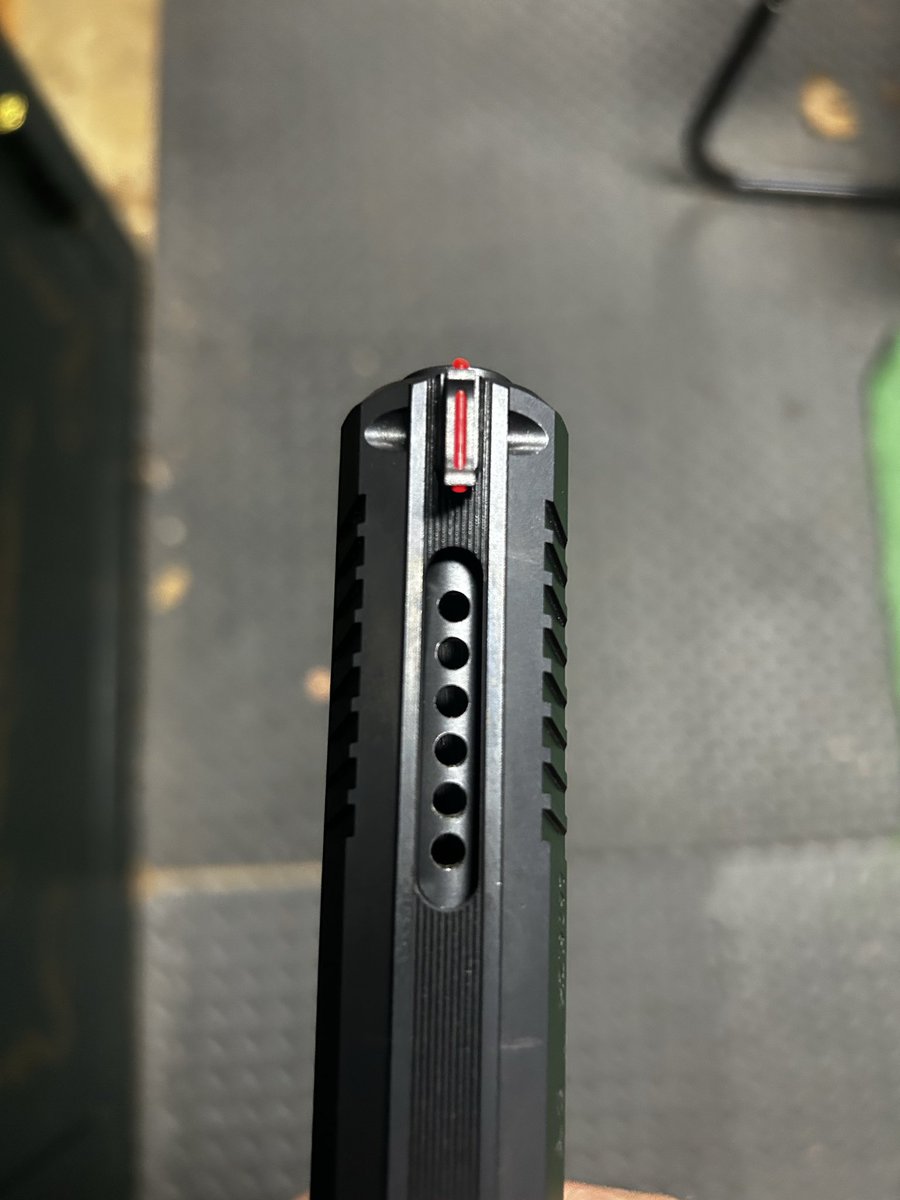
Returning to my roots and building some one off 2011’s. I made good progress with this one today. Still a long way to go. Next I’ll make a custom comp & finish blending the slide to the frame for a perfect fit, then polish and decide on the finish. The 1911/2011 platform will always be my favorite
69
May 5
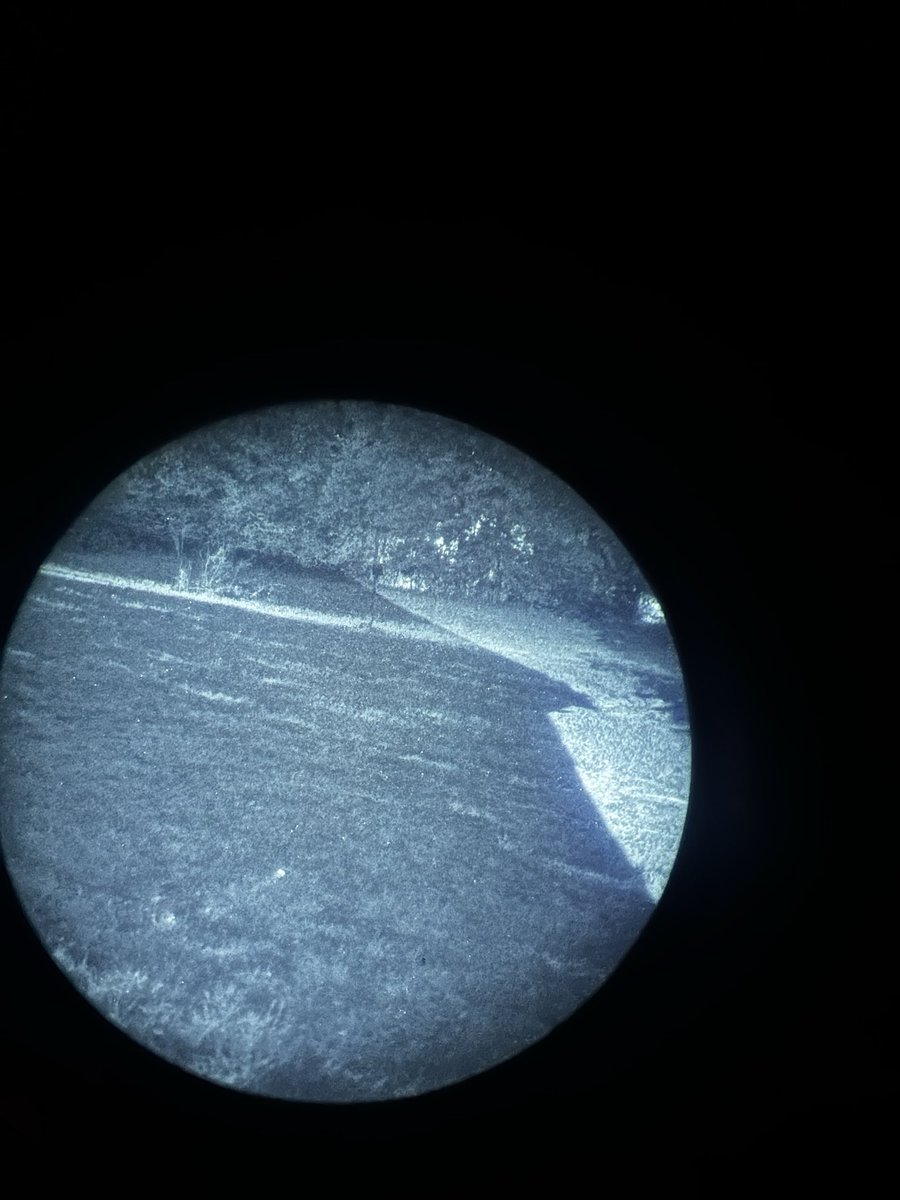
Can you find the Blem in this Parish Optics PVS14? The best deal going for these optics, only $1599.00. White Phosphor
Manual Gain
Autogating
1 Year Warranty
Helmet mount and hard case included
Free Shipping
In stock units expected to ship within three business days.
36
May 1
Every day should be a belt fed day! What is your favorite belt fed?
18
Mar 16
I'm building an A-Team inspired Ruger Mini-14: classic stainless steel, Samson folding stock, original front sight, short threaded barrel for that 80s action vibe! 🔥 Which finish should I go with? Vote & suggest silencers in replies! #Ateam #RugerMini14 #GunBuild #wheatonarms
0%
Matte stainless
0%
Mirror polished stainless
0%
Cerakote OD green & black
0 votes • Final results
45
Feb 10
Join me this Saturday, February 14 @cityarsenal_sc to chat about your custom gun work! Scan the QR code for fun giveaways.
26
Feb 2
Do you need your pin and welded muzzle device removed or a new muzzle device installed? contact @WheatonArms
ALT Do you need your pin and welded muzzle device removed or a new muzzle device installed? contact @wheatonarms

11
Wheaton Arms retweeted

Jan 21
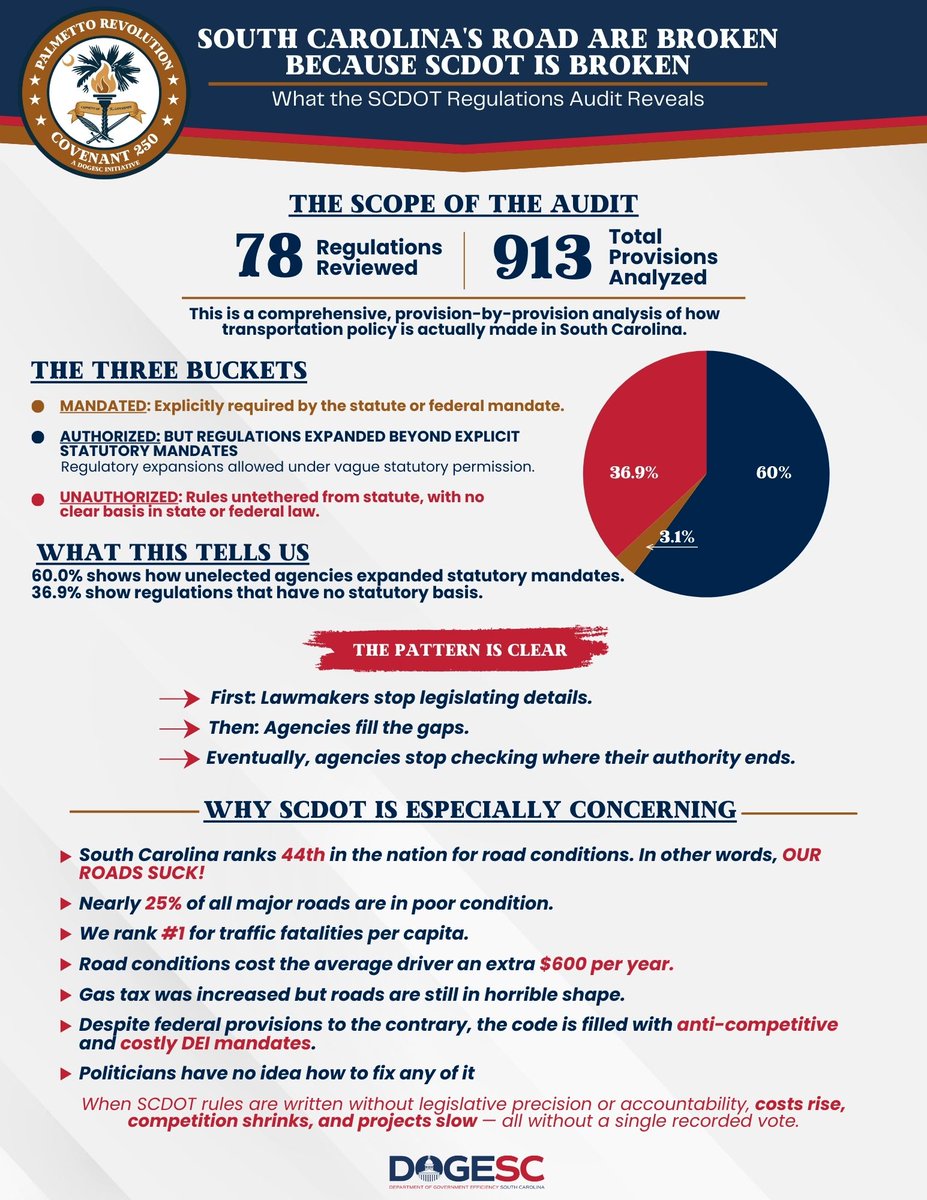
South Carolina’s Roads Are Broken Because SCDOT Is Broken
Charleston, SC — South Carolina’s crumbling roads are the predictable result of a broken system inside the South Carolina Department of Transportation, according to a new audit released today by DOGESC.
Using proprietary artificial intelligence tools, DOGESC conducted a comprehensive, provision-by-provision analysis of SCDOT regulations to determine whether the agency is operating within the authority granted by the General Assembly.
The findings are alarming.
DOGESC reviewed 78 SCDOT regulations containing 913 individual provisions. Each provision was classified based on whether it was explicitly required by statute, expanded beyond statutory intent, or entirely unauthorized under state or federal law.
Only 3.1% of SCDOT regulations were explicitly mandated by statute or federal law.
A staggering 60.0% expanded statutory mandates beyond what lawmakers clearly authorized, relying on vague legislative language to justify sweeping regulatory control.
Most troubling, 36.9% of SCDOT provisions were found to be outright unauthorized, untethered from any clear statutory authority.
“This is exactly how power and wealth is transferred from the citizen to the government” said Rom Reddy, founder of DOGESC. “South Carolina agencies are making policy, expanding the law, and in many cases inventing rules with no legal foundation,. without a single vote by elected lawmakers.”
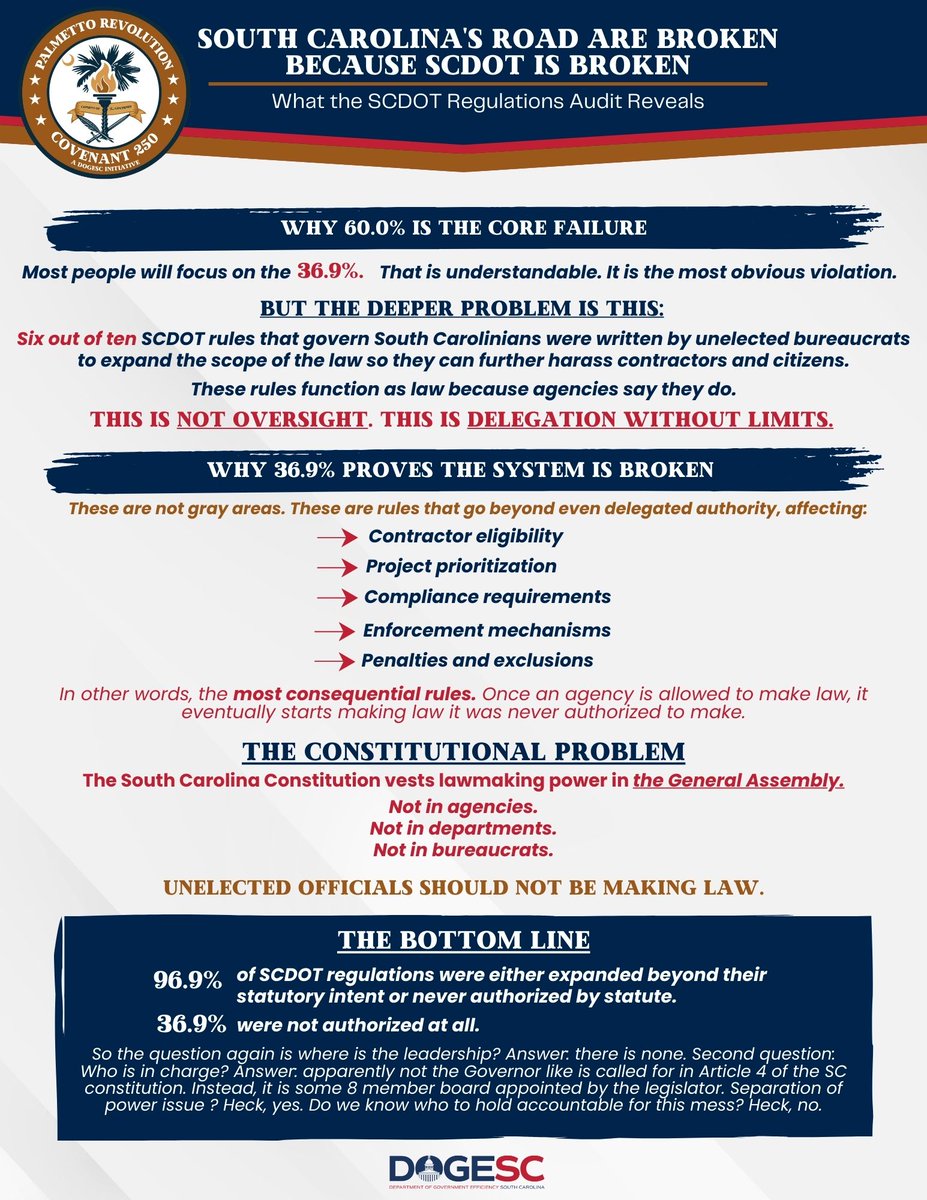
While the nearly 37% of unauthorized regulations represent the most obvious legal violations, DOGESC also emphasized that the problem that lies with the 60% of rules that expand statutory authority beyond what lawmakers approved.
“Six out of ten SCDOT rules that govern South Carolinians were written by unelected bureaucrats to expand the scope of the law,” Reddy said. “These rules function as law because agencies say they do. That is not oversight. That is delegation without limits.”
The unauthorized provisions affect the most consequential areas of transportation governance, including contractor eligibility, project prioritization, compliance requirements, enforcement mechanisms, penalties, and exclusions.
“Once an agency is allowed to make law, it eventually starts making law it was never authorized to make,” Reddy said.
Under the South Carolina Constitution, lawmaking authority is vested in the General Assembly. Executive authority is vested in the Governor.
“SCDOT is controlled by an unelected eight-member board appointed by legislators,” Reddy said. “That raises a serious separation-of-powers issue. Who is in charge? Who is accountable? Right now, the answer is no one.”
According to the audit, 96.9% of SCDOT regulations were either expanded beyond their statutory intent or never authorized at all.
“That is not a technical problem,” Reddy said. “That is a leadership failure.”
DOGESC announced that the SCDOT audit is part of a broader effort to examine South Carolina’s administrative state, expose regulatory overreach, and restore constitutional accountability.
“This isn’t partisan,” Reddy said. “It’s about whether laws are made by elected representatives or quietly written by bureaucrats. Right now, South Carolina is being governed by regulation, not representation. And until that changes, our roads and our government will remain broken.”
27
88
239
7,774
Jan 14
Bro FAFO'd and got clocked twice!!
Jan 12

🔥 BREAKING: This bad*ss MAGA man is being praised nationwide for singlehandedly PUMMELING every leftist rioter who ambushed him
This is how it's done!
Stand with ICE and repel the violent left! 🇺🇸🇺🇸
20
Wheaton Arms retweeted

Jan 13
🚨 LMFAO! EPIC clap back from this ICE agent against a leftist stalker in MN
LEFTIST: "I have 7 years of education!"
AGENT: “I love my job! I can't believe I get paid for this. I only have a high school diploma, and I make MORE than you!”
BOOM! 😂😂
653
1,922
16,685
336,836

16 Oct 2024
Sam Wheaton Full Race Video from Penton Karting Track from this past weekend. Check it out!
youtu.be/R6QedIiCr9E
56
26 Sep 2024
SHOCK: FBI Whistleblower Urges Americans to Vote, Arm Themselves, Stock up 3-4 Months Supply of Food and Water, and Pray.
x.com/Iraqveteran8888/status…
26 Sep 2024

The truest and most honest advice you’ll ever receive:
27