
For something to be true, it must be true in all places and at all scales.
Joined August 2020
- Tweets 448
- Following 26
- Followers 43
- Likes 1,634
106 Photos and videos

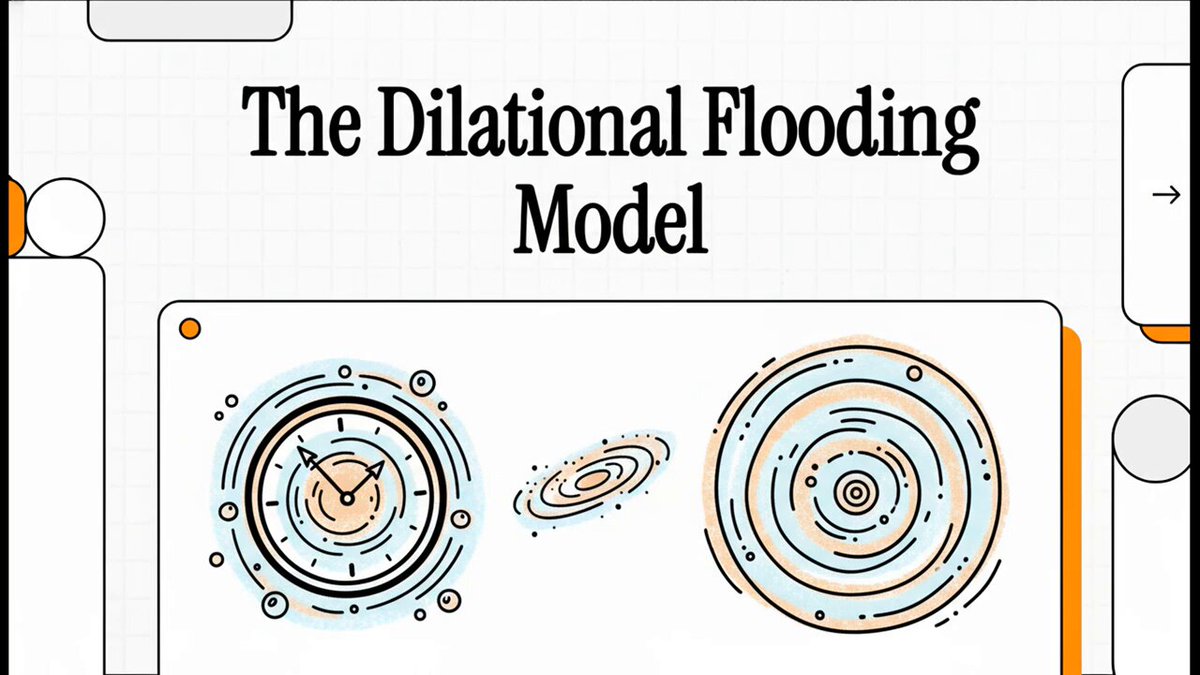
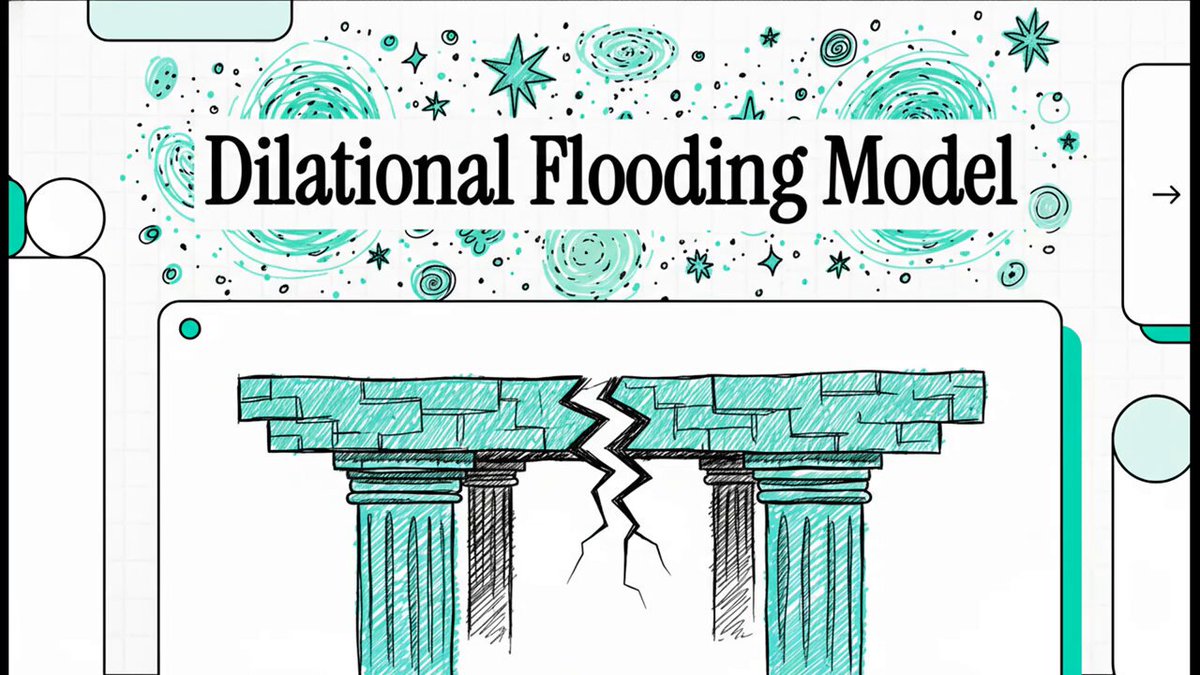




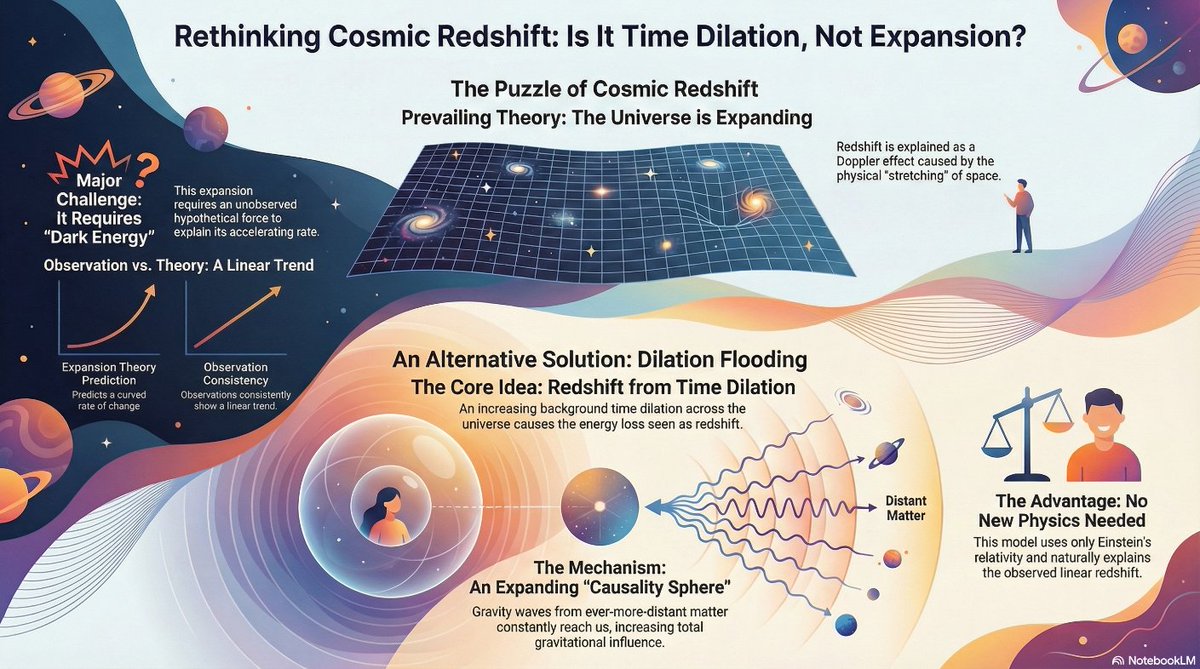
The pioneering theories of relativity and redshift arose when the universe was presumed to be static and eternal, a view shared by Einstein and Hubble. But while modern cosmology embraces a finite-age evolving cosmos, time dilation and gravitational phenomena are still treated as static rather than propagating and cumulative. However, LIGO’s GW170817 multimessenger event confirmed that gravitational waves propagate at the speed of light conforming to the same causality horizons as electromagnetic signals. This essay argues that treating time dilation as a dynamic, history-integrated "dilation flooding" effect, driven by an expanding “last undilated horizon”, offers a parsimonious resolution to persisting tensions including apparent cosmic acceleration, Hubble tension, unexpectedly mature high-z galaxies, galactic rotation curves, and gravitational lensing anomalies, without invoking dark energy or exotic matter.
On Cosmic Evolution - by George J. Woolridge
9
Jesse Woolridge retweeted

Jun 2
@GadSaad
I just watched your interview with @dbongino and your hypothesis regarding why the Jewish population is historically the target of blame for many cultures. Your nutshell explanation is that the Jews "Punch above their weight class" which draws such ire.
I did find it interesting that Dan pushed back with some examples of apparently successful cultures that don't necessarily receive the same reputation.
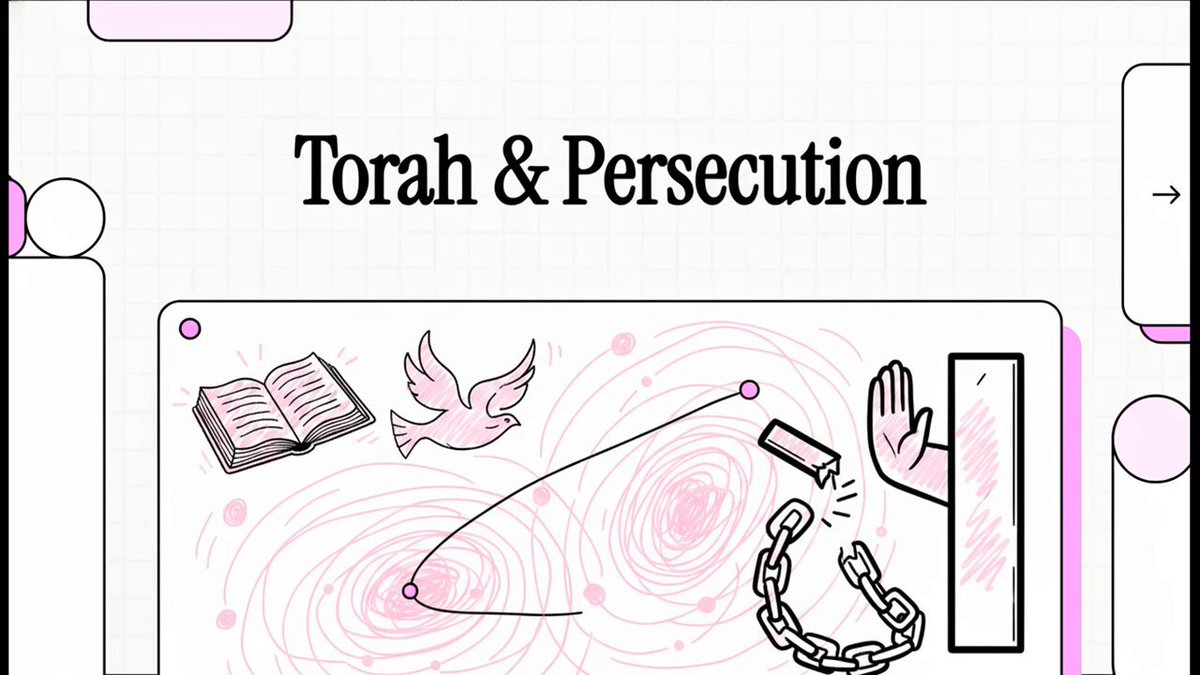
I would like to suggest a more succinct cause to the symptom you are describing. Those that embody or promote a more successful truth always are the target of those avoiding success. That the identity of the Jewish people is the Torah, and that the Torah persists as being an objectively applicable model of successful society, liberty, and fair governance, they will forever be a target of all governments and societies which seek to oppress and manipulate others.
This also explains why there are parallels even today where MAGA conservatism which is largely a conservative libertarian rule of law revival is constantly attacked, and why the Bible is among the most widely banned books worldwide beyond any other religious text. All governments want control. Most people want instrumental convergences to avoid self-responsibility. But God commands us to be fair and self-reliant.
That is why the Jews will be forever persecuted, and anyone who sincerely emulates the Word of God.
whetscience.substack.com/p/a…
2
29
Apr 24
Anti-Semetism Is A Red Herring
For thousands of years, the Jewish people seem to have been on the receiving end of a disproportionate amount of cultural bias. There are those who attribute this to theological factors where the forces of evil continuously attack those chosen by God. However, for a people who are purported to be God’s representatives on earth, the Bible itself contains many unflattering stories of the Israelites being a less than shining example. Furthermore, canonical scripture is not exclusively the account of Israel with several key participants and entire books about persons and cultures unrelated to them. Many characters, including Ruth, Melchizedek, Balaam, Naaman, Cyrus the Great, Rahab, and others, show a narrative of inclusivity. Even the book of Jonah is about the salvation of a wholly non-Jewish kingdom, and the book of Job has no connection to anyone else in the Bible at all.
It begs the question whether it is the Jewish people themselves that attract the ire of others or if it is something else in entirety.
Throughout recorded history and wherever they may be found on the earth, what has defined the Jewish people specifically is that they have carried the Torah. That they have treated it as sacred and passed it on with surprisingly few variations over thousands of years makes it perhaps the most carefully preserved and consistently transcribed from antiquity. With such cultural devotion to the maintenance of this writing, it is no surprise that there would be religious adherence to its tenets as well.
So what are some of the major sociological tenets of the Torah?
One standard of law for all: “One law and one ordinance shall be for you and for the stranger who lives as a foreigner with you.” (Numbers 15:15-16, 29; Exodus 12:49, Leviticus 24:22)
Impartial justice system for all: “You shall not show partiality in judgment; you shall hear the small and the great alike.” (Deuteronomy 1:16-17; 16:19; Leviticus 19:15) “You shall not deprive the foreigner or the fatherless of justice, nor take a widow’s clothing in pledge.” (Deuteronomy 24:17) “Therefore love the foreigner, for you were foreigners in the land of Egypt.” (Deuteronomy 10:17-19)
Evidentiary standards: “One witness shall not rise up against a man for any iniquity, or for any sin that he sins. At the mouth of two witnesses, or at the mouth of three witnesses, shall a matter be established.”(Deuteronomy 19:15) “At the mouth of two witnesses, or three witnesses, he who is to die shall be put to death. At the mouth of one witness he shall not be put to death.” (Deuteronomy 17:6)
Legal protections for women: ““If a man entices a virgin who isn’t pledged to be married, and lies with her, he shall surely pay a dowry for her to be his wife.” (Exodus 22:16-17) “You shall not take advantage of any widow or fatherless child.” (Exodus 22:22-24) “They shall fine him one hundred shekels of silver, and give them to the father of the young lady, because he has given a bad name to a virgin of Israel.” (Deuteronomy 22:13-21) “She shall be his wife, because he has humbled her. He may not put her away all his days.” (Deuteronomy 22:25-29) “‘If a man dies, and has no son, then you shall cause his inheritance to pass to his daughter.” (Numbers 27:1-11) Exodus 21:7-11; Deuteronomy 24:1-4
Respectful coexistence with others: "You shall not wrong an alien or oppress him, for you were aliens in the land of Egypt." (Exodus 22:21; 23:9). "The stranger who lives as a foreigner with you shall be to you as the native-born among you, and you shall love him as yourself." (Leviticus 19:34)
Personal property rights: “You shall not covet your neighbor’s house.” (Exodus 20:15, 17; Deuteronomy 5:19, 21) “If the thief is found breaking in, and is struck so that he dies, there shall be no guilt of bloodshed for him.” (Exodus 21:33–22:15) “You shall not remove your neighbor’s landmark” (Deuteronomy 19:14) “In his day you shall give him his wages, neither shall the sun go down on it,” (Deuteronomy 24:14-15)
Limiting government overreach: “He shall not greatly multiply to himself silver and gold.” (Deuteronomy 17:14–20)
If you are not already surprised that these sociological principles were written in the Torah upwards of 2500 years ago, then you should realize that it is only within the past 250 or so years that societies with these statutes have existed to any degree. At no point in history prior to the period of American colonization has there been any government structured around a libertarian model of equal legal protections and access to free market commerce for all. It is almost exclusively in modern liberal democracies with a Judeo-Christian legal heritage, loosely considered to be Western society, that the above list of social protections are enjoyed.
To be clear, there are a few examples of limited application of some of these tenets in history, and typically to some objective success. However, it is nearly universal in pre-colonial governments and still the case in many non-Western societies that there is significant legal stratification, lack of civil liberties, and suppression of markets. Although this controlling situation always results in cultural regression and/or economic stagnation, the few individuals that benefit from this arrangement are reluctant to empower their neighbors at the risk of diluting their own position.
Because the Jewish people are the carriers of the Torah and observe it religiously, they have been systematically persecuted and scapegoated by those who are opposed to equal rights in a libertarian free market society.
Although the history is somewhat muddled from church officials during much of Europe's history abusing their state assigned authority to use the Jewish groups as a scapegoat for unrelated cultural failings. Obviously, this was not done out of intellectual sincerity, but to shore up the oppressive oligarchies while suppressing the serfdom. These false flag claims have been perpetuated over thousands of years making them easy to stoke with minimal effort maintaining some animosity between Christian and Jewish sects.
That the Torah is a key part of the Christian Bible means that, by extension, many Christians can and do also suffer from this persecution. Clear evidence of this can be seen through current (2026) and historical Bible restrictions around the world and those who perpetrate these bans.
Monarchies, dictatorships, and other similarly consolidated government entities have very typically restricted possession and dissemination of the Bible. From the Seleucid Empire (c. 167–164 BCE) who would kill Jews in possession of Torah scrolls, to Medieval “Christian” Europe where individual access to the Bible and attempts to translate it into local languages was punishable by burning at the stake, and modern day authoritarian states like Turkmenistan, Eritrea, and North Korea where harsh punishments, including death, can be extended to 3 generations of your family. The Torah denounces worshiping any man as being superior to another which motivates these governments to vilify anything which might inspire the masses to rise up against them.
Theocracies, or secular states which regulate religious practices, overwhelmingly restrict the Bible. Somalia, Afghanistan, and Yemen are known to execute those who possess a Bible. Carrying a Bible in Mauritania, Iran, and Saudi Arabia will likely lead to imprisonment. Although most of these examples are frequently Islamic theocracies, Nigeria, Vietnam, India, Jordan, and Indonesia are countries where Christians are persecuted by extremist society or otherwise restricted by the government. Even Hindu which promotes an oppressive caste social structure is at odds with the impartial justice system and free market opportunities found in the Bible. The United States policy of separation of church and state is not intended to keep theists out of government, but to prevent the government from creating policies by which it might become a theocracy.
In contrast, Communist or one-party governments are necessarily atheistic. The Soviet Union had restricted or banned the Torah for the entirety of its existence. In 2026, communist governments like China and Laos still have harsh religious restrictions and Bible distribution bans, including electronic versions. The Torah principles of having no authority above God, libertarian views of coexistence with diverse cultures, and free markets are all antithetical to communist and heavily socialized governments. Communism is dependent on false flag promotion of class warfare in society to popularize artificial normalizations which, ironically, are ultimately enforced by an unimpeachable ruling class.
Despite claims that it is a patchwork of principles borrowed from other cultures, the Torah as a functional synthesis of libertarian and free market regulations is without historical precedent or parallel. This system of consent-based rule of law emphasizing equality, justice for outsiders, and limits on arbitrary power inherently clashes with kingdoms, dictatorships, castes, oligarchies, or collectivist systems that all rely on hierarchy, favoritism, or scapegoating.
The Bible (which includes the Torah as its first five books) faces uniquely widespread and severe restrictions on possession, importation, printing, distribution, and public display compared to all other major religious writings. It is particularly restricted relative to the Quran, Vedas, Buddhist canon, or most others. No other holy text experiences comparable global scrutiny or outright bans in dozens of countries. While all religions face localized pressures (e.g., China's broad religious controls), the Bible endures the most systematic legal and practical barriers, even in the United States, all due to its emphasis on a personal direct relationship with one God, equally applied rule of law, and universal moral standards.
In conclusion, the “red herring” of anti-semitism is that it is an attempt to distract from the flaws of necessarily oppressive systems of governance by promoting vitriol against those most closely associated with the Torah.
74
Mar 28
Check out my latest article: Dilation Flooding and the pre-equilibrated gravity contradiction linkedin.com/pulse/dilation-… via @LinkedIn
44
Feb 28
LCDM relies on yet unproven dark matter and dark energy to make predictions, but cannot explain coherently why it is undetectable. This exotic behavior is serendipitous as opposed to logical. But by revisiting the history of cosmology we can unwind these misunderstandings. Dilation Flooding, based entirely on the first principles of Einstein relativity, answers all of these cases without case-specific and arbitrary constants. The difference: Considering the age of the universe. Specifically the observational sphere or light cone of a given point in space. Want to know more? questions@whetscience.com
1
52
Feb 9
MOND is designed to address specific cases with arbitrary constants to change physics so the observation matches the math, but it doesn't work in all cases. LCDM uses dark matter to make this same adjustment, but cannot explain coherently why it is undetectable and the exotic behavior is serendipitous as opposed to logical. Neither address the JWST galactic age tension.
Dilation Flooding, based entirely on the first principles of Einstein relativity, answers all of these cases without case-specific and arbitrary constants. The difference: Considering the age of the universe. Specifically the observational sphere or light cone of a given point in space.
Want to know more? questions@whetscience.com
64
Feb 7
In this expanded examination of the Dilation Flooding Model, I show how Dilation Flooding supplants LCDM, and resolving JWST galactic age anomalies.
Questions regarding this model can be directed to questions@whetscience.com
1
1
69
Jan 23
Everything That Had the Breath of the Spirit of Life - Ep.10: Final Thoughts
In this final video is a summary of the purpose, methods, and an appeal to intellectual scrutiny of the Bible as a whole. If you would like to see more detail on any segment in this series, or would like more content like this, leave a comment or contact me at questions@whetscience.com Excerpts from Everything That Had the Breath of the Spirit of Life: A Multidisciplinary Contextualized Analysis of Genesis Chapters 1-9 can be found here: whetscience.substack.com/p/a… I am currently searching for an agent and/or publisher who may be interested in offering this title. Send solicitations to: questions@whetscience.com
35
Jan 20
Everything That Had the Breath of the Spirit of Life - Ep.9: The Ark - Synthesis
This video is a synthesis of analytical details in the Ark narrative of Genesis 1-2:4 as described in the book Everything That Had the Breath of the Spirit of Life: A Multidisciplinary Contextualized Analysis of Genesis Chapters 1-9.
Excerpts of the written study can be found here: whetscience.substack.com/p/a…
I am currently searching for an agent and/or publisher who may be interested in offering this title. Send solicitations to: questions@whetscience.com
35
Jan 17
Everything That Had the Breath of the Spirit of Life - Ep.8: The Ark - Elements
This video summarizes several key analytical details in the Ark narrative of Genesis chapters 6-9 as described in the book Everything That Had the Breath of the Spirit of Life: A Multidisciplinary Contextualized Analysis of Genesis Chapters 1-9.
Excerpts of the written study can be found here:
whetscience.substack.com/p/a…
I am currently searching for an agent and/or publisher who may be interested in offering this title. Send solicitations to: questions@whetscience.com
36
Jan 15
Everything That Had the Breath of the Spirit of Life - Ep.7: The Days of Adam - Synthesis
This video is a synthesis of analytical details in the Days of Adam narrative of Genesis 1-2:4 as described in the book Everything That Had the Breath of the Spirit of Life: A Multidisciplinary Contextualized Analysis of Genesis Chapters 1-9. Excerpts of the written study can be found here: whetscience.substack.com/p/a… I am currently searching for an agent and/or publisher who may be interested in offering this title. Send solicitations to: questions@whetscience.com
32
Jan 11
Everything That Had the Breath of the Spirit of Life - Ep.6: The Days of Adam - Elements
This video summarizes several key analytical in the Days of Adam narrative of Genesis 1-2:4 as described in the book Everything That Had the Breath of the Spirit of Life: A Multidisciplinary Contextualized Analysis of Genesis Chapters 1-9.
Excerpts of the written study can be found here: whetscience.substack.com/p/a…
I am currently searching for an agent and/or publisher who may be interested in offering this title. Send solicitations to: questions@whetscience.com
43
Jan 8
26
Jan 7
Everything That Had the Breath of the Spirit of Life - Ep.5: The Beginning - Synthesis
youtu.be/j9XOH8XvhjY
This video presents a synthesis of analytical elements of the Beginning narrative of Genesis 1-2:4 as described in the book Everything That Had the Breath of the Spirit of Life: A Multidisciplinary Contextualized Analysis of Genesis Chapters 1-9.
Excerpts of the written study can be found here:
whetscience.substack.com/p/a…
I am currently searching for an agent and/or publisher who may be interested in offering this title. Send solicitations to: questions@whetscience.com
38
Jan 3
youtu.be/tvQabPSpr4o
This video summarizes several key points in the Beginning narrative of Genesis 1-2:4 as described in the book Everything That Had the Breath of the Spirit of Life: A Multidisciplinary Contextualized Analysis of Genesis Chapters 1-9.
Excerpts of the written study can be found here:
whetscience.substack.com/p/a…
I am currently searching for an agent and/or publisher who may be interested in offering this title. Send solicitations to: questions@whetscience.com
36
Jan 1
lnkd.in/gmcCRq-Y
Everything That Had the Breath of the Spirit of Life - Ep.3: Analytical Considerations Part 2
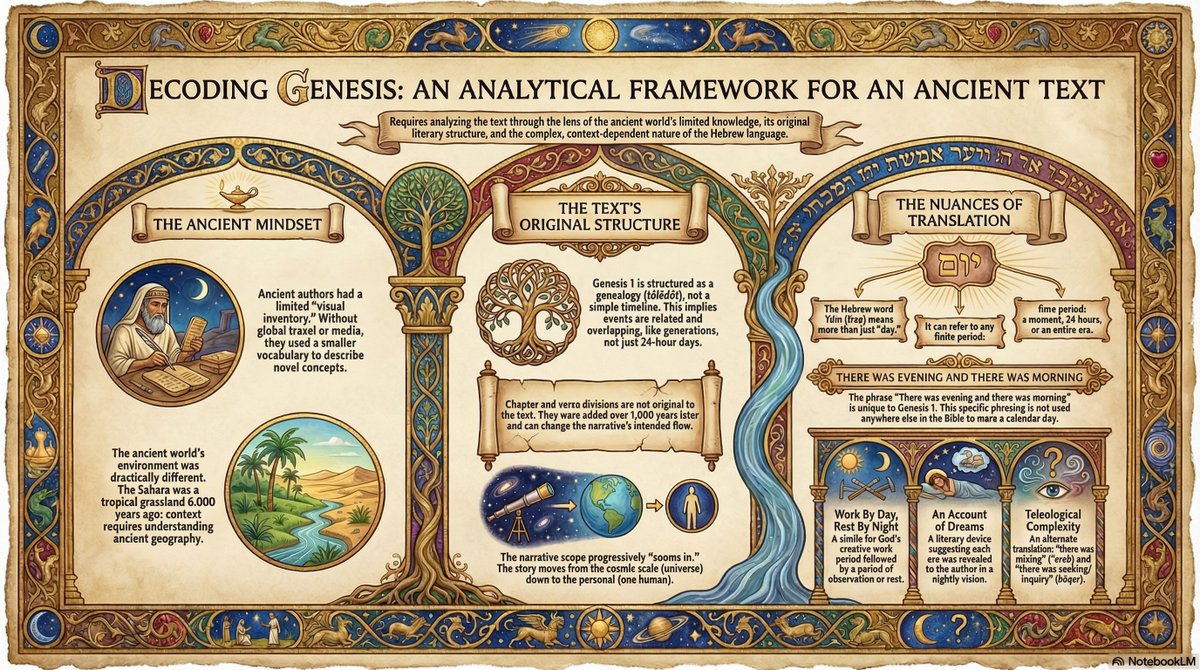
In this video are a few highlights from the first section of the book Everything That Had the Breath of the Spirit of Life: A Multidisciplinary Contextualized Analysis of Genesis Chapters 1-9.
These Analytical Considerations govern not only this analysis, but provide the parameters by which it was compiled.
Excerpts of the study can be found here:
lnkd.in/gw7cNbUk
I am currently searching for an agent and/or publisher who may be interested in offering this title. Send solicitations to: questions@whetscience.com
35
31 Dec 2025
youtu.be/hFEvR87ADHU
In this video are a few highlights from the first section of the book Everything That Had the Breath of the Spirit of Life: A Multidisciplinary Contextualized Analysis of Genesis Chapters 1-9.
These Analytical Considerations govern not only this analysis, but provide the parameters by which it was compiled.
Excerpts of the study can be found here:
whetscience.substack.com/p/a…
I am currently searching for an agent and/or publisher who may be interested in offering this title. Send solicitations to: questions@whetscience.com
36