


AI is still underused in compliance.
Compliance Week's recent CCO survey shows that AI is entering compliance teams, while governance frameworks are still lagging. Related survey data found that more than 83% of respondents already use AI tools, yet only about 25% have implemented a strong governance framework.
This shows a clear gap: compliance teams are ready to use AI, but practical, auditable, and controllable AI workflows still need to catch up.
Compliance work includes many evidence-heavy tasks: alert review, case summaries, risk linkage, document checks, report preparation, and decision records. AI can help teams improve review speed and consistency, especially when it is embedded directly into compliance workflows.
At the same time, AI still needs human review and final sign-off.
This is the principle behind Width AI Compliance Officer: AI helps summarize cases, connect evidence, identify risk patterns, and prepare review materials; compliance teams retain judgment, accountability, and final decision authority.

20
E-commerce fraud in Southeast Asia is becoming a payment and #AML risk.
Public data shows the pressure: Singapore recorded S$913.1 million in total scam losses in 2025, while Malaysia reported 13,979 e-commerce crime cases and RM129 million in losses in the same year. At the same time, Thailand's AOC 1441 and Indonesia's IASC continue to process large volumes of online scam reports, account freezes, and fund-tracing cases.
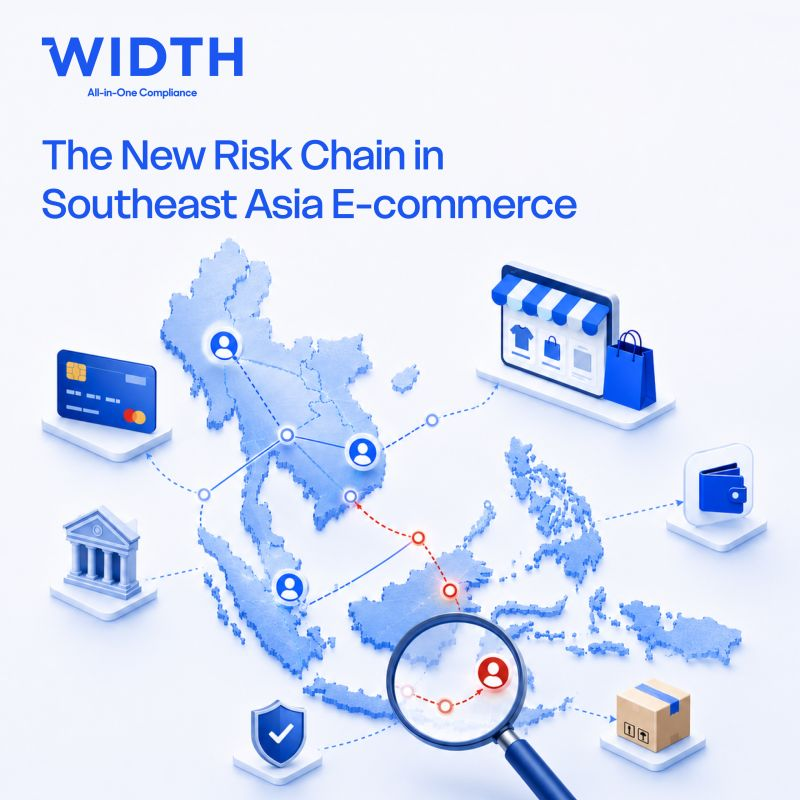
The challenge in e-commerce fraud is moving from "detecting suspicious orders" to understanding the full identity and money-flow chain.
Behind one fraudulent seller, there may be multiple marketplace accounts, receiving accounts, device fingerprints, e-wallets, beneficiaries, and historical complaints. A single refund or transfer may also be part of mule activity, account rental, or a cross-border laundering chain.
This means risk teams need to act faster: verify the seller, identify abnormal fund flows, detect account and device links, preserve order, payment, chat, and review evidence, and decide whether the case should move into AML escalation or regulatory reporting.
A more effective approach is to bring these risk signals into one compliance workflow. Once a signal enters the system, teams can review identity, transactions, fund flows, graph links, and historical cases together, turning isolated alerts into explainable, reviewable, and reportable case decisions.
1
32
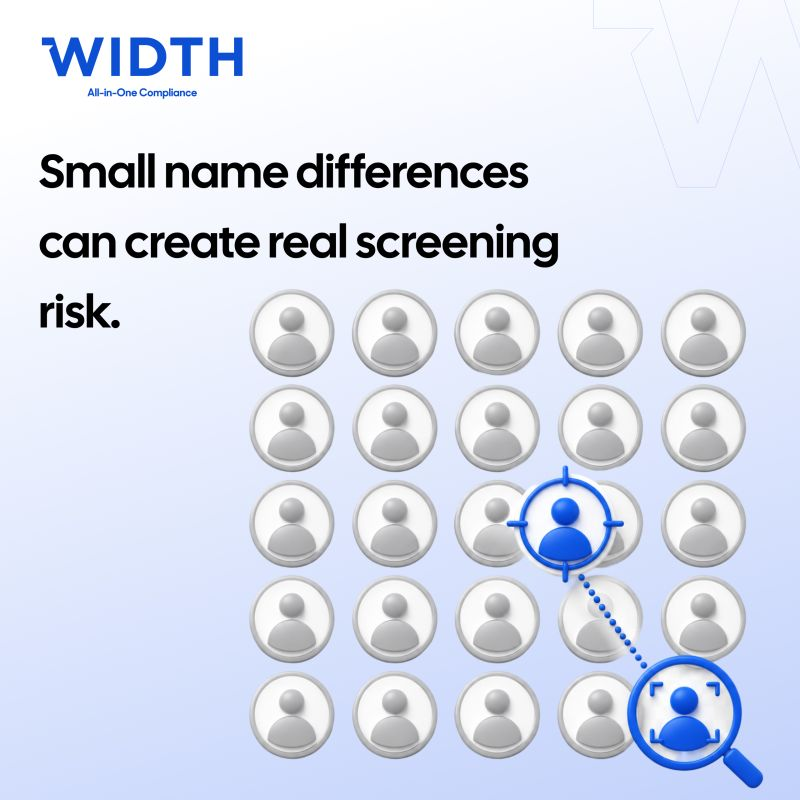
Name screening is an often-underestimated part of AML compliance.
In January 2026, the UK Office of Financial Sanctions Implementation announced a £160,000 penalty against Bank of Scotland. The case involved a sanctioned individual whose name variation was missed by the bank’s screening system, after which 24 transactions were processed, totalling £77,383.39.
In real-world screening, teams need to handle spelling variations, name-order changes, transliteration differences, aliases, OCR noise, cross-script records, and glyph-based manipulation.
The FATF/APG 2026 Singapore Mutual Evaluation Report also noted that Singapore’s AML/CFT/CPF system needs to be sharper in producing demonstrable and consistent risk-based results.
For compliance teams, screening outcomes need to support review, explanation, and audit: recall affects missed-risk exposure, false positives affect manual review pressure, and evidence quality affects case explanation and regulatory review.
WIDTH’s name matching, sanctions screening, and AML screening capabilities support scenario-aware matching, dynamic thresholds, and case review workflows, helping teams connect screening alerts with customer context, case evidence, and audit records.
27
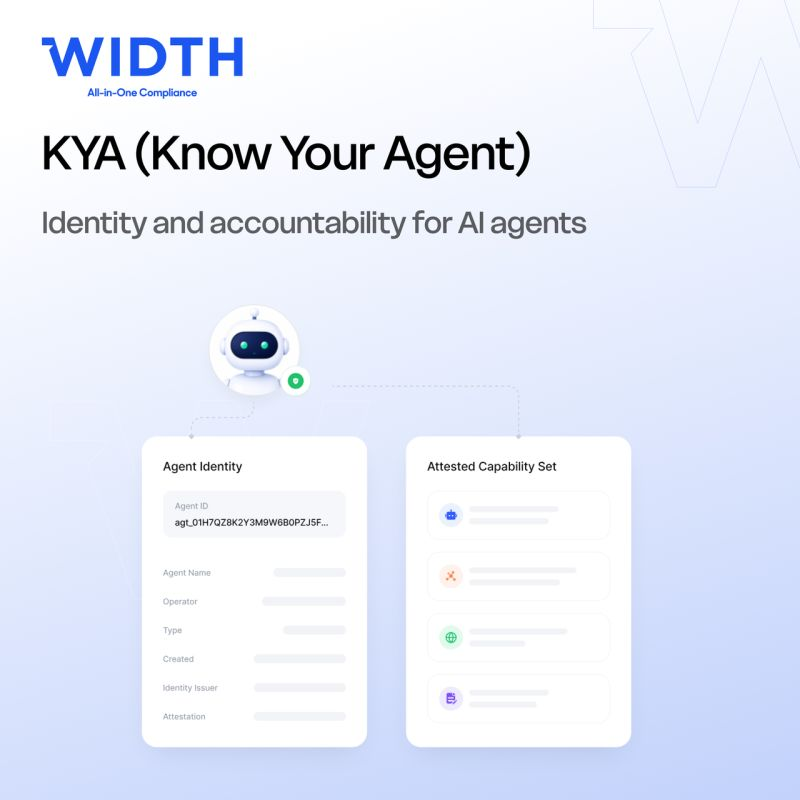
As AI agents begin to act on behalf of customers and businesses, compliance teams will need a clearer way to identify, authorise, and audit them.
This is the idea behind Know Your Agent (KYA).
💙KYC verifies individuals.
💙KYB verifies businesses.
💙KYA extends identity and accountability to the AI agent layer.
With #KYA, institutions can define who the agent represents, what it is authorised to do, which actions are permitted, and who remains accountable for its activity.
For regulated industries, agentic AI requires verifiable identity, signed capability scope, and an audit trail that can stand up to review.
38
Hong Kong has recently tightened compliance expectations around investment account opening, ongoing due diligence, and account relationship management.
The latest Securities and Futures Commission (SFC) and #HKMA documents highlight several concrete risk areas: questionable or forged identity documents used for account opening, zero-balance dormant investment accounts, insufficient due diligence over cross-border intermediary relationships, and the completeness of source-of-funds declarations for new investment accounts.
This regulatory development shows that investment account compliance is moving from one-time onboarding checks toward ongoing due diligence, account monitoring, and client relationship management.
For banks, brokers, fund service providers, and teams supporting cross-border investment-related business, compliance operations need to cover identity verification, source-of-funds records, account status changes, unusual activity detection, case review, and audit evidence retention.
When this information is spread across separate systems and workflows, compliance teams face higher operational pressure during reviews, regulatory enquiries, and internal audits.
WIDTH helps compliance teams connect KYC/CDD, risk scoring, ongoing account monitoring, case review, and audit evidence within one workflow, making investment account risk management more traceable, explainable, and reviewable.
SFC circular: apps.sfc.hk/edistributionWeb…
34
🧘 A question for #compliance teams:
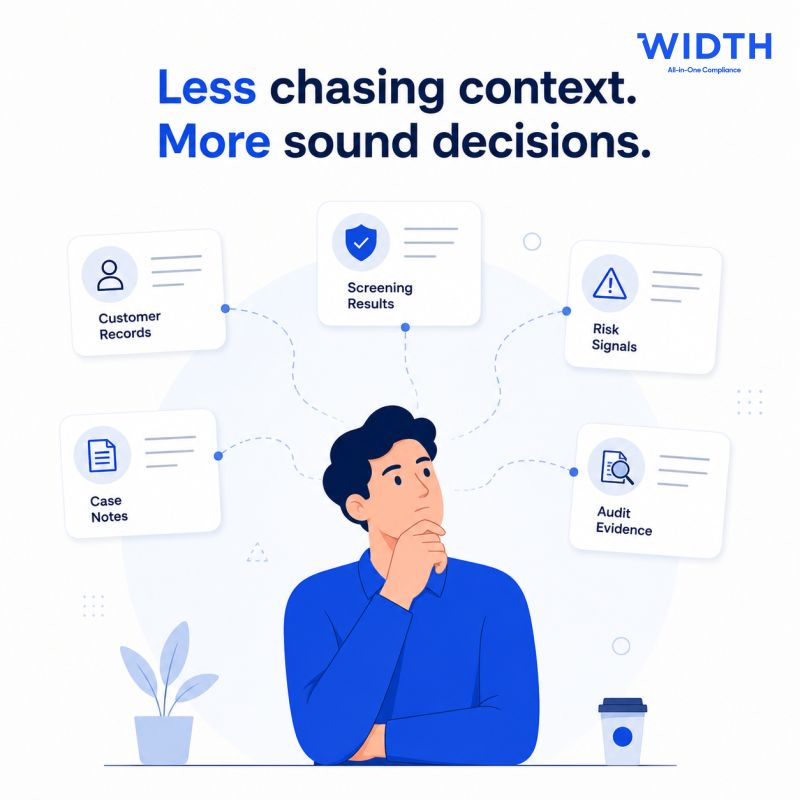
How much of your day goes into assessing risk — and how much into just looking for information?
When customer records, screening results, case notes, review decisions, and audit evidence sit across different places, compliance teams spend more time chasing context before they can make a decision.
WIDTH helps teams bring that context together, so more time can go into the risk decisions that matter.
31
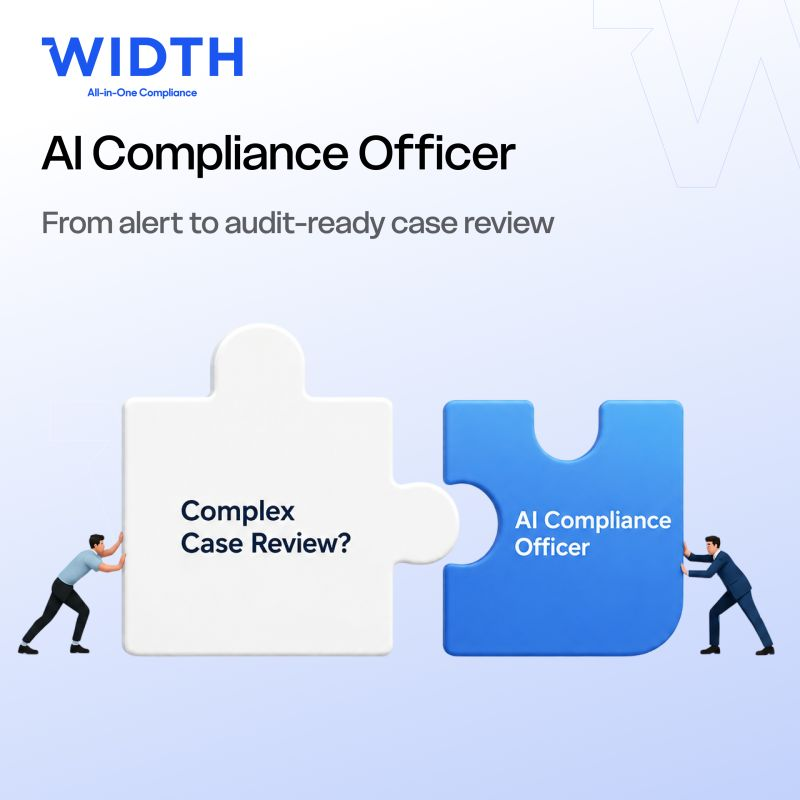
In financial crime compliance, an alert is only the starting point.
After an alert appears, analysts still need to check the customer profile, review screening results, look at transaction history, compare related cases, collect supporting documents, and prepare a case record that can be reviewed later.
This is where WIDTH's AI Compliance Officer supports case review.
It helps summarize the case, link risk signals to customer context, organize relevant evidence, generate review-ready reports, and suggest possible next actions for the analyst to consider.
AI helps reduce manual preparation work.
Human reviewers remain responsible for the final decision.
With WIDTH, compliance teams can move from alert review to evidence preparation, decision documentation, and audit trail management within one connected workflow.
32
Next week in Singapore, our Co-Founder & CEO Chye Kit Chionh will join the SG AI Agent Summit at Unique Bloom 2026 as a guest speaker.
Taking place during Singapore AI Week, the summit will bring together leaders and innovators to discuss AI agents, enterprise adoption, and global market opportunities. Unique Research
As AI agents move further into real-world business and financial workflows, governance, accountability, and compliance infrastructure will become essential to trusted adoption.
📅 12 June 2026
🕘 9:00 AM – 5:00 PM
📍 PARKROYAL COLLECTION Pickering, Singapore
Looking forward to the discussions on what responsible AI agent adoption looks like in practice.

1
1
52
Singapore's upcoming SPF Cyber Command is worth watching for financial institutions, payment firms, and digital asset businesses.
According to recent reports, the new command will strengthen Singapore's response to scams and cybercrime, including capabilities in cryptocurrency tracing, blockchain intelligence, and AI-assisted detection of scam websites.
Many scam and cybercrime cases are increasingly difficult to place into a single risk category. A case may begin with a fake website, move through mule accounts, involve wallet transfers, and eventually require transaction records, customer profiles, device signals, and case evidence to be reviewed together.
For compliance and risk teams, connecting customers, accounts, wallets, transactions, alerts, evidence, and case decisions into one clear review trail can better support fraud prevention, AML monitoring, crypto risk review, and audit-ready case management.
asianews.network/singapore-p…
41
In compliance, the key lies in identifying the risks that require attention across large volumes of signals.
Customer onboarding, transaction behaviour, connected entities, changing risk profiles, and case records all contribute to the full picture. When this information sits across different processes, teams spend valuable time reconstructing context, slowing down decisions and increasing review pressure.
WIDTH connects KYC / KYB, screening, transaction monitoring, risk scoring, case review, and audit evidence into one compliance workflow, helping regulated businesses turn fragmented risk signals into clearer decisions with traceable records.
Making key risks clearly visible is where stronger compliance operations begin.
26
A recent RegTech Analyst article highlighted that compliance obligations remain the top driver of RegTech adoption among financial institutions, while operational efficiency and cost optimisation are also becoming important considerations.
This reflects a meaningful shift: the value of #RegTech is expanding from regulatory fulfilment to the redesign of compliance operations.
The key factors shaping compliance efficiency often appear in daily workflows:
Continuous updates to customer information
Contextual connection of risk signals
Evidence retrieval during case review
Traceable records for final decisions
When KYC / KYB, screening, transaction monitoring, risk scoring, case management, and audit evidence sit across separate systems, compliance teams often need to reconstruct context across multiple workflows.
WIDTH focuses on connecting risk signals, customer context, review workflows, and decision records into one operating flow, helping teams manage daily compliance operations with greater clarity, control, and traceability.
regtechanalyst.com/complianc…
20
Hong Kong's virtual asset regulatory framework continues to move into a more operational phase.
Recent Securities and Futures Commission (SFC) updates cover Relevant Stablecoin service, SFC-authorised funds with exposure to virtual assets, and proposed licensing regimes for virtual asset advisory and management service providers.
Four compliance points stand out:
1️⃣ Regulatory scope is expanding
Virtual asset compliance is covering more business scenarios, including stablecoin-related services, fund products, advisory activities, and asset management.
2️⃣ Product controls need to be clearer
As virtual asset products become more institutional, firms need stronger controls around client eligibility, risk disclosure, custody, transaction exposure, and ongoing monitoring.
3️⃣ AML and transaction risk remain central
Firms need to connect customer due diligence, wallet risk, transaction monitoring, sanctions screening, and suspicious activity review across the customer lifecycle.
4️⃣ Auditability is becoming essential
Clear workflows, review logic, case evidence, and decision records are increasingly important for governance and regulatory inspection.
For WIDTH, digital asset compliance is moving toward connected infrastructure. Onboarding, KYT, AML monitoring, case review, regulatory reporting, and audit evidence need to work together like systems within the same building.

56
Stablecoins are entering a new stage of market competition.
For a long time, the market focused on issuers, reserves, liquidity, and payment use cases. As stablecoins move further into regulated financial services, institutional adoption will increasingly depend on operational controls: customer identity, wallet risk, fund flows, transaction monitoring, unusual activity handling, Travel Rule, case review, and audit evidence.
This means the next stage of stablecoin competition will also depend on who can embed compliance controls into daily business workflows.
For example, when a stablecoin transfer involves a high-risk wallet, an unusual transaction path, or incomplete customer information, fragmented KYC, KYT, transaction monitoring, and case review processes can make it difficult for compliance teams to identify the source of risk, explain the handling logic, and retain complete evidence.
For VASPs, financial institutions, and payment-related businesses, stablecoin operations need to manage customers, wallets, transactions, rules, cases, and reports within one connected operating flow.
WIDTH helps compliance teams turn stablecoin risk signals into reviewable cases, documented decisions, and audit-ready records.
#WIDTH
1
51
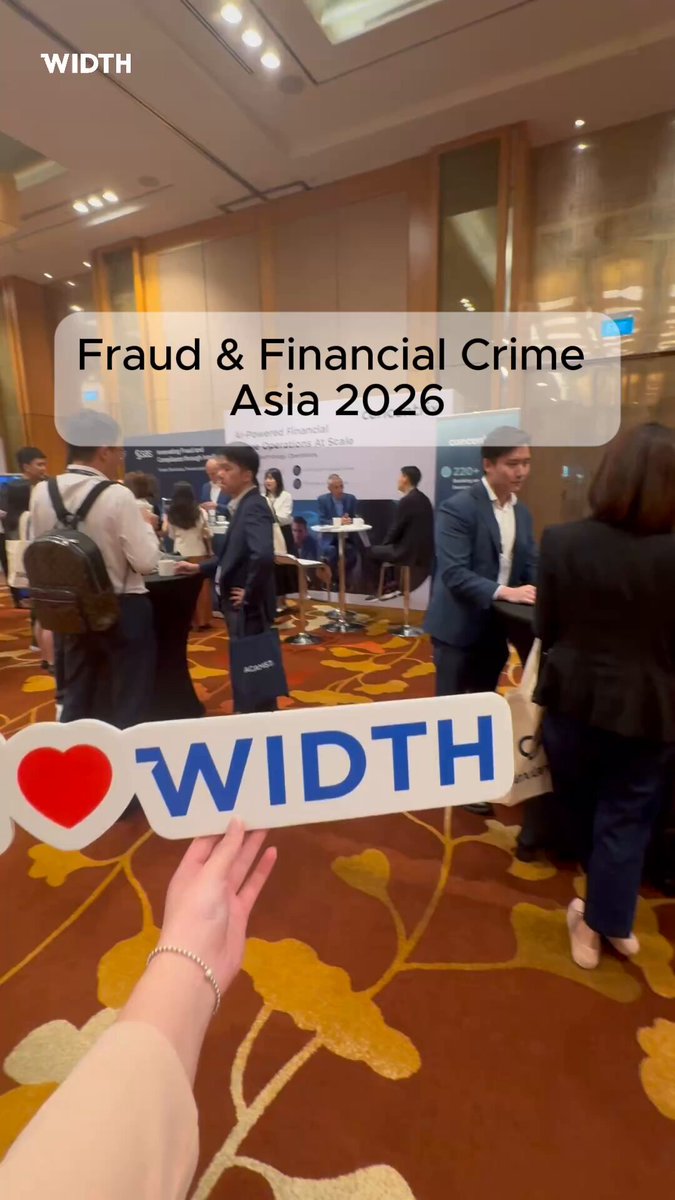
Looking back at Fraud & Financial Crime Asia 2026.
It was a valuable opportunity to join industry leaders in Singapore for discussions on financial crime, fraud, AML, AI governance, and model risk management.
Our Co-founder & CEO, Chye Kit Chionh, joined the panel “Governance Under Pressure: AI and Model Risk Management” to share WIDTH’s perspective on explainable, auditable, and human-accountable AI in financial crime control.
Thank you to Regulation Asia for convening such a strong community, and to everyone who connected with the WIDTH team onsite.
#WIDTH #FraudAndFinancialCrimeAsia #AML
1
3,867
Corporate Service Providers are no longer just helping companies complete incorporation paperwork.
In Singapore's #AML/CFT framework, CSPs are increasingly becoming front-line gatekeepers.
Before a company is incorporated, CSPs need to understand who is behind the business, verify beneficial ownership, assess customer risk, screen relevant parties, and decide whether the relationship should proceed.
This makes KYC, KYB, screening, documentation, and ongoing review part of daily CSP operations.
As regulatory expectations become more detailed, CSPs need a clearer way to manage client acceptance, review, escalation, and audit evidence.
WIDTH helps bring KYC/KYB, AML screening, risk assessment, case review, and compliance records into one connected workflow.
Book a Demo: width.com/demo.html
58
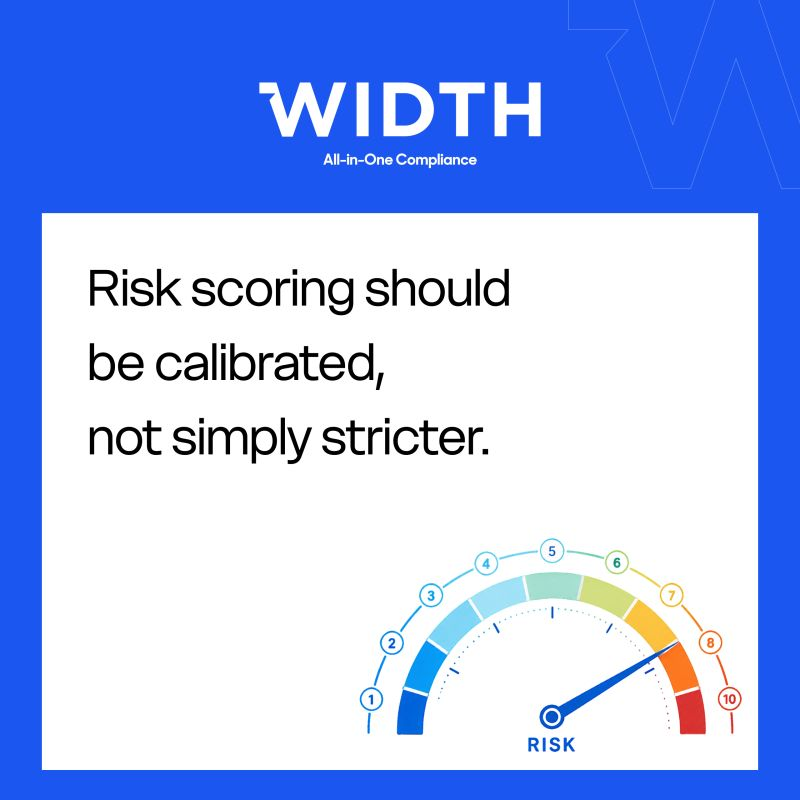
Stricter risk scoring does not always lead to better AML outcomes.
When risk models are calibrated too aggressively, compliance teams may face more false positives, heavier manual review workloads, and greater friction for legitimate customers.
#KYC and AML controls should be built around proportionality and risk alignment.
Effective KYC should help teams identify higher-risk customers and activities, apply enhanced review where needed, and avoid applying the same level of scrutiny to every customer and case.
For compliance teams, the key question is not how high the score is. It is whether the scoring logic reflects actual risk, and whether review thresholds are properly calibrated.
37
WIDTH retweeted

May 28
Our 4th Episode of COCO Talk, this time we talk about AI & Compliance - a very important and serious topic in the Enterprise AI world.
Great to have CK - CEO of WIDTH @WidthGRC , the all in AI compliance platform to share his deep insights and perspective in compliance tech world.
May 28

Nearly 30 years inside compliance. No engineering background. One weekend rebuilding the stack his company used to pay tens of thousands for.
🎙 COCO Talk EP4: AI × Compliance — Why "Old-School" SaaS Is Dated
CK, founder of WIDTH and former regional head of compliance at Macquarie Group, sits down with COCO to unpack what's actually broken in traditional compliance, why regulating AI itself is the wrong question, and where nearly 30 years inside the system says the next wave is heading.
Intro
Meet CK: nearly 30 years across PWC, Macquarie, and now WIDTH
What's actually broken in compliance — and who broke it
Trust, the cart, and the horse — AI as a means, not an end
One operator, one bot, one weekend — rebuilding an SMB stack
Why plain-vanilla automation SaaS is dated
Should AI be regulated? MAS FEAT principle, 2018
The three pillars: security, data privacy, AI governance
Prevent → detect → preempt: the next paradigm
@cckitchionh @CharliehuAI
1
4
246
Two UAE regulatory developments are worth watching.
DIFC is expanding access to its Prescribed Company regime, while keeping Corporate Service Providers central to filings, record-keeping, and compliance interfaces.
ADGM is tightening virtual asset requirements across staking, the Travel Rule, unhosted wallets, ongoing risk assessment, and AML/CFT controls.
As market access becomes broader, CSPs, VASPs, and regulated financial institutions will face higher expectations to embed compliance controls into daily workflows:
· Counterparty due diligence and KYC/KYB
· Travel Rule and transaction monitoring
· Ongoing risk assessment and case review
· Audit-ready evidence and record-keeping
Connected compliance infrastructure is becoming essential.
#TravelRule
51