A city set on a hill || Building @Foodlr_app & @bricksfi || Blockchain, Data & Politics Enthusiast #Vivre_la_Vie #GGMU
Joined April 2017
- Tweets 13,001
- Following 757
- Followers 2,348
- Likes 14,573
415 Photos and videos













Pinned Tweet

18 Aug 2025
Fintechs don’t actually wait for bank settlements😂
They usually keep a pool of money parked somewhere. When you send ₦5k, they pay you instantly from that pool. By the time the real transfer clears hours later, they just refill the pool. Let me explain it to you👇
17 Aug 2025

“What exactly do Opay and MoniePoint do that makes their transactions faster than other commercial banks?”
—Man reacts
448
2,468
12,278
1,835,456

You ring your partner & they fail to pick up?
They text in a spare moment to tell you whats holding them up. Eventually when they return your call, they narrate all that happened without making it seem like a question & answer situation.
Accountability in action? Always top notch.
"Babe I shouldn't have said that"
"Thats true, I made this same mistake two weeks ago, I'll work on improving"
"I hurt you & I'm sorry, lets talk about it over dinner"
Communicating anything is easy.
You ask a question? They respond, no guilt tripping or anything corny.
These are bare minimums by the way.
Lets love right!
22h

What’s a green flag in a relationship?
24
620
2,719
102,555
Omo Ore-Òfé retweeted

Jun 12
Unrelated but this is a reason I’ve stopped talking to someone i was into
Every time she came over, we either had to buy food, or I cook. Not once did she go into the kitchen.
You’ll stay over for 2-3 days. I’ll leave the house to get the ingredients. I’ll prepare everything, make the food and she’ll eat. I’ll do the dishes too after.
It was either that or I had to buy food that we’d eat. Not once did she offer to cook or make us a meal except that one time I’d eaten and she made noodles for herself.
Happened 3 times and after the third time, I just let her go
Jun 12

Omo I no dey judge girls wey dey live for boy house again 🙂↕️.
379
529
4,616
1,607,044
Omo Ore-Òfé retweeted

Jun 11
I keep telling people that a lot of you still don’t understand what “big club” actually means. Success comes and goes, trophies come and go, but size is something completely different.
When Manchester United start winning the league again, that’s when you’ll truly see what global support, attention and noise look like. The whole football world will be forced to pay attention. The motion will be on a different level entirely.
Some clubs are successful, some clubs are great, but very few are genuinely massive. That’s why even after years without a league title, Manchester United still dominates conversations everywhere.
No disrespect, but even Real Madrid no big reach Manchester United when it comes to global attention and moving the football world. When United rise again, una go finally understand the difference between successful and BIG. 😂
Jun 11

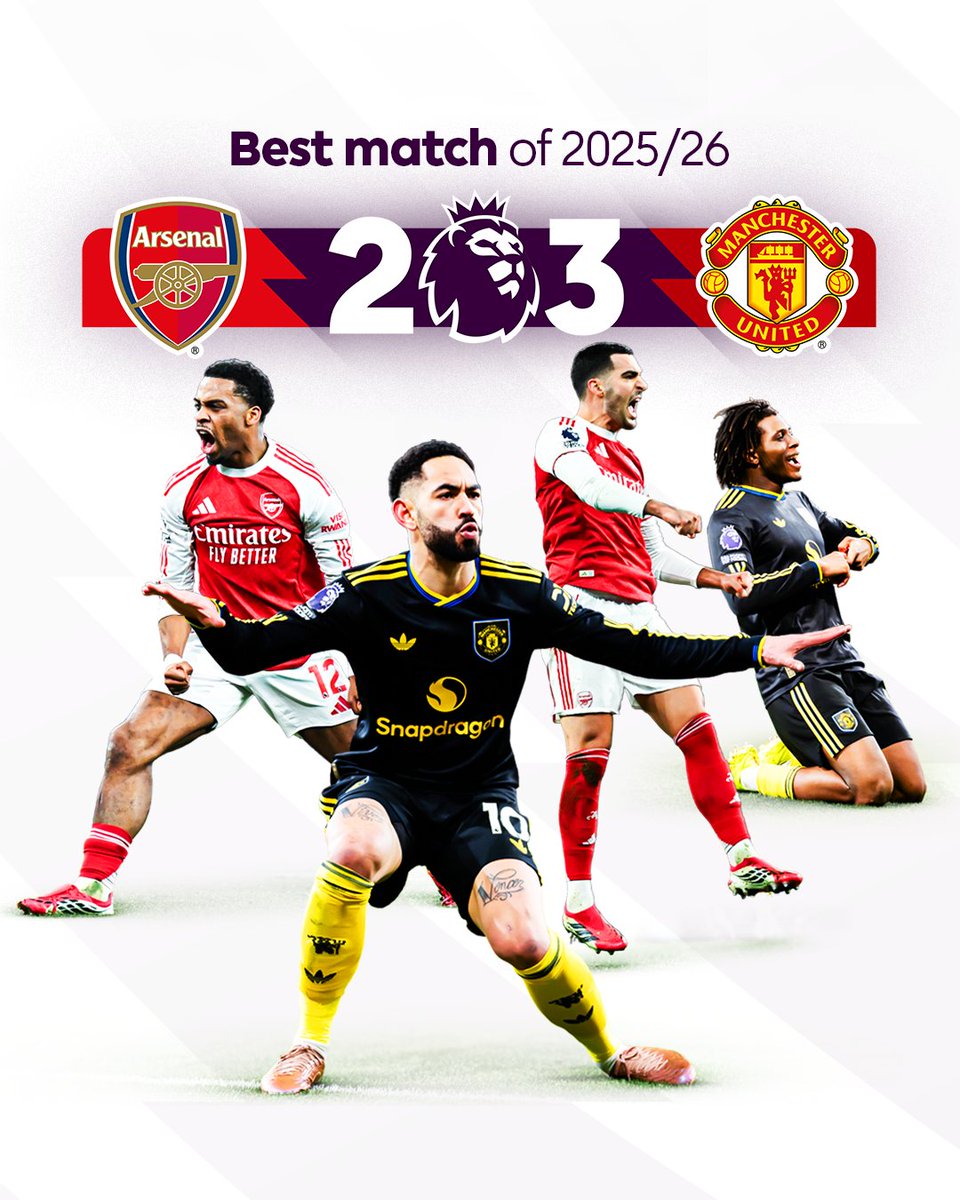
The best match from the 2025/26 season, as voted by YOU 🫵
🔴@Arsenal 2-3 @ManUtd ⚫️
preml.ge/tdxmtrwr
771
1,975
9,507
597,144

Omo Ore-Òfé retweeted

Jun 10
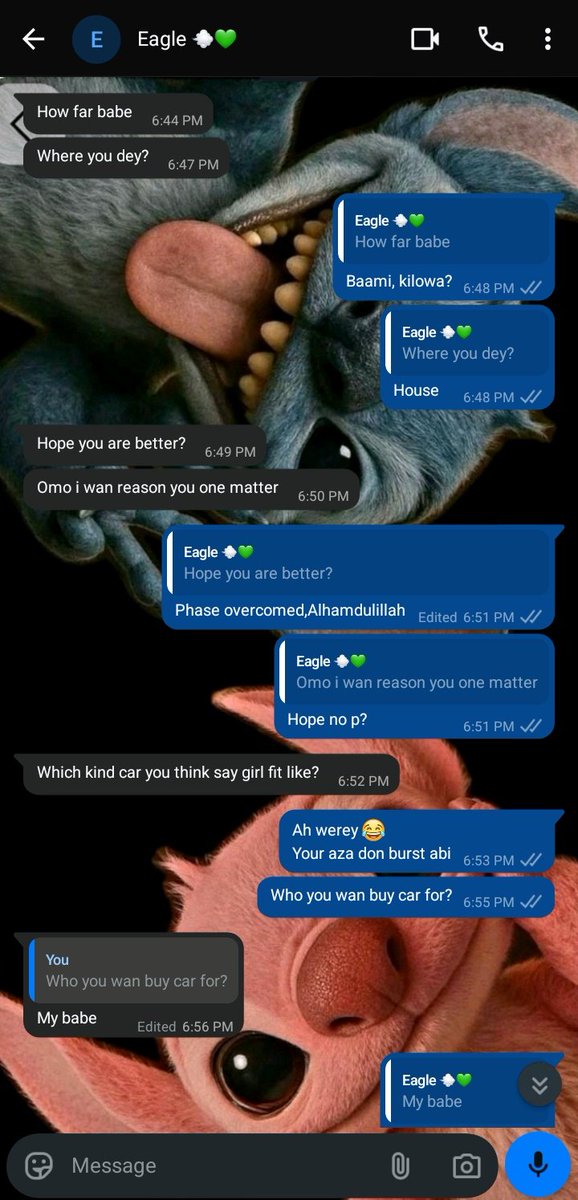
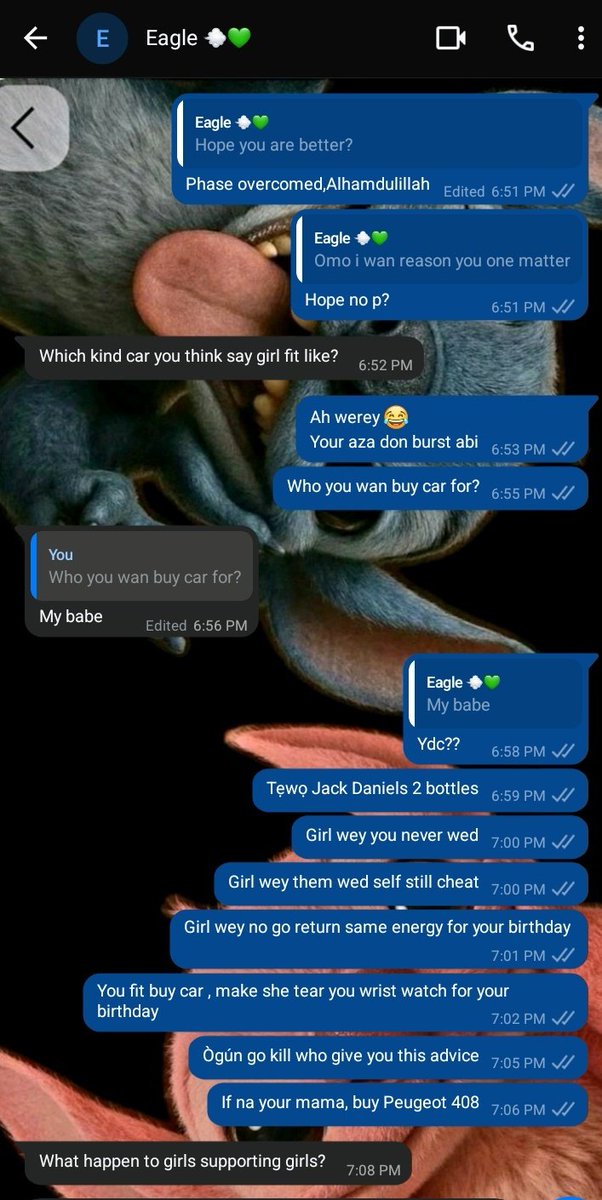
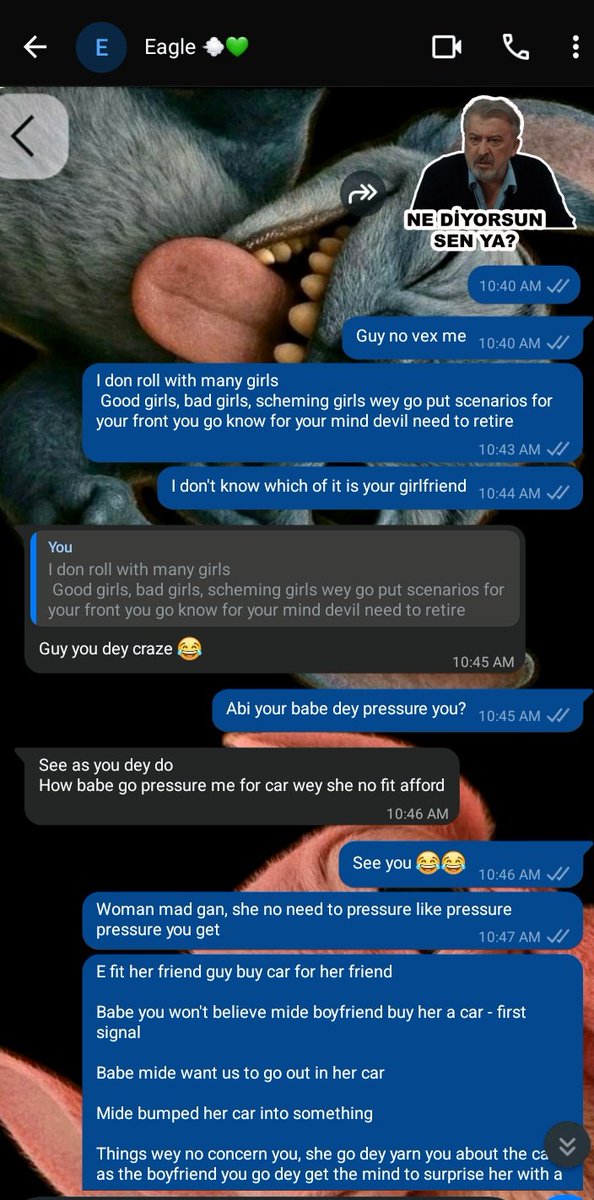
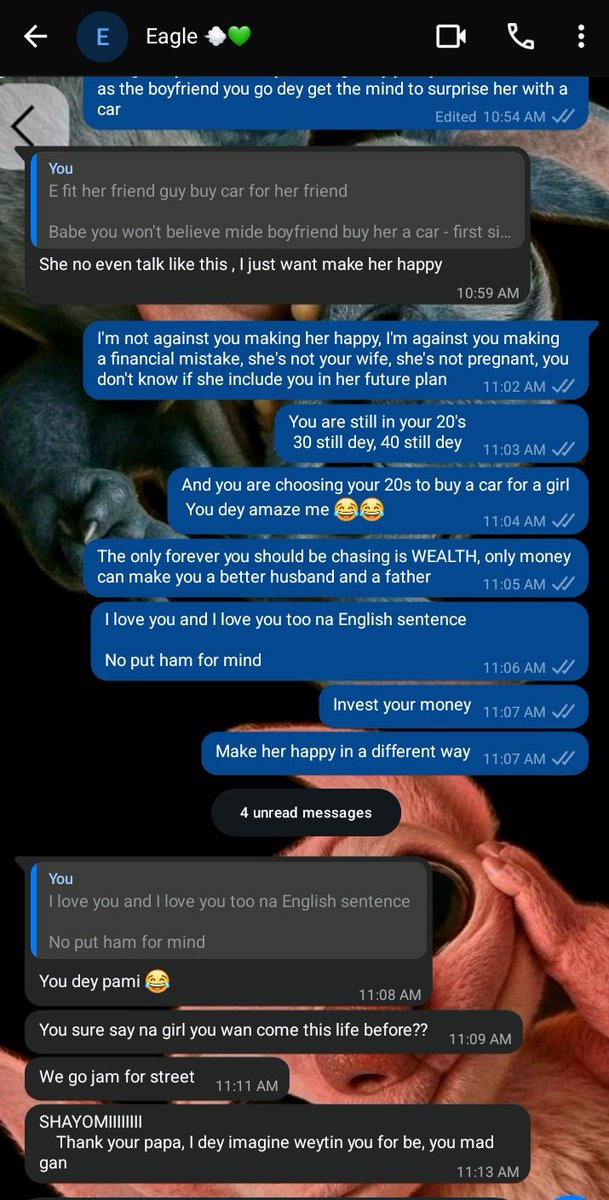
He wan go astray, i quickly drag ham back 😂
Jun 10

So this my guy wan buy car for him babe , he seek for my advice
Baba think say i go support ham
Make the werey sha no burst my message to him babe
Wait for screenshot
823
797
5,748
884,087
Omo Ore-Òfé retweeted

Jun 10
life when you put yourself first.

133
7,385
41,048
419,472


Omo Ore-Òfé retweeted

Jun 9
english teachers recognizing ur potential is the kind of validation that stays w u forever
1,046
86,669
437,871
6,064,225

Omo Ore-Òfé retweeted

Jun 10
Divided by species United by problem 😂
Community note
The video is AI-generated, not real animal footage. Evidence includes the mouse warping unnaturally into motion instead of flipping and other inconsistent animations.
video.twimg.com/ext_tw_video/2…
2,167
20,716
120,541
7,732,637
Omo Ore-Òfé retweeted

Every Nigerian needs to pay very close attention to this official press release by the Finance Minister of Nigeria, Taiwo Oyedele. This serves as the direct response by the Federal Government to the International Monetary Fund 2026 Article IV Concluding Statement on Nigeria.
The recent IMF statement on Nigeria is overflowing with glowing praises for the Tinubu Administration and their supposedly brilliant economic policies.
The IMF is loudly cheering for the reunification of the foreign exchange market because the gap between the official and black market exchange rates has remained below 5%, which is absolutely fantastic for foreign investors since they love predictability, guaranteed margins, and zero currency friction. They also excitedly applaud the fact that Nigeria's foreign reserves have built back up, supposedly providing a comfortable cushion against global economic shocks. Finally, the IMF highly commended the Tinubu government's decisions to eliminate deficit monetization (which stopped the CBN from printing money to fund government projects) and to permanently remove petrol subsidies.
Now, the Tinubu Administration, speaking through the office of the Finance Minister, is proudly parading this IMF report like a shiny gold medal. They are framing this praise as an "independent validation" that their brutally painful economic policies over the past few years are finally yielding positive macroeconomic results. The glaring problem here is that this is not something Nigeria as a sovereign country should be celebrating, and this is entirely because of who the IMF actually works for and who dictates their underlying policies. The G7 nations and Western superpowers entirely control the IMF board, and the institution itself exists strictly to protect the financial interests of international creditor nations, massive global investment banks, ruthless hedge funds, and wealthy foreign bondholders. The primary job of the IMF is merely to ensure that the global financial system remains perfectly stable and that struggling developing nations never default on their massive, crippling debts to foreign creditors. Therefore, the IMF works exclusively for the lenders (the global financial-industrial complex), absolutely not for the bleeding borrowers like Nigeria, Ghana, Kenya, or any other struggling African nation.
To see how bad this is, just observe this currency unification being praised by the IMF as a massive win for the Tinubu Administration. They are celebrating simply because the exchange rate is now mathematically stable and investors are finally happy. This is spectacularly good for foreign speculators, but it is deeply catastrophic for us because the currency stabilized at a spectacularly weaker level of N1,400 per dollar, compared to N770 in the black market and N450 in the official rate before this administration took over.
So yes, the currency is technically unified, but at a permanently crippled level. Since Nigeria is a heavily import-dependent economy, this unified weakness has made the cost of food, life-saving medicines, basic hospital bills, school fees, transportation, building materials, imported spare parts, and daily survival astronomical, thereby permanently destroying the purchasing power of everyday Nigerians.
Furthermore, the IMF congratulating the Tinubu Administration on increasing the country's foreign reserves might sound like brilliant news, until you suddenly realize that it is this exact, deliberate policy that violently crippled our local industries. Most of the money that makes up these bloated new foreign reserves was forcefully squeezed out of the removal of petrol subsidies, a move that has deeply suffocated our local businesses, artisans, manufacturers, and logistics companies who rely entirely on petrol generators to survive. But this is not even the full tragic story. Even the bloody change they violently squeezed out of the dying Nigerian middle class was not enough to impress these foreign investors. To aggressively entice them, the Tinubu Administration spiked the base interest rate from 18% up to a staggering 27%. This was no mistake. In the US, for example, when you lend money to the government by buying Treasury Bills, federal bonds, municipal securities, or index funds, the interest you expect to make per year is at most 5%. But the Nigerian government is desperately signaling to these foreign speculators and international bondholders to come drop their dollars in Nigeria, effectively guaranteeing them a massive 27% interest by the end of the year. This might look like a huge economic win as foreign capital flows into the country, but this hot money never ends up in the pockets of ordinary Nigerians. It is never used to build schools, pay hospital bills, subsidize agriculture, fix dead refineries, or reduce house rents. The money just sits idly in the central bank to impress the IMF and World Bank creditors, proving to them that Nigeria is highly liquid and perfectly safe to lend to.
The absolute worst part of this trap is that it is not just the CBN increasing the base interest rates. The commercial banks are naturally forced to aggressively increase their lending rates even higher. Today, some predatory commercial banks are charging desperate businesses as much as 35% to 40% interest on loans. This financial terrorism has forced countless local businesses to drastically cut down production, lay off massive numbers of staff, and permanently close their branches in remote areas across Nigeria, forcing them to operate strictly within the suffocating limits of their own personal, depleted capital. It is practically mathematically impossible to borrow from a Nigerian bank, scale up production, create actual wealth, and employ the millions of struggling graduates in our society when you first have to pay 40% to the bank. Add that to the reunified currency making imports insanely expensive, meaning businesses still have to pay extra for imported raw materials, clear goods at exorbitant customs duties, pay multiple state taxes, and buy the hyper-expensive fuel that spiked in price due to the celebrated subsidy removal.
It is very possible to analyze this insulting press release further, but there is absolutely no need to waste the time. Clearly, this administration should not be celebrating warm handshakes, pat-on-the-back press releases, and polite diplomatic smiles from foreign creditors and international bondholders. They should be focusing entirely on the bleeding Nigerians who are brutally forced to carry the crushing, suffocating burden of these massive economic miscalculations just to please a comfortable, wealthy board of directors at the World Bank and the IMF.
Jun 9

PRESS RELEASE
𝐓𝐇𝐄 𝐅𝐄𝐃𝐄𝐑𝐀𝐋 𝐆𝐎𝐕𝐄𝐑𝐍𝐌𝐄𝐍𝐓 𝐍𝐎𝐓𝐄𝐒 𝐈𝐌𝐅 𝐀𝐒𝐒𝐄𝐒𝐒𝐌𝐄𝐍𝐓 𝐎𝐅 𝐍𝐈𝐆𝐄𝐑𝐈𝐀'𝐒 𝐄𝐂𝐎𝐍𝐎𝐌𝐘 𝐀𝐍𝐃 𝐑𝐄𝐌𝐀𝐈𝐍𝐒 𝐂𝐎𝐌𝐌𝐈𝐓𝐓𝐄𝐃 𝐓𝐎 𝐒𝐔𝐒𝐓𝐀𝐈𝐍𝐈𝐍𝐆 𝐑𝐄𝐅𝐎𝐑𝐌𝐒 𝐌𝐎𝐌𝐄𝐍𝐓𝐔𝐌
Abuja, 9 June 2026
The Federal Government welcomes the publication of the International Monetary Fund (IMF) 2026 Article IV Mission Concluding Statement on Nigeria and notes its overall positive assessment of the country's economic reform programme. The report provides further independent validation that the bold and necessary reforms undertaken under the leadership of President Bola Ahmed Tinubu, GCFR, are strengthening macroeconomic stability, restoring confidence, and laying the foundation for sustainable and inclusive growth.
The IMF observed that reforms implemented over the past two and a half years have yielded improved macroeconomic outcomes and enhanced Nigeria's resilience to external shocks. The Fund specifically highlighted improvements in foreign exchange market functioning, stronger external buffers, ongoing fiscal and revenue reforms, banking sector resilience, and growing macroeconomic stability. These developments affirm that Nigeria is moving in the right direction and is better positioned to withstand global economic uncertainties than at any time in recent years.
The Government is particularly encouraged by the IMF's recognition that the difficult but necessary decisions to end fuel subsidies, eliminate deficit monetisation, liberalise the foreign exchange market, and strengthen fiscal discipline have contributed significantly to reducing vulnerabilities and rebuilding confidence in the economy. The report notes that Nigeria now faces global shocks with stronger policy frameworks and buffers than before.
The recent conflict in the Middle East has created new challenges for economies around the world through higher energy prices, rising food costs, tighter financial conditions, and disruptions to global supply chains. While these developments present inflationary pressures, the IMF acknowledged that Nigeria has demonstrated notable resilience. Despite significant increases in global energy prices, the foreign exchange parallel market premium has remained below five percent, sovereign spreads have remained broadly stable, and investor confidence has been preserved.
The IMF further noted that Nigeria is well positioned to benefit from higher energy prices through stronger export earnings, improved fiscal revenues, and increased foreign exchange inflows.
The Federal Government remains focused on translating these opportunities into long-term gains by increasing crude oil production, expanding domestic refining capacity, growing gas production and exports, and attracting new investments across the energy value chain.
The Government acknowledges the IMF's observation that poverty and food insecurity remain significant challenges. While progress is being made in terms of per capita income growing by nearly 10 percent in 2025 indicating marked reduction in poverty levels, we are mindful that macroeconomic stability, while necessary, is not sufficient on its own. Economic growth must be inclusive and must translate into tangible improvements in the welfare of Nigerians.
Accordingly, the Government continues to strengthen targeted social protection programmes, including direct cash transfers to vulnerable households, support for small businesses, student financing through the Nigerian Education Loan Fund (NELFUND), consumer credit initiatives, healthcare investments, and interventions aimed at improving livelihoods and expanding economic opportunities.
In agriculture, the Government is scaling up investments through the Renewed Hope National Agricultural Mechanisation Programme and other initiatives designed to improve productivity, expand irrigation and dry-season farming, enhance access to inputs and financing, strengthen value chains, and improve food security. These efforts are aimed at moderating food inflation while creating jobs and raising rural incomes.
The Federal Government also welcomes the IMF's recognition of the progress being made in domestic revenue mobilisation and public financial management reforms. The successful implementation of Nigeria's new tax laws, the digitisation of revenue collection processes, improved transparency in public finance, and enhanced accountability mechanisms will continue to strengthen fiscal sustainability while ensuring a fairer and more efficient tax system.
We note the IMF's recommendations regarding fiscal reporting, budget transparency, and data reconciliation. The Government is already taking steps to strengthen fiscal data integrity, improve coordination among relevant institutions, enhance transparency in budget execution, and deepen public financial management reforms. Efforts are ongoing to improve fiscal reporting systems and ensure that economic and fiscal statistics continue to meet the highest international standards.
The report's medium-term outlook reinforces confidence in Nigeria's economic prospects. The IMF projects continued economic growth above four percent, improving external reserves, rising investment, and strengthening fiscal revenues over the medium term. Public debt has already declined relative to GDP, while reserve buffers have strengthened considerably. These outcomes which complement recent sovereign credit rating upgrades by leading international rating agencies reflect the growing resilience of the Nigerian economy and the positive impact of ongoing reforms.
The Federal Government remains firmly committed to maintaining macroeconomic stability, accelerating inclusive growth, strengthening fiscal discipline, deepening structural reforms, improving the investment climate, expanding infrastructure, enhancing human capital development and job creation. We will continue to pursue policies that support private sector growth, attract domestic and foreign investment, and improve the competitiveness of the Nigerian economy.
While challenges remain, the direction is clear and the foundations are stronger. The ultimate objective of these reforms is not merely improved economic indicators, but better outcomes for every Nigerian - lower inflation, decent jobs, higher incomes, greater economic opportunity, and a better quality of life.
𝐓𝐚𝐢𝐰𝐨 𝐎𝐲𝐞𝐝𝐞𝐥𝐞
Honourable Minister of Finance and Coordinating Minister of the Economy
Federal Republic of Nigeria
61
726
1,338
105,296

Omo Ore-Òfé retweeted

If someone at work tries to micromanage you, micromanage them back.
Send them too much feedback, ask them a lot of questions, do follow ups when they go quiet or even when you know they are busy don’t let them rest.

Never resign because of bullies.
Bully them back professionally.
151
11,499
52,548
1,385,628

I get money for anything you wanna eat and drink when you come over
I get money for taking US out to places I wanna see as well
I get money for affording soft lifestyle for myself( you can tag)
I no get money for wigs, to change your phone or your family issue, or back to back craving or clubbing for Snapchat aesthetics!!
511
5,987
22,792
500,716
Omo Ore-Òfé retweeted

Jun 8
ancestors had a whole festival for her yunno. people measured wealth by her. cannot actually believe the yam slander i'm seeing.
Jun 7

this yam hate is insane, that’s literally the best thing nigeria has.
90
4,233
13,970
337,462
Omo Ore-Òfé retweeted

Jun 5
Tola’s wife is getting praised for basic financial sense.
Which tells you how low the bar has been.
The fact that “she made sure we had a home before the wedding” is viral news means most people go into marriage without doing this.
We have normalized financial chaos as romance.

Still can’t believe my wife made us pay our rent way ahead of time and stocked up the house with food, prepaid meter unlimited, just before we started wedding expenses 😂 😂
51
954
3,078
119,306

Omo Ore-Òfé retweeted

Jun 3
i hate how physical touch as a love language gets reduced to sex and kissing when it's more like... handholding, laying your head on their shoulder, putting your legs over their lap, tracing their palm, tucking your feet under their thighs. just touching for touching's sake.
145
13,720
69,749
1,257,728

Omo Ore-Òfé retweeted

Jun 2
i don't care how you were raised. you're an adult, unlearn that nonsense.
337
49,611
201,696
3,003,560