
Cross-chain infrastructure for humans and AI agents. Build once, deploy across all supported chains. No bridges. Mainnet summer 2026.
Joined November 2017
- Tweets 4,364
- Following 701
- Followers 15,118
- Likes 6,253
643 Photos and videos




Pinned Tweet

May 28
Bridges were never the endgame for multi-chain.
Wire Network is building the Universal Transaction Layer.
Now your assets stay native, execution stays coordinated, and fragmented systems operate like one.
142
22
375
76,565
Jun 12
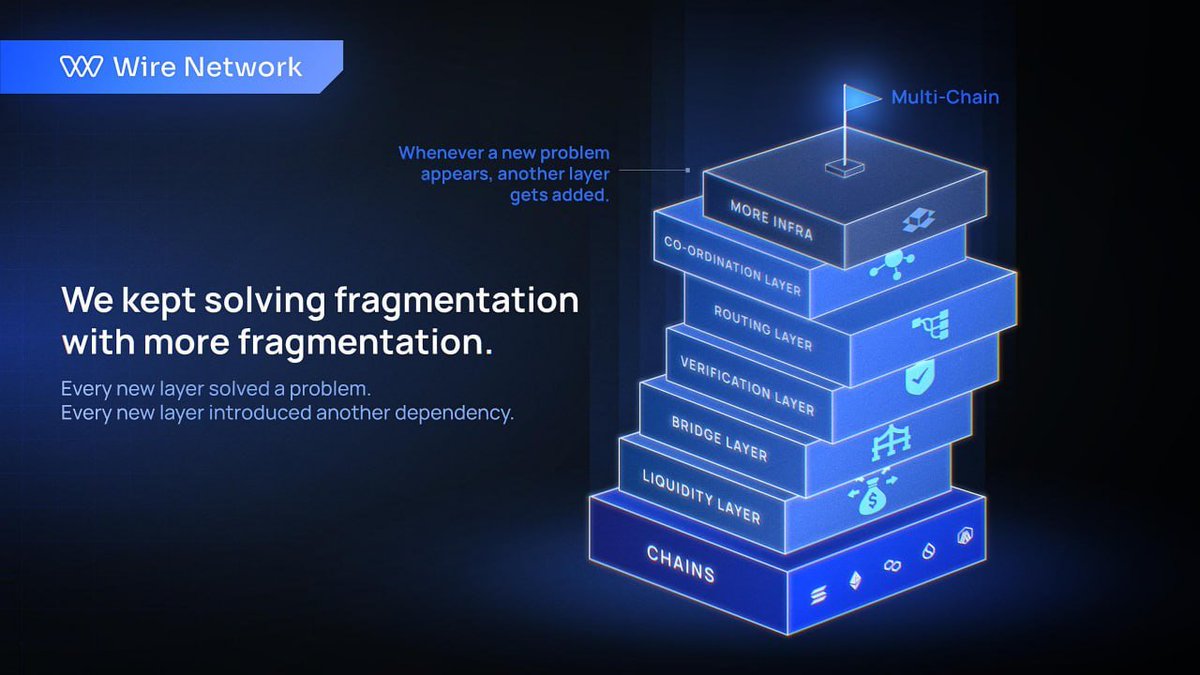
For years, crypto scaled by adding more chains.
But every new chain also introduced:
new liquidity silos, new integration work, new trust assumptions, and new coordination problems.
The industry kept solving fragmentation with more infrastructure layered on top of fragmentation itself.
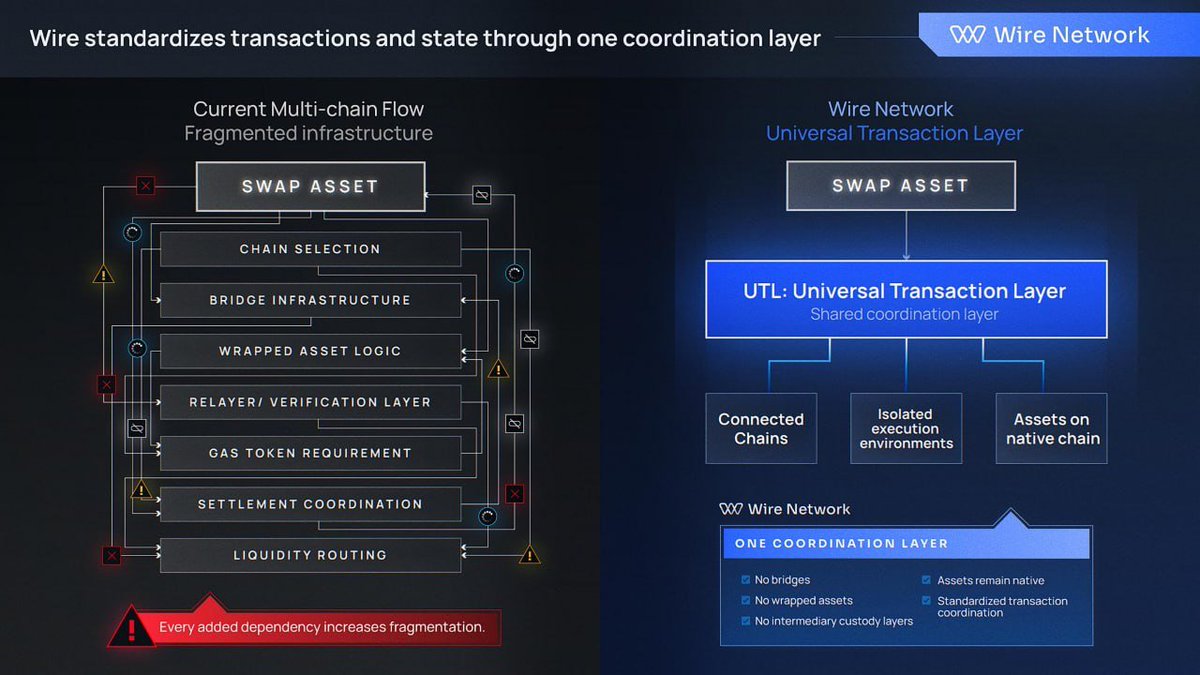
Instead of relying on bridges and external coordination layers, Wire introduces a Universal Transaction Layer where transactions and state are standardized across connected chains while assets remain native.
65
10
174
5,451
Jun 10
Bridges became one of the most important parts of crypto infrastructure.
They also became one of the largest sources of risk.
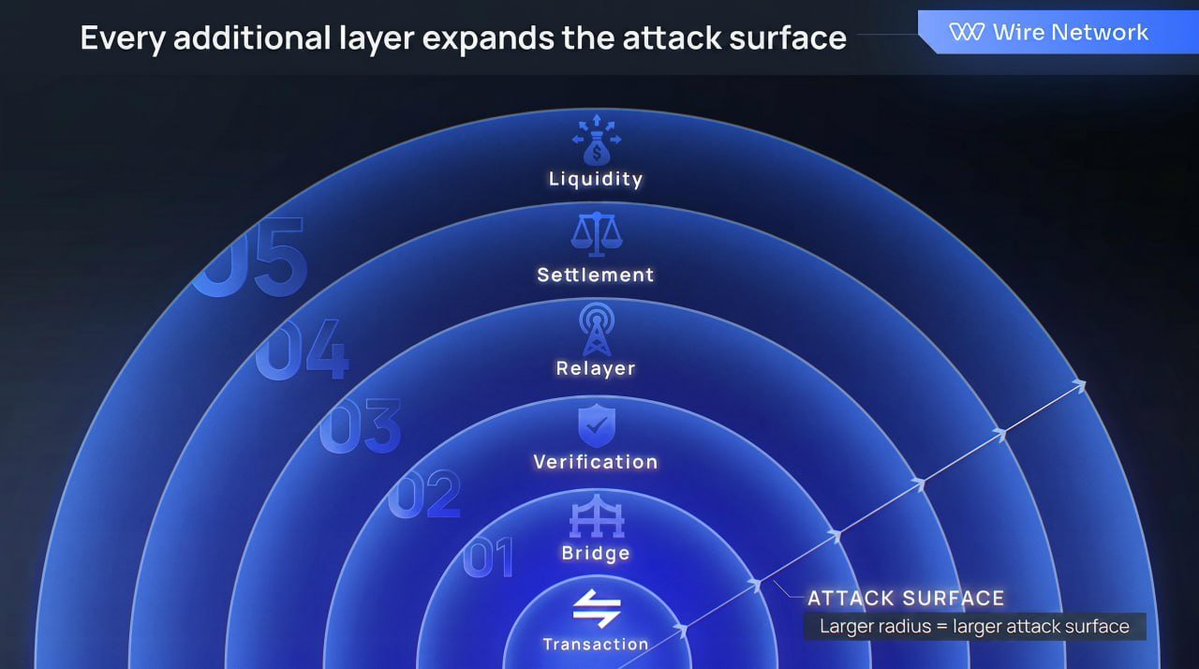
That’s because every time value moves between chains, additional infrastructure is needed to coordinate ownership, verify transactions, and keep systems in sync.
The more layers involved, the larger the attack surface becomes.
Wire approaches this differently.
Ownership transacts on Wire while assets stay put on their native chains, removing the need for intermediary custody layers entirely.
72
7
193
9,675
Jun 8
The next generation of users may not be users at all.
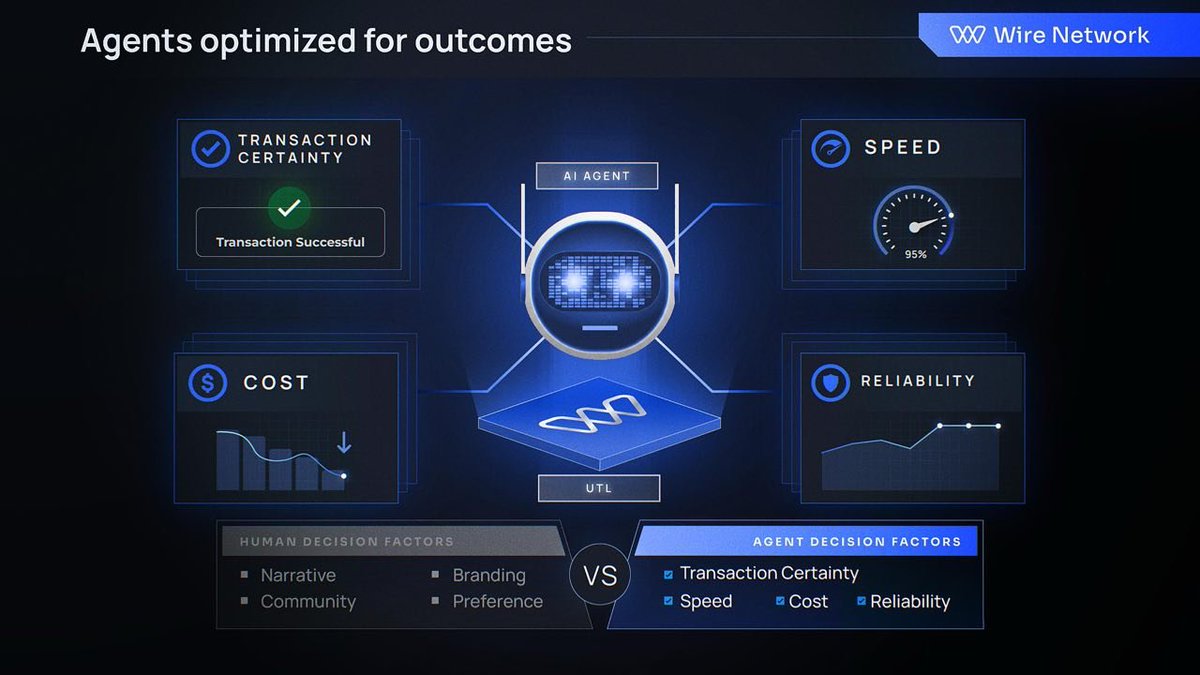
They'll be autonomous systems making decisions based on performance, not preference.
Transaction certainty. Cost. Speed. Reliability.
A gas-free interoperability layer that standardizes transactions and state across connected chains is ideal for agent-to-agent, agent-to-human, and human-to-human transactions.
That's the future Wire Network was built for.
82
7
193
13,750
Jun 5
Autonomous systems are already starting to influence how value moves across crypto.
And they don’t care about chains; they care about performance.
They optimize for speed, success rate, cost, and deterministic execution.
But today’s infrastructure wasn’t built for that behavior.
It’s chain-first: users pick a chain, developers deploy per chain, liquidity is split per environment, and execution depends on fragmented routing logic.
So even simple actions require systems to constantly translate between environments just to complete a single outcome.
Instead of routing per chain, Wire provides a coordination layer that standardizes transactions and state across chains, so systems, including agents, can operate on outcomes rather than environments.
What used to require a routing layer per chain becomes a single, predictable surface.
The next phase of crypto will be outcome-based execution coordinated across chains.
96
12
199
10,938
Jun 3
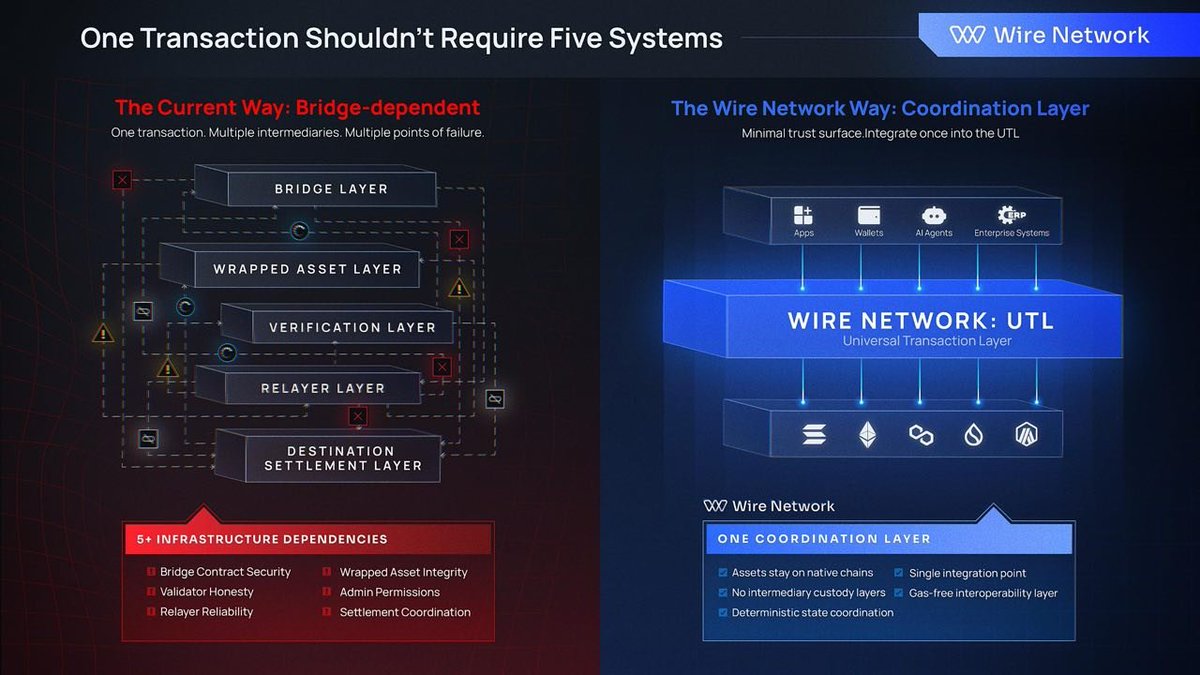
Wire Network is designed to eliminate the need for traditional bridging infrastructure in cross-chain systems.
Today, billions of dollars move through bridges every year, but bridges exist for one reason:
Chains don’t share native state.
That creates a system where every cross-chain transaction requires locking assets, wrapping tokens, adding third-party verification layers, and introducing extra trust assumptions.
So instead of one system, you get multiple systems stitched together with additional infrastructure.
Wire changes the structure entirely.
Assets stay on their native chains, but ownership is coordinated through Wire’s Universal Transaction Layer.
That means no intermediary custody layers. Ownership transacts on Wire while assets stay put.
Bridges don’t make crypto interoperable.
They expose how fragmented it still is.
Wire removes that dependency at the coordination level.
95
3
125
3,755
Jun 1
Wire Network is built to solve a core issue:
Multi-chain systems don’t share state. So everything becomes fragmented.
Over 200 blockchain networks exist today, but apps still have to rebuild logic, liquidity, and integrations across each one.
And as AI agents begin interacting with these systems, that fragmentation becomes even more limiting, because agents require fast, gas-free, cross-chain execution that behaves consistently across environments.
That leads to:
- duplicated deployments
- split liquidity
- bridge risk
- inconsistent execution across chains
So even though everything is “connected,” it doesn’t behave like one system.
Wire changes that model.
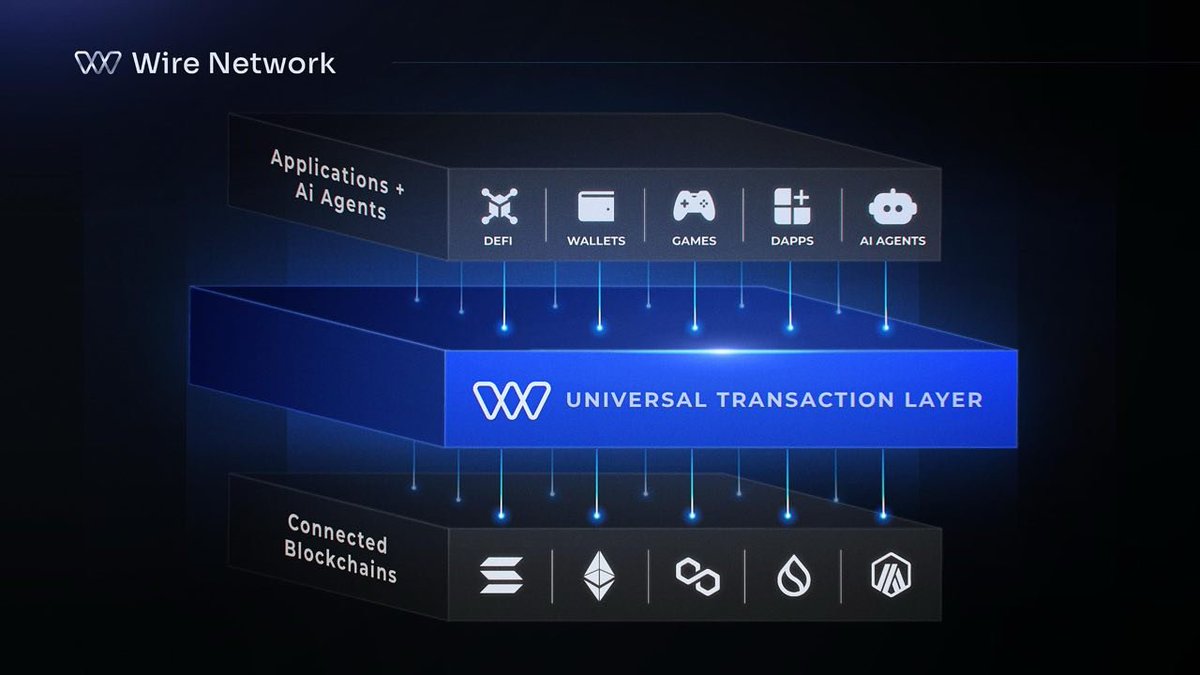
Instead of forcing developers to connect chains one-by-one, Wire provides a Universal Transaction layer (UTL) that unifies execution across environments, designed for both applications and the emerging AI agent economy.
The UTL acts as a high-speed, gas-free interoperability layer (~10,000 TPS), meaning agents and applications can route transactions through a single universal rail rather than fragmented infrastructure, which is why Wire’s execution environment is ideal for AI agent-to-agent or agent-to-human transactions.
So apps integrate once with the UTL, gaining the ability to transact against assets across any connected chain, without bridges, wrapped assets, or asset movement.
113
13
259
71,451
May 27
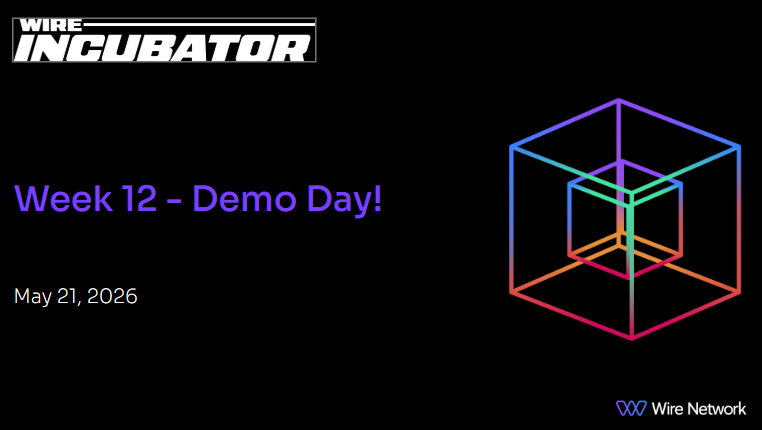
The Wire Incubator Pitch Day was an amazing wrap-up to 3 months of knowledge sharing and collaboration
10 projects spanning web3 business models told their story in 5 min videos that you can watch below.
Take a look and let us know which one(s) you would fund.
13
15
43
3,246
May 22
Wire simplifies transaction execution by removing deferred transactions completely.
There are no more send_deferred or cancel_deferred functions. they don’t exist in the node or wire-cdt anymore. This avoids the long-standing complexity and resource accounting issues deferred transactions created in earlier systems like Antelope.
At the same time, the system is cleaned up further: the waits field in account authorities has been removed, recovering about 32 bytes of RAM per account. Legacy tooling is still supported through SHiP by serializing empty waits when needed.
Less legacy logic in the execution layer means fewer edge cases, fewer surprises, and a more deterministic system overall.

1
2
10
572