Initiative at @UWSMPH that supports rigorous, policy-relevant research on reproductive health, equity, and autonomy in Wisconsin and beyond. Posts≠endorsements.
Congratulations to CORE Lab alumna Fiona Weeks, who in January will begin a three-year term as president-elect of @WIPublicHealth! 🌟 WPHA is dedicated to advancing statewide public policy change to eliminate health inequities. 📊 Proud of you, Fiona! buff.ly/kobaGKZ
CORE investigator and ob-gyn clinician Abby Cutler tells @CapTimes that new abortion bills introduced in the #WI Legislature “inject confusion" and shame, complicating and stigmatizing care decisions best managed between a medical provider and patient. buff.ly/XP2x5OE
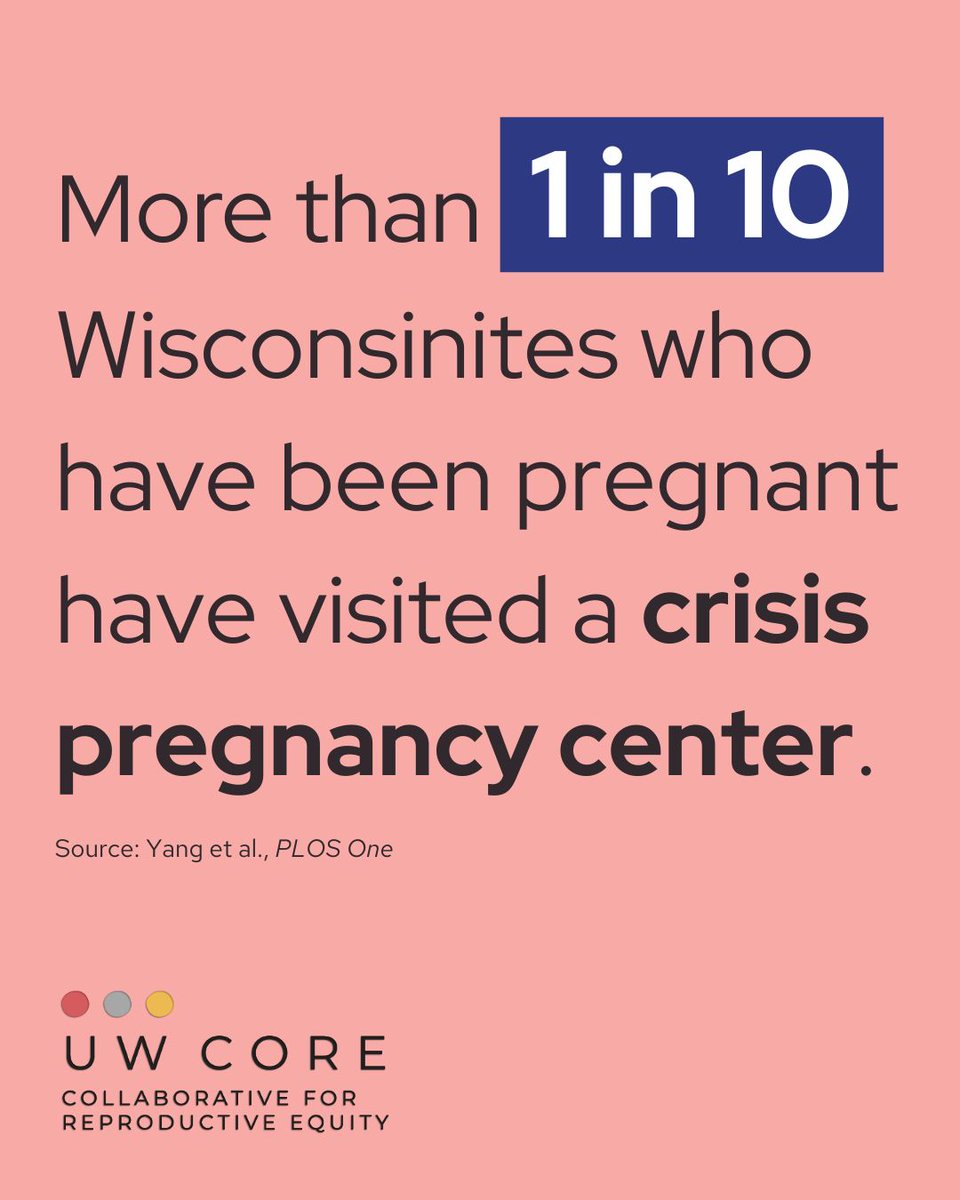
14% of reproductive-aged Wisconsinites with a history of pregnancy visited a crisis pregnancy center (CPC) in 2019-20: buff.ly/eZwH9rh
❌ CPCs aim to convince pregnant people not to have an abortion.
ℹ️ They resemble clinics but lack licensed providers.
#TeachingTuesday
ALT Light pink graphic with black text and UW CORE logo reads "More than 1 in 10 Wisconsinites who have been pregnant have visited a crisis pregnancy center. Source: Yang et al., PLOS One"
⚠️ A CORE brief and infographic detail evidence of how CPCs harm patients: buff.ly/UD9Woi8
- Many CPCs engage in unethical practices.
- CPCs cannot ensure client confidentiality due to lack of medical licensing.
- They often provide disinformation about abortion risks.
📍 The 👆 study reveals that over half (51%) of Wisconsin counties had a CPC in 2017, while only 3% had an abortion provider.
🗺️ Other research finds that post-Dobbs, CPCs have grown in number and funding, especially in states with abortion restrictions: buff.ly/s3kwOUd
Today is Thanks, Birth Control Day! 🔊 Everyone deserves access to the birth control method that works best for their body, life, and goals.
Want more? CORE has many publications and resources on contraception and family planning. 🔍📖➡️ buff.ly/cJuXGY1#ThxBirthControl
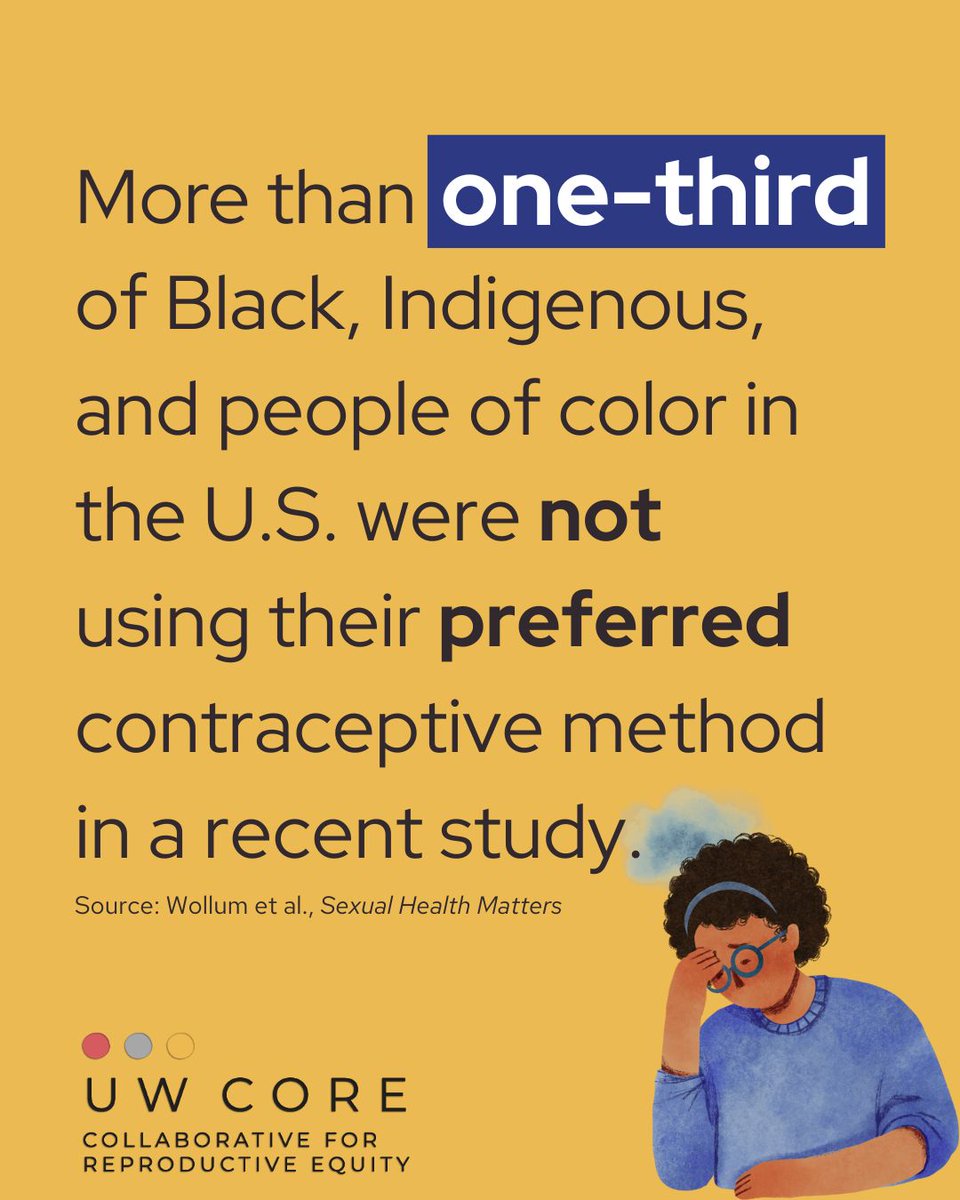
A recent research survey highlights significant barriers 🚧 in accessing preferred contraceptive methods among Black, Indigenous, and people of color (BIPOC) in the U.S.
⚠️ 37% of respondents were not using their method of choice.
Study: buff.ly/FaGHxSw#TeachingTuesday
ALT Graphic in black and white font on yellow background with UW CORE logo and icon of person with brown skin experiencing stress. Text reads: "More than one-third of Black, Indigenous, and people of color in the U.S. were not using their preferred contraceptive method in a recent study. Source: Wollum et al., Sexual and Reproductive Health Matters"
Costs, logistics, and concerns about side effects and health risks were main barriers 🚧 to using preferred contraception.
Healthcare interactions play a crucial role. Respondents reporting higher-quality contraceptive care 🗨️ were more likely to be using their preferred method.
CORE colleague Laura Swan also reveals socioeconomic barriers to preferred contraception➡️ buff.ly/qwafYIO
These studies emphasize the need for financial equity, improved quality of care, and accurate, person-centered information to help meet contraceptive preferences.🏥
New research finds that over-the-counter (OTC) oral contraceptives may improve equitable access 📈 to contraception.
💊 OTC pill users were more likely than prescription users to be uninsured, adolescent, and residents of rural areas.
buff.ly/oNvFvV7#TeachingTuesday
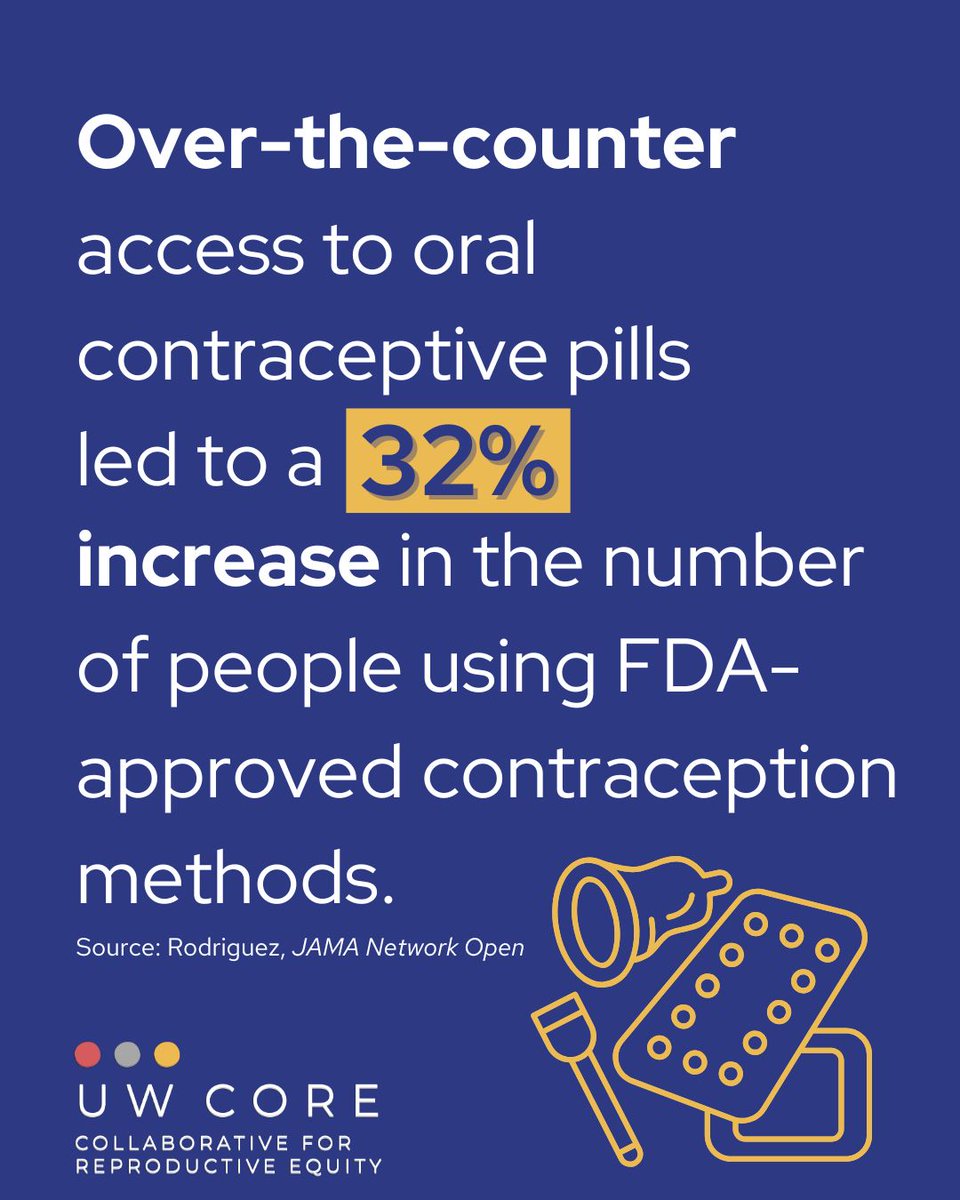
ALT Graphic reads "Over-the-counter access to oral contraceptive pills led to a 32% increase in the number of people using FDA-approved contraception methods.
Source: Rodriguez et al., JAMA Network Open"
The findings also indicate that over-the-counter access could substantially impact contraceptive practices.
OTC oral contraceptives led to a:
📈 32% increase in people shifting from no contraception to an FDA-approved method
⬆️ 41% rise from less-effective methods to the OTC pill
💬From study: “As reproductive health care access faces growing threats, OTC contraception offers a promising strategy to support reproductive autonomy and reduce disparities in contraceptive use.”
⬆️ community awareness and insurance reimbursement can impact access and autonomy.
Numerous CORE scholars, along with colleagues from other Wisconsin institutions and communities, will present at the 2025 Society of Family Planning Annual Meeting Oct. 25–27 in Pittsburgh. We look forward to sharing and learning! 📝
🗓️ View the list: core.wisc.edu/2025/10/20/wis…
📢 @Guttmacher's Megan Kavanaugh, w/ CORE Director Jenny Higgins and others, propose a new method to assess contraceptive access impact, focusing on individual needs and perspectives for better sexual and reproductive health equity. In @ContraceptionJL! ➡️ sciencedirect.com/science/ar…
📢 UW-Madison's Social Science Research Services is coordinating with @uwsoc to hire a communications and events specialist! You'll support the Center for Demography and Ecology and the Center for the Demography of Health and Aging.
Apply by Oct. 16 ➡️ buff.ly/2tJNLm3
Telemedicine 💊 has significantly increased abortion access in the Midwest and South, especially in areas with restrictive laws, a new study shows.
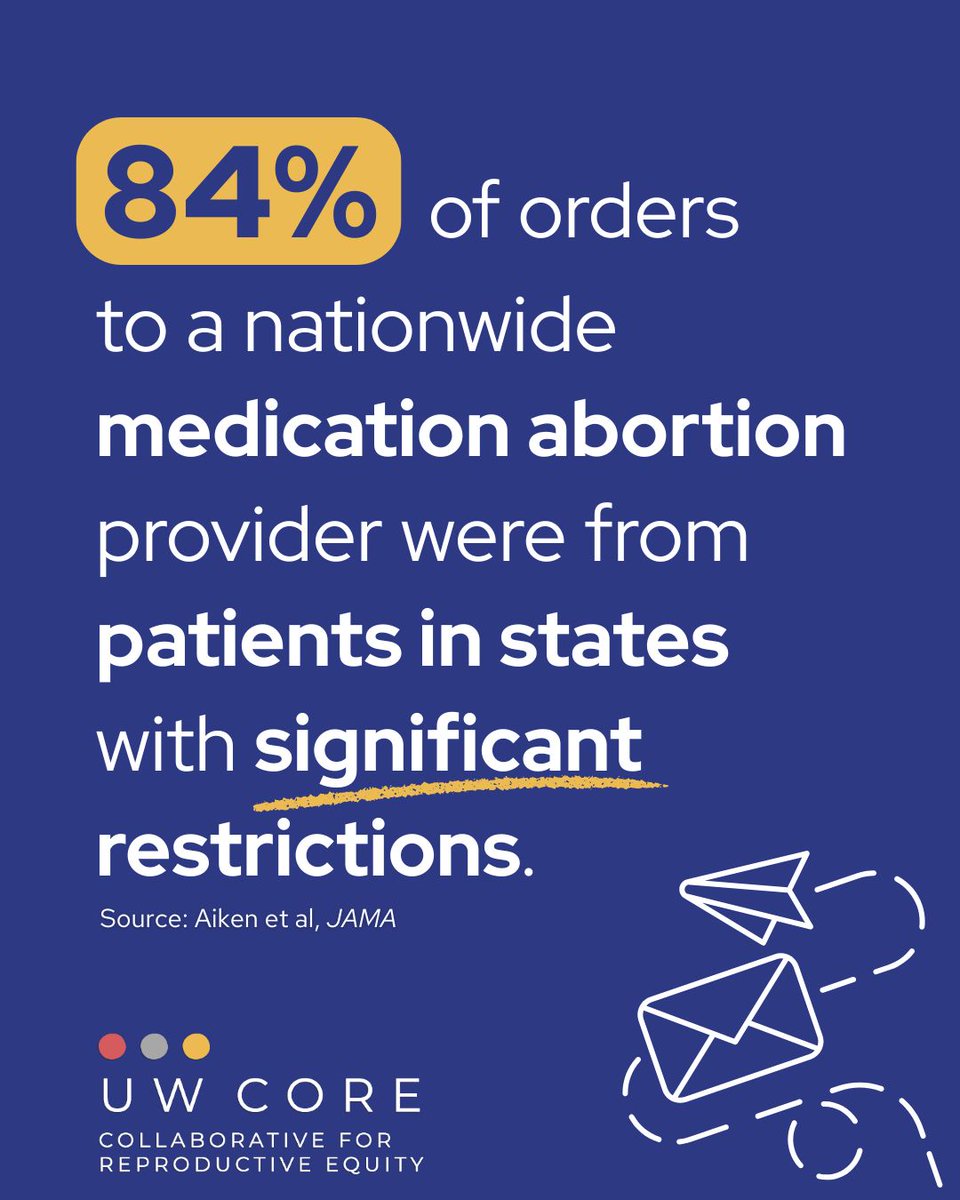
📝 84% of a telemedicine service's prescriptions went to patients in states with significant restrictions.
buff.ly/SjJiVNk
ALT Graphic reads "84% of orders to a nationwide medication abortion provider were from patients in states with significant restrictions.
Source: Aiken et al., JAMA"
The 👆 study also suggests that telehealth is addressing gaps in access for underserved populations. People who ordered pills from the telehealth abortion service Aid Access were more likely to live in areas with:
📊 Higher poverty
🛜 Slower internet
🛣️ Longer travel to clinics
⚖️ Current state and federal efforts to restrict medication abortion access threaten this important, safe, and effective health service.
⚠️ In #Wisconsin, state law prohibits telehealth medication abortion care. Read more in our brief ➡️ buff.ly/1njJMUd#TeachingTuesday
A new CORE study links abortion restrictions to higher rates of referrals to child protective services.
🔍 Restrictions result in negative health outcomes, stress, financial strain, and potential family violence, raising child welfare concerns.
Read more⬇️ buff.ly/fpt4jYE
Congratulations to CORE investigator and @widfm's Diana Carvajal and all awardees of new @SocietyFP grants to document the composition of clinicians providing abortion care. Studies will provide evidence to track and strengthen the abortion care workforce. buff.ly/mEz4AER