
Formerly known as MythosMayhem. Theologian dedicated to promoting the love and relationship of One God and Father who is over all, through all and within all.
Joined October 2025
- Tweets 3,014
- Following 206
- Followers 158
- Likes 1,231
26 Photos and videos











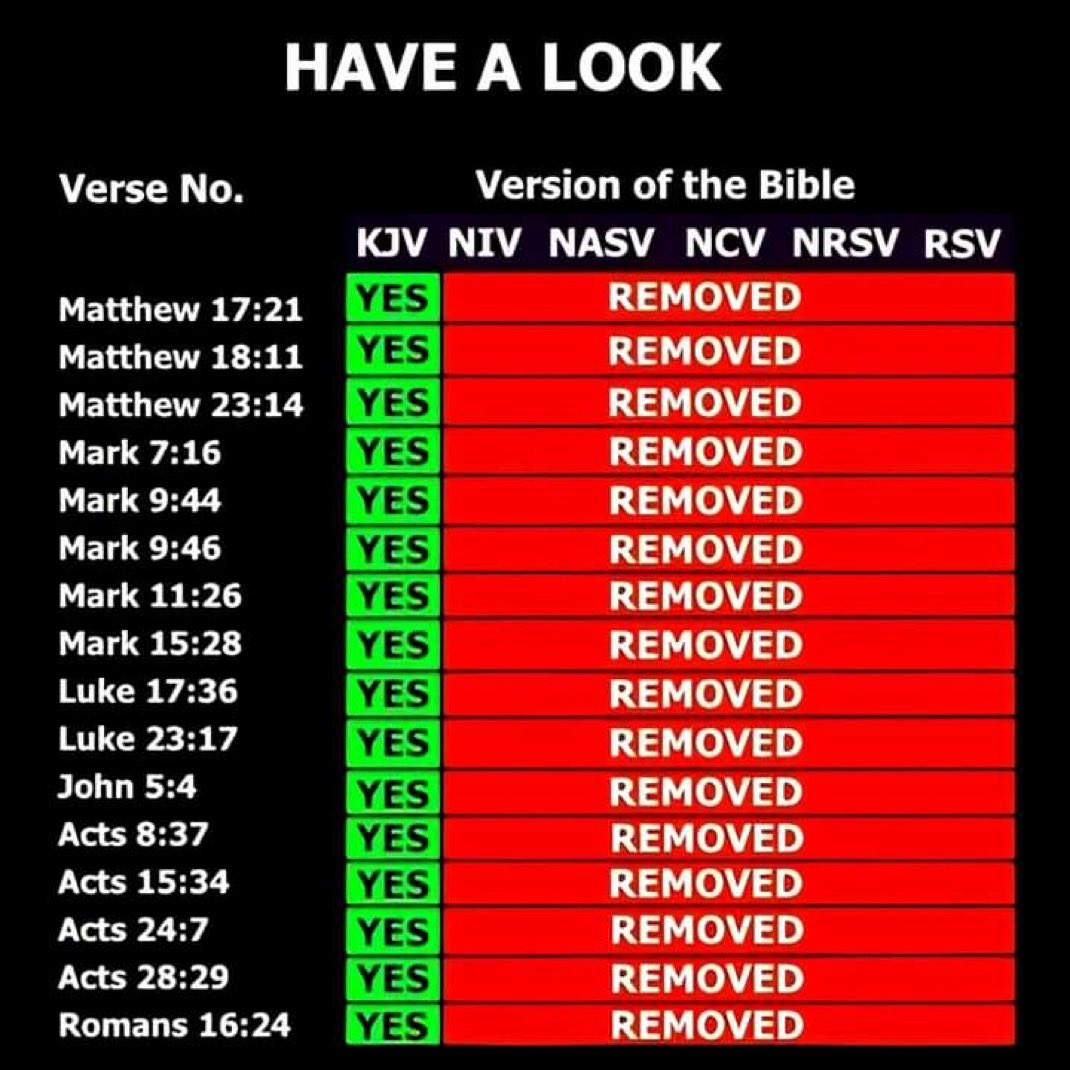





Jun 3
You need to research your Scripture more closely.
I post this regularly, as it needs to be understood by those of the Christian faith:
There are 6 main places in the Bible where the English is interpreted to speak against homosexuality. The first two are in the OT book of Leviticus, 18:22 and 20:13..
In Leviticus 18:22, the Hebrew says, “with a male you shall not lie as with a woman”. Where the translation says ‘male’, the Hebrew word zakar is used, which was normally used to denote a younger male, instead of a mature man, which is the Hebrew word ‘ish’. This verse can be interpreted, “With a young male you shall not lie. As with a woman”.
Notice again the way the Hebrew is worded. It says ‘male’ and not man. Why say male and woman instead of male/female or man/woman? The Hebrew makes a distinction here, which can infer that zakar (male) can mean a young male.
Basically don’t lie with a young boy as with a mature woman. An older man taking a young man child as a sexual partner is called pederasty. This is very similar to verse 20:13 which I’ll discuss later.
The next two places are in 1Cor 6:9 and 1Tim 1:10 where the Greek word arsenokoitai is used. When the OT was translated into the Greek, it was called the Septuagint, or LXX. When Lev. 20:13 was translated into the Greek for the LXX, the words arseno and koiten were used. Arsenokoitai is a combination of those two words: arseno (meaning man) and koite (mat or bed). These two verses are where it is currently translated as homosexual, which started in 1947
Since Leviticus 18 could be interpreted as pederasty versus homosexuality, Martin Luther used the pederastic opinion in his 1534 German interpretation of 1Cor 6 and 1Tim 1. He used the German word for boy molester, knabenschander, where the Greek used arsenokoitai in the two verses. The German versions kept this boy molestation interpretation until around 1798, when they also included Sodomite and buggerer along with pederasty.
Something to note about the word ‘arsenokoitai’ is that it is a hapax legomenon, which means that it is not used anywhere else in Greek literature. It literally only exists in the LXX for Lev. 18, and in the NT in the two passages mentioned. The word as Paul wrote it is the noun ‘man-bed’.
As the word itself is so vague, with no other usage to determine what it definitely means, it could mean pederasty, as Martin Luther, believed, or it could mean any sexual promiscuity in some sense. There is also other hermeneutics (ways to interpret) which could give the word a spiritual sense.
Additionally, the classical Greek had two words, ἐρώμενος (passive male sex partner) and ἐραστής(lit. Love-with, courted the ἐρώμενος) which were the common terms for those in a typical homosexual relationship, so for the term ‘arsenokoitai’ referring to homosexuality, there’s no concrete basis for what Paul was speaking against.
So homosexuality in these passages are very debatable, but what about the effeminate of the same passage in 6:9?
Where the Bible mentions a person being ‘effeminate’, the Greek word there is debated as to how it should be translated in the English. For instance, in Matt 11:8, Luke 7:25, the word μαλακός, malakos is translated as ‘soft’ concerning the types of clothing worn in a king’s palace, or what type John the Baptist’s clothes weren’t. The translation of ‘effeminate’ is a stretch by any hermeneutic.
So when 1Cor 6 says that ‘malakos’ shall not inherit the kingdom of God, what does that mean? Does it mean that people who wear finery don’t experience a true spiritual experience in this age? Does it mean that people who aren’t physically strong (aka physically soft), or maybe not of a strong moral character (ethically soft)? There are many ways to interpret this word ‘soft’, but the modern English versions use effeminate, which is a biased opinion.
But I digress.
Cont.
2
1
408
Jun 3
Jude 1:7 is the fifth verse that is interpreted as being against homosexuality. In this verse, where it is translated ‘strange flesh’, σαρκὸς ἑτέρας the word is literally ‘another flesh’, which can refer to any sexual encounter outside of an intimate bond. This ‘another flesh’ relies on opinion. Also, the Greek for ‘another’ is heteras, where we get the English hetero, so it’s actually not opposed to homo. This is debated to be either a sexual union between humanity and angelic beings, or again as a spiritual metaphor.
The sixth and last is Romans 1. In Romans 1:26, the translation of ‘degrading passion’ is literally dishonorable suffering or strong emotion. This is followed by ‘and they exchanged the natural use for that which is besides the inner nature.’ Many infer this to be sexual due to the word ‘likewise’ in the next verse 27, where Paul speaks about burning with lust.
But how do define ‘burning with lust’, and being ‘against nature’? This ‘lust’ does not automatically denote forms of sexuality, as these terms could also apply to the emphatic mental state of desiring or intrinsically demanding that these idols which we create in our lives to be our salvation instead of turning to the Spirit of God within? This outwardly mentality would the be considered against God’s nature.
Basically in my research, each of the verses relies on someone’s opinion of what the terms should mean, so I don’t believe that we should be creating concrete doctrine where the Greek language used is far from concrete. I prefer to err on the side of loving my neighbor instead of castigating them.
1
1
125
Jeff retweeted

Jesus never asked us to have flawless on-paper theology. He asked us to have perfect real-world love. As in complete love, not withheld from those we’ve decided are unfit to receive grace.
7
7
42
1,246
Jeff retweeted

May 4
Why 80% of Christiandom doesn't like the two ancient libraries found 80 years ago?
The Claim---》God preserved his scripture in the Bible. God is capable of doing so.
Okay- God preserved three ancient libraries not seen for almost 2,000 years. The Dead Sea Scrolls, Ethiopian Bible and The Nag Hammadi Library.
Unless you think the devil snuck one in on God? He hid these libraries from God until the time was right and sprang his clever trap?
My mind goes to the Parable of the Sower. The seed is the Word of God and the farmer spreading seed into the earth. After 2,000 years, the seed sprouts and the ancient libraries resurface- like a resurrection of sorts. Oh boy did they ever try to burn and stamp out all of these texts.
Do I believe all of them are inspired? No, but many are and probably most. The texts that are 'out there ', I set those aside
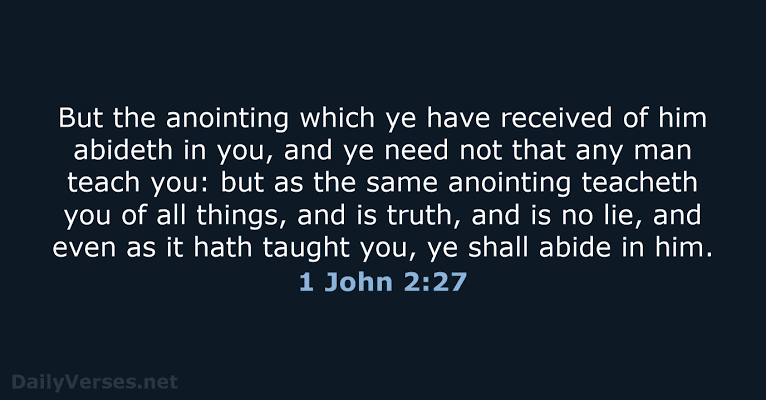
1
1
2
214
Apr 21
If your interpretation of the Scriptural good news can be taken as hateful to others, you need to reconsider your interpretation.
1
1
7
208
Mar 10
If Jesus was literally resurrected, then why does the Apostle Paul teach in 2Cor 5:16, “Even though we had considered Christ according to flesh, yet now we consider no longer.”
When we interpret Scripture with Scripture, we find that Paul no longer considered Christ as flesh, which is fully opposed to a physical resurrection.
4
6
572
Mar 7
Romans 3:23 – Missing the glory, not Just the goal.
In the traditional interpretation: "For all have sinned and fall short of the glory of God." This is often read as a failure to meet a moral standard.
But in the ontological interpretation, hamartia (translated as sin) is seen as a distorted blueprint. To "fall short of the glory" means to lose the "form" of God's image you were meant to reflect. Sin is not just a bad action; it is a fragmented existence where you no longer recognize your original nature.
2
3
371
Feb 25
According to Php 2:6,7, we are to have the same mindset as Jesus Christ, “Who, existing in the form of God, did not consider to be equal with God something to be grasped, but emptied Himself, having taken the form of a servant, having been made in the likeness of men”
Who is Jesus? He is us. What is truth? We are one with the Father.
1
4
257
Jeff retweeted

That is a common concern, but Christian Universalists also view evangelism as urgent, just for different reasons. If you had the cure to a terrible disease, you would rush to share it immediately to stop people's suffering now, even if you knew everyone would eventually receive it. Evangelism is about urgently inviting people into the freedom, healing, and joy of God's kingdom today, rather than leaving them to suffer the destructive, real-world consequences of sin in this life and the next. Yes, the lake of fire is real, but it has a restorative, educative purpose rather than being a place of pointless torture.
History shows that Jesus will ultimately redeeem everyone does not breed complacency. Some of Christianity's most zealous, self-sacrificing missionaries, like the Moravians, literally sold themselves into slavery to reach the West Indies actually held universalist beliefs. They evangelized out of a profound love and a desire to share genuinely good news, not out of terror.
In contrast, relying on a fear-based gospel often backfires. Using the threat of endless torment as a stick creates severe spiritual trauma and breeds deep psychological anxiety. Instead of drawing people to Christ, this approach frequently drives people away from the faith entirely because it paints a picture of a cruel, unloving and unmerciful God. True evangelism doesn’t require a threat of eternal torture; it is the urgent, joyful announcement of a God of relentless love who invites us to escape the damage of sin right now.
Try to find one example in the bible of this fear-based gospel being preached to an unbeliever. There isn’t one instance. That must tell you something. Paul never mentions hell and the book of Acts, which describes the earliest evangelism in the church, doesn’t mention hell either. Simply put, the ‘saved from hell’ good news is never preached in the bible.
If the billions of Christians who profess a belief in endless torment truly believed the horror of that doctrine, wouldn't every single one of them be out urgently evangelizing day and night? What percentage do you think are actually doing that? I’d say, not many. Wouldn’t you agree?
1
2
169
Feb 19
“For by grace you are saved through faith, and this not of yourselves; it is the gift of God”
Many misread this verse. The gift of God is His grace. Faith is our response when we understand His grace. That faith allows us to walk in our rescue (salvation), free from the stresses, fears, worries, anxieties of this age, knowing that we have God’s grace in our misgivings.
Grace has been given to all, but only those who truly understand that grace live in that faith, which is what salvation is: living in faith in the Spirit.
3
125
Jeff retweeted

Churches really are like cults. They seek control through 'sacred' texts, creeds & confessions over their adherents via heavy shepherding. Any attempt to question, query or challenge the status quo leads to sanction or expulsion revealing their true spirit and lack of agape love.
1
2
290
Jeff retweeted
Feb 11
The Bibles purpose is to teach us how to experience and hear God for ourselves.
It's not a textbook to pass a theological exam - it's a record of those who encountered the ineffable and recorded it.
So we can compare our experiences with those that have gone before. God did not stop speaking.
1
3
228
Feb 5
In Acts 10:28, Peter was taught, “God has shown me to call no man impure or unclean”.
Have you been shown the same lesson?
2
6
219
Jan 20
In my interactions with Christians on this site, I’ve seen numerous posts and replies from evangelical fundamentalists who attempt to gate-keep who can be considered a Christian.
Recently, this trend has worked its way into the progressive realm, specifically dealing with Christians who work in the current government Administration, and particularly in federal law enforcement.
We must remember that the Centurions in Scripture, Matt 8:5-13/Luke 7:1-10, Acts 10, and Luke 23:47, were all employees of the Roman empire. They aren’t shown leaving their roles, but being of faith within it.
Peter teaches us in Acts 10:28 that he has been shown by God that he should not call any person impure or unclean.
Instead of castigating others for their employment, pray for the Father’s spiritual influence in their duties and their tasks, not only to themselves but also to their coworkers.
1
10
455
Jan 11
The only time the good news becomes a divisive issue is when we no longer see it as our internal spiritual awakening within the Father and as our spiritual daily walk, but when we see it as a reason to chastise others for not having our same convictions.
We forget that the Bible teaches that everything is permissible (yes, everything), but not everything is profitable. This means personal conviction, and knowing some things come with a price spiritually, mentally, or physically.
3
357
Jan 8
Would love for an archaeologist to discover the lost ‘Gospel of the Hebrews’ spoken of by Clement of Alexandria and his pupil Origen in the 2nd and 3rd centuries.
My, wouldn’t that shake theology up a bit with Jesus calling the Holy Spirit ‘My Mother’.
1
4
302
Jan 4
For so long, I was taught that Scripture meant one specific thing, depending on the passage. This was my denominational teaching.
Now my ears are open, seeing the Scripture more deeply than I could have ever imagined.
While I don’t agree with his entire theology, I give special thanks to my loving wife introducing me to Neville Goddard’s lectures on the promise (his later years) of God for illuminating the allegory of Scripture.
He’s an interesting character on YouTube to say the least.
3
8
317
Jan 1
“If you have sinned, what do you accomplish against Him?
And if your transgressions are many, what do you do to Him?
“If you are righteous, what do you give to Him,
Or what does He receive from your hand”. ~Elihu, Job 35:6,7.
God is not a respecter of persons, whether in sin or righteousness. Live your life in the peace of the Christ Spirit and stop worrying about everyone else.
5
183
Jan 1
I am a heretical Christian.
While in Christendom that particular title is frowned upon, I wear it as a badge of the Father’s love for me.
The Greek αἱρετικός (hairetikos) is an adjective which means to be choosy or be a member of a faction (small group of dissenters).
It describes one who doesn’t accept archaic doctrine, but instead chooses their own beliefs, through serious study of the Scripture, even they go against the established norms.
I will always base my heretical theology on the Father’s love for His creation and the restoration of all things within Him, which is the Good News of Christ.
2
1
8
223
30 Dec 2025
A metaphor:
Everyone in creation are as a spiritual letters written by God, with each of us containing God’s own particular message.
When we read and understand the Father’s Word within our letter, it is then that we recognize by whose spiritual seal it is sealed.
As our letter has the Father’s seal, there is no higher authority over it; His Word is through it and His love is within it.
If you haven’t already done so, your letter is waiting to be read.
1
2
118