
Works in Progress is a magazine of new and underrated ideas to improve the world. Subscribe to our new print edition now. We are proud to be part of @Stripe.
Joined January 2020
- Tweets 2,528
- Following 29
- Followers 25,929
- Likes 148
538 Photos and videos











"This is a look into a potential future. Every one of us that is not a US citizen is at risk." @s8mb on the policy implications of the Mythos/Fable blackout.
Jun 13

This is, perversely, good news for Britain, Australia, Japan, Europe, and other countries being cut off that would once have seen themselves as close allies of the United States.
It shows us what the future may hold if AI is the strategically and economically decisive technology of the 21st century and is controlled by the US and China. It is good news because *it may be happening early enough to give us time to act.*
I think this will be rescinded pretty soon, but it’s a sign of things to come. In a future where frontier models cannot be used outside the US, our industries and economies will fall behind and American businesses may not be able to operate overseas. We won’t be able to defend ourselves militarily with defence systems built on obsolete software. Europe 2031 is a good scenario of what a future like this could mean: europe2031.ai
Some of the things we need to do are ‘no regrets’ measures we should do anyway. But some are genuinely costly and risky.
We need cheap electricity – powered by gas, coal (this is costly, coal is very bad), deregulated nuclear fission – whatever can provide *cheap, reliable, 24/7* power. This almost certainly excludes wind power, which is enormously expensive and unreliable. We need projects to be able to connect to the grid in days rather than years by paying for fast-track connections.
We need to make it incredibly easy to build data centres, with the property taxes retained locally and hypothecated for local tax cuts so there is some direct benefit for locals. This doesn’t need to be nationwide.
We need to create new regulatory regimes for innovative businesses that give them the right to hire and fire staff with ease. The difficulty and cost of firing staff is one of the main reasons Europe has fallen behind so badly. We need to create a parallel employment regime that companies and workers can opt in to: worksinprogress.co/issue/why…
Even though I think it will probably fail, I think we should probably try to create a good, non-American frontier AI lab. I am quite pessimistic about this – even extremely well-resourced, innovative software companies are struggling to do this. But the stakes are so high that not trying seems foolish.
One thing that might work in our favour is the number of brilliant AI engineers who are not US citizens, who under the current export controls do not have access to Mythos/Fable even if they live and work in the US. What happens to Demis Hassabis, Ilya Sutskever, Andrej Karpathy, and the many other Europeans, Canadians, etc who are working on AI models in Britain and America who are affected by this?
I do not think we should force our own companies to use model, because this would exacerbate their economic weakness – this lab should have to compete on an even playing field. I am deeply sceptical that this can work, but we cannot rule it out. If we do it, it has to be able to pay US salaries, operate without political constraints. worksinprogress.co/issue/how…
It is cope to tell yourself that Trump is an aberration or that these export controls are a one-off. To repeat, I think these specific controls will be lifted quickly and it will be easy to move on and forget it happened. But this is a look into a potential future. Every one of us that is not a US citizen is at risk. The standard political divides do not apply here; the question is whether you grasp the enormity of AI as a technology. We have to act!
1
21
4,719

Jun 12
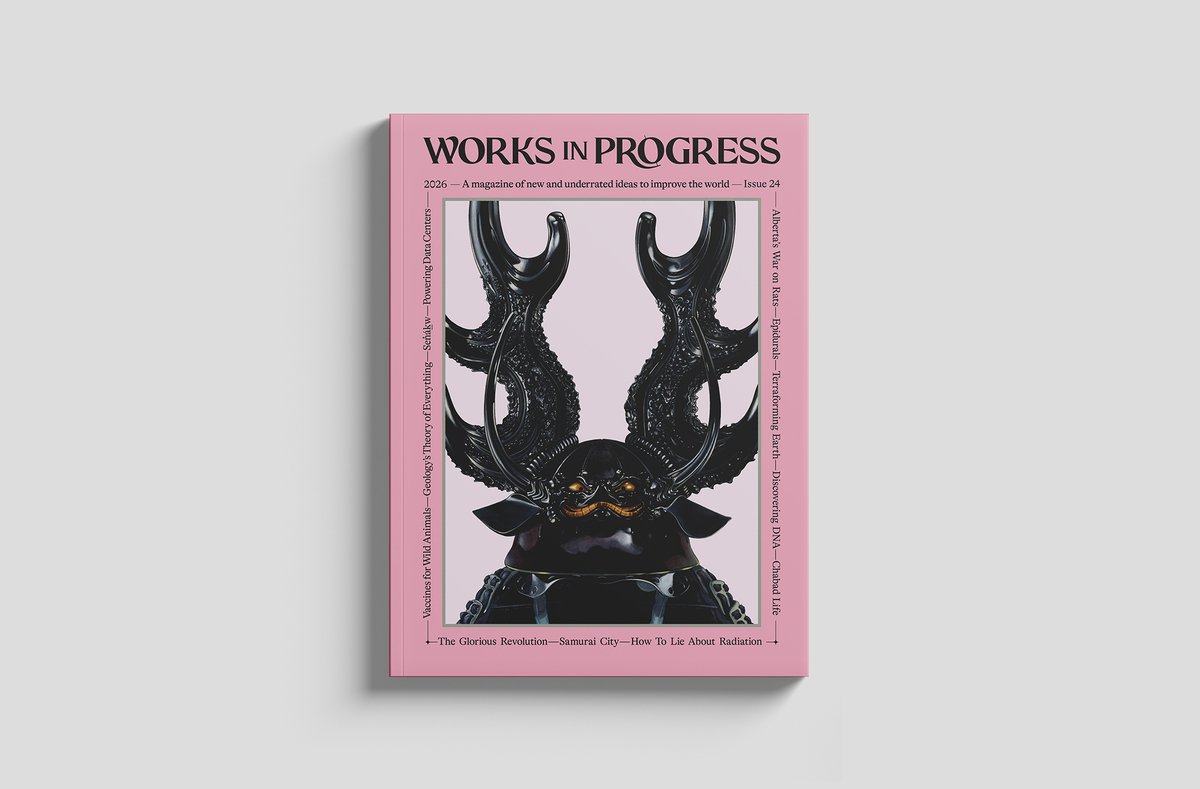
A glimpse into the design of Issue 24.
Jun 10

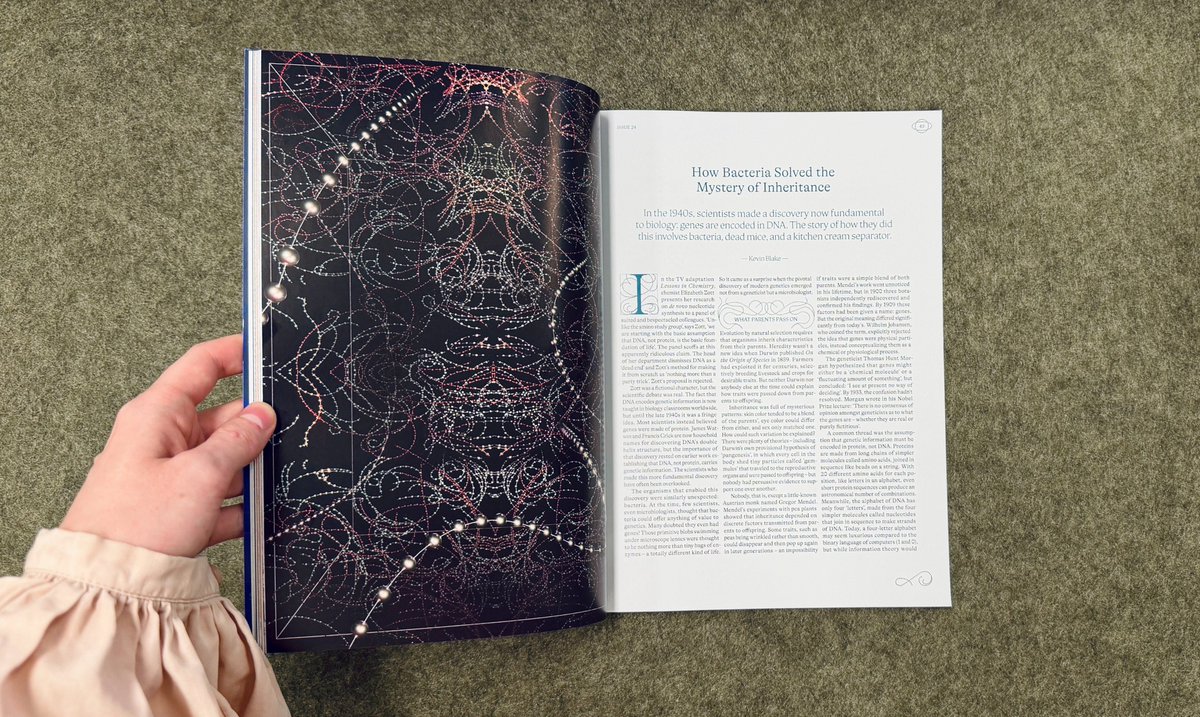
Final artwork and behind the scenes on how my colleague Magnus made it - for the @WorksInProgMag article on How bacteria solved the mystery of inheritance
9
2,272
Jun 10
Read it in Issue 24 of the print edition, landing on doorsteps around the world this week.
Jun 9

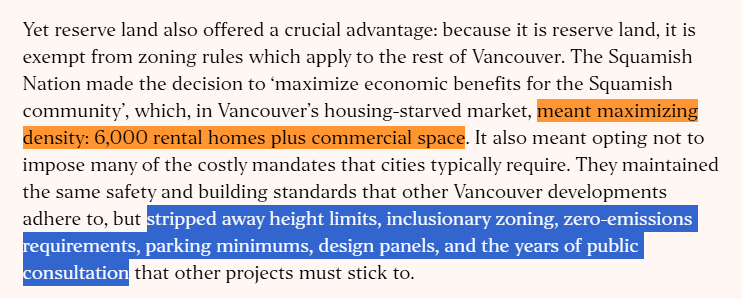
Love this story about how the Squamish Nation did what seems almost impossible for everyone else, and managed to densify a portion of Vancouver, one of the most regulation-constrained cities for housing anywhere in the world
2
1
8
2,494
The race to discover a new drug is often less important than the race to test it in humans. American medical research is falling behind China due to excessive barriers to conducting clinical tests. @RuxandraTeslo and Amol Punjabi recently wrote for us on the story of CAR-T therapy, an extremely promising treatment for some of the world’s most painful cancers: invented in America, developed and perfected in China. worksinprogress.co/issue/the…

China is winning the drug discovery race. There's no better example of this than multiple myeloma.
worksinprogress.co/issue/the…
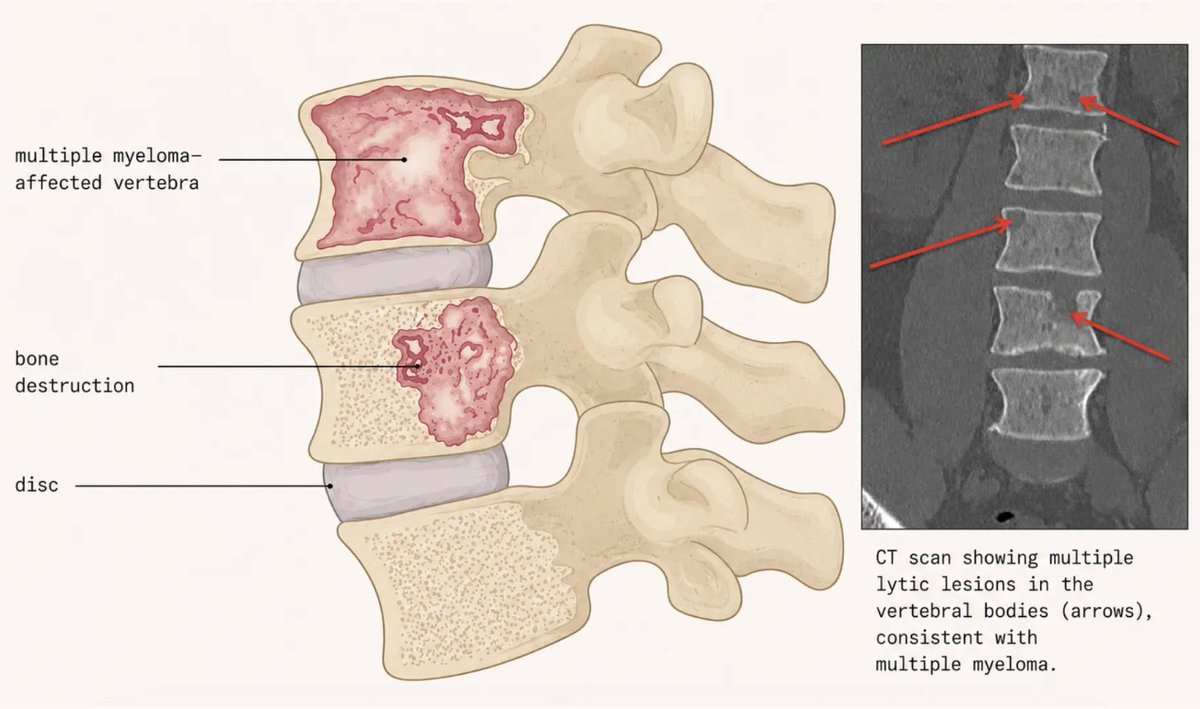
It's one of the most painful cancers, destroying bone from within. For decades, patients endured cycles of brutal treatment and relapse. Then came Carvytki: a one-time CAR-T infusion that appears to cure some patients who have failed multiple treatments.
Its development story, beginning in 2016, was an early signal of a shift now making headlines: the US is losing biotech dominance to China. Though the foundational science was largely American, a nimble Chinese company moved faster with a better molecular engineering idea.
Unless the US addresses clinical-trial bottlenecks slowing early in-human data, more breakthroughs will be developed elsewhere, weakening the ecosystem American biopharma depends on.
Some key points from my article for @WorksInProgMag, with my friend Amol Punjabi, of @EvidenceOpen:
1) Multiple myeloma is not only extremely painful in and of itself, but also one of the most brutal cancers to treat. As first-line therapy, patients endure four drugs simultaneously, then a stem cell transplant, followed by continuous maintenance therapy. And most still relapse, with each treatment round carrying worse chances.
2) A drug called Carvykti, approved in 2022, is changing the treatment landscape. Carvytki acts as a single, one-time infusion. It's a CAR-T therapy, part of a new wave of transformative immunotherapies: made from the patient's own immune cells and reprogrammed to hunt cancer. In patients who had already failed 4 other treatments, 33% were still disease-free after 5 years. The results as earlier line therapy look even more promising.
3) Most of the foundational science was American. Decades of CAR-T research, and in 2013 the NCI showed BCMA-targeted CAR-T cells could kill myeloma in the lab.
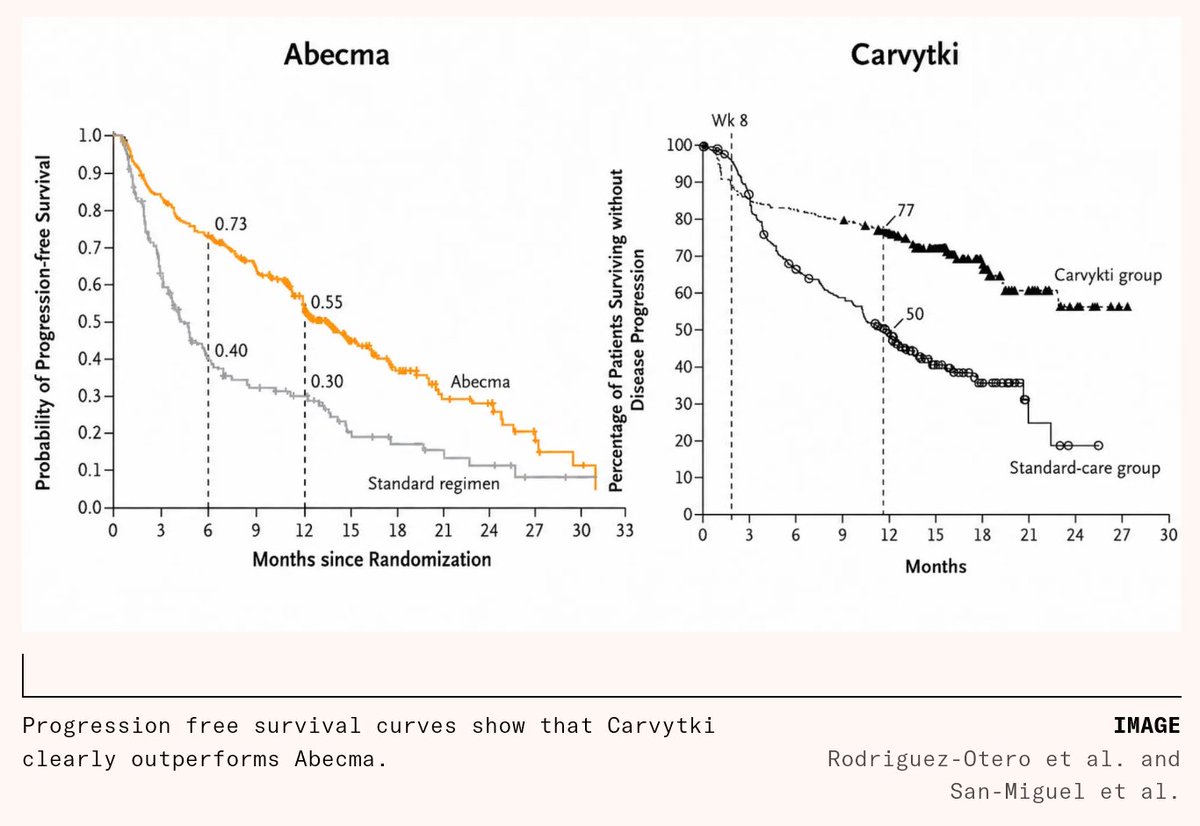
4) But the drug that ultimately changed myeloma, Carvytki, originates from China. Carvytki beats Abecma (the American CAR-T for myeloma) by a wide margin: 36 months of progression free survival in heavily pre-treated patients versus Abecma's 9 months.
5) In 2016, Legend Biotech was just beginning clinical trials. This was the same year the American team was publishing their first-in-human results. Legend started later, but moved faster. Clever engineering and China's ability to get drugs into humans quickly gave them the edge. Large American biopharma J&J ended up striking a deal with Legend and developing the therapy.
6) Never underestimate the llama: US-developed Abecma used mouse antibody fragments to target BCMA. Chinese startup Legend used llama nanobodies instead. These are smaller, more stable and bind more cleanly to BCMA. The usage of llama as opposed to mice antibodies is what is believed to lead to Carvytki's superior efficacy.
7) In retrospect, Carvytki should have been an early warning. China is winning the drug discovery race through deliberate policy. Their first-in-human clinical trials can launch in 6 months vs 18 months in the US, letting them iterate faster between lab and clinic. The @nytimes recently reported that ~50 percent of major drug deals this year involve Chinese-origin drugs, up from nearly zero a decade ago.
8) The US still leads in late-stage development, as shown, but the pipeline feeding it is increasingly Chinese. The worry is that this will mirror what happened in solar, batteries, and EVs, where early-stage dominance eventually became control of the entire chain.
9) A proposal to streamline early stage trial regulatory requirements to keep the US competitive has made it into the President's 2027 budget for the FDA. But Congress has to act to make it a reality.
2
6
24
4,574
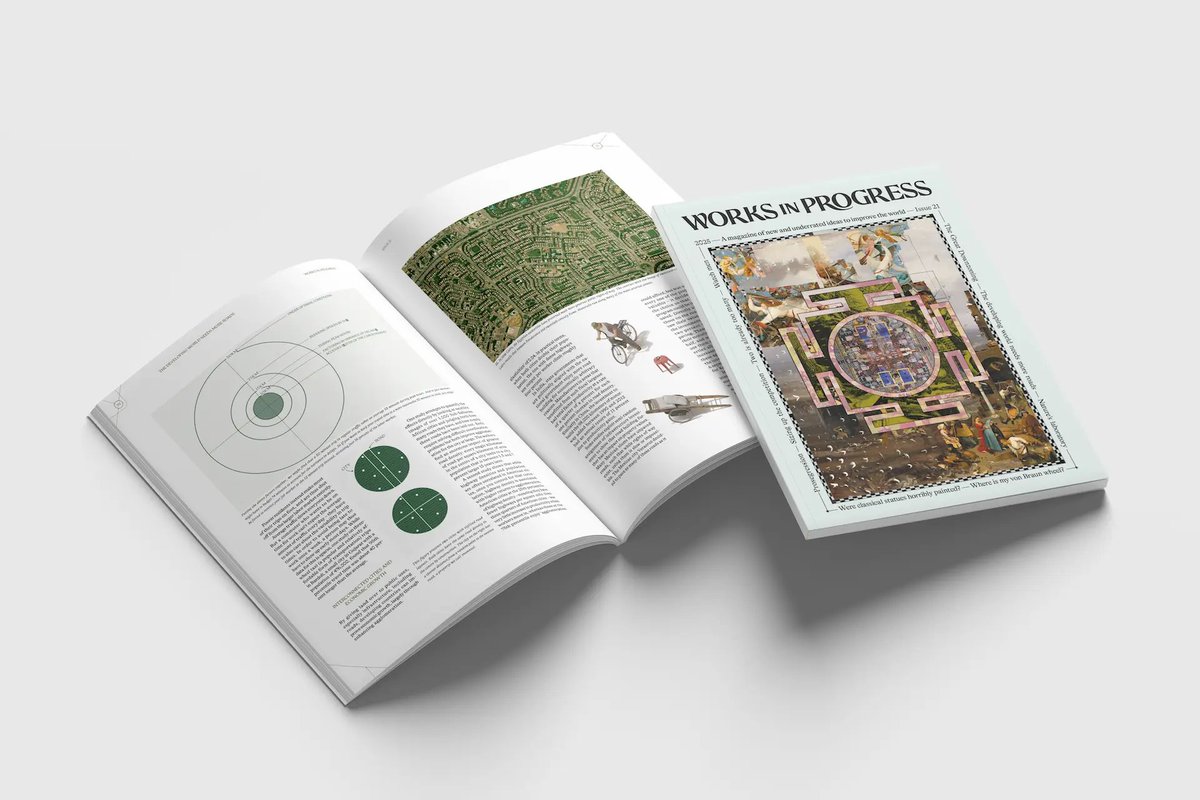
It was great to meet so many of our NYC subscribers, where WiP Art Director @thinkaboutglue gave a talk on how she designs the graphics to illustrate the world's most important ideas. We're looking forward to seeing more of our readers this week in Washington DC at the Issue 24 launch party!



1
8
1,251
Flags designed by modern vexillologists are clean, simple, and utterly banal. @Ned_Donovan writes in praise of the flags that tell you exactly where you are, by violating every rule of design.
worksinprogress.co/issue/the…
Jun 5

Each autumn in early modern India, certain men drifted out of the central provinces to take up a trade. A Thuggee would join a caravan on the road as a merchant glad of company, or a cook looking for work. He played the part for days, sometimes weeks, earning the trust of the men he travelled with.
Then one night, with the camp asleep, he strangled them with a scarf, knifed each one to be sure, and vanished with the money. The perfect crime. The movement to redesign America’s city flags works in much the same way. Give or take the strangling.
worksinprogress.co/issue/the…
The rules of flags are recent. In 2006 Ted Kaye wrote a pamphlet for the North American Vexillological Association setting out five principles of good flag design. Keep it simple, simple enough for a child to draw from memory. Two or three colours. No lettering, no seals. And, fifth, be distinctive, or be deliberately related to the flags you share a history with. In 2015 the radio host Roman Mars built a TED talk on it. Millions watched, and the redesigns began.
And here the Thuggee parallel begins. The redesigns spread through r/vexillology, a Reddit forum of half a million. A man watches the talk and that night draws a new flag for a town of three thousand he has never visited.
Then he drifts into a council meeting as a concerned citizen, asks to speak between the sanitation budget and the painting of the fences, and explains why the town’s flag is wrong. Nobody else has come. The council defers to the expert. The place never knew it was a target.
Pull up the twenty flags the association now rates highest and they are, near enough, one flag. A navy field. A white and gold sun, or a single star. A wavy line where a lake or a river should be, now and then a triangle for a mountain.
Tulsa, Reno, Topeka, St George. Different cities, the same flag, drawn twenty ways (see image). The one rule every winner breaks is the fifth, the one about being distinctive.
Some of these flags are better than the cluttered seals they replaced. But there is one more thing worth knowing about the Thuggee. The cult, the goddess, the scripture that blessed the killings, much of it may never have existed as the British described it. The more recent histories read thuggee as ordinary banditry, scattered and local, that colonial administrators tidied into a single legible category with one terrifying name, the better to catalogue it and stamp it out.
The British did to highway robbery exactly what the refiners do to flags. The flag thuggees took something local and even if ugly, unique, and made it simple enough to draw from memory.
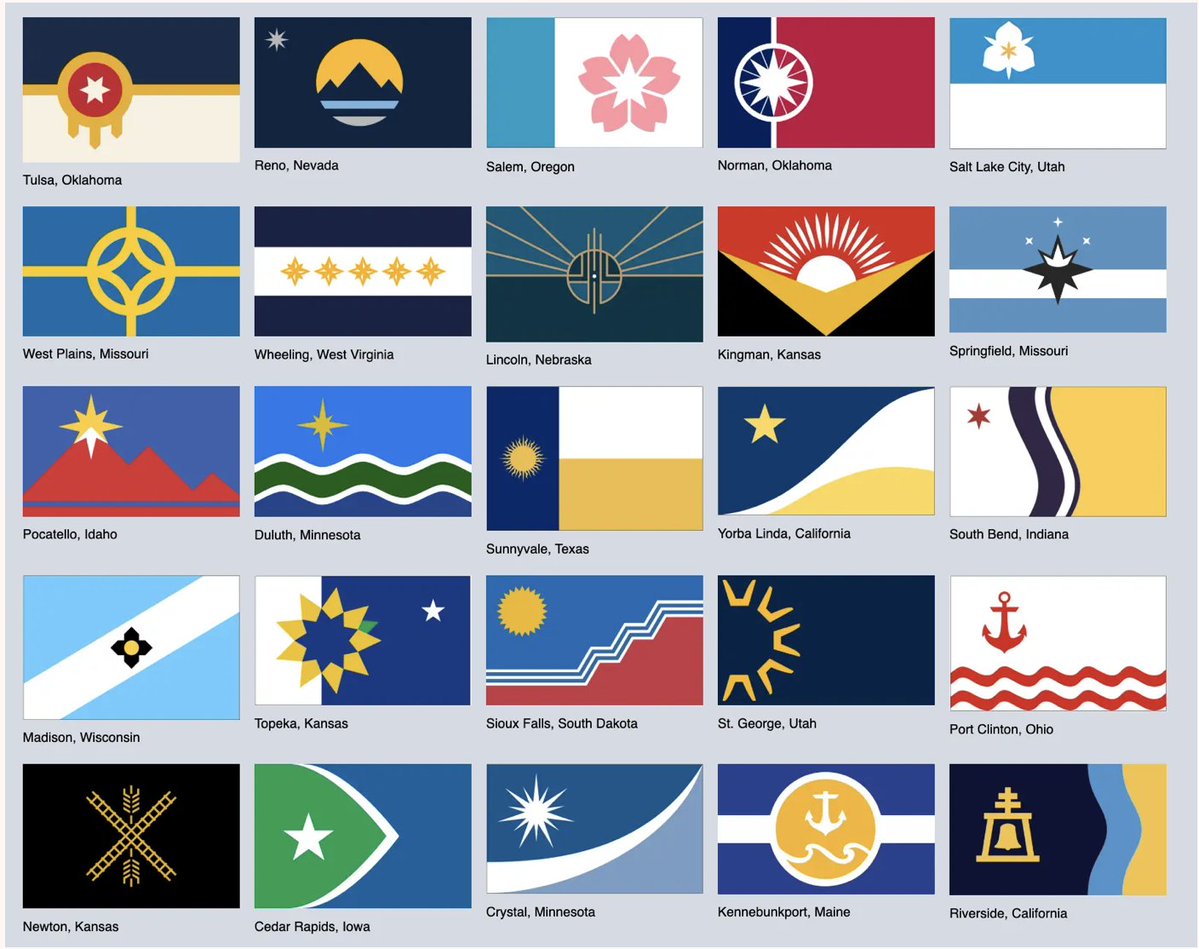
ALT The 20 best flags according to NAVA

ALT Milwaukee's Chaos Flag

ALT Nitro
4
9
2,797
“The most clearly authoritarian features of 19th century cities are streets and drains.” Samuel Hughes explains why private enterprises were great at providing public transport, and much less good at providing road networks for them to travel through.
1
6
1,695
AI is the future, and Europe is missing out on it. We’re delighted to have Simon joining us, to write about how Europe can become a genuine force for good in the development of AI.
Jun 4

I’m excited to share that I’ve joined @WorksInProgMag as an editor, where I’ll be focusing on AI and European progress.
At Works in Progress, I’ll focus on a topic that is both important and underrated: how Europe should grapple with the changes brought by artificial intelligence.
Europe is in a challenging position. But I also believe it is crucial that Europe remains able to influence how the coming years and decades play out. It is one of the world's most liberal regions, and has been central for the world's moral progress.
Right now, the number of people working on European AI policy is really low. Many things need to happen for the continent to be adequately equipped for what's to come: data center construction, ensuring frontier AI adoption in governments, better risk-tracking across European capitals, and a broader policy agenda that ensures Europe can capture more of AI’s surplus.
I’ve recently started writing up my thoughts on AI in Europe at simongrimm.substack.com, with a much larger piece coming out soon.
Works in Progress is an amazing home for this type of work. It has published many canonical pieces on big challenges of our time, economic stagnation first among them. But it has also covered lead elimination, far-UVC for pandemic prevention, organ donation, and many other important ideas. If one wants to paint a picture of how Europe can succeed in the age of AI, Works in Progress is the ideal place to do so. (If you haven't subscribed yet, do it; you'll be in great company.)
Joining Works in Progress also means leaving the US, and the project I’ve spent the past three years working on: the Nucleic Acid Observatory, now SecureBio Detection. At MIT and SecureBio, we built a pathogen early warning system that I’m incredibly proud of. The people I was lucky to work with in Cambridge were among the smartest, most mission-driven, and most focused people I’ve ever spent time with. The impact SecureBio is having on biosecurity is immense, and we are all safer for it.
I’m proud to be joining Works in Progress as the next step in my career, and I’m looking forward to working with such talented colleagues during such a turbulent, fast-moving time.
1
6
1,846
Works in Progress retweeted

Jun 4
I’m excited to share that I’ve joined @WorksInProgMag as an editor, where I’ll be focusing on AI and European progress.
At Works in Progress, I’ll focus on a topic that is both important and underrated: how Europe should grapple with the changes brought by artificial intelligence.
Europe is in a challenging position. But I also believe it is crucial that Europe remains able to influence how the coming years and decades play out. It is one of the world's most liberal regions, and has been central for the world's moral progress.
Right now, the number of people working on European AI policy is really low. Many things need to happen for the continent to be adequately equipped for what's to come: data center construction, ensuring frontier AI adoption in governments, better risk-tracking across European capitals, and a broader policy agenda that ensures Europe can capture more of AI’s surplus.
I’ve recently started writing up my thoughts on AI in Europe at simongrimm.substack.com, with a much larger piece coming out soon.
Works in Progress is an amazing home for this type of work. It has published many canonical pieces on big challenges of our time, economic stagnation first among them. But it has also covered lead elimination, far-UVC for pandemic prevention, organ donation, and many other important ideas. If one wants to paint a picture of how Europe can succeed in the age of AI, Works in Progress is the ideal place to do so. (If you haven't subscribed yet, do it; you'll be in great company.)
Joining Works in Progress also means leaving the US, and the project I’ve spent the past three years working on: the Nucleic Acid Observatory, now SecureBio Detection. At MIT and SecureBio, we built a pathogen early warning system that I’m incredibly proud of. The people I was lucky to work with in Cambridge were among the smartest, most mission-driven, and most focused people I’ve ever spent time with. The impact SecureBio is having on biosecurity is immense, and we are all safer for it.
I’m proud to be joining Works in Progress as the next step in my career, and I’m looking forward to working with such talented colleagues during such a turbulent, fast-moving time.
30
19
258
45,317
Works in Progress retweeted

Jun 4
If you read one thing this week, let it be this piece on China's development of a superior treatment for a blood cancer called multiple myeloma by @RuxandraTeslo & Amol Punjabi: worksinprogress.co/issue/the…
Carvytki (right), a CAR-T treatment developed by China's Legend Biotech, proved to be much more effective than Abecma (left), a US-developed alternative. After promising early-stage trials, Legend partnered with Johnson & Johnson to develop and commercialize the treatment, which is widely used today.
While much of the foundational research was originally done in the US, it was a Chinese biotech firm that was able to get out in front, thanks in part to a faster regulatory process for early-stage clinical trials.
2
23
96
10,534
Works in Progress retweeted

May 16
A thread on the 50 best fortifications to go and visit in the world according to me. They are all fun for at least one in the family. They are listed in reverse rank order as determined by how much fun, unique and awesome they are.
65
212
1,492
442,633
Works in Progress retweeted

May 13
Thrilled to announce I'm joining @WorksInProgMag and @stripe to continue my research and writing on clinical trials & biotech innovation, with many more articles to come. (If you haven't already, subscribe to the magazine. It's great in terms of content and very beautiful.)
My work is driven by a core conviction: in the years and decades ahead, we will be far more constrained by the quality of our culture and institutions than by technology itself. In biology, a remarkable convergence is underway. AI, alongside a wave of other emerging tools, is fundamentally expanding what science can do.
But beneath this sizzling potential, something is going wrong in Western biotechnology. China is pulling ahead and companies are increasingly moving clinical trials there, drawn by faster clinical trial timelines and a more dynamic ecosystem. Promising therapies sit in limbo for years. Despite the science being here, personalized cancer therapies are not viable to anyone but a few who can afford to navigate the labyrinthine regulatory apparatus. And pharmaceutical R&D productivity has remained stubbornly flat in the last 10 years, after decades of decline.
And I can't imagine a better home for my research and writing on what can be done to accelerate biomedical progress than Works in Progress. This is a magazine that has published some of the most important writing on why the physical world has stopped working, including "The Housing Theory of Everything," which became one of those rare pieces that actually changed how people think about a problem.
But this is not just about my desire to study biotech innovation.
Biotech is not an anomaly. The same pattern: technology outrunning the institutions meant to govern it, is playing out across society. And now AI is compressing the timeline, accelerating pressures that were already straining the system.
When people ask what I worry about when it comes to AI, I tell them it’s not the usual things. I'm not losing sleep as much over AI taking my job. I am more worried that we will lose our appetite for depth and that long-form thought, serious reading, sustained attention, the very things that make culture worth having, will erode faster than we notice. That our collective intelligence will hollow out, gradually. And the very problems we have now will only accelerate.
@WorksInProgMag is a resistance movement against that, condensed in the form of magazine. It stands for long-form, in-depth writing. It stands for beauty. It is fundamentally anti-slop.
In that sense, it's a natural fit with @stripe. A payments company publishing a magazine might seem like an odd pairing. That is, until you understand what kind of payments company @stripe actually is. It has always been driven by a genuine passion for craft and for getting small things exactly right.
I am really proud to be part of something that embodies my own values in such a deep way, especially at a turning point in history.
52
46
749
92,861

We have many articles we'd like to publish for which we haven't found the right author. Here is a list of some of those ideas. If one of them looks like something you'd write well, send us a pitch.
worksinprogress.news/p/more-…
22
36
196
78,213
Read it for yourself: worksinprogress.co/print
May 8

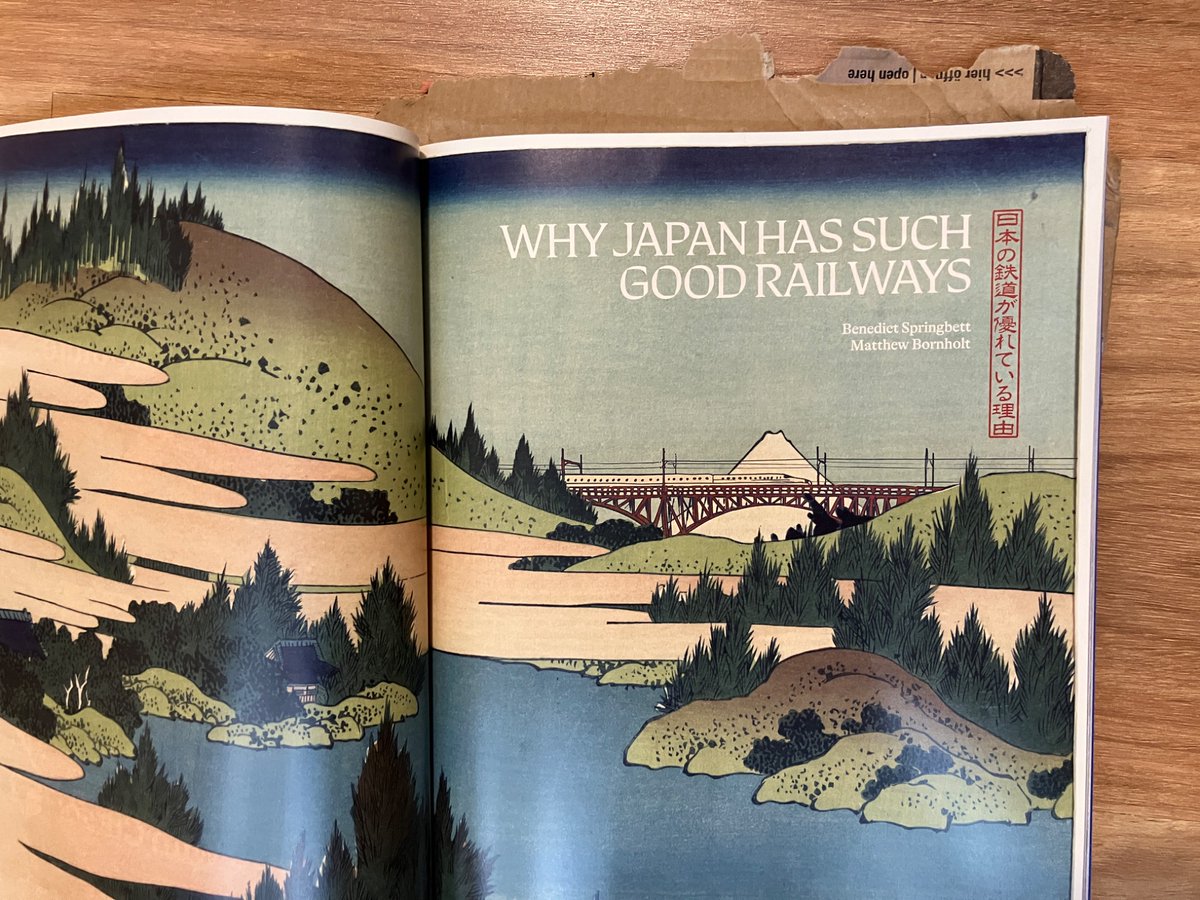
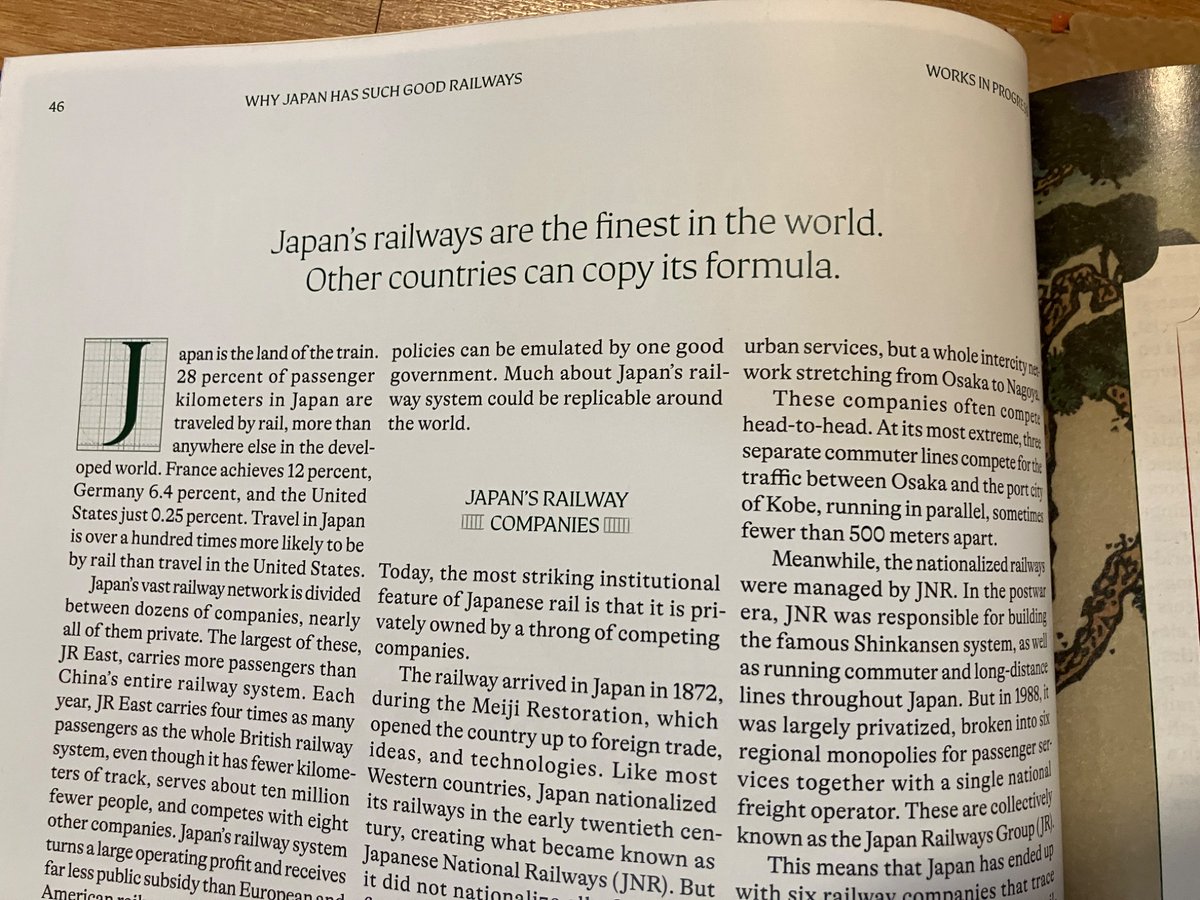
When I discovered the new periodical “Works In Progress” has a magnificent NatGeo c1950 energy, the peak of western technologically driven advancement enthusiasm, it would have taken little to get me over the line. But a piece on Japanese rail, overshoot. Take my money

2
2
53
10,192
Works in Progress retweeted

Apr 25
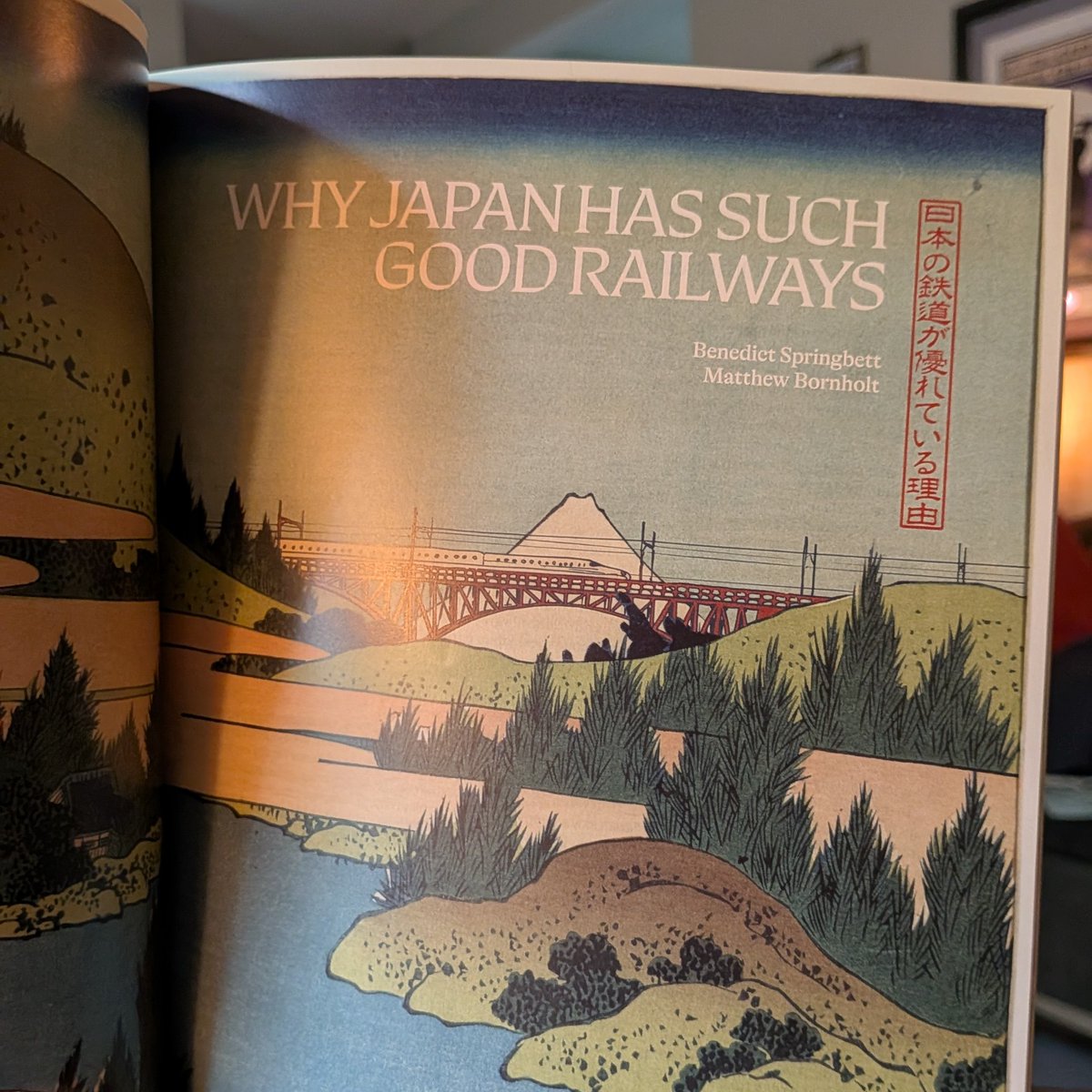
There's a great article on Japan's railways in this month's @WorksInProgMag. It's worth considering a print subscription too, because the design is so beautiful and makes this article even more of a joy to read:
worksinprogress.co/issue/why…

The Japanese railway privatization of 1987 stands as one of the most devastating defeats ever dealt to statist transportation mythology. The government split the bloated Japan National Railways into seven regional companies, sold them off, and watched private ownership transform a bankruptcy-bound disaster into the world's most efficient rail system.
JNR hemorrhaged money for decades before privatization. By 1987, the state railway carried debt equivalent to $200 billion in today's money while delivering mediocre service plagued by strikes and inefficiency. Politicians treated it as a jobs program rather than a transportation service. The predictable result: chronic losses, deteriorating infrastructure, and customer service that reflected government monopoly arrogance.
Private ownership changed everything overnight. The new JR companies slashed operating costs by 40% within five years while dramatically improving service quality. JR East alone now generates annual profits exceeding $3 billion. These companies invest billions in cutting-edge technology, maintain punctuality rates above 99%, and operate the world's most advanced high-speed rail networks. They achieved this without a single yen of operational subsidies.
The transformation reveals a core dynamic of transportation infrastructure: private companies must satisfy customers to survive, while government monopolies need only satisfy politicians. JR companies diversified into real estate, retail, and hospitality around their stations, creating integrated profit centers that cross-subsidize rail operations. Government railways never innovate this way because bureaucrats face no market pressure to generate returns.
Meanwhile, Amtrak burns through $2 billion in annual subsidies while delivering third-world service across most routes, and European state railways require massive taxpayer bailouts every few years to stay solvent.

Community note
Three JR companies (Hokkaido, Shikoku, Freight) remain government-owned, and most of JNR's ¥37 trillion debt was absorbed by government entities borne by taxpayers, not the JR companies. Some JR operations continue to receive subsidies. en.wikipedia.org/wiki/Japan_Rai… en.wikipedia.org/wiki/Japanese_… tokyoreview.net/2018/10/japan-…
7
75
552
66,847
Apr 24
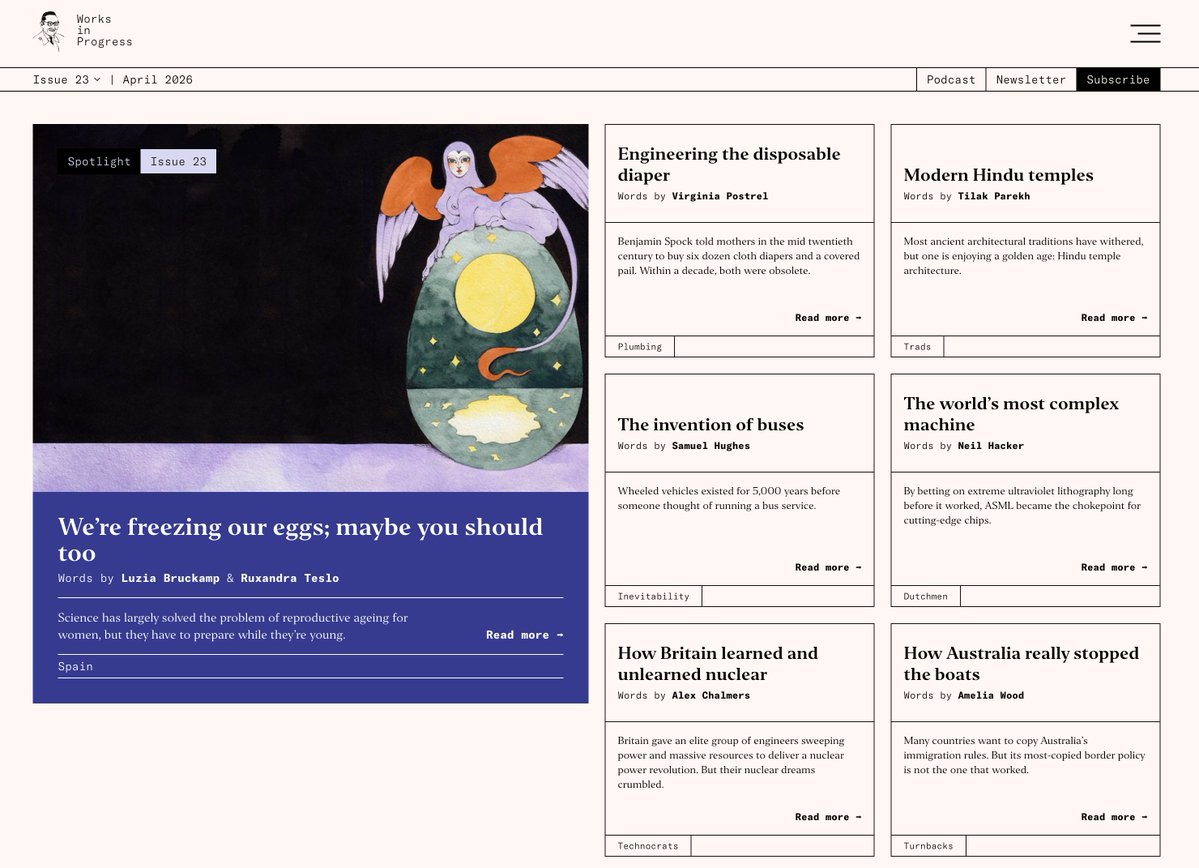
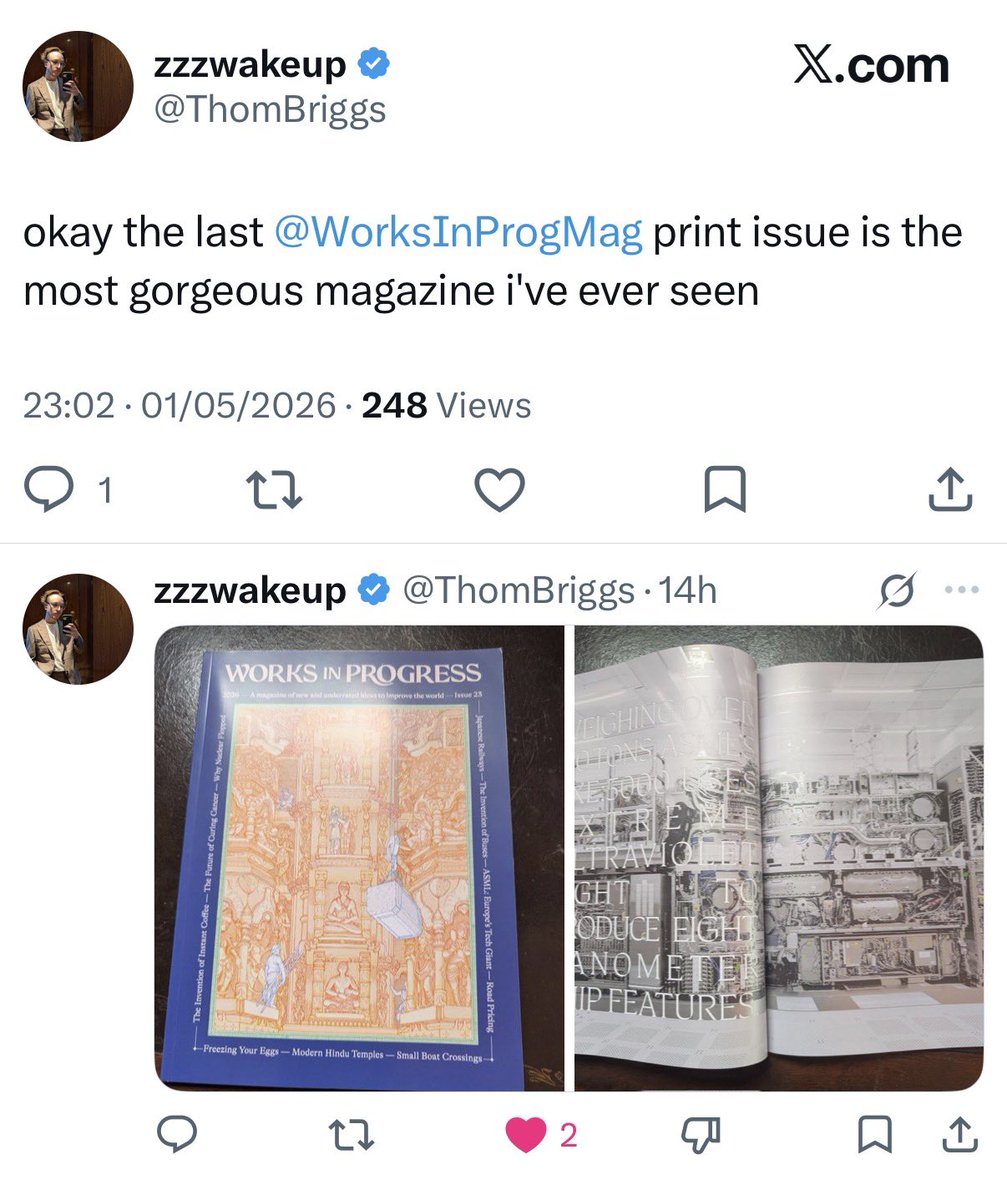
Issue 23 of Works in Progress is out now! With features on:
🪞 ASML, Europe's AI juggernaut.
🧷 Engineering the disposable diaper.
🛕 Modern Hindu temples, some of the world's most inspiring architecture.
🚌 The invention and reinvention of buses.
worksinprogress.co/
Plus:
👶 Why the best time to freeze your eggs is now
🚄 How America can have Japanese-tier railways
☢️ How Britain forgot to build cheap nuclear power
And more!
worksinprogress.co/
9
22
80
34,088
Works in Progress retweeted

Apr 18
Works in Progress 23 — Title page art (ASML) is revealed when negative space on the translucent page is filled in by the previous page. Delightful! @s8mb @WorksInProgMag
2
5
53
9,093