
Joined May 2022
- Tweets 182,368
- Following 15,873
- Followers 119,152
- Likes 206,900
3,963 Photos and videos



Pinned Tweet

18 Sep 2023
I made an exit strategy so you don't have too!
So my main take away from the last bull run is you go into the bull market not knowing what is going on and you will assume you will figure out the top and sell perfectly.
This does not happen even and you will get burnt. I did and i'm sure that many of you will have had similar experiences. There are so many ways to exit the market, here is just one idea I had that makes sense to me. Please change this as you see fit to taylor your portfolio.
Step 1, Making a duplicate portfolio tracker: On coingecko/ coinmarketcap make a new portfolio. This will be important for this strategy. Once you start selling (this point will be discussed), you will not mark the sales on this duplicate portfolio. Only on your main one. This is so we can accurately track the % we should be selling.
Step 2, when to start selling: This is not an exact science, however for the purpose of this I have chosen one month after the previous break of ATH. Feel free to change this however the rest of the data below will use this.
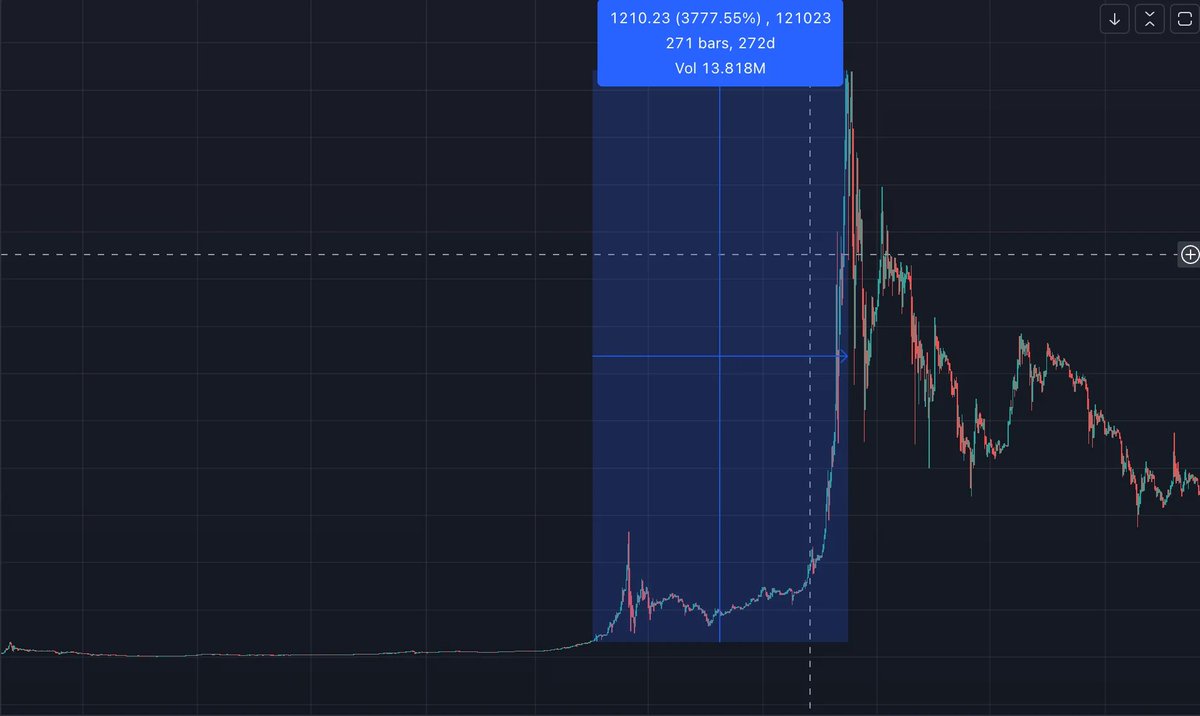
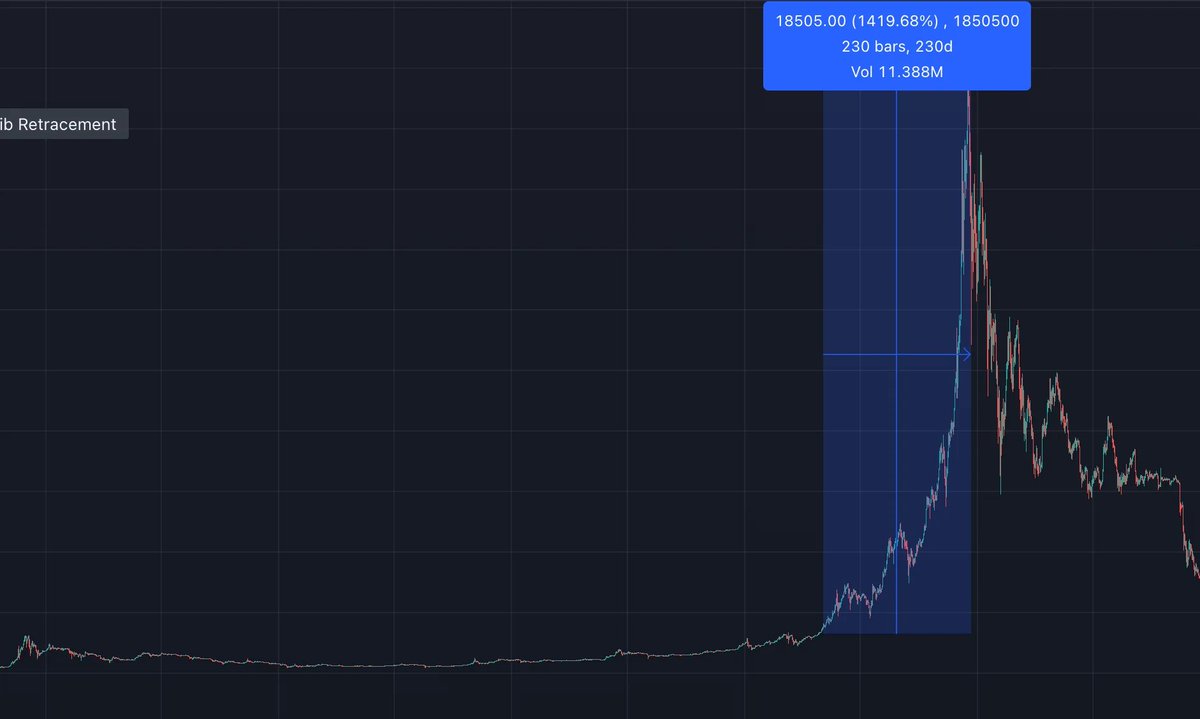
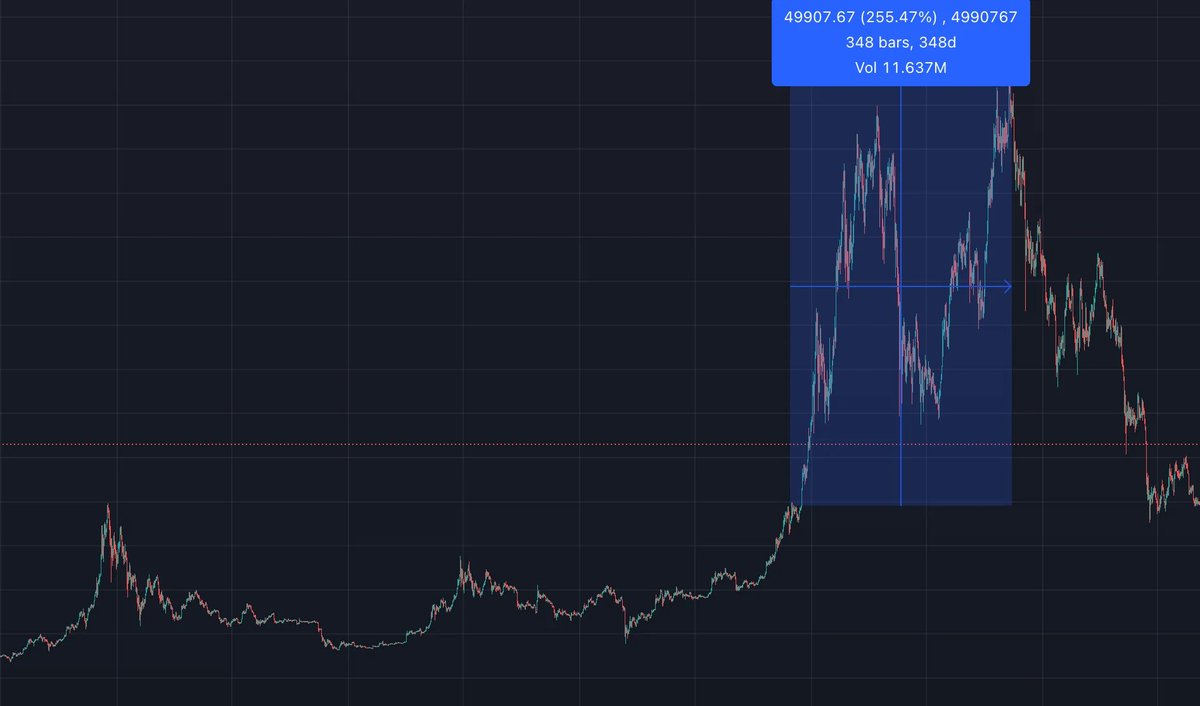
Step 3: Estimating the length of the bull run: Below I will show the length of the last 3 bull runs from the point where they break the ATH.
2013, the break of ATH to top is 272 days. This was a very volatile bull markets however we don't expect this due to the size the market has grown too.
2017, the shortest of the three at 230 days.
2021, the longest bull run lasting 348 days.
So here we have 3 bull markets to work with. Obviously we have to assume that something will change majorly for the next rally, however we use what we have to give ourselves the best chances.
Average of the 3 = (348 230 272) / 3 = 283 days. Minus one month which we wait before we start to sell will equal 262. That is what we will be working with.
Step 4, the strategy: First of all I will be working on the assumption that you are trying to sell 100% of the portfolio.
100% / 262 = 0.38%. This is what percent needs to be sold per day to achieve 100% sold using our time estimate.
Now, you should not sell everyday 0.38%. Once you wait the month after the previous ATH breaks, you start counting percent, each day accumulating. E.G. day 1 = 0.38, day 2 = 0.76 etc. You let this build until a green green day which you sell. Could be worth waiting for the largest moves ( 10-20%). Once you sell this amount, the count resets to 0.
So why did we create the second portfolio? Because if you are selling the ratio in your portfolio would change. For example, if you hold 1 BTC and sell 50%, then the next day you sell 50% again, you would have 0.25 BTC. Not sold 100%. However, if you keep one portfolio not touching it when you sell, you can put in say what is 5% in dollars and the next day 5% again, and you would have sold 10%. Otherwise the maths will get extremely complicated.
Once you get toward the end, you might have to sell on some red days. Don't be afraid! This is very important if you want to take full profits, so in the last say 100 days be less picky about you sell days. We always speak about DCAing in so use this strategy if you would like to DCA out :).
NFA and Always DYOR!
1,095
510
3,310
486,185
Jun 13
Didn’t realize this was still running until i saw it.
USD1 airdrop on Binance extended through June 26.
178M $WLFI pool.
To participate you need to hold $USD1 in spot, margin, or futures and rewards hit every friday.
Margin and futures collateral earns 1.2x.
Honestly, not a bad deal if you’re already in stables waiting for the market to do something.
Jun 12

We didn't stop.
178M $WLFI allocated to the $USD1 campaign on @binance, now EXTENDED through June 26.
Rules haven't changed → HODL 🦅☝️
details via @binance
binance.com/en/support/annou…
61
4
265
4,579
Jun 13
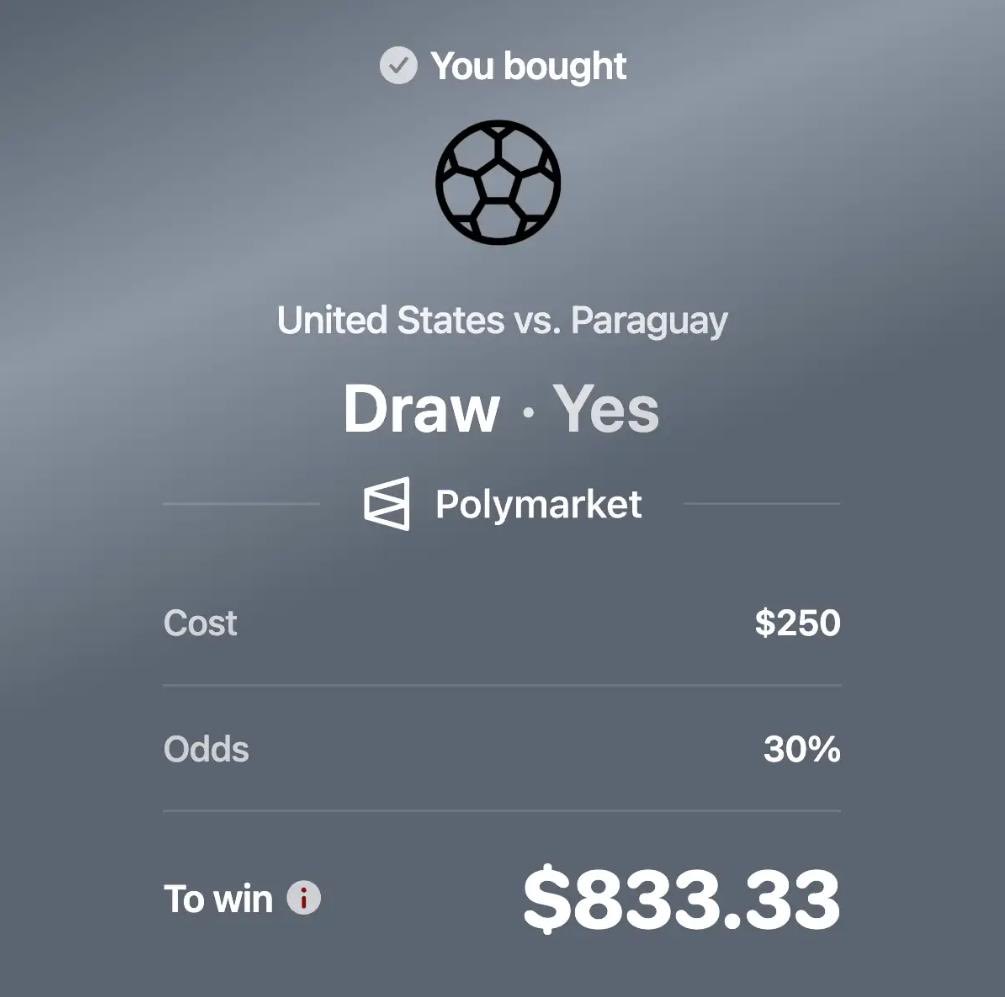
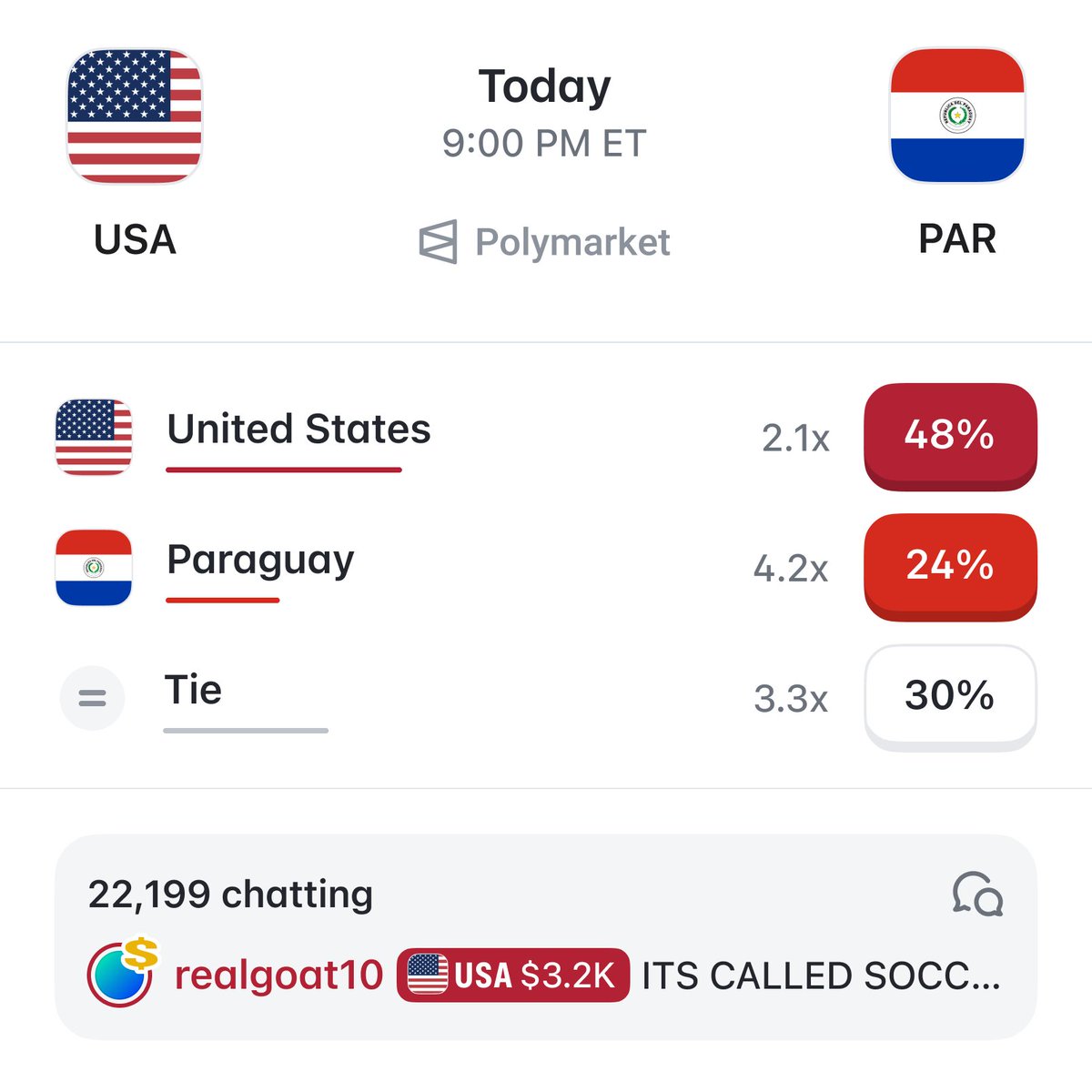
USA's first World Cup game starts tonight.
Neither team has looked great over recent matches TBH.
I think we most likely see a draw here. Polymarket has some good odds.
Jun 12

JUST IN: T–7 hours until the USA kicks off its first match for the 2026 World Cup.
48% chance team USA defeats Paraguay.
122
5
367
7,915
Jun 12
Today is my birthday! 🎂
A few years ago, I thought the goal was freedom. More money, more flexibility, more control over my time.
And to be honest, crypto gave me all of those things.
But somewhere along the way, I realized those weren't the things I was actually looking for.
Freedom isn't waking up with no problems. It isn't having perfect certainty, and it definitely isn't a green portfolio every day.
Freedom is waking up and knowing why you're doing what you're doing.
The older I get, the more I realize life isn't really measured by the big moments people see. It's measured by the quiet things: the people you get to keep around, the conversations you still remember, the work you're still proud of when nobody is watching, and the days that felt ordinary at the time but somehow become the memories you miss the most later.
This past year wasn't perfect. Some things worked, some didn't. Some expectations turned out to be wrong, and some lessons were more expensive than they should have been.
But I wouldn't trade any of it.
Every year I become a little more certain about what matters and a little less concerned about what doesn't.
Bull markets show you what's possible. Harder markets show you who you are.
I'm grateful for both.
To everyone who has been part of this journey, whether we've spoken every day or only crossed paths once, THANK YOU!!!
For the support, the conversations, the opportunities, and for being part of a chapter of my life I'll always remember.
Another birthday.
Still here. Still learning. Still building.
And more grateful than ever :)
12 Jun 2025

Today is my birthday! 🎂
Another chance to pause and reflect...
Last year I said crypto changed my life.
This year, I’ll say something deeper:
"it kept me grounded when everything else felt like it was slipping"
Not just because of charts or trades,
but because of the people, the conversations, and the quiet belief that I was building something real.
Even when life got overwhelming, this space gave me purpose.
DIRECTION.
Crypto didn’t just change my path.
It reminded me who I was when I almost forgot.
To everyone who walked beside me, supported me, or even just stayed: THANK YOU!!!
Another year around the sun. Still here. Still building. Still grateful :)
317
18
582
16,754
Jun 12
If you’re looking at the SpaceX IPO and thinking:
“Massive company. Space is the future. Just buy it and hold for the next 10 years.”
It may be worth slowing down for a minute.
1️⃣ This is a liquidity test.
An IPO of this size doesn’t just create a new investment opportunity.
It also pulls a huge amount of money from the market.
The real question is:
What gets sold so investors can buy SpaceX?
2️⃣ The easiest thing to sell is usually not the worst company.
When investors need liquidity, they often sell their most liquid and most profitable positions first.
Large-cap tech.
Mag 7.
AI winners.
Momentum names.
The stocks everyone already owns.
3️⃣ That’s why the impact isn’t limited to SpaceX itself.
Mega IPOs can change the internal structure of the market.
The index may look fine on the surface while liquidity is quietly being pulled elsewhere.
4️⃣ CFO behavior matters here.
When companies rush to raise money through convertible bonds, I usually read it as management taking advantage of strong market conditions while they still can.
A convertible bond looks like debt.
But it also contains an equity option.
In practice, it allows expensive equity to be monetized indirectly.
5️⃣ And it’s not just VCs.
Google selling secondary shares.
Large private companies lining up for liquidity events.
Growing convertible issuance.
Individually, these are just headlines.
Viewed together, they start looking like a wall of supply.
6️⃣ This is where the 2021 comparison becomes interesting.
Back then, investors still believed the story.
Inflation was supposed to be temporary.
Tech valuations were elevated.
Companies were raising capital.
Eventually, Nasdaq lost more than a third of its value.
Whenever I see strong narratives combined with rising supply, I pay attention.
7️⃣ Companies don’t go public as early as they used to.
Years ago, public investors participated near the beginning of the growth story.
Today, many companies reach enormous valuations while still private.
A large share of the gains stays with VCs and early investors.
Then the IPO arrives.
8️⃣ Which means IPO investors are not always participating in growth.
Sometimes they’re providing exit liquidity.
SpaceX may be a fantastic company.
That doesn’t automatically make it a fantastic investment at any price.
9️⃣ Lockup expirations may end up being the second wave.
IPO day is only the beginning.
The bigger test often comes 6-12 months later when insiders gain the ability to sell.
At that point, markets have to absorb not only the IPO, but potential insider supply as well.
🔟 My main takeaway:
The SpaceX IPO is a Mars story.
But it’s also a liquidity story.
For me, it’s a stress test of how much supply the market can absorb.
My personal view is that there’s a reasonable chance investors get an opportunity to buy SpaceX well below its IPO price within the next year.
Not because SpaceX is a bad company.
But because great companies and great investments are not always the same thing.
And with Anthropic, OpenAI, and other major names potentially following behind it, the real story may be much bigger than a single IPO.
70
5
303
16,574
Jun 12
Watched $1.84B get liquidated in 24 hours last week
The whole conversation was about the number and nobody talked about the mechanism.
Your margin crosses a threshold ➜ the liquidation engine takes over ➜ it sells into the order book.
That sell moves price ➜ that price movement crosses someone else's threshold ➜ repeat.
The residual margin you assumed you'd get back? in cascade conditions, it rarely returns.
95
4
277
6,793
Jun 11
About 24 hours left to get free Premium access to @CoinTracer_App
All you have to do is enter the competition
Premium unlocks AI models that give you tips on how to improve your trading, plus market insights and more
It's literally a no-brainer
🔗 cointracerapp.com/competitio…
67
4
257
6,053
Jun 11
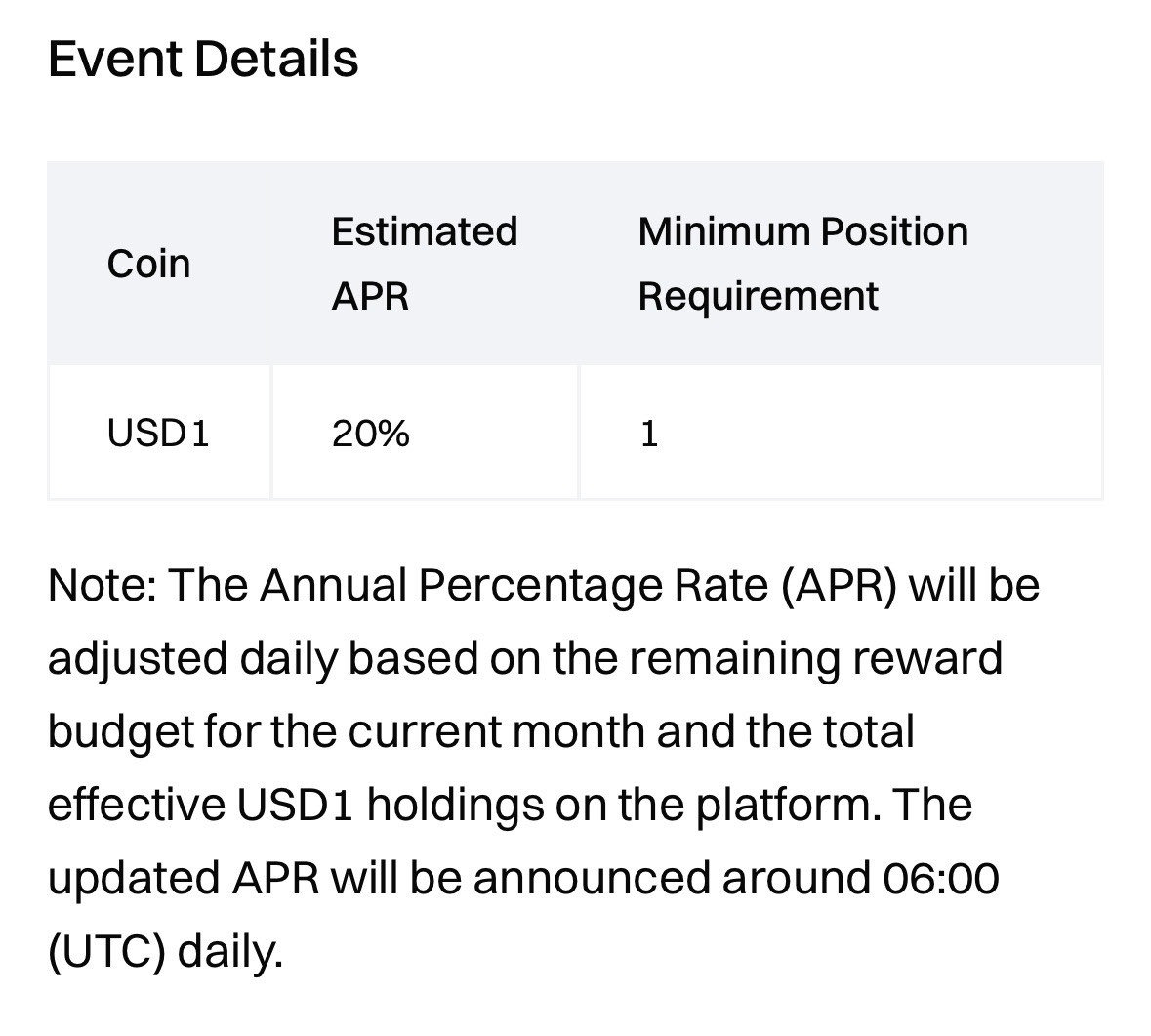
Few days ago I mapped out where $USD1 yield was actually sitting across venues.
The picture has kept moving since then with @Gate launching soft staking on USD1.
Users that hold it in their assets account, earn up to 20% APR in $USD1 rewards, no lockup, distributed daily.
APR adjusts each morning depending on total platform holdings and remaining reward budget for the month.
So it moves, but the structure is clean.
What keeps this interesting to me is the underlying.
USD1 is collateralized by short-term US Treasuries and cash equivalents.
So it feels like like holding a reserve-backed dollar peg and the yield comes on top.
In a market where most people are already in stables waiting for a direction, that distinction matters.
Jun 8
Interesting spot $USD1 is in right now.
People use to treat it as another stablecoin from @worldlibertyfi.
But the yield infrastructure around it has moved fast:
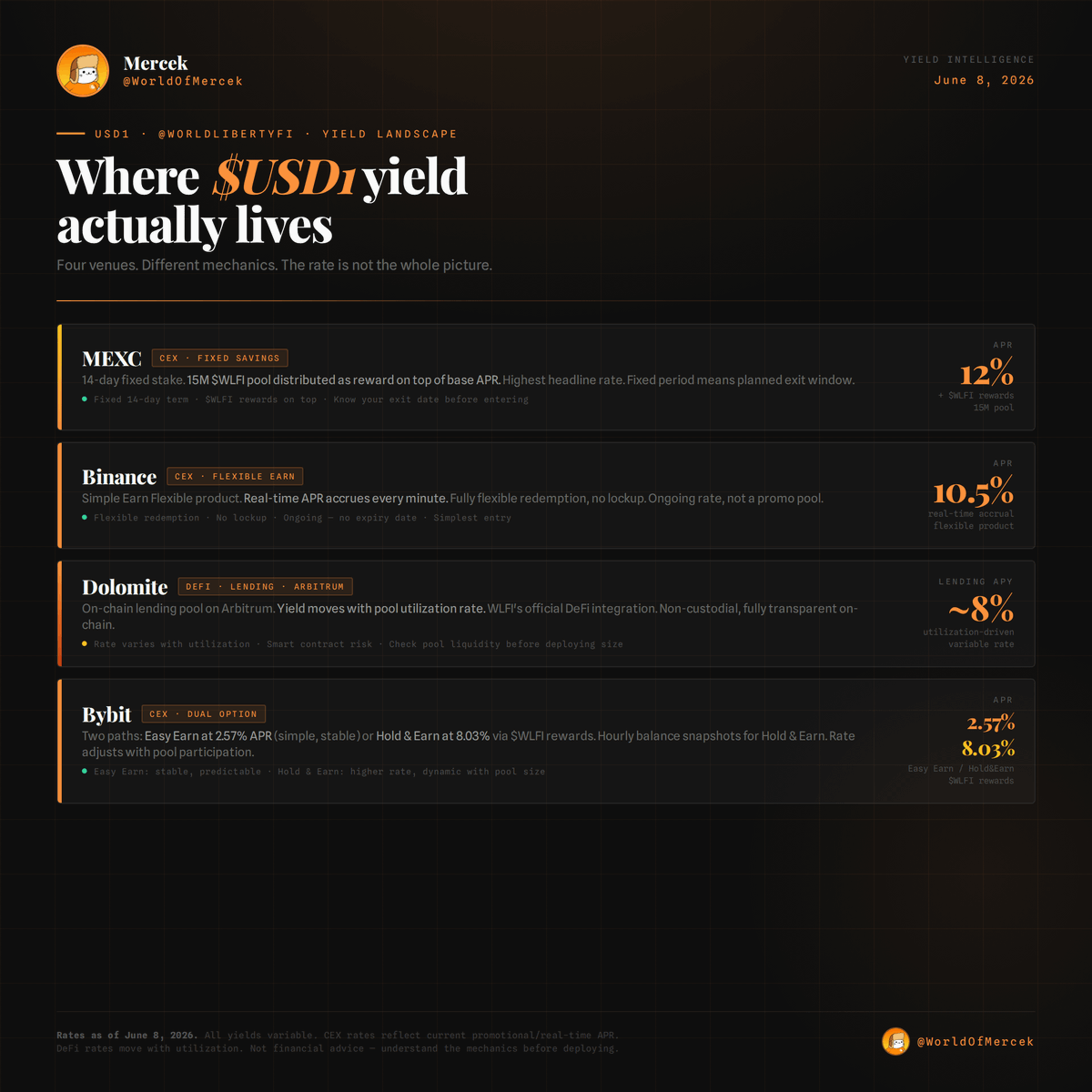
→ @binance Earn: 10.5% APR with USD1 Flexible Products
→ @MEXC: 12% APR stake USD1 on the MEXC platform to receive corresponding $WLFI token shares (15M $WLFI pool)
→ @Dolomite_io on arbitrum at ~8%
→ On @Bybit_Official there’s a 2,57% APR on easy earn or hold USD1 to earn WLFI (8,03%)
The yield sources are different from each other too: CEX incentive pools, DeFi lending utilization, fixed savings products.
Worth understanding which one fits how you’re positioned before deploying!
51
1
246
6,779
Jun 11
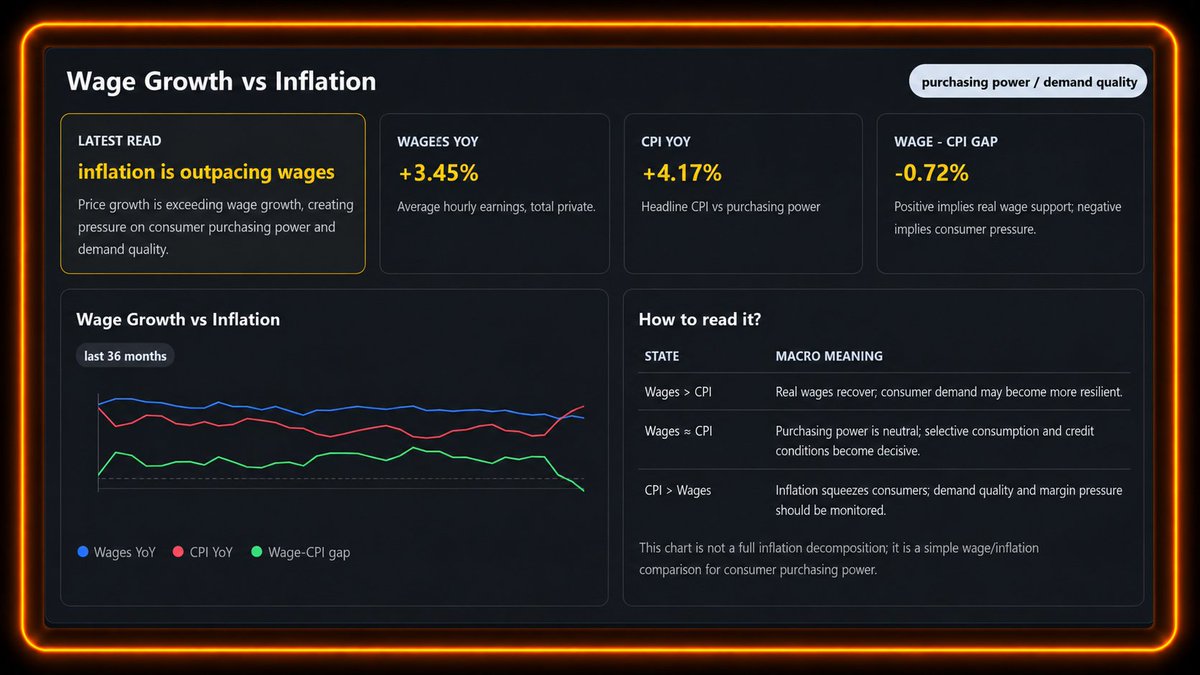
The gap between wage growth and inflation in the U.S. just fell to its weakest level in the last 36 months.
Wages are growing at 3.45% YoY.
CPI is running at 4.17% YoY.
On paper, paychecks are getting bigger.
In practice, prices are rising faster.
That difference may look small, but it changes how consumers experience the economy.
A household doesn't care whether wages are positive in nominal terms.
What they feel is whether their income buys more or less than it did a year ago.
Right now, purchasing power is moving in the wrong direction.
What's interesting is the source of the inflation pressure.
If stronger demand were driving most of the increase, rising prices would at least be occurring alongside a healthier consumer backdrop.
Instead, a large share of the recent inflation impulse has come from energy.
Consumers end up paying more, but they don't necessarily receive the income growth needed to offset it.
The result is often a deterioration in spending quality rather than a collapse in spending itself.
More money goes toward necessities.
Less money goes toward discretionary purchases.
That creates a very different economic environment than the one policymakers usually hope to see.
The economy can still look resilient on the surface while households gradually lose flexibility underneath.
For markets, that distinction becomes increasingly important.
104
3
306
14,994
Jun 10
The market's first reaction to this CPI report will probably focus on the headline number.
I think that's a mistake.
The more interesting story is underneath it.
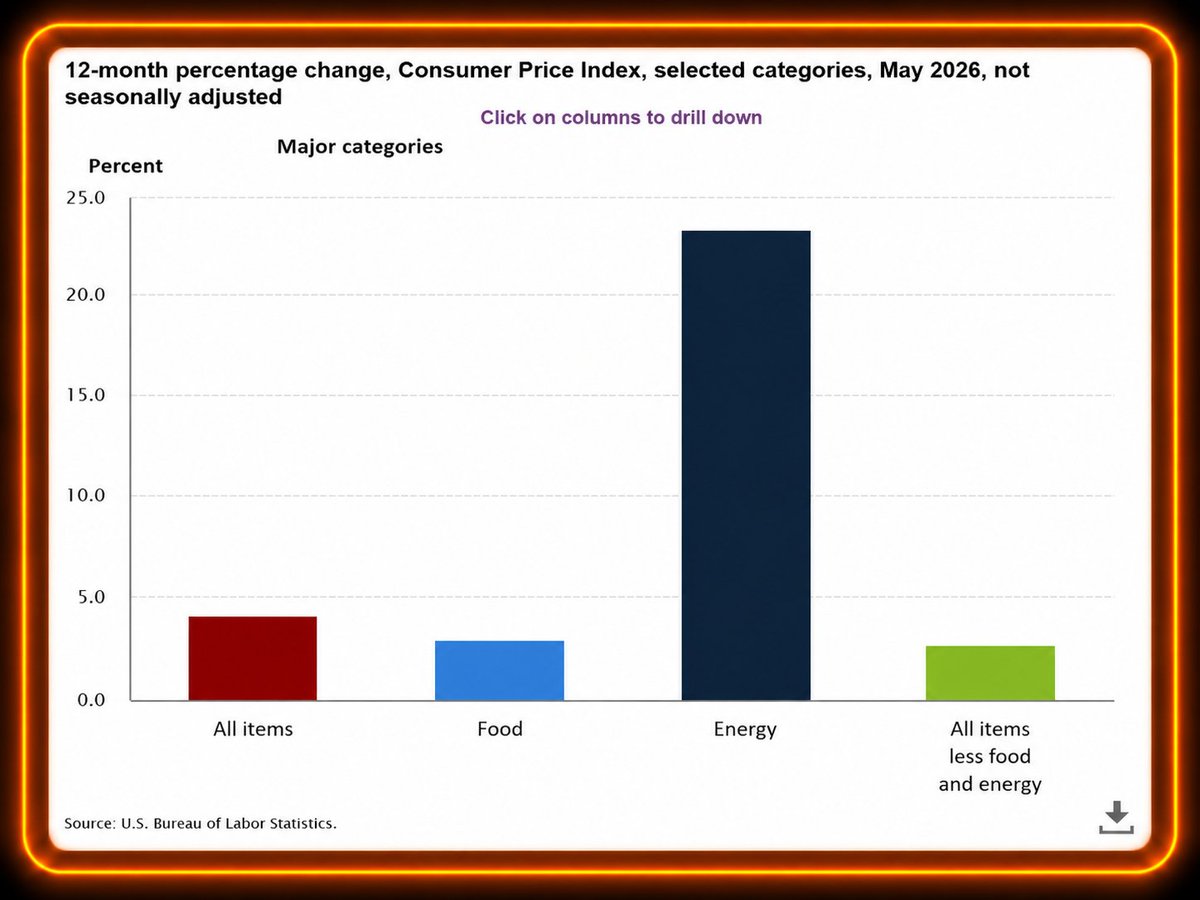
Headline CPI came in hot, but most of that heat came from energy. Gasoline and broader energy prices did a disproportionate amount of the work.
Core inflation, meanwhile, remained relatively contained.
That's an important distinction because policymakers don't lose sleep over a single energy shock.
What worries them is when inflation starts spreading through the rest of the economy and becomes harder to contain.
This report doesn't really show that.
If I were trying to frame this from Warsh's perspective, I don't think the takeaway would be "inflation is back."
I also don't think the takeaway would be "mission accomplished."
The more likely conclusion is that the Fed still needs more information.
Energy can be noisy.
Sometimes it's a temporary shock.
Sometimes it becomes the first domino that eventually pushes up services, wages and broader inflation expectations.
The challenge is figuring out which one you're dealing with.
That's why I don't think this report meaningfully changes the bigger picture.
It's not dovish enough to justify an aggressive easing narrative.
It's not hawkish enough to force a major policy shift either.
To me, it still looks like the same market regime we've been living in for months:
Not a clean risk-on environment.
Not a full risk-off environment.
Just a market where macro remains in control and capital stays selective.
90
1
309
17,573
Jun 10
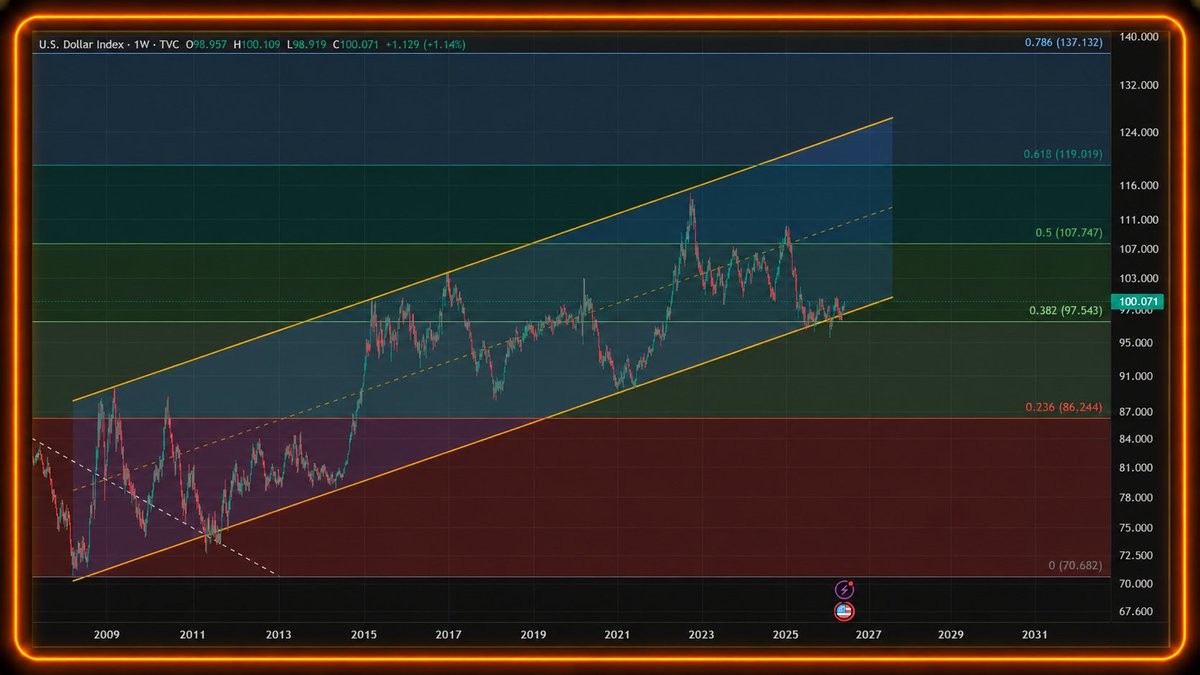
DXY is starting to feel like an invisible ceiling hanging over markets.
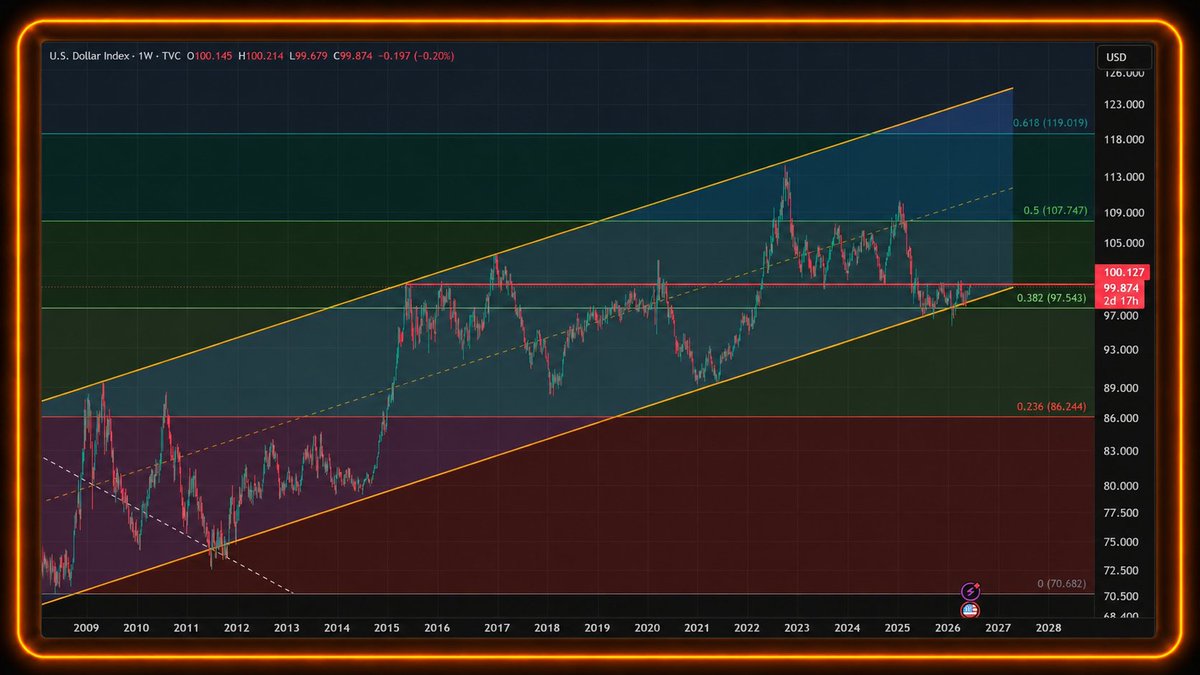
Since March 2025, the range between roughly 97.5 and 100 has created an environment where risk assets can still move, but struggle to sustain broad participation.
Markets never fully shifted into risk-off.
But they never produced a truly healthy risk-on environment either.
That's why leadership has constantly rotated.
At different points we saw Bitcoin take the lead.
Then gold and commodities.
Then emerging markets.
Then oil.
Then AI-related parts of the U.S. equity market.
But none of those leadership phases developed into a broad, durable trend.
Instead, each one briefly made new highs, attracted capital, and then handed leadership to something else.
The macro backdrop never really expanded.
Capital simply rotated inside an increasingly narrow field.
As long as DXY remains trapped between 97.5 and 100, markets appear to be breathing.
But the breaths are getting shorter.
Each new leadership cycle has become narrower, more selective, and less durable than the one before it, leaving more damage behind once the rotation ends.
From here, the market can probably continue operating in this regime for a while longer.
But eventually everything starts pointing toward one of two outcomes.
Either DXY breaks higher.
In that scenario, the next major shock likely comes from the dollar itself. The story stops being about Bitcoin, Nasdaq, gold, or commodities individually. Dollar strength becomes a tightening force that pressures most risk assets at the same time.
Or DXY breaks lower.
That would be a very different environment.
Instead of capital constantly rotating from one leadership group to another, markets could finally move into a broader risk-on phase where participation expands rather than narrows.
At this point, risk assets may need more than a stable dollar.
They may need the dollar to finally make a decision.
80
1
297
15,421
Jun 10
L2s inherited Ethereum's speed. The sequencer never made the trip.
@arbitrum, @base & @Optimism each run on ONE sequencer: a single node orders every transaction.
That node can censor a wallet, reorder any trades, or halt the chain.
Which L2 decentralises its sequencer first?
145
3
346
17,927
Jun 9
Tested @guardis_io today for some time.
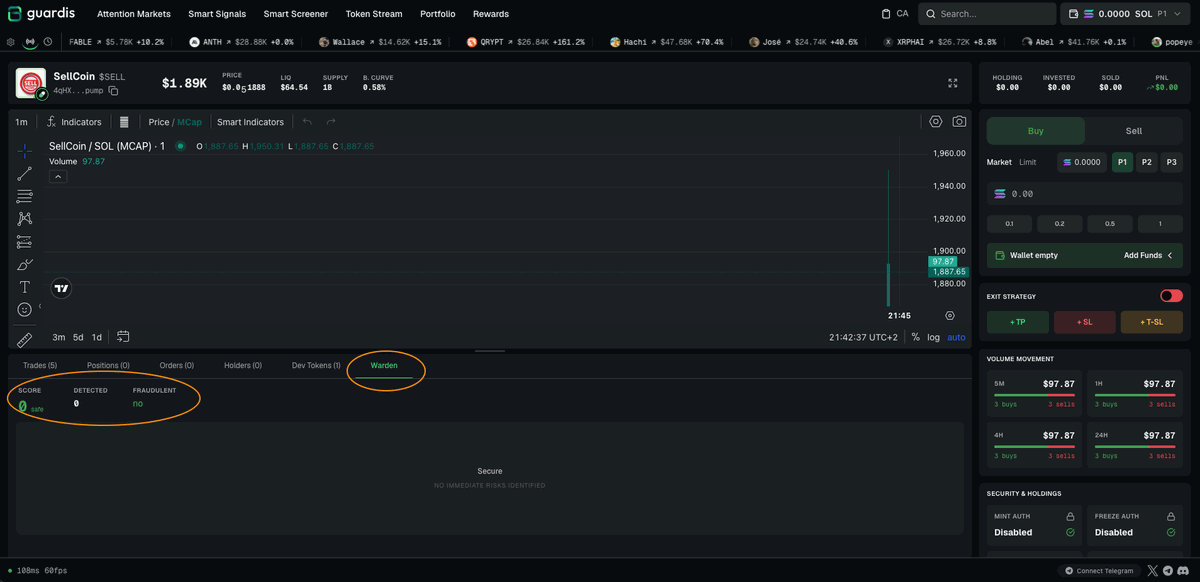
The part that stood out for me was Warden.
It scans the dev wallet before you buy: mixer flow, honeypot contracts, liquidity-removal patterns.
All surfaced before you're in the position.
Fully non-custodial. Solana-native.
If you've been rugged before, you know how expensive not checking gets... This is what checking actually looks like.
DYOR. Not financial advice.
🔗 Join the community: t.me/Guardis_community_verif…
95
1
296
9,270
Jun 9
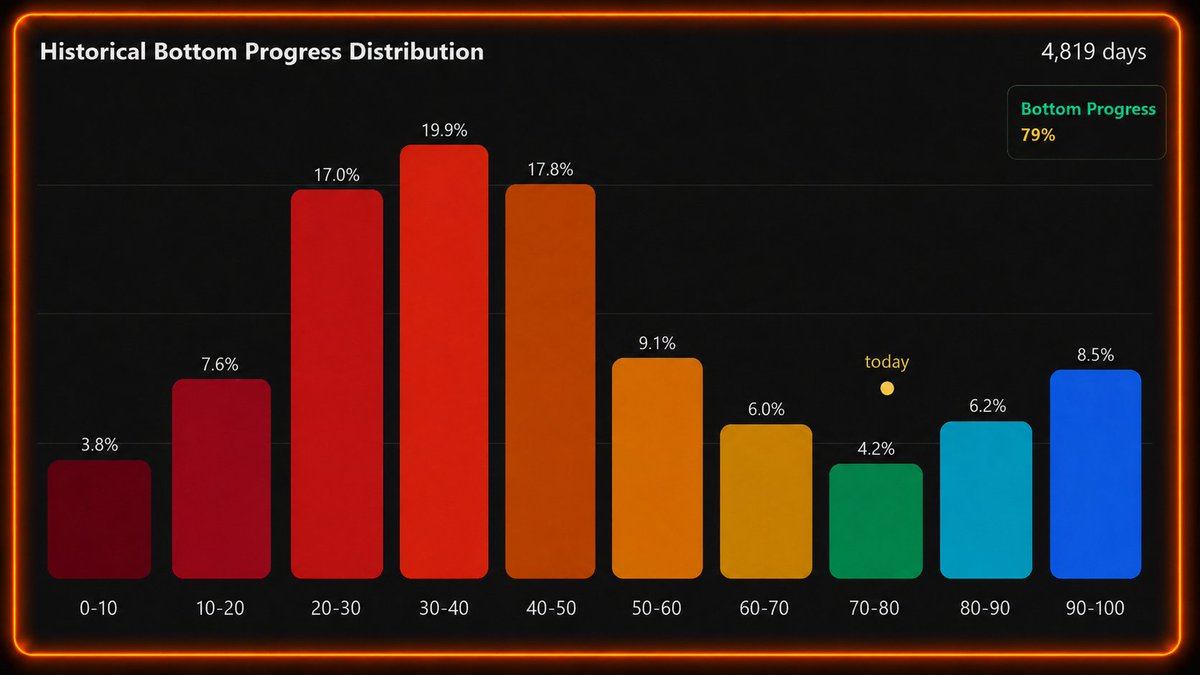
What would you say if I told you bitcoin:native has historically completed roughly 79% of its bottoming process? :D
What I see is fairly simple.
Bitcoin is no longer trading in what I'd consider a normal correction zone.
It's moving into an area where, historically, downside exhaustion starts becoming more relevant.
The important part, though, is that Bitcoin rarely bottoms immediately after entering these zones.
That's something many investors underestimate.
Historically, Bitcoin has spent a surprisingly large portion of its life moving sideways, frustrating participants, and building a base after most of the damage was already done.
In other words, the market may be leaving the "normal correction" phase behind.
The bigger question now is what comes next.
Does Bitcoin continue exhausting investors through price?
Through time?
Or through a combination of both?
That's the part I'll be watching most closely from here.
100
2
317
14,775
Jun 8
Privacy in crypto has always been the conversation that never quite arrived.
Everyone agrees that financial privacy matters in theory.
But in practice, most of the infrastructure people actually use exposes every transaction, every balance, every counterparty: publicly and permanently.
The stablecoin layer is the worst offender.
You’re using a dollar-referenced asset for payments and settlements while your entire activity sits on a public ledger.
@USDPrivate launched today with a different model.
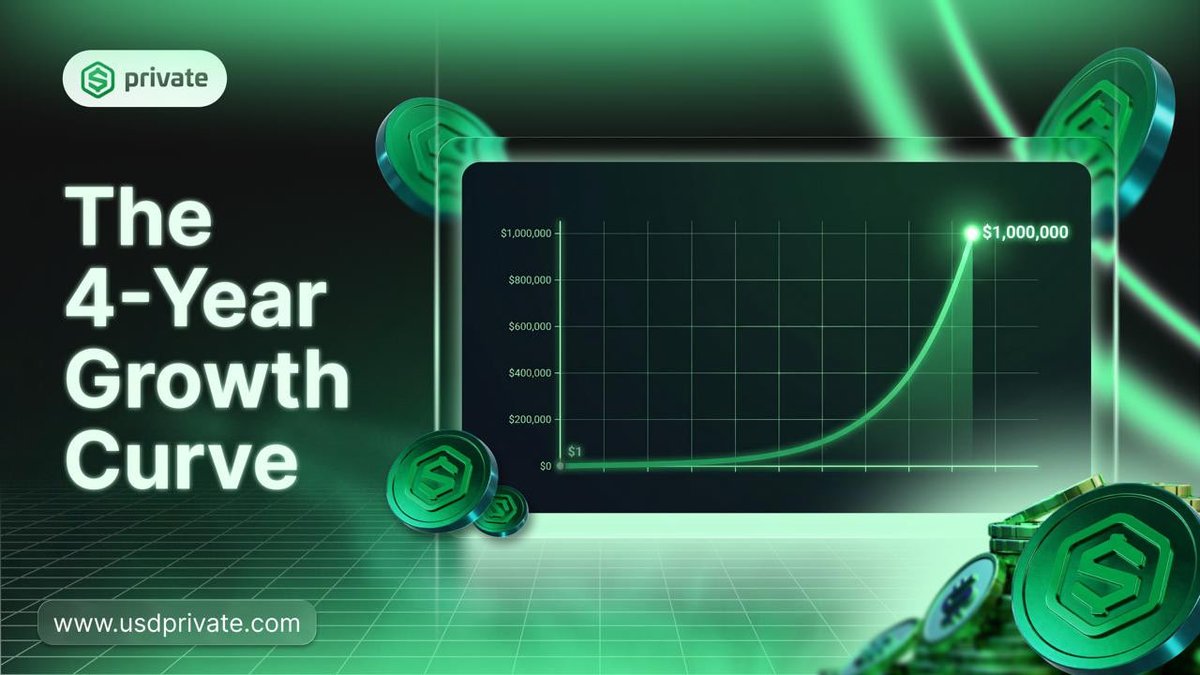
$USDP is a structured digital asset with a defined price path from $1 to $1,000,000 over four years, operating within the USD Private platform, designed to eventually convert into USDM.
USDM is a privacy-focused digital dollar built on a Monero-based framework.
Confidential USD-referenced transactions at the infrastructure level.
The concept is worth understanding regardless of where you land on it.
🔗 Give the project a closer look at usdprivate.com
67
1
146
17,886
Jun 8
Over the next 10 days, markets aren't facing a simple calendar of events.
CPI is coming.
FOMC is coming.
VIX expiration and June OPEX are coming.
Any one of them could shift sentiment on its own.
This time, they're arriving together.
When several market-moving events get compressed into the same window, price action often becomes harder to read. Stocks can rally, crypto can bounce, gold can react differently, and bonds can end up pricing something else entirely.
That's why I think one of the most important charts right now isn't necessarily Bitcoin, the S&P 500 or even gold.
It's the dollar.
DXY has spent months sitting near a critical area and is now attempting to stabilize around the lower boundary of a long-term rising channel.
If the dollar starts moving higher from here, it shouldn't be viewed as just a currency story.
A stronger dollar often means tighter financial conditions, weaker global liquidity, more selective capital flows and a tougher environment for risk assets.
That doesn't automatically mean everything has to go down.
But it does mean markets become less forgiving.
The timing matters because market internals aren't exactly showing a broad and healthy risk-on environment right now. Participation has weakened, leadership has narrowed, and the Fed still doesn't have much room to aggressively ease if inflation remains sticky.
That's what makes the next couple of weeks so important.
The question isn't simply whether CPI comes in hot or cold.
The question isn't simply whether the Fed cuts rates later this year.
The bigger question is whether risk assets can continue acting as if liquidity conditions are improving if the dollar starts strengthening at the same time.
That's the test I think markets are about to face.
78
3
401
27,234
Jun 8
Interesting spot $USD1 is in right now.
People use to treat it as another stablecoin from @worldlibertyfi.
But the yield infrastructure around it has moved fast:
→ @binance Earn: 10.5% APR with USD1 Flexible Products
→ @MEXC: 12% APR stake USD1 on the MEXC platform to receive corresponding $WLFI token shares (15M $WLFI pool)
→ @Dolomite_io on arbitrum at ~8%
→ On @Bybit_Official there’s a 2,57% APR on easy earn or hold USD1 to earn WLFI (8,03%)
The yield sources are different from each other too: CEX incentive pools, DeFi lending utilization, fixed savings products.
Worth understanding which one fits how you’re positioned before deploying!
41
3
250
13,003
Jun 8
Honestly the most interesting thing about this week wasn’t the crash.
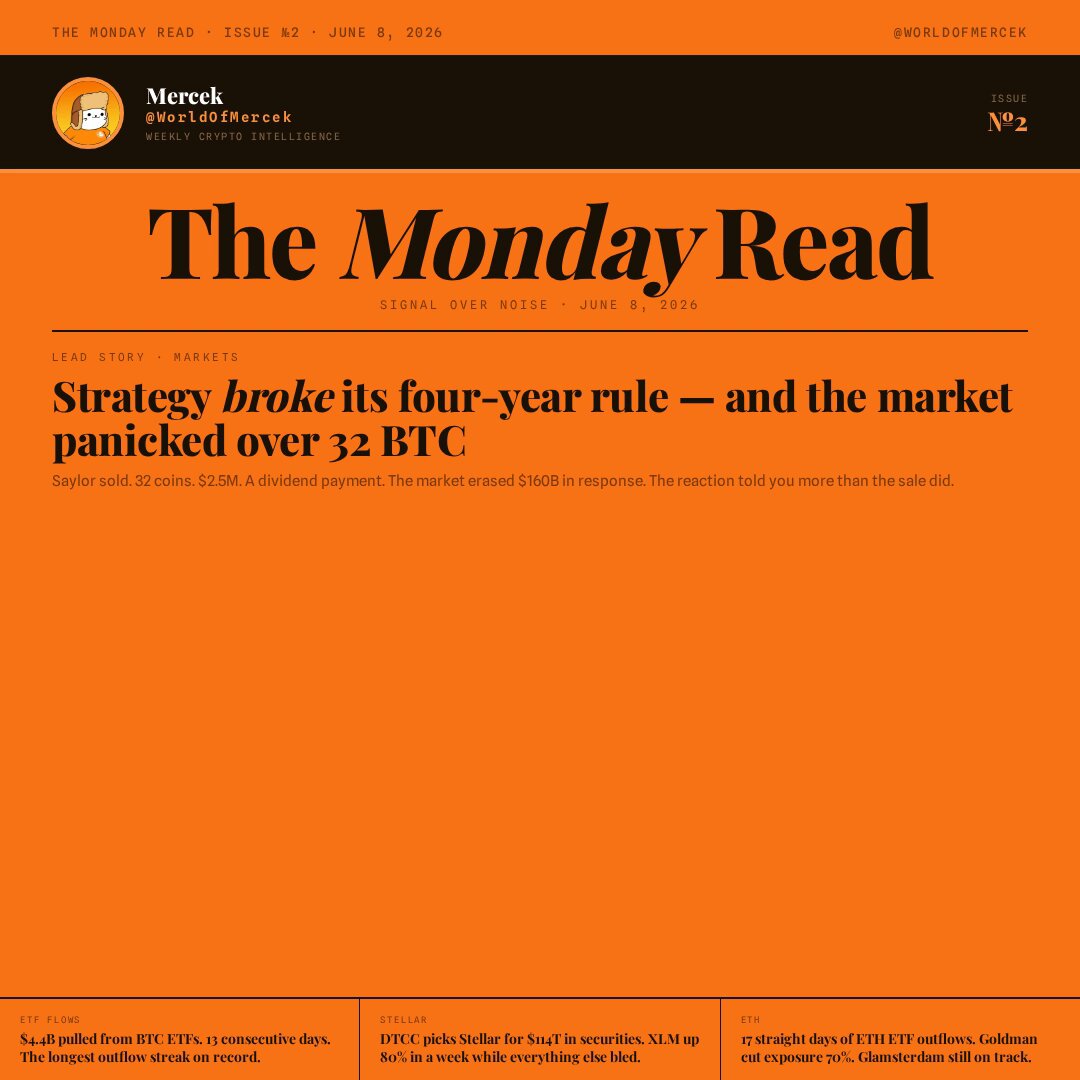
It was watching $160B evaporate over a dividend payment while the most significant institutional infrastructure move in crypto history barely made a timeline.
Priorities are still broken.
What’s your read?
134
3
282
17,807
Jun 8
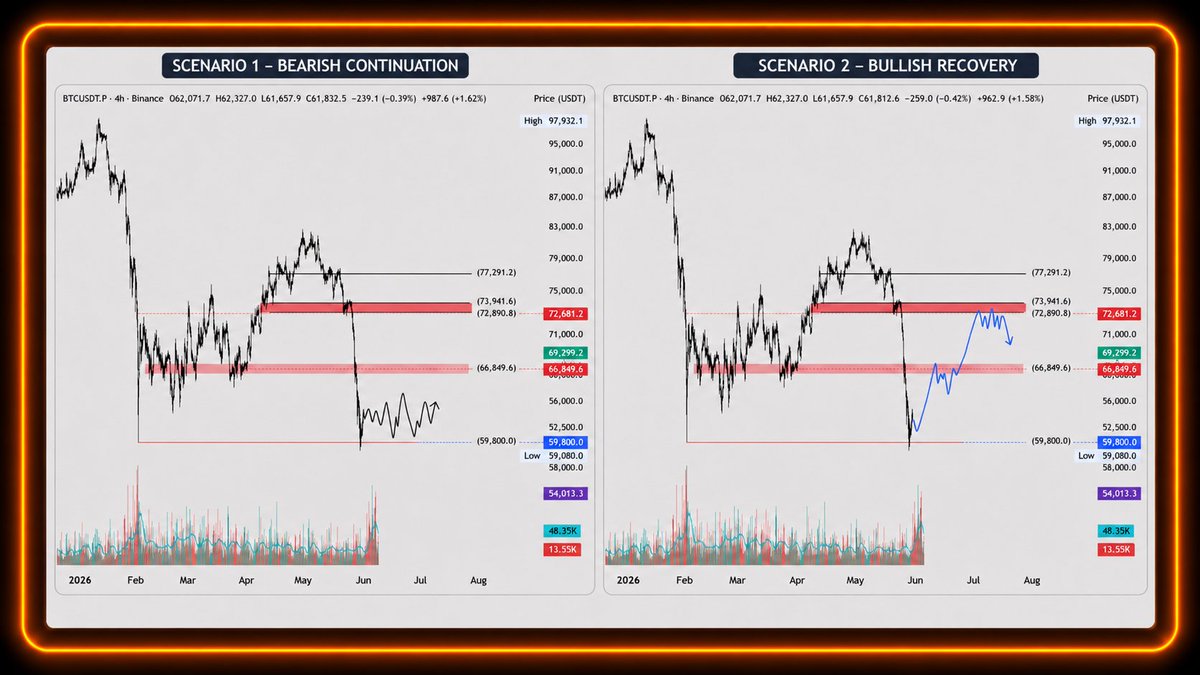
The hardest part about identifying a bottom is that real accumulation often looks like nothing is happening.
If price spends months chopping around and building a long base, that's often what real bottoms look like.
Most people imagine bottoms as dramatic reversals. In reality they're usually pretty boring. Price gets compressed, volatility dries up, traders lose interest, and eventually people start looking elsewhere.
That's what accumulation tends to feel like while it's happening.
If this is a true bottom, the market may simply spend time frustrating both bulls and bears before eventually moving higher.
But if it's not a true bottom, the path often looks different.
Price bounces sharply, pushes into the nearest resistance, spends some time below it, maybe even breaks above it briefly, and then rolls over from the next major resistance. In that scenario the market isn't really building a base yet. It's still searching for where the next low should be.
That's why I think the resistance zones matter more than anything right now.
They're marked on the chart.
Black path = accumulation scenario.
Blue path = relief rally first, new low later.
The market will decide which one it wants. Our job is simply to recognize the difference when it does.
69
1
262
13,690