Joined May 2020
- Tweets 6,075
- Following 804
- Followers 2,082
- Likes 59,519
732 Photos and videos







Jun 15
Yes, the most privileged sectors of the economy: insurance, real-estate, finance essentially do and produce nothing, or very little, and that is transmitted through the culture at all levels. You make more money, with money. The hardest thing the US did was build oil and gas refineries in about 30 countries since the 1950s, then it would export debt and cheap agricultural products to the rest of the them, followed by the digital platforms of zog valley, and expropriate the profits generated/ they would flow back into stocks and bonds. It’s not a coincidence that the least materialistic endeavors are the most profitable in the US. Grift is the main industry because grifters run the political economy.
Jun 15

an underdiscussed aspect of modern capitalism is that most low-wage jobs tightly regulate what you're doing at all times while you're on the clock and most high-wage jobs consist of hours of unstructured time in front of the computer during which you can do whatever
35
2,054
Jun 14
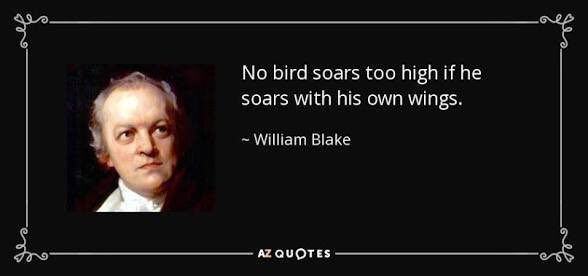
"More! More! is the cry of a mistaken soul; less than All cannot satisfy Man."
Jun 13

Struck by something @DavidGornoski said in a recent podcast clip about God being “hard to get” and how this is reflected in modern culture. When you can’t accept that you are loved unconditionally, naturally you start to seek what is outside of yourself, or what you perceive you lack—as a desperate attempt to return to love.
Social climbing, putting others on a pedestal, modern relationship dynamics, diet culture etc so much of it is rooted in scarcity.
Wanting “hard to get” things as opposed to expressing gratitude is the root of much suffering & disembodiment.
Bioenergetics, by virtue of helping us increase our energy production is often the first step to returning us to “abundant” behavior and the innate wisdom of the body.
1
13
2,366
Full transcript from Danny’s telegram: Previously unreleased group conversation with Ray Peat that took place on January 30, 2022, about technocracy, growing food, hard money, and safe places to live:
Q: Short-term safety (1-3 years) – inside or outside the USA?
Ray Peat: It really depends on how you would live outside the US. The transition time creates confusion and can reduce your stability, which is very close to safety. Safety varies with pollution, random danger, and political possibilities. It depends on the specific city or region, whether you’re in the US or Mexico. You can find places with extreme safety in Mexico and risky places in the US. Americans are almost always the least likely to be directly harmed in Mexico, except indirectly through pollution.
Q: Does the answer change for the long term (rest of your life as a 30-year-old)?
Ray Peat: With the exception of invasion by the US, Mexico is on a generally good stabilizing course while the US is on a steady downward course. If they continue the present path, the US could become almost unrecognizable within 10 years. The rate of craziness we’ve seen in the last year and a half, if extrapolated, would make it a complete nightmare long before 10 years.
Q: Aren’t the strongest resistors to the global agenda concentrated in the USA with the best laws and resources to fight back, compared to Mexico?
Ray Peat: No. When you get away from the cities, Mexico has more of that spontaneous libertarian spirit. That conformist, militaristic conformism in the US was completely absent when I first went to Mexico 60 years ago. It has been creeping in, but I would guess a good half of the population is still pretty spontaneously libertarian — they secretly keep their guns and do what they want, ignoring the state.
Q: Thoughts on Bolivia, Costa Rica, Nicaragua, Ecuador, Peru as alternatives?
Ray Peat: Costa Rica has traditionally been the most like Scandinavia — unmilitarized and pretty free. Peru is probably the most inclined to fascism. Ecuador is being pressured so heavily by the US it’s hard to tell what will happen. Bolivia is second in the world (after Mexico) in communal land ownership at about 33%, which supports anti-neoliberal processes. The neoliberal pressures are what anger the population and create dangerous situations.
Q: Is Mexico more resistant to Green New Deal / climate change agendas than Bolivia?
Ray Peat: I imagine both are pretty resistant, but my feeling from both big-city and small-town people in Mexico is that they are extremely resistant to propaganda. Right after 9/11, the word “pretexto” was already in everyone’s mind in Mexico, while it took 10 years for that awareness to take hold in the US.
Q: Hedging bets for the next 10 years — Bolivia or Mexico?
Ray Peat: Mexico has a long history (about 150 years) of being a place of escape from repressive governments, similar to Holland centuries ago. Even conservative governments have honored that liberal tradition of accepting refugees from everywhere.
Q: Does growing cartel violence and power in Mexico factor into your decision?
Ray Peat: The cartels are starting to use their drug money to invest in agriculture, and they don’t always know what they’re doing, which contributes to some deforestation. But they can be shooting each other not very far away and no one pays attention because it’s only between the drug people.
Q: If we start a community with a large agriculture focus, would that raise eyebrows with the cartels?
Ray Peat: If you were a very rich operation, maybe — think of the Mennonites in Chihuahua. They seem to have done pretty well and I haven’t heard of them being menaced by the cartels. (One incident involved a family driving a vehicle similar to those used by drug people.)
1
6
54
4,385
Q: Central Mexico (Michoacán plateau) vs southern Mexico (Chiapas etc.)?
Ray Peat: The greatest turmoil and land-stealing issues are in Yucatan, Chiapas, Quintana Roo, and up into Guerrero. From about the middle of Michoacán up toward Guanajuato and over to Guadalajara, that high plateau has the best climate but also the best culture. People even Mexicans have told me that the eastern slope and the south is where people are less civilized. On the plateau west of Mexico City everything is pretty mellow.
Q: Living in a normal small-town house vs starting a farm with goats — pros/cons?
Ray Peat: Every little town has its own personality and still carries the consciousness from previous centuries. In small towns, people still make everyone else’s business their own. If you go into a small town as a stranger and get to know the people, they tend to be supportive rather than exclusive. At least for Americans, they go beyond expectations to help you settle in.
Q: What are the most essential things for surviving the next 10 years (grow your own food, etc.)?
Ray Peat: Having a division of production. One little group concentrating on cows or goats, another on growing corn, for example. Each area of land will have its most productive use. Fitting into an already productive community is the quickest, most stable, and long-range way to do it.
Q: Have you considered leaving the US for Mexico now?
Ray Peat: Yep. I think anytime you can manage it is a good time. Just get out.
Q: How important is learning Spanish, and how well do you need to speak it to be accepted?
Ray Peat: Just making the effort. I’ve never seen any other country where people are so helpful. As long as you’re making the effort, they’ll do their best to understand you and even not correct your blunders. The average person is going to help you learn it faster than you could ever learn it in a classroom.
Q: How careful do you need to be when buying land in Mexico?
Ray Peat: You really have to get to know the context of the property you’re getting — by gossip, talking to neighbors and local people. I learned who the previous owners had been almost all the way back to Lázaro Cárdenas. It’s best to rent first and get to know the community and the people very well. Especially avoid big real estate operators — they can be the riskiest.
Q: What makes Mexico relatively immune to US influence and a safe haven?
Ray Peat: They have a deep consciousness of the danger from the north. Everyone knows about the invasions and the times the US has invaded Mexico. The whole country would be expected to resist an actual military occupation. People have been openly aware of the internal danger of FBI, DEA, FDA and other agencies putting pressure on them. For the whole last century they’ve done a good job of resisting it.
Q: Why is Mexico a better option than Bolivia?
Ray Peat: Mexico has the tradition of knowing Americans personally — being very receptive and sociable with individual Americans — at the same time knowing the horrible treatment the US has given Mexico as a country. Even countries like Bolivia are a lot more innocent or trusting of the US as a population.
Q: If AMLO disappears, would Mexico become much more susceptible to US plans?
Ray Peat: Yeah, except that there will be more AMLOs. I think that’s why he’s still alive — they know there’s a fairly unlimited supply of people who would take his place. The whole country is just in a direction, a spirit, away from what the US and everywhere else is doing.
1
18
1,795
Q: How seriously should we worry about sudden destruction of bank account data or forced digital currency?
Ray Peat: I think everyone should have alternatives to the banks. The plan is to have digital money and do away with exchangeable pieces of paper, because you can do business outside the system with paper. Much of Mexican business (about half the economy last time I looked) is still outside the government’s perception, and that’s one of the things the tax system, government, and banks would like to control. But Mexico is still somewhat out of control.
Q: Any general approach to dealing with a parasitic infection like Chagas?
Ray Peat: Avoiding it is interesting. Most parasites hang out in very humid tropical areas. High altitudes help — there’s not enough oxygen for some skin mites, and the ultraviolet light is so intense at 7,000 ft that bacteria have a very short life. High thyroid and high altitude both lower lactic acid and inflammation while increasing anti-inflammatory and anti-infective carbon dioxide.
Q: Any other advantages of Mexico over Bolivia?
Ray Peat: Bolivia has cities at higher altitudes and lower latitude, but some very high-altitude big cities (like La Paz area) have become so polluted that it detracts from the area. Also, there aren’t the masses of US staff stationed in Bolivia as there are in Mexico.
Q: Alternatives to banks — gold/silver or something else?
Ray Peat: Gold and silver and productive land, mangoes, fruit trees…
Q: On farming and starting agricultural projects
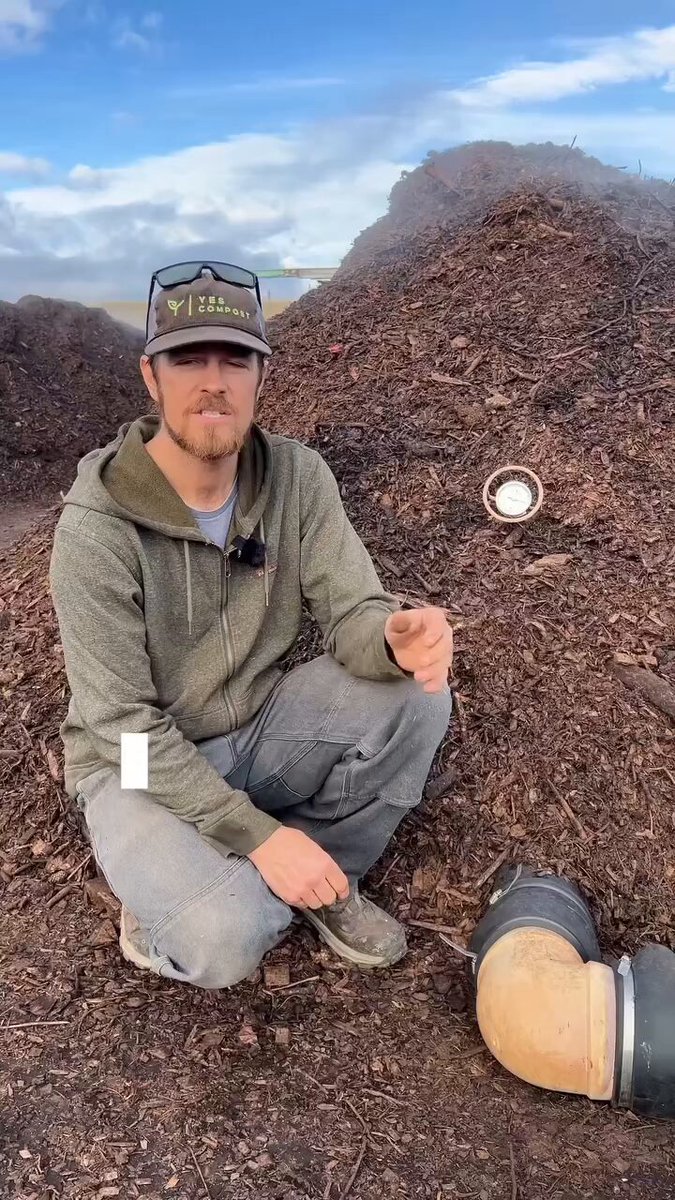
Ray Peat: Lots of independent subsistence farmers don’t understand soil chemistry. Just bringing in knowledge of composting would make it possible to quickly turn low-producing land into high-producing land. If I were going to start an agricultural organization, I would look for borderline depleted land with some kind of water supply and then concentrate on building up the fertility. The more organic material, basically, the better things grow.
Q: How much influence do the cartels have, and how much are they influenced by the US/CIA? Is that a threat to living in Mexico?
Ray Peat: The sensible thing would be to legalize the drugs they trade in. Enforcement against the cartels is what they need to keep the prices up. The people who proposed letting drugs come through Mexico freely and letting Americans worry about legality had the obvious solution for Mexico — there would be no significant profit within Mexico. But the US obviously doesn’t like that solution.
Q: Final thoughts / advice for the group?
Ray Peat: I’m sure that’s the natural state of things. I think there’s plenty of time. Take your time, poke around, start learning the language, and let people know that you’re interested in settling down — that will bring you lots of information.
Q: Advice for group dynamics in an intentional community?
Ray Peat: It’s good to read about the history of intentional communities. The idea of becoming farmers when you haven’t had a farming tradition led most of the intentional communities to break up — people discovered they weren’t cut out for that kind of work.
Q: How much influence do the cartels have, and how much are they influenced by the US/CIA? Is that a threat to living in Mexico?
Ray Peat: The sensible thing would be to legalize the drugs they trade in. Enforcement against the cartels is what they need to keep the prices up. The people who proposed letting drugs come through Mexico freely and letting Americans worry about legality had the obvious solution for Mexico — there would be no significant profit within Mexico. But the US obviously doesn’t like that solution.
Q: Final thoughts / advice for the group?
Ray Peat: I’m sure that’s the natural state of things. I think there’s plenty of time. Take your time, poke around, start learning the language, and let people know that you’re interested in settling down — that will bring you lots of information.
1
13
530
Proud to say we have been raisin maxing for years asap with all our kids
Jun 3

It would be very interesting to see the impact of the massive advertising push for eating raisins in the 80's and 90's on height in children
Raisins are very high in boron, with 1-2mg per 2oz serving
The difficult part would be controlling for other factors, as average US height has fallen recently due to factors like obesity and immigration
5
469
Americans have insane standards about this, bordering neurosis. Let your kid play outside and give him good books to read. Take them on trips when you can and let them meet interesting people and show them how passionate you are about your own interests. The one thing the boomers did right was give us freedom in childhood by largely not caring, but I would argue they didn’t go far enough by taking us out of public schools for at least a few years to break up the mind numbing routinized living. Anyone can talk to my five year old about topics like an adult because he basically just follows me around when I’m working and listens to a wide range of literature.
Jun 1

homeschooling seems to be a luxury trad behavior in this current day and age. it's something that doesn't seem worth the sacrifice if it means mom can't work and money is extremely tight
4
13
743
May 30
There’s billboards all over the place now advertising Indian truck stops and restaurants in their language.
May 30

I live in the Blackest community in inner city Houston. My local planet fitness is now full of Indian men speaking Hindi and even Moroccans speaking Arabic. These ppl were not here pre-Covid.
1
8
724
May 25
I didn’t even realize how big 3rd world escapism is on Instagram. It’s insane how they have immiserated millions of young people. People who don’t leave the country are fleeing back to farm homesteads just one generation after they convinced everyone to move into the cities and sell the family farm.
7
414
May 20
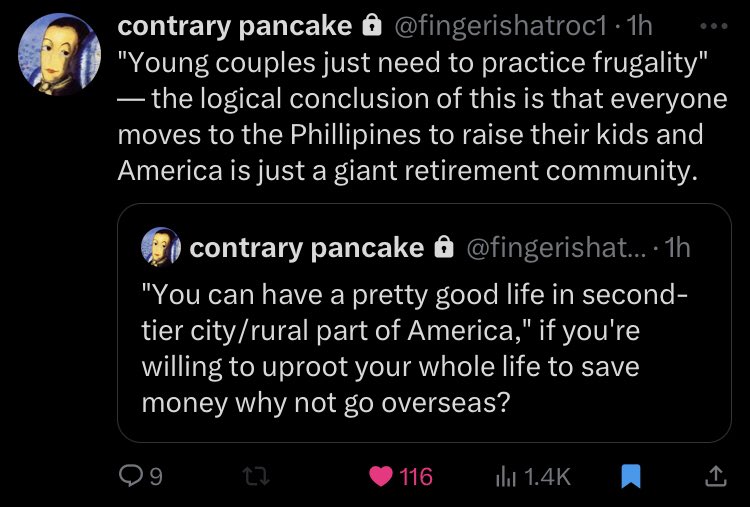
If you want land a hook on the oligarchy as a “little guy” you will have to move countries. It’s just a cold hard fact. The Olds have sealed everyone’s fate on the political level, it’s not even worth trying to save them at this point, to be frank.
May 19

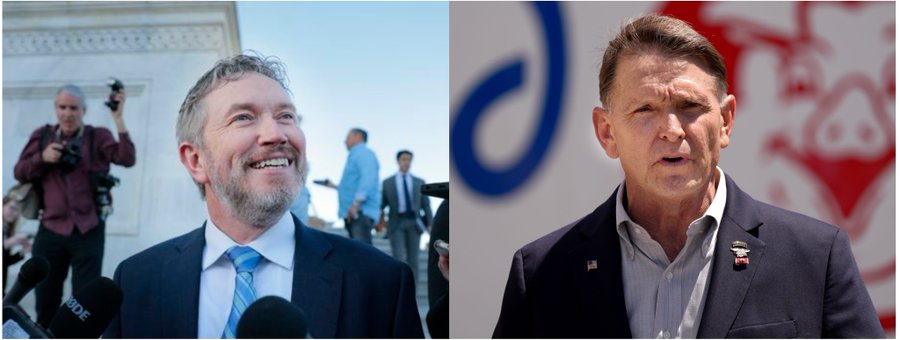
KY-04: Total amount donated by small-dollar donors (under $200 per person)
🟥 Thomas Massie: $1,874,603.23
🟥 Ed Gallrein: $197,216.00
1
4
489
May 19
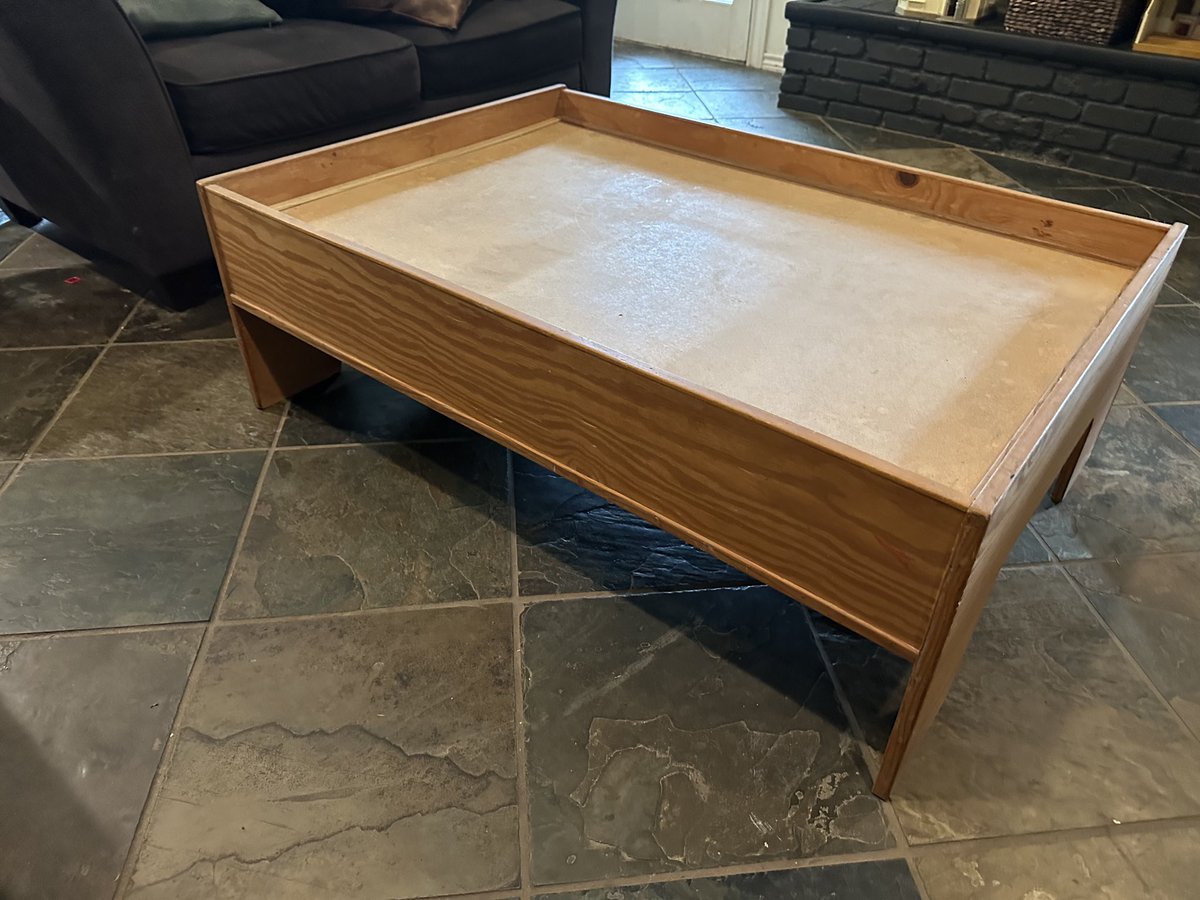
Today’s scavenge. Going to turn it into a model train table.
May 18

I feel like I’ve recreated a form of communism in my own life by living in an upper(ish) middle class neighborhood of old people who routinely get rid of the best furniture and barely used or fixable appliances. Half of my houses’ furniture, belongings, is stuff I picked up, half of my kids treehouse is from a perfectly good used one. There’s actually a whole industry of “scavengers” now, that I call them, that I am a part of.
8
519
May 19
The couple broadcasting the “Ask Your Herb Doctor” show said their dentist remarked that their children were the only kids in his whole practice whose palates were wider than their parents. The open secret to the solution is sugar metabolism.



20
61
4,493
836,500
May 19
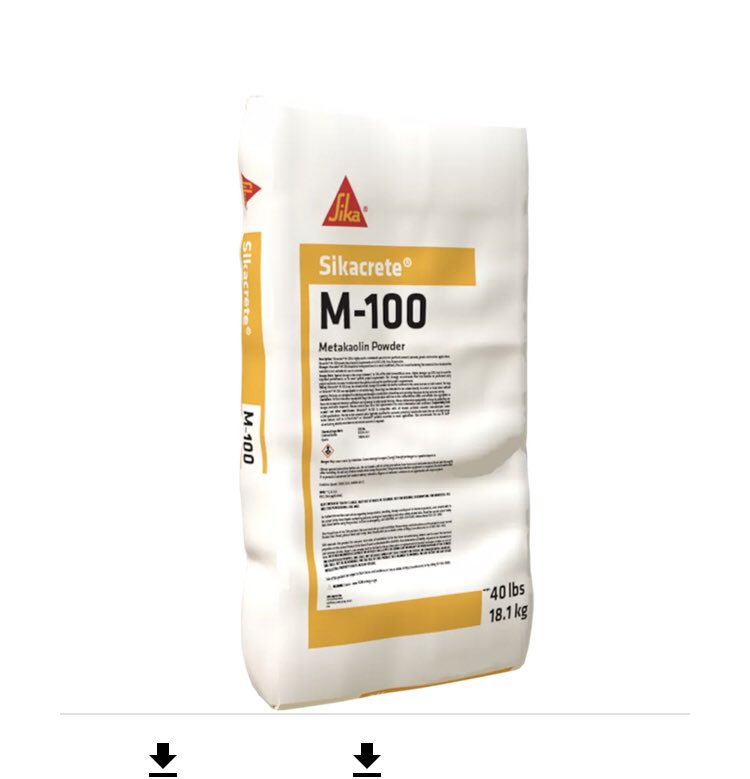
My new favorite seed sprouting method is to use the top layer of my chicken compost bin with some dirt/sand added so it’s not too concentrated . No idea if the yield is more statistically speaking but it feels like it is.
2
298
May 18
I feel like I’ve recreated a form of communism in my own life by living in an upper(ish) middle class neighborhood of old people who routinely get rid of the best furniture and barely used or fixable appliances. Half of my houses’ furniture, belongings, is stuff I picked up, half of my kids treehouse is from a perfectly good used one. There’s actually a whole industry of “scavengers” now, that I call them, that I am a part of.
8
984
May 17
After more experimentation I discovered I apparently have an egg allergy and this was the main factor. Can tolerate heavy coffee usage again. I guess this is a testament that increasing your metabolism can also still increase your underlying stress hormones on a relative basis.
Mar 31
Discovered that a lot of this is due to heavy coffee use that I guess is finally catching up to me so I have to up my liver and oyster intake even more and I’ve also found taking aspirin multiple times earlier in the day helps.
2
8
719