
Joined December 2025
- Tweets 3,176
- Following 1,962
- Followers 1,374
- Likes 8,962
540 Photos and videos









Pinned Tweet

Mar 30
🚀 Hey XRPL fam! Want the pulse on the entire XRP Ledger ecosystem?
Head straight to xrplpulse, your ultimate curated directory of the best XRPL projects!
We’ve got an amazing lineup already live: Horizon DEX, Ledger Realms, RippleVerse, Axiom prediction markets, DropFi, XRPLClaw, Blume Finance, and over 70 more gems across DeFi, games, NFTs, payments & tools.
Want your project featured?
Submissions are easy, free and welcome!
We’ve also just launched our awesome Spotlight Series, shining extra love on hidden XRPL creators. Keep your eyes peeled… the next release drops later today!
And don’t forget: Join the XRPL Pulse Telegram right now and claim your daily $VPRSM rewards every single day. Build that streak, play the community games, and stack those weekly airdrops!
Who’s feeling the pulse? Drop a 🔥 below! #XRPL #XRPLPulse #VPRSM #VoidTheNoise
7
3
25
2,357
XRPL Pulse retweeted

15h
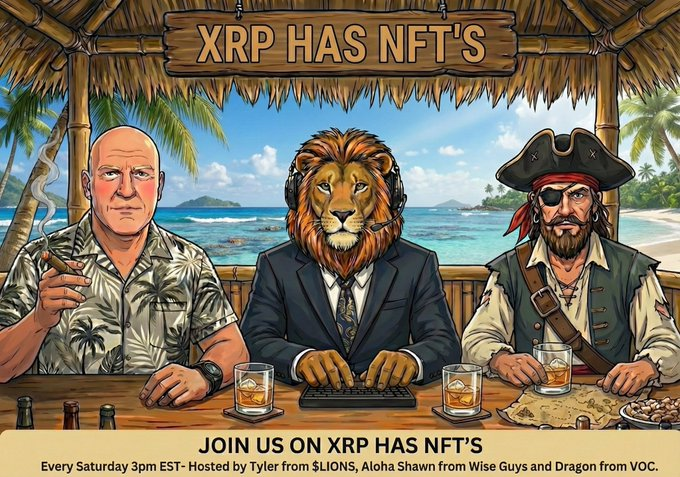
🚨 XRP Has NFT's 🚨
⏰ Saturday Space 6:00pm EST ⏰
🗓 Every Saturday 👀
Discuss, Network, Grow & Build.
@shawnfaulstick, @DracVOConic & @Pnasty010
7
12
18
659
23h
On the hunt for $XRPL Tokens that want to get verified using @rhyzlo_xrpl and then will add them to our DEX page at XRPLPulse
Curated project directory and curated tokens on the DEX💪
Come and see what's being built
1
2
3
92
23h
Morning and happy weekend $XRP fam!
I'm thinking of launching a new NFT collection, I made it in paint , I am taking early offers...
This is satire...
I love all projects on the XRPL and hey I make fun of situations to lighten the mood.
If people produce NFTs that's up to them, if people buy them it's their choice. No one forces anyone to buy anything so can we all just give up with the tribalism?
ps. open to offers on this fine art below.
7
3
25
730
XRPL Pulse retweeted

Jun 12
1
4
16
358
Jun 12
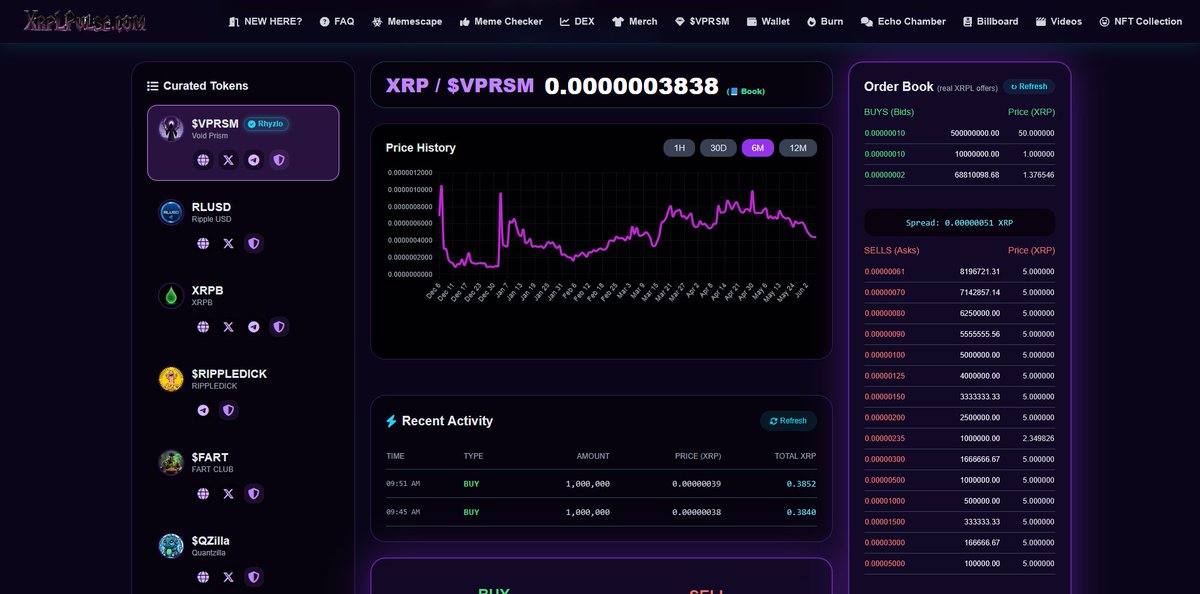
New trading platform over at xrplpulse, only a few tokens available to trade currently because this platform will list curated tokens.
@rhyzlo_xrpl verified tokens will become the norm and our platform will be where they will be hosted.
More features are being built and refined, but definitely come check us out and see how it's looking so far!
1
2
63
XRPL Pulse retweeted

Jun 11
to all my dev friends with tokens on the xrpl. it is time for you to show your community how credible and trustworthy your token is.
let's make this the standard for the industry. go now to rhyzlo.com and verify your token. share the "verified by rhyzlo" badge everywhere. takes you 2 mins max to do it.
Jun 11

if you are serious about the credibility of your token and the safety of your community you should get your token verified by Rhyzlo.
take less than 1 min and you can do it yourself. at the end you get a verified by rhyzlo badge that you can put everywhere. trust is everything
4
4
8
699
Jun 10
🔔Calling all XRPL Token Creators!
Want your token to be discoverable and tradable with confidence?
✅ First, run it through rhyzlo.com/ for a full security & quality audit.
✅ Then apply to get listed on our own DEX → xrplpulse.com/dex
Safer tokens. Better liquidity. Stronger ecosystem.
Let’s go!
#XRPL #XRPLPulse #DeFi #TokenListing @rhyzlo_xrpl
1
4
98
XRPL Pulse retweeted
I thought KYC on a public ledger was an oxymoron. Turns out XLS-70 makes it work without exposing your personal data on-chain.
Here's how it actually works: a trusted credential issuer, a licensed KYC provider, an exchange, whoever, issues a signed credential to your XRPL account. That credential just says "this account passed verification." No name, no passport scan, nothing sensitive. The issuer's signature is the proof.
Token issuers can then require that credential before allowing a trustline. So if you haven't been verified, you literally can't hold the token. Compliance without a centralized blocklist.
When I built Rhyzlo's risk scoring, I added XLS-70 credential detection as a trust signal, accounts holding verified credentials get a meaningful score reduction. Not because KYC is perfect, but because it signals the issuer is operating in a regulatory framework and has real accountability.
The catch: adoption is still early. Most XRPL tokens don't use it yet. But for any issuer targeting institutional holders or regulated markets, this is the only real on-chain compliance path the ledger currently has.
1
4
169
Jun 8
Taking a different approach to a DEX...
Not every token from the XRPL, but a curated list... (it's a small list at the moment!)
We are using @rhyzlo_xrpl for verification and would love to see more verified tokens approach us for listing (free to list of course!)
Trading fees you say? No, we don't have those either...
Let's make trading simple and let's onboard new people!
2
3
9
175
Jun 8
Just dropped our brand new DEX interface on XRPL Pulse!
Today we launched xrplpulse.com/dex a clean, non-custodial DEX built from the ground up with simplicity first.
No complicated interfaces.
No overwhelming charts or jargon.
Just straightforward swapping on the XRPL ledger, designed to make it genuinely easy for newcomers to jump in and start trading safely.
Whether you're a seasoned XRPL user or just discovering the ecosystem, we want this to feel welcoming and intuitive. Connect with Xaman, explore curated tokens, and trade directly on the XRPL.
Huge thanks to the XRPL community for the continued support. Feedback is always welcome, we're iterating fast.
Let's make XRPL even more accessible!
#XRPL #XRP #DEX #CryptoOnboarding #XRPLPulse
1
86
Jun 7
I am still here...
Busy times during warmer months, but I'm still here, still building!
I will give an update on what I have been building when I have more of a finished product that will be updated on the website.
Just letting you all know I'm still here 🤣
29
Jun 5
Big update for XRPL Pulse 🚀
After careful thought, we’re introducing a one-time 20 XRP listing fee for new project submissions.
Why the change?
👉 Covers real costs (servers, APIs, development our time)
👉 Keeps the directory high-quality and spam-free
👉 Ensures we can keep improving XRPL Pulse for the whole community.
We’re staying true to our core: human-curated, no pay-to-play. Every submission is still manually reviewed. Payment does not guarantee a listing, only genuine, active XRPL projects will be approved.
Existing listings remain free and untouched.
This change only applies to new submissions going forward.
Thank you for understanding, this keeps XRPL Pulse independent and sustainable for the long term. We’re still 100% community-first.Let’s keep building on XRPL
#XRPL #XRP #XRPLPulse
1
1
73
Jun 4
What a great contest, make sure you get in on this one!
Jun 4

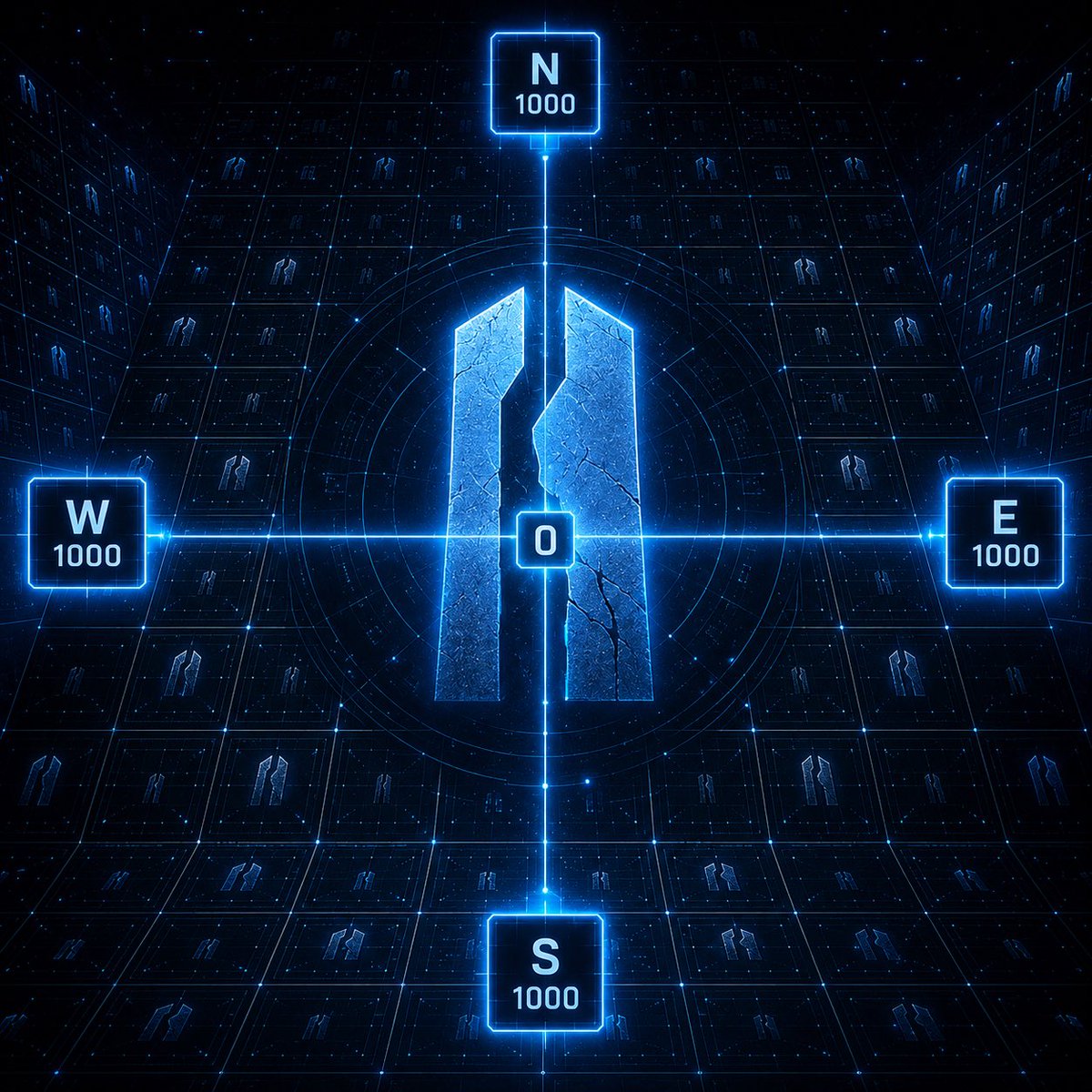
New MONOLITH contest.
I’m personally approving this one.
We’re giving away one Signature Axis Tile on the MONOLITH wall.
Winner chooses one:
N1000
S1000
E1000
W1000
Value: $499
MONOLITH is built on $XRP utility: coordinates, public tile pages, wallet-linked ownership, and Coordinate Deed NFTs.
The winner gets the coordinate, the public MONOLITH tile page, the Coordinate Deed NFT, and permanent placement on the wall.
To enter:
Share this post.
Drop a comment and tell us why you want your spot.
You want a tile?
Help build the wall.
Contest ends Saturday at midnight PST.
Winner announced Sunday.
Position matters.
@monolith_xrpl
🌐 monolithxrpl.com
2
32
XRPL Pulse retweeted

May 30
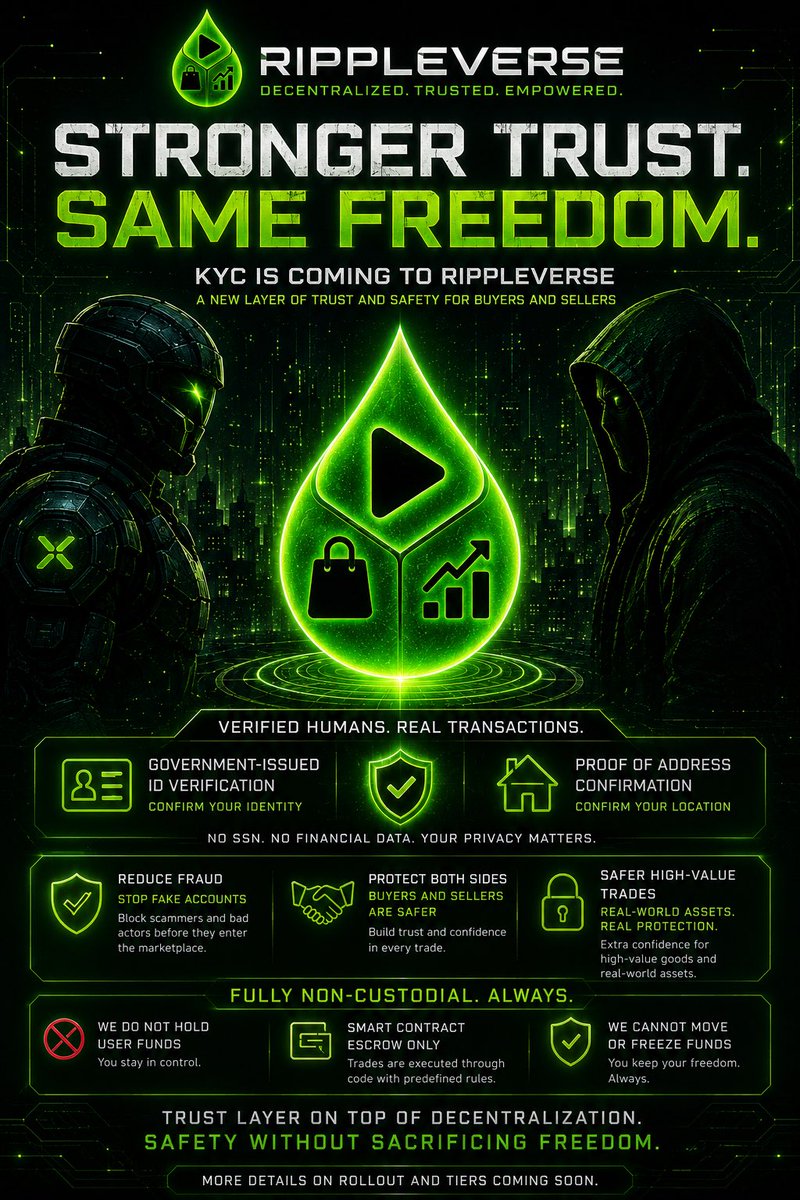
We’re introducing KYC on the RippleVerse marketplace for both buyers and sellers as part of our rollout of stronger trust and safety protections.
This will NOT be a full financial-grade KYC process. No Social Security Number (SSN) or sensitive financial data will be required.
Instead, verification will focus on:
• Government-issued ID verification
• Proof of address confirmation
The goal is to reduce fraud, prevent fake accounts, and protect both sides of the marketplace especially for higher-value goods and real-world assets.
RippleBids remains fully non-custodial. We do not hold user funds, we do not control escrow, and we cannot move or freeze transactions. All trades remain between users through smart contract-based escrow with predefined rules.
This adds a trust layer on top of a decentralized transaction system improving safety without compromising user control or platform neutrality.
More details on rollout and tiers coming soon
3
12
19
419
XRPL Pulse retweeted

May 28
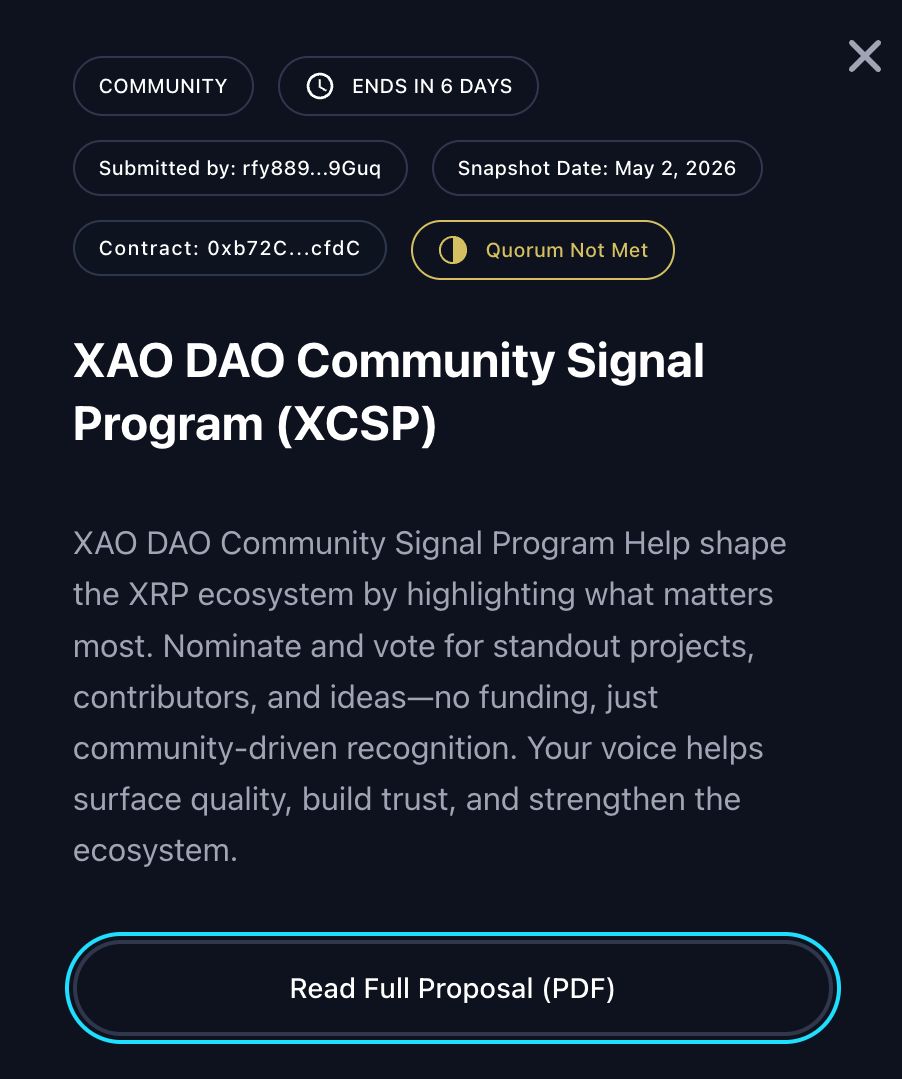
⏳️ Only 6 Days Left to Vote on "XAO DAO Community Signal Program."
XAO DAO Members, please take a moment to review this proposal and vote "YES" or "NO" before the voting period closes!
Please share & tag another XAO DAO member. 🤝
Let's get the word out!
6
13
32
3,433
May 26
Hey XRPL community!
What’s your favorite project you’ve discovered on the XRP Ledger so far?
Whether it’s a DEX, NFT marketplace, DeFi tool, payment app, or something unique, drop the name and a quick reason why you love it below!
Also, head over to xrplpulse to explore more projects, track the ecosystem, and see what others are loving. Let’s highlight the best of XRPL together! 🚀
#XRPLPulse
3
2
7
201