Joined July 2018
- Tweets 14,563
- Following 1,223
- Followers 986
- Likes 1,269
345 Photos and videos











Pinned Tweet

17 Nov 2024
We are over in the 'other place' sort of. Making sure our group name isn't grabbed by anyone nefarious 😁 *twirls moustache*
Follow us on 🦋 BlueSky @yeslinlithgow.bsky.social
1
2
160
Yes Linlithgow 🏴 retweeted

Forner head of of the Bank of England praises Ireland's economic reach.
And Mark Carney, this weekend commends Canadian businesses choosing Ireland as THE base for their European operations.
Independence works.
18
103
252
3,595
Yes Linlithgow 🏴 retweeted

Jun 14
Jamie Mann and Petra Matijevic have examined all of the known offshore entities in the Land Register and checked whether they have made a declaration on who controls them in the RCI.
In results that are both shocking and unsurprisingly they found that two thirds (956) of the 1447 offshore entities that own Scottish land registered in the Land Register have failed to register a recorded person or any associates. 2/7 theferret.scot/offshore-land…
8
76
84
2,933
Yes Linlithgow 🏴 retweeted

Jun 14
People say we must change our national anthem - it's a dirge, negative or anti-english. Be suspicious of them. It's one of the great national anthems. They hate it because it is common - a 60s folk song, of the people, about our people, for our people. It is ours. It is us. 🏴💙
301
601
5,484
218,519
Yes Linlithgow 🏴 retweeted

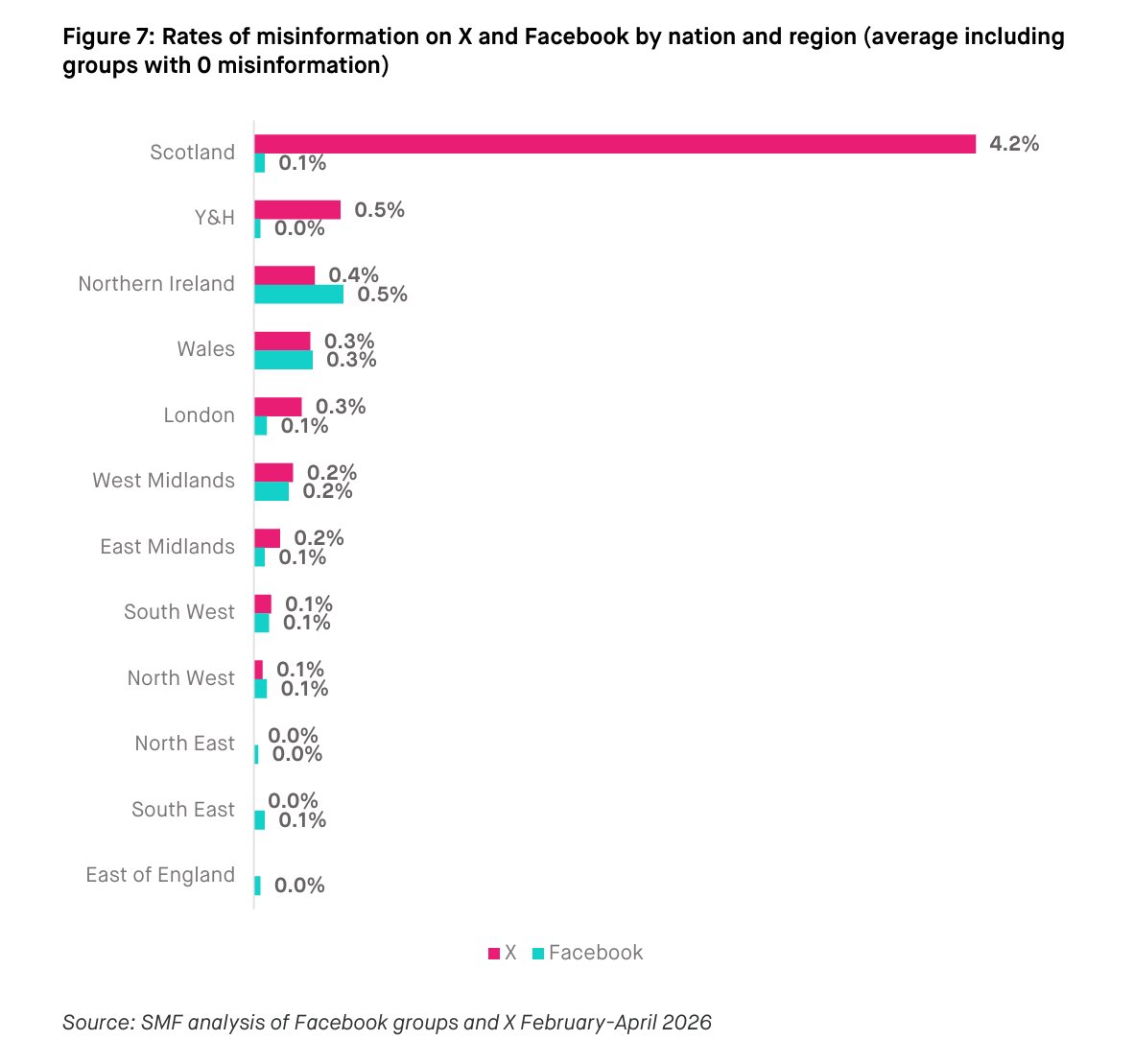
"Why does Scotland have the highest rates of local misinfo on X by a mile?" I think we know why. They want to prevent Scottish independence because they want to continue to steal our resources.
Jun 8

Why does Scotland have the highest rates of local misinfo on X by a mile?
10
150
260
3,315
Yes Linlithgow 🏴 retweeted

Jun 12
The Tartan Army have arrived in Boston

51
582
8,739
117,001
Yes Linlithgow 🏴 retweeted

Jun 12
Now that Israeli interference in the Scottish election has been confirmed (by the French intelligence services) I wonder if everyone blaming this solely on Russia and Iranian bots will care to update their posts?
Jun 8
Why does Scotland have the highest rates of local misinfo on X by a mile?
89
784
2,041
68,194
Yes Linlithgow 🏴 retweeted

Jun 11
Mr Swinney destroying the english fascist party in Scotland.
👏👏👏👏👏👏👏👏👏👏👏
Smash the 🏴fascists.

Reform's Malcolm Offord asks the FM if he will prioritise the needs of “local Scots” ahead of “strangers”.
John Swinney says Offord is presenting himself as a solution to a problem he created and he should condemn MSP Thomas Kerr’s action of encouraging Scots to protest.
39
70
198
4,742
Yes Linlithgow 🏴 retweeted

UK claims Scotland borrows £26.5bn, yet UK borrowed £132bn, meaning 8% would be just £10.56bn.
UK assigns what it wants, and "claims" it's Scotland's debt.
Scotland is not in debt, as it's impossible to get into debt when you can't borrow.
6
191
364
3,187
Yes Linlithgow 🏴 retweeted

Jun 9
Watch this and you will get a sense of how ‘Little England’ view the Scots. I wish this wasn’t a commonly shared view, but I worked for years in England and had to bite my tongue so many times. We urgently need independence as their assumed dominance and arrogance is ingrained!!!
Jun 9

ITV viewers have demanded an apology over 'anti-Scottish comments' on Good Morning Britain today.
Susanna Reid suggested the bank holiday for the World Cup was just 'about alcohol'
55
330
973
22,536
Yes Linlithgow 🏴 retweeted

Jun 9
1/2
Scotland's AI Data Centre Gold Rush: Who Benefits and Who Pays?
Scotland stands on the brink of one of the largest industrial transformations in its modern history, yet most Scots have no idea it is happening.
According to the figures contained within the Scotland AI Data Centre Pipeline briefing, more than 9,177MW of data centre capacity is either proposed, in planning or moving through the development pipeline, the same briefing notes that Scotland's winter peak electricity demand is just over 4,000MW, if these figures are accurate and the projects proceed, the total demand from the proposed data centre pipeline would exceed Scotland's entire current peak electricity consumption by more than double.
The question every Scot should be asking is simple, who benefits and who pays?
The first group to examine are the developers themselves, the briefing identifies Intelligent Land Investments (ILI Group) and Apatura Energy as two of the dominant players, neither company is described as a traditional data centre operator, instead, both are said to operate a model based on securing land, obtaining grid connections, progressing planning approvals and then selling those assets on to major hyperscale operators, in simple terms, they secure the permissions and infrastructure rights, then profit from selling the package to larger international corporations.
The briefing states that Apatura's primary investor, Klint Ventures, has publicly discussed a strategy of selling 500MW of Scottish data centre capacity and generating approximately £300 million in profit for investors. Those investors are reported to include capital from Monaco-region, Nordic, Arabic and Spanish sources.
That immediately raises a question of public interest. If hundreds of millions of pounds can be extracted in profit from Scottish land, Scottish grid capacity and Scottish planning approvals, what direct benefit will remain in Scotland once the deals are done?
The second group are the global technology corporations waiting in the wings.
Although some end users have not been publicly identified, the briefing lists likely buyers and operators as potentially including Microsoft, Amazon Web Services, Google, Equinix, Brookfield, BlackRock-backed interests and other hyperscale data centre operators. These are among the wealthiest corporations on earth.
Their interest is obvious, Scotland possesses abundant renewable energy resources, available land and comparatively cool temperatures, to a global AI company, Scotland represents an attractive location to power the next generation of artificial intelligence systems.
The third group are the public bodies and agencies that promoted the expansion.
The briefing identifies the Scottish Government's Digital Connectivity Division, Scottish Enterprise and Crown Estate Scotland as central components of what it describes as a promotional machine for large-scale data centre development.
According to the document, these organisations were involved in identifying sites, promoting Scotland as a destination for hyperscale developments and creating the policy framework that encouraged investment.
Scottish Enterprise has a statutory role in promoting economic development, while Crown Estate Scotland generates revenue from land and seabed assets, those responsibilities create obvious incentives to encourage development.
The concern is whether sufficient weight has been given to the interests of communities, environmental impacts and long-term energy security, perhaps the most worrying issue is energy.
Scotland's people are repeatedly told that electricity is scarce, that energy infrastructure must be expanded, that transmission upgrades are essential and that consumers face increasing costs as the grid evolves, yet at the same time, proposals are emerging for developments that could consume energy on a scale dwarfing existing industrial demand.
18
167
178
7,604
Yes Linlithgow 🏴 retweeted
Never say that England subsidizes Scotland ever again.
Scots and Scottish businesses are squeeze for every extra little bit possible to help English companies.
Jun 8

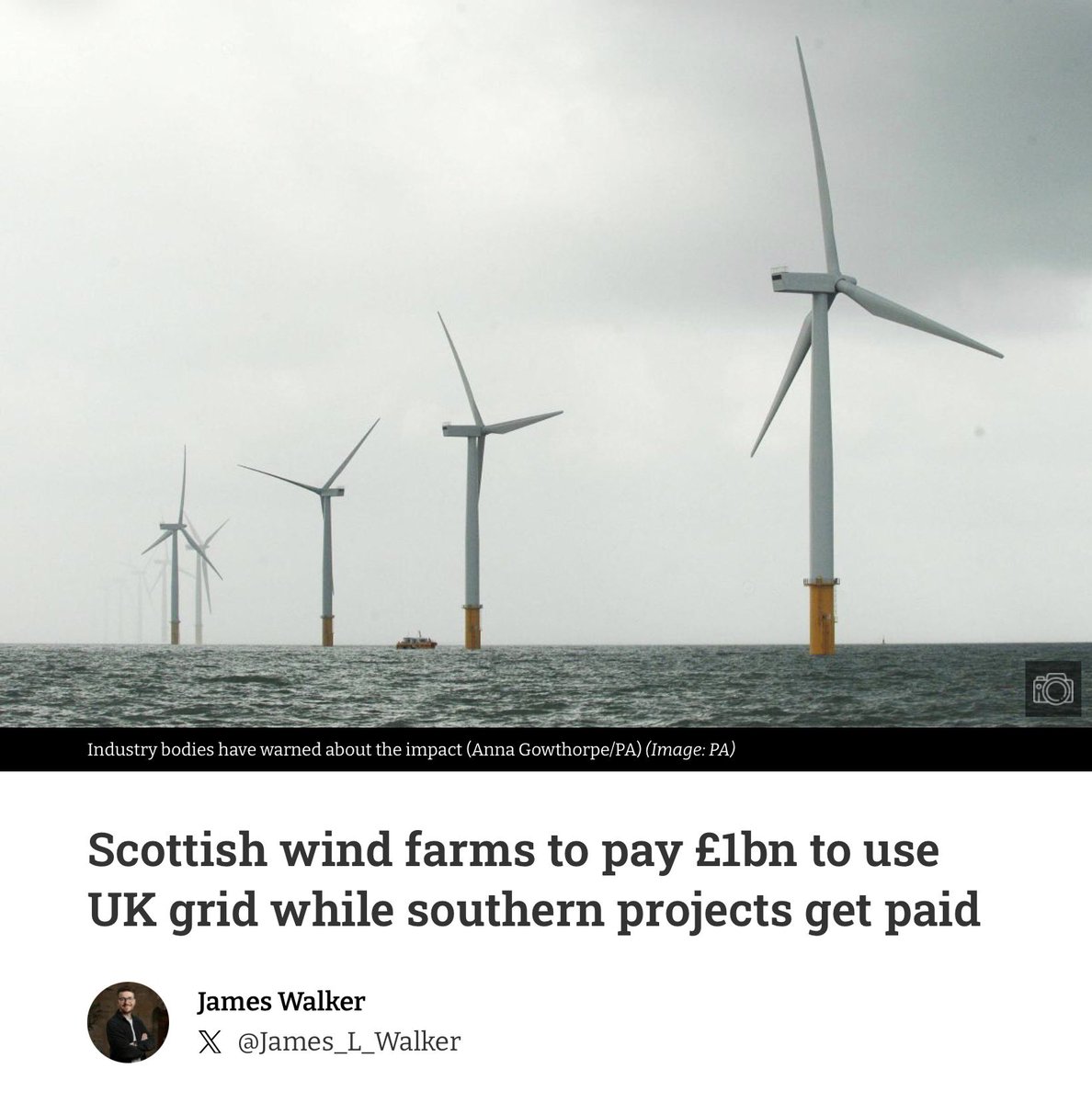
Clean energy projects in Scotland to pay £1b to use UK electricity network while England will be paid to connect
A FoI by The Scotsman to Neso shows charges in 2030/31 in Scotland will hit £669m, & in central/southern Scotland £291m. England & Wales forecast to receive £436m
19
185
273
7,580
Yes Linlithgow 🏴 retweeted

Fuck sake.
Scotland had the sense to vote against Brexit.
England pulled us out anyway.
#ScottishIndependence

30
139
185
2,989
Yes Linlithgow 🏴 retweeted

They need Scotlands water to cool its systems, the water probably will be contaminated, our Whisky industry is under threat,
Wake up people
5
92
180
1,444
Yes Linlithgow 🏴 retweeted

Jun 7
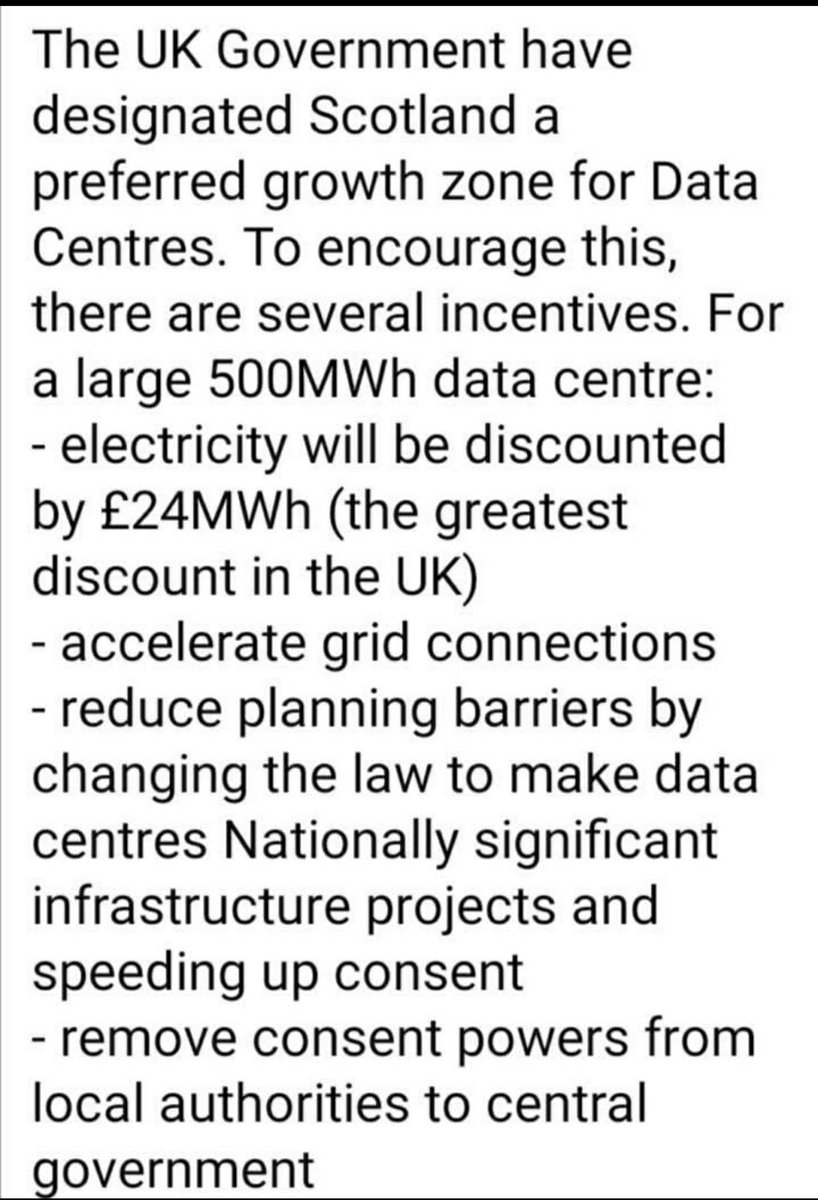
..and the plundering continues
5
40
40
1,174
Yes Linlithgow 🏴 retweeted
Jun 6
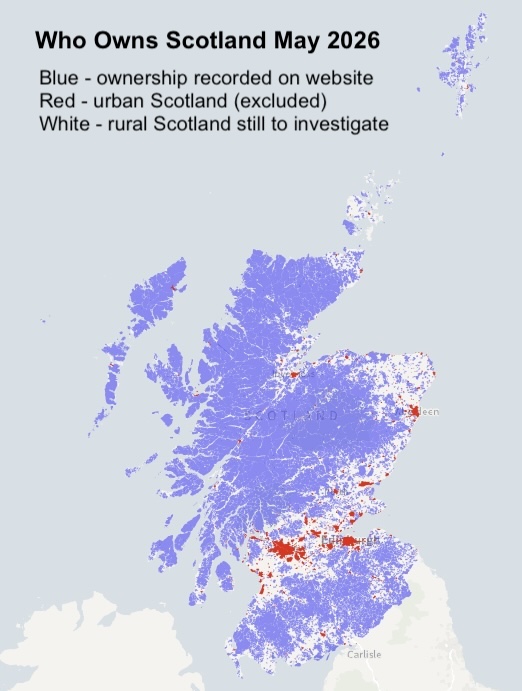
MAY 2026 UPDATE Who Owns Scotland now published with a total of 5000 landholdings (76.95% rural Scotland). All records updated & 19 new ones including an estate sale that I will highlight in a blog. New subscriptions welcome - they start at £6. Link in bio
5
96
176
12,301
Yes Linlithgow 🏴 retweeted

Seriously?
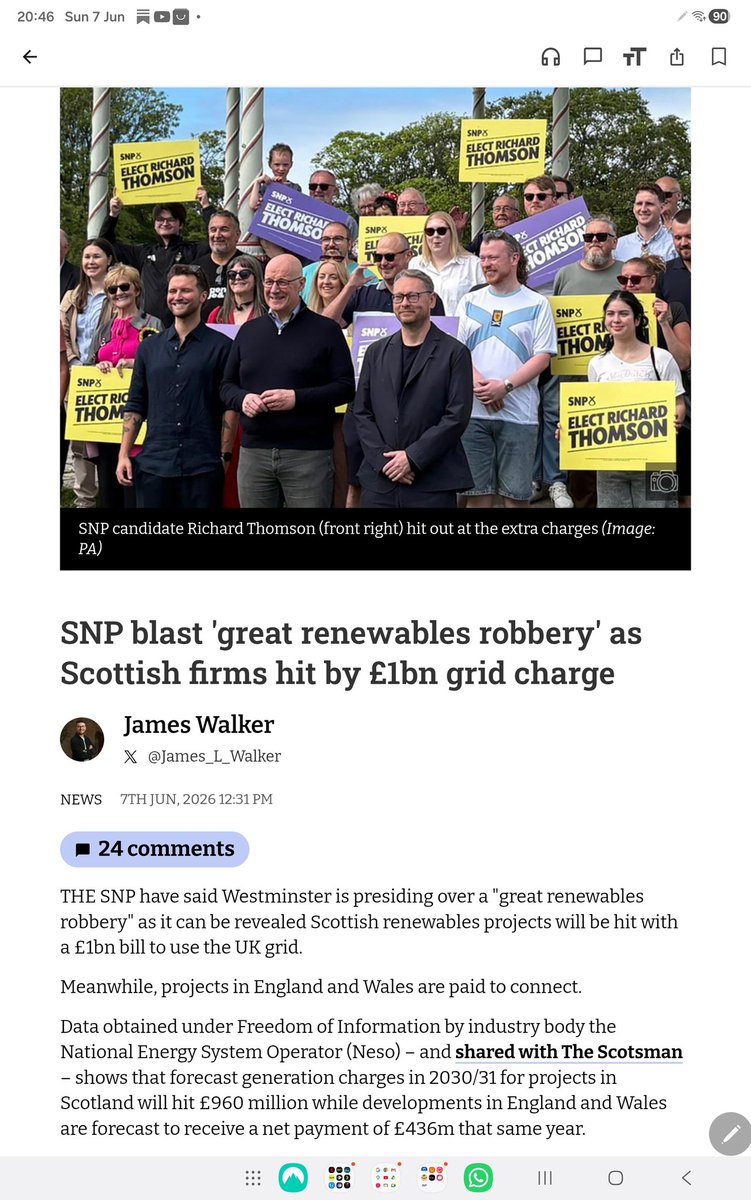
Scotland is going to be charged £1 billion for the privilege of suppling energy to England?
And then we get charged the highest rate
FFS, Westminster is really taking the proverbial.
Muscular unionism at is most vicious.
We need #ScottishIndependence
74
597
752
18,881
Yes Linlithgow 🏴 retweeted

Irish research/survey vessel Celtic Explorer transiting The Minch, Scotland enroute from Bergen, Norway to Killybegs, Ireland.
An independent Scotland will soon be in the market for such a capable multi-role vessel.
#Scotland
#Norway
#Ireland
#shipping
marine.ie/site-area/infrastr…

4
4
10
491
Yes Linlithgow 🏴 retweeted

Jun 7
Clean energy projects in Scotland are set to pay £1 billion to use the UK’s electricity network while projects south of the border will be paid to connect, it has been revealed thenational.scot/news/261728…
46
468
451
86,379
For those who once queried when our resources would be further plundered & they would come for our water. Not quite how it was expected but....
Jun 7

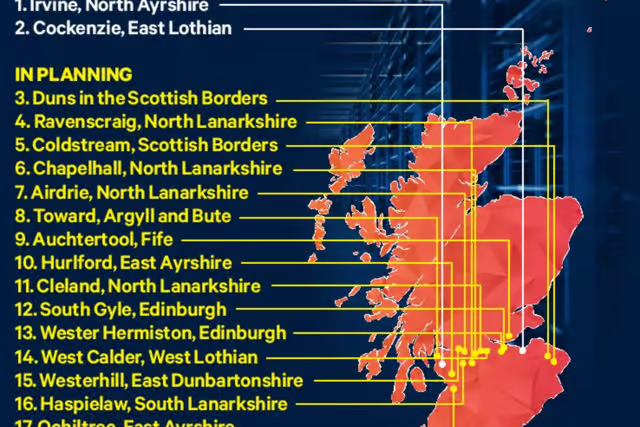
These are the planned Data Centres for Scotland alone!
The average centre consumes up to 5 MILLION GALLONS PER DAY which is why they want to locate them to water rich Scotland.
2
1
123
Yes Linlithgow 🏴 retweeted

Jun 6
2. The Scottish Context: Already at Crisis Scale
Scotland is not facing a hypothetical threat. APRS has documented 17 live hyperscale data centre planning applications across Scotland, with more in earlier stages of the pipeline. Combined energy demand from current applications alone stands at 4,450–4,950 MW — greater than Scotland's entire winter peak electricity demand of approximately 4,000 MW.
• Scotland's current total annual energy consumption: 21,762 GWh (2023)
• Projected annual demand if current applications are approved: approximately 38,982 GWh
• Effect: more than doubling Scotland's entire energy use
• Jobs created: minimal — data centres are highly automated facilities
• Planning decisions to date: none approved; Edinburgh rejected one application in early 2026 on green credentials grounds
APRS, the Environmental Rights Centre for Scotland (ERCS), and Stop Climate Chaos Scotland (SCCS) have all written to Scottish Ministers and party leaders calling for an immediate moratorium. The Scottish Government's response to date has been to note that planning authorities are responsible for considering environmental implications — without issuing the guidance that would give those authorities a consistent basis for refusal.
6
29
37
1,487