
Joined September 2019
- Tweets 55
- Following 0
- Followers 182
- Likes 5
18 Photos and videos

Apr 15
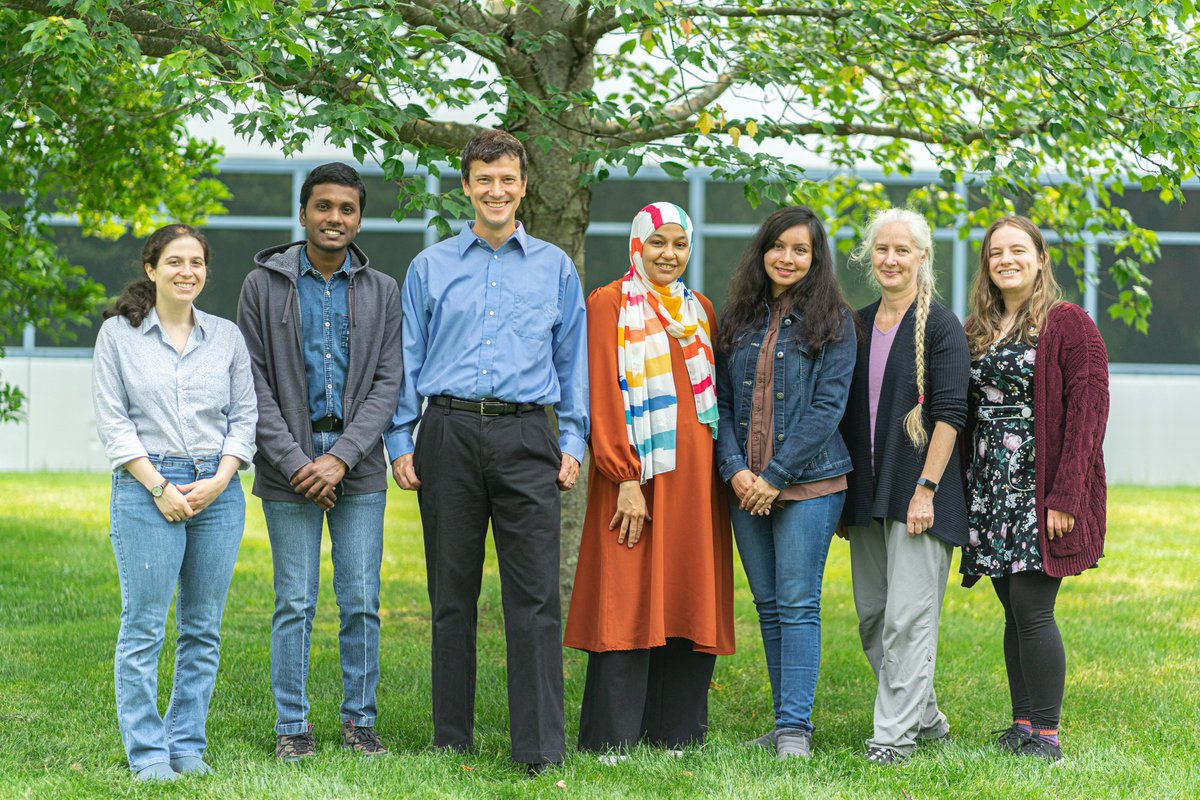
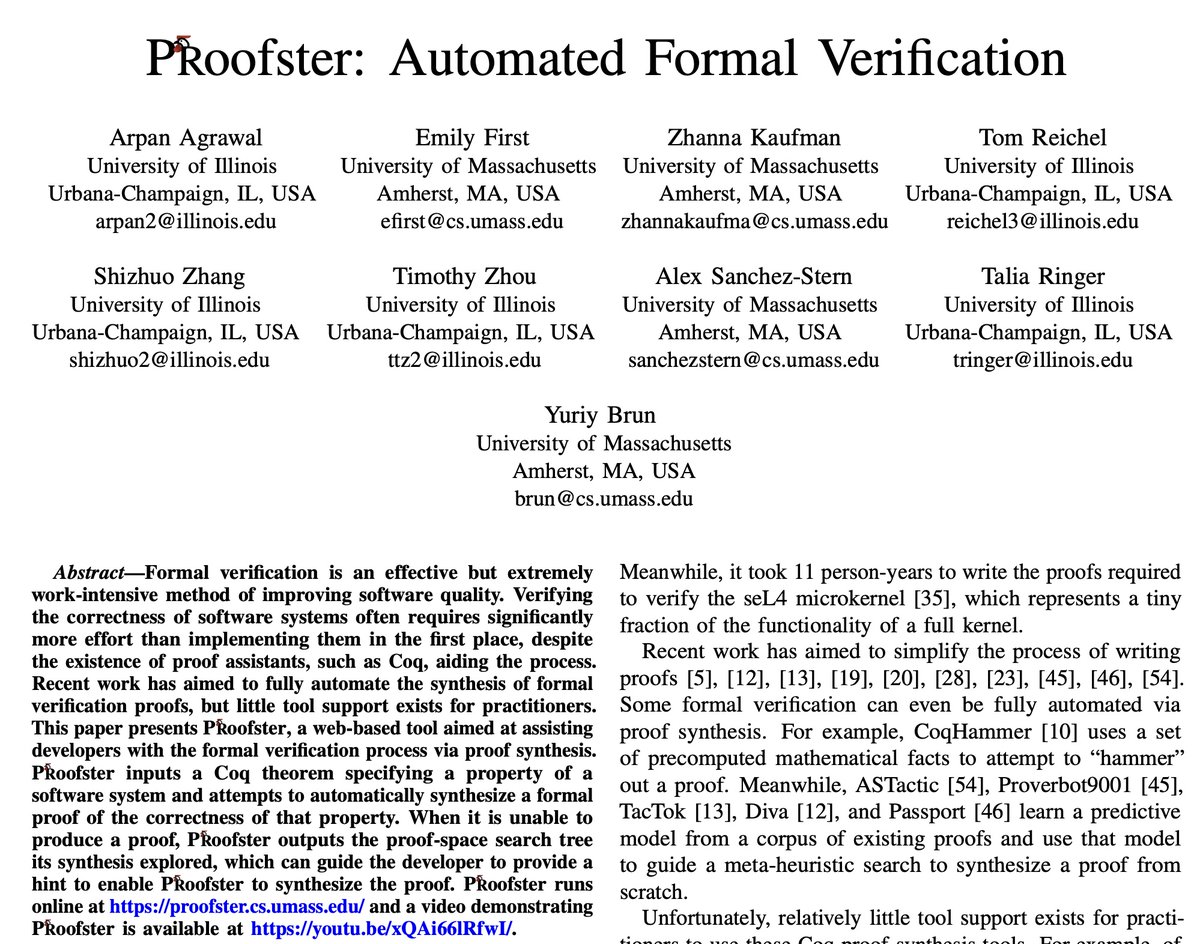
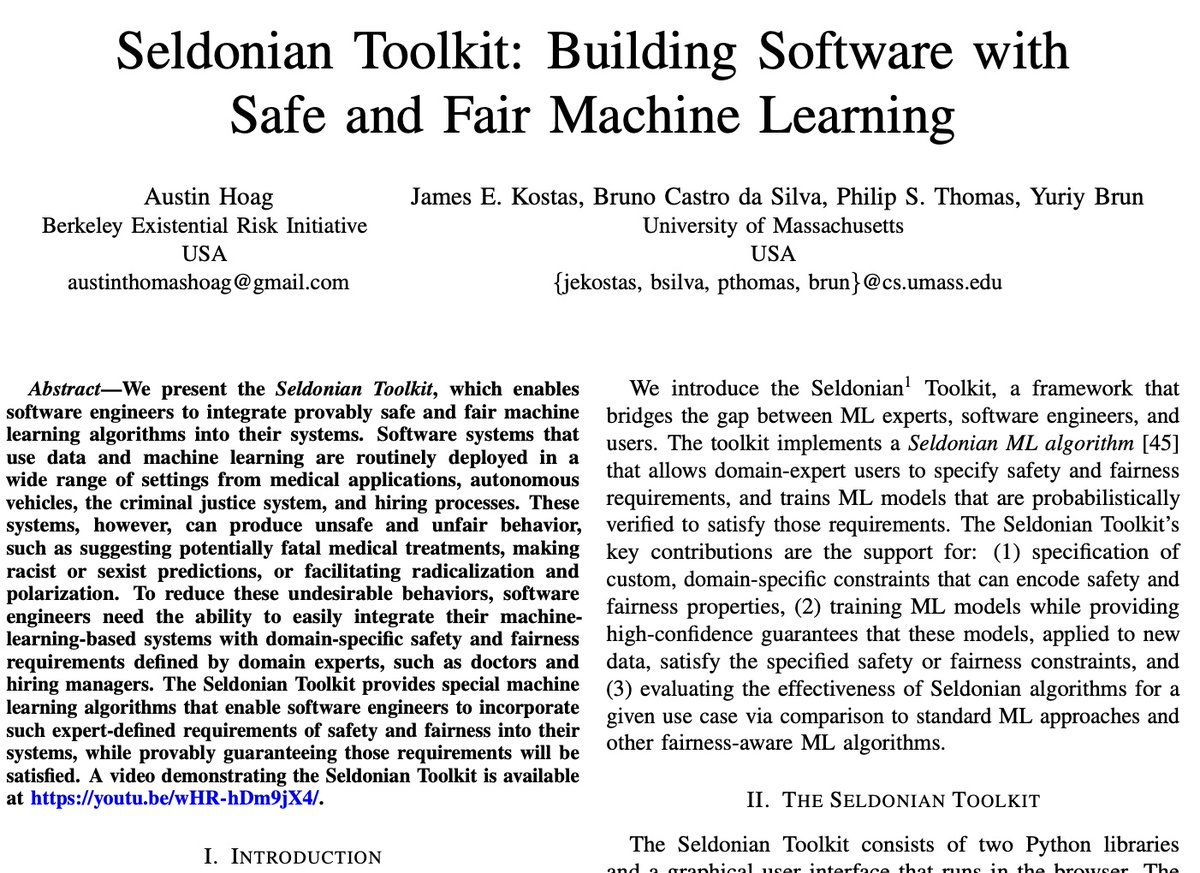
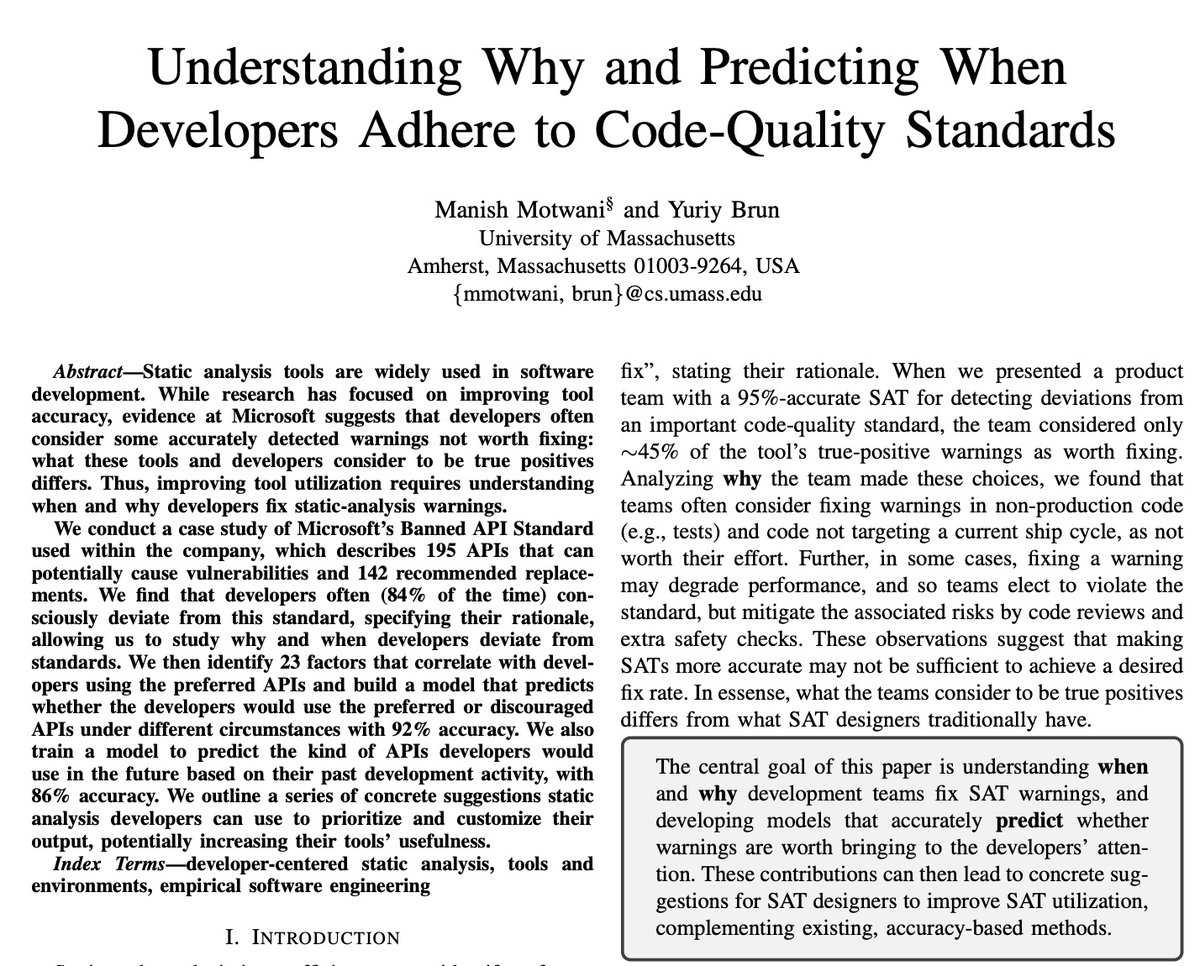
One of the biggest challenges in building software is ensuring that what you build is correct. This year, at ICSE 2026, UMass LASER has two papers that bring us closer to that vision, using AI to automatically prove correctness.
1
1
60
Apr 15
If you're in Rio at ICSE this week, come see our talks. If not, read our papers: Cobblestone: people.cs.umass.edu/~brun/pu…
ProofCoop: people.cs.umass.edu/~brun/pu…
1
17
Apr 15
Fantastic work by Zhanna Kaufman, Saketh Ram Kasibatla, Emily First, Alex Sanchez-Stern, Arpan Agrawal, Kyle Thompson, Sorin Lerner, and Talia Ringer
23
30 Jun 2025
cics.umass.edu/news/fse-test…
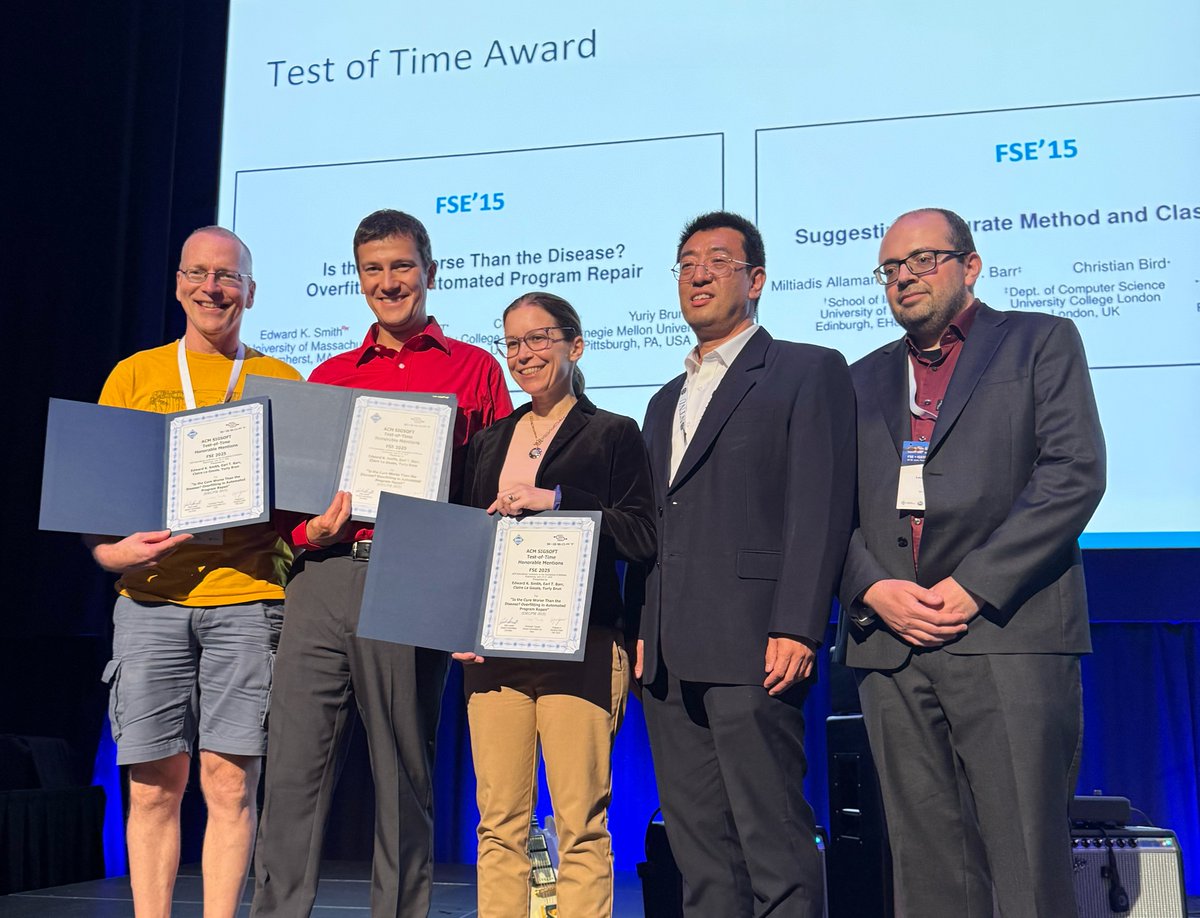
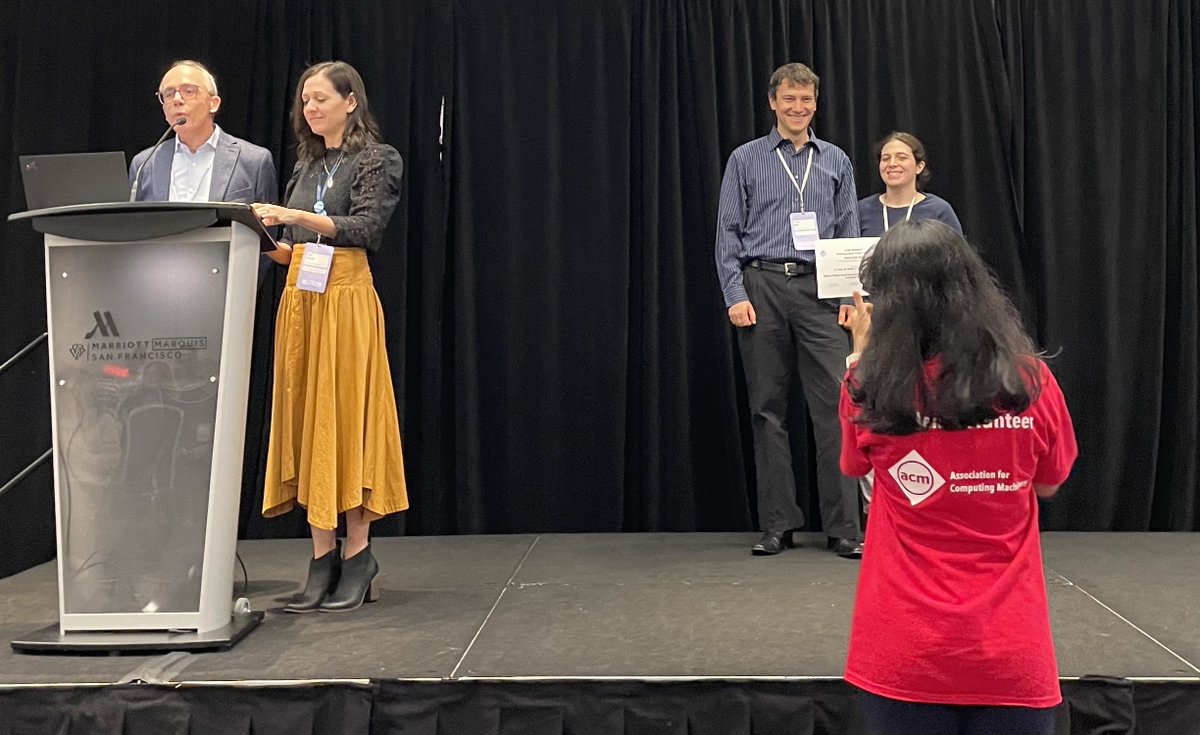
Incredibly honored to receive the ACM International Conference on the Foundations of Software Engineering 2025 Test of Time Award honorable mention for our work on overfitting in automated program repair. with Ted, @clegoues, & Earl.
1
2
48
30 Jun 2025
The work identified what can go wrong when automated tools repair bugs and created an objective methodology for measuring patch quality used widely in modern repair research.
Original paper: doi.org/10.1145/2786805.2786…
27
26 Jun 2025
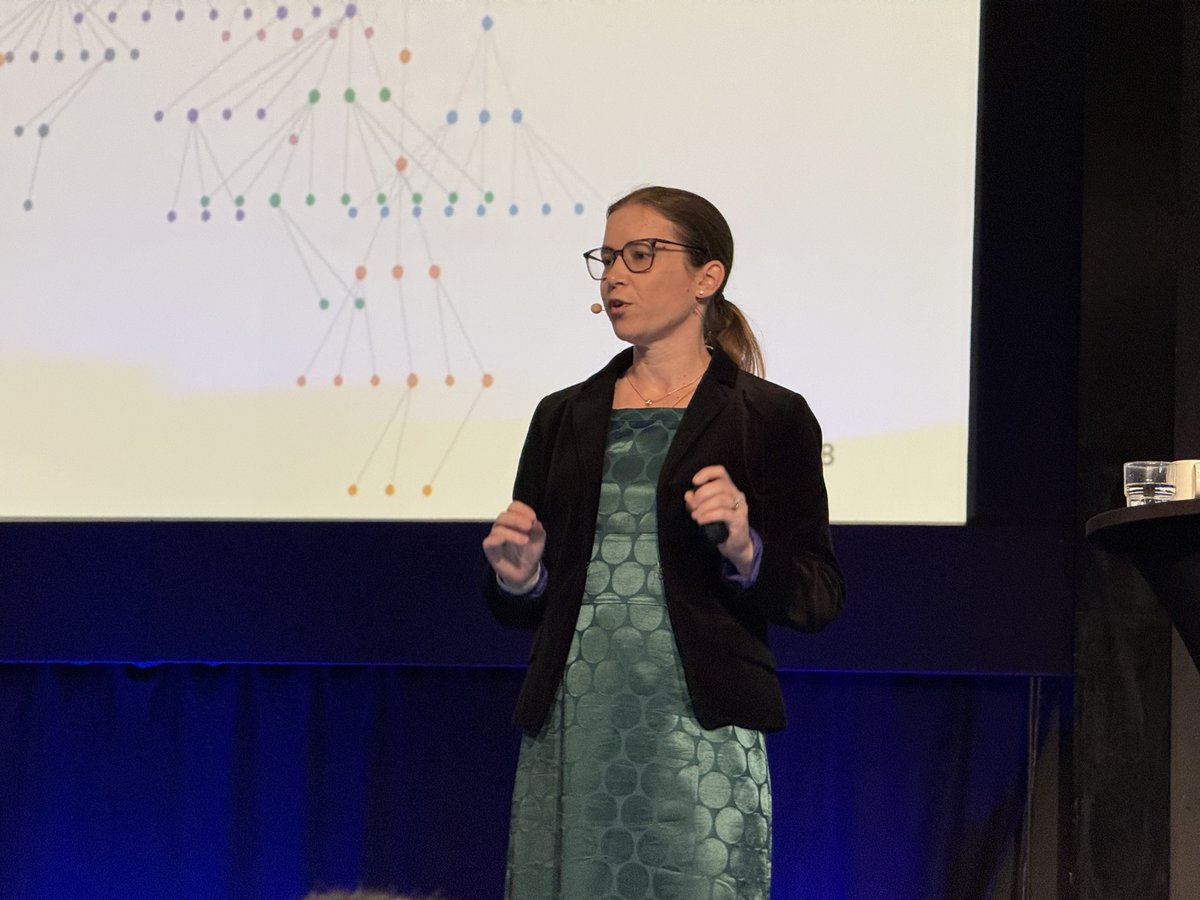
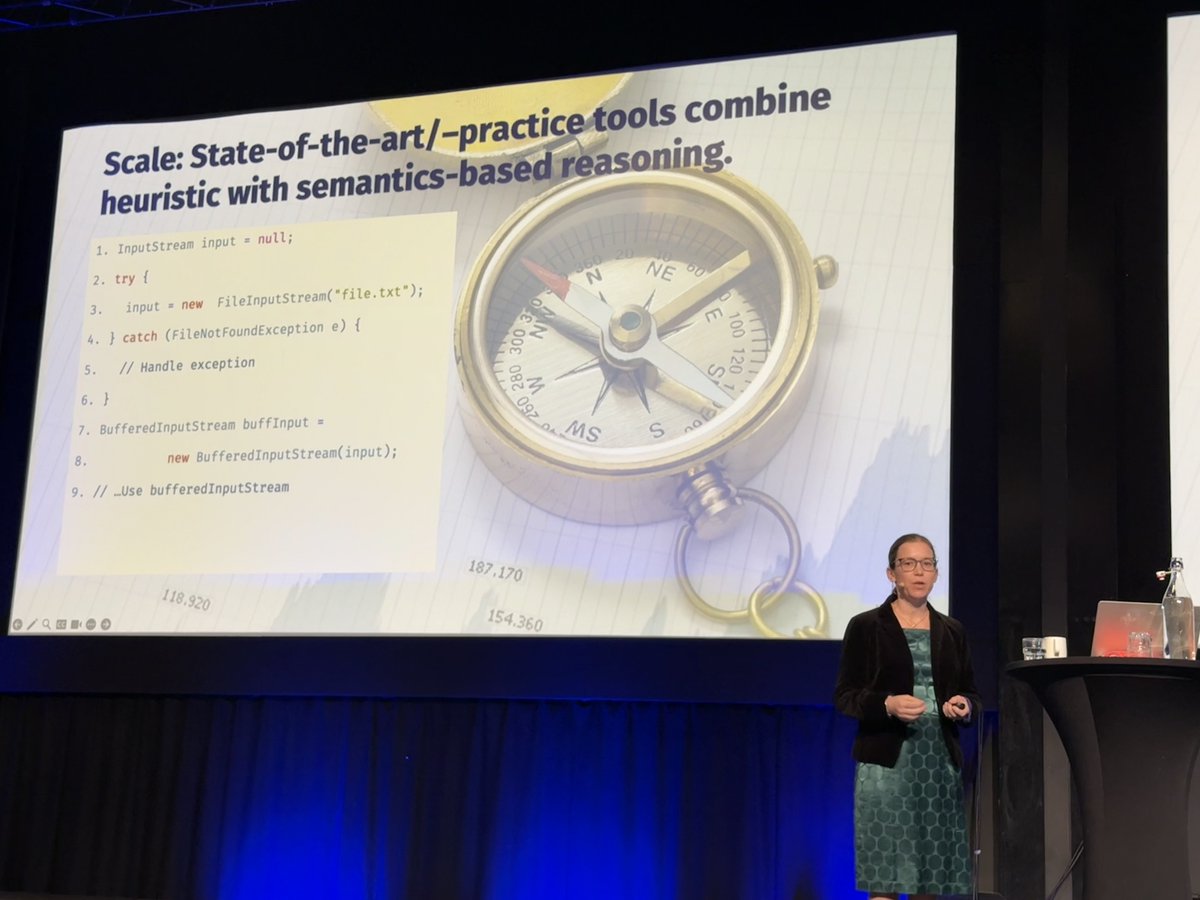
Claire Le Goues @clegoues gave a fantastic ISSTA @issta_conf 2025 keynote this morning on software correctness in the age of generative AI.
1
73
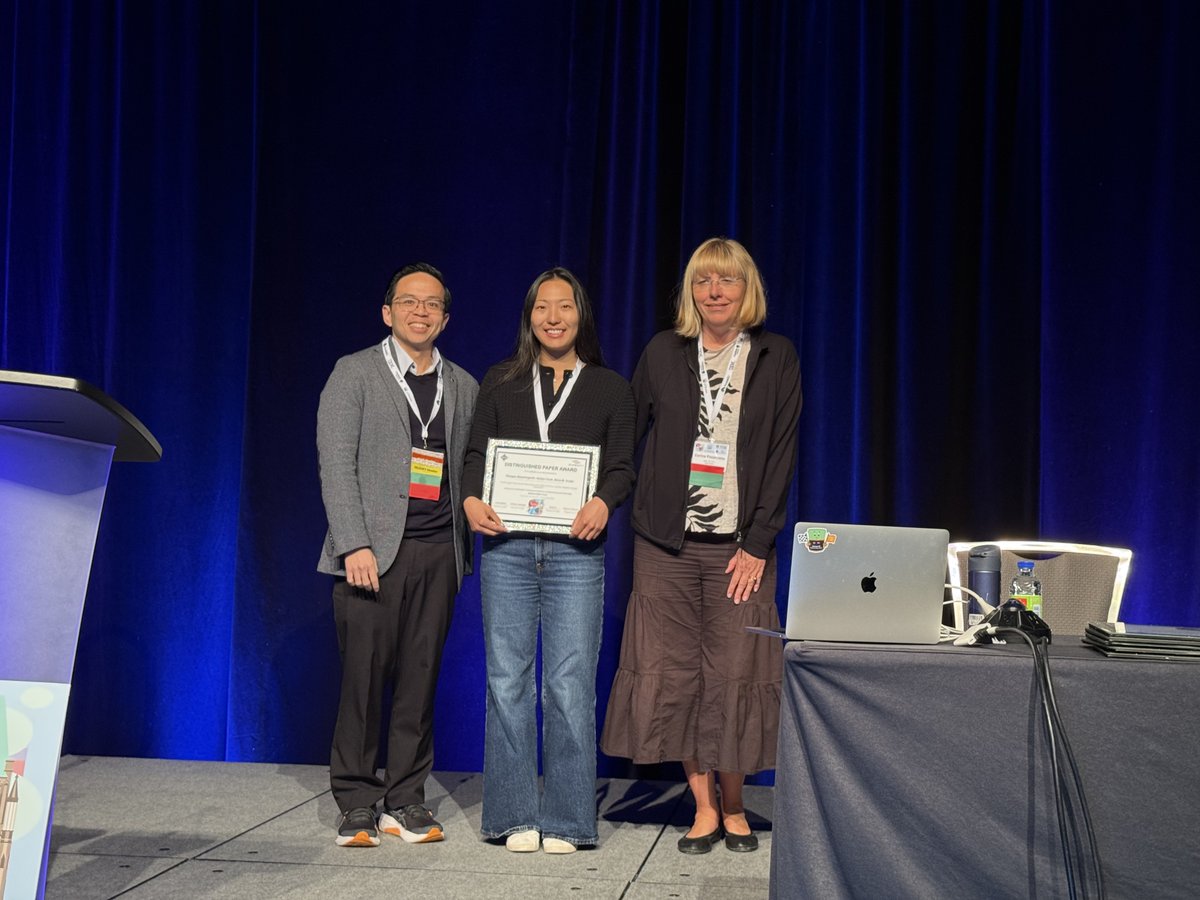
29 Apr 2025
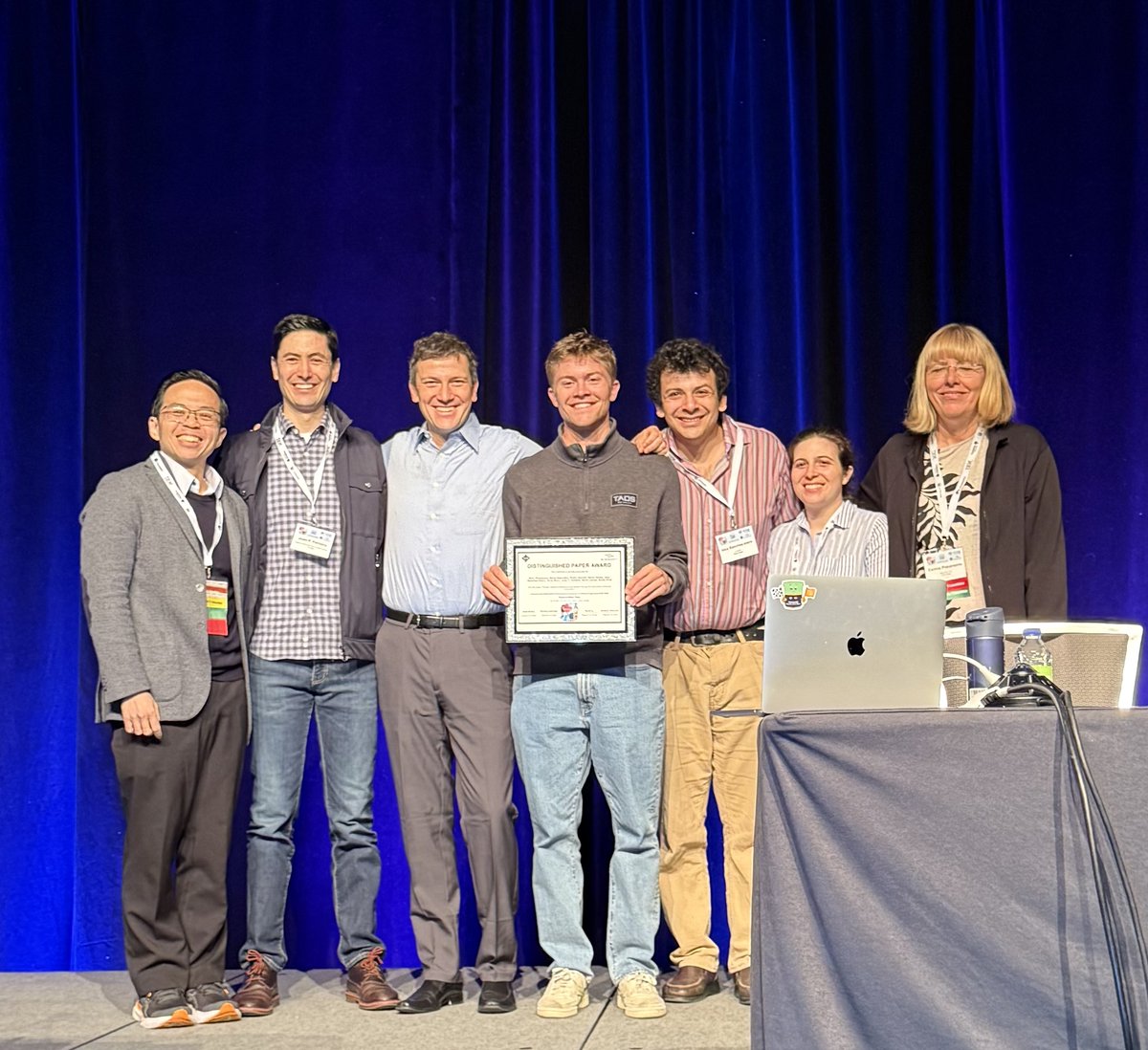
LLMs offer an amazing opportunity to automate formal verification because the theorem prover is an oracle, identifying hallucinations and wrong proofs.
Hear about our Distinguished Paper Award work at @icseconf.bsky.social at 12:15 PM on Wed, room 212.
conf.researchr.org/details/i…
1
61
29 Apr 2025
Come learn how reinforcement learning can significantly improve automatic proof synthesis for formal verification!
Hear our talk on QEDCartographer at ICSE 2025 at 11:30 AM on Wednesday in room 212.
conf.researchr.org/details/i…
Paper: people.cs.umass.edu/~brun/pu…
2
140
28 Feb 2025
Are you graduating with a PhD? Do you work on program analysis, formal verification, software correctness, or AI? Apply to join the UMass LASER lab as a postdoctoral researcher, a vibrant team focused on using the latest NLP technology to ensure software correctness!
1
6
807
28 Feb 2025
I am soliciting applications for a postdoctoral fellowship. If interested, please submit a CV, the names of 3 reference letter writers, and a short (~1 paragraph) statement of interest and a potential starting date by MARCH 15, 2025.
1
114
28 Feb 2025
Contact Yuriy Brun <brun@cs.umass.edu> for questions and to discuss the position. See some of our latest work for examples of high-impact use of NLP for software correctness. people.cs.umass.edu/~brun/pu… (ICSE'25) people.cs.umass.edu/~brun/pu… (ICSE'25)
90
1 May 2024
Do automatically generated patches help developers debug? Yes! Find out more in our ICSE'24 paper "Automated Program Repair, What Is It Good For? Not Absolutely Nothing!"
Video: youtube.com/embed/_2tUAI78Yb…
Paper: doi.org/10.1145/3597503.3639… @clegoues @manningcics @ICSEconf
2
188
31 Jan 2024
Thank you, IEEE Spectrum for the nice write up on our work. Research led by Emily First, with @MarkusNRabe and @TaliaRinger.
spectrum.ieee.org/ai-debug-s…
@manningcics
1
4
13
2,366
6 Dec 2023
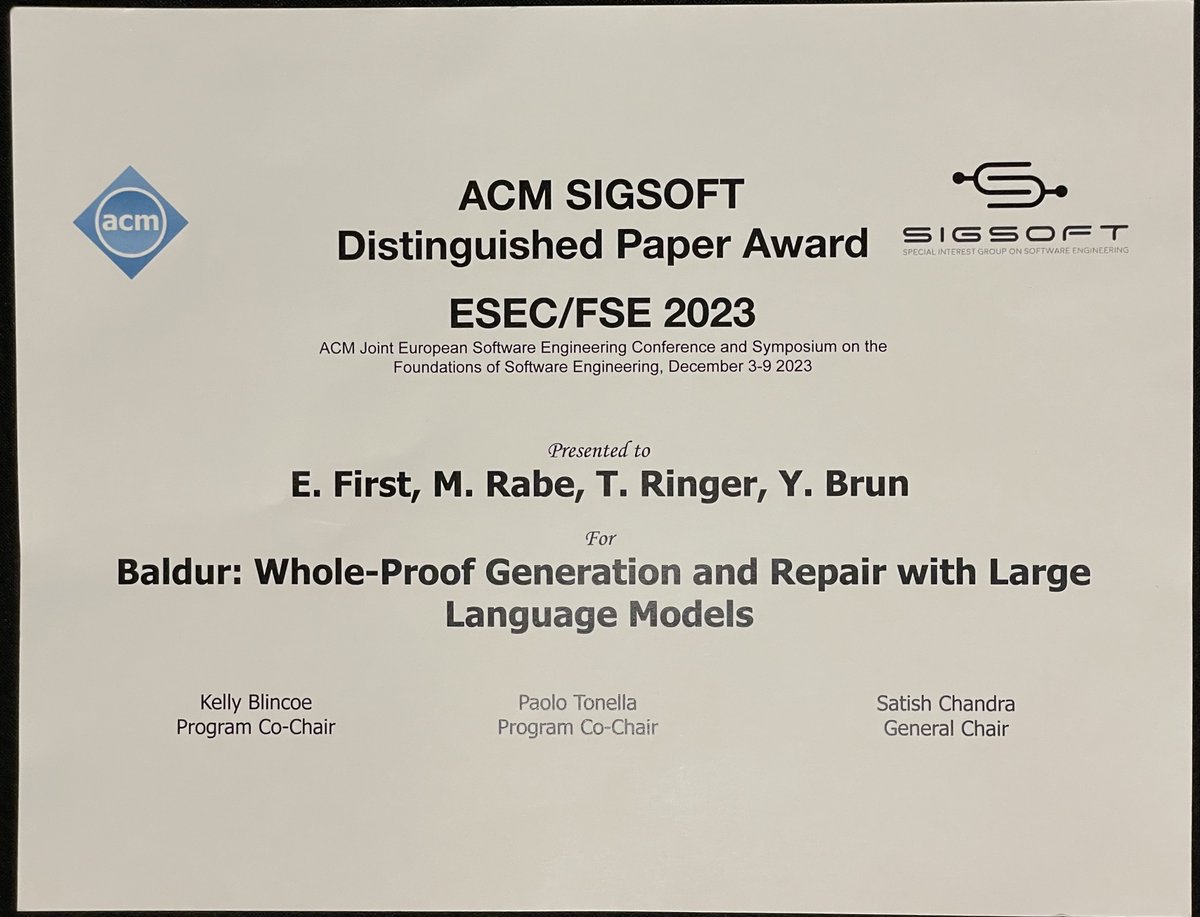
Our paper on automating formal verification (in Isabelle/HOL) won a Distinguished Paper Award at@FSEconf. Congrats to Emily First, @MarkusNRabe, @TaliaRinger! full paper: people.cs.umass.edu/~brun/pu……@manningcics
2
2
51
2,872
25 Oct 2023
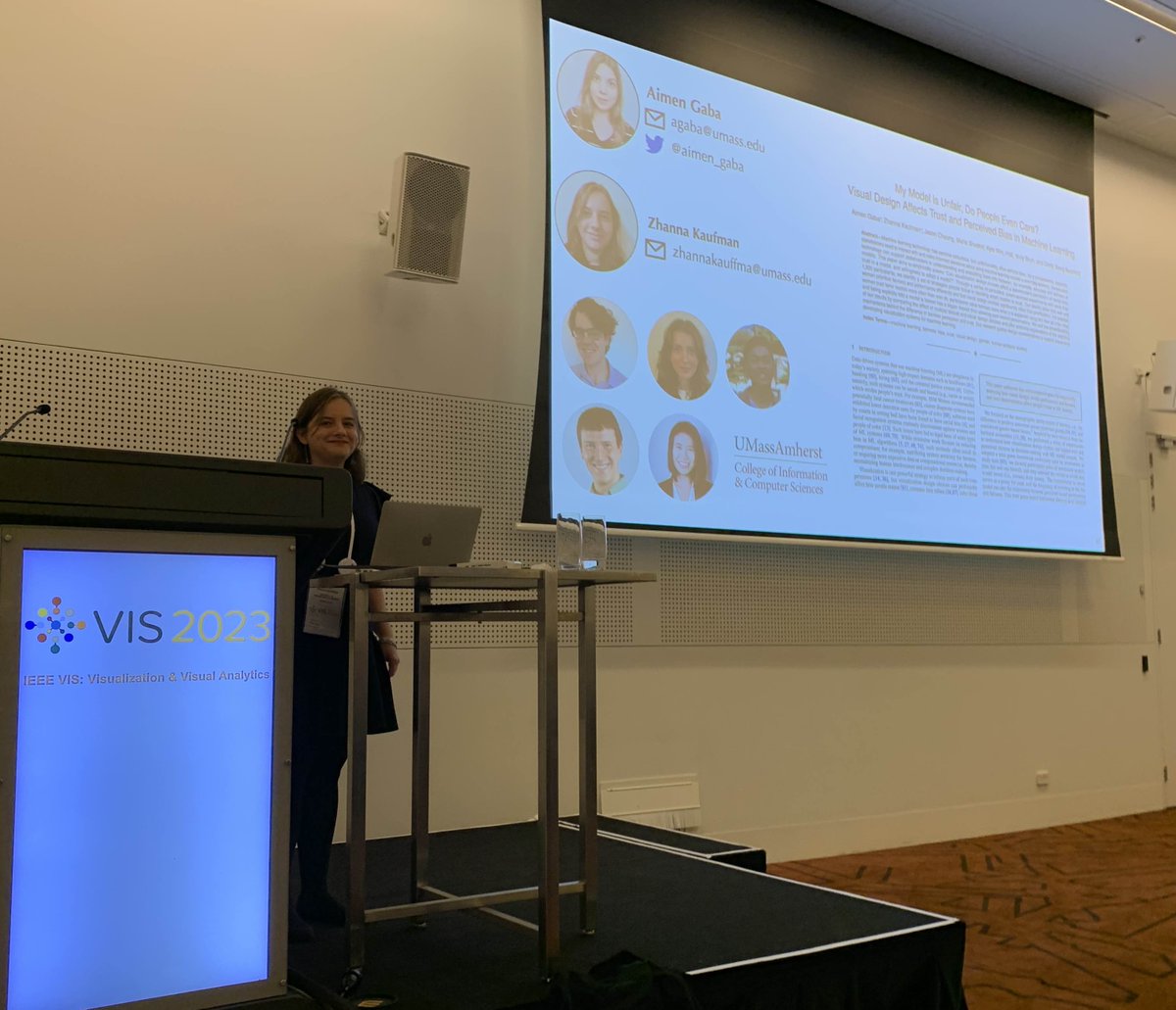
Zhanna Kaufman presenting our VIS'23 paper on how ML bias affects people's trust.
Paper: My Model is Unfair, Do People Even Care? Visual Design Affects Trust and Perceived Bias in Machine Learning
people.cs.umass.edu/~brun/pu…
@thecindyxiong , @aimen_gaba
@manningcics
1
2
8
611
25 Oct 2023
Our paper aims to understand how bias and effectiveness of data-driven systems affect trust in systems. In a study with over 1,500 users, we find that (1) women weight bias more than men do when deciding whom to trust, regardless of whether the bias favors men or women,
1
1
107
25 Oct 2023
(2) describing system behavior using text rather than bar charts leads to people putting more weight on bias, and (3) explicitly labeling a system as biased has more effect than showing a history of biased behavior.
3
100