
3 Photos and videos
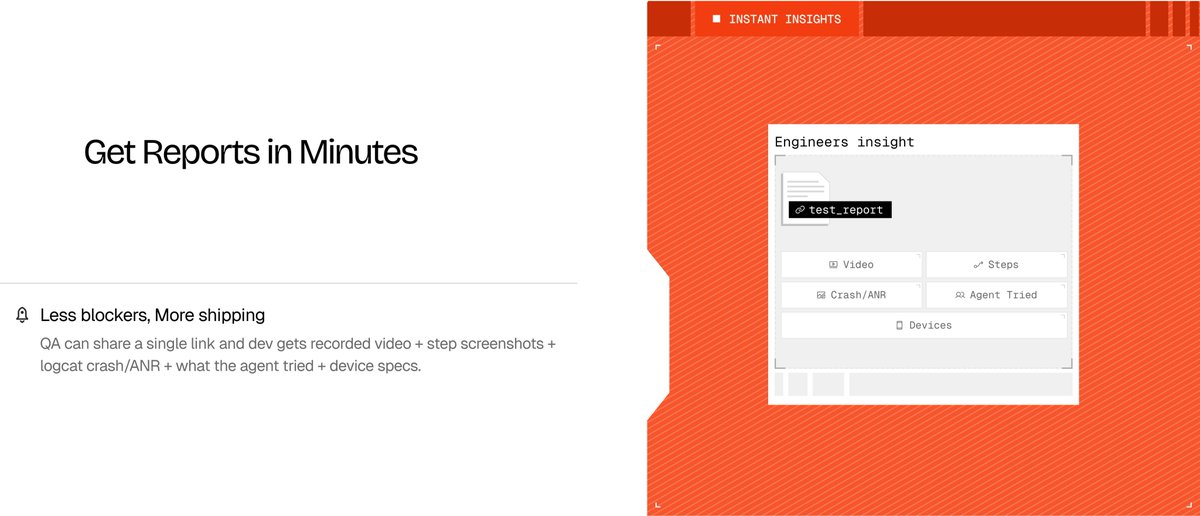


Zenact retweeted

May 14
A lot of architecture thinking came from one old constraint: code was expensive to produce, so the main job was making complexity manageable for human engineers.
That is still true, but it is no longer the whole picture.
Now a coding agent can produce a surprising amount of code very fast. So the harder question moves downstream.
How fast can the system prove that the change is safe?
That changes what good architecture means.
Clean services, good abstractions, and clear ownership still matter. But now architecture also needs clear failure boundaries, observable flows, reproducible state, and enough evidence that decisions do not depend on another long meeting.
If an agent changes a critical part of the product, the team should not need a long manual ritual to understand the impact.
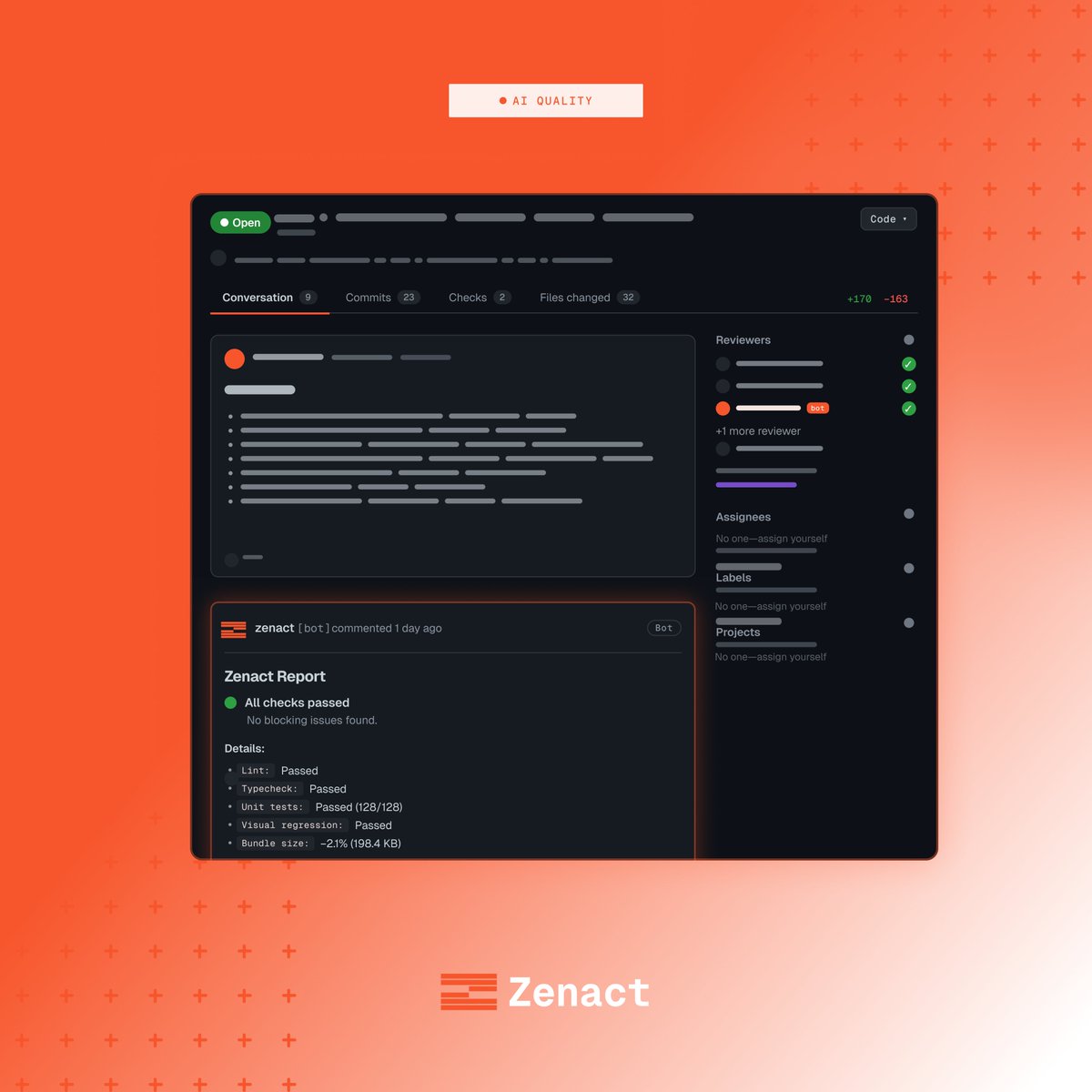
The system should make it easy to see what changed, where it changed, what broke, and whether the change can be trusted.
That is architecture too.
The better technical stack in an AI world is not the one that only makes code generation look impressive.
It is the one that shortens the distance between code changed and code trusted.
1
1
7
190
Zenact retweeted
May 11
A lot of testing companies still pitch themselves as bug catchers.
I think that undersells the real problem because the bigger waste is time. Code gets written ai and Then people wait to say "mission accomplished".
A developer waits for QA to test, release waits for manual checks, team waits for one of the few people who knows the script or the workflow well enough to verify it.
That queue is expensive.
If I had to rank the biggest time drains, it would be:
1. developer waiting on QA testing and feedback
2. manual testing before release
3. script writing
The third problem is real.
But tools like Claude Code and Codex are already starting to compress it.
Which means the testing bottleneck becomes even more obvious.
"Thats why we are shaping and building the Zenact AI to help teams ship faster than a half promise of catching bugs"
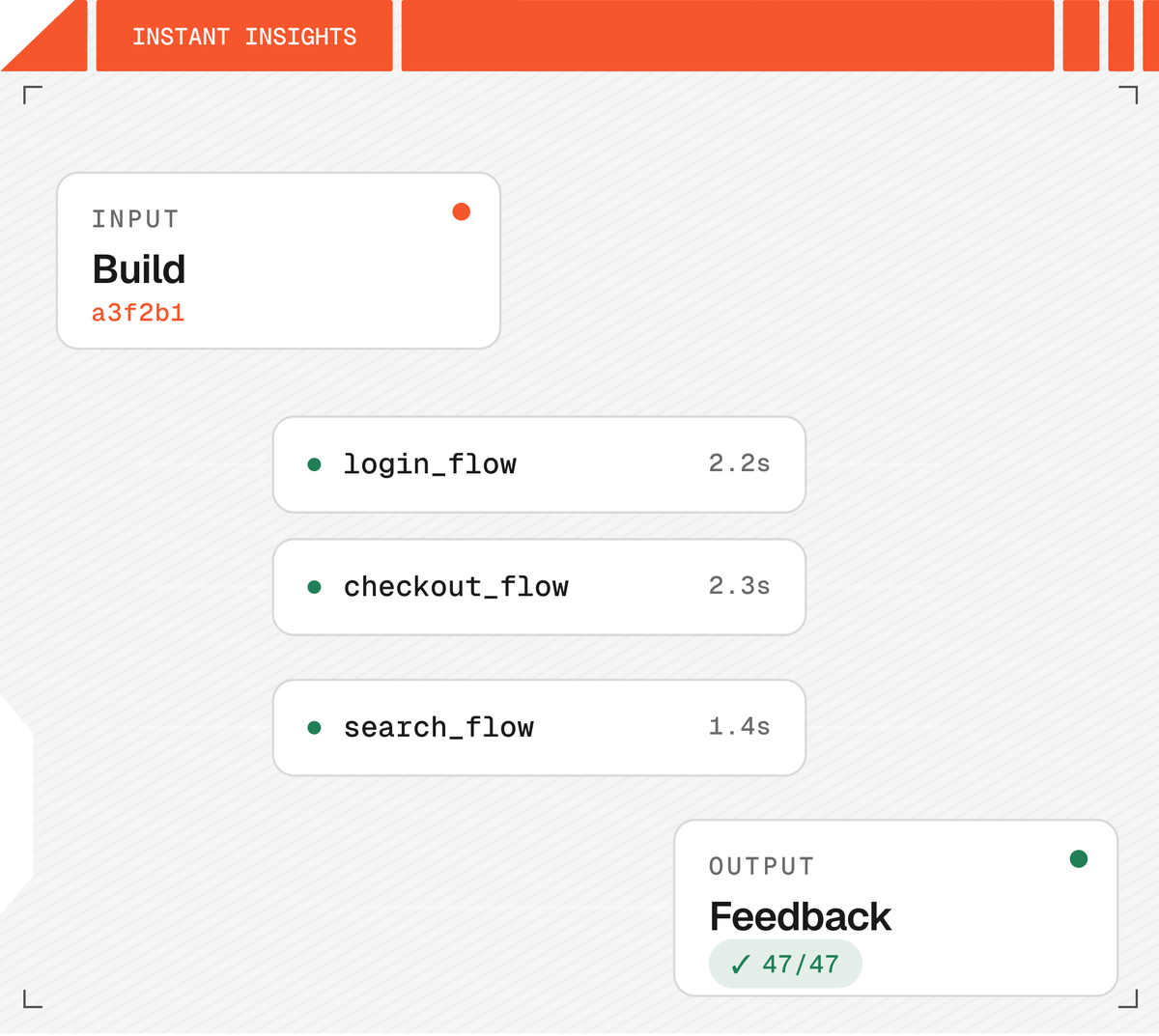
The interesting future is not just about AI writing code. It is the same coding agent triggering thousands of Zenact agents to test flows in parallel, getting back video, logs, traces, and failure detail, and then using that feedback loop to start fixing what broke.
Shorter queues.
Faster feedback.
Faster releases.
2
5
173
Zenact retweeted
May 7
Most QA tooling optimizes for test authoring throughput.
The constraint appears during failure: attribution is expensive.
A test run isn't sequential. It's a loosely coupled system - UI events, device state, network responses, OS schedulers - each with independent timing and partial observability. Failures emerge in the gaps between them.
Modeling execution as a graph makes this tractable.
- Nodes represent state transitions across layers.
- Edges encode causality, not just order.
- Failures become path divergence under identical initial conditions.
Once you have this, you can localize the exact fork where behavior drifted, cluster failures by shared subgraphs, and measure whether retries explore new state space or collapse onto the same trajectory.
Debugging shifts from heuristic probing to graph traversal.
2
6
53


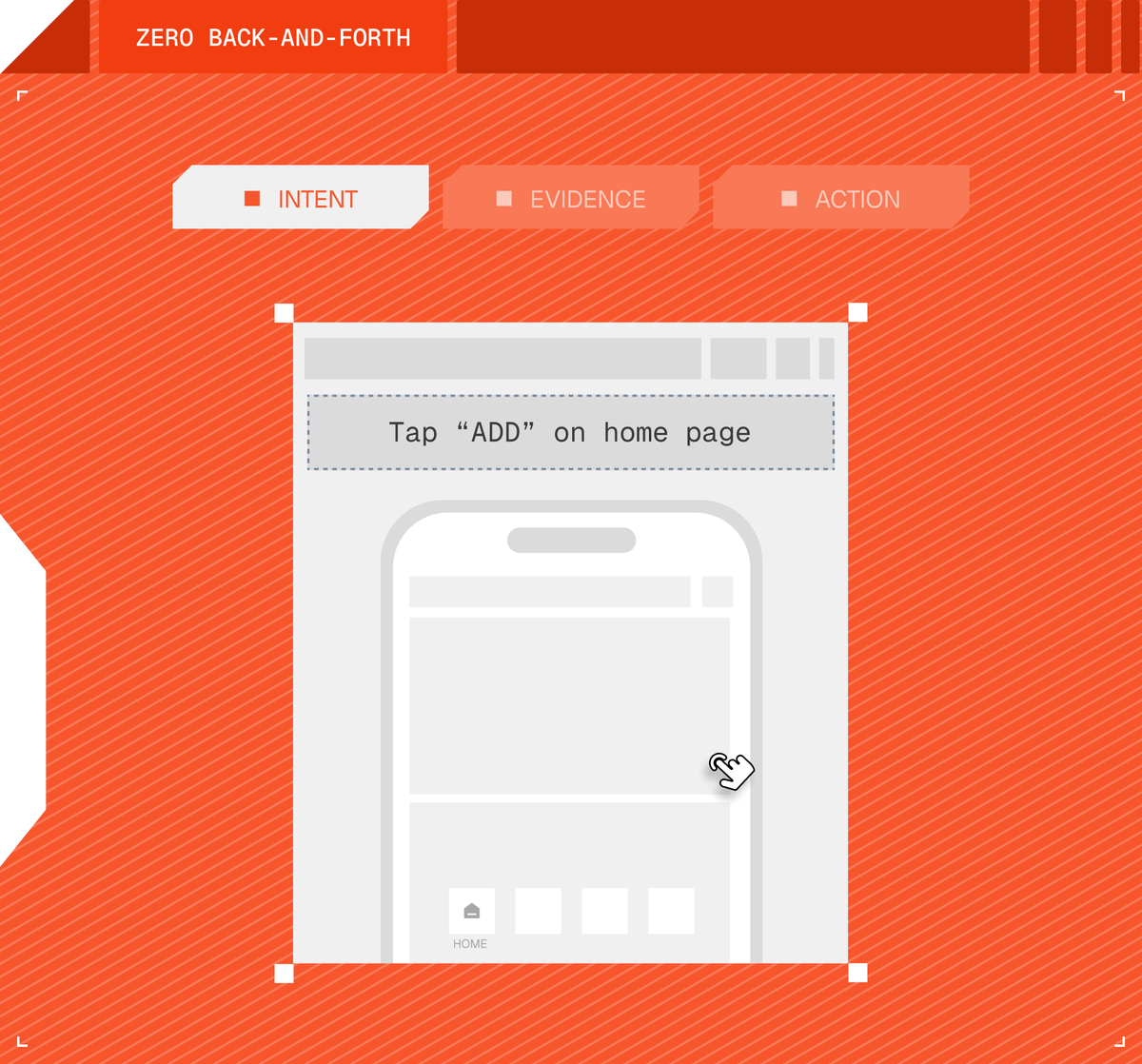
RT @RenushriRawat: One thing we kept hearing was simple: people do not just want an agent to run, they want to see how it is running.
As so…
1
46