
Christian.
Joined June 2020
- Tweets 18,288
- Following 1,902
- Followers 1,379
- Likes 17,466
4,608 Photos and videos













Pinned Tweet

5 Jul 2025
God is the greatest all Glory belongs to him.
1
4
54
35,261
Mr Iyamu (101x)🇺🇸 retweeted
Jun 10
Now that the ETF narrative has largely run its course, I want to take a closer look at what Vitalik and Ethereum are building, and more broadly, what cryptocurrencies actually have to offer.
We've been living in a bubble economy for long enough, and it's time to reassess where the real value lies.
The obsession with TPS has exposed itself as largely misplaced. The reality is that most users don't care about it, and even Web2 institutions have shown little interest in high-throughput blockchain infrastructure.
I was skeptical about MegaETH from the beginning. Credit where it's due the team did an excellent job generating excitement and marketing the vision. But the market's expectations seemed detached from reality. Many people genuinely believed that an L2 promising 100,000 TPS justified a $1.5 billion valuation, despite the lack of clear demand for that level of performance.
The technology came at the wrong time, same with monad, it’s not needed in the grand scheme of things because 99.9% of crypto participants can do without it, there is no value created, the underlying value is 0.
Always of the opinion that alt szn wasn’t going to be in attendance of the last bull market that happened from 2023- August 8 -2025, because we had more tokens to less liquidity that is for every new token launched for it to have an Increase in price, liquidity had to be recycled, then The nail on the coffin was the ICO that happened, it was so unprofitable.
But we are here now, we have to dwell in our new reality to move forward, the experiment of High FDVs have come to an end.
Jun 8

A few months ago, many of us were filled with optimism.
Cryptocurrencies were rallying, political changes were being celebrated, and markets were pricing in a future full of opportunity. There was excitement around a new administration, a new Federal Reserve chair, and the belief that a new economic cycle was beginning. I haven't yet studied the new Fed chair's philosophy in depth, in my solitude I stumbled upon something which is :
The Law of Conservation of Value.
The principle states:
Anything that doesn't increase cash flows doesn't create value.
It's a simple sentence, often overlooked, but it carries profound implications.
The more I think about it, the more I believe that many financial bubbles and crises can be traced back to people forgetting this principle. Investors, founders, institutions, and sometimes entire markets become convinced that value has been created when, in reality, only prices have increased.
A rising price is not the same thing as value creation.
A higher valuation is not the same thing as value creation.
And financial engineering is not the same thing as value creation.
The history of financial markets is filled with examples of people confusing these concepts.
The dot-com bubble is one example. Investors believed that because the Internet would transform the world, every Internet company deserved a massive valuation. The Internet did change the world, but many of those companies never generated enough cash flow to justify their prices.
The 2008 financial crisis provides another example. Banks packaged risky mortgages into securities and convinced themselves that the process somehow created value. But securitization didn't increase homeowners' ability to repay their loans. It didn't increase cash flows. It simply redistributed risk while preserving the same underlying economic reality.
The law remained undefeated.
If cash flows do not increase, value does not increase.
This idea becomes particularly relevant when analyzing technology companies and crypto projects today.
Founders, venture capitalists, and market participants often speak about valuations as if they are proof of success.
A company may be valued at $2 billion.
Another may be valued at $10 billion.
But valuation alone tells us very little.
The real question is:
What supports that valuation?
Does the company generate cash flow?
Does it earn returns on invested capital that exceed its cost of capital?
Does it possess a durable competitive advantage?
Are revenues growing because customers genuinely value the product?
Or is the valuation simply a reflection of speculation and abundant liquidity?
One of the first signs that a technology company may ultimately prove disappointing is a valuation that cannot be supported by its fundamentals.
If revenue, cash flow, user retention, or economic value creation cannot justify the price being paid, then investors are often relying on hope rather than analysis.
History shows that markets can ignore fundamentals for years.
But eventually, economics wins.
The laws of value creation always reassert themselves.
Technology changes.
Industries evolve.
Narratives come and go.
Yet the underlying principle remains remarkably consistent:
Companies create value when they generate future cash flows at returns that exceed the cost of the capital invested in them.
Everything else is secondary.
And perhaps that's why understanding value is one of the most important skills an investor can develop.
gm and have a lovely day.
2
1
7
599
Mr Iyamu (101x)🇺🇸 retweeted

Jun 10
New Era Begins Now
Welcome to the Next Chapter of HEADBOY

169
13
670
24,618
Mr Iyamu (101x)🇺🇸 retweeted
Jun 8
A few months ago, many of us were filled with optimism.
Cryptocurrencies were rallying, political changes were being celebrated, and markets were pricing in a future full of opportunity. There was excitement around a new administration, a new Federal Reserve chair, and the belief that a new economic cycle was beginning. I haven't yet studied the new Fed chair's philosophy in depth, in my solitude I stumbled upon something which is :
The Law of Conservation of Value.
The principle states:
Anything that doesn't increase cash flows doesn't create value.
It's a simple sentence, often overlooked, but it carries profound implications.
The more I think about it, the more I believe that many financial bubbles and crises can be traced back to people forgetting this principle. Investors, founders, institutions, and sometimes entire markets become convinced that value has been created when, in reality, only prices have increased.
A rising price is not the same thing as value creation.
A higher valuation is not the same thing as value creation.
And financial engineering is not the same thing as value creation.
The history of financial markets is filled with examples of people confusing these concepts.
The dot-com bubble is one example. Investors believed that because the Internet would transform the world, every Internet company deserved a massive valuation. The Internet did change the world, but many of those companies never generated enough cash flow to justify their prices.
The 2008 financial crisis provides another example. Banks packaged risky mortgages into securities and convinced themselves that the process somehow created value. But securitization didn't increase homeowners' ability to repay their loans. It didn't increase cash flows. It simply redistributed risk while preserving the same underlying economic reality.
The law remained undefeated.
If cash flows do not increase, value does not increase.
This idea becomes particularly relevant when analyzing technology companies and crypto projects today.
Founders, venture capitalists, and market participants often speak about valuations as if they are proof of success.
A company may be valued at $2 billion.
Another may be valued at $10 billion.
But valuation alone tells us very little.
The real question is:
What supports that valuation?
Does the company generate cash flow?
Does it earn returns on invested capital that exceed its cost of capital?
Does it possess a durable competitive advantage?
Are revenues growing because customers genuinely value the product?
Or is the valuation simply a reflection of speculation and abundant liquidity?
One of the first signs that a technology company may ultimately prove disappointing is a valuation that cannot be supported by its fundamentals.
If revenue, cash flow, user retention, or economic value creation cannot justify the price being paid, then investors are often relying on hope rather than analysis.
History shows that markets can ignore fundamentals for years.
But eventually, economics wins.
The laws of value creation always reassert themselves.
Technology changes.
Industries evolve.
Narratives come and go.
Yet the underlying principle remains remarkably consistent:
Companies create value when they generate future cash flows at returns that exceed the cost of the capital invested in them.
Everything else is secondary.
And perhaps that's why understanding value is one of the most important skills an investor can develop.
gm and have a lovely day.
2
3
9
1,024
Mr Iyamu (101x)🇺🇸 retweeted
Feb 3
Hey where are we ?
finally had some time to write this. From my perspective in 2024, I always believed the crypto market topped last year. We’d exhausted the core fundamentals, and most of the positive catalysts were already priced inmaking a downturn inevitable.
:x.com/evian101x/status/17897…
WHAT HAPPENED (HYPOTHESIS ) :
- The ETFs were a major catalyst that pushed the market into a new phase. On top of that, the EIPs at the time acted as catalysts for ETH and every other tokens related to it to move higher.
Around September–October 2023, I wrote a thread sharing my personal view on why the market could continue higher. I was watching BlackRock and ARK buying shares of MSTR and Coinbase, respectively.
Because Bitcoin is paired to the USD not the Russian currency the war in Ukraine didn’t change the broader trajectory. Bitcoin was still positioned to move higher.
You can find that thread here: x.com/evian101x/status/17287… (credit to Neoportia I could find this ).
- A series of events unfolded—these are the ones I can recall. One of the biggest issues was the rise of extremely high fully diluted valuations. High FDVs became an easy, lucrative exit for protocol founders, allowing them to take profits with minimal effort. This single-handedly killed the euphoria created by the ETF narrative.
It’s like trying to build a house while the workers are stealing the cement there’s no way the structure can stand. Today, onboarding new users into crypto is incredibly difficult. The attention-driven meta accelerated this problem, shifting focus away from building real products (this isn’t about any single platform). The average Web3 founder now jumps at any opportunity to shill a mediocre product instead of improving the underlying technology.
As a result, Kaito-style attention mechanics amplified mediocrity, and so promoted AI slops.
Founders moved from “How do we make this technology work?” to “How many people are talking about it?” This created clear disconnects:
1 - between the technology and its founder,
2 - between users and the technology, and
3- between founders and users themselves.
Founders also realized they could reward a small group of users while retaining the majority of tokens. Greed set in not in a productive way, but in an absurd one. The logic became: if I can reward < 1000 users and have more tokens why wouldn’t I? Token valuations became and remain severely inflated. Examples include MegaETH, Monad, and many other tokens launched between 2023 and 2025.
All of this eroded the interest that Wall Street and Web2 once had in crypto. The narrative shifted from “I can get a 50x buying an EVM-compatible chain at a $50M FDV” to “I can’t touch these tokens they just rug.” That shift ultimately led to the death of retail participation.
- Most new blockchains today trend toward zero in fees, revenue, and meaningful economic activity because they lack real incentives and sustainable ways for participants to make money. Simply put, there is no genuine demand for either the token or the chain itself.
Pump.fun indirectly boosted Solana by creating demand
more token launches meant more on-chain activity, which pushed Solana’s usage and price higher. In that sense, it worked.
The upside: it became extremely cheap and easy to launch a token.
The downside: it led to severe token saturation. The number of tokens far outpaced available liquidity, creating a structural imbalance that was never addressed. Liquidity was endlessly recycled from one token to another in a closed loop, many rugs so losing capital was easy.
As a result, most participants lost interest in utility-driven plays. This wasn’t accidental it was a symptom of the broader disease caused by inflated FDVs. When tokens can always be acquired cheaper elsewhere, long-term utility stops mattering.
- Founders are now calling ICOs the “next big thing,” but the reality is more concerning. Extended testnet phases often lasting a year or more create systems that aren’t easily scalable. Many Web3 founders can code, but lack broader critical thinking and product judgment. As narratives get exhausted and attention spans shrink, founders start asking: How do we still win, even if the technology doesn’t scale? And more importantly: How do we repay VCs without openly dumping tokens?
The answer became ICOs.
Imagine buying testnet-stage technology at a $1B or higher FDV. VCs get paid, founders get richer, and the technology quietly turns into vaporware. The focus shifts from building scalable products to financial engineering, encouraging cheap tech and easy exit strategies.
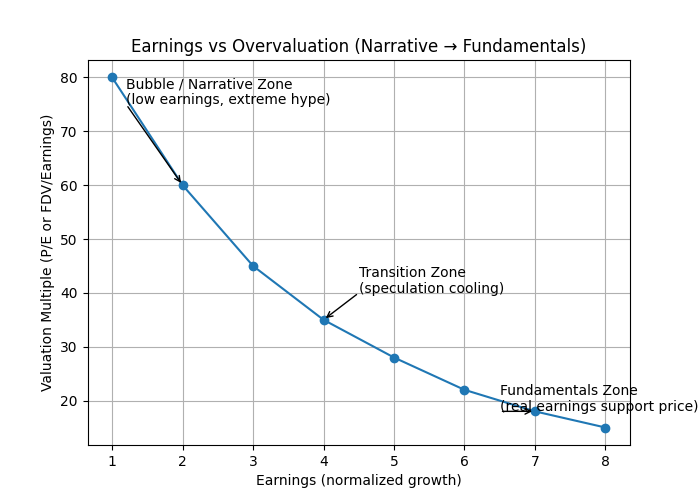
Earnings don’t justify valuations. Projects may inflate their valuations, but they fail to maintain any balance between valuation and actual revenue, creating deep inconsistencies.
Today, we see new L1s generating little to no ecosystem revenue, while “new” technology is no longer truly new. This creates an uneven, bubble-like environment exactly what George Soros describes in reflexivity-driven markets. That’s why so many tokens race to zero faster than Usain Bolt in a sprint.
They’ve started a new narrative: that CZ premkarkets are the problem. My brothers and sisters in the Lord, this is just narrative shifting passing the baton to someone else while leaving the root cause completely untouched.
MegaETH is a mess. Launching a game to “test latency” is bottom-barrel and largely useless. The team opens a premarket, trades it aggressively, and sends it straight to zero where it arguably belongs.
A $1B FDV for an L2? Come on.
Evidently, high-FDV ICOs need to go.
WHERE WE ARE :
We’ve moved from a relatively even playing field to a worse one and now to a deeply uneven environment.
I genuinely believe the market needs a full reset, from VCs all the way down to every participant.
The 2019–2021 ( BRING BACK @SBF_FTX ) era can’t be compared to today. Back then, we had genuine innovation GameFi, P2E, even short-lived Ponzi-style experiments with clear mechanics and transparent lifecycles. Today, we mostly have copies of copies, with no meaningful breakthroughs.
people don't hold tokens anymore, or buy tokens, they just sell them ( people like me ) it has become net negative to buy or hold any, because founders inflate valuations / fdv.
If the root causes of our problems aren’t addressed, the damage becomes systemic. This isn’t just bad for retail it’s detrimental to everyone still playing the game. Data from a few trusted sources already shows that several major players and funds are sitting on massive unrealized losses.
markets don’t collapse because people are pessimistic they collapse because risk is mis -priced for too long. When valuation disconnects from cash flow, demand, or real usage, gravity eventually wins. Liquidity masks insolvency, narratives delay reality, and leverage amplifies the fallout.
thank you for staying till the end, I love you as always
- Mr Iyamu (101) for,
lockbox HF.


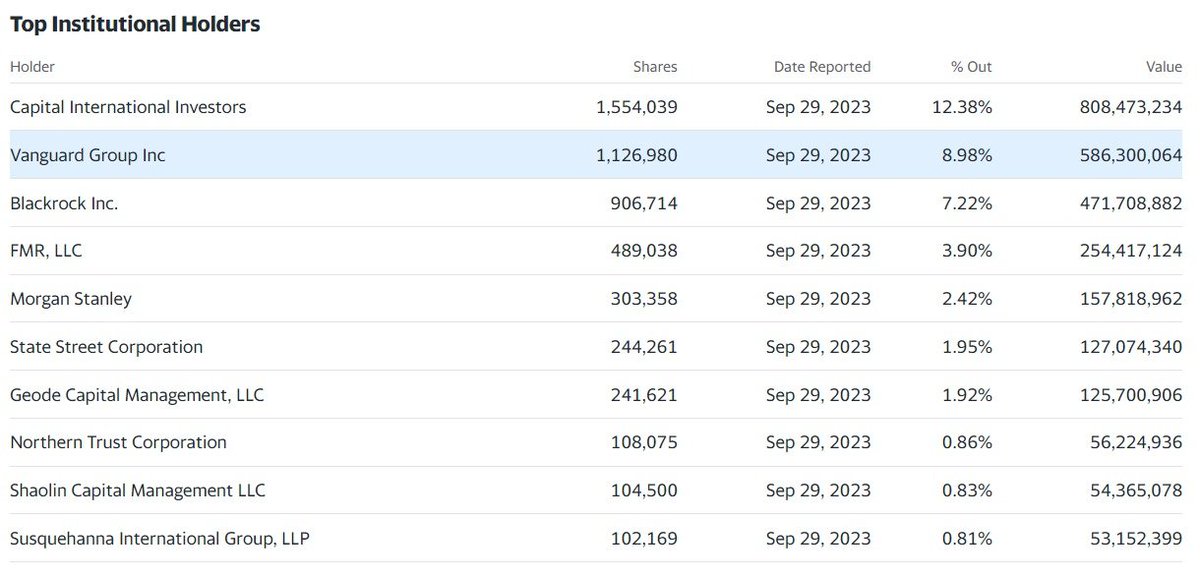
26 Nov 2023
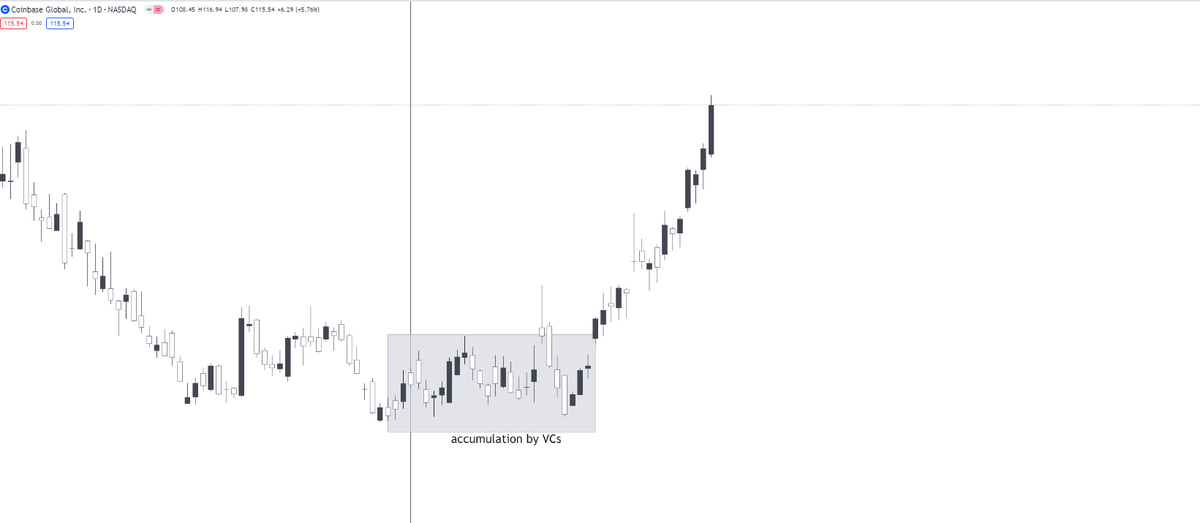
Coinbase faced a little fud this year, it was needed so they can buy at cheaper prices, check the picture below, you can see coinbase shareholders are those VCS spearheading ETFs approvals, you can see the accumulation then the run up.
9
15
60
2,557
Mr Iyamu (101x)🇺🇸 retweeted
3 Jun 2025
In my opinion we will see another -20% to 30% decrease in asset price across board because we lack solid fundamentals, only btc matters at the moment so holding tokens ( alts ) is suicidal

13
1
26
2,644
Mr Iyamu (101x)🇺🇸 retweeted
4 Jun 2025
Or even -50%
Imagine your alts doing another -50% for character development?
This is part of the thread I wrote thank you Elon

3 Jun 2025
In my opinion we will see another -20% to 30% decrease in asset price across board because we lack solid fundamentals, only btc matters at the moment so holding tokens ( alts ) is suicidal
1
5
1,374
Mr Iyamu (101x)🇺🇸 retweeted
3 Jun 2025
Hey Gm.
I can’t get a twitter verification at the moment so I will be sticking with a thread ( 🧵 )
This is not a financial advice.
15
19
67
11,393
Mr Iyamu (101x)🇺🇸 retweeted
10 Dec 2025
Hey.
3
1
12
2,935
Mr Iyamu (101x)🇺🇸 retweeted
16 Dec 2025
When the bear goes into hibernation,
the prey rejoice the hunter is gone.
They wander freely, careless and loud,
believing the danger has passed.
But winter was never mercy.
It was preparation.
When the bear returns to hunt,
the same prey grow fearful, then bitter.
They curse the bear for doing
what bears have always done.
And the elders of the market say:
“The bear did not change.
Only the prey forgot

1
8
818
May 20
Traded the stock so much, intel called him to Silicon Valley.
My GOAT.
May 7
bubble boi you move me in so many ways you can't even imagine.
4
1,205
May 20
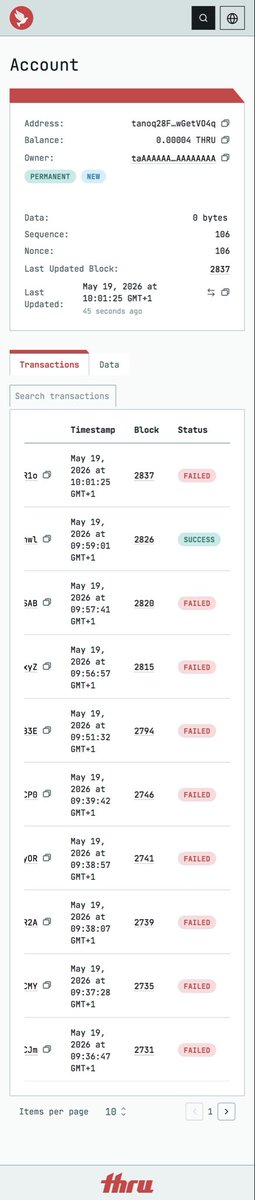
Crashed the first version
They came in with a new version
May 19
Everything was changed whole code.
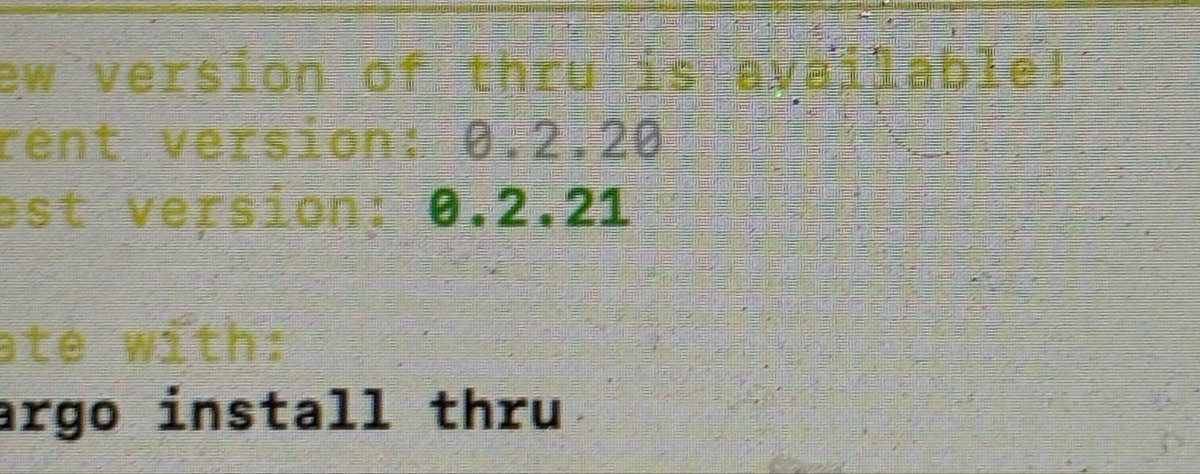
Have to start testing out the new codes because the old ones have become obsolete, the CLI version was updated.
And sorry I crashed the network @CantelopePeel.
5
1,939
Mr Iyamu (101x)🇺🇸 retweeted
May 19
Everything was changed whole code.
Have to start testing out the new codes because the old ones have become obsolete, the CLI version was updated.
And sorry I crashed the network @CantelopePeel.
1
8
1,700

Mr Iyamu (101x)🇺🇸 retweeted
May 15
Hey dad.
What’s wrong with the blockchain
Are you doing a maintenance or fixing something?
May 15

cerebruh
1
4
966