Exploring History. DM me a story you want to share & for credits 📥
Joined April 2022
- Tweets 3,793
- Following 14
- Followers 237,449
- Likes 1,891
3,344 Photos and videos

Pinned Tweet

25 Apr 2025
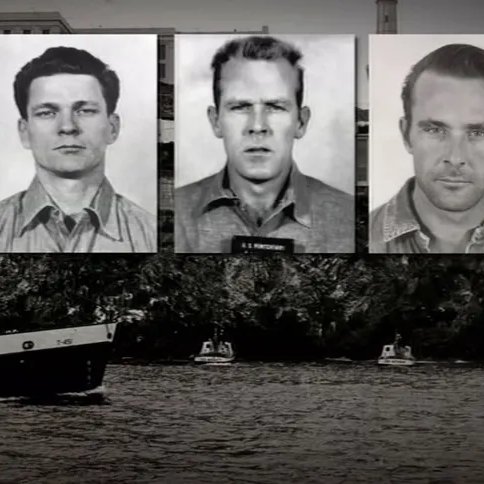
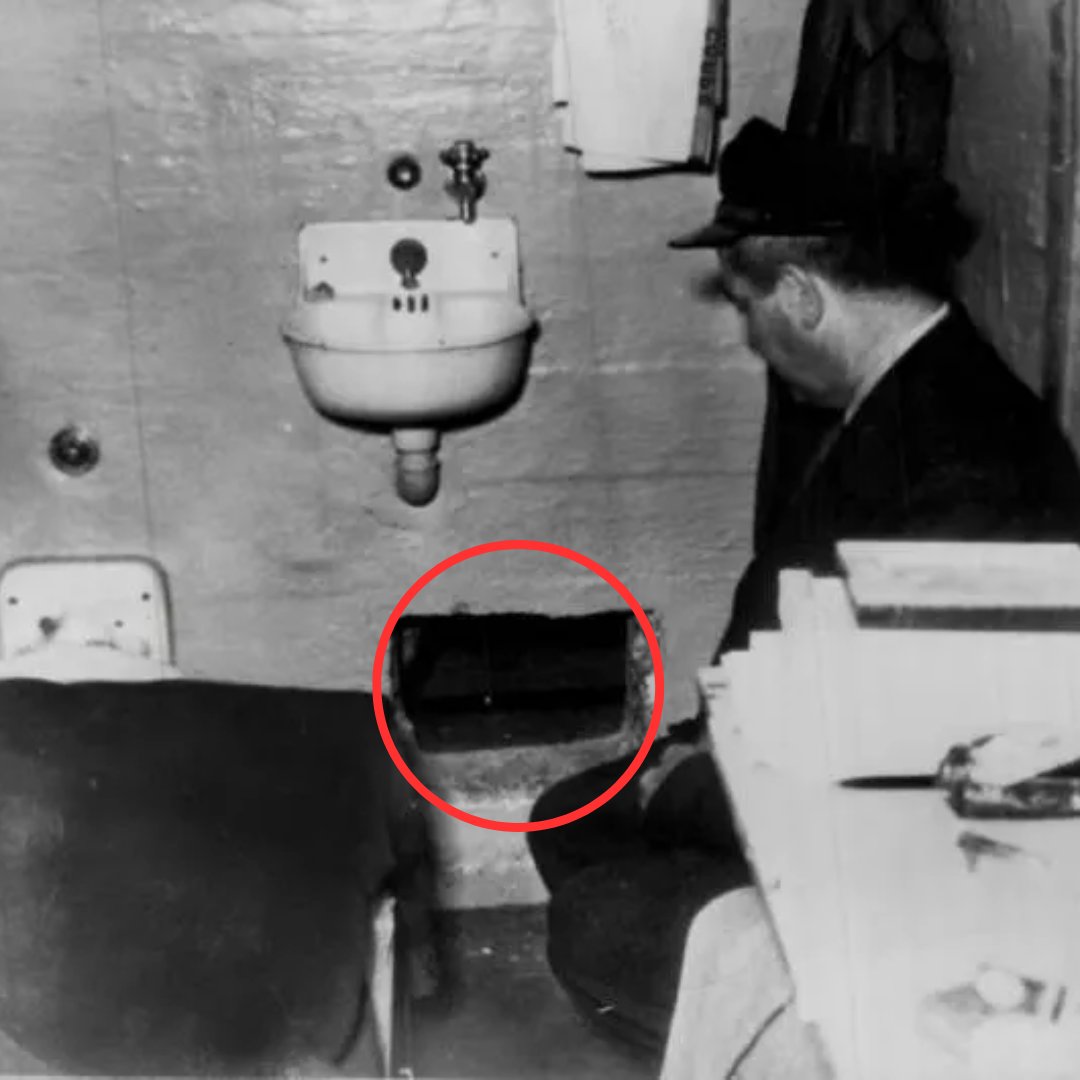
Alcatraz was built to be escape-proof.
• Sharks in the water
• Guards on every tower
• Freezing currents no man could survive
For years, no one made it out until June 11, 1962.
The true story of the greatest prison break in history:
843
8,334
173,213
43,135,888
In a rare interview, Tolkien is asked why he spent 14 years building the world of The Lord of the Rings.
His answer reveals a philosophy of creation rooted in something deeper than storytelling.
When pressed on whether the hobbits and their world emerged from his unconscious, Tolkien pushes back. He describes himself as a "meticulous sort of bloke" who spent those years "finding time schemes and getting everything right."
The appendices, the languages, the social customs, and the histories all existed before the story itself.
In fact, the world came first.
The Hobbit was almost an accident:
"It existed in posy and in large scale plan before The Hobbit was written. The Hobbit was intact originally an attempt to write something outside it and drew into it."
The interviewer, surprised, asks why.
Why create an entire world before writing a single story within it?
Tolkien's response gets to the heart of his creative philosophy:
"Because being made by a creator, one of our natural factors is wishing to create. But since we aren't creators, we have to subcreate. Let's say we have to rearrange the primary material in some particular form which pleases us, which may it isn't necessarily a moral pleasing. It's partly aesthetic pleasing."
This idea of subcreation is central to Tolkien's worldview.
Humans cannot create something from nothing, but they can reshape what already exists into forms that satisfy an aesthetic vision, not merely a moral one.
When the interviewer suggests that moral concerns should outweigh aesthetic ones, Tolkien disagrees.
He argues that an "aesthetic facet is as strongly to be predicated as a moral one in this world."
On the question of good and evil, Tolkien explains that the Dark Lord was not always dark. He fell, "several stages down of Lucifer."
The One Ring, he says, represents "a power so enormous that even if a good man were to use it against a bad it would corrupt the good man."
He emphasizes that this idea predates the atomic bomb. He had been developing these stories since his undergraduate years, long before modern allegorical interpretations could be applied.
Asked whether he would rather be remembered as a man who said something or a man who made something, Tolkien rejects the distinction:
"I don't think you can distinguish. The made things unless it says something won't be remembered."
6
88
382
25,602
Kids in 1975 were out here living their best lives on Big Wheels.
56
179
1,587
130,672
This song became the first to reach one billion views on Youtube
2
1
56
7,055
Jackie Gleason, the legendary American comedian and star of “The Honeymooners”, on the time he got CBS to send him a private train to Miami:
In the 1960s, Gleason decided he was done shooting his show in New York. He wanted Miami, and he wanted to arrive there in style.
“When we’re doing the Honeymooners, I had a big contract for that for two years. And after the first year, I said I didn’t want to do it. And they didn’t believe me. They thought I had a job somewhere else. And finally, they realized that I just didn’t want to do it.”
When the network came crawling back and asked him to do another show, Gleason was out in California shooting a picture.
He said yes — but only under one condition:
“I said, ‘All right.’ I said, ‘But I want a train that goes to Florida.’ Because I had come down here and played golf and liked it and I figured might as well go to Florida and do the show. Play golf all the time and they went for it.”
They went for it.
What followed was a rolling party stretching coast to coast.
Gleason breaks down what was on board:
“Everything. We had two Dixieland bands come from California and they would spell each other. I’d say to them, ‘Take five miles,’ and the parties went on 24 hours.”
Asked if there were girls on the train, he laughs:
“Boy, there were girls. There certainly were. And they were very, very nice girls. Nothing on it happened. I know that sounds ridiculous, but it didn’t. Might have been because the berths were too small, but regardless of that, nothing happened on that trip.”
Asked if there was a bar on the train, his answer is perfect:
“A bar. The train was a bar. I guess that’s a classic example of what clout is.”
Then he drops the line that captures the whole story in a single breath:
“‘Send a train, please.’ That’s right. When you’ve got good ratings and you’re one, two, or three in the ratings, there is nothing your little heart desires that they don’t provide.”
25
235
63,340
Watch the exact moment Picasso's second most expensive painting sold for $139 million at auction
1
11
24
9,946
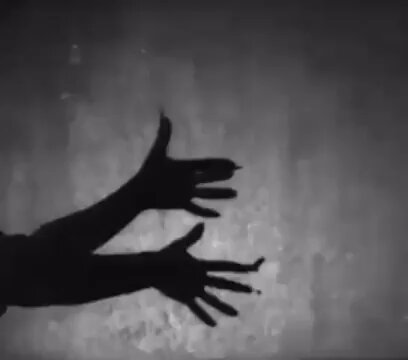
Shadow puppetry in the 1930s.
Pure artistry with nothing but hands and light
55
176
12,217
Jun 12
Pierce Brosnan on the lucky break that launched his film career:
"I struck a vein of gold there. I was very fortunate. I was really lucky."
Speaking during the third season of Remington Steele ("We're still making it. Yes. Hence this growth here.
See, we've just finished our third season back in the States."), Brosnan looks back on how quickly things came together for him at the start.
It happened almost by accident. As he tells it, in one slow week he managed to land roles in two films.
The first was The Long Good Friday, where he played a small but memorable part:
"I was the gentleman killer. I was the killer. I pick the fellow up in the swimming bars and then I stab him and then I pop up at the end of the movie and I point at Mr. Hoskin's head."
The second was The Mirror Crack'd, alongside Elizabeth Taylor. His role there was brief, but the detail he remembers is a good one:
"I was being cradled on Liz Taylor's bosoms."
He plays down the depth of the part with a laugh:
"It's very very very uh it's very brief. Um I mean my approach but uh it's just she looks into my eyes and says Jamie Jamie and puts a head and that was it."
For all the Hollywood success, Brosnan stays rooted in where he came from. Ask him about his accent and he turns it into a running joke:
"The Irish accent? Uh well, that comes and goes. It all depends on who I'm talking to. So, by the end of this interview, I might be back into the bro."
He left Ireland in 1964, and what stuck with him from his schooling is told with affection and a bit of dread:
"Christian brothers. They were fierce fellas. Fierce fellas. Yes."
The bit of the language he still carries is small but fondly held:
"All I all I remember is sig and dawia and sig she means sit down and dal means go home."
16
24
349
81,290
Jun 12
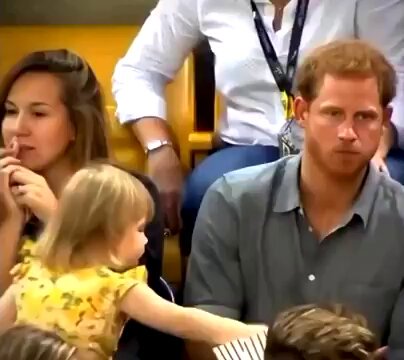
A little girl repeatedly stole Prince Harry's popcorn at the Invictus Games thinking he wouldn't notice
5
13
158
29,519
Jun 12
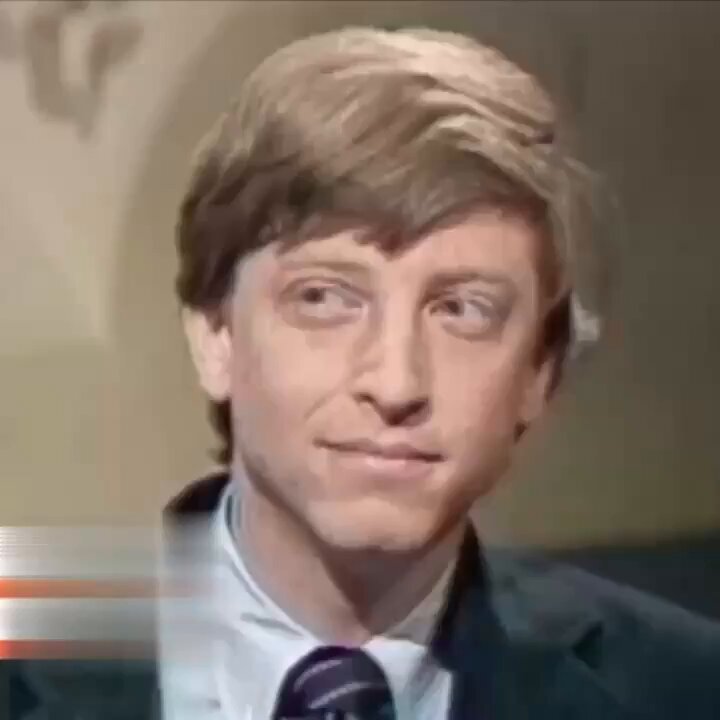
Long before Microsoft became a tech giant, Bill Gates explained what really motivated him... and it wasn't money.
At the time of the interview, Microsoft was on track to do "just over 100 million" in annual revenue. Gates was 28. His first major contract had come nine years earlier, when he was 21.
The interviewer pressed him on the money.
Was he a millionaire? Gates deflected:
"Microsoft's a company owned primarily by its employees, and it's not easy to put a value on it."
Then came the more interesting question.
Was he in it for the money?
Gates's answer:
"I don't think anyone at the company's in it for the money. It's a much more exciting field than trying to measure exactly how much we're selling or how much it's worth. The creation of these programs is something you can sit down and see people enjoying and solving real problems."
When asked why he left Harvard before graduating, Gates pointed to the speed of the opportunity in front of him:
"Things move very quickly in the industry and it was really the urgency to get out there and be the first one to put a basic on the micro computer that caused me to drop out."
The interviewer then brought up Gates's reputation as both a technical prodigy and a skilled businessman capable of building a company.
Gates rejected the label and instead described what he found most rewarding:
"I enjoy working with the people, talking about what we're going to get done, getting real excited, making sure that the structure is there, that the ideas get measured properly and really leading the company. That's exciting."
Finally, the interviewer raised a concern that was already common in the fast-moving tech industry: burnout. Would Gates burn out before turning 30?
"No."
How did he know?
"The work we're doing is it's not like, you know, we're doing the same thing all day long. We go into our offices and think up new programs. We get together in meetings. We go out and see end users. We talk to customers. There's so much variety and there's always new things going on. And I don't think there'll ever come a time when that would be boring."
4
18
62
11,777
Jun 12
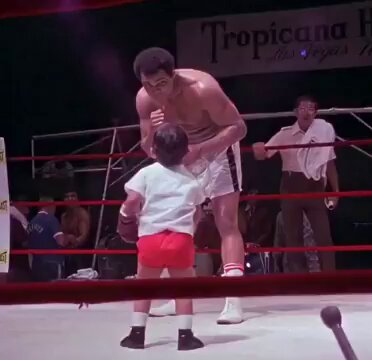
Muhammad Ali getting "knocked out" by a child remains one of the most heartwarming moments in sports history
15
187
1,574
97,667
Jun 11
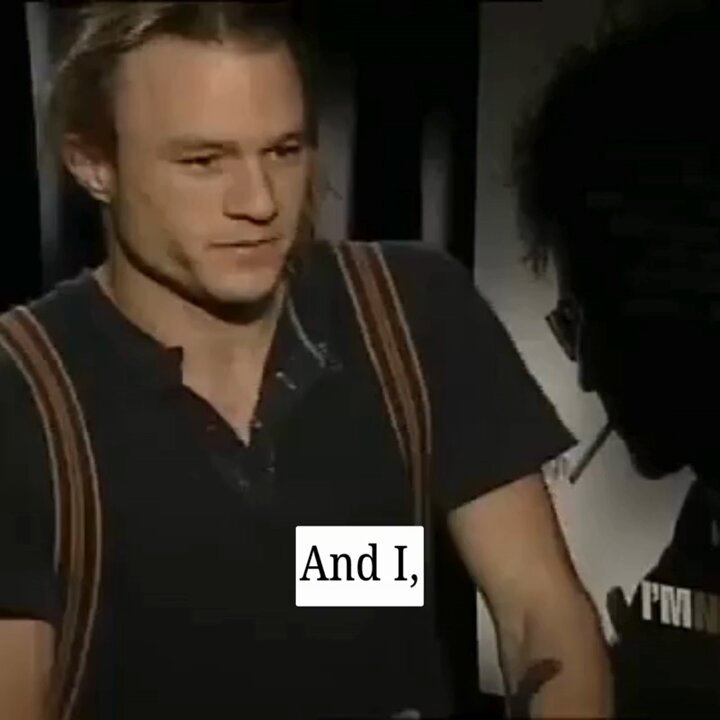
In one of his final interviews, Heath Ledger explained why he never tried to understand Bob Dylan:
Ledger had just finished work on Todd Haynes' Bob Dylan film, "I'm Not There."
When the interviewer admits he loved the film but didn't understand much of it, Ledger's answer is disarming:
"I still don't. I think that's the idea though with the film; I don't think Todd wants you to walk out completely understanding who Bob Dylan is because that would be a lie. I mean, we don't know who Bob Dylan is, and I think that's the movie's trying to preserve his Mystique in that way. And that's why I wanted to be a part of it."
That respect for the subject was the whole appeal. Ledger lays out the risk most biopics run:
"It was, you know, biopics can be incredibly defaming to the person they're trying to create a portrait of, and this seemed to be highly respectful of Dylan. I was also a big fan of Todd Haynes; I think he's a genius and it just seemed like a good project."
What is striking is how nearly he missed it.
Ledger reveals he was the last actor to join, almost by accident:
"It was the only part left by the time I was the last person to come on board. Yeah, there was another actor actually playing that part and he fell out, and so I kind of asked if I could be a part of it."
The real pull, though, was Michelle Williams, already attached to the project:
"I mean, that's how I really got on board; I snuck a peak of her script."
Once filming began, Haynes immersed the cast in the world he was building.
Ledger recalls that Todd "presented us all with a CD that had a selection of songs that particularly pertain to the era and the story that we were telling. And along with that, he also gave us a scrapbook with imagery of how he was going to shoot each story."
For all that direction, Ledger felt free.
He sums up the balance between a director's vision and an actor's instinct:
"It was shaped in the sense that it was Todd's creation and I was just presenting some flesh and blood for him to kind of say the dialogue and be the character that he created. But Todd certainly gave us a lot of freedom and space, but he had a very set vision which I think he and no one else owned, and everyone just very much trusted him."
3
10
30
14,190
Jun 11
In 1960, Richard Nixon and John F. Kennedy stood on a televised debate stage and were pressed on the same hard question:
What would it actually take for them to sit down with Soviet leader Nikita Khrushchev?
From opposite sides of the aisle, their answers were strikingly similar.
Nixon, then vice president, was asked to be specific about his conditions.
He pointed back to a position he had laid out in an earlier debate:
"We have to have adequate preparation for a summit conference. This means at the secretary of state level and at the ambassadorial level."
He wanted an agenda agreed on in advance, one that flagged only the issues where real negotiation was possible.
Without that, he argued, the meeting was worse than useless:
"If we build up the hopes of the world by having a summit conference that is not adequately prepared, and then if Mr. Khrushchev finds some excuse for breaking it up as he did this one because he isn't going to get his way, we set back the cause of peace. We do not help it."
Nixon had no patience for what he saw as empty goodwill, naming past meetings directly:
"Other than some phony spirit, a spirit of Geneva or Camp David or whatever it is."
And he was careful to explain the word:
"When I say phony spirit, I mean phony, not because the spirit is not good on our side, but because the Soviet Union simply doesn't intend to carry out what they say."
When it was his turn, Kennedy agreed the recent failed summit was a lesson. He noted that the president had wanted prior agreement before the May meeting, the Soviets refused, and "we went to the summit and it was disastrous."
His own condition echoed Nixon's:
"I believe we should not go to the summit until there is some reason to believe that a meeting of minds can be obtained on either Berlin, outer space or general disarmament, including nuclear testing."
But Kennedy added a second element. Before any talks, build strength:
"Soviet Union does understand strength. 'We arm to parley,' Winston Churchill said 10 years ago."
He argued the next president should spend the opening months of his term building American strength, so that negotiation happened from a position of confidence:
"But until we're strong here, until we're moving here, I believe a summit could not be successful."
Then he closed with a pointed bit of hindsight:
"I think if we had stuck by that position last winter, we would have been in a better position in May."
3
11
28
5,022
Jun 10
Alec Guinness almost said no to the role that would make him immortal to an entirely new generation.
When asked how he came to be involved in a science fiction film, Guinness revealed his first reaction was far from enthusiastic:
"A script arrived on my dressing table. And I heard that it had been delivered by George Lucas and I thought, well, that's rather impressive because he's an up-and-coming and very respected young director. So, and then when I opened it and found it was science fiction, I thought, 'Oh crumbs,' you know, 'this is simply not for me.'"
But something kept him reading:
"I started reading. And it seemed to me the dialogue was pretty ropey. Uh, but I had to go on turning the page and I mean that's an essential in any script. You've got to know what happens next or what's going to be said next."
He eventually met Lucas, they got on well, and he signed on.
Then came the contract negotiation that would become legendary.
Guinness had never taken a percentage on a film before because, in his words, films "lose money like mad" when he takes a percentage. His agent suggested 2%. He agreed, expecting nothing.
The day before Star Wars opened in San Francisco, Lucas called him personally:
"He said, 'I think the movie is kind of going to be all right.' I said, 'I'm glad, George.' He said, 'Yeah, the press quite like it.' I said, 'Good.' He said, 'We're pleased with, you know, very grateful for little alterations you suggested, and so we'd like to offer you another half percent.'"
Guinness thought he had 2.5%. But when he later asked the producer to put the offer in writing, he discovered the half-percent had quietly become a quarter-percent. He ended up with 2.25%.
On why he thinks the film connected so deeply with audiences, Guinness offered a simple diagnosis:
"A marvelous healthy innocence. Great pace, wonderful to look at, full of guts, nothing unpleasant. I mean, people go bang bang and people fall over and are dead. But, you know, no horrors, no sleazy sex… a sort of wonderful freshness about it, a kind of like a wonderful fresh air."
He added that when he walked out of the cinema onto Tottenham Court Road, the real world suddenly felt "awfully sort of gritty and dirty and full of rubbish." It was, he said, "one of the few movies I've come out of recently where I really felt happy and uplifted."
His warning to anyone looking for deeper meaning in it:
"People are going to read too much into it. It's a simple, simple stuff for all ages."
Though the letters he was already receiving suggested the reading-too-much-into-it had begun.
One couple wrote asking if he'd come live with them for a few months to help fix their marriage.
4
27
262
15,566
Jun 10
History in the making

JUST IN: Elon is reportedly trying for his first black baby
9
19
5,425
Jun 10
Kevin Spacey once pulled off an audacious plan that helped launch his career
For months, Spacey had been trying to audition for a play directed by Dr. Jonathan Miller, but he couldn't get in the door.
"For many, many months I tried to get an audition for the play and I was just beginning in the theater and I couldn't get an audition. Wouldn't see me. My agents couldn't get me in."
So he came up with a plan.
When he found out Dr. Miller was giving a lecture in New York, Spacey bought tickets and went. But he knew walking backstage wasn't the move:
"I just kept thinking through the show, how am I going to meet him? I don't want to go backstage and go, 'Hi, I'd like to be in your play.' I thought it's got to happen in the right way."
Then opportunity, quite literally, fell into his lap.
Sitting next to Spacey was an elderly woman who slept through most of the lecture. Peeking out of her handbag was an invitation to a cocktail reception being held immediately afterward in honor of Dr. Miller.
"I thought to myself, she's tired. So I pinched it and very quickly moved seats."
Spacey walked in with his stolen invitation and spotted Dr. Miller at a table flanked by Kurt Vonnegut and Norman Mailer, surrounded by wealthy donors.
Unreachable.
Until Vonnegut got up to use the men's room and didn't come back.
"I beelined for this chair next to Dr. Miller and just started chatting to him about how great his lecture was."
Miller asked what brought him there. Spacey's answer was perfectly played:
"Well, oddly enough, Eugene O'Neill brought me."
Miller replied:
"Is he here? I've always wanted to meet him."
Spacey told him about eight months of failed audition attempts. Miller handed over his card and told him to get in touch directly.
Two days later, Spacey had his first audition.
Five months later, he was auditioning opposite Jack Lemmon, his childhood hero, who had approval over who would play his sons.
Spacey came in swinging:
"I wanted this part so badly and I was just relentless with Jack. I just toppled over his lines and I drove through his pauses. You could literally feel something started with us at that moment."
At the end of the audition, Lemmon walked over, put his hand on Spacey's shoulder, and said:
"You know what? I never thought I'd find the rotten kid, but you're Jesus Christ."
4
20
67
10,866