
No DMs
Joined September 2025
- Tweets 2,060
- Following 14
- Followers 100
- Likes 7,403
604 Photos and videos




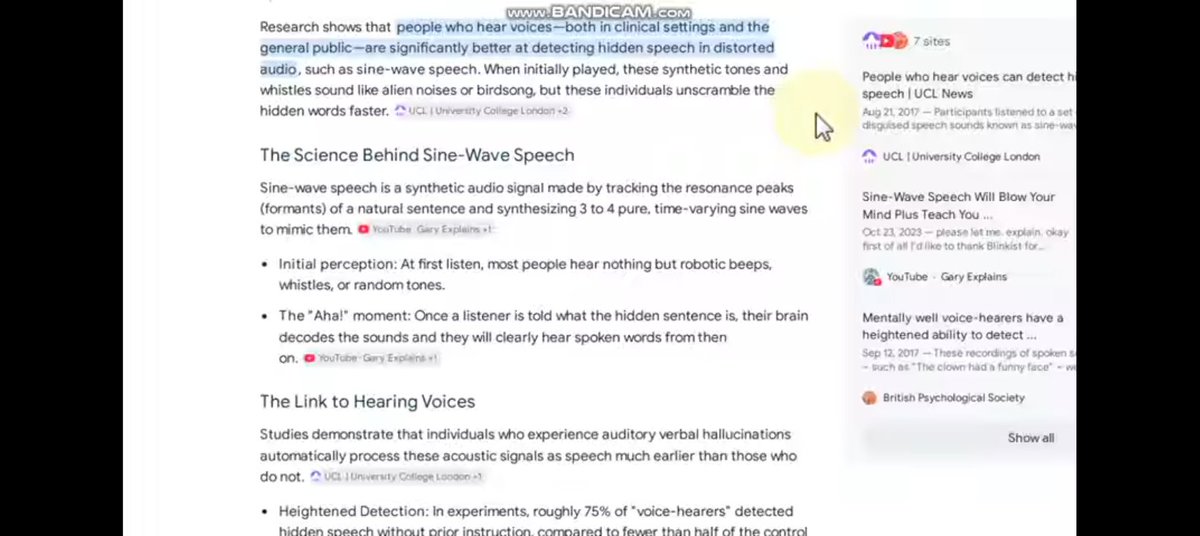

Some days peering into the online void is like peering into a box of cosmic horrors.
Another day, another horror.


1
15
A reminder to document a refusal in a legally binding will. Or don't, and roll the dice of whether or not your brain will become a member of the living dead in potential wetware science experiments.

Mar 27

Document a refusal in a legally binding will. A written refusal in a notarized will is legally binding and cannot be overridden by family or authorities.
Clearly state:
"I refuse to make any anatomical gift of my body, organs, tissues, or parts for transplantation, research, education, or any other purpose."
Register your refusal using donor registries that focuses on consent, a documented refusal in a will carries more legal weight than simply not registering.
Inform family and professionals by discuss your decision with family, your physician, and attorney to ensure your wishes are known and respected.
Use a standard refusal form. Some organizations offer formal refusal forms, but a notarized will is the strongest legal instrument.
This ensures your body will not be used for any medical or research purposes, and if unclaimed or if a family is unable to afford services and it ends up being disposed of by burial or cremation at public expense.
4
30
I'm so grateful for the men in my family. We've been moving furniture, doing large donation runs, packing, clearing out a garage, and a house for two days now (w/1 more to go).
Honestly, it's because of their leadership and physical strength that everything is going smoothly
2
5
47


Jun 14
So...I've never seen anything quite like this before in my life...but there are so many earwigs EVERYWHERE outside.
Every so often I see videos of a place with some weird bloom of a particular insect. As it's hitting temps in the low 90°s in my dry region, this is ours wtf 😂
1
42
Jun 14
The problems faced with privacy loss these days don't stem from just a couple of things. It's from a huge pile of steaming cow poop that is ever expanding, saturating the entirety of every aspect of living in a modern society, in thousands of interconnected and unavoidable ways
3
90
Jun 14
Discussing the events of high strangeness in our lives growing up and since meeting, is pretty common for my husband and I. It's something that's always been a part of our lives. The variance of events are diverse. That being said, I've seen a lot of things, but never a grey.
1
39
Jun 13
I'm hoping I can catch the turn over on my 2002. It gets tricky when it's this close.
Plus side to owning an older vehicle, no modern automotive factory spyware.
Cons, big money/governments are actively working to make servicing, repairing, and owning these impossible.
2
4
242
La Swan retweeted

Jun 12
Schweden entdeckt das Bargeld wieder
Jahrelang galt Schweden als Vorbild für die nahezu bargeldlose Gesellschaft.
Ab dem 1. Juli werden Supermärkte und Apotheken gesetzlich verpflichtet, Bargeld anzunehmen. Gleichzeitig müssen Banken wieder ausreichend Möglichkeiten schaffen, Bargeld einzuzahlen und abzuheben. Bargeldlose Bankfilialen sollen damit weitgehend der Vergangenheit angehören.
Der Grund für diesen Kurswechsel ist aufschlussreich: Die schwedische Regierung warnt vor den Risiken einer Gesellschaft, die sich vollständig von digitalen Zahlungssystemen abhängig macht.
Bemerkenswert ist, dass ausgerechnet eines der am stärksten digitalisierten Länder Europas nun erkennt, dass Bargeld nicht nur ein Zahlungsmittel ist, sondern auch ein wichtiger Bestandteil von Krisenvorsorge, Resilienz und persönlicher Unabhängigkeit.
Quelle
🧭 R24 FinanzKompass

195
4,188
9,733
100,932
La Swan retweeted

dude can anybody actually point me to a case handled by the federal government that will convince me that they should be trusted with *more* demonic power to "make people feel like they're going crazy" and "like they're imagining things" with Cognitive Electromagnetic Weapons?
They literally said in Congressional hearing that the weapons do the same thing as religions say demonic entities do? Demonic entities are invisible entities that torture people and the torture is because the demon is invisible and uses that to make the person appear insane.
Jun 11

To be frank, failing to extend FISA Section 702 could be fatal.
Democrats need to put politics aside and support this vital national security tool.
Community note
Section 702 surveillance would continue under existing FISA Court certifications even if the statute lapses on June 12, remaining valid until at least March 2027. brennancenter.org/our-work/resea… cato.org/blog/fisa-sect…
1
1
2
75
Jun 12
I'm noticing that people are beginning to go dark online. From what I can see, they've chosen to stop participating and engaging with what the screens are presenting.
I understand this silent exodus.
1
31
Jun 12
We might be able to help you become less invisible - maybe you'll even eventually be able to sit at the cool kids table at lunch time.

3
35
La Swan retweeted
Jun 12
Computers and run code vs consciousness as substrate of all existence🤷♀️
1
1
41
La Swan retweeted
Jun 12
Time in bondage is a trial to forge strength and hatred of oppression, not a state of mind to be accepted or internalized. A "civilized barbarian" is morally superior to the corrupt, slave-holders we encounter, and rises up to ask, "What is best in life"
1
1
49
Jun 12
Leto II Atreides's diffused brain fundamentally altered his consciousness as it spread throughout his entire worm-body. Resulting in decentralized awareness as his human brain dissolved and reformed. Enabling a form of massive parallel processing of thoughts and perspectives.
👀
2
41
Jun 11
Panpsychism, suggests that consciousness is a fundamental property of all matter (not just biological life), implying the universe itself possesses a form of sentience or inner life.
The idea of realities indistinguishable from our current observations always fascinate me.
1
32
Jun 10
Every aspect of life has been and continues to be digitized and stored in a type of master elder brain matrix-like database.
1
29
Jun 10
As I read a sign near a cash register about the way they round up and down since pennies were eliminated - I thought about a video on the rise and prevalence of copper theft
Then I thought about the 86ing of the last coin with any valuable metal left in it by the government
4
129
Jun 10
youtu.be/WDsI-zk6gfE?si=_hK1…
Truthstream Media
1960s Government Subliminal National Anthem Video - It's THEY LIVE

2
48
Jun 10
There's a weirdo part of my brain that considers really off the wall things like this movie, Disclosure Day. It's really getting pushed hard and I wonder, why?
I wonder if below the easily detectable visual and auditory surface, there will be embedded subconscious content?
1
2
103