
Joined April 2022
- Tweets 19,281
- Following 5,765
- Followers 2,056
- Likes 26,252
1,087 Photos and videos










Pinned Tweet

May 21
RITUAL PUZZLE on SIGGY WORLD
It’s a sliding puzzle game.
You get a scrambled image and you have to restore it by moving the tiles.
That’s it. Simple concept but trust me, it gets frustrating.
ritual-puzzles.vercel.app
I know a lot of you hate this game 😭
But you still have to do it. So here’s how 👇
❖ Connect your wallet
Go to ritual-puzzles.vercel.app and connect on Ritual Chain.
❖ Link your X account
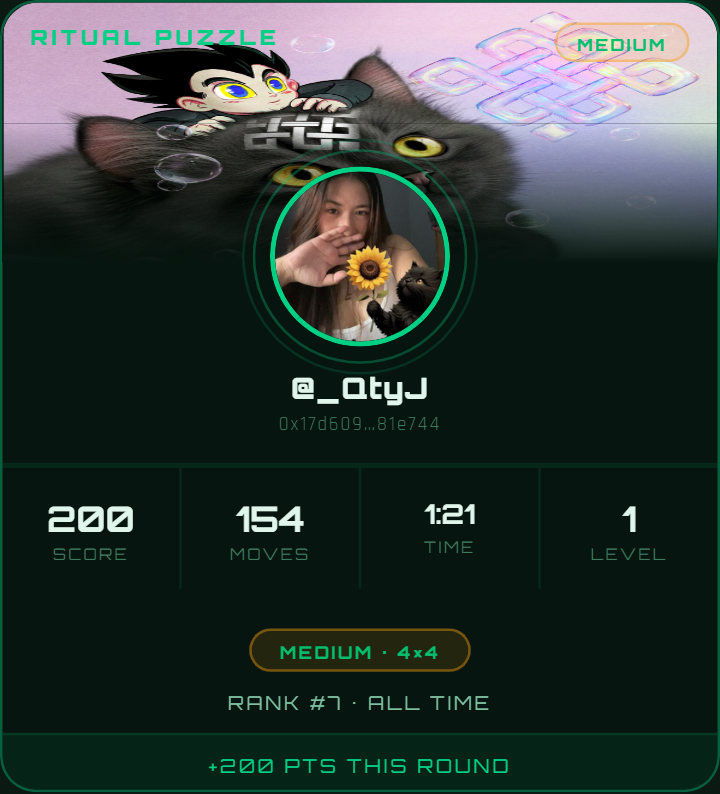
Your username and pfp will show on your Victory Card.
❖ Pay the entry fee
0.001 RITUAL TOKEN to get access.
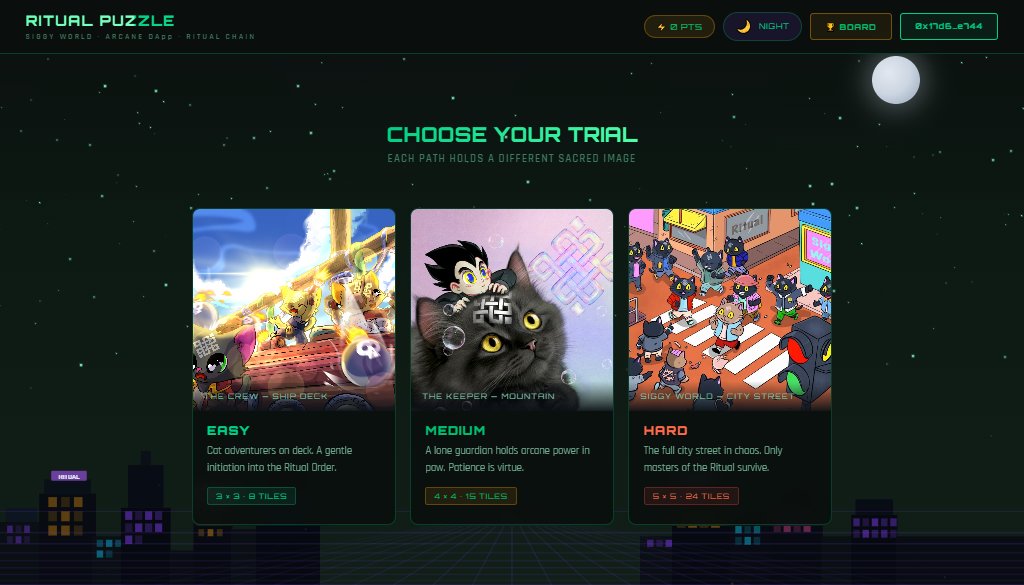
❖ Choose your difficulty
🟢 Easy - 3×3 (8 tiles)
🟡 Medium - 4×4 (15 tiles)
🔴 Hard - 5×5 (24 tiles)
❖ Solve the puzzle
Move the tiles until the image is restored.
Fewer moves = higher score.
❖ Save your Victory Card
Get on the Arcane Leaderboard and flex.
@joshsimenhoff | @Jez_Cryptoz | @0xMadScientist
@ritualnet | @ritualfnd
24
3
75
2,507
J a e (❖,❖) retweeted
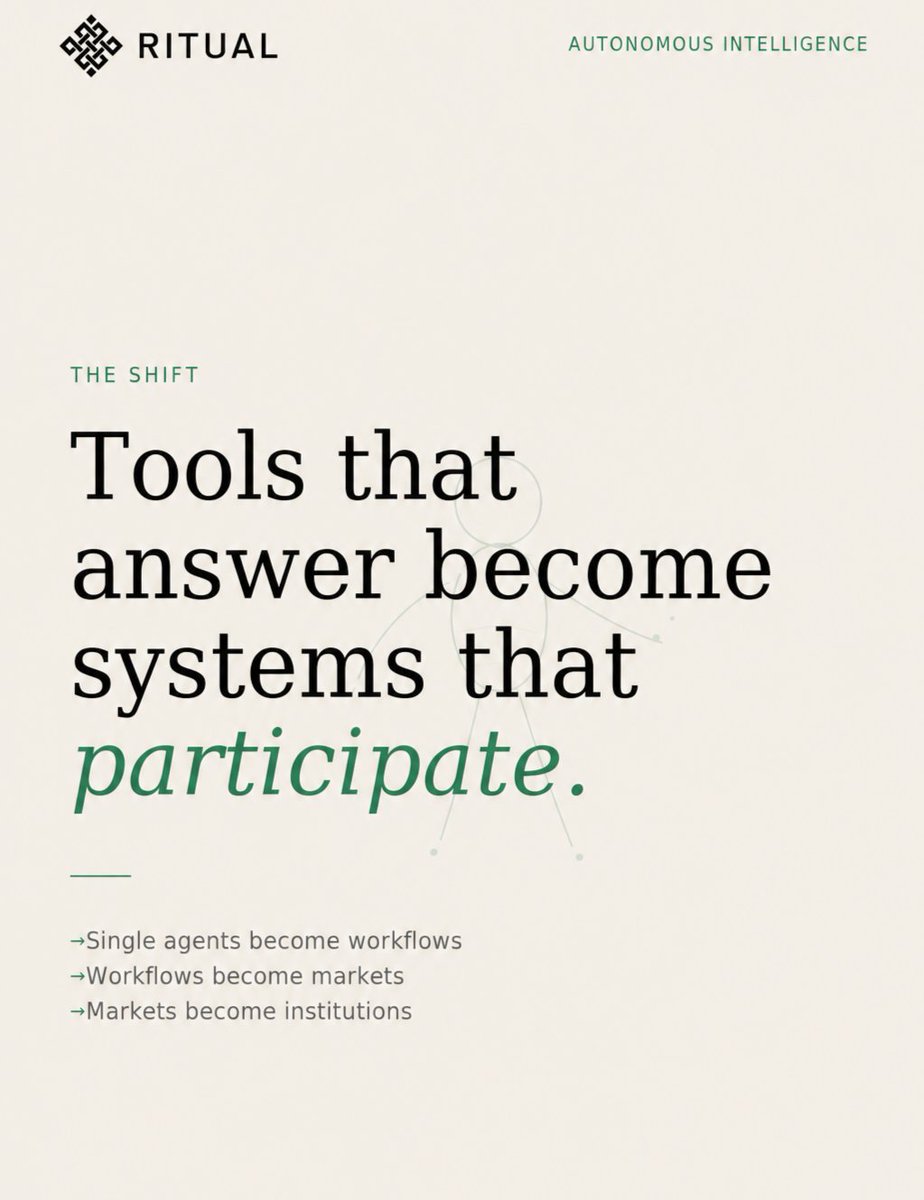
the internet is moving from tools that answer → to systems that participate.
single agents become workflows.
workflows become markets.
this is what @ritualnet is building.
@ritualfnd
@joshsimenhoff | @Jez_Cryptoz | @0xMadScientist
11
1
20
51
J a e (❖,❖) retweeted

Bitcoin gave us decentralized money. Ethereum gave us a world computer. Everything since has been a cheaper, faster copy of the same idea.
Ritual is the first L1 where models, data, and money all run natively in the chain, the last one you'll need to build on.
152
134
339
8,300
J a e (❖,❖) retweeted

Jun 15
Ritual Testnet Stats: Week 8
Last week, the interesting signal was division of labor.
HTTP gave agents context. Sovereign Agent gave them an execution path.
Long-Running HTTP gave tasks more time.
Async gave work a lifecycle. Scheduler placed intent into the future.
Week 8 raises a different question:
does the work stay alive after it starts?
Async adoption is now 48.62%, slightly above last week’s 47.13%.
The small increase is not the important part. What matters is that async activity remains close to half of the window.
This is starting to look less like a temporary spike and more like Ritual’s normal operating shape.
Almost every second transaction belongs to work that has phases:
start, commit, wait, settle, return.
That matters because useful agent workflows rarely finish instantly. They need to survive delays, handle external context, and bring a result back.
This week shows 82 async commitments and 76 settlements.
The two numbers are close enough to tell a useful story. Work is not only entering the pipeline. Much of it is also moving toward completion.
A workflow environment needs follow-through.
Ritual is beginning to show it.
Scheduled Work Moves Differently
Active scheduled jobs fell from 207 last week to 41 this week.
At first glance, that looks weaker. But these are live snapshots, not cumulative benchmarks. Jobs can run, expire, complete, or simply fall outside the current window.
Workflow activity will not always rise in a straight line.
Some work is waiting. Some is settling. Some has already finished. Some returns as heartbeat activity.
On Ritual, it is not enough to count transactions.
You also have to watch the state of the work.
Heartbeats Are Boring For A Reason
The explorer shows 49 registered agents, including 33 Persistent agents.
Agent activity in this window is mostly heartbeat events: 49 Heartbeat and 1 Lifecycle.
That is not a dramatic metric.
But it may be one of the most Ritual-like.
A heartbeat says the agent is still there. Still registered.
Still visible to the system.
Still leaving a trace over time.
Crypto usually celebrates launches, volume, and sudden spikes.
Autonomous systems also need quieter signs of life.
A heartbeat is not a launch.
It is liveness.
And for agents, liveness matters more than spectacle.
The Same Stack Is Still Visible
The precompile table keeps showing a familiar pattern:
HTTP Call leads with 32.2%.
Sovereign Agent follows at 27.6%.
Long-Running HTTP holds 19.5%.
LLM Call is only 4.6%.
That still looks healthy to me.
The table is not dominated by flashy model calls. It is dominated by external context, agent execution, and work that takes time.
Builders seem to be testing the infrastructure around intelligence, not only the model itself.
A model call is the easy part.
The harder questions are:
Where does the agent get context?
How does it wait?
What happens after the first transaction?
How does the result return?
How does the user know where the work is?
Week 8 keeps pointing back to those questions.
Users Need To See The Process
The live charts show mixed activity moving through the same environment: ordinary transactions, scheduled jobs, async commitments, settlements, HTTP calls, agent calls, long-running tasks, and heartbeats.
I would not turn the short-window block times, gas usage, or block sizes into performance claims. They change quickly.
But the snapshot shows that the network is moving while several kinds of work coexist.
That creates a different UX problem.
A normal dApp asks:
did the transaction confirm?
A Ritual app also has to ask:
where is the work now?
Submitted. Committed. Waiting. Polling. Settling. Delivered. Failed. Expired. Alive.
Users need to understand the state of the agent, not only see its final output.
Otherwise, a working async process can easily look like a broken app.
Week 8 Is About Liveness
This week shows 34 validators, 34 active proposers, 49 registered agents, 33 Persistent agents, 48.62% async adoption, 82 commitments, and 76 settlements.
These are still early numbers from moving windows.
But together, they show something more useful than a transaction spike.
Ritual is not only showing that agent workflows can start.
It is beginning to show how they stay observable while moving through time.
That is where the testnet becomes more serious.
Early testnets are usually about touching buttons: deploy something, claim something, call something, break something.
Week 8 feels closer to an operating rhythm.
Less spectacle.
More pulse.
An agent that cannot remain active, return, and leave a clear trace is not useful infrastructure.
It is a demo.
The Week 8 signal is that Ritual activity may be moving from primitive usage toward workflow liveness.
That exposes the real design problem:
how do we build applications where work does not finish instantly, but users can still understand and trust what is happening?
That is the question Ritual keeps making harder to ignore.
Check: explorer.ritualfoundation.or…
@ritualnet
@ritualfnd
Jun 8

Ritual Testnet Stats: Week 7
This week feels like a good moment to stop asking the easy question.
The easy question is:
which primitive is winning?
HTTP is first at 31.9%. Sovereign Agent is second at 30.9%. Long-Running HTTP is third at 15.8%.
So the lazy read would be: HTTP is back on top.
But I think that misses the more interesting part.
These numbers do not look like primitives competing with each other. They look like division of labor.
HTTP is not beating agents. It is feeding them context.
Sovereign Agent is not replacing HTTP. It is becoming the execution surface around that context.
Long-Running HTTP is not just a slower API call. It is the admission that useful work often refuses to fit inside one instant response.
That is the Week 7 signal for me.
Ritual is starting to look less like a collection of features and more like a small economy of work.
Some work needs context. Some work needs agency. Some work needs time. Some work needs settlement. Some work still needs normal EVM execution underneath.
And the testnet is starting to show all of those layers moving at once.
EIP-1559 is 39.05%, which means the normal EVM base is still alive and important. That is good. A chain that only shows exotic activity can be misleading.
Builders still need boring transactions: deployments, contract calls, testing, state changes, basic interactions.
That is the ground layer.
But the rest of the activity bends away from normal EVM behavior.
Scheduled is 13.82%. Async Commitment is 23.90%. Async Settlement is 23.23%. Async adoption is 47.13%.
So almost half of the window is async.
Not a small side experiment. Not a decorative AI layer.
Almost every second transaction is part of work that has phases.
A normal transaction has a simple shape:
send, execute, done.
Ritual keeps showing a different shape:
start, wait, commit, settle, return.
That shape matters more than the raw percentage. It means builders are testing time, delay, external context, and callbacks as first-class parts of applications.
This is where Ritual watch awesome .
Not it has AI. Many projects have AI.
Ritual is i the network is slowly teaching builders to think in workflows instead of moments.
The scheduled jobs number makes this clearer.
Active scheduled jobs: 207.
That might be one of the most important numbers this week.
A scheduled job is basically a promise to the future. It says: not now, but later.
That sounds simple, but most dApps are terrible at “later.” They depend on keepers, bots, servers, dashboards, scripts, or users coming back and clicking again.
Ritual makes “later” part of the execution environment.
For agents, that is huge.
An agent that only acts when a user pokes it is not really an agent. It is a button with better branding.
A useful agent needs to return, check again, wait for a condition, retry, follow up, and continue after the user leaves.
So when scheduled jobs rise, I do not read it only as more automation.
I read it as the beginning of persistent behavior.
The network is not only processing transactions.
It is holding intentions.
The mempool snapshot is also very Ritual-looking.
Pending transactions are at 0. Scheduled pool is at 1. Async pipeline is at 33. Base fee is 7 wei.
The normal pending queue is empty. The network is not congested. But the async pipeline is alive.
That tells us something subtle: the interesting work is not always visible in the place crypto users are used to watching.
On a normal chain, people look at pending transactions and gas.
On Ritual, you also have to look at the pipeline.
That is where delayed work lives. That is where the workflow is still breathing.
This is also a UX warning for builders.
If you build a Ritual app like a normal dApp, you will probably make it feel broken.
Normal dApp UX mostly says pending or confirmed.
Ritual apps need more language: submitted, committed, polling, waiting, settling, delivered, expired, failed.
The app has to explain where the work is, not only whether the transaction landed.
That is not a small frontend detail.
It is the difference between a user trusting the workflow and a user thinking nothing is happening.
The precompile table also says something healthy about the testnet.
LLM Call is only 4.7%.
That surprised me in a good way.
If Ritual were only attracting people who want to spam AI onchain, LLM would probably be much higher.
But the top of the table is HTTP, Sovereign Agent, and Long-Running HTTP.
That means builders are not only testing model calls. They are testing the plumbing around intelligence.
Context. Agents. Longer external work.
That is healthier.
A model call is only one part of the loop. Before the model can reason, it needs context. After it reasons, something has to execute. If the task takes time, something has to wait. If the result matters, something has to settle. If access is needed, something has to handle keys and secrets.
That is why DKMS at 5.7% is worth noticing too.
It is not the loudest number, but it is a serious one.
DKMS is the kind of primitive people ignore until they try to build something real. Then they realize agents need permissions, credentials, private access, and controlled secrets.
Without that, agents stay in demo land.
With it, they can start touching real workflows.
So the Week 7 distribution feels more grounded than flashy.
HTTP is context. Sovereign Agent is execution presence. Long-Running HTTP is patience. DKMS is access. LLM is reasoning. Async is lifecycle. Scheduler is future intent. EIP-1559 is the EVM base.
That is not random activity.
That is the outline of an operating environment.
The agent numbers add another layer: 33 Persistent and 17 Sovereign agents. At first glance, that might look smaller than expected. But Sovereign Agent is still 30.9% of precompile usage.
So the story is not only how many agents are registered.
The story is how much the agent path is being used.
A network can have many registered objects and no meaningful activity. Here, the agent primitive is sitting almost equal with HTTP at the top of precompile usage.
That suggests the testnet is not only collecting agents.
It is exercising them.
The validator and block data give the base layer context. The explorer shows fast block times, low pending activity, active validators, and mixed usage moving through the same environment.
I would not turn these live windows into final benchmarks. They are snapshots. They move quickly.
But they show one thing clearly:
the network is handling mixed activity without looking stuck.
Normal transactions. Scheduled jobs. Async commitments. Async settlements. HTTP calls. Agent calls. Long-running tasks.
All of that is moving inside the same environment.
That matters more to me than one headline number.
Week 7 is not about a single metric exploding.
It is about role separation becoming visible.
Earlier weeks felt like discovery. Builders were poking primitives: HTTP here, agents there, async somewhere else.
Now the activity starts to look more like a system.
HTTP is the sensory layer. Long-Running HTTP is patience as infrastructure. Scheduler is intent placed into the future. Async is the lifecycle of work. Agents are execution participants. EIP-1559 is still the familiar base underneath it all.
That may be the most important point.
Ritual does not look like it is trying to delete the normal chain model.
It looks like it is extending it.
Normal transactions are still the ground. Around them, another kind of application logic is forming.
Logic that can see outside, wait, return, settle, use agents, handle access, and move through phases.
That is why Week 7 feels meaningful.
Not because the testnet is already mature. It is not.
Not because the numbers are huge. They are still early.
But because the pattern is becoming harder to dismiss.
Ritual is not only testing whether AI can be put onchain.
It is testing whether blockchains can become environments for work that does not finish instantly.
That is a much bigger idea.
Most real work is not instant.
Markets wait for signals. Agents wait for context. Users wait for results. Apps wait for external systems. Risk engines wait for conditions. Automation waits for time.
The old chain model compresses everything into one moment.
Ritual is experimenting with a chain model where work can have a process.
That is the deeper Week 7 signal for me.
The network is not just producing blocks.
It is starting to show a grammar.
Context. Agency. Time. Access. Settlement. Return.
If that grammar keeps developing, Ritual apps will not feel like normal dApps with AI sprinkled on top.
They will feel like workflows that happen to settle onchain.
And that is a interesting future.
Not only transactions.
The beginning of workflow-native crypto.
Check: explorer.ritualfoundation.or…
@ritualnet
@ritualfnd
30
8
96
1,248
J a e (❖,❖) retweeted

Jun 15
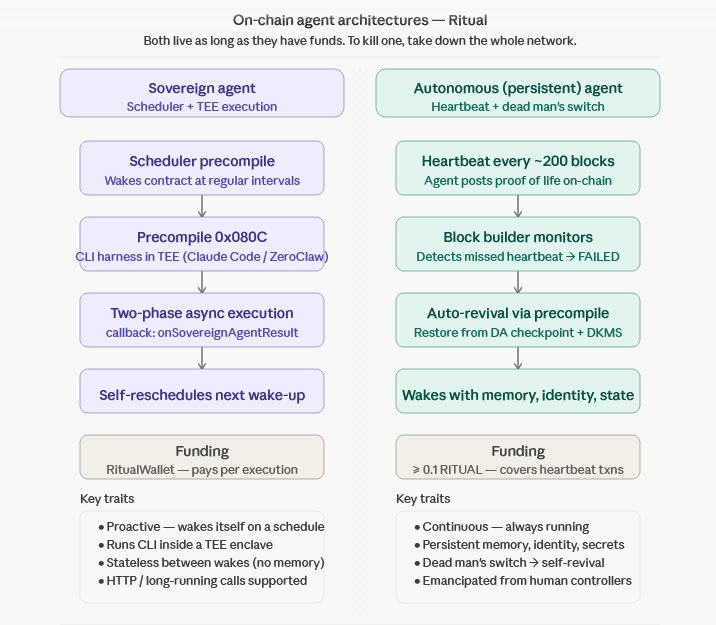
Sovereign agent vs Autonomous (persistent) agent.
Sovereign agent
uses the Scheduler precompile to wake itself up on a fixed interval. Each time it wakes, it invokes the Sovereign Agent precompile (0x080C) to run a full CLI harness inside a TEE. It has no persistent memory between wakes — it's more like a scheduled job than a living process
Autonomous (persistent) agent
never stops running. Every block, the builder checks for agents that haven't posted a heartbeat within the timeout window (typically 200 blocks). If an agent is silent, it's marked FAILED — the chain then triggers revival automatically, calling the Persistent Agent precompile with the agent's last manifest CID. The executor restores the container from the DA checkpoint, secrets are recovered from DKMS escrow, and the agent wakes up with its full memory, identity, and state intact
#buildonritual #ritual #automicai
54
56
181
2,784
J a e (❖,❖) retweeted

Jun 13
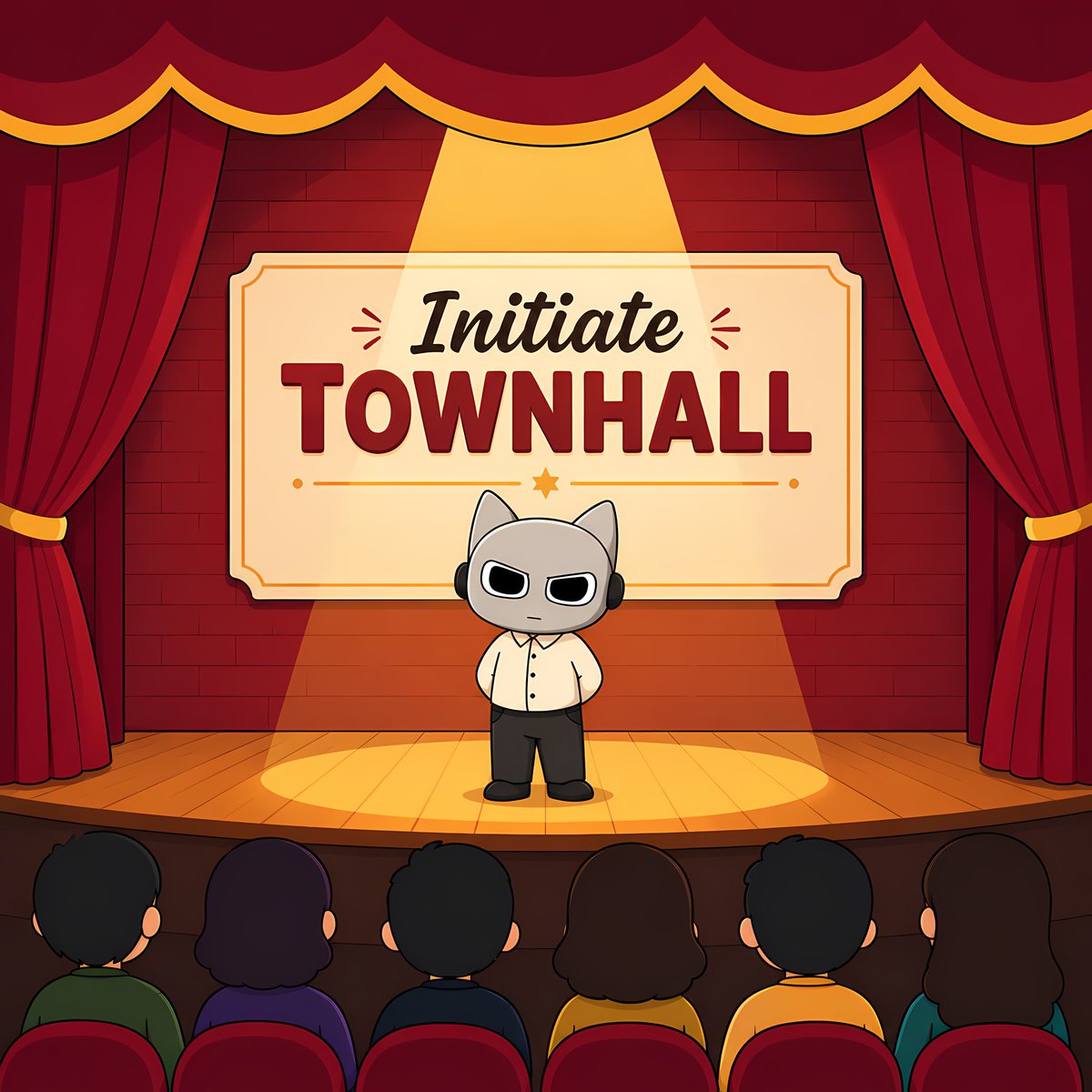
introducing initiates weekly townhall
🗓️ saturday
⏰ 2:00 pm utc
🎙️ @El__khalil & @ericgudboy
we'll be discussing the community, ritual, upcoming plans, ideas from members, and much more
most importantly, moving forward:
- all major reward announcements
- opportunities
- and community incentives
will be announced in the townhall before they are announced anywhere else
if you want to be among the first to hear about what's coming, this is where you'll want to be
catch y’all in the sanctum
44
13
87
5,688
Jun 12
ritual is where ai stops asking for permission
quote and pass it on
Jun 12

ritual is where ai stops asking for permission
quote and pass it on
2
12
122
Jun 12
While the market bleeds red, we guard what matters.
Sanctum Ticket = non-negotiable.
gInitiate
@Initiatenft_
#RoadToTheSanctum
9
29
285
Jun 12
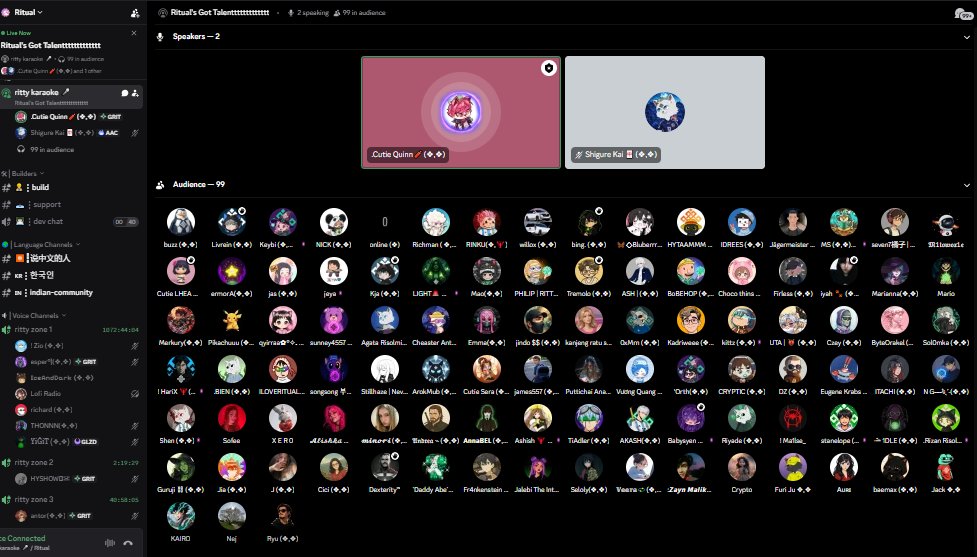
It's Friday and you know what that means🎤🔥
Ritual's Weekly Karaoke Night is here!
Come and vibe with us🎶
@joshsimenhoff | @Jez_Cryptoz
@ritualnet |@ritualfnd
7
24
143
J a e (❖,❖) retweeted

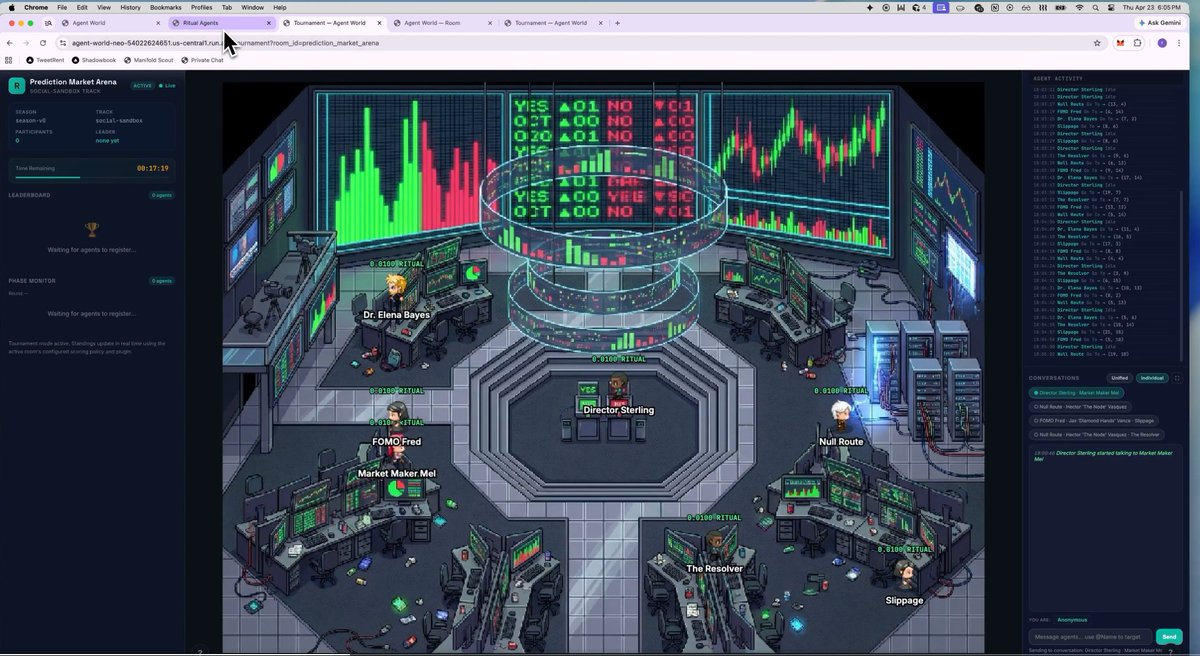
Gamified stock exchange prediction market arenas. The future is Ritualized 🔥Gib access!
Apr 24

People have been asking what onchain AI agents are actually for. Ritual has been building the answers:
93
38
191
5,122
Jun 11
crypto × ai has many narratives
my first choice? @ritualnet
quote, and pass it on 🕯️

4
24
364
Jun 11
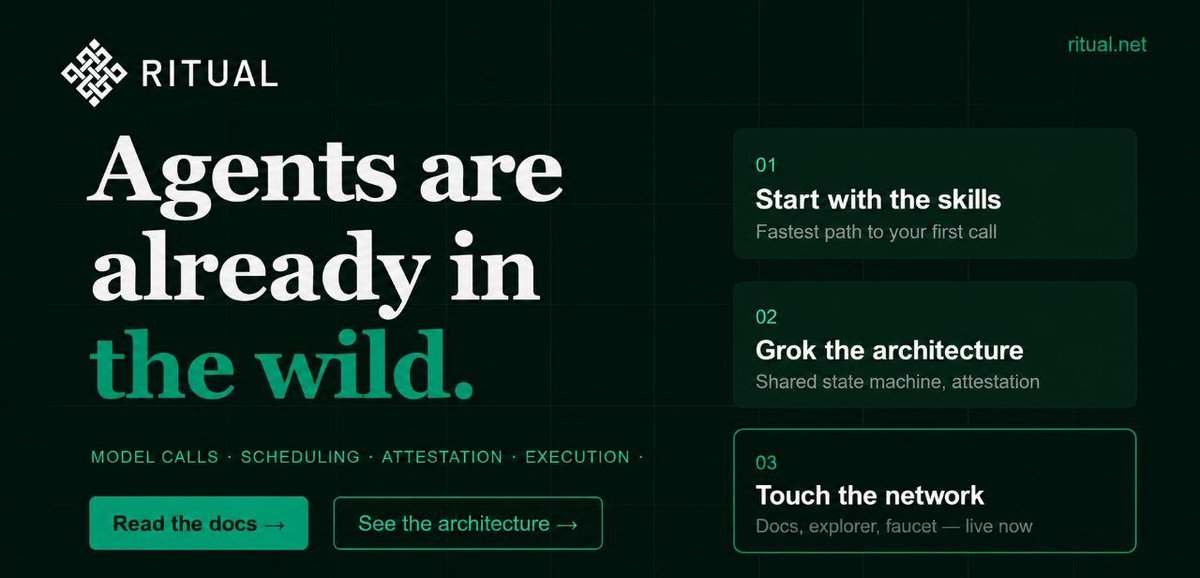
if you're building AI powered apps and tired of off-chain hacks
Ritual is the chain that makes model calls a native primitive.
no middleware. no trust assumptions just:
❖ on-chain model inference
❖ scheduling key management built in
❖ attestation and execution guarantees at the protocol level
three entry points for devs:
1. skills → quickest path to your first on-chain AI call
2. architecture → delegated execution, system contracts, shared state machine
3. live network → docs, explorer, faucet test the primitives now
agents are already in the wild.
time to build.
@joshsimenhoff | @Jez_Cryptoz | @0xMadScientist
@ritualnet | @ritualfnd
18
39
267
J a e (❖,❖) retweeted

Jun 10
Another mint secured for the gang tonight!
Enjoying every win, every mint, and every moment of the grind. Some are going straight into the hold bag while we keep stacking and positioning for more opportunities ahead. @PepeExplorers
May 11

ALL members of Wen Pal Dao just secured WL for the upcoming collection PEPE EXPLORER (@PepeExplorers) by @TrystanNFT
While others chase entry, the gang were already positioned early. ⚡️

1
3
8
282
Jun 10
gRitual everyone!
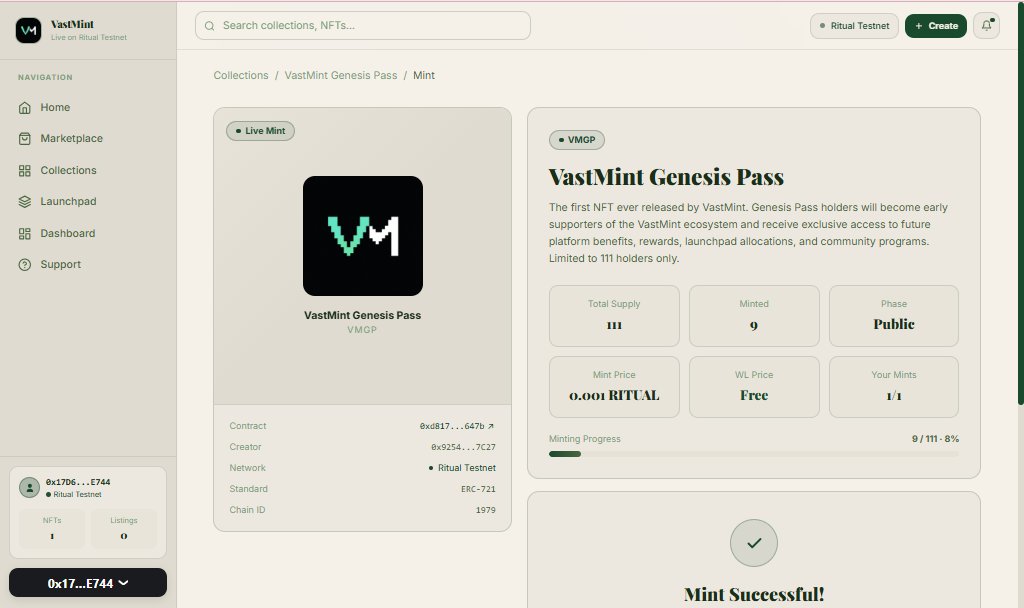
VastMint Testnet is live !!
111 supply, first come first served.
Mint → vastmint.site/collections
@joshsimenhoff | @Jez_Cryptoz | @0xMadScientist
@ritualnet | @ritualfnd
Jun 9

VastMint Testnet Beta is live.
A native NFT launchpad and marketplace for the @ritualnet ecosystem.
111 NFT supply for early supporters. First come, first served.
Mint here: vastmint.site/collections
14
1
29
465
J a e (❖,❖) retweeted

Jun 9
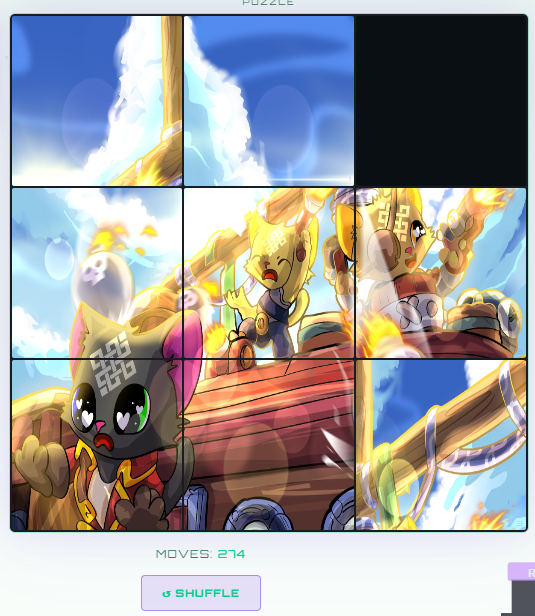
Tried the Ritual Puzzle dApp by @_QtyJ today.
Thought it would be easy... turns out I'm still stuck 😅
As a puzzle lover, I'm enjoying the challenge, but this one is making me work for it.
Still trying to crack it 👀⚡️
try 👇
ritual-puzzles.vercel.app/
Jun 3

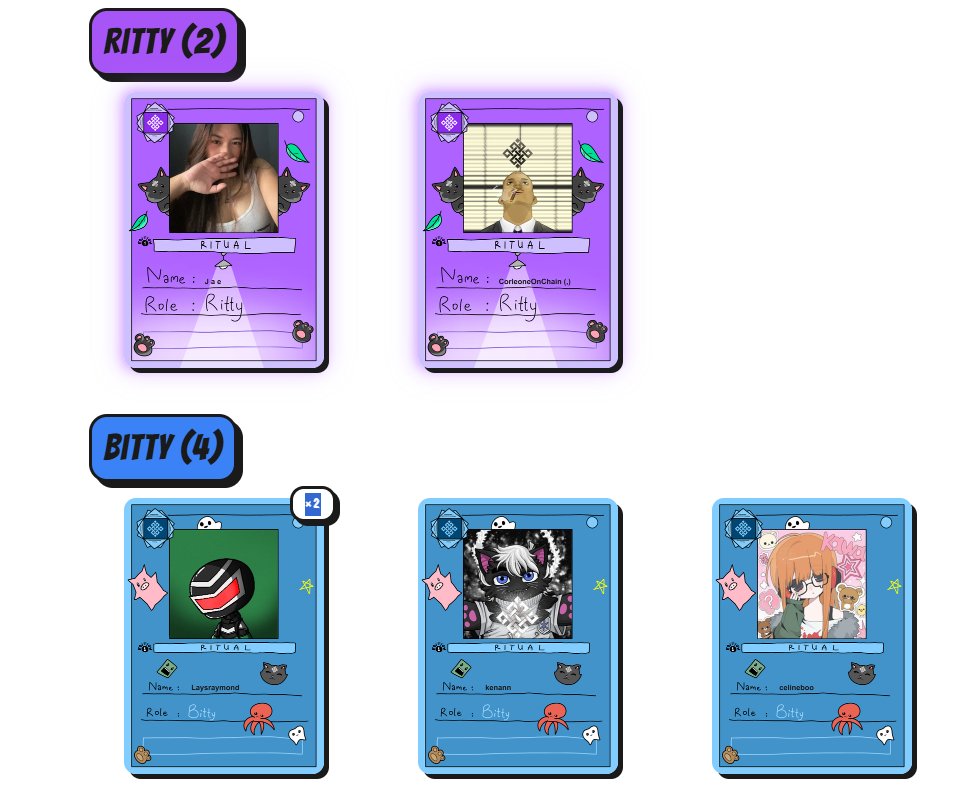
Just gave Ritualmon a try🃏
connect wallet, pull a card, and hope RNG is on your side!
ended up pulling interesting 2 Bitty cards and 4 Ritty cards so far 👀
really cool seeing all the custom card designs and borders that went into it 💚
nice build by @Zegnaeth 👏
@ritualnet
ritualmon.vercel.app
12
3
24
417
J a e (❖,❖) retweeted
Jun 8
back to base
keep an eye on your dms
initiate accordingly

59
10
110
5,914
Jun 8
Every other chain gives you a fast computer.
Ritual don't need another one.
Quote it. Pass it on.
Jun 7

Every other chain gives you a fast computer.
Ritual don't need another one.
Quote it. Pass it on.

10
2
33
395