
Innovative technologies for generating clean energy
Joined June 2020
- Tweets 314
- Following 10
- Followers 32
- Likes 259
77 Photos and videos


16 Jul 2023
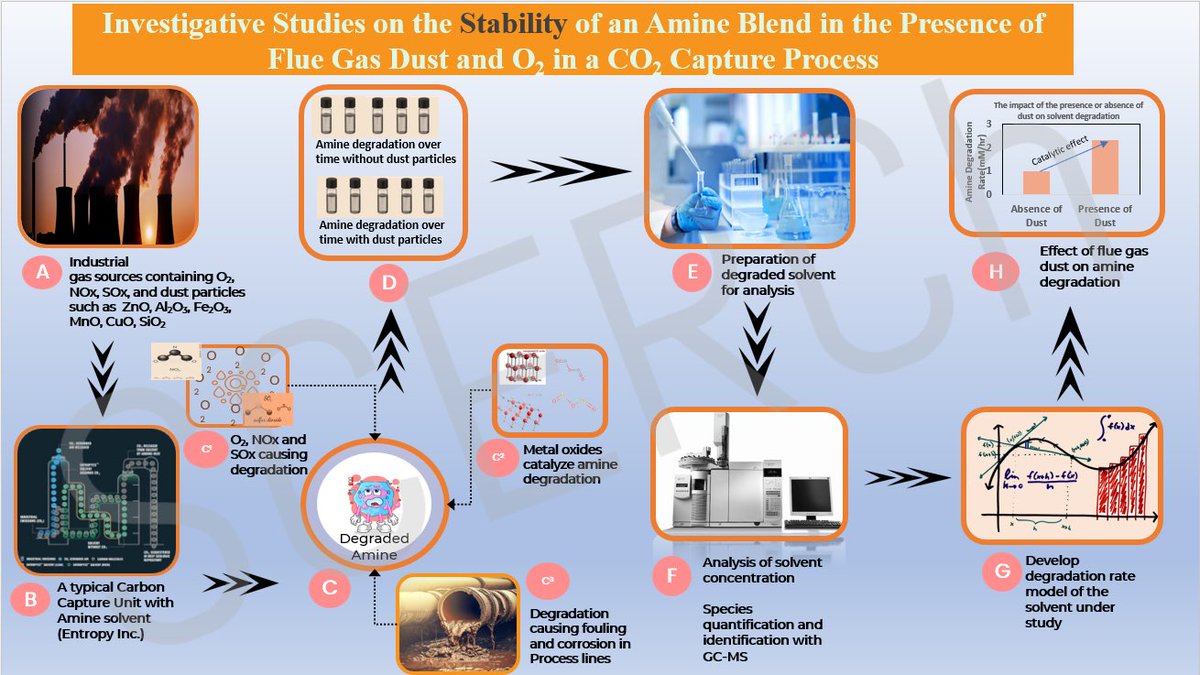
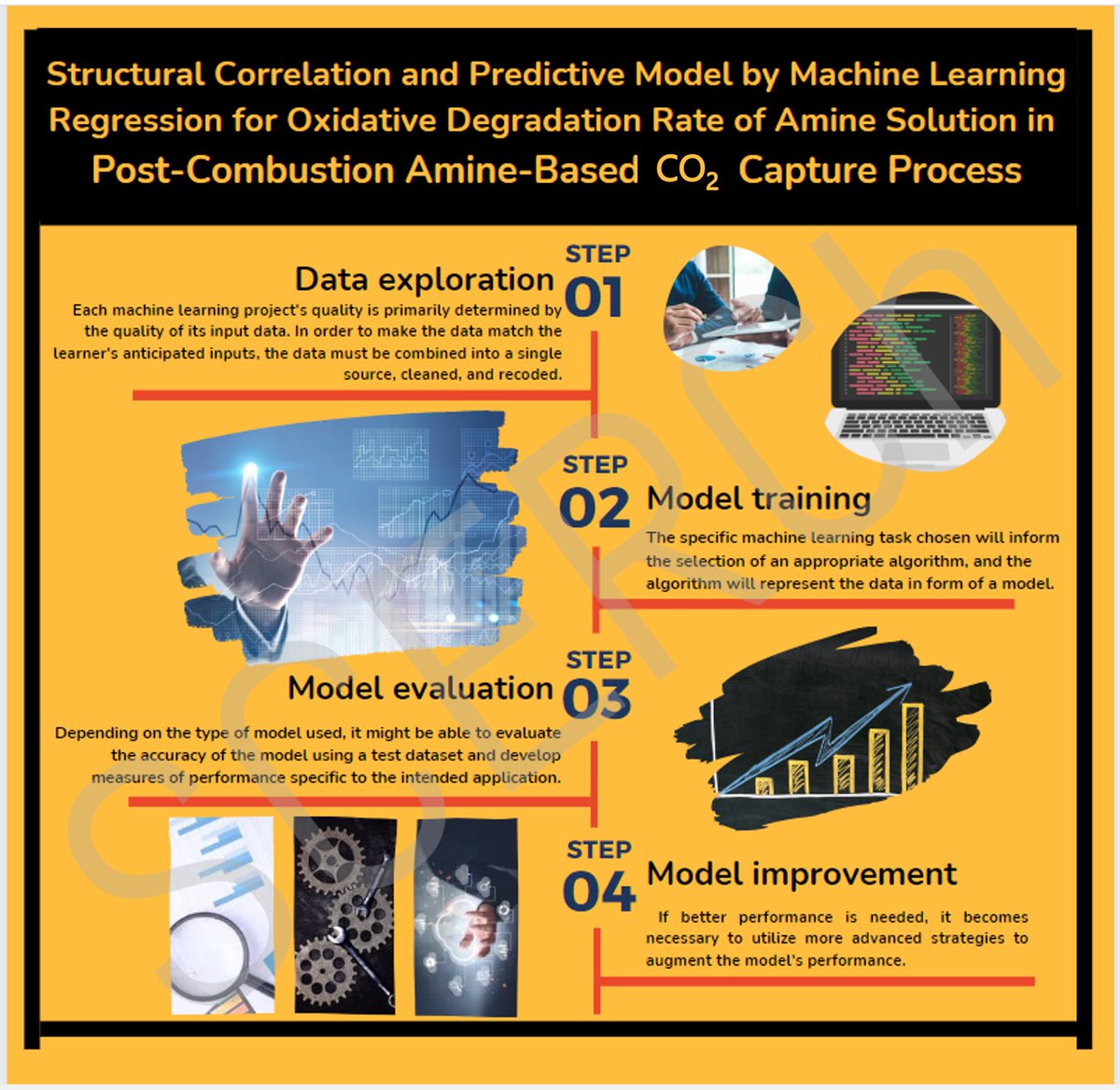
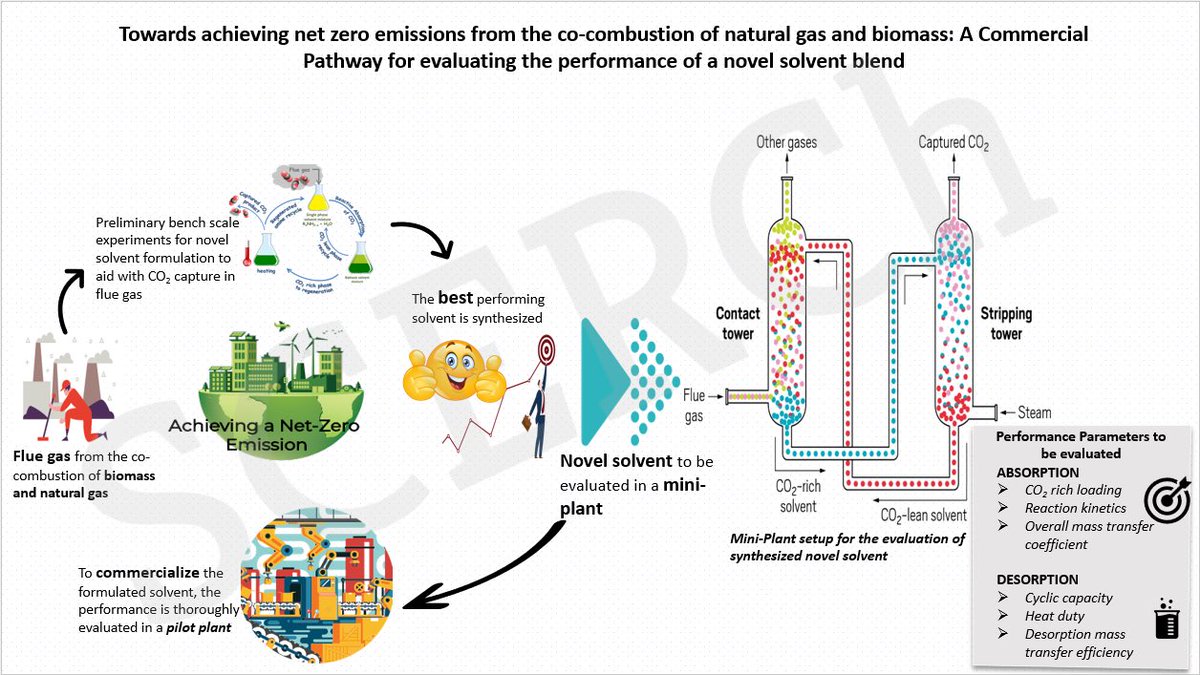
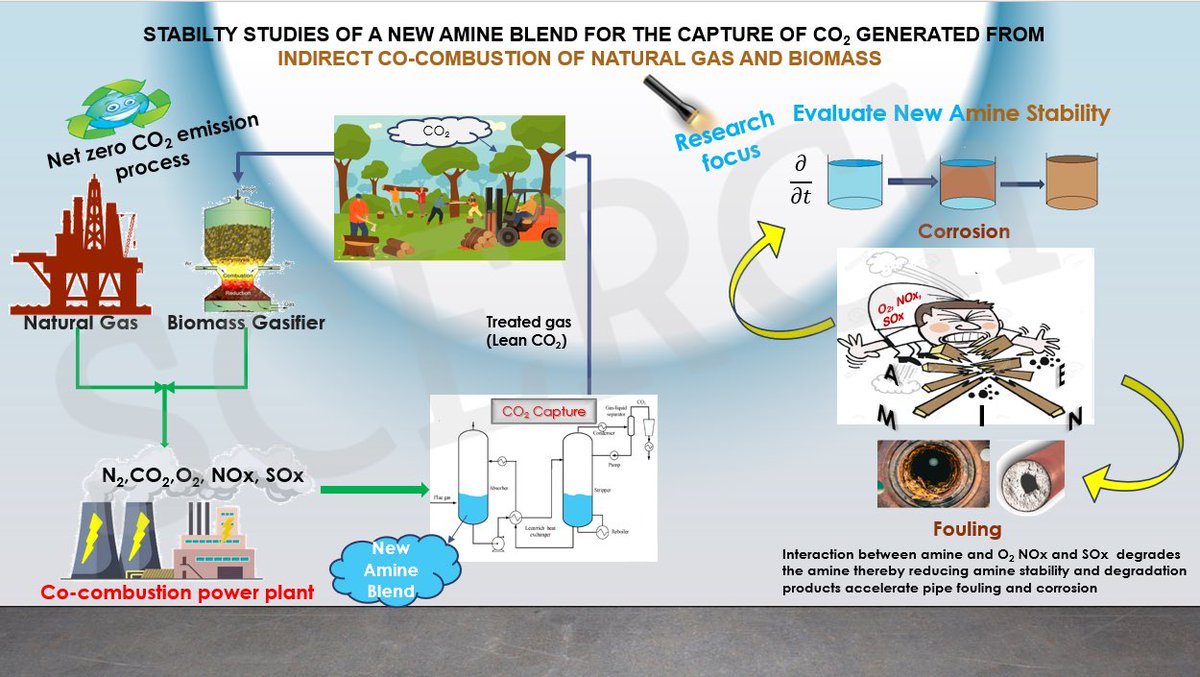
This research by one of our students, Thomas Boakye, involves conducting comprehensive laboratory experiments, carefully simulating the conditions encountered in an actual CO2 absorption system.
1
113
16 Jul 2023
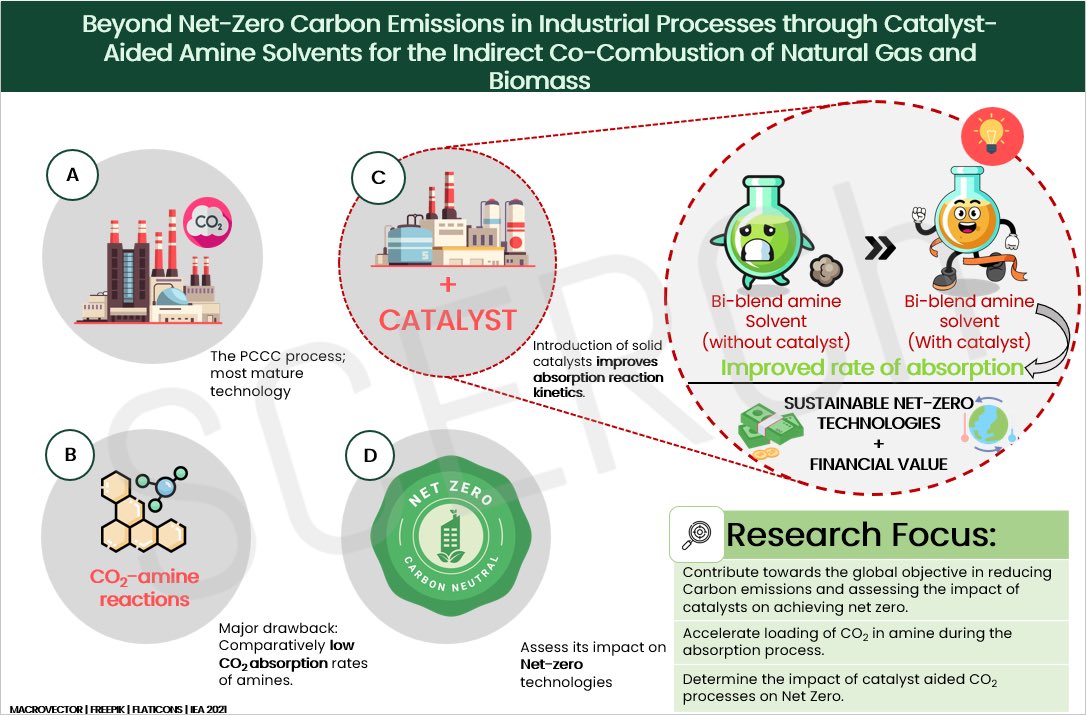
Based on these rates, a model will be developed to predict the stability of any new solvent when exposed to different flue gas concentration scenarios. This information can be used to optimize the capture process and ensure that it is as efficient as possible.
1
75
16 Jul 2023
By studying these interactions, potential challenges will be identified and effective mitigation strategies proposed. #research #carboncapture
45
28 Jun 2023
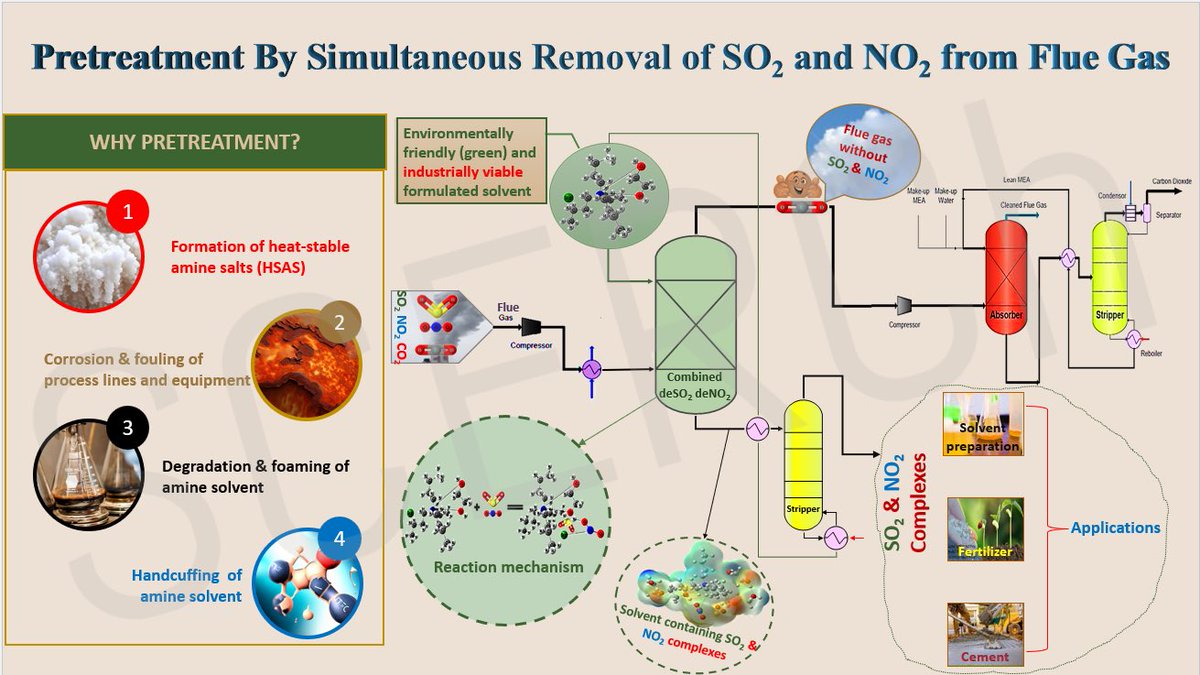
Our student Enoch Otoo will investigate the simultaneous NO2 and SO2 removal from flue gas using a novel, low-cost, and formulated green solvent.
1
2
99
28 Jun 2023
The study will be conducted on a laboratory batch-scale using a simulated flue gas stream with varying concentrations of NO2 and SO2.
1
2
52
28 Jun 2023
Furthermore, empirical data generated from his work will be evaluated to study the performance and kinetics of the formulated solvent for further study. Visit lnkd.in/egvtCKD2 for more. #research #amines #carboncapture
2
73
23 Jun 2023
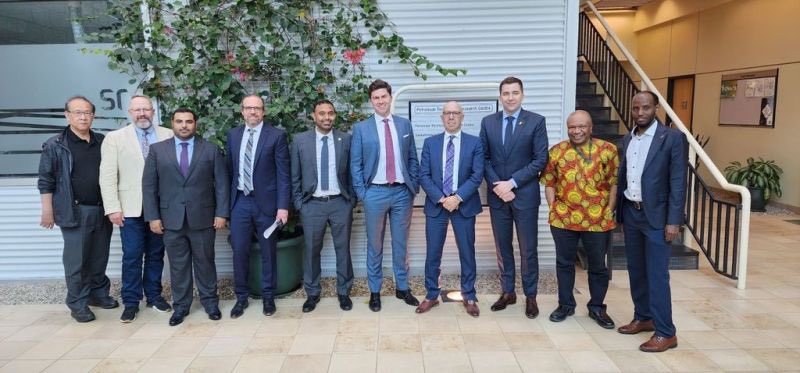
Our chair Raphael Idem, PhD, P.Eng., FIAAM. is walking the talk as he participated in a meeting to discuss collaborating on CCUS!
1
65
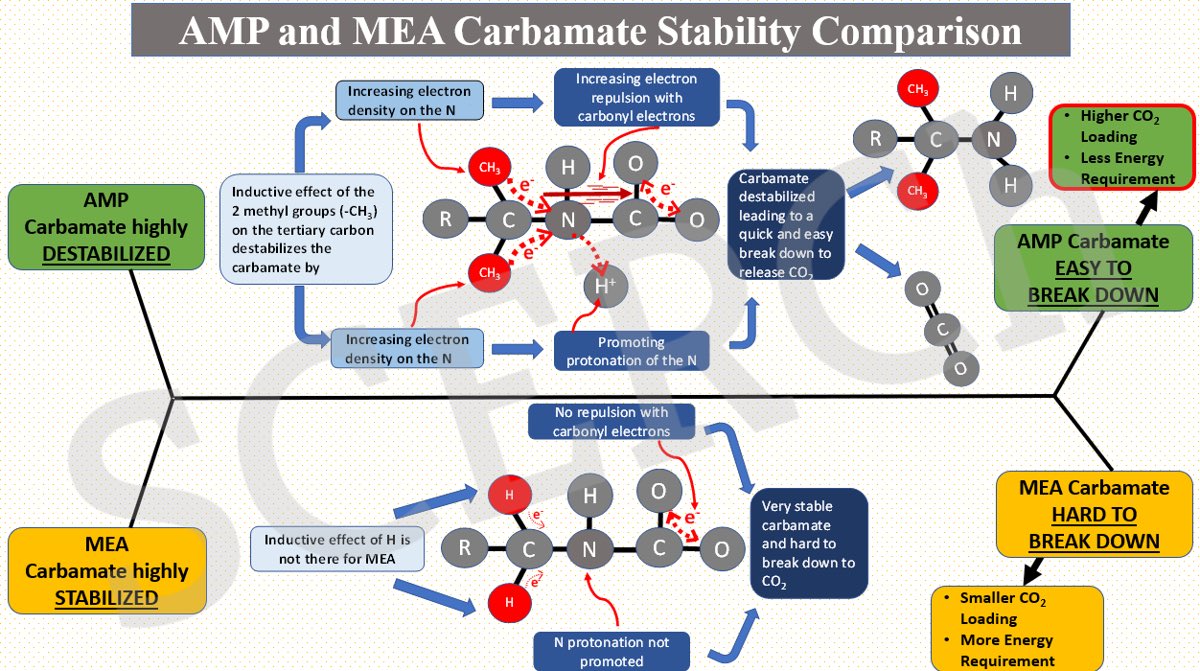
In this post, we explain why carbamate of sterically hindered AMP is unstable relative to that of MEA.
1
1
90
The instability of AMP carbamate leads to an easy break down to release CO2 and amine in the desorption process, thus giving rise to a higher CO2 loading and a lower desorption heat requirement than those of MEA.
1
1
34
25 May 2023
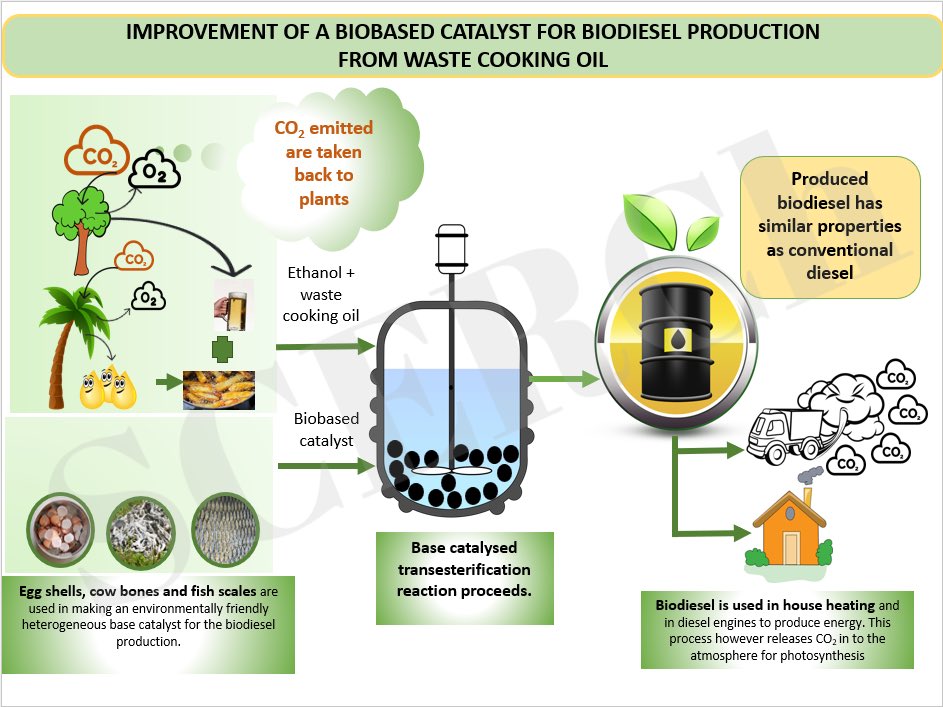
In order to attain net zero carbon emissions by 2050 and meet a 45% of biofuel production from waste resources target by 2030, there is the need to explore catalysts for increasing biofuel yield.
1
2
204
25 May 2023
This work by our student, Mariam Hanson, will explore the use of environmentally benign materials for biodiesel production. Visit lnkd.in/egvtCKD2 for more. #research #energy #carboncapture
2
37
25 May 2023
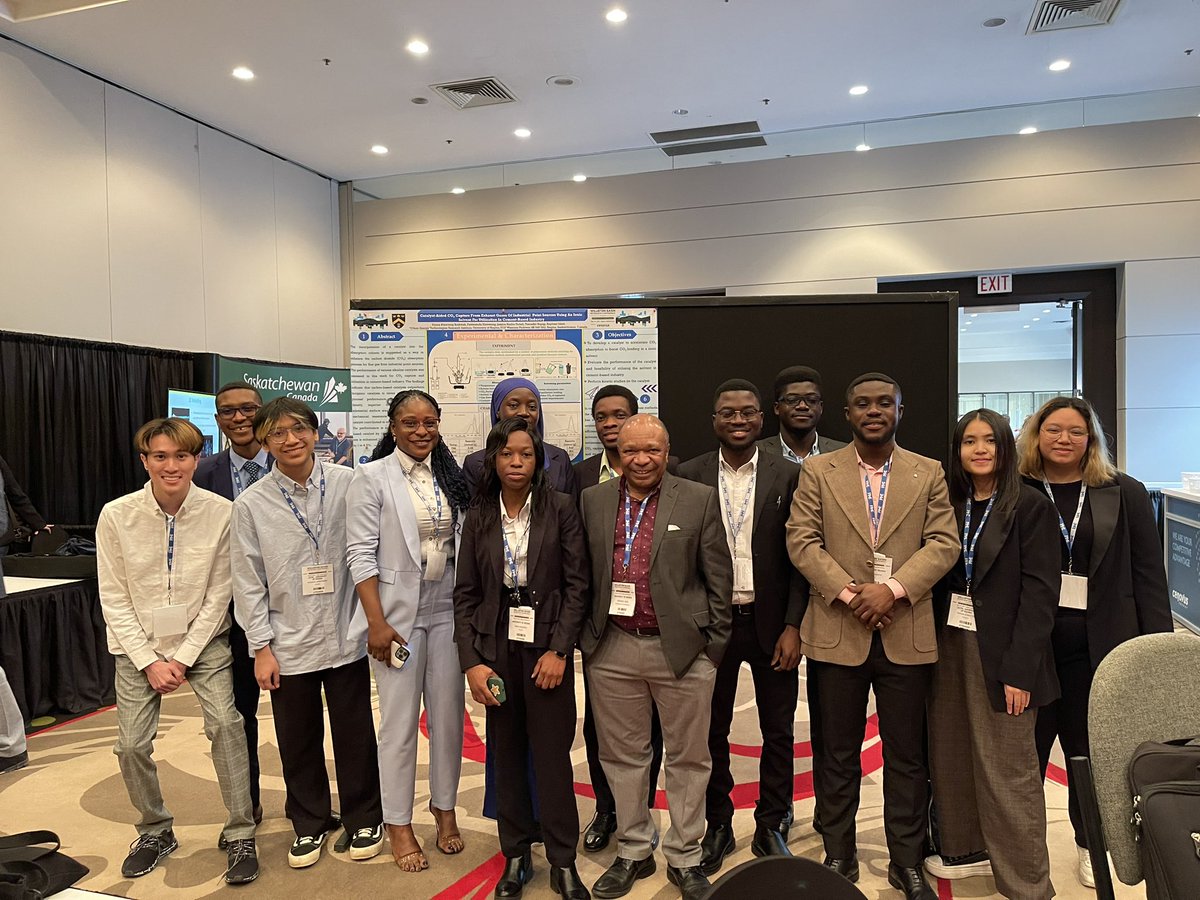
Meet the team that represented the SaskPower Clean Energy Research Chair (SCERCh) program at the Williston Basin Petroleum Conference featuring the Saskatchewan CCUS Summit on May 2-3, 2023.Out of the 39 posters presented, 11 posters were from the SCERCh team Kudos #researchers
2
90
12 May 2023
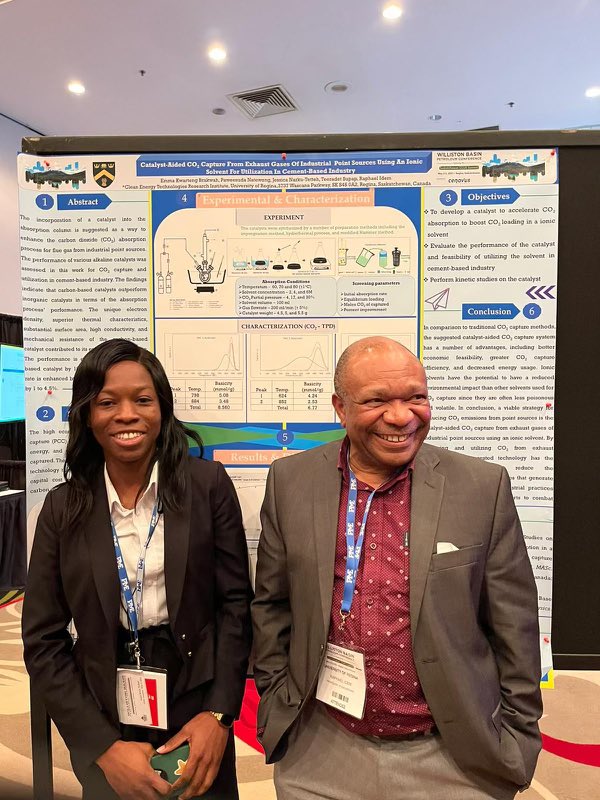
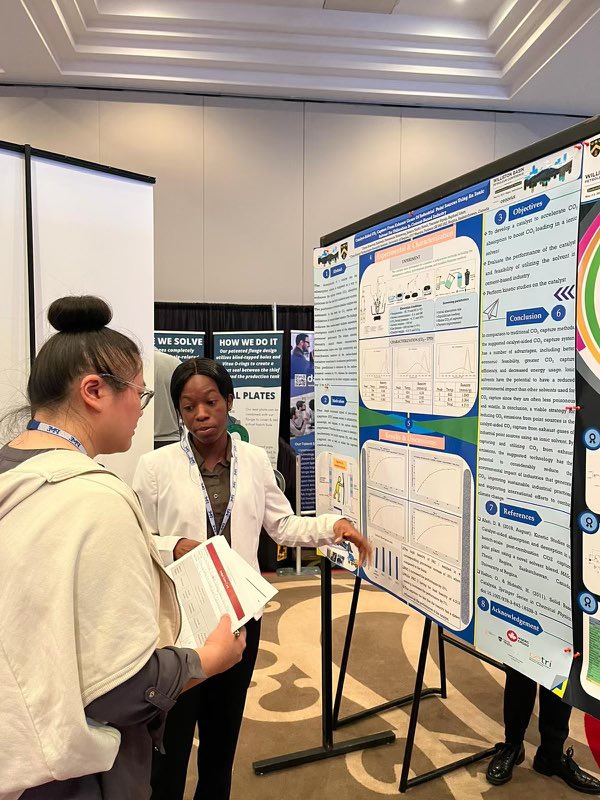
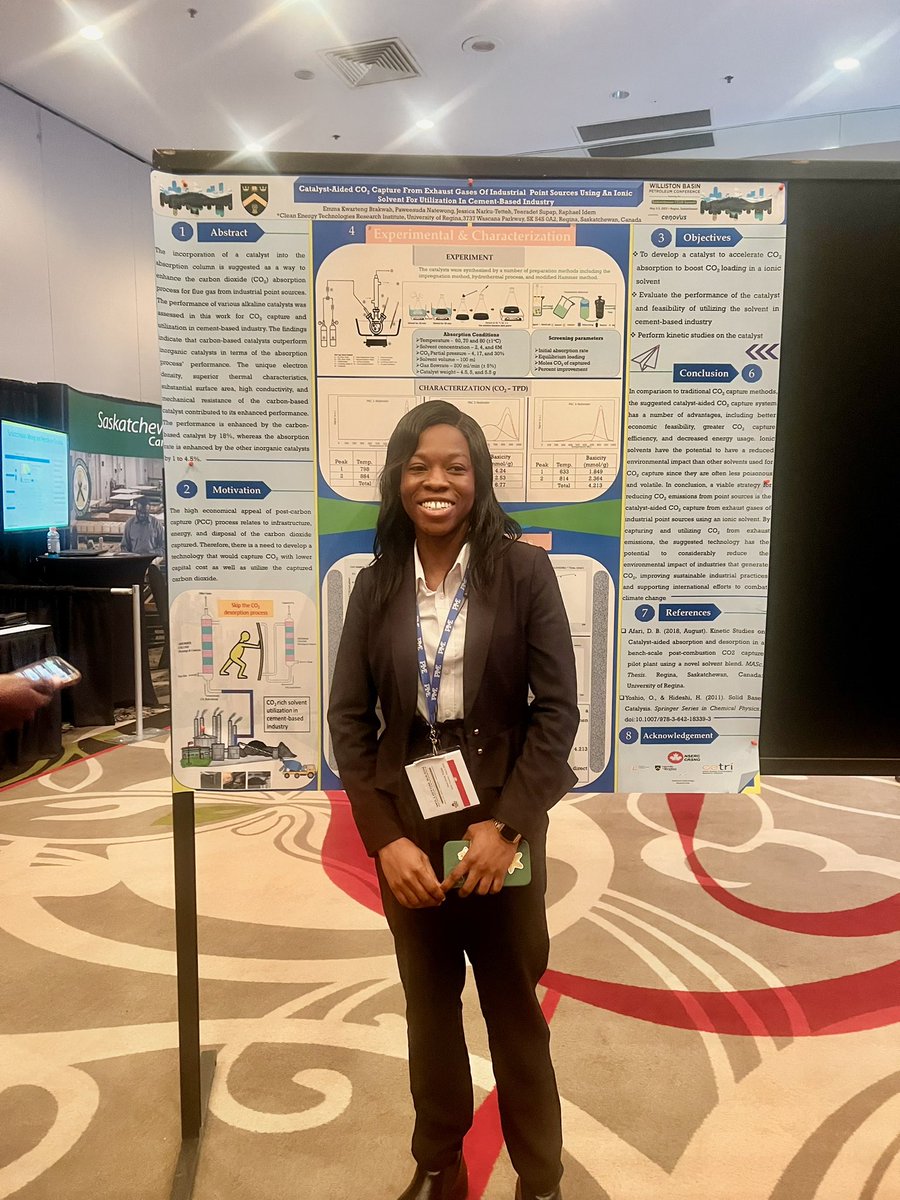
We are elated to share that our graduate student, Emma Kwarteng Brakwah won first place in the poster competition held at the WIlliston Basin Petroleum Conference featuring the Saskatchewan CCUS Summit on May 2-3, 2023.
1
1
120
12 May 2023
It is a reminder that hardwork, perseverance and dedication do not go unnoticed, and that even the smallest of contributions can make a significant impact”
-Emma Kwarteng Brakwah
1
1
21
12 May 2023
Miss Brakwah, you’ve become an epitome of #excellence, #hardwork and #determination and the entire SCERCh team duly acknowledges your amazing feat!
1
20