Joined August 2023
- Tweets 176
- Following 123
- Followers 154
- Likes 81
3 Photos and videos

7 May 2025
Anyone else notice this in meetings: when people give a verbal resume (without being asked) that sounds impressive, I have NEVER ended up being impressed with them.
100% of the time, my suspicions that they are all talk have been verified.
Why do people do this?
2
105
24 Jan 2025
Those in this business know that BORTAC are some hard dudes. They are going to bring it.
23 Jan 2025

American hiker strafed with gunfire & shot twice by suspected #cartel #terrorists in Jacumba, CA
Cartels think they can bring their war here. Think again!
Americans won’t be intimidated. Our agents & BORTAC will confront these threats HEAD ON!
@CBPAMO
322
4 Jan 2025
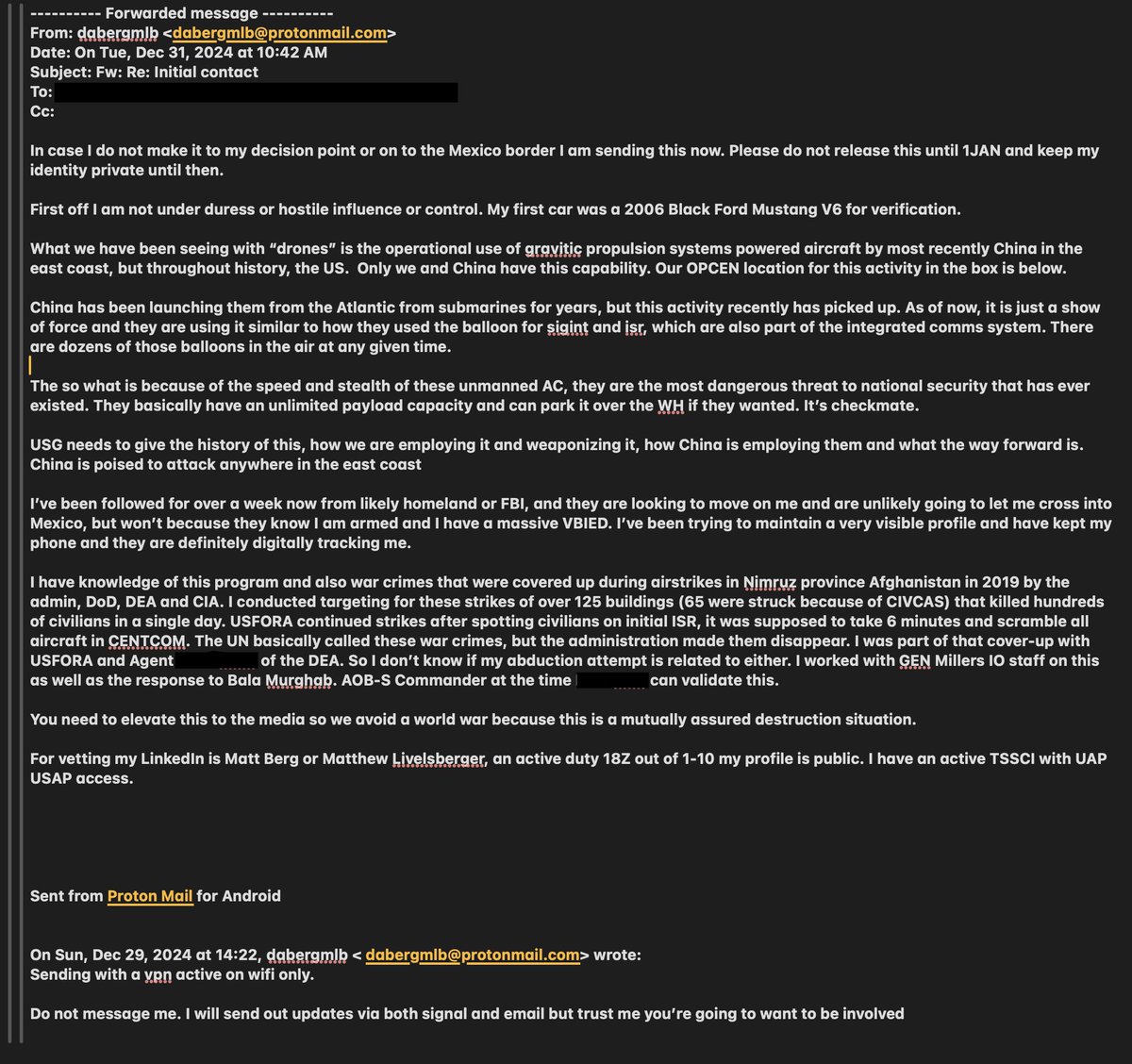
I've read a hundred letters like this over the years. This is someone who was suffering from delusions, not someone who is blowing the whistle on some big government cover-up. "Crazy" is a spectrum, and paranoid delusions often sound somewhat plausible and are usually anchored to actual events. As a street cop, I dealt with people like this all the time, and it's really, really obvious what this is. I don't want to take away from any of the people trying to be a combination of Scooby Doo and Jim Garrison, but these conspiracy theories are just too much.

178
29 Dec 2024
People are way too scared of making the wrong decision. They should be far more worried about not making a decision at all (or failing to implement the decision they did make).
Two traps to look out for: redundant deliberation and reassurance seeking. Both are motivated by our desire to make hard decisions into easy decisions.
There's some awesome stuff from @neilshortland on this in his excellent book, Decision Time.
29 Dec 2024

If you wait too long, time passes, the door closes, people move on, and the deal is no longer on the table.
At the same time, if you always react immediately or impulsively, you might make the wrong decision.
Take a second to think about things, but once you’re sure of what you want, act with a sense of urgency.
1
2
180
9 Dec 2024
We are the last generation of SWAT officers who do things manually. In the future, we will wear a VR headset and control one of these remotely. I bet that happens in the next 15 years.

1
306
7 Nov 2024
For those who are interested in negotiation skills, @fbinegotiator is worth a follow, and his book, Never Split the Difference, is a great read.
7 Nov 2024
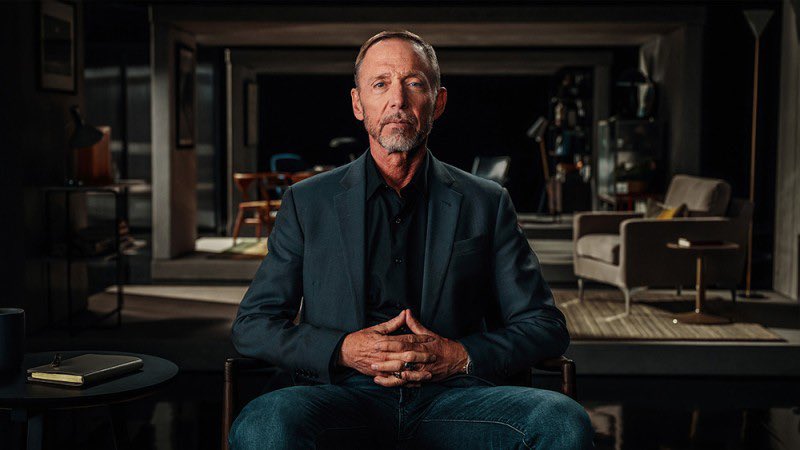
I’m the former lead FBI Hostage Negotiator.
These days I teach negotiation and communication skills for a living.
Retweet this if it would be helpful for me to come on X Spaces and teach people how to communicate with those who disagree with them politically.
1
152
19 Oct 2024
I have worked in government my entire life, and it is set up so anyone in the system can, on their own volition, stop a project (through action or inaction), but no single person has the authority to make a project proceed. All brake pedals, no gas pedals.
Over time, these systems become dominated by risk averse bureaucrats who create new processes to further insulate themselves from actual decision-making and who are all too scared to delete any process that is no longer relevant.
I don't know how we go about fixing this.

Washington DC has become an ever-increasing ocean of brake pedals stopping progress.
Let’s change those brake pedals to accelerators, so we can get great things done in America and become a spacefaring civilization!
2
229
25 Sep 2024
I've seen lots of SWAT guys fall victim to this. They try to wait until they WANT to leave the team, and end up staying until they HAVE to leave the team. When you leave determines if you miss the team or resent the team. Choose wisely.
24 Sep 2024

If you don't reinvent yourself every decade or so you become the 'expert' dinosaur.... soon to be extinct.
4
383
15 Jul 2024
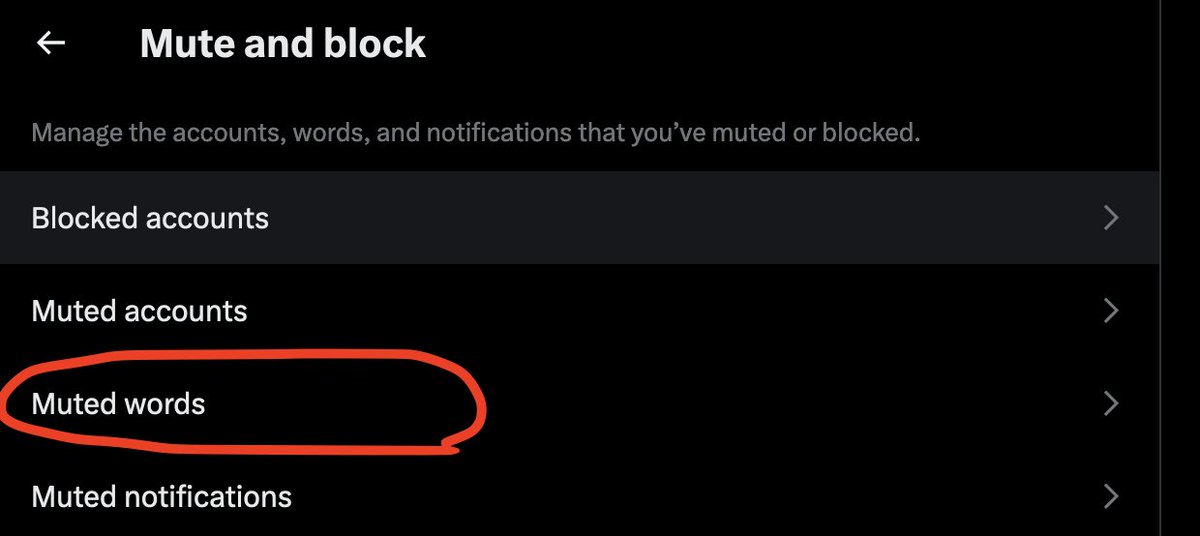
After every major incident, I add words to my mute list to try to make X just a little less of a hellscape. Today's new addition: Inside job
255
14 Jul 2024
Everyone's going to have a theory on this one. Too early for conclusions, but here are the relevant areas of analysis:
1. How was the site selected and by who? What security trade-offs were made? Some sites are very difficult to secure but chosen for better access by public, and security measures are often downplayed for perception purposes.
2. At least one witness says they saw a guy climbing on the roof with a gun, and he told local police. What communications went out from the local police? What was their ability to communicate with Secret Service? Command and control is always challenging in these events. Expect to see some communication breakdowns that could have contributed to this.
3. I hear 8 gunshots. The first 3 are at a certain cadence. Those are all likely the bad guy's. The next four are quicker. Those could be return fire from police, or more shots from the bad guy. I'm betting the final shot was the police / secret service counter-sniper.
4. From the limited video I've seen, the response from the Counter Assault Team (who are known to be legit, by the way) was very quick and professional.
231
3 Jul 2024
It was a pleasure speaking at the Canuck's development camp. Room full of talented young men pursuing their profession to the highest level. Loved it.
3 Jul 2024

This evening, we invited RCMP Inspector Kevin Cyr as a special guest to speak at our 2024 Development Camp.
Inspector Cyr spoke on dealing with adversity and perseverance in high-pressure situations, relating aspects of his role in these crises to the pressures athletes face when striving to succeed in their sports.
#Canucks | @ToyotaPacific
1
1
359
6 Nov 2023
How hard you work is not a measure of how effective you are.
1
5
502
6 Nov 2023
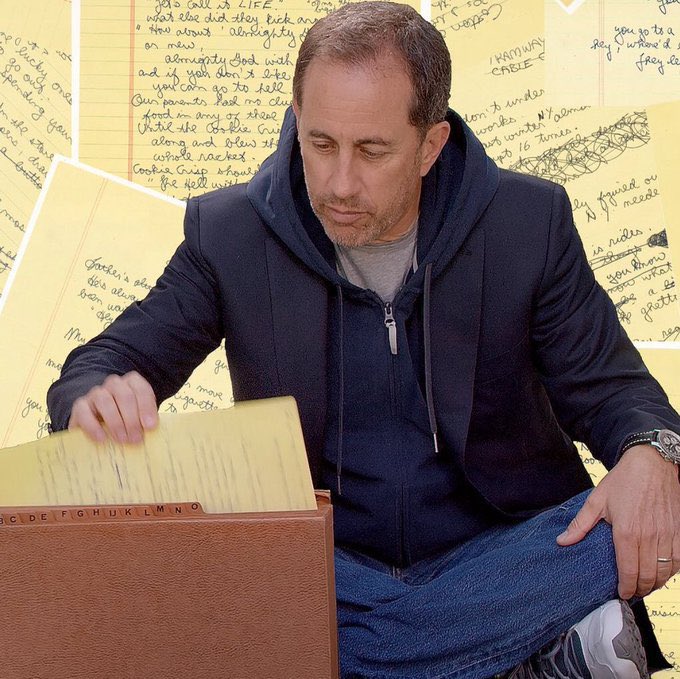
What can Jerry Seinfeld teach us about leading high risk operations? Great piece by @bpoppenheimer that discusses fields of precision and fields of uncertainty.
Most people think they work in a field of precision, where correct answers can be predicted ahead of time, and you can feel confident about your work before you do it.
But those fields of work are very limited. I know I certainly don't work in one.
I don't control all of the variables, I have incomplete information, and I work under time pressure. There is no precision.
My work (and I would say most work) is more like Jerry Seinfeld's - he never really knows what is going to land with an audience. He works in a filed of uncertainty. Every day he has to face at least a little bit of failure.
And that's his secret.
He doesn't wait for feeling of certainty before taking action. He embraces that discomfort of uncertainty.
I really enjoyed this one. Good writing by Billy with some take aways for me.
6 Nov 2023

Jerry Seinfeld started performing stand-up comedy in 1976.
Since then, to this day, he sits with a yellow legal pad and writes jokes every day.
Given that he’s been honing his craft for 47 years, he was asked, “How do you know a joke is going to work on stage?”
Seinfeld said,
“You don’t.”
Interviewer: You just trust yourself?
Seinfeld: No you don’t. There’s no trust. It's excruciating—8 or 9 times out of 10, it doesn't work.
The interviewer said that he had recently seen Seinfeld perform at The Beacon Theatre in New York City, where Seinfeld seemed to get nothing but laughs.
“What you saw is what's worked,” Seinfeld said. “But you only saw 1.5% of what I’ve tried.”
Takeaway 1:
The writer Morgan Housel points out the importance of distinguishing between two categories: fields of precision and fields of uncertainty.
Astrophysics, for instance, is a field of precision: when NASA’s New Horizons spacecraft passed by Pluto on July 14, 2015, NASA said it “took about one minute less than predicted when the craft was launched in January 2006.” NASA’s forecast was 99.99998% accurate.
Comedy, on the other hand, is a field of uncertainty. Even Jerry Seinfeld’s forecasts are 1.5% accurate.
It’d be great if more things in life were like astrophysics. It’d be great if, before you started a business or wrote a book or quit a job, you were 99.99998% sure it’d all work out. But most things in life are like comedy. Most things in life, Housel writes, “are fields of uncertainty, overwhelmingly driven by decisions that can’t easily be explained with clean formulas, like a trip to Pluto can.”
Takeaway 2:
In a world of uncertainty, where most things are more like comedy than astrophysics—more than talent or work ethic, the poet John Keats famously wrote, you need the ability to step into and push through doubts and uncertainties.
In 1817, Keats wrote a letter to his brothers to share this exciting realization.
“At once it struck me,” Keats wrote, “what quality went to form a Man of Achievement … Negative Capability.”
Keats explains that “Negative Capability” is “when a man is capable of being in uncertainties, mysteries, doubts, without any irritable reaching after fact and reason.”
Even if he’s going out with jokes that have worked, Seinfeld said, every time he steps on stage, “it’s slightly terrorizing.” Rarer than comedic talent, Seinfeld adds, is the ability to handle that terror. “A lot of people can be funny, a lot of people can write jokes, but not a lot of people can handle that daily slight terror.”
- - -
“The need for certainty is the greatest disease the mind faces.” — Robert Greene
Follow @bpoppenheimer for more content like this!
2
500
27 Oct 2023
If you are asked to make a decision, and you say NO, your next question should be what would make you say YES. If you don't know, then your "no" wasn't a real decision - it was a delay tactic. You feel like you made a decision, but you didn't.
1
7
369
24 Oct 2023
There are four types of risk personalities (that we all demonstrate depending on the situation):
Risk Ignorant – They don't even see the risks. These are people who just can't imagine things not working out. They underestimate the probability and/or consequence of a failed operation. To them, it's all upside.
Risk Adverse – They avoid the risk, no matter the potential reward. They understand the inherent risk to operations and avoid those risks no matter what the projected ROI is. To them, avoiding risk is the goal.
Risk Seeking – They want the risk; the reward is secondary. They see the risks and that is actually what they are after. The potential reward of a successful operation is just an excuse to take the risks.
Risk Conscious – They balance risks and rewards. They understand the inherent risk in operations and do purposeful assessments of risks vs reward and return on investment.
1
5
290
13 Oct 2023
Leading a high performing team means you'll spend more time pulling back the reins than cracking the whip. This sounds like the easier of the two options. It isn't. High performers can be a total pain in the ass. You just have to decide if the results are worth the headaches.
2
224
12 Oct 2023
Why is everyone "neurodivergent" all of a sudden? I remember when we just called it your personality, and you were responsible to manage the weaknesses while leveraging the strengths.
But now it seems that declaring neurodivergence immediately absolves you of personal responsibility, and requires others to work around your personality weaknesses.
What a time to be alive.
1
5
191
4 Oct 2023
Hard consequences can make easy decisions feel like hard decisions.
Not wanting to do something isn't the same as not knowing what to do.
1
123
20 Sep 2023
There is an important difference between PRIORITIES and PREFERENCES. The most common SWAT example I see where these are conflated is on hostage calls.
When responding to hostage incidents, without question the preferred resolution is a negotiated surrender. A successful negotiated surrender has a 100% guarantee that no one will be harmed.
Tactical intervention, on the other hand, has a risk that the hostage may be harmed, a police officer may be injured, and force will be required against the suspect.
When a commander should proceed with negotiation versus tactical is not an easy calculation.
❌ While negotiation is preferred, we have to ask what it looks like if it fails.
Often, it means a hostage is killed by the suspect and tactical intervention is necessary anyway to try to render aid.
So you still have all the risks of tactical intervention, but it's often late, and there is a significant reduction (if not elimination) of the potential to achieve the priority to save the hostage.
If the commander misconstrues the *preferred* negotiation resolution as a *priority*, or mistakes the *priority* of rescuing a hostage as being merely a *preference*, good decision making becomes impossible.
❇️Priorities are outcome-focused and linked to your mission. They are WHAT you must accomplish.
❇️Preferences are process-focused and linked to your manner of execution. They are HOW you hope to be able accomplish your mission.
If we fail to achieve our priorities, it means we failed our mission.
But if we don't get our preference in how to achieve our priorities, that can still be okay. There's always another way, even if less desirable.
We can pick what our priorities are. But we can't pick if we get to carry out our preferred plan.
We don't control all of the variables, and external factors (like the suspect's decisions) will determine the means by which we will have to accomplish our mission.
❌ If we mistake our preferences to be priorities, then we risk failing the mission as we will be hyper-focused on doing it only one way. We eliminate all of our flexibility, and by the time we realize it, it is often too late.
❌ If we relegate our priorities to be only preferences, then we will too easily allow other considerations to eclipse our mission. Risk and uncertainty will erode our resolve.
Failing to delineate our priorities and our preferences is a key error in high-consequence decision making.
It's not easy to firmly establish our priorities and then be willing to accept that we might not get our preference in how we achieve our mission. But if you work in high-consequence environments, it is a crucial skill to learn.
2
167