Joined September 2020
- Tweets 2,794
- Following 119
- Followers 93
- Likes 2,743
25 Photos and videos














Intelligence is not something you should be proud of or show off; especially if you’re a capitalist who wants to be rich.
Look around you. Have you seen the skits people watch? Dumb stuff!
Jarvis and Peller make the exact kind of content Gen Z loves.
VDM can sway public discourse for an entire week.
These are not stupid people. They’re smart in a very specific way: they understand how the masses think, and they know how to command attention.
There was a BBN season where a housemate was evicted and people were tweeting, “Good riddance; she been dey do too much book book.”
And who did the masses want? Mercy Eke, because big bumbum, and hot romance.
That should tell you something.
Your problem is that you take the masses too seriously. At the biological level, we are higher animals driven by fear, lust, hunger, status, and other base desires.
We just cover it up with clothes and a little conditioning.
Animals is what we are.
That’s what you tap into.
That’s why forex is such a favorite of the masses: they see outliers flashing cars and money and they want it too; the same way an ape wants a banana another ape is holding.
It’s biology.
It’s how the world works.
To win, you have to think, talk, and behave like the masses. Don’t fight it.
Don’t mock people who follow Peller and Jarvis; that arrogance is how you miss the lesson. Be humble. Observe them.
That’s how you learn to leverage mass behavior and move up in this world.
46
142
718
22,351
Sadiq retweeted

Jun 16
I watched a woman cry for almost 2 hours at her POS stand because of ₦20,000 💔
At first, I thought someone had stolen from her.
But no. A customer transferred ₦20,000 to her account, collected the cash, and left. Minutes later, she received a debit alert—the customer had reversed the transfer.
She tried calling the number. It was switched off. She checked the account details nothing, the man had disappeared.
Now, ₦20,000 may not seem like much to some. But for her, it was days of profit. I watched her sit there crying, saying:
“How do I explain this to my children? This is the money I use to feed them.”
That’s when it hit me. Many people are not poor because they are lazy. They are one bad day away from breaking.
One scam. One sickness. One mistake. One emergency.
So please, if life is treating you kindly right now, be grateful. And if you do business with people hustling to survive, don’t cheat them.
You may be stealing money from them… but you could also be stealing peace from an entire family. 💔
47
156
720
63,801
Sadiq retweeted

Jun 16
Let's not get carried away.
Murder is the lowest thing.
1
1
1
309
Sadiq retweeted

Jun 15
Bachelor of Arts (B.A.) in Arabic Language and Education (University of ilorin)
Master’s degree in Leadership and Management,United Kingdom
Memorized the Qur’an and written it by heart.
Represented my state in Qur’an competitions both locally and Nationally.
A Thanawiy graduate from Az-Zumratul Adabiyyatul Kamaliyyah.
Owner and Co-Founder of Al Firdaous Islamic Open Academy, an educational institution that has served and supported over 300 students both locally and internationally.
القراءات العشر الصغرى عن طريق الشاطبية والدرة (In View).
Jun 12

Hi women, can you post pictures or talk about your academic achievements? I need some motivation this month.
If you see this tweet, share it so women can see it.
381
1,481
6,905
170,950
Sadiq retweeted

Jun 14
I was determined that my help who lived with me from 2018 - 2022 would not go on from my house to be another person's help.
She learnt to sew in my house & graduated as best in her fashion school.
Today, she is married, runs her business, & we're friends.
I am an Igbo woman.
19
105
985
18,338


Sadiq retweeted

I cried after I saw the clip of Fulani terrorists taking turns to rape their victims
Woke up crying this morning.
I am not okay, these women are never going to be okay again, Nigeria is not okay, and the leaders have failed us.
141
2,408
5,361
439,607
Sadiq retweeted

Get into rooms where your biggest dreams are their daily lives.
68
310
1,408
25,418
Sadiq retweeted

Terrorists took turns raping a 52-year-old mother in front of her two children. They recorded it and posted the video online.
We aren’t resilient people, we’re just cowards.
494
7,519
18,459
621,069
Sadiq retweeted

Jun 6
It filters out background noise and helps us lock onto one single task without getting distracted by a dozen others.
2
3
54
Sadiq retweeted

Jun 6
OMG! I just walked out of a session with an ADHD teen
the way they described executive dysfunction was impossible to forget.
1. They said:
25
79
1,149
353,837

Sadiq retweeted

May 28
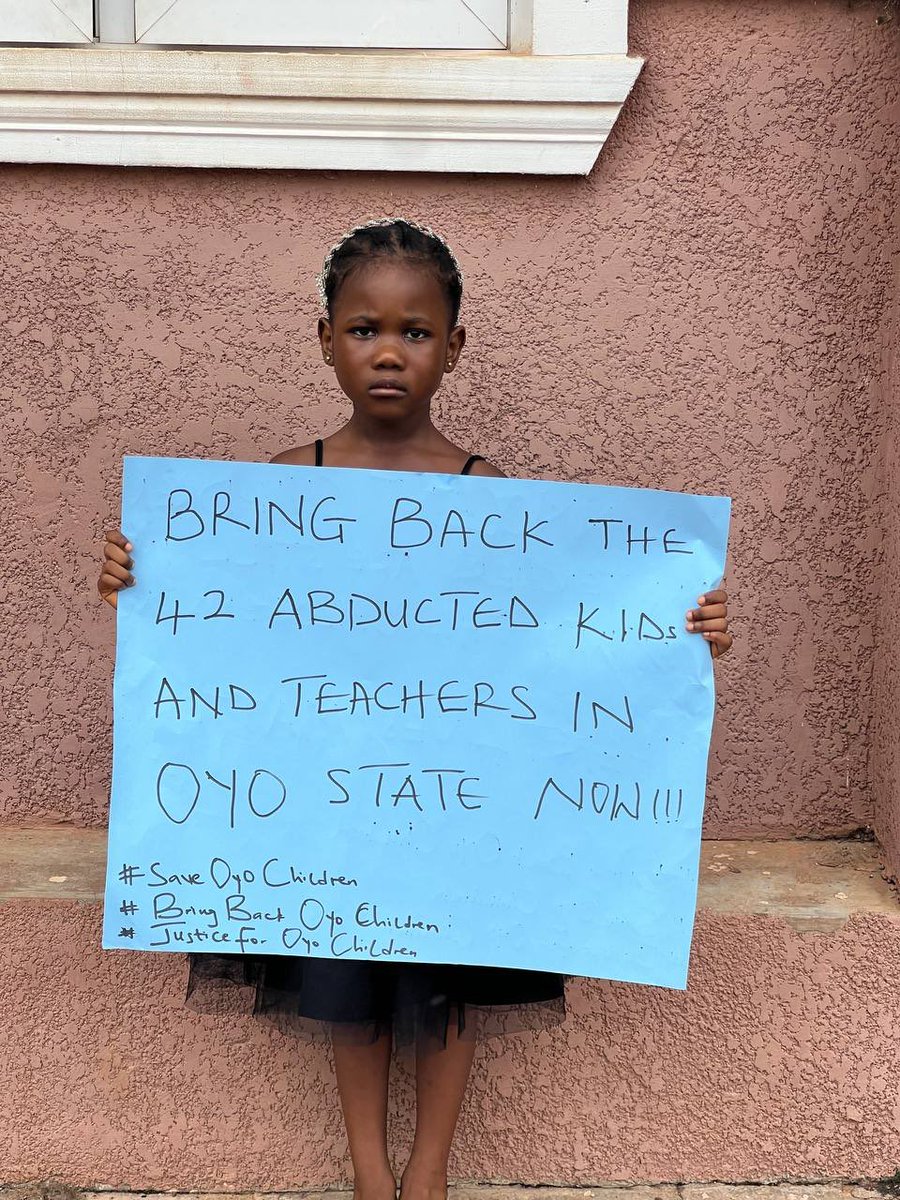
If this pops up on your TL, repost it; it costs you zero naira.
180
31,865
45,399
762,802
Sadiq retweeted

May 25
Day 10 in captivity 💔
#rescueoriire school kids and teachers now.
🥹🥲🙏🏼💔
18
4,486
5,469
91,536
Sadiq retweeted

May 17
I was in a bus sometime last year , we got to a check point and this guys got 2 bottle water , it was 500
They collected the water and was struggling to bring out money from their pocket , they passed our bus and the driver wasn’t having it to wait
The little boy was really running hard to catch up , I had 500 naira cash on hand so I threw it out for him , the guy picked it and the one that got the water also saw me throwing the money
Told him to give me back , you won’t believe what this guy said lmao
He asked me who send me 😂, did I think he didn’t know what he was doing
I gave my phone to my coursemate beside me, I was ready to go down with this guy , grabbed him inside the bus I really wan deck am, until he gave me the money
Some people are really heartless eeh

what level of cruelty do you have to possess to run a fake transfer to a highway hawker
209
2,014
11,776
419,189
Sadiq retweeted

May 17
A drunk policeman shot me at a checkpoint in 2011.
The bullet tore through my car, through my right hand.
I lost my career as an animator. My marriage cracked. My mind still bleeds.
The twist?
I sued the Nigeria Police. Won in 2015.
Judge said: "Pay his medical bills."
10 years later. Zero naira.
I face permanent disability without help.
@PoliceNG_CRU @TunjiDisu1 @UNDP @NhrcNigeria
#NigeriaPoliceNotYourFriend
273
9,977
17,563
524,729
Sadiq retweeted

No one is truly anonymous on social media.
If you take a picture and put a sticker to hide the person in the picture, the original picture before the sticker can be gotten and I will explain how I did it.
Every picture taken on your phone has a cryptographic hash and an EXIF metadata, it is processed through the OS imaging pipeline,gets encoded, indexed, and synced across multiple layers including local storage, app cache memory, CDN servers, and cloud backup systems.
So, even if you post an edited version of a picture, the real one can be accessed.
Check first comment for how I accessed the original picture. 1/2

May 17

Happy Birthday @neo_officialll
As you mark this 70th birthday, here is wishing you the best life has to offer. You have shown great business acumen, and because forever is made up of nows, may the new age catapult you to the height of business excellence.
Cheers to a new phase of life 🍷
207
62
1,109
375,265
Sadiq retweeted

Apr 28
This post is for Muslims on the TL and those who want to know why Islam prohibits Surrogacy
What does surrogacy mean?
Surrogacy is a process where a woman carries a baby for another person or couple who will eventually be the legal parents. People often turn to this when they are struggling with infertility or when carrying a child would be a physical danger to the mother. While it looks like a way to fix a painful problem, Islam sees it as something that breaks the fundamental structure of a family.
The main reason it is not allowed is the PROTECTION OF LINEAGE, known as Hifz al-Nasl. This is one of the five core objectives that Islamic law was built to protect.
Imam Abu Ishaq al-Shatibi explained this in his book Al-Muwafaqat. He said that the entire Islamic community agree that the law was made to guard religion, life, intellect, property, and lineage. Without a clear and honest lineage, the way we handle inheritance, marriage, and our very identities would fall into total chaos.
al-Shatibi stressed that establishing a proper lineage is a pillar of how a just society works. Unfortunately, Surrogacy splits motherhood into two different people. You have one woman providing the genes and another woman carrying the life and delivering the child. This creates a massive confusion about who the mother really is.
The Quran provides a clear answer by defining motherhood through the struggle of pregnancy and the act of birth.
ان امهاتهم الا اللائى ولدنهم
(Their mothers are none but those who gave birth to them.)
Surrogacy separates the biological side from the gestational side, which goes against the natural order and the clarity that Allah wants for every child. It turns a sacred life-giving process into something that can be contracted out, which takes away from the dignity of the woman.
This part shows Islam is a respecter of womanhood. Unlike others, Islam recognizes a woman’s body to be a sanctuary, and not a machine or a rental space. Using a surrogate treats her as a commodity, which is a major concern because it often exploits women in difficult financial situations.
Also, reproduction is meant to stay within the private boundaries of a marriage contract. The reproductive system of a woman is a sanctuary that belongs only to her and her husband.
When a man's sperm is placed into a woman who is not his wife, even through medical tools, it is seen as an intrusion into a space where he has no legal right to be. Here, scholars ruled that surrogacy is prohibited because it brings a third person into a bond that was meant to be for two.
They argued that the womb is an integral part of a mother’s identity. This keeps the family tree clean and prevents the mixing of lineages that the scholars have worked so hard to protect. Allah says:
ادعوهم لابائهم هو اقسط عند الله
Call them by the names of their fathers. It is more just in the sight of Allah.
This principle of justice ensures every child knows exactly where they come from.
As for those facing the pain of infertility, Islam does not leave you without hope. It allows for medical help such as IVF, but only under strict checks. The procedure is only allowed if the sperm and egg come from the husband and wife and the embryo is placed back into the wife's own womb while they are STILL MARRIED.
This is viewed as a medical cure. Scholars use the story of Prophet Zakariya to show that seeking help to fix a physical barrier to having children is a blessed path. Allah says:
فاستجبنا له ووهبنا له يحيى واصلحنا له زوجه
So We answered his prayer, and bestowed upon him John, and We healed his wife for him.
Scholars say this healing of the wife shows that medical intervention to restore fertility is a mercy from Allah. It means you can use the knowledge of science to fix what is broken in the body as long as you do not cross the sacred lines of lineage.

Deep down, I sincerely want to know why Surrogacy is not allowed in Islam?
24
288
835
47,965
Sadiq retweeted

Apr 23
Yoruba girls = Ewedu
Yoruba boys = Omi Obe
Full blooded Yoruba child = Gbegiri
😍😍😍😍
116
771
4,846
68,463